

(click to enlarge)
In August 2005, Australia’s Ministry of Defence reported that Australia and the United States had joined forces by signing a joint agreement to develop active phased array radar technology in Australia. The hope was that it would kick-start a new Australian electronics and systems integration industry, based on S-band active array and X-band phased-array technology, sized for and applied to smaller ships like frigates and corvettes.
This technology is being developed by ACT electronics company CEA Technologies, and has become part of Australia’s ASMD project to make its ANZAC Class frigates survivable against supersonic cruise missiles. Other military and civil applications on land and sea are also possible, given the radar’s characteristics.
The CEAFAR / CEAMOUNT Solution

CEAFAR is a 4th generation S-band active phased array radar, and it’s designed to be supplemented with the X-band CEAMOUNT Solid State Continuous Wave Illuminator. These active array radars also use digital beamforming techniques, rather than mechanical scans. That lets them use multiple simultaneous beams that help improve performance in severe environmental clutter, and also provides improved search and targeting capabilities against very fast, maneuvering targets like modern supersonic anti-ship missiles.
The combined system of radar, illuminator and central equipment group of power supplies etc. is able to generate and continuously maintain more than 10 simultaneous fire control channels. That’s a very sharp improvement over Australia’s existing frigate capabilities; indeed, it’s in the same range or better than some top-of-the-line air defense destroyers. Thales Nederland’s ICWI (Interrupted Continuous Wave Illumination) technologies will offer further improvements, when used with the SM-2 Block IIIA missile.
As an additional feature, the radar is designed to be software based. That adds risk to the program in the short term, but in the long term, it creates a radar that can be improved via algorithm updates and processor improvements, rather than more expensive and time-consuming hardware changes.
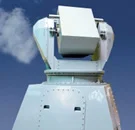
To date, planar phased array radars that can “stare” out over an entire coverage area, instead of rotating at the top of a ship, have been the domain of larger vessels like cruisers and destroyers. As technologies have improved, medium and large sized frigates have begun to include these technologies as well. CEA Technologies’ pitch to the Australian DoD contended that advances in the power and size of modern electronics might allow this approach to be brought down to smaller frigates and even corvettes, giving them strong protection against evolving threats and an expanded role in future fleets. The niche was open, which meant that a successful program could give Australia a world-wide defense technology winner.
After some preliminary tests went well, an Australian government that was already wondering what to do with its new but already-overmatched ANZAC frigates began to pay attention.
Timeline & Key Programs

ASMD: Upgrading the ANZACs

(click to view full)
The initial 2005 agreements progressed thanks to a focus on Australia’s ANZAC frigates, whose ability to defend themselves were becoming questionable. That ASMD project is well underway, and expected to field its 1st operational ship by November 2013.
There are two sub-phases of SEA 1448 Phase 2. Phase 2A involved upgrades of Saab’s 9LV combat management system to 9LV Mk3E status, and installation of 2 Sagem VAMPIR NG infra-red search and track systems to help deal with stealthy and near-shore targets. Phase 2B introduces CEA’s CEAFAR radar and CEAMOUNT illuminator, installs it in a modified ship superstructure in place of Saab’s Sea Giraffe, integrates it with the ship’s combat system, and adds RIM-162 Evolved Sea Sparrow Missile CWI control modes to take full advantage of the radar’s air defense capabilities. Related ASMD upgrades included new 30-inch MS Windows touchscreen consoles in as redesigned operations room, large-screen displays, redundant gigabit LANs, and integration of new inputs like Link-16.
Marrying a radar to any individual ship class is an exercise in specific design. A great deal of study has gone into the mounting of CEAFAR’s 6 faces, and the CEAMOUNT illuminator’s 4 faces. That process has finally settled on an option that shifts the citadel to roughly mid-center along the length of the ship, with the SPS-49 horizon search radar sitting atop the housing. The mount is placed as high as possible without compromising the ship’s stability, and this solution is reported to have a range of more than 30 nautical miles.
For ASMD, CEAFAR’s 6 faces are each a 4 x 4 array of 30cm x 30cm “tiles.” Each tile is made up of 64 miniature, solid-state S-band transmit/receive modules, for a total of 6,144.
The corresponding CEAMOUNT has 4 antenna faces, each of which is a 2 x 2 array of 20cm x 20cm tiles. Each tile has 256 T/R X-band modules, for a total of 4,096 T/R modules.
Because of the radars’ characteristics, their power and resolution can be stepped up or down by changing the number of tiles used, and adjusting back-end power and cooling accordingly. CEA Technologies has developed a 2 x 2 CEAFAR tile array (256 T/R modules per face) as the Offshore Patrol Vessel Radar for fleet supply ships and patrol vessels, and they’re also working on an 8 x 8 array (4,096 T/R modules per face) whose capabilities make it potential competitor/ replacement for Lockheed Martin’s SPY-1 radar on AEGIS ships.
Future Options

(click to enlarge)
CEA’s radars themselves have options well beyond Australia, especially given the global popularity of the ASMD program’s counterpart Saab 9LV combat management system. Back in August 2005, Australian defense minister Sen. Hill congratulated CEA Technologies and the Australian Defence Materiel Organisation for the work done to bring about the AUSPAR project, and noted that:
“The program will allow further development of the CEA radar technology for possible use in medium to long range air warfare and ballistic missile defence. The technology can also be applied to smaller ships and other Australian Defence Force air surveillance assets… [and] also has potential to be used in a range of US programs including the Littoral Combat Ship and other new ship programs, land and land mobile programs, as well as replacing legacy systems on some US ships… We have a very close working relationship with the US Navy on this project, with US staff embedded in the project team.”
Note that in order to be useful for long range air warfare and ballistic missile defense per Sen. Hill’s vision, these phased array radars would also need to be integrated with other ships, using options like the US Navy’s Co-operative Engagement Capability (CEC). CEC works especially well with the AEGIS radar & combat system, which will be present in Australia’s new SEA 4000 Air Warfare Destroyers. CEC allows advance ships to track and engage threats beyond the firing ship’s radar range, and advanced versions of the Standard missile will give Australia that option.
By 2013, it became clear that the USA was in fact considering some sort of radar consolidation and upgrade for its Littoral Combat Ships. Lockheed Martin is already touting CEAFAR in LCS size and smaller versions of its armed MCS Littoral Combat Ship export variant.
Australia is also looking at a larger version of its new radars for its SEA 5000 future frigate program, which will replace its Adelaide Class and ANZAC Class ships. Indeed, Abbott’s Liberal Party government made the initial June 2014 program announcement at CEA Technologies.
Contracts and Key Events
2014
Chosen for SEA 5000 future frigate; ANZAC-ASMD #2 done; Land demonstration with IRIS-T SAM; Export order to mystery customer.

(click for full ship)
Oct 4/14: ASMD #2 done. The upgraded ANZAC-ASMD frigate HMAS Arunta returns to Fleet Base East in Sydney after completing her upgrade with the new radar and systems, and participating in Exercise KAKADU 2014.
As Arunta came out of the upgrade process, HMAS Warramunga entered, and her crew switched over to become the crew of the upgraded HMAS Arunta. Sources: RAN, “Arunta returns to Sydney after successful upgrade”.
June 6/14: SEA 5000. Australia’s new Liberal government has some announcements to make, including funding for initial studies around the SEA 5000 future frigate program. The announcement is made at CEA Technologies, so it shouldn’t surprise that the CEAFAR/CEAMOUNT radar combination will be part of these frigates. The initial commitment is A$ 78.2 million, for design & engineering studies around installation of the CEAFAR/ CEAMOUNT radar faces and associated electrical & cooling systems on the same Navantia 7,000t hull used for the Hobart Class air defense destroyer. The active-array radar faces are likely to be larger than the comparable system deployed on Australia’s upgraded 3,600t ANZAC Class, which would give the Australians additional power and growth margin to deal with more advanced future threats. As Minister Johnston puts it:
“The hull was originally designed by Navantia to be an anti-submarine warfare hull, so I’m reasonably confident that with the right construction, the right noise-suppression systems, it will be a very suitable hull…. the essence of the Future Frigate program is the CEAFAR Active Phased Array Radar used in conjunction with the Evolved Sea Sparrow and the Saab 9LV [Mk3E] Combat Management System, now that is all Australian product and I must say I am extremely proud…. We have seen a way forward for us to – for the first time – have an almost totally indigenous Command and Control structure that is world-class on frigates.”
The goal is “at least eight ships,” and the need to keep the naval industrial base busy seem to be speeding up the program. Read “Australia’s Future ASW Frigates: Warfare Down Under” for full coverage.
Study re: SEA 5000 future frigate
May 31/14: An Export? CEA Technologies CEO Merv Davis says that CEAFAR has been exported, but can’t say to whom:
“Davis says that CEAFAR has enjoyed limited export success, to an undisclosed customer, but is excited about the near-term programs in Canada, Spain, and the US providing potential opportunities. But he says his main objective is… the ADF, with SEA 5000 as the major goal.”
Sources: Weekend Australian, “Search for sales as radar proves a knockout” [PDF].
CEAFAR Export to ???
March 2014: New applications. Australian Defence magazine looks at new applications for CEA’s technology. The firm has developed a 2×2 OPVR (Offshore Patrol Vessel Radar) face for fleet supply ships and patrol vessels, and is working on an 8×8 face as part of ongoing research contracts (q.v. Nov 28/13):
“[CEA] has built and demonstrated a 64-tile face… in line with its award of a contract to develop high powered phased array technology…. According to reports Lockheed Martin is considering the provision of export oriented ‘core Aegis’ component [sic] for integration with third-party combat management systems that may open the way to the integration of phased array radars outside the current AN/SPY-1 family. Since an upscaled active electronically scanned (AESA) radar such as CEAFAR, out-performs a passive electronically scanned array (PESA) radar such as SPY-1D(V), it would be safe to assume that navies looking for core Aegis systems for their destroyers and frigates might well consider acquiring CEA’s high power AEESA radar rather than SPY-1, for their main surface search and target acquisition sensor.”
Lockheed has to actually do it before that opportunity opens. Meanwhile, CEA’s Land Transition program is co-funded by DoD’s Capability Innovation Program (PIC IP). It involves re-packaging the radar faces for ground applications as the Ground Based Multi-Mission Radar (GBBMR), which was used for the IRIS-T test and could be used for Air Traffic Control radars (q.v. October 2013). Sources: Australian Defence, New Markets for CEA’s Innovations.”
Jan 20/14: Diehl Defence has successfully tested its new short-medium range IRIS-T SLM Ground Based Air Defence System at Denel’s Overberg Test Range in South Africa. The interesting angle is the system’s radar: CEAFAR. It’s paired with Diehl’s launcher and missile, Rheinmetall Air Defence’s Oerlikon Skymaster battle management system, and Terma’s BMD-Flex command, control and communication system. About 90 visitors from other countries were also present to watch the test.
IRIS-T is generally carried by fighter jets, but as systems like SL-AMRAAM and VL-MICA are proving, commonalities and shared support costs are making surface to air missile conversions attractive, and opening new market segments. IRIS-T customers include Austria, Germany, Greece, Italy, Norway, Saudi Arabia, South Africa, Spain, Sweden, and Thailand; and Germany is definitely interested in it as a future surface-to-air system. It has also been tested an as alternative load for Kongsberg’s NASAMS SL-AMRAAM system, but that doesn’t present the same potential opportunities for CEAFAR. Sources: defenceWeb, “Diehl continues IRIS-T surface-to-air testing at Overberg Test Range”.
Dec 17/13: ANAO Report. Australia’s National Audit Office releases their 2012-13 Major Projects Report. The ANZAC Class Anti-Ship Missile Defence program has spent A$ 405.2 million of its A$ 675.9 million budget, which leaves A$ 270 million, but they’re only part-way through Ship #2 conversion, with 6 more after that. IOC was declared in November 2013, and the program is on budget so far, but ANAO writes that:
“Projects recognising that available funding for indexation may be at risk, include LHD Ships and ANZAC ASMD Phase 2B, when contracted indices escalation may be greater than that approved…. Based on the revised acquisition strategy approved by Government in July 2009, the systems being delivered in Phase 2B are currently on schedule. The overall variance from the original Second Pass (eight ships) Government approval of the project in September 2005 is 19 months. With the RCI for Phase 2B approved for the follow on ships 2-8 in November 2011, there is a 10 month variance to the delivery of the final capability as advised in the 2009 Cabinet Submission. This equates to a 55 month variance to the original approvals for this phase of the project. During 2012-13, schedule has continued to be maintained, with recent activities including the successful completion of Stage 2, CAT 3 and CAT 4 system testing on HMAS Perth. The second ship to undergo the ASMD upgrade is progressing on schedule and is due to re-enter service in early 2014.”
2012 – 2013
ASMD frigate upgrade gets full go-ahead; Operational certification; Australia positioning radars for future frigates, too; Bid for the RAAF’s ground-based AIR 5431 ATM radar; Export opportunities to USA, Canada, New Zealand.
November 2013: IOC. The ASMD ANZAC upgrade project is certified as reaching Initial Operational Capability, thanks to the installation on HMAS Perth and the ship’s re-acceptance into the fleet. Work is underway on HMAS Arunta, and other ships will follow after that. Sources: ANAO Major Projects Report, 2013.
ANZAC-ASMD IOC
Nov 28/13: R&D. The Australian government announces an unspecified Standing Offer contract to CEA Technologies in Canberra, to help develop high powered Phased Array Radar technology (q.v. May 17/13) based on the CEAFAR radar. One reason is industrial: “Senator Johnston said the CEAFAR radar is a focus of the phased array radar element of the High Frequency and Phased Array Radar Priority Industry Capability (PIC).”
The other reason involves projects that are coming up, including replacement frigates for the Adelaide and ANZAC classes. Improving CEAFAR’s power and scalability will keep it relevant, so that it remains a good choice for installation on ships built beyond 2020. Sources: Australia DoD, “Minister for Defence – Canberra based company awarded radar development contract”.
High-power R&D contract
October 2013: Go to ground. CEA officials confirm that in addition to work on an 8×8 array that could be used on SEA 5000 future frigates, the company has also submitted a bid for the RAF’s AIR 5431 Air Traffic Management radar. They have a 50/50 shared R&D project underway with Australia’s government to migrate their radar to the ground domain. Sources: Asia-Pacific Defence Reporter, “ASMD Lives up to its Extraordinary Potential”.
Aug 30/13: Testing. Australia’s DMO has finished operational acceptance trials of the CEAFAR/ CEAMOUNT in conjunction with Saab’s 9LV Mk3E combat system. The tests at America’s Pacific Missile Range included multiple firings of the RIM-162 ESSM missile, and at least one GQM-163 Coyote supersonic target. Sources: Australia DoD Aug 30/13 release | UPI, “Radar, combat management system complete testing”.
May 17/13: Beyond ASMD. Australia looks set to broaden its use of the CEAFAR/ CEAMOUNT radar technologies, by fielding a larger version:
“The Department of Defence today released a Request For Tender to CEA Technologies for the development of a High Power Phased Array Radar concept demonstrator…. for the development of radar systems based on the CEAFAR radar which could support future naval acquisitions such as the Royal Australian Navy’s Future Frigates through Project SEA 5000…. The initial part of this investment is anticipated to be in the order of [A$] 4 million dollars.”
They’ll have some time to work on it. According to the 2013 White Paper, the frigates aren’t scheduled to begin construction for another 10 years. Australia DoD | ASPI shipbuilding timeline.
March 2013: ASMD Update. Asia Pacific Defence Reporter covers the ASMD ANZAC upgrade program. As of Feb 7/13, A$ 654.143 million has been spent on the ASMD program, or about 62% of the total budget. HMAS Arunta is set to finish installation by Oct 30/13, with at-sea acceptance testing done by May 9/14. All ANZAC frigates are scheduled for upgrade by the end of 2016, with HMAS Toowoomba scheduled to finish the program by coming out of at-sea testing in the 1st half of 2017.
Abroad, CEA CEO Rob Forbes cites New Zealand and its ANZAC fleet as an obvious candidate, though discussions with the RNZN haven’t translated into a program at the ministry. Canada’s Future Surface Combatant program is another potential opportunity, and he adds “considerable interest from the US,” reportedly including ground-based versions. We’re not sure where that would fit, given existing USMC (G/ATOR), US Army, and USAF (3DELRR) programs. APDR, via CEA [PDF]
Dec 19/12: ANAO Report. Australia’s National Audit Office releases their 2011-12 Major Projects Report. Overall, SEA 1448 Phase 2B’s price tag has risen from A$ 404 million at 2nd Pass Approval in 2005, to A$ 675.8 million. As of June 2012, A$ 340.4 has been spent, with A$ 335.4 left to go. There is some concern that labor rates could change, driving up the final cost, but otherwise the problem is seen as mature and stable.
That hasn’t always been the case, as the timeline above shows. ANAO shows large overall delays in both ANZAC ASMD Phase 2A (97 to 167 months = 6 years); and ANZAC ASMD Phase 2B (57 months delay, from 90 – 145 total). In addition, Australia’s new MH-60R Seahawks won’t achieve full capability on board until all ANZAC Class frigates are modified for interoperability. Unfortunately, ANAO says that can happen only after each updated ship is accepted into naval service, and a suitable maintenance period for the modifications becomes available. It seems likely that Australia’s S-70B Seahawks will be needed well past their successors’ entry into service.
September 2012: ASMD Update. Asia Pacific Defence Reporter magazine covers the ASMD ANZAC upgrade program. HMAS Perth has now coupled its earlier RIM-162 ESSM defensive missile firings with RGM-84 Harpoon Block II shots, giving the frigates new anti-ship and land-attack capabilities. The frigate also participated in the August 2012 RIMPAC exercises with the US Navy and a number of pacific fleets, and took home the Gunnery Championship trophy. That appears to have spawned some international interest in the new radar set.
HMAS Arunta has been in dock since April 2012, preparing for conversion, with BAE Australia in the lead role. Orders have reportedly been released to suppliers for 7 ship sets of materials, with 90% of purchase orders released. CEA is working on its 2nd radar ship set, and is looking to follow-on batches of the US Littoral Ship Program as an opportunity.
Saab is working on full radar control, and Air Intercept Control mode, RIM-162 ESSM integration in all modes that also allows more missiles to be controlled at once, and full integration with the radar/GPS guided Harpoon Block 2. These are all combat system upgrades, with tests and trials scheduled for mid-2014. APDR, via CEA [PDF].
May 30/12: An Australian navy release adds a couple of crucial details concerning the ASMD upgrades:
“HMAS Perth was recently upgraded and its new capability was successfully shown off to the Royal Canadian Navy (RCN) at the annual Esquimalt Victoria Day Parade. The total project cost is in excess of $650 million, including the funds already spent upgrading HMAS Perth. The Royal Australian Navy’s (RAN) remaining seven frigates will be upgraded by 2017.”
Nov 28/12: ASMD full go-ahead. The Australian government approves the extension of the ASMD program to all 8 of its ANZAC class frigates. Estimated cost is A$ 600 – 650 million:
“…the Government has approved the upgrade of our Anzac Frigate fleet… enables us to ensure that the Anti-Missile Defence System of our frigates is substantially enhanced… with a capacity of now focusing and targeting on more than one target or object at the same time. This is very much now a success story, and as a consequence of this announcement and decision, it’s also been agreed on the recommendation of the acting Chief Executive Officer of the Defence Materiel Organisation that we will take this project, the ASMD project, the Anti-Ship Missile Defence project, off the Projects of Concern List.”
Full ASMD upgrades approved
Sept 3/11: The CEAFAR/CEAMOUNT radar system on HMAS Perth has been released for initial operational use, after it returns from successful cruise missile tests in the United States Navy’s Pacific Missile Range Facility, Hawaii.
The next step for the government involves a decision on whether or not to continue the upgrades through the rest of the ANZAC Class. Australian DoD.
Operational certification
2009 – 2011
Project is delayed, but completed testing with ESSM firing.

(click to view full)
Nov 28/11: Australia’s Minister for Defence announces that ANZAC ASMD 2B is no longer a Project of Concern. Sources: ANAO.
Off the POC list
Sept 13/11: Testing. CEA Technologies and partner Northrop Grumman run a 2-face CEAFAR prototype through various scenarios for “representatives from the U. S., Australian and various other international armed forces.” Paul Sullivan, Northrop Grumman’s Naval and Marine Systems Division’s VP Operations, said that:
“This type of scalability and tailoring is unparalleled in the radar domain, and represents a true capability advantage to the warfighter – at a fraction of the price of current demonstrated or fielded competitor radars…”
The dual-face installation is much more manageable than the 6-face ANZAC citadel design, and would be suitable for much smaller craft. It requires only power and an Ethernet connection. In this case, it was integrated with Northrop Grumman’s Integrated Combat Management System (ICMS) and NG Con mobile command and control system at NGC’s Undersea Systems business unit in Annapolis. Sources: NGC, “Northrop Grumman and CEA Demonstrate Scalable CEAFAR Next-Generation Phased Array Sensor System”.
May 8/11: Testing. HMAS Perth’s testing period is successfully completed, after firing its first RIM-162 Evolved Sea Sparrow Missile at a remotely piloted air target above Jervis Bay. It’s fair to say that this firing also launches the new radars as contenders in the global naval marketplace.
Saab later issues a release, touting the role played by its upgraded 9LV 453 Mk3E combat system. Related upgrades included new 30-inch MS Windows touchscreen consoles in as redesigned operations room, large-screen displays, redundant gigabit LANs, integration of new inputs like Sagem’s Vampir IRST and Link-16, and advanced control modes for the RIM-162 Evolved Sea Sparrow Missiles, which take full advantage of the radar’s capabilities. As important as the radars are, the combat system plays a key role in any ship – and Saab’s popular 9LV is now tested with CEAFAR/ CEAMOUNT radars. RAN photo | Saab release.
May 3/11: Testing. The Royal Australian Navy announces that:
“HMAS Perth (Captain Malcolm Wise) has emerged from her Anti-Ship Missile Defence (ASMD) upgrade with a truly unique profile and has proven her mettle in the last two months of sea acceptance testing trials in the West Australian Exercise Area… now heading east to complete the trials in the East Australian Exercise Area and conduct rangings on the US Navy’s Pacific Missile Range Facility off the coast of Hawaii… With all upgrade trials due to be complete in June, Perth will be partnering with a number of Australian and US ships in the joint US-Australian exercise, Talisman Sabre 11 off the coast of Queensland in July.”
Oct 23/10: Testing. The Australian reports that HMAS Perth slipped her moorings at the Australian Marine Complex in Henderson, just south of Fremantle, and sailed into Cockburn Sound for the first time with its all-new Australian radar system:
“Defence sources told The Australian HMAS Perth will be tied up at the naval base at HMAS Stirling while the new radars and heavily upgraded Saab Australia combat system undergo Harbour Acceptance Trials. The new radars will be set to work for the first time next month, according to a source in the project, but the ship won’t start its formal sea trials until late February [2011].”
August 2009: Program shift. Australia’s government changes the SEA 1448, Phase 2B ASMD program to a “1 + 7” configuration. Instead of a blanket program to upgrade all of their ANZAC frigates, they’ll upgrade just 1 ship, test it, and only then make a decision about the others. Sources: ANAO.
Program changes
March 31/09: ASMD Contractors. Thales Nederland announces that Australia’s ANZAC frigates will be fitted with its Mid-Course Guidance and Sampled Data Homing function technologies, as a complement to their new active array radar systems.
The technology was developed to accompany Thales’ own active array EMPAR radar, and is based on Interrupted Continuous Wave Illumination (ICWI). ICWI guidance helps a single missile control radar guide several missiles simultaneously to several threats, instead of having a limited number of illuminators that can each focus on just one missile and one threat at a time. This has substantial benefits in the event of saturation attacks. Other navies buying Thales ICWI technologies include Germany and the Netherlands (F124 frigates), Denmark (future patrol ships), and Japan (future helicopter carrier and destroyers).
Feb 17/09: Update. During a speech to the 2009 Australian Defence Magazine conference, Parliamentary Secretary for Defence Procurement Greg Combet has this to say about the ASMD project:
“Another project that has experienced significant delay has been the ANZAC Anti-Ship Missile Defence (ASMD) Project. The ASMD project involves a comprehensive upgrade of the ANZAC Frigates including the addition of new phased array radar technology designed by local Australian company CEA Technologies.
This is an exciting project involving some of the world’s best radar technologies, however it has also experienced some delays and budget pressures. I was pleased to announce last year that the project has now been able to successfully demonstrate CEA Technologies’ CEAFAR active phased array multi-function radar on HMAS Perth at sea. This is a significant milestone and forms part of the Commonwealth’s new risk mitigation strategy that aims to see the technology fully demonstrated before it is deployed to all of the frigates. “
2005 – 2008
Co-operation agreement with USA; CEA partnerships with Saab, Northrop Grumman; AUSPAR contract; Testing begins.

(click to view full)
Nov 25/08: Testing. CEA Technologies announces that its CEAFAR active phased-array multi-function radar has successfully completed at-sea risk reduction and data collection tests while installed on the ANZAC frigate HMAS Perth:
“Demonstration activities included tactical air and surface scenarios involving multiple aircraft and ships. Small targets that are representative of anti-ship missiles and weapon systems were employed. Tasks were conducted in littoral and open ocean maritime conditions and included the complex electromagnetic environments associated with multiple warships and aircraft… The at-sea demonstration follows a successful land-based demonstration in early November.”
On the other hand, Australia’s DoD does note that this project is behind schedule, and under scrutiny. Australian DoD | CEA Technologies.
Nov 6/08: Testing. A successful land-based demonstration of a production CEAFAR radar occurs at CEA Technologies’ Canberra facilities. CEAFAR fixed-face active phased array radar operated 2 ‘faces’ to track air targets in a complex land environment.
This test paves the way for at-sea work, and also fits into CEA and NGC’s larger plans for the technology. They believe that it may be scalable to land and even air-based applications, and so this test is a first step in that direction as well. CEA release [PDF]
January 2008: POC. SEA 1448, Phase 2B is one of the inaugural items on Australia’s new defense “Projects of Concern” list.
2007: Review. Further review of the technical risks associated with installing CEA’s new radars concludes that the project is likely to run over budget if installed on all 8 ships. Source: ANAO.
Project of Concern
Dec 19/07: Testing. CEA Technologies announces [PDF] that they have successfully achieved the required “through air” (i.e. clear conditions) radar performance with CEAFAR. CEA also implemented and demonstrated important aspects of its digital beam forming technology not scheduled for this stage of the program.
The firm’s release adds that the company is “actively engaged in the pursuit of international Naval programs in North America and Europe with opportunities worth in excess of AUD250M.”
Jan 22/07: Update. Jane’s Navy International reports:
“Australia’s CEA Technologies is continuing to progress engineering development of the CEAFAR active phased-array radar system for the Anti-Ship Missile Defence (ASMD) upgrade of the Royal Australian Navy’s (RAN’s) eight ANZAC-class frigates. Selection of CEAFAR E/F-band phased-array radar and associated CEAMOUNT I/J-band missile illuminator for the ASMD upgrade (under Project SEA 1448) was confirmed by the Australian Department of Defence (DoD) in September 2005. This endorsement followed successful land-based and shipborne trials of the CEAFAR system over the past two-and-a-half years…”
Note that subsequent releases and product data from CEA and Northrop Grumman list the CEAFAR as an S-band radar, and CEAMOUNT as X-band illuminators.
March 10/06: CEA Technologies signs a strategic agreement with Northrop Grumman Corporation, which includes a minority shareholding in CEA. At the same time, long-term investors Deutsche Asset Management and the Canberra-based Goodwin & Kenyon Group sell their shareholdings. CEA release [PDF].
NGC partnership
Dec 31/05: CEA Technologies CEO Mike Aitchison and Saab Systems Managing Director Merv Davis announce a 5-year extension to their strategic alliance, which focuses on marketing their Australian Anti Air Warfare System internationally. The firms have been working together since 2001, and collaborated in the 2003/04 trials.
Saab’s 9LV combat system is quite widespread among small frigates and corvettes, as well as some larger platforms. The combined solution is based around the combination of CEAFAR, CEAMOUNT, and Saab’s 9LV Mk3E Combat Management System (CMS). The idea is that this new system can be interfaced to a warship’s existing Command and Control System at far less cost than a total system upgrade. Which can easily be more expensive than the physical modifications to the ship. CEA Technologies [PDF]
Saab partnership
Dec 23/05: Australian firm CEA Technologies in Fyshwick, Canberra receives a contract from Australia’s Defence Material Organisation (DMO) for Stage 2 of the AUSPAR phased array program. The contract also covers further design and risk reduction work for the ANZAC Frigate Anti Ship Missile Defence (ASMD) upgrade program, and will lead to a production contract expected to be awarded later in 2006.
Figures appear to vary slightly. Australia’s DoD describes it as an $A 12 million contract, while the CEA Technologies release fives a figure of A$ 21 million. What really happened is that 2 contracts worth a total of A$ 33 million were issued. DoD is referring to the ANZAC Class frigate upgrade contract, while the CEA media release refers to funding for the broader AUSPAR (Australia United States Phased Array Radar) program for high power active phased array radars based upon CEAFAR technology.
ANZAC (frigate) Alliance Team Members Tenix Defence and Saab Systems will collaborate with the Ministry of Defence, the Defence Science and Technology Organisation (DSTO) and CEA. At this stage the program is expected to be complete in early 2008. Australian DoD | CEA release re: agreement [PDF] | CEA release #2 [PDF] re: AUSPAR award.
AUSPAR Phase 2
Aug 16/05: Australia and the United States sign a joint agreement to further develop Australian active phased array radar technology (AUSPAR). Australia’s Department of Defence | CEA Technologies [PDF]
April 2005: The United States Navy indicates that it will join the AUSPAR program, following successful land and sea based trials of the existing low power CEAFAR phased array radar in 2003/04. Source [PDF].
Australia – US agreement
Additional Readings
* CEA Technologies – CEAFAR Active Phased Array Radar
* CEA Technologies – CEAMOUNT Illuminator
* Australia DMO – SEA 1348 Ph 2 – ANZAC Ship Project.
* DID – Australia’s Future ASW Frigates: Warfare Down Under. Also slated to use these radars.
* ASPI Blog (May 3/13) – Shipbuilding and maritime projects. Includes a timeline chart, based on the 2013 Defence White Paper. Which will be superseded by a 2015 White Paper.
News & Views
* Australian Defence (March 2014) – New Markets for CEA’s Innovations [PDF].
* Asia-Pacific Defence Reporter (October 2013) – ASMD Lives up to its Extraordinary Potential [PDF].
* RAN (Aug 5/11) – HMAS Perth (III) – ASMD and other changes – The Complete Story. Details ship changes beyond the major radar and combat system shifts.
* The Australian, via WayBack (Oct 23/10) – New radar allows ‘channels of fire’
* Australian Defence Magazine, via WayBack (December 2007 – January 2008) – Ship Defence Capabilities Outweigh Program Risks [PDF]
* Australian Defence Business Review Magazine, via WayBack (Nov – Dec 2007) – New Radar Horizon Set For Anzacs & Beyond [PDF]
Australia: Other Naval Surface Combatant Programs
* DID – Aussie Anti-Air Umbrella: The Hobart Class Ships. The 3-ship high-end fleet above the ANZAC-ASMD frigates. Their radars are not as advanced, but they have size, power, CEC networkability, and proven ballistic missile defense growth on their side.
* DID – Australia’s Hazard(ous) Frigate Upgrade. Their FFG-7 Oliver Hazard Perry Class ships were a nightmare to upgrade. This 4-ship fleet is the tier below the ANZACs.
Competitors
* Defense Update – EL/M-2248 MF-STAR Naval Multi-Mission Radar. A similar radar offering from Israel’s IAI Elta.
* EADS Cassidian – TRS-4D
* DID – Flexible G/ATORs: The USMC’s Multi-Mission AESA Ground Radars. Not a competitor yet, but Northrop Grumman is considering the TPS-80 as a future naval radar for smaller ships.