


(click to view full)
Australia, Canada, and Italy were named by the U.S. government at the end of 2004 as being the most likely partners in the development of the P-8A Poseidon Multimission Maritime Aircraft (MMA), based on a Boeing 737 airframe. The US Navy is now in formal talks with these potential international partners, and India has also expressed interest. The U.S. market alone is estimated to be $20 billion, and the P-8 replaces the P-3 Orion aircraft currently in service with 15 countries.
Each potential international partner would be expected to contribute approximately $300 million toward the development of the P-8A. The U.S. also approached other allies but according to eDefense they were “less responsive,” raising the prospect of a competing European system at some future date based on an Airbus airframe – or even a more complete bifurcation of the maritime surveillance market.
P-8A Poseidon: The Platform & Program
For further details and ongoing updates concerning the P-8A, see DID’s FOCUS Article covering the program.
P-8A Poseidon: India’s Interest & Broader Export Potential
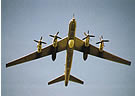
The Indian Navy’s interest in joining the MMA program has already been communicated, and the Pentagon would possibly provide an answer through Defence Security Cooperation Group (DSCG) chief Lt. Gen Jeffrey B. Kohler. Some Indian Navy sources believe that a recent decision to spend $6 billion on 50 Boeing civil jets for Air India could incline Boeing toward a favourable response. The P-8A matches the operational profile currently assigned to the Indian Navy’s Russian-made Tupolev-142 “Bear” and Ilyushin-38 “May” long-range reconnaissance, maritime patrol and anti-submarine warfare aircraft.
These discussions come in the wake a recent visit to India by U.S. Secretary of State Condoleeza Rice, in which the USA expressed its desire to substantially upgrade their strategic relationship. Given the two nations’ shared interest in an arc that stretches from the Staits of Malacca to the coast of East Africa, many analysts see naval cooperation as the likely linchpin of their future military relationship. Washington’s recent offer of at least 12 P-3C Orions would match India’s requirements profile immediately, but participation in the P-8A offers an aircraft with superior performance in all respects plus accompanying strategic, industrial, and prestige benefits. Some analysts consider the request a sort of test by India of its long-term importance to the USA.
UPDATE: A bid involving eight P-8 MMAs was submitted to India for its Maritime Patrol Aircraft competition.
What about sales beyond India?
There are something on the order of 225 P-3 type aircraft flying on behalf of 15 countries. Some nations who fly the P-3 already have a natural interest in the P-8, while others like India recognize its obvious usefulness for both the diesel submarine threat and for a variety of operations that could be related to the war on terrorism, anti-drug efforts, et. al. As such, the market opportunity for the MMA could be quite substantial.
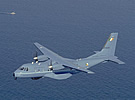
One important limiting factor, however, could spring from a combination of the EU’s focus on developing a rival defense industry, and European states’ reduced need to patrol long sea lanes in the absence of a global Soviet threat. European nations operating the P-3 may gravitate toward smaller maritime patrol aircraft like the French Atlantique ATL3, therefore, and the EADS/CASA 235MP Persuader (already ordered by Spain, Indonesia, Ireland, Turkey, UAE, and the US Coast Guard). Initial designs are even appearing in this class for executive jet aircraft equipped with maritime surveillance radars and related gear.
Given that many nations’ maritime surveillance and attack requirements make the P-8’s range and endurance parameters unnecessary, it’s very possible that the EU’s moves will successfully bifurcate the global maritime patrol category into a broad class of nations who buy smaller aircraft, and an elite few with more extensive requirements who buy aircraft in the P-8A class.
Program Updates
* Navy News, via Military.com (Jan 9/07) – P-8A Renamed Poseidon
* Raytheon (June 6/06) – Raytheon P-8A MMA Radar Receives New AN/APY-10 Nomenclature
* DID (April 17/06) – India’s Navy Holding Maritime Patrol Aircraft Competition (updated). Boeing’s P-8A MMA is a contender.
* DID (Feb 06/06) – ACS Failure Fallout: Boeing to Offer SIGINT 737 (updated). The P-8A team is involved, and the two aircraft will share some common systems.
* DID (Dec 12/05) – $96.5M to Refine USA’s Main Airborne Maritime Surveillance Radar. This modification continues the refinement of the AN/APS-137D(V)5 maritime radar system, by exercising an option for the development, testing, and incorporation of enhanced precision targeting. DID explains what this radar does… and an iteration of this radar will be installed on the P-8A.
* DID (Dec 2/05) – Global Hawk UAV Prepares for Maritime Role (updated)
* DID (Nov 24/05) – Boeing Wins $24M for P-8A & BAMS-Related Software Development
* DID (Aug 24/05) – Follow-Up: Rear Adm. Michael L. Holmes on The USA’s P-3C Force
* DID (June 7/05) – P-8A alters wing design.
Additional Readings & Sources
* Our readers supplied some answers re: Japan’s absence from the list of partners. See: Japan’s P-X Maritime Patrol Aircraft
* India Express (May 3/05) – Navy Eyes New Boeing, Awaits Signal
* Avionics Magazine – B737 Joins the Navy. Excellent treatment of the P-8A’s electronics.