

(click for alternate view)
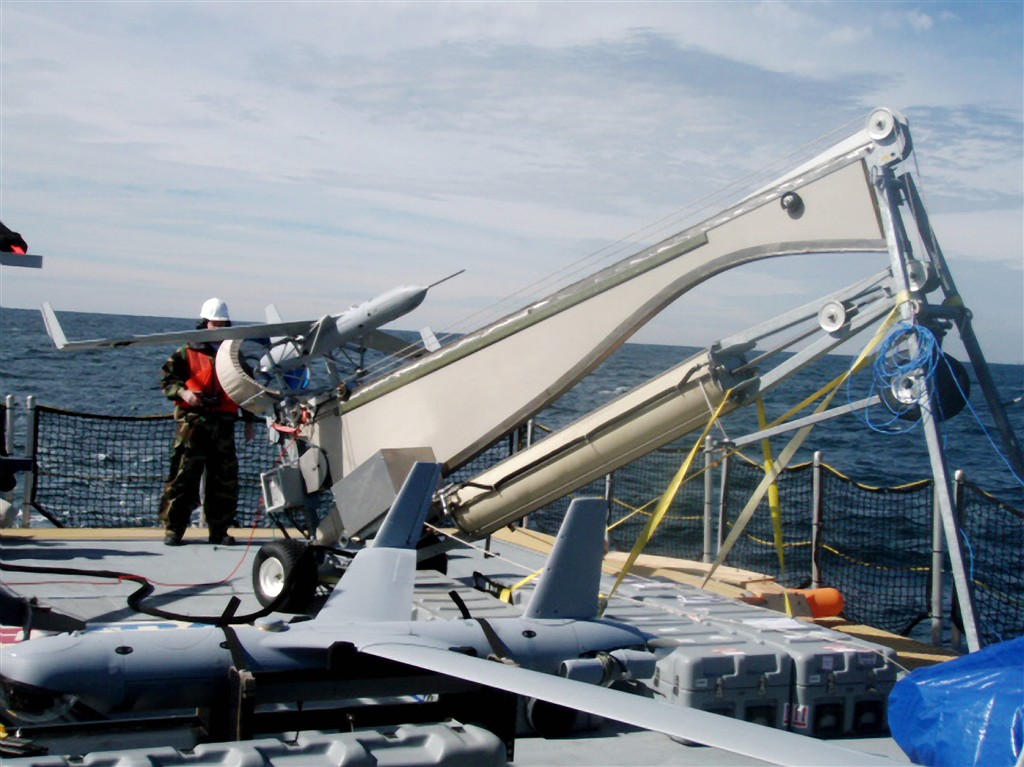
Boeing Phantom Works and a team of U.S. bio-defense companies have been given a two-year $8.2 million Phase I contract to modify the Boeing/Insitu ScanEagle unmanned air vehicle (UAV) to look for biological warfare agents as part of a program funded by the USA’s Defense Threat Reduction Agency (DTRA). Under the Biological Combat Assessment System (BCAS) Advanced Technology Demonstration (ATD) program, the DTRA and the Boeing-led team will work with U.S. Pacific Command and the U.S. Navy Third Fleet to design and develop a remote sensor system that can assess battle damage and collateral effects, and also locate, track, collect and detect simulated biological warfare agents in a designated area.
The team will integrate the sensor system into the Boeing-Insitu ScanEagle UAV and then will demonstrate the system’s capabilities in flight tests. Successful flight tests will lead to a possible Phase 2 follow-on contract and limited production options with the DTRA worth approximately $15 million.

This is the first time Boeing has served as a lead systems integrator on a program directed solely toward chemical and biological defense, so they’re drawing on scientists and engineers from across the company and industry. Industry team members include the Midwest Research Institute, Applied Research Associates and Steris. Internal Boeing participants, meanwhile, will be drawn from Boeing Commercial Airplanes, the Advanced Systems group of Integrated Defense Systems, and the Engineering & Information Technology and Advanced Homeland Security groups within Boeing’s Phantom Works unit for advanced R&D. See Boeing’s June 2006 release | The Bright Onyx sensor contract | Boeing’s March 2008 release.