


(click to view larger)
The USA’s C-130E/H medium air transport fleet suffers from 2 key problems: (1) many aircraft, especially Air National Guard planes, aren’t flyable, or won’t remain so much longer; and (2) their avionics are too old to meet modern standards for flight in civil airspace, just as standards are set to tighten in 2015.
The 1st problem is being addressed by major structural rework, inspections, and groundings. The 2nd problem was supposed to be addressed by the C-130 AMP program, begun in 2001 in order to improve aircraft fight-readiness, flight times, flexibility, and fuel use. Higher than expected costs left the program yo-yoing between possible cancellation and slowed progress over the last few years, and the near-death experiences eventually caught up to it. C-130 AMP was cancelled in the FY 2013 budget, while the USAF searches for alternatives that it might be able to afford. A study by the Institute for Defense Analyses (IDA) came up with such options that could deliver most of AMP’s capabilities for a significantly lower price tag.
The C-130 AMP

(click to view full)
The C-130 AMP program was originally supposed to cost $7 million per aircraft, in order to consolidate 13 Mission Design Series sets into one common core avionics suite with 5 mission families: Combat Delivery (C-130 AMP), and 4 unique Special Operations sets which would come under a separate contract.
The central element in both is Communication, Navigation, Surveillance/ Air Traffic Management (CNAS/ATM) compliance, which is required in order to fly in civil airspace without a waiver. It features night-vision compatible digital displays, and the 737 commercial airliner’s proven flight management system. American KC-135 aerial tankers are receiving their GATM/ PACER CRAG modifications for similar reasons.
A successful AMP program offers a number of benefits: simplified training, better reliability, improved navigation and communications, easier insertion of new technologies, and the fuel and flexibility benefits of all-airspace access. Sweden has modified its Tp84/C-130 aircraft for exactly those reasons.
On the other hand, programs of this type can be difficult. They involve significant wiring replacement throughout the aircraft, as well as integration of new equipment with older airframes and their existing gear. The USA’s much larger C-5 Galaxy fleet has encountered serious cost overruns in its own AMP/RERP program, and the C-130 AMP was no different.
Turbulent Passage

(click to view full)
By 2005, the 434-plane C-130 AMP had risen to $9 million per production aircraft. In 2007, the program was forced to declare a cost growth breach under Nunn-McCurdy laws. The program was re-baselined to 268 planes, then cut to 221, and has remained on cost and schedule with respect to the changed baseline. In a tight budget environment, however, the USAF has become less supportive. The Milestone C approval required to enter Low-Rate Initial Production has been held up, and December 2009 comments by USAF Chief of Staff Gen. Norton Schwartz suggested that the USAF was looking to scrap the program in favor of less complete, and less costly, retrofits.
By that time, Boeing had 3 American AMP aircraft flying at Edwards AFB and Boeing facilities in San Antonio. Those 3 aircraft are currently slated for delivery to the future trainers at Little Rock AFB’s 314th Airlift Wing, in Arkansas, in early 2010. The firm also had its simulator declared ‘ready for use,’ and had 2 more assembled AMP kits awaiting Milestone C and LRIP approval to begin installation. The firm is still working to reduce overall costs toward the $7 million that was originally promised, however, and has been holding lean events and other workshops with key suppliers to that end.
Until Milestone C approval in June 2010, the C-130 AMP program was in a sort of limbo. Officially, it was still underway, and contracts exist to support continued work with the 3 existing test aircraft. Unofficially, the proposed 24 LRIP aircraft and 194 full rate production aircraft (now down to 221 total, incl. 3 test aircraft) awaited decisions by the USAF, the Pentagon, and Congress.
Before June 2010, some reports talked of cancellation. Others discussed an expected program re-compete involving Boeing, C-130 builder Lockheed Martin, and BAE Systems, once the LRIP planes had been delivered. Other sources suggested the possibility that the program would receive approval and continue, possibly with reduced numbers of aircraft.
These conflicting accounts were unsurprising. They stem from a basic 4-way conflict, which the parties involved still haven’t resolved.
Boeing was working to do its best to bridge the cost gap, tout the long term savings, and make C-130 AMP more and more of a flying reality, in order to make it harder to cancel.
The USAF has little budget room, and seems to prefer a future course of more limited upgrades, and/or shrinking the Air National Guard (ANG) units.
Congress, who sees those ANG units as important sources of jobs-in-district, continues to resist any efforts to retire aircraft, even when the aircraft in question aren’t safe to fly any more.
The Pentagon, led by Secretary of Defense Robert M. Gates, continued to look for programs to kill, and had faced down Congress on issues it deemed important. That hasn’t changed, either, especially with huge defense cuts looming. In 2009, Forecast International’s Aerospace/Defense Retrofit & Modernization Editor, Adam Feld, had this to say:
“The Navy is also seeking funding for 47 Navy and USMC aircraft, but the program has come under heavy fire due to its price tag. Even with Boeing trying to keep costs down, the Air Force just isn’t sure there’s room in the budget… Congress doesn’t appear all that enthusiastic about cutting the AMP. The United States has already spent about $1.5 billion on development and there’s also international interest to consider. Saudi Arabia is looking to spend as much as $800 million upgrading its own C-130 fleet, for instance. For the time being, Congress is funding the program but also deferring it. According to the FY10 budget request, we’re not going to see a real increase in production until 2015, which would give the global economy some more time to recover and may relieve some of the pressure to cut spending.”
That recovery hasn’t happened, and the 2013 budget sought to resolve the conflict by canceling AMP, even as the USAF’s long term plans acknowledge that it needs to keep many of its C-130Hs flyable. Leaving us with the same 4-way conflict, several years later.
Next Steps

(click to view full)
As of June 2010, the program had LRIP approval for a limited number of planes, which must be included each year in the Pentagon’s annual budgets.
LRIP Lot 1 production covered the 3 test planes already delivered so far. They will undergo Periodic Depot Maintenance at Warner Robins AFB. The next step was delivery to the USAF’s C-130 AMP schoolhouse at Little Rock AFB, AR for Initial Operational Test and Evaluation (IOT&E).
LRIP Lot 2 covered 5 planes, with the first 2 C-130s arriving at Warner Robins Air Logistics Center, GA in August 2010 and October 2010. The first 2 AMP kits have already been delivered, and the USAF performs the Lot 1 installations with Boeing’s assistance.
LRIP Lots 3-5 was to involve the other 15 planes approved in Milestone C. Overall, Boeing was to upgrade 5 planes, another contractor to upgrade 5, and Warner Robbins AFB to upgrade 10. At the end of this set, the USAF would have had 23 C-130 AMP planes, including the 3 initial test planes.
In early 2012, renewed reports surfaced that the Pentagon under new Secretary of Defense Panetta was preparing to end the C-130 AMP program. That became a concrete plan when the FY 2013 budget was submitted, and work has stopped on all but the first 5 planes. Support in Congress was lacking, even with pressures to keep National Guard bases that should have improved AMP’s odds. By mid-2014, Congress’ GAO backed an IDA study that made the case for cheaper alternatives, and FY 2015 has seen continued pressure to keep the program itself alive, without moving it into full production.
Contracts & Key Events
Unless otherwise specified, all contracts are awarded by Air Force Material Command’s 656th Aeronautical System Squadron at Wright-Patterson Air Force Base, OH, to Boeing in Wichita, KS. Note that Sweden’s C-130 AMP program falls under the same contract vehicle, but is covered in a separate article.
FY 2013 – 2014
July 17/14: Political. The Senate Appropriations Committee approves a $489.6 billion base FY 2015 budget, plus $59.7 billion in supplemental funding. It includes the AMP program, keeping it alive but not moving it forward in any big way.
C–130 Avionics Modernization Program. The Committee supports modernization of the C–130H fleet and understands the Air Force plans to operate approximately 150 C–130H models for the foreseeable future. As such, the Committee supports continuation of the C–130 Avionics Modernization Program [AMP] program to ensure the Air National Guard operates relevant and modernized aircraft. Therefore, consistent with the report accompanying S. 2410, the National Defense Authorization Act for Fiscal Year 2015, as reported, the Committee directs the Air Force to obligate prior year funds authorized and appropriated for the C–130 AMP program to conduct such activities as are necessary to complete testing and transition the program to production and installation of modernization kits.
The budget still has to be voted on in the whole Senate, then reconciled in committee with the House of Representatives’ defense budget, then signed into law by the PResident. Sources: DID, “FY15 US Defense Budget Finally Complete with War Funding”.
May 29/14: GAO/IDA. The Government Accountability Office reports to Congress that it concurs with the findings of a study from the Institute for Defense Analyses (IDA):
“IDA estimated that AMP’s costs for research, development, test and evaluation (RDT&E), procurement, and operation and support (O&S) over a 25-year period would total $2.137 billion—significantly higher than the estimated $1.531 billion for Option A and $530 million for Option B. Regarding benefits, IDA found that the lower-cost options offered nearly as much capability as AMP, and the study concluded that the Air Force should not pursue the C-130 AMP program as currently defined.”
Option A would still replace older technology gauges with multi-function displays, and replace the current self-contained navigation system (SCNS) with a more modern SCNS capable of better location and planning precision. Option B would do neither of those things, while making other improvements. Both would still require a navigator, which adds to long-term costs. On the other hand, combat experience in the navigator-less C-130J shows that you often need to add a “3rd pilot” anyway on dangerous missions.
The overall cost range estimate for AMP modifications was between $14.3 – 19.5 million per plane. AMP’s best mission-capable improvement over existing planes was just 1.4%, so that wasn’t a notable benefit. The biggest likely problem without AMP would be added waits at airfields, which could affect up to 33% of C-130H missions. Option B planes would also be barred from certain helpful altitudes and routes, which would affect maximum capacity and range but wouldn’t hinder the majority of missions.
May 23/14: Politics. The Senate Armed Services Committee has completed the mark-up of the annual defense bill, which passed by a 25-1 vote. The Senate bill would provide $25 million for procurement and installation of C-130 upgrade packages. It’s a very small amount, and must still survive reconciliation with the House bill. Sources: Delaware News Journal, “House, Senate bills hopeful signs for state National Guard”.
May 5/14: Politics. The House Armed Services Committee added $73.8 million to the budget bill for upgrades for the C-130H fleet, most of which would go to the AMP program.
“The committee believes that by failing to take actions to modernize the C-130H fleet in the very near term with C-130 AMP and propulsion systems upgrades, [recapitalization and sustainment costs] will become so cost prohibitive in the future that the only course of action available to the Secretary will result in the divestiture of the C-130H aircraft from the Air Force inventory…. Knowing that the majority of the C-130H fleet resides within the Reserve Components of the Air Force… the committee is concerned… if the aircraft is to have a service-life through 2040 as currently planned.”
Sources: Defense News, “HASC Markup Limits Air Force Options on A-10, U-2”.
FY 2012

(click to view full)
Sept 20/12: What now? US AMC director of requirements Rowayne Schatz says of the AMP program that:
“While it was a great upgrade… it was still the same size cargo compartment, the same engines, and basically you got the same capability of the legacy aircraft in many ways.”
Well, yes, that was sort of the idea inherent in the program. AMC is reportedly looking at less comprehensive upgrades that some US allies have already installed, but they have no envisioned date for an RFP. Current estimates have reduced the expected program to 188 planes (though note 184 in the March RFI), if indeed anything survives the coming budget battles. Aviation Week.
July 17/12: #5 delivered. C-130 AMP #5 is delivered to Little Rock AFB, AR, while Boeing touts future savings from the program, in hopes that it will be saved:
“The integration of the cockpit reduces flight crew workload by allowing the aircraft to be operated without a navigator, saving the Air Force about $1 billion over the entire fleet.”
June 25/12: A $10.6 million cost-plus-award-fee contract, for cost growth to on the AMP program. Work will also be performed in Oklahoma City, OK, and is to be complete by Feb 28/14 (F33657-01-C-0047, PO 0222).
March 2/12: Plan B? The USAF issues an “Optimize Legacy C-130 CNS/ATM RFI“, as FBO.gov solicitation #RFIC130CNSATM. Can they get full airspace access for less?
“This objective is planned to be achieved through an avionics upgrade of an estimated 184 C-130H combat delivery fleet aircraft (H1, H2, H2.5, H3) by replacing and/or adding equipment necessary to meet the mandated Air Force Navigation/Safety modifications and CNS/ATM requirements as annotated in the attached draft requirements table (Attachment #4).”
Plan B RFI
Feb 13/12: Canceled. The USA’s FY 2013 budget documents include an Air Force decision to cancel the C-130 Avionics Modernization Program. The USAF has put all new C-130 AMP contract awards on hold, and postponed C-130 AMP initial operational test and evaluation, but existing contract items through to the AMP kit install on a 5th C-130 aircraft are continuing.
If the measure is approved by Congress, it’s expected to cost Robins AFB, GA about 228,000 workload hours between FY 2012 through 2015. About 1/3 of AMP updates to 221 C-130H aircraft were planned for Robins AFB. See also WRWR.
Canceled
Jan 12/12: AMP’s End? Bloomberg reports, in advance of the Pentagon’s planned Jan 26/12 announcement:
“The Pentagon has canceled a 10-year- old program that has Boeing Co. upgrading C-130 Hercules transports with modern cockpit electronics, according to two government officials.
The move saves almost $4 billion, including $2.22 billion planned from 2013 to 2016, according to an Air Force program document. The Air Force recommended the program termination and Pentagon planners accepted, said one of the officials familiar with the decision, who spoke on condition of anonymity because it hasn’t been announced.”
Jan 3/12: Boeing and the USAF’s Warner Robins Air Logistics Center mark delivery of the 1st C-130 AMP aircraft modified by Warner Robins ALC, and the 4th overall to be delivered to Little Rock AFB, AR. The 5th and last plane that will participate in Initial Operational Testing and Evaluation (IOT&E) at Little Rock AFB is scheduled for delivery in February 2012. Boeing.
FY 2010 – 2011
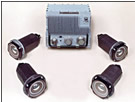
June 2/11: A $61.1 million firm-fixed-price contract modification for the C-130 AMP program’s LRIP Lot 2 production, part 2.
The order involves 2 C-130 AMP kits, plus engineering and program management support, initial spares and support equipment for Little Rock Air Force Base and St. Joseph’s Air National Guard Base, a functional test bed modification, a C-130 AMP part task trainer, and a C-130 AMP Weapon System Trainer (FA8625-08-C-6481 PO0020).
LRIP Lot 2 will include 5 planes in total, and this contract makes 6 kits ordered since LRIP began. The training devices will be developed at supplier CAE USA’s Tampa, FL facility, and delivered to the Arkansas Air National Guard C-130 AMP training center at Little Rock Air Force Base, AR in 2014. See also Boeing release; and Oct 22/10, June 24/10 entries.
April 4/11: A $6.8 million C-130 AMP contract modification funds change proposal 0610: “Low Rate Initial Production engineering drawing updates for kit proof/final physical configuration audit and CDRL 0001.” Needless to say, the original planes did not have full engineering models like the exact 3-D representations used today.
Work will take place in Wichita, KS (F33657-01-C-0047, P00183).
March 31/11: A $20.1 million fixed-price contract modification for the C-130 avionics modernization program. Work will be performed at Long Beach, CA (F33657-01-C-0047-P00189).
March 17/11: A $31.2 million firm-fixed-price contract modification funds initial efforts to support C-130 AMP low rate initial production (LRIP) Lot 3. It involves 2 AMP kits; engineering support; integrated logistic support; operations testing and evaluation support; support equipment and installation tooling for both the source familiarization phase contract winner and Boeing (vid. “Next Steps,” above); type one maintenance training; and long-lead items for the Weapons System Trainer.
Work will be performed in Long Beach, CA (FA8625-08-C-6841/ P0002).
Oct 22/10: A $19.1 million contract modification to support 2 C-130 AMP kits at Warner-Robins ALC, for LRIP Production Lot 2. At this time, all funds have been committed (FA8625-08-C-6481; P00021).
Oct 5/10: Boeing received a $24.3 million contract modification for the C-130 avionic modernization program, and all funds have been committed (F33657-01-C-0047; PO 0192).
Aug 19/10: Boeing announces that Headquarters USAF Directorate of Operations (HQ USAF/A3O) has endorsed the company’s C-130 AMP Head-Up Display (HUD) and Head-Down Primary Flight Display (HDPFD) as the aircraft’s primary flight references, after 4 years of design reviews, lab evaluations and demonstrations. Boeing C-130 AMP program manager Mahesh Reddy:
“This endorsement means C-130 AMP pilots can now use the HUD as their sole primary flight reference, allowing them to use their head-down displays for other data. We involved the Air Force customer from the beginning of the design reviews. This allowed them to ask questions along the way, become familiar with the product and make all necessary adjustments to the HUD design.”
Aug 17/10: The Pentagon releases its August 2010 Selected Acquisitions Report, covering major program changes up to June 2010. It includes:
“C-130 AMP (Avionics Modernization Program) – The SAR was submitted to rebaseline from a Development to a Production Estimate following approval of Milestone C (Low Rate Initial Production) in June 2010. Program costs decreased $52.6 million (-0.8%) from $6,352.9 million to $6,300.3 million, due primarily to a revised cost estimate in support of the Milestone C decision.”
SAR program estimate
Aug 2/10: Boeing is moving its C-130 AMP and B-1B bomber modernization programs from Long Beach, CA to Oklahoma City, OK over the next 2 years, in order to cut costs. The move will begin with C-130 AMP starting in the Q1 2011 and conclude by the end of 2012 with the move of the B-1 Program.
The programs now employ about 800 people. During the move, some employees will be relocated, while other positions will be posted and hired locally in Oklahoma City, and about 550 will be relocated. The remaining positions at Long Beach will be reduced from the programs over the next 2 years as contracts are fulfilled. Boeing Global Services & Support (GS&S) Maintenance, Modifications & Upgrades (MM&U) division VP Mark Bass was to the point:
“…as we reviewed our anticipated operating costs for the next several years, it became clear that Boeing needs to take major actions on these programs in order to remain affordable for our customers.”
Out of Long Beach, CA
June 24/10: Milestone C. Boeing announces that the C-130 AMP program has passed its Milestone C program review, and received approval for low-rate initial production (LRIP) of 20 more planes. Milestone C includes engineering and manufacturing reviews, and submission of an extensive flight-test program. After talking to Boeing, DID can report additional details.
LRIP Lot 1 production covered the 3 test planes already delivered so far. They will undergo Periodic Depot Maintenance at Warner Robins AFB. The next step is delivery to the USAF’s C-130 AMP schoolhouse at Little Rock AFB, AR for Initial Operational Test and Evaluation (IOT&E).
LRIP Lot 2 will include 5 planes, with the first 2 C-130s arriving at Warner Robins Air Logistics Center, GA in August 2010 and October 2010. The first 2 AMP kits have already been delivered, and he USAF will perform the Lot 1 installations with Boeing’s assistance.
LRIP Lots 3-5 will involve the other 15 planes approved in Milestone C. Overall, Boeing will upgrade 5 planes, another contractor will upgrade 5, and Warner Robbins AFB will upgrade 10. At the end of this set, the USAF will have 23 C-130 AMP planes, including the 3 initial test planes. Boeing.
Milestone C
April 1/10: The Pentagon releases its April 2010 Selected Acquisitions Report, covering major program changes up to December 2009. The C-130 AMP qualifies as a Significant Breach, with Unit cost increases of 15-25% from the currently-accepted baseline, or 30-50% from the original baseline:
“C-130 AMP (Avionics Modernization Program) – The PAUC (Program Acquisition Unit Cost) increased 7.3% and the APUC (Average Procurement Unit Cost) increased 17.9% to the current APB (Acquisition Program Baseline) because the program amended its strategy to provide for depot installs during the Future Years Defense Program (FYDP) and amended its estimate for the level of spares. It also added costs for training systems not previously included, adjusted for current inflation indices, and incurred a one-year gap in production.”
SAR – cost breach
March 30/10: GEO Report. The US GAO audit office delivers its 8th annual “Defense Acquisitions: Assessments of Selected Weapon Programs report. It pegs total costs of the C-130 AMP program at $4.03 billion, including $756.4 million R&D, but adds that “cost updates are pending the C-130 AMP program’s production decision.” The GAO adds:
“…the program’s production decision has been delayed several times since it was restructured in 2008 following a Nunn-McCurdy unit cost breach of the critical threshold. The reasons for the delays include concerns over the program’s acquisition strategy and affordability, and software testing and documentation issues. These issues have been addressed, and program officials said that the program’s production decision is tentatively planned for spring 2010. A proposed [2nd phase] effort to provide avionics upgrades to additional C-130 aircraft [beyond the planned 221] will also be evaluated as part of future budget cycles.
“…The C-130 AMP program’s three current critical technologies – global air traffic management, defensive systems, and combat delivery navigator removal – are mature. After a Nunn-McCurdy unit cost breach of the critical cost growth threshold, the program was restructured and the number of critical technologies was cut in half from six to three. The removed technologies were intended for Special Mission C-130 aircraft configurations, which were eliminated from the program during the restructure.”
March 3/10: A $36.4 million contract for C-130 AMP low rate initial production (LRIP) Lot 1 modification. At this time, $8.2 million has been committed (FA8625-08-C-6481, PZ0010).
Boeing confirms that this award does not represent a Milestone C/ low rate production decision, which is scheduled for March 24/10. Instead, it finishes paying Boeing for development engineering, and for the 2 assembled AMP kits that await Milestone C approval to begin installation.
Jan 20/10: A $6.45 million contract to add the AN/AAR-47Av2 Missile Warning System to the C-130 Avionic Modernization Program. At this time the entire amount has been committed (F33657-01-C-0047, P00173).
Dec 14/09: A $44.1 million, fully-committed contract for the C-130 Avionic Modernization Program. All funds have been committed (F33657-01-C-0047, P00176).
FY 2006 – 2009

(click to view full)
Sept 14/09: Training. Boeing announces that it has completed delivery of the U.S. Air Force’s first simulator for the C-130 Avionics Modernization Program (AMP) to Little Rock Air Force Base, AR. Boeing is scheduled to deliver a suite of trainers over the next several years to support the AMP training program at Little Rock, with each piece of training equipment offering a different level of instruction to train crew members.
At this juncture, Boeing says that 3 C-130 AMP aircraft have completed initial flight testing, and are undergoing additional evaluation flights with the Air Force before the AMP upgrade kits are installed on the fleet. Boeing release.
July 20/09: Training. The C-130 AMP Weapon System Trainer (WST) passes government acceptance testing, and is declared “ready for use”. The full-motion, high fidelity simulator uses the same software as the C-130 AMP aircraft, which means that any future modifications can be made to the aircraft and the training devices at the same time.
Boeing partnered with veteran C-130 simulator firm CAE USA in Tampa, FL to integrate the new AMP cockpit into the simulator, and to perform similar modifications for other training devices in the suite. Source.
Sept 5/08: Software. Boeing announces that it has completed AMP software development.
April 9/07: The C-130 AMP is listed in the Pentagon’s Selected Acquisition Reports, because of cost growth:
“Program costs increased $1,047.8 million (+21.2 percent) from $4,933.2 million to $5,981.0 million, due primarily to increases in labor rates and install hours (+$691.4 million) and increases in mission support equipment, simulator/trainers, depot costs, and other weapon system costs (data, peculiar support equipment, interim contractor support and training (+810.5 million). These increases were partially offset by a quantity decrease of 166 aircraft from 434 to 268 aircraft (-$560.6 million).”
Read “Pentagon Selected Acquisition Reports: April 2007” for fuller coverage.
SAR – costs more, for fewer planes
Sept 19/06: 1st flight. Boeing flies the first C-130 AMP aircraft, designated H2, from Lackland Air Force Base in San Antonio, TX. Boeing inducted the aircraft in January 2005, after accepting it from Maxwell Air Force Base in Montgomery, AL. Boeing has also has inducted the second aircraft, H2.5, and has initiated the modification process. Boeing release [incl. embedded video].
1st C-130 AMP flight
July 20/06: Training. Boeing in Wichita, KS receives a $56.4 million cost-plus-award fee contract modification for C-130 AMP program engineering change proposal 1004R1, training part II. The contract covers simulator modifications.
At this time, $6 million has been committed. Work will be complete in January 2010 (F33657-01-C-0047/P00114). See also Boeing release)
Feb 6/06: A $5.9 million cost-plus award fee contract modification. It covers Engineering Change Proposal (ECP) 00904R1 for the C-130 Avionics Modernization Program, which will allow AMC to update their pre-AMP Baseline Configuration data for C-130H (H1, H2, H2.5, H3), and LC-130H models. At this time, $3.2 million has been committed (F33657-01-C-0047/P00077).
FY 2001 – 2005
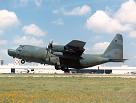
Combat Talon II
April 30/04: MC-130 AMP. A $58.8 million cost-plus award-fee contract modification covers Engineering Change Proposal 0303 – Special Operations Forces (SOF) acceleration. Boeing will deliver 2 avionics modernized MC-130 Combat Talon aircraft, no later than CY 2008.
Work will be performed in Long Beach, CA, and $14.4 million of the funds has been committed. This contract will end in December 2009 (F33657-01-C-0047, P00050).
Sept 22/03: A $183 million cost-plus award-fee contract modification, as part of a C-130 AMP rebaseline to recognize cost growth.
Boeing will perform this effort in Long Beach, CA, but no funds have been obligated. This is simply an umbrella contract that allows the USAF to place orders as needed; it will run until January 2010 (F33657-01-C-0047, P00043).
May 23/03: A $9.7 million cost-plus-award-fee contract modification to fund an engineering change proposal related to the C-130 AMP’s electrical power standardization requirements. Work will be performed in Long Beach, CA, and will be complete in September 2008. Air Force Material Command at Wright-Patterson Air Force Base, OH manages the contract (F33657-01-C-0047, P00030).
Aug 20/02: C-130 AMP added to the Pentagon’s selected acquisition reports for major programs, as a new entry. US DoD release/SAR.
July 30/01: Boeing subsidiary McDonnell Douglas Corp. in St. Louis, MO received a $1 billion firm-fixed-price contract to provide for aircraft modifications, integration support, and other services outside the scope of the avionics modernization program. It will include aircraft modifications, integration support and other services outside the scope of the AMP.
Funds on this contract will be obligated as individual delivery orders are issued during the course of the contract’s ordering period. The 1st delivery order will be for performance of a study of the C-130’s air data system; an expected follow-on contract for kit production installation is anticipated to follow this effort.
At this time $519,939 of the funds have been obligated. Solicitation began in April 2000, negotiations were completed February 2001, and work is to be complete in September 2013. Work will be performed in Long Beach, CA, and at other locations (F09603-01-D-0045, 0001).
AMP Companion Contract
July 30/01: McDonnell Douglas Corp. in St. Louis, MO received a $484.7 million cost-plus- award-fee contract to develop and build avionics modernization program kits for the C-130 aircraft. At this time $49.8 million of the funds have been awarded. Solicitation began April 2000, negotiations were completed in February 2001, and work is to be completed in September 2007.
McDonnell Douglas will perform this effort in Long Beach, CA, and at other locations (F33657-01-C-0047).
June 4/01: Boeing subsidiary McDonnell Douglas Corp., in St. Louis, MO is selected to receive a $485 million cost-plus-award fee and a $1billion indefinite-delivery/ indefinite-quantity contract related to the C-130 AMP, contingent upon approval by the Defense Acquisition Board.
Development of AMP kits is expected to extend through September 2007. Funds will be obligated as individual delivery orders are issued during the course of the contract’s ordering period, which will extend through September 2013. Air Force Materiel Command at Wright-Patterson Air Force Base, H will manage the contracts (F33657-01-C-0047 and F09603-01-D-0045). See also Boeing release.
Development contract
Additional Readings
* Boeing – C-130 Avionics Modernization Program (AMP).
* DID – Sweden Modernizing C-130 – Tp84 Avionics.
* US GAO (May 29/14, #GAO-14-547R) – Assessment of Institute for Defense Analyses’ C-130 Avionics Modernization Program Analysis.
* Elbit Systems (May 24/11) – Elbit Systems to Upgrade Romanian Air Forces’ C-130 Transport Aircraft Under Contract Valued at $18.6 Million. Romania has 4-5 C-130B/H planes. Illustrates that Boeing isn’t the only firm doing this kind of work for global fleets.
* Forecast International (July 19/10) – C-130 Future Bright Despite Cloudy AMP.
* Defense News (Sept 15/09) – Air Force Looks To Cancel C-130 AMP.
* Boeing (June 4/01) – Boeing Selected to Modernize C-130. Modification kit installations were slated to begin in 2004 and continue through 2014, and reach a rate of about 70 per year at peak production.
