


(click to view full)
India’s slow-motion force modernization has made significant progress within its aerial transport fleet. Their AN-32s are being modernized, stretched C-130J Hercules have been bought for their special forces, and the IAF’s high-end IL-76s will soon be joined by 10 Boeing C-17 heavy transports. Now, at the very bottom of India’s fixed-wing transport force, it’s time to replace the 6 tonne capacity of the IAF’s 30 or so surviving 748M Avros. The planes are currently used for troop transport, communications, and training.
The 2 leading contenders are a familiar pair, and would be more like western counterparts to the higher-performance AN-32s. A number of other makes and models have been floated, which could make for an interesting competition if enough of them respond.
RFP: Terms & Contenders
(click to view full)
India issued its original RFP for up to 56 light cargo aircraft, with an estimated value of INR 130 billion. That was $2.34 billion when the RFP was issued, but the Rupees weakness (just $2.04 billion equivalent on Nov 12/13) may force India to spend more of its own currency for the same results. India would take delivery of the first 16 planes from the original manufacturer, then their chosen Indian partner would produce the other 40 under license. Planes #17 – 32 would also have 30% Indian content, and planes #33-56 would have 60% Indian content.
That workshare will require an Indian partner, but it can’t be HAL because they’re over-committed.
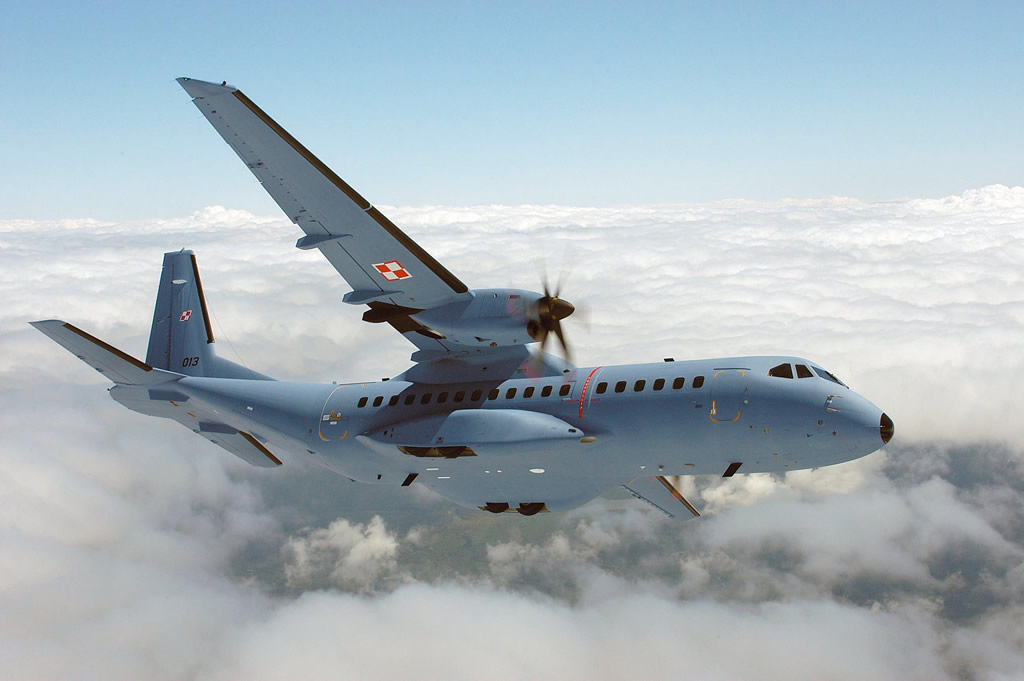
The 2 main contenders were the same pair of rear-ramp turboprops that dominate light tactical transport competitions around the world: Airbus Military’s C295, and Alenia Aermacchi’s C-27J Spartan. Each has won, and lost, its share of competitions.
The C295. It’s more cost-efficient to operate, which makes a big difference over its lifetime. It’s also closer to the Avro 748M conceptually, though its payload is 9.25 tonnes. Specialty variants include an airborne early warning variant that’s in development with Israel’s IAI, and a C295 ASW maritime patrol variant that’s already on offer for India’s medium maritime patrol aircraft needs. Work with Jordan is developing a gunship variant for counter-insurgency operations.
An alliance between Airbus and Tata offered the promise of a future private-sector Indian aerospace firm, with enough serious foreign backing that this program could turn them into a HAL peer competitor for other programs. Unfortunately, this team was also the only bidder. India will have to waive procurement rules that prevent contracts from sole-bidder competitions, or the competition will have to restart and the opportunity will be lost.

(click to view full)
The C-27J Spartan. Offers short-field takeoff performance, and the width and floor strength to handle loads like vehicles and small helicopters. On the flip side, it’s shorter than a C295, costs more to operate, and will carry fewer cargo pallets. Maximum payload is 11.5 tonnes, and the Spartan shares some engine and avionics commonalities with India’s C-130J fleet. Specialty variants include an AC-27J Praetorian gunship that’s in development with ATK.
The C-27J’s biggest problem in this competition is India’s AW101 VVIP contract, which has been canceled by a bribery scandal whose core allegations have been dismissed by an
Italian court. AgustaWestland, like Alenia, is a Finmeccanica company. Unless the C-27J is 1 of just 2 competitors with offers, the rules adopted by the new BJP government would prevent their bid from even being considered. Their plane isn’t a perfect fit, and if Finmeccanica believes they won’t be picked under any circumstances, why waste the money putting together a bid? They publicly declined.
Other contenders have been mentioned, but their odds are slimmer.
Antonov’s AN-148 regional passenger and cargo plane is the strongest “outside” contender. It’s high wing twin-jet design is unique in this field, and it can carry a mix of passengers and up to 9 tonnes of cargo. The plane has a number of other customers around the world, including countries with comparable climate variations and high altitude terrain. Indian airlines have reportedly ordered 18 of them, and there has been some talk of setting up some production facilities in country.
The problem is that some key technology is Russian, and the Russians aren’t cooperating with Ukraine. Which prevented Antonov from offering it to India. Lesser problems include high operating costs, and the Russian carrier Rossiya has cited operating efficiency below its Boeing 737s. Those costs were reportedly a big reason why Aeroflot declined to expand its order, though the Russian carrier also cited reliability issues.
India already flies An-32 light tactical transports, which are being modernized to An-32RE status. They’re a bit heavy for this competition, and any Antonov plane will now have to deal with the risk factor of being subject to disruption by the Russian-backed civil war.
Ilyushin’s IL-114 has been mentioned. It’s used as a regional airliner in Uzbekistan, whose 14-plane order made them the IL-114’s only customer. Only 7 remain in service, however, plus 1 plane that was resold to Russia’s Radar-MMS as an electronics testbed. Cargo capacity lists as 6.5 tonnes, and it has excellent low-speed loitering capability, but production has ended. It was recently rescued from this very unappealing combination by Russia’s invasions of Ukraine, which derailed purchases of the An-140T and caused Russia to revive the IL-112 as a military transport derivative. They didn’t offer it to India, though.

(click to view full)
Saab 340/2000 turboprops are also out of production, though military variants have been sold to Pakistan, the UAE, and other countries based on refurbished aircraft. Maximum cargo payload is around 6 tonnes, but it’s loaded through a side door, not a ramp. Saab’s regional turboprops have almost 500 models in service around the world, and are reportedly being offered as the base for India’s medium maritime patrol aircraft needs. Saab has been building Indian partnerships as part of its M-MRCA fighter bid.
One possible option would be to offer to restart turboprop production in India, with the intention of both winning Indian military contracts, and extending civilian sales in the region. The problem is, 40 aircraft isn’t a large enough number to justify that investment – and Saab reportedly wasn’t sent the RFP.
Contracts & Key Events

(click to view full)
Nov 3/14: 1 bid. Airbus and the Tata Group were the only bid submitted by Oct 22/14. Creating a production line for 40 planes is completely uneconomical, so even 1 bidder is an achievement. Asis so often the case, Indian procedures could derail it.
The problem is the lack of reasonable competitors, even without added economic hurdles. Antonov informed India that they couldn’t bid because Russia’s Voronezh Aircraft Production Association has severed ties, and they can only produce the aircraft by working together. Finmeccanica’s Alenia and Russia’s UAC-Ilyushin chose not to bid, Saab reportedly wasn’t solicited; and Boeing, Lockheed Martin, and Embraer were solicited, but have no real offerings in this capability class.
India now has yet another self-created defense dilemma. Their de facto ban of Finmeccanica from new contracts, following allegations of corruption that have failed in Italian courts, have predictably injured capabilities in other areas. Unless the IAF gets its way, and a top-level political decision is made to set aside India’s procurement laws against single-vendor competitions, this competition is blocked. Which means the Modi government’s golden opportunity to create a private-sector Indian military aerospace firm is also blocked. Will the Modi government bite this bullet? Sources: Defense News, “Ukraine Misses Deadline, Lone Bidder Remains for Indian Aircraft Competition”.
Oct 30/14: Alenia out. IHS Jane’s reports that Alenia is bowing out:
“The C-27J Spartan is the most modern multimission tactical transport aircraft available on the market…. The Indian Air Force [IAF] Avro Replacement programme instead calls mainly for a basic medium transport aircraft and, therefore, Alenia Aermacchi decided to not participate to the tender…. India remains a very strategic market for Alenia Aermacchi proprietary products…”
It is certainly possible to conclude that an RFP doesn’t value your product’s features enough to be competitive, and bow out. Short take-off and tactical vehicle carriage don’t seem to be emphasized in India’s competition. It’s also possible to conclude that the political environment won’t allow you to be picked, but still need a face-saving exit that doesn’t alienate an important market. Readers can decide for themselves which category this falls into. Sources: IHS Jane’s Defence Weekly, “Alenia decides not to contest Indian MTA requirement”.
Oct 27/14: Industrial. Press reports say that Airbus is on the verge of negotiating a partnership with Tata to manufacture aircraft for the defense sector. Airbus CN-235/ C-295 are the obvious option, but Airbus’ deep expertise could easily be bent toward other projects as well, including sub-contracting for other projects, helicopters, etc.
If carried out, this would be the 1st major defense sector tie-up under the new rules that allow 49%-owned joint ventures with foreign companies. The previous limit was 26%. Sources: Times of India, “Airbus may partner Tatas for manufacturing defence transport aircraft”.
Oct 4/14: Industrial. Defense News quotes an unnamed source, who says that the Indian government has been talking to major private sector industrial players about setting up a full production line for up to 250 Tejas Mk.2 fighters. That would certainly justify the investment. If carried out, it would do 3 big things: (1) sidestep HAL’s production difficulties by partly or wholly removing Tejas from HAL’s purview; (2) Create a full competitor to HAL in the aerospace sector; and (3) Turn the winner into India’s 1st major private sector defense firm.
Since it seems apparent that the Indian government would have to fund a new production line for HAL anyway, funding the line elsewhere and reaping the benefits of diversification and competition is a logical policy option. Especially since the resulting competitor would also be a potential source for programs like India’s light transport competition.
The challenge is that setting up a production line for modern combat jets isn’t simple, and some kind of partnership with a foreign firm like Boeing, Saab, Dassault, et. al. would almost certainly be required. Tata Group, Mahindra & Mahindra and Larsen and Toubro have been mentioned, and L&T Heavy Engineering President Madhukar Vinayak Kotwal has confirmed that discussions are taking place, but that’s all he is prepared to say. Watch this space. Sources: Defense News, “India Offers To Spend $12B To Break Monopoly”.
Sept 26/14: IL-114. After Russia’s invasions and annexation of Ukrainian territory break relations between the 2 countries, the An-140T can no longer serve as the planned An-26/ An-72 replacement. Russia’s response is to revive the IL-114, and the IL-112 military variant, both of which will be powered by Klimov TV7-117SM turboprops. Those engines offer a tradeoff of good fuel burn, in exchange for around 30% of the engine life compared to western alternatives. Digitization of the design with modern avionics etc. is also expected.
Russia wants a pair of IL-112s for flight and ground testing, and has reportedly offered to spend about RUB 8 billion (about $233 million) to complete development of a modernized IL-114 and the accompanying militarized IL-112. Meanwhile, local authorities in Samara have promised to invest between RUB 1 – 1.5 billion into Aviacor’s modernization. Aviacor is expected to replace An-140 production with the new IL-114, which might also replace the recently-stalled proposal for Rostec to license-build Q400 twin turboprops from Canada’s Bombardier for the Russian market. The Il-112 will reportedly go into production at the VASO plant in Voronezh, which is expected to discontinue manufacture under license of the Antonov An-148. Sources: AIN, “Russia Dumps An-140T Airlifter for Home-Made Ilyushins” and “Russia Looks To Resurrect Il-114”.
Sept 15/14: No bids. India had to extend the deadline to October 2014, after their Avro replacement tender attracted zero bids and just 2 firms turned up on Aug 28/14 to even indicate interest. That’s awkward.
Their main problem may be pretty simple: absent long-term expectations of sales beyond the Indian government, who is going to spend money to build a manufacturing facility with full airport rights for an order of around 40 planes? Approximately nobody. The problem is, someone has to do it if the private sector is going to get into the game as a legitimate competitor to state-run firms like HAL. One wonders if the solution is to split the industrial development angle from the specific transport competition, creating 2 sequential processes. Sources: India’s Financial Express, “Global Vendors Give A Miss to Defence Min’s $3.5-Bn Aircraft Project; Deadline Extended”.
No bids
July 21/14: HAL no! India’s Defence Acquisition Council clears a set of acquisitions worth Rs 21,000 crore (INR 210 billion / $3.493 billion). This includes Rs 12k – 13k crore project for the Avro replacement project, which may not be enough given the rupee’s recent fall.
New BJP Party defence and finance minister Arun Jaitley also pushed thorugh a provision that the private sector will be the sole player in making 56 transport aircraft to replace the IAF’s Avros, dealing HAL right out of the competition. India’s private sector firms like Tata, Reliance, Mahindra and L&T are expected to look for a foreign partner, and to use a foreign design, with 16 planes built abroad and 40 in India. The tender was reportedly sent to Airbus, Alenia, Embraer, Lockheed Martin, Ilyushin, Saab, and STE Ukraine.
The move stands to create a private sector competitor for HAL, but the firms in question will need to buy and build facilities that include airport rights and a production line. That may be hard to amortize over 40 planes; worse, all light transport candidates mentioned to date are either poorly-suited to civil aircraft sales, or have already been pushed out of the global market. That market will only become more crowded, if a HAL/CSIR project to develop a regional airliner bears fruit by the mid-2020s.
Finally, the tender must survive Indian politics. India needs a wider bidding circle than Airbus (CN235/ C295), Alenia (C-27J), and Ilyushin (?), if it wants to be certain of avoiding a trap in which Ilyushin’s Ukrainian location is deemed too precarious, Alenia’s candidacy is crippled by the AW101 contract’s bribery allegations, and Airbus becomes a sole bidder who can’t be awarded a contract under India’s byzantine rules.
Despite all of these considerations, if the Indian government is determined to introduce private-sector competition – and this one may be – they will find a way. Dassault Aviation quite liked Reliance Industries Ltd., and wanted to put them in charge of Rafale production in India, so it will be interesting to see if they bid and how they do. Sources: The Asian Age, “A boost for India’s aerospace industry” | India’s Business Standard, “Ajai Shukla: Midwifing new aircraft” | International Business Times, “What Does Indian Defence Get in Military Projects Worth ?34,260 Crore?” | Times of India, “Modi govt clears private sector entry into military transport aircraft project”.
RFP – private sector only
Feb 25/14: India’s Ministry of Defence clears INR 130 billion in military projects to go ahead, but delays 4 key initiatives, including this one. From The Times of India, “Decision on four key defence deals put off”:
“The proposed Rs 13,000-crore project to supply 56 transport aircraft to IAF, in turn, was meant to promote private sector entry into the domestic aerospace arena. But it has got stuck after heavy industries and public enterprises minister Praful Patel raised questions about why state-run units were being kept out of the project.”
Nov 11/13: Delay. India’s Defence Acquisitions Council extends the Avro replacement RFP by 3 months. The problem is the Congress Party’s Minister for Heavy Industries Praful Patel, who is pushing to keep state-run units (basically, Hindustan Aeronautics) in the project, despite their commitment and performance issues. “The matter is being examined in detail,” said an official. Sources: Times of India, “Antony defers decision on critical but controversial missile deals with Israel”.
Nov 27/12: RFP. Aviation Week reports that India has issued its Request For Proposals, and expects to begin deliveries within 4-5 years:
“The Indian air force (IAF) is looking at several options including IL-114 variants from the Russian Ilyushin Aviation Complex, Ukrainian An-148 Antonov, the twin-turboprop European EADS Casa C-295 and Italian Alenia C-27J Spartan medium-sized military transport aircraft.”
Subsequent reports add Embraer and Lockheed Martin (C-130J) to the list, and Embraer in particular is an unusual choice. India already flies C-130Js for their special forces, but their 20t medium transport niche is expected to be filled by the Indo-Russian MRTA collaboration, which will become a rival to both Embraer’s KC-390 and to the C-130J. Embraer does have smaller civilian ERJ/E-Jet airliners, but the KC-390 is their only military transport.
RFP
Sept 28/12: Industrial. StratPost reports that India’s plan to build most of its light tactical transports in India is hitting some financial roadblocks:
“After more than a year of discussion, it now appears that Indian industry has decided not to step up with bids to build the replacement aircraft, in partnership with foreign manufacturers, because of the financial infeasibility… The procurement was stipulated to have been under the ‘Buy and Make Indian’ channel under the Defense Procurement Procedure (DPP), for which only Indian companies could be the lead bidders, in collaboration with foreign manufacturers… [the problem is that] Indian industry has found the order to be too small to justify the capital expenditure…”
The estimated $200-250 million is a lot to invest in a project that ends at 56 aircraft. It’s probably a poor business decision, unless there’s a strong prospect of future sales beyond the IAF’s order, or of significant industrial offsets work from other IAF foreign aircraft buys. RP Defense.
July 27/12: Approval. The Ministry of Defense’s acquisition council gives the go-ahead for a global tender to replace the IAF’s 748M Avros, and sets out the terms of local manufacture: 1st 16 in India, 30% local content for the next 16 planes, then 60% local content for the final 24.
HAL won’t be participating, as they are: “already burdened with projects, such as the SU-30MKI production and upgrades of Indian air force’s aircraft fleet, including the Mirage, MiG 29 and Jaguar aircraft.”
That limitation will place the winner’s Indian partner in a unique position as a competing Indian aircraft builder. Larsen and Toubro, Mahindra and Mahindra, and Tata are all seen as potential partners for foreign competitors. UPI.
Additional Readings
* DID – C-17s for India.
* DID – India Buys 6-12 C-130J-30 Hercules for Special Forces.
* DID – MRTA: HAL and Irkut’s Joint Tactical Transport Project. Will be a twin-jet C-130J competitor in the 20t medium cargo class, but the C-130J is carving out a strong special forces niche, and India needs planes now.
* DID – India Refurbishing its AN-32 Transport Fleet. Light tactical transports.
