

(click to view full)
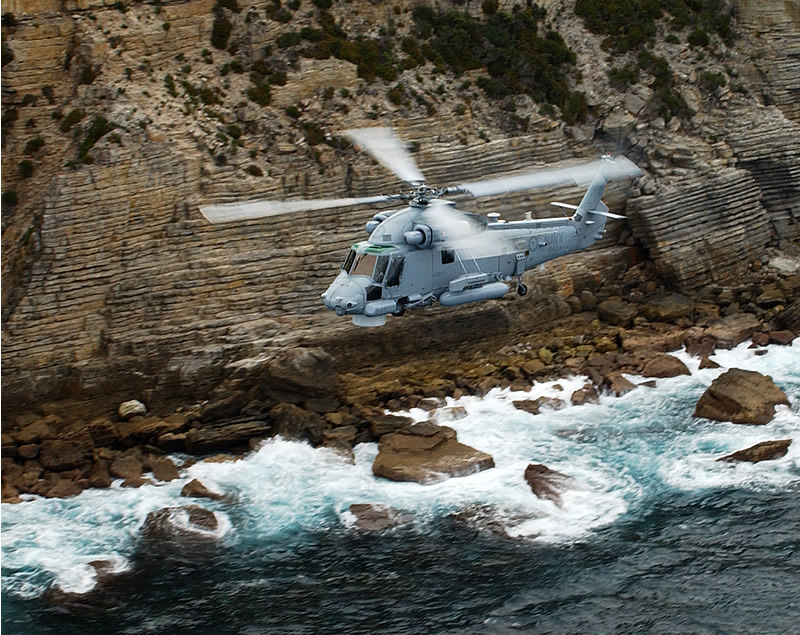
One country’s disaster can be another country’s good fortune. After Australia’s bargain-hunting naval helicopter program had turned into a A$ 100 million per helicopter upgrade nightmare, they had some unpleasant choices to make. In 2007, Australia’s Liberal Party government elected to continue the Super Seasprite program – but their successor Labor Party government reversed that decision in 2008, and come to an interesting agreement with Kaman: We stop development, you get the helicopters for resale, we agree on financial terms for both items.
In 2013, New Zealand decided that replacing their 5 existing SH-2Gs helicopters with 8 upgraded, low airframe life SH-2G(I)s was an attractive deal. Especially with missiles and training simulators thrown in. Australia’s problem had become their opportunity.
Super Seasprite: Programs & History
Australia’s Issues and Dilemmas
(click to view full)
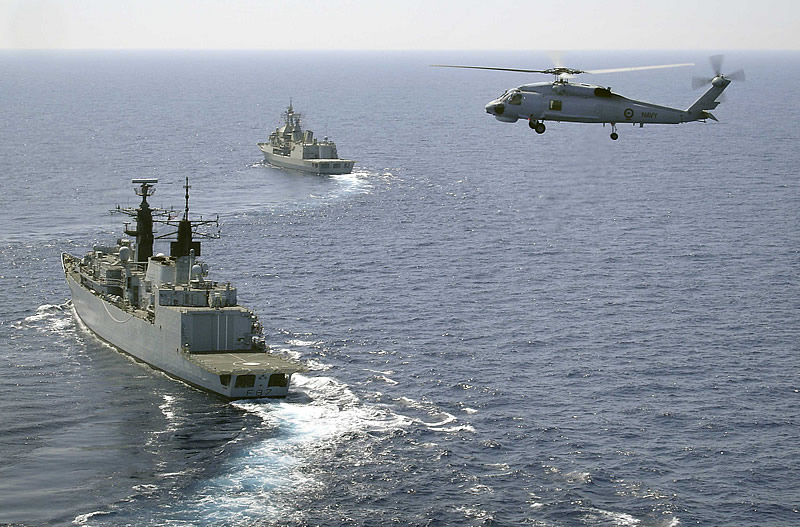
The SH-2G remains a good procurement case study, because it represented a difficult decision.
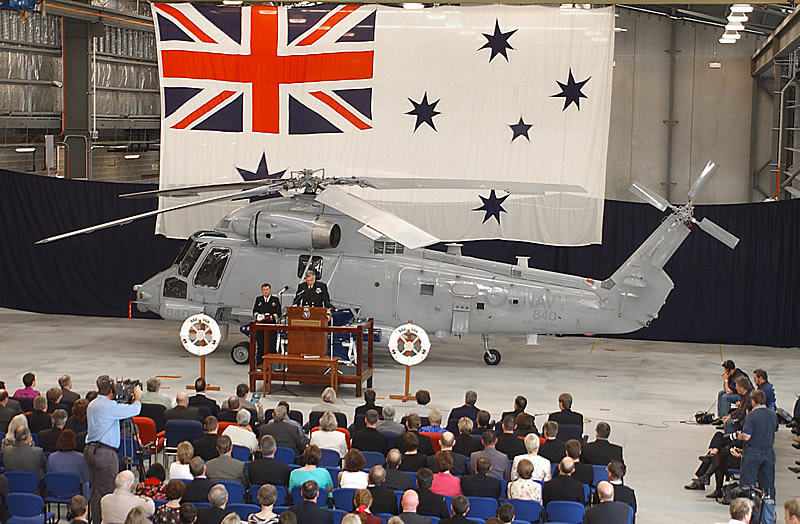
In 1997, Australia signed an $A 667 million contract with Kaman to purchase 11 upgraded SH-2G(A) “Super Seasprites,” with modernized avionics. This compact helicopter design was thought to be well suited to operation from the RAN’s ANZAC Class frigates, and even from patrol boats with helicopter decks. The first SH-2G(A) was unveiled in 2003, but by 2005 up to 40 deficiencies had been identified, including inability to operate in bad weather and low-light conditions, and inability to meet Australian airworthiness certification standards. Placing modern avionics into a 1960s airframe proved challenging indeed: the helicopters were restricted to “passenger and supply transport in good weather” in 2005, then grounded entirely in May 2006.
By 2007, the project was 6 years behind schedule, costs had risen over 50% to $A 1.1 billion (about $900 million) for 11 helicopters, and the program was being used as a negative case study in the Australian Defence College’s leadership and ethics course. Its per-helicopter costs of over A$ 100 million would have been enough to buy and equip any new naval helicopter on the market.
Worse, estimates required to get the Super Seaspites into service had to be considered mere estimates, given the project’s consistent history of unexpected issues. It was estimated that at least $A 45 million more and 29 months of work would be required to make them serviceable, with full operational status unlikely until at least 2010.
Which left Australia with a classic managerial sunk cost decision. Cancellation earlier in the program would almost certainly have been wise. By 2007, however, that wasn’t an option. The only question left for the program was Hamlet’s: To be, or not to be?
(click to view full)
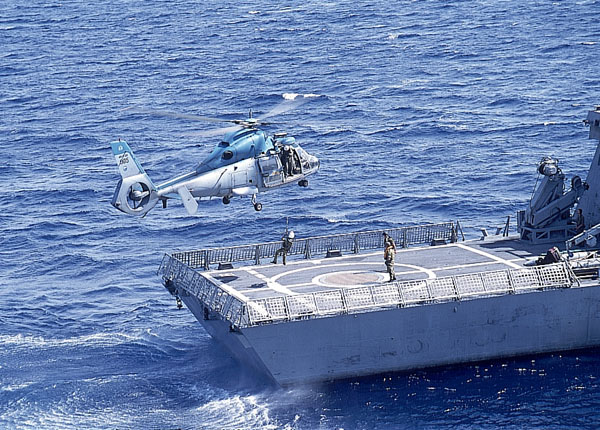
The remaining problems with the rebuilt SH-2Gs were not trivial. Their crashworthiness was below contemporary standards, the cockpit was too small for some crewmen, and there were problems with the combat system. Worse, the computerized flight control system tended to make unpredictable “hard-over” movements when Australia tried to operate it with 2 crew in “no hands” mode. The first 2 issues were unfixable given the limits of the helicopter’s basic design, and the latter 2 issues were long-standing software problems whose resolution was uncertain.
Alternatives included larger but developmental NH90-NFH naval helicopters to complement the Australian Army’s NH90-TTHs, proven Sikorsky Seahawks, as well as smaller machines like AgustaWestland’s Lynx family and Eurocopter’s AS565 Panthers. Panther and Lynx platforms carry less equipment than their larger counterparts, and sometimes their sensors are also less sophisticated.
Regardless of the comparisons, however, the bottom line remained the bottom line. If proceeding with the SH-2G(A) had a strong likelihood of costing less than starting over with another platform, then the correct managerial decision is to ignore sunk costs and proceed on the basis of “least cost to meet requirements.”
Could the Sea Sprites can be rendered serviceable, and perform adequately in their role, for less than the alternatives? Different governments looked at the program, and made their decisions.
Decisions, Decisions
(click to view full)
A Liberal Party review in May 2007 elected to proceed, but by March 2008, Australia had a new Labor Party government. They thought about the issues, and came to a different conclusion. The Super Seasprite program would be canceled, saving at least A$ 150 million. Instead, Australia would buy new helicopters on the global market.
Kaman’s cancellation deal was interesting. They gave up A$ 35 billion in unpaid billings, and got the 11 helicopters and infrastructure back from Australia. Subject to US weapons export approval, any future sale on the international market would be split evenly between Kaman and Australia. At this point, the only SH-2G customers left were Egypt, New Zealand, and Poland.
Australia went forward with a competition between the European NH90-NFH and Sikorsky’s MH-60R, which led to a Sikorsky win in 2011. The billion-dollar program will supply 24 larger, newer and more capable MH-60Rs, which will benefit from long-term US Navy commonality and investments. They’ll replace both the Seasprites and the RAN’s S-70B naval helicopters.
(click to view full)
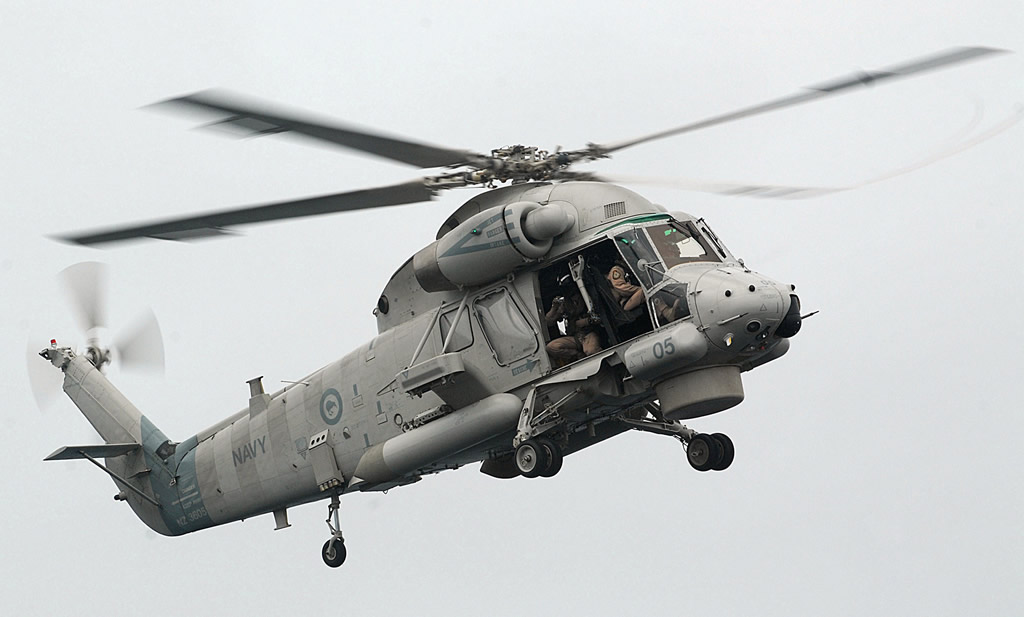
Meanwhile, New Zealand had a less ambitious SH-2G program, buying new-build helicopters in the 1990s and happily flying them from their 2 ANZAC Class frigates. By 2011, their SH-2G helicopters had been flying long enough that replacement was in order. Kaman had decided to keep investing in the SH-2G(A) helicopters, removing the troublesome “hands off” autopilot feature but keeping many of Australia’s weapon and sensor upgrades. These SH-2G(I)s were offered on the global market.
In 2013, New Zealand decided that replacing their 5 existing SH-2Gs helicopters with 8 upgraded, low airframe life SH-2G(I)s was an attractive deal. Especially with missiles and training simulators thrown in. Australia’s problem had become their opportunity.
Program Updates
2012 – 2013
New Zealand buys them as SH-2G(I)s, follows up with a limited buy of Penguin missiles.
(click to view full)
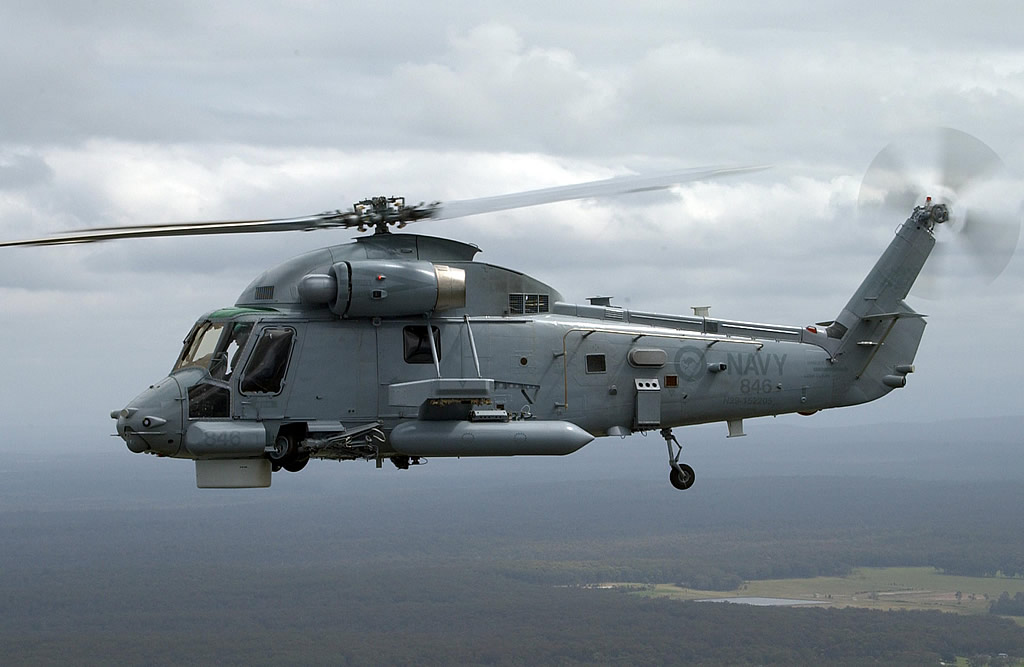
Nov 29/13: Penguin missiles. Sold! Kongsberg announces that they’ve signed a contract with the New Zealand Defence Force for the delivery of Penguin Mk 2 Mod 7 anti-ship missiles and associated equipment. The firm describes the contract as being “for a limited number of missiles”, which suggests that they may not have sold Australia’s entire inventory (q.v. Feb 18/98, Sept 24/13). Sources: Kongsberg, “New Zealand selects KONGSBERGs Penguin anti-ship missile”.
Penguin missile buy
Sept 24/13: Penguin missiles. The Australian Department of Defence (DoD) has confirmed to IHS Jane’s that all of their remaining Penguin Mk.2 MOD 7 light anti-ship missiles (q.v. Feb 18/98) are up for sale through their original manufacturer Kongsberg, with unspecified conditions attached.
Unlike Australian ANZAC frigates, New Zealand’s ships were never upgraded with Harpoon anti-ship missiles. The SH-2Gs are compatible with these missiles, and New Zealand is reportedly negotiating to complete their program (q.v. April 19/13) and buy some, in order to give its frigates an anti-ship capability that goes beyond torpedoes.
Australia’s RAN could have moved the Penguins over to their existing S-70Bs, but a study had identified it as a high technical risk, and by March 2008, they had decided to dispose of their stocks instead. Their newer MH-60R helicopters aren’t equipped to use the missiles at all, so their helicopter buy didn’t change their missile decision. Instead of carrying up to 2 Penguins, the RAN’s MH-60Rs will carry a brace of up to 8 shorter-range AGM-114 Hellfires to destroy small boats and land targets, leaving anti-ship work to ship-launched Harpoon missiles that offer comparable reach vs. a helicopter + Penguin combination. Sources: IHS Jane’s Defence Weekly: “Sources confirm New Zealand in negotiations for Australian Penguin missiles”.
April 19/13: Sold! In the wake of a successful RNZAF flight trial and independent trials by Canada’s Marinvent Corporation, New Zealand’s government signs a NZ$ 242 million (about $204 million) contract with Kaman. They’re buying 8 SH-2G(I) upgraded Super Seasprites, 2 spare airframes, spare parts, Penguin missiles, and a training simulator. Kaman will return the helicopters to flyable status from storage in Connecticut, USA, followed by flight testing and airworthiness certification by New Zealand. They’ll be manned by a crew of 3 instead of Australia’s 2, and the absence of the “no hands” autopilot feature means it will be hands-on at all times. The first 3 helicopters are due in late 2014, and deliveries should be done in 2016. Estimated service life is “out to 2030,” according to New Zealand’s National Party government, who also states that “All other technical issues have been resolved by the manufacturer Kaman”.
Right now, New Zealand’s fleet of 5 SH-2Gs leaves them with just 2 deployable helicopters for the ANZAC frigates, plus 1 used for training and 2 in maintenance at any given time. Meanwhile, the RNZN has added 2 more helicopter-capable ships, to make 5 (frigates Te Mana & Te Kaha, MRV Canterbury, OPVs Otago & Wellington). New Zealand didn’t see other opportunities to buy 10 equivalent naval helicopters for just NZ$ 147 million (about $120 million), and they hope that 8 operational helicopters will let them fly from all 5 ships in maritime patrol and search & rescue roles.
The SH-2G(I)’s new Penguin Mark 2 Mod 7 anti-ship missiles will be a significant upgrade over the RNZAF SH-2Gs’ existing AGM-65 Mavericks. It offers longer reach, a larger warhead, and tougher attack profiles. The Penguin’s boost-sustain solid fuel rocket motor gives the 120 kg/ 260 pound missile a maximum range of 34 km/ 18 nautical miles, using inertial navigation and a passive infrared seeker for no-warning guidance. It can take an oblique path to the target, turning up to 180 degrees around a waypoint. It can also can perform random weaves before striking the target at the waterline, or execute a pop up and dive attack. NZ government announcement | NZ Labour Party via NewsTalk ZB | NZ government response || Kaman | MSN Australia | The Australian | Hartford Courant.
New Zealand buys them
June 20/12: RNZAF? Kaman says it’s in discussion with a potential buyer for its 11 Super Seasprites: New Zealand. The RNZAF has been operating SH-2Gs from its own ANZAC frigates, and needs successor helicopter to serve until 2025. They could also use more multi-role helicopters to outfit ships like HMNZS Canterbury, which might make a fleet of 11 appealing. Kaman:
“The U.S. Department of State has granted authorization that would permit the Company to negotiate a possible sale of SH-2G(I) Super Seasprite Helicopters to the Government of New Zealand. The potential sale would include eleven SH-2G(I) helicopters, a full motion flight simulator, training aids, spares inventory, publications and the introduction into service and through life support of the aircraft.
New Zealand officials have been working over the past year to determine the most effective way of meeting their future maritime helicopter requirements and the Cabinet has recently directed defence officials to engage in further discussions with Kaman.”
2006 – 2011
Fleet grounded; Survives one review, but not the second; Contract formally canceled.

(click to view full)
March 20/08: The government of Australia and Kaman Corp. announce an agreement re: cancellation of the Seasprite contract. Subject to US Government approval under defense technology export laws, Kaman will own the 11 SH-2G-A Super Seasprite helicopters, along with spare parts and associated equipment, for sale on the open market. The Australian Government and Kaman would share in the profits of subsequent sales on a 50/50 basis, with a guaranteed financial return of A$ 39.5 million/ $US 37 million. At least $25 million will be paid by March 2011, plus $6 million (US) each in 2012 and 2013.
Kaman will forego payment on approximately $35 million (US) in net unbilled receivables in exchange for the helicopters, spare parts and equipment, which will be recorded as inventory and is expected to exceed the amount of the net unbilled receivables and the guaranteed payments. The Australian government described it as A$ 30 million worth of spares that will be retained by Australia for use on the Seahawk and Black Hawk helicopter fleets.
The cancellation avoids A$ 150 million in planned spending on the Seasprite project. Australian government release | Kaman release.
SH-2G(A) contract canceled
March 5/08: Scrap it. Minister for Defence Joel Fitzgibbon announces the likely end of the program:
“In late 2007 the Rudd Labor Government initiated a review of the Seasprite helicopter project, in line with the promises made prior to the election. After careful consideration of all the issues involved, the Government has decided that it intends to cancel the project. Discussions will be commenced immediately with the contractor in relation to the legal and financial arrangements…
To ensure the Navy maintains an effective naval aviation capability, the Government has decided on two measures. First, our interim approach will focus on improving the operational availability of the current [S-70] Seahawk fleet. Second, the Government will investigate the planned replacement of the Seahawk during its [2008 Defence] White Paper deliberations.”
Sept 7/07: New Zealand. The New Zealand Seasprite program may have some issues of its own. The opposition National Party issued a release:
“These [NZ$] 326 million excl GST aircraft [DID: about $220 million] which have been in service for six years were touted by then Defence Minister Mark Burton, as being ‘a significant addition to our defence capability’. But in answers to parliamentary written questions, Defence Minister Phil Goff has admitted that only four of the five Seasprite are being flown regularly.
One has been inoperable – having clocked up zero flying hours – for more than two years because there are problems in obtaining spare parts to repair it following a hard landing. The Government must explain why repairs are taking so long.”
Sept 7/07: Still alive. Minister’s release:
“In April 2006, I initiated a full examination of the Seasprite project following grounding of the aircraft due to concerns over the reliability of the Seasprite’s Automated Flight Control System.
The review paid particular attention to the reliability of the Flight Control System and its associated safety implications; the ramifications to Naval aviation of the project being 6 years late; and the performance of the integrated sensor system.
The review examined how to resolve these issues so that the best possible capability can be provided to the Royal Australian Navy.
After detailed consideration of the issues involved, the Government has decided to continue the Seasprite project, subject to satisfactory contract arrangements.
The return to flying will involve a series of controlled steps to assess the contractor’s performance, and to ensure the safety, performance and reliability of the Seasprite.
The Government will take steps to ensure that the contractor’s progress is measured against milestones during the course of the additional work.”
SH-2G(A) survives review
May 15/06: Grounded. Doorstop on Grounding of Sea Sprites. Interview includes Q&A with Dr. Brendan Nelson:
“The Director of Naval Aviation has had no choice but to ground the helicopters until recent further software problems have been resolved. Late in March [2006] I specifically asked the Chief of Navy and the Chief of Defence to develop and provide me with all of the options that the government might consider: what is the way ahead; how can these problems be fixed; how certain can we be about making sure that the Super Seasprite is able to deliver what was promised by our contractors. Alternatively what modifications could we make to the program and at what cost, and what sort of capability might we get. And thirdly I have also… asked the Department of Defence to provide me with the option of the government considering removing itself completely from the Super Seasprite Program.”
Fleet grounded
Feb 18/98: Penguin missile. Australia’s DoD announces an A$ 80 million contract to buy Penguin Mk.2 MOD 7 missiles for its SH-2G(I) Super Seasprite helicopters. Australia’s ADI (later Thales) will provide the warhead for the Penguin missile, and:
“The Penguin missiles are planned to be available when the Super Seasprite Helicopters are introduced into service early in the next century, and thc [sic] delivery of all the missiles is expected to be complete by early 2002.”
The Penguin Mk.2 MOD 7 has a range of about 30 km/ 16 nmi, and incorporates folding wings to make helicopter carriage easier. It uses a combination of Inertial Navigation and Imaging Infrared (INS/IIR) passive guidance to provide no warning to enemy ESM systems, while using a downward-pointing radar altimeter to fly at low altitude until it hits the target at or near the waterline. Its 120 kg/ 265 pound WDU-39/B semi-armour-piercing warhead is about 1/3 of its total weight, and will do serious damage to ships as large as 1,000t.
Additional Readings & Sources
Background: Helicopters & Ships
* Naval Technology – SH-2G Super Seasprite – Multi-Mission Naval Helicopter, Australia
* Kaman Aerospace – SH-2G Super Seasprite
* Royal New Zealand Navy – Kaman SH 2G Seasprite Helicopter
* Naval Technology – Anzac Class Frigates, Australia. New Zealand bought 2 of their own, hence the ANZAC label.
* DID – New Zealand’s New NH90 & A109E Helicopter Fleets. Their other helicopters. Neither offer anything close to the SH-2G(I)’s level of surveillance, or its weapons array of torpedoes and missiles.
News & Views
* The Hon. Dr Brendan Nelson, Minister for Defence, via WayBack (May 25/07) – Defence Statement: Seasprite Helicopters
* DID (June 22/06) – Australia Tightens Eurocopter Ties With A$ 2B Buy of 34 NH90s
* RF Design, via WayBack (June 14/06) – Software program for Royal Australian Navy helicopters enters formal qualification phase
* Australian Broadcasting Corp – radio, via WayBack (May 15/06) – Defence considers scrapping Seasprite helicopters. Radio transcript with Defence Minister Dr. Brendan Nelson.
* Australia Broadcasting Corp., via WayBack (May 15/06) – Techncal problems ground Navy helicopters
* Federal Australian Labor Party, via WayBack (May 15/06) – Super Seasprite Helicopters. This was Her Majesty’s Loyal Opposition party at the time. In (20/20 hindsight):
“…this one was a bit of groundbreaking part because you had to put in modern electronic equipment into a very, very dated frame. There was always the possibility, if not the likelihood, of something going wrong. So to trade away your right to recover damages if there’s fault on the part of either the manufacturer or the supplier was a very, very big gamble.”
* RAN Navy News, via WayBack (July 13/05) – Looking Spritely. RAN provisionally accepts the first SH-2G (A) helicopter.
* Sydney Morning Herald, via WayBack (March 19/05) – Navy’s $100m chopper can’t fly in bad light
* Australian DoD, via WayBack (March 19/05) – Defence Statement: Super Seasprite Helicopters. Vigorously denies the SMH report. “The aircraft is currently undergoing a certification process before it can become fully operational. Defence expects to receive a certified helicopter later this year. Once accepted, the Super Seasprite will fulfil all of its planned roles including search and rescue operations in poor visibility. This is a normal and proper process…” Subsequent actions by the RAN indicate otherwise.
* RAN Navy News, via WayBack (July 9/01) – Navy targets Penguins as Seasprite system. This means they plan to use Kongsberg Mk2 Mod 7 Penguin anti-shipping missiles, with a range of around 30km; a contract was signed in 2003 [MS Word format].
* RAN Navy News, via WayBack (March 19/01) – First Seasprite put on display. Note Penguin missile in the picture.