
The BvS10 is the successor to the wildly popular Bv206, 11,000 of which have been sold to 40 countries around the world – including the USA (M978). Readers may have seen these vehicles elsewhere, too, as a number of Bv206s have post-military careers at ski resorts, in industries like mining and logging, etc. The new BvS-10 is larger and more heavily armored; it’s in use in Britain, France and the Netherlands as a key armored vehicle for their respective Marines, has been bought by Sweden, and is under evaluation elsewhere. International interest includes imitators: Singapore’s Bronco ATTC is a BVS10 competitor, and Finland and Norway have their own local Bv206 variants.
What makes this unusual-looking vehicle family and design so popular? They aren’t like Humvees or similar wheeled mainstays. They aren’t full armored personnel carriers, either – they’re armored, but Bv family vehicles can’t take the kind of punishment that a Bradley or LAV can absorb. Instead, the secret to their success lies in a remarkable all-terrain capability, and their ability to fill a rare and critical role: air-portable and amphibious infantry enhancement. These success factors are discussed below, along with contracts and key developments related to this vehicle family.
The Bv Family of Vehicles
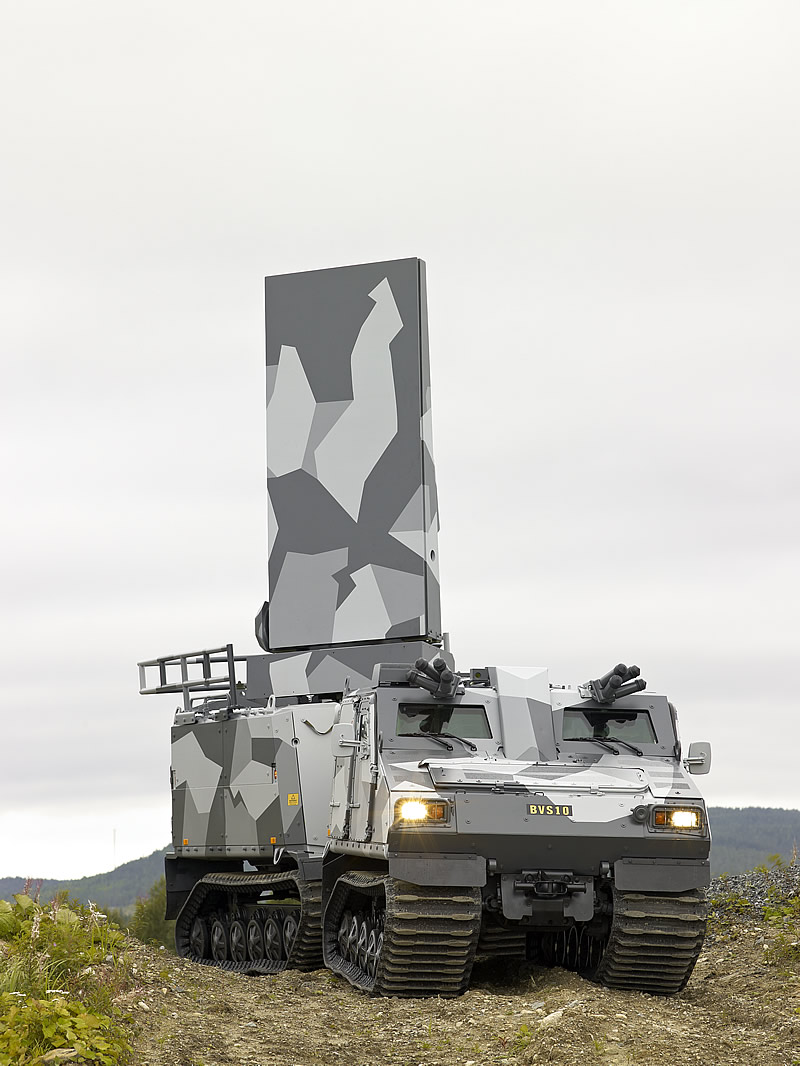
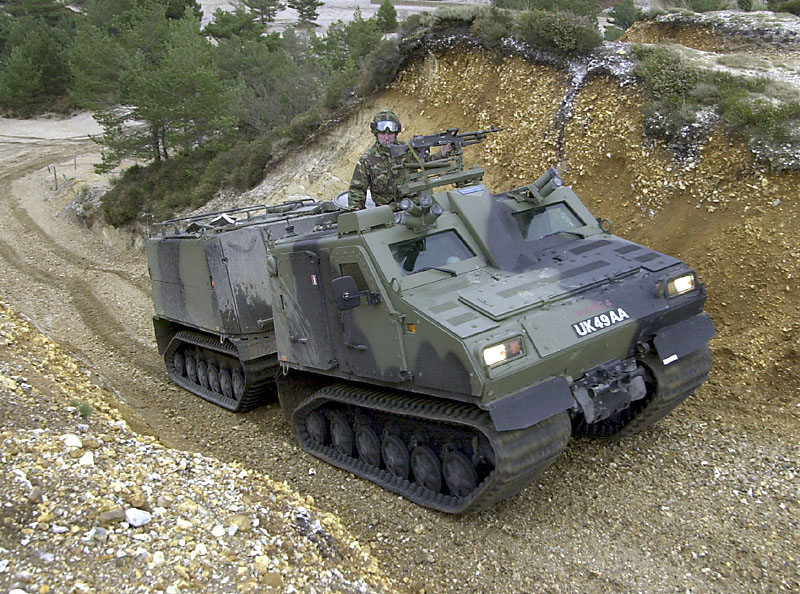
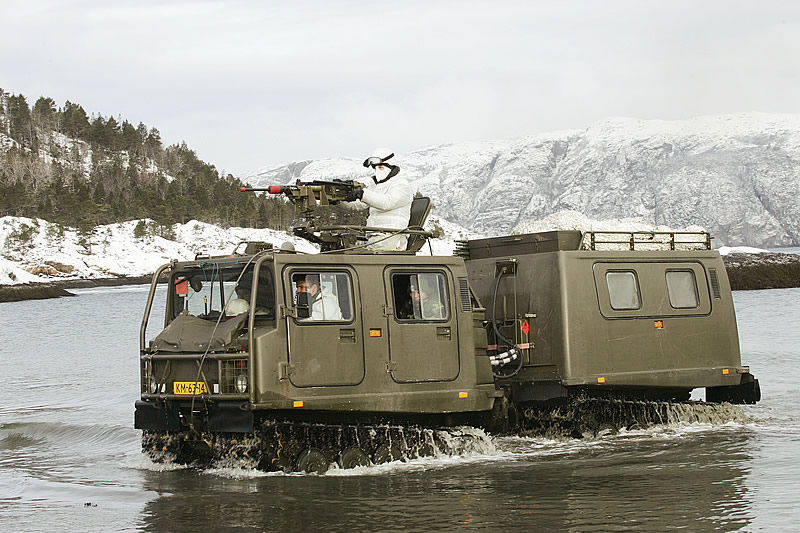
Hagglunds Bv family vehicles are really two separate chassis working together. Hydraulic cylinders that push or pull one chassis segment relative to the other do all the steering. The central articulation point also allows the two segments to twist and turn in different planes, accommodating the most difficult terrain from high slopes to winding forest trails. Meanwhile, wide band tracks ensure good traction, with a low “footprint” pressure that lets these vehicles move across all terrains, and can even avoid tripping anti-tank mines. Amphibious conversion is quick.
The Bv206S is a slightly larger (10-tonne/ 11 ton full combat weight), armored version of the Bv206 that retains helicopter air-portability inside a CH-47 Chinook, or can have its 2 sections airlifted separately by a pair of medium utility helicopters like Britain’s EH101 Merlins.
(click to view full)
BAE Haaglunds’ new BvS10 differs from its Bv206 predecessors by adding a bit more weight at 7.6t/ 16,300 pounds empty, with a maximum designed weight of 10.6t/ 23,350 pounds. Fortunately, a more powerful Cummins 5.9 litre diesel engine gives it 80 kph/50 mph performance on class A roads, and a 300 km/ 180 miles range. The improved ground clearance and newly developed chassis, power train and steering units give the vehicle considerably enhanced speed and comfort, as well as greater load carrying capability (up to 5 tons for some variants), and the ability to add various modular sub-systems such as add-on armor, weapon-mounts, a load-changer, and cargo platforms. The Viking can operate in temperatures from -46C/-51F to 49C/120F, can ford through water up to a depth of 1.5 m/ 5 feet without preparation, and is fully amphibious with 5kph/ 3mph water speed on a full load, after less than 2 minutes’ preparation by the crew. BAE data places the existing Viking’s reliability in theater at 88%.
BvS10s have been performing well, but various up-armoring additions mean that they have also been working beyond their maximum designed weight for months. Hence BAE Hagglunds’ BvS10 Mark II, whose maximum designed weight is 14.2t/ 31,300 pounds, with a payload of 6t/ 13,250 pounds. It incorporates a larger and more powerful engine, a bigger alternator which gives more electrical power, an improved steering unit, uprated suspension and brakes, a shallow v-hull for extra mine protection, and the ability to carry more armor. Despite the extra armor, the Mk II fulfills all the original Viking requirements, such as the ability to swim. Variants include:
* BvS10 MkII APC. Carry 3 crew, and up to 6 fully-equipped soldiers.
* BvS10 Ambulance. Just 2 crew, and space for 2 stretchers & 2 paramedics.
* BvS10 C2. Carry a command & control system and up to 4 staff.
* BvS10 Logistics. Have a flatbed in place of the standard back cab. Slide-on modules for the flatbed include a 10-foot container, the ARTHUR artillery locating radar, or a communications module.
* BvS10 Repair & Recovery (RRC). Crew + 4 technical specialists. The rear cab is fitted with a full mobile workshop, as well as a HIAB crane and capstan for recovery work.
* BvS10 UAS. Used as an equipment transporter for the UK’s new Mk450 Watchkeeper UAV system.
Imitation, the Sincerest form of Flattery

(click to view larger)
A larger vehicle is currently in service with Singapore as ST Kinetics’ Bronco ATTC (All-Terrain Tracked Carrier), and as the Warthog in Britain. Gross Vehicle Weight is 18t/ 40,000 pounds, including a 6.8t/ 15,00 pound total payload, or space for up to 16 troops. Its Caterpillar C7 engine delivers up to 350 bhp, driving it up to 65 km/h on smooth surfaces, or allowing it to handle 60% gradients and 30% side slopes in all conditions and terrains. Singapore is a Bv206 customer, and when the ATTC was introduced, Haaglunds launched a lawsuit claiming that ST Kinetics had copied their design. That lawsuit was later dropped, leaving ST Kinetics with a similar but heavier competitor.
The Bronco is fully amphibious, and its versatility has made it very useful in post-tsunami relief efforts. An up-armored, non-amphibious “Warthog” variant was picked by the British Army to replace borrowed Royal Marines’ BvS10s in Afghanistan, with the BvS10s returning to the Royal Marines for future use.

(click to view full)
The smaller Bv206 has also received its share of international flattery. Finnish firm Patria Vehicles’ NA-140 and its variants are very similar, and more than 300 have been manufactured since 1985 to equip the armies of China, Turkey and Finland.
After 20 years of using the Bv206, Norway is also introducing up to 1,000 units of the Natech (Narvik Technology AS) P6 in P6-300M and other variants, as part of Project 5085; it is reported to be very similar to the Bv-206S.
Bv Family: Why So Popular?

(click to view full)
The BvS vehicle family’s popularity boils down to:
Key Virtue #1: Outstanding air transportability. These vehicles can be carried in many tactical and even light air transports, carried inside a CH-47 Chinook, or slung underneath other medium-heavy helicopters. The Bronco ATTC is an exception, but all of these vehicles can also be broken into their 2 component sections to be loaded into or slung beneath many helicopter types due to their low height, width, and weight.
Key Virtue #2: True all-terrain capability. These vehicles are designed to operate in conditions ranging from the heat and humidity of the jungle to dry desert and the frozen Arctic, and have done so. Their low weight and extra-wide tracked distribution make even snow and marshy ground passable, thanks to very low ground pressure. That same low ground pressure offers more safety against anti-tank mines, who may not receive enough pressure to detonate. They can quickly be made fully amphibious, and this combination of mobility advantages has made them popular with a number of countries’ Marine Corps.

mortar carrier, Norway
(click to view full)
Key Virtue #3: Specialized variants. This family of vehicles offers a wide array of variants, including models with cranes for load handling and recovery, ammunition resupply vehicles, ambulance functions, deployable command posts, mortar carrier versions, and artillery hunting radar (the Bv206 ARTHUR). In addition, several countries are developing their own indigenous variants.
The result: Infantry enhancement. This family of vehicles offers instant air-portable infantry mobility with small arms protection (Bv206S and later); additional carrying capacity over all terrains to reduce soldiers’ burdens; and firepower overmatch via its weapon mount (medium-heavy machine guns, grenade launchers, anti-armor missiles, mortars, etc.), via extra weapons inside (ammunition, anti-armor missiles, etc.), , and via its towing capabilities (mortars, howitzers etc.). They are not designed for major combat, and are not a substitute for full-size armored personnel carriers (APCs). What they can do is bring a combination of APC and Jeep benefits in a more mobile, all-terrain, platform – one capable of 3rd-dimension envelopment, and rapid ground response into the most difficult terrain.
Contracts and Key Events
At present, the BvS-10 is in operation with the British Royal Marines, has been delivered to the Dutch Royal Marines and begun deliveries to France and Sweden, and is reportedly under trial and evaluation in Finland (who already operates Bv206 variants). All BvS10 customers share operational information, and co-operate on support through a multi-national user group that BAE Systems co-ordinates.
2014 – 2019
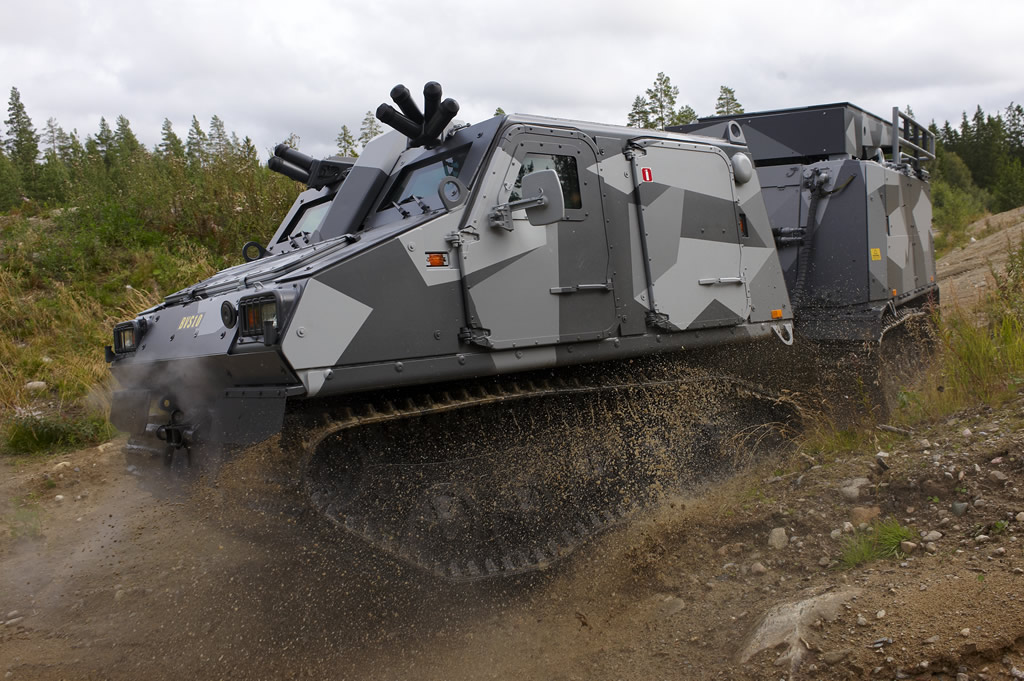
(click to view full)
February 28/19: Austria BAE Systems delivered the first four BvS10 all-terrain vehicles to Austria. The delivery is part of a contract signed in 2016 for 32 armored personnel carriers. The vehicles were handed over during two ceremonies last week in the Austrian states Tyrol and Salzburg. Austrian Defense Minister Mario Kunasek attended the celebrations alongside representatives of the Swedish government and BAE Systems Hägglunds, the Sweden-based manufacturer of the BvS10. The first set of vehicles will be fielded by the Austrian Armed Forces’ 24th Infantry Battalion, a battalion of the 6th Mountain Infantry Brigade, which plays a leading role in the European Union Mountain Training Warfare Initiative as well as the 2nd Engineer Battalion, which can provide combat support in mountainous terrain. The BvS10 is an All Terrain Armored Vehicle. The Austrian APC variant of the BvS10 is fitted with a number of specific features including a 360 degree Observation Camera System with six Day/Infrared cameras and displays in the front and rear of the cabin for greater situational awareness. Also featured is the latest Remote Controlled Weapon Station, which can be operated by both the Gunner and the Commander. It is foldable to allow for swift transportation in the field. BAE Systems expects final deliveries to conclude later this year.
July 26/17: BAE Systems has teamed with Italian firm Goriziane Group SpA to offer joint support of the BvS10 Beowulf armored all-terrain vehicle (ATV). Gorizioni Group, who have already worked with BAE on the older BV206 ATV, are specialists in the engineering and maintenance of vehicles and other heavy equipment, and this extended agreement is part of BAE’s dedication to “work closely with industries in the countries we do business in to support government programs and local economies,” according to Tommy Gustafsson-Rask, general manager of BAE Systems Hagglund. The Italian military is one of the largest users of the BV206 and BV206S vehicles, and the vehicle is also in use with the militaries of Austria, France, the Netherlands, Sweden, and the United Kingdom.
July 7/16: Austria is to join France, the Netherlands, Sweden and the UK in operating BAE System’s BvS10 Beowulf military vehicle after signing contracts with the Swedish government for the delivery of 32 vehicles. While the value of the contract is unknown, deliveries are expected to begin in the second half of 2017 and conclude in 2019. Designed to operate in rugged terrain to deliver personnel or cargo in combat and disaster relief situations, the BvS10 will play a role in Austria’s European Union Mountain Training Warfare Initiative where it will host schools, training and support to enhance military effectiveness in mountain terrain.
May 27/14: Canada. Rheinmetall Canada displays a BvS-10 at its CANSEC booth, in the wake of a teaming agreement that has them cooperating with BAE on a future bid for Canada’s Marginal Terrain Vehicles (MTV) program. the Canadians already possess Bv-206 vehicles, and have used them in Afghanistan (q.v. Appendix A). Sources: BAE Systems, “BAE Systems and Rheinmetall Team to Offer Go-Anywhere Vehicles to Canada”.
2011 – 2013

(click to view full)
Dec 19/13: Sweden. The Swedish FMV procurement agency exercises part of their Jan 5/12 contract option, via a SEK 800 million ($120 million) contract for 102 more BvS10 Mk.IIBs, raising their order total to 150. That leaves them with 25 more options.
The 102 vehicles will be delivered in the same 4 variants: troop carrier, ambulance, C2 command vehicle, and “logistics” (cargo carrier). They will continue manufacturing in BAE Systems Hagglunds’ refurbished production facility in Ornskoldsvik, Sweden, with deliveries beginning in 2014 and ending in 2015. Sources: BAE, “Sweden Buys 102 More BvS10 All-Terrain Vehicles From BAE Systems” | Swedish FMV, “FMV bestaller ytterligare 102 bandvagnar av Hagglunds”.
Sweden: 102 more BvS10 Mk.IIB
June 2013: Refit report. Britain’s Battlespace magazine offers an update on the refits, even as BAE Systems discusses more comprehensive Viking support arrangements with the UK MoD. Phase 1 Refits, which handled existing Mk.IIs and the Mk.Is with upgraded hulls, were finished in May 2013.
Phase 2 deliveries have now started, and installation of the required improvements plus the latest v-hull bottom will continue until April 2014. The exceptions will be rear cars for Repair & Recovery variants, which are unmanned while in transit.
Phase 3 involves the Mortar and Crew Served weapon variants (TL: 27). They also receive the latest v-hull, except for the mortar version’s rear cars. The new variants will undergo testing this summer, and deliveries aren’t expected to begin until March 2014.
Phase 4 involves new blast protection kits, which began delivery in April 2013. All upgrades will be available to other BvS10 operators, if they request it. Battlespace
Oct 3/12: UK upgrades. Britain will overhaul the Royal Marines’ BvS10 vehicles to a common Mk.II standard. Under BAE’s GBP 37 million ($61 million) contract, the fleet will be given a major overhaul, brought closer to to a common configuration, and certified for a 14 tonne gross weight. The changes are the result of BAE’s modular bid, which involved a common core set of work, plus a range of options that let the UK MoD pick what it most wanted within its budgetary limits.
To get there, a number of modifications for land operations in Afghanistan will be removed, restoring the vehicles’ amphibious capability. The Vikings will receive general inspections, new front and rear car hulls, a shallow v-hull underbody, braking and suspension upgrades, and other improvements stemming from Dutch and French experiences. A new engine and alternator would be required for full Mk.II compatibility, but Britain’s budget squeeze has deferred this key upgrade. New wiring and mounts will prepare the fleet for the larger engine, if Britain decides to add it later.
Beyond these upgrades, 19 Crew Served Weapon variants will add Platt’s 7.62mm crew-served machine gun mounts on top of the rear cars as well, and another 9 will become mortar cars fitted with 81mm internal mortars. Work at BAE’s new production line in Ornskoldsvik, Sweden will last until 2014, and all parties expect a mid-life upgrade at the end of the decade. The Royal Marines plan to keep their Vikings in service until 2031. UK MoD | BAE Systems.
Britain: BvS10 refurbishment & Upgrades
Jan 5/12: Swedish Vikings. Sweden’s FMV has picked BAE Hagglunds’ BvS10 Mk.IIB over Singapore’s larger Bronco ATTC, as their military’s next all-terrain vehicle. Sweden already fields a number of Bv206s, and the initial SEK 700 million (about $101 million) contract will supplement them with 48 BvS10 vehicles in 4 types: 19 APC, 17 Logistics, 10 Ambulance, and 2 Command & Control. Delivery is scheduled to be done by autumn 2012, for operational use in Afghanistan by spring 2013.
The Swedish vehicles include some modifications, including improved crew ergonomics, internal volume, and protection, plus integration of Kongsberg’s Protector remote weapon station up top. Smoke grenade launchers are fitted front and back, to give 360 degree coverage. Swedish government-furnished radio and battlefield management systems are also different, as one would expect.
The Swedish acquisition process took a bit less than a year, including tests of the 2 competitors. Additional buy options could push Sweden’s total order to 175 vehicles, via up to 127 more BvS10 MkIIs in up to 3 more batch orders. Swedish FMV | BAE.
Sweden: 48-175 BvS10 Mk.IIB
Nov 25/11: France. France’s DGA announces [in French] that it has formally accepted delivery of its 1st 14-tonne, v-hulled BvS10 Mk.2/ VHM under the 53 vehicle contract (vid. Dec 22/09 entry). This is not the same thing as the 1st delivery by the manufacturer (vid. March 29/10 entry). Before it could receive formal acceptance, the Véhicule a Haute Mobilité had to be qualified for operational service during 8 months of trials, which ended in September 2011.
2009 – 2010
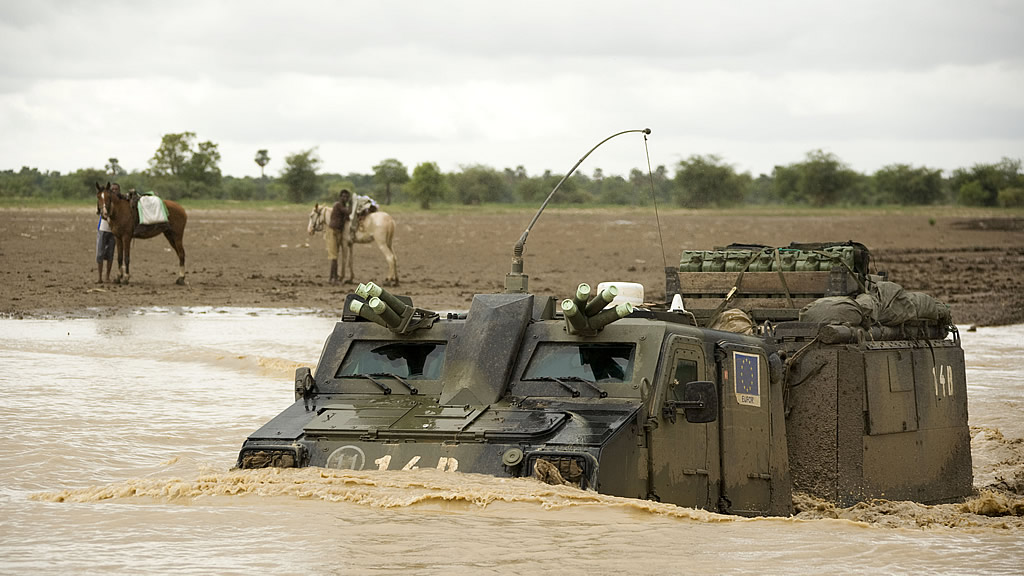
in Chad 2009
(click to view full)
May 21/10: Dutch. The Netherlands is looking to upgrade 127 of the Dutch Marines’ Bv-206Ds with a mid-life upgrade (MLU) package to extend their operational life to 2020, the same as the Marines’ new BvS10 Vikings. The MLU budget is estimated between EUR 25 – 50 million, and the main risk involves the vehicle frame. If the glassfiber reinforced plastic has become fragile due to sun exposure, full replacement will make the upgrade much more costly. Kamenbrief [in Dutch].
March 29/10: UK. BAE Systems delivers the last of 24 BvS10 Viking Mk.II mine-protected vehicles ordered by the British Royal Marines (see Sept 30/09 entry). The vehicles will be deployed to Afghanistan in the near future. BAE Systems’ release adds that deliveries on France’s December 2009 order for BvS10 MkIIs have begun.
Dec 22/09: France. BAE Systems announces that it won the VHM contract from France’s DGA procurement agency to supply 53 BvS10 Mark II vehicles (q.v. Sept 30/09 entry). If all options are exercised, BAE says that the total value of the contract could reach EUR 220 million ($317 million) for 129 vehicles.
France already operates their Bv206 predecessors, and this contract covers 3 BvS10 vehicle variants (APC, C2 and Logistics), as well as a comprehensive support package. The vehicles will be produced in cooperation with BAE’s French partners, including Panhard and EADS. Deliveries are scheduled to begin in 2010.
France: 53
BvS10 Mk.II
Nov 19/09: UK. The British Army announces that the first ST Kinetics Warthog has been manufactured and shipped to the UK. It will be fitted with electronics and armaments , and must then be fully tested and certified as safe to use. Steps after that are its issue to troops for pre-deployment training, and then deployment.
Sept 30/09: UK. BAE Systems announces a GBP 24 million (currently $38.2 million) British contract for 24 BvS10 Viking Mark II vehicles: 22 standard troop carriers and 2 command variants. They will be delivered to the UK MoD in early 2010, so that they can be deployed to Afghanistan with the Royal Marines in the spring of 2010.
To this point, BAE says that the UK MoD has bought 166 Vikings, adding that the BvS10 Mark II is also in contention for the 124 vehicle French VHM competition. BAE Systems release.
Britain: 24
BvS10 Mk.II
Feb 16/09: BAE Systems announces a British order for 9 more BvS10 vikings, in order to maintain their operational capability in Afghanistan while the Army waits for the new ATTC Warthogs. See Dec 2/08 entry.
The latest vehicles will include 7 infantry carriers and 2 mobile command and control vehicles, and will be built to the Mk.I configuration standard, which includes new mine protection kits. The current fleet will also receive Mk.I retrofits, under a December 2008 contract. The first vehicle in the new-build contract is anticipated to be delivered directly from stock in February 2009, and the whole contract is expected to be delivered during the first quarter of 2009. The mine protection upgrades will be fitted after the base vehicles have been manufactured.
Britain: 9 BvS10
2007 – 2008
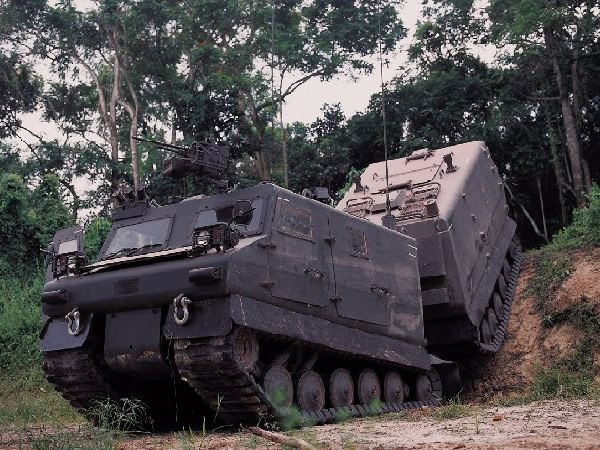
(click to view full)
Dec 18/08: Broncos for Britain. Singapore Technologies Engineering Ltd’s similar but heavier Bronco beats BAE’s BvS10 Mk.2, as they win a GBP 150 million (about S$ 330 million/ $230 million) contract from the UK Ministry of Defence for 100 Bronco ATTCs. These 20-ton “Warthog” vehicles will be supplied to the British Army’s Royal Armoured Corps, for use in Afghanistan.
A total of 4 Warthog variants will be built under the contract – APC/Troop Carrier, Ambulance, Command, and Repair & Recovery. Vehicle deliveries will commence in Q3 2009, with the majority to be delivered in 2010. UK MoD Programme Manager Simon Cox had this to say:
“We appreciate the close, flexible and constructive working relationship with ST Kinetics. They are a great company to work with and the Bronco has exceeded our expectations in terms of quality, capability and performance. We are delighted with their product, attitude and the progress jointly made in a very short time indeed.”
The Army had been using BvS10s on loan from the Royal Marines. Those vehicles will remain in service, and will be rotated back to Britain and the Marines once they are replaced in theater. UK MoD | ST Kinetics | Defense News.
Britain’s Army: 100 ATTC Broncos
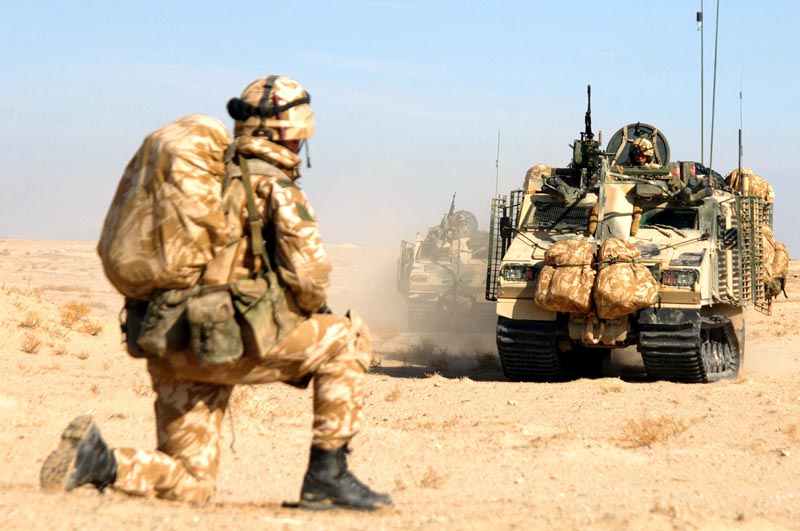
(click to view full)
Dec 2/08: Defense News reports that the UK MoD has ordered 22 more Vikings this year, bringing the total number of BvS10s they’ve bought to almost 150 vehicles. It adds that a number of these have been destroyed in combat, and the UK MoD has said that they are in negotiations with BAE for a mine blast protection kit. Delivery is expected to be complete by mid-2009.
Over the longer term, however, a larger vehicle may be necessary. BvS10s have been performing well, but various up-armoring additions mean that they have also been working beyond their maximum designed weight for months. Candidates for the folow-on “Warthog” buy of up to 100 vehicles reportedly include the BvS10 Mk II, and Singapore’s Bronco ATTC.
Britain: 22 BvS10
Oct 29/08: UK Defence Secretary John Hutton announces a package worth GBP 700 million (then $1.56 billion equivalent, but only $1.05 billion by late November), which will pay for over 700 new armored vehicles for use in Afghanistan. They include over 100 brand-new “Warthog” cross-country vehicles, which will have greater protection levels. Contracts remain to be negotiated.
March 30/08: Dutch issues. In “Marine heeft nu al pech met Vikings“, De Telegraaf reports that Dutch Marines have been working for weeks install new drive shafts in their 74 BvS10 Viking vehicles (see June 1/05 entry), after problems were discovered during exercises in England and Norway. 10 Vikings required for operation in Chad have been repaired.
On April 24/08, the Dutch MvD answered questions regarding the vehicles [Dutch, PDF], stemming from the De Telegraaf article.
(click to view full)
August 2007: Sub-contractors. A second order of 26 MR555 weapon ring mounts with accompanying gunshield protection is shipped from Australia’s Plattmounts to the UK, for installation on BvS10 Viking vehicles. These mounts also equip British FV432 Mk 3 Bulldog tracked APCs, as well as many of the USA’s RG-31 Charger mine-resistant patrol vehicles.
May 2/07: BvS10 UAV. New role for the Viking. The UK Ministry of Defence has awarded BAE Systems Hagglunds a contract for another 21 BvS10 Viking armored all-terrain vehicles. This order is in addition to an earlier batch of 108 that began delivery to the UK’s Royal Marine Commandos in July 2003.
The armored all-terrain vehicles will be used as an equipment transporter for the UK’s new Mk450 Watchkeeper UAV system. Prototype vehicles are scheduled for delivery at the end of 2007, with production deliveries to commence in the second half of 2008.
Britain: 21 BvS10 for UAVs
2005 – 2006
by Torbjorn Kjosvold
(click to view full)
June 12/06: Sweden. BAE Systems Hagglunds AB announces a SKr 260 million ($35 million) rush order from the Swedish Defence Materiel Administration (FMV) for 52 additional Bv206S vehicles, with an option for more. The order amounts to 52 vehicles with an option to acquire additional vehicles, bringing the Swedish Armed Forces up to a total of 93 Bv206S. With this order, 479 of BAE Hagglunds’ Bv206S vehicles have now been sold to Sweden, Germany, Italy, France and Spain.
The goal driving the FMV is the coming activation of the EU’s Nordic Battle Groupas of January 1st 2008, and led by Sweden. The FMV release notes that “…Bv206S can be transported by air with several of the smaller airplanes and helicopter models, which makes it a very suitable vehicle alternative for rapid forces with high demands on tactical and strategical mobility and troop transport under protection.”
Sweden: 52 Bv206S
Nov-Dec 2006: Sub-contractors. The initial order of 43 MR555 weapon ring mounts with accompanying gunshield protection is shipped from Australia’s Plattmounts to the UK, for installation on BvS10 Viking vehicles.
Jan 26/06: Dutch. Just 8 months after the contract was signed, BAE Systems Hagglunds has delivered the first of 74 armored BvS-10 Viking armored all terrain vehicles to the Dutch Army. The purchasing process was accomplished in less than 3 months, and the lead-time between contract and serial delivery has been only 8 months. Brig. Gen. Paul Opgenort:
“We are very content with Hagglunds and the company’s ability to keep to the time agreed for the first delivery. A key to the success has been the unconventional but flexible way of working, regarding the processes of development, purchase and production.”
June 1/05: Dutch. Like the British Royal Marines (who bought 108), the Netherlands Defence Materiel Organisation went directly to the source and signed a contract for 74 BvS10 “Viking” All Terrain Vehicles with BAE Systems Land Systems Hagglunds, in a June 2005 deal valued at approximately SEK 570 million (approximately EUR 57.9 million, or $71.3 million). The DMO will purchase four variants of the BvS10: 46 troop carriers, 20 commander vehicles, 4 recovery vehicles and 4 ambulance vehicles; with deliveries to take place from January 2006 – April 2007.
These Viking armored vehicles will supplement earlier Bv-206 vehicles in service with the Dutch Royal Marines since the early 1990s. In parallel with the BvS10 order, BAE Hagglunds continues to produce heavy CV90-35 Infantry Fighting Vehicles for the Netherlands, which will be delivered from 2007-2010.
Netherlands: 74 BvS10
Appendix A: Bv Vehicles’ Performance in Afghanistan

(click to view full)
Canadian Bv206s performed well with the Princess Patricia Canadian Light Infantry Battle Group during Afghanistan’s Operation Anaconda. Attached to the U.S. Army’s 2nd Brigade, 10th Mountain Division as part of a joint force, they were airlifted inside US Army CH-47D Chinooks to an objective called “The Whaleback” as part of the subsidiary Operation Harpoon. Their experience, and the British experience in Afghanistan, are illustrative.
Senior Analyst Mordica’s “High Altitude Operations” report from the US Center for Army Lessons Learned (no longer publicly available) noted:
“DISCUSSION: The Canadian Army air assaulted small unit support vehicles (SUSV) into the mountains during offensive operations against the al-Qaida and Taliban fighters. The vehicles were used to move distances over the rough terrain at high altitudes, allowing the infantry to ride or transport their loads into battle. These vehicles allowed the infantry some small arms protection and helped them beat the fatigue associated with mountain operations. The SUSV is helicopter transportable and provides all-terrain mobility. The vehicle performed well in combat.”
StrategyPage has a more publicly accessible March 19, 2002 follow-up, with an interesting twist:
“Major Chuck Jarnot, 101st Airborne Division Liaison Officer in Afghanistan, noted that the greatest risk to vehicle movement in Afghanistan is not Taliban/Al-Quedas Rocket Propelled Grenades, but rather the millions of land mines laid throughout the country. The Canadian BV-206 AMV used in Anaconda mitigates this risk by virtue of the very light weight and tracked suspension that results in extremely light ground pressure.
This not only contributes to its excellent terrain agility, but makes anti-tank mine detonation a very small probability since the BV-206 ground pressure is far below the minimum necessary to set off a typical anti-tank mine.”
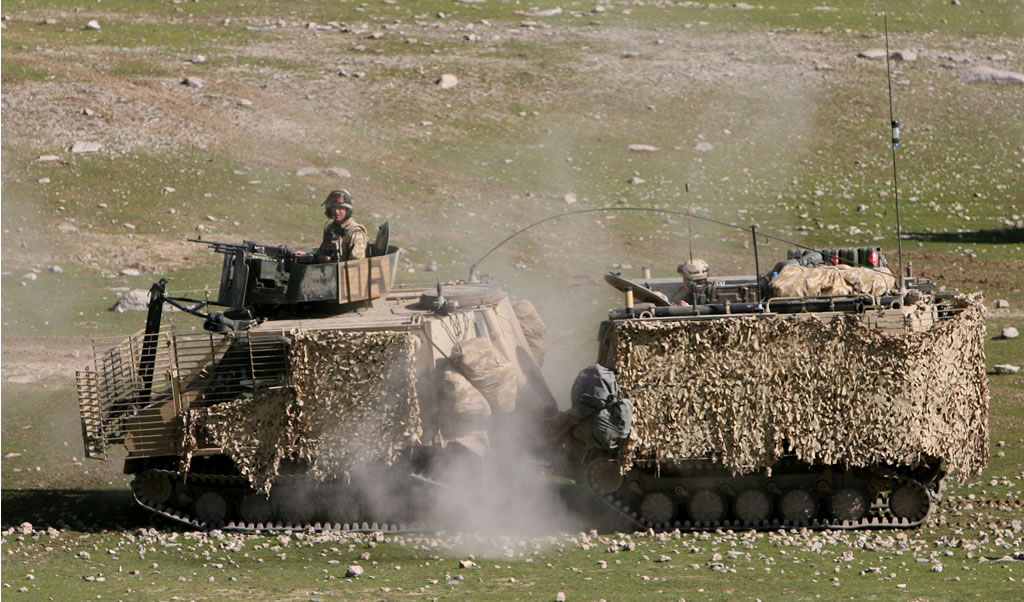
The larger BvS10 entered the Afghan theater of operations as a key vehicle for the British Royal Marines, complete with anti-RPG slat/’birdcage’ armor. The British Army borrowed some, then replaced them with their “Warthog” derivation of ST Kinetics’ larger Bronco ATTC. The Royal Marines also bought a larger vehicle for use in Afghanistan, but their follow-on buy was the BvS10 Mk.II. In 2013, they will be joined in theater by similar Swedish vehicles. Some experiences from 2006-2008 are illustrative of the platforms’ advantages and tactical employment:

Afghanistan
(click to view full)
Feb 13/08: Nothing subtle about this UK MoD article: “Marines back in the Vikings – “They are phenomenal”.” One expects that sort of tone from a Ministry of Defence. The key is how well they back that tone up with examples from the field, and whether offsetting problems have surfaced. To date, DID is not aware of performance below expectations in any respect. On to more thoughts from the front lines:
“…due to their popularity the demand for their use is high amongst all troops patrolling and conducting operations in Helmand. Consequently, the demand on the Marines trained to drive them is high too. To help alleviate the pressure… a third unit, from the Queen’s Royal Lancers A Squadron, has been trained and recently deployed to Helmand. They are the first Army unit to operate the Viking on their own.”
Growing demand across service boundaries is always a positive sign. Major Jez Stemp, the Officer Commanding the Royal Marines’ Armoured Support Company:
“Their greatest asset is their all terrain mobility. The Taliban tend to mine known routes, but the Vikings can manoeuvre around them and go off road.”
Royal Marine Tom Aylett, back in Afghanistan for the second time:
“We put the lads in the back of the wagon, drop them off to do operations and attacks with the Vikings. I drive it and man the gun on top… They provide us with a lot of protection and allow us to get closer to the enemy. It’s very reliable, can go up a hill and never gets bogged down like other vehicles.”
Royal Marine Lance Corporal Dean Walker concurs:
“The Viking opens up a lot more operations. We can move where, with and who we want.”
MR555 gun shield
(click to view full)
Jan 28/08: The UK MoD’s “Keeping the Vikings on the move (VIDEO)” is focused on the soldiers who maintain its BvS10 vehicles, but it also offers some observations from tactical experience. Corporal Kev Walker of 1 Battalion Royal Electrical & Mechanical Engineers works with Vikings in Camp Bastion, Afghanistan:
“The Royal Welsh got contacted by an anti aircraft gun. My troop went in with the Vikings to create a screen, allowing them to get out. We put down heavy fire from the Viking’s General Purpose Machine Gun (It is also fitted with .50 calibre guns), and before we left, having taken no casualties, it looked like all the Taliban had left. If we didn’t have something like the Viking it wouldn’t have been such a happy ending. It was pretty heavy terrain too and I’m not sure any other vehicle could have got in there. We know the Taliban don’t like them…”
Staff Sergeant Chris Hanks of the Royal Electrical & Mechanical Engineers adds:
“They can cope with the terrain because they have track mobility, which is much better than wheeled vehicles and gets bogged down less. “
Sept 12/07: “Viking vehicles prove their worth in volatile Helmand” contains quotes from Maj. Jez Hermer of the Royal Marines’ Armoured Support Company at Bovington, Dorset:
“Since the beginning of the Afghan conflict everyone has woken up to the success of Viking. It is now very important to Operation HERRICK. It has opened up Helmand province and given commanders a broader range of options than they would have had available to them… I see it remaining in Afghanistan and I don’t see it coming back until the end of the commitment.”
“The forces’ inventory of armoured vehicles has come under serious examination in Afghanistan and Iraq. With excellent protection, an ability to operate in all weathers across all terrain, including to ‘swim’ in water, and to withstand a range of threats, Viking has performed well…”
The British Army, meanwhile, is using tracked Spartan vehicles to similar effect.
Jan 23/07: Some of the lads in theater seem to like the new Platt MR550 weapon mounts and gunshields. This was forwarded to us [name and profanities redacted]:
“been busy but got time to tell your mount is f** brilliant, the lads love it. been out and about and without a doubt it has stopped some lads becoming casualties. its stable as hell and the lads are big fans of the extended ranges we reach when firing. had a few problems with little bits but got them sorted in no time at all… say a big thankyou to all your staff for getting them out here as they have been a life safer in some of the s** situation we have found ourselfs in. well mate got to go and get ready for anthor trip out.”
Other comments from Royal Marines about their new gunshield:
”Took hits with no worries!”… ”RPG hit the vehicle and we moved on”… ”On the Platt we were shooting out to 2300m on GPMG and tracer burned out… continual shooting on same target watching the splash”

note anti-RPG armor
(click to view full)
Jan 10-11/07: A pair of releases from the UK MoD covering operations in Afghanistan speak very highly of the BvS10 Vikings’ performance, noting their battle-ready helicopter transportability and their success in combat against small-arms fire, mortars, and even single-warhead RPGs thanks to their slat armor. The vehicles are already credited with saving a number of lives; one expects to hear this from official sources, but the level of enthusiasm from front-line soldiers without an investment in the vehicle program is a very positive sign.
Oct 31/06: The first ever operation involving the new BvS-10 Viking armored vehicle is successfully completed by Royal Marine Commandos in the rugged terrain of southern Afghanistan. Operation Zina saw 33 Vikings complete a 10-hour combat move into Helmand province from their base in Kandahar airfield, moving through notorious areas of Kandahar City and Gereshk. During the journey Royal Navy Harriers provided force protection and helped clear the route ahead of the convoy, which was also supported by armored fighting vehicles from Denmark and Estonia. Despite some heavy surveillance from suspected Taliban, the journey was completed without incident. See video [Windows Media, 1.87 MB].
The UK MoD release notes that “Being able to operate over deep sand and boulder fields, the Vikings have the mobility to operate anywhere in Helmand province and carry a section of Marines into battle… The Vikings are now patrolling throughout Helmand province and their ability to go anywhere at speed will be a tremendous asset to the Royal Marines.”
Additional Readings and Sources
Thanks to Benelux subscriber David Vandenberghe for his tips and translation assistance.
Background: Bv Family of Vehicles
* BAE Systems Press Kit – BvS10.
* Army Technology – Viking (BvS10) Amphibious Armoured All-Terrain Vehicle, United Kingdom .
* UK Army – Viking BVS10.
* BAE Press Kit – Bv206S. 2012 snapshot.
* Army Technology – Bv206S Armoured, Articulated All-Terrain Vehicle, Sweden.
* CASR DND 101 – Canadian Forces Tracked Utility Vehicle – the Hagglunds Bv206.
* Arctic Tracks – The Hagglunds Bv206: Most versatile vehicle on earth. It shouldn’t be surprising that the vehicles also have a number of civilian uses.
* BV206 ATV’s Vehicles. Another outfit, this one selling used British military vehicles in a number of civilian configurations.
* One35th.com – ARTHUR – Artillery Hunting Radar on BV206. Better than nothing, but Canada trialed ARTHUR in Afghanistan and found that the number of false positives were an issue.
* One35th.com – Related Bv206-2. Includes information re: other countries’ local variants.
Background: Similar and Related Vehicles
* One35th.com – DSTA/ ST Kinetics Bronco All Terrain Tracked Carrier.
* Army Technology – Bronco All Terrain Tracked Carrier, United Kingdom. The country should, of course, be “Singapore,” who has ordered over 600.
* UK Army – Warthog. The British variant of the Bronco is called “Warthog.”
* ST Engineering – Bronco All Terrain Tracked Carrier.
* Wikipedia – Sisu Nasu. Also sold to France, Mexico, Taiwan, and Turkey. Finland is replacing some them with used Norwegian Bv206-D6N vehicles, via an initial order of 123 with an option for 150 more.
* Finnish Army – NA-140 GT. Still in use.
News & Views
* UK Army Kit! Magazine (Winter 2007) – The Striking Viking. Cover article for that issue, but the magazine is only available internally within the Army now.
* UK Ministry of Defence (Oct 31/06) – Vikings complete first convoy mission in Afghanistan (incl. VIDEO).
* Defense Talk (Jan 26/06) – First BvS10 Armoured all Terrain Vehicle for Dutch Army
* BAE Systems (June 1/05) – Holland Orders 74 BvS10 All Terrain Vehicles From BAE Systems
* The Adventures of Chester (Jan 5/05) – Singapore Military Tsumani Relief.
* Defense Week (April 8/02) – Canadians Put An Unusual Vehicle to the Test. Re: Operation Anaconda in Afghanistan.
* StrategyPage: Armor – March 19, 2002. Operation Anaconda…
* Canadian Department of National Defense (March 13/02) – Deputy-Chief of Defence Staff Vice-Admiral Greg Maddison Provides a Briefing on Operations of Canadian Forces in Afghanistan. includes details re: Operation Harpoon.