
Fading away?
(click to view larger)
Fire location radars are valuable in high-end wars against heavy artillery and rocket salvos, and in counter-insurgency conflicts where incoming mortars and simpler rockets are a frequent hazard. While artillery tracking systems have existed for decades, tracking very small, fast-moving projectiles is no easy task. False positives can be a problem during a high-end war in Germany’s Fulda Gap, but they become a bigger problem during counter-insurgency campaigns.
Canada has some radars of this type already, but their limitations were starting to chafe, and a new contract for counter-battery radars could be the result. A recent DSCA request adds impetus to that search – but will it come in time to make a difference?
* Conundrums & Contenders
* Contracts & Key Events
Conundrums & Contenders

(click to view full)
Welcome to the other side. Canada’s Explosive Ordnance Disposal teams bought Vanguard Mk2 robots from a Canadian firm. American troops were uncompromisingly negative about the Vanguards, however, and the US Army had no national allegiance or past decisions to protect. They had already thrown the Vanguards out of theater, in favor of iRobot’s Packbot and QinetiQ’s TALON MTRS systems. Now, Canada appears to be finding itself on the “disgruntled foreign customer” end of that dynamic.
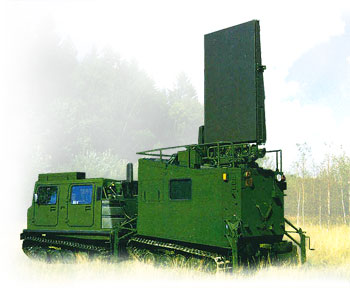
Norway and Sweden developed a surveillance and tracking radar called ARTHUR (ARTillery HUnting Radar), and fielded the system on Bv206 vehicles in 1999. The system is used to track incoming artillery, mortar, and rocket projectiles, has a 40 km/ 25 mile range, and can be mounted on the all-terrain Bv series armored vehicles or placed on trucks. This mobile and very transportable system was been ordered by Sweden and Norway, and exported to the Czech Republic, Denmark, Greece, Spain and the UK Royal Marines, who use the system as the “Mobile Artillery Monitoring Battlefield Radar program (MAMBA)”. Some ARTHUR systems have also been leased to Canada and Italy in support of peacekeeping operations.
Those leasing decisions may be about to create problems for the brand. Canadian forces have not been happy with ARTHUR’s performance in theater, and are actively canvassing alternatives that will help them pinpoint and reply to incoming artillery fire in Afghanistan.
As of January 2009, Ottawa Citizen reporter David Pugliese had identified 3 interested firms.
One is Lockheed Martin, whose EQ-36 Enhanced Firefinder improves on ThalesRaytheon’s currently fielded AN/TPQ-36 Firefinder, improving overall performance and offering 360 degree coverage instead of 90 degrees. An initial contract as awarded in September 2006, a prototype was unveiled in 2007, and July 2008 saw a US Army contract to accelerate delivery and fielding of the first 12 production EQ-36 radars.
Raytheon Canada intends to offer its improved AN/MPQ-64 Sentinel radar, which can detect rockets and mortar rounds at longer ranges than existing systems, and can also serve as an air defense radar. The Sentinel radar was first delivered to the US Army in 2006, is in use with British forces, and is the main air defense radar for the USA’s medium-range SLAMRAAM surface to air missile system used by Finland, Holland, Norway, and Spain.
Raytheon Canada’s Luc Petit added that Raytheon can also offer a land-based gun system than can be integrated with the radar and used to destroy incoming warheads. That system would be its Centurion/C-RAM, a land-based adaptation of the 20mm Phalanx gatling gun that serves as close-in defense and last-ditch missile protection for Canada’s naval ships.
Saab now owns Ericsson Microwave Systems, which developed ARTHUR. In response to Canada’s need, however, Saab International Canada reportedly intends to offer an advanced version of its Giraffe AMB 3D radar. The Giraffe AMB has been selected as a key component in Estonia’s new air defense system, and will also be part of Britain’s LEAPP comprehensive local air control and defense system. It reportedly provides 360-degree detection and tracking of incoming warheads.
The Canadian navy already uses an earlier version of the Giraffe radar on its Halifax Class frigates, which are scheduled for a radar upgrade as part of their modernization program. One potential hindrance is that the system must be integrated with ARTHUR software to add artillery-tracking capabilities to its air defense function. If the Canadian Forces decide that this software is part of the problem with their existing leased systems, Saab’s odds will be greatly diminished.
Contracts & Key Events

(click to view full)
July 15/10: The US DSCA announces [PDF] Canada’s formal request to buy 10 fire location radar systems, for up to $377 million. The request involves:
* Either 10 of Lockheed Martin’s AN/TPQ-36 (EQ-36) Enhanced Firefinder Radars or 10 of Raytheon’s AN/MPQ-64F1 Sentinel Radars;
* 10 AN/VRC-92E or AN/VRC-92F Single Channel Ground and Airborne Radio System (SINCGARS) Vehicular Dual Long-Range System Radios;
* 10 Sentinel M11521A High Mobility Multipurpose Wheeled Vehicles (HMMWVs);
* 10 AN/TPX-57 Identification Friend or Foe (IFF) trailers;
* Plus generators, spare and repair parts, repair and return support, tool and test equipment, communications support equipment, and other forms of U.S. Government and contractor support equipment.
The prime contractors will be either Thales Raytheon Systems of Fullerton, CA (MPQ-64) or Lockheed Martin in Syracuse, NY (EQ-36), plus International Telephone and Telegraph of Fort Wayne, IN (SINCGARS), and American General of South Bend, IN (HMMWVs). The AN/TPX-57 IFF is a Raytheon product.
In an unusual twist given the usual “Canada First,” requirements there are no known offset agreements proposed in connection with this potential sale. Implementation of this proposed sale will not require the assignment of any additional U.S. Government or contractor representatives to Canada.
Jan 1/09: A Montreal Gazette report quotes the Canadian military, whose own report stated that out of 3,200 incidents the radar identified as enemy fire, only 2 could be confirmed as real. That performance, and developments in the field, are reviving the Canadian Fores’ interest. Reports now indicate that a contract for up to 10 new systems is expected sometime in 2010.
The key question is whether a 2010 contract can do much good on the front lines, given Canada’s pledge to withdraw from Afghanistan by the end of 2011. Increasing use of cheap rockets by guerilla and terrorist forces can be expected to be a long-term problem, however, and artillery tracking has been an issue since Canada began staffing peacekeeping missions to Bosnia in the late 1990s.