

(click to view full)
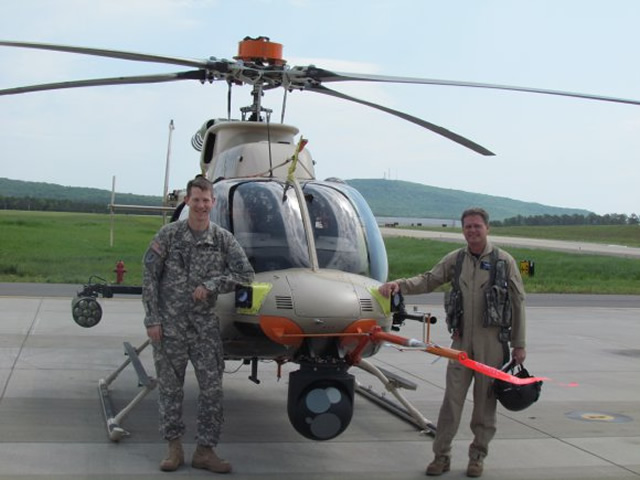
In July 2008, the US Defense Security Cooperation Agency announced Iraq’s formal request to buy 24 Armed Reconnaissance Helicopters that act as scouts, perform light close air support, and escort other helicopters on dangerous missions. The DSCA documents also included requests for airborne weapons – which would be a new capability for the nascent post-Saddam air force.
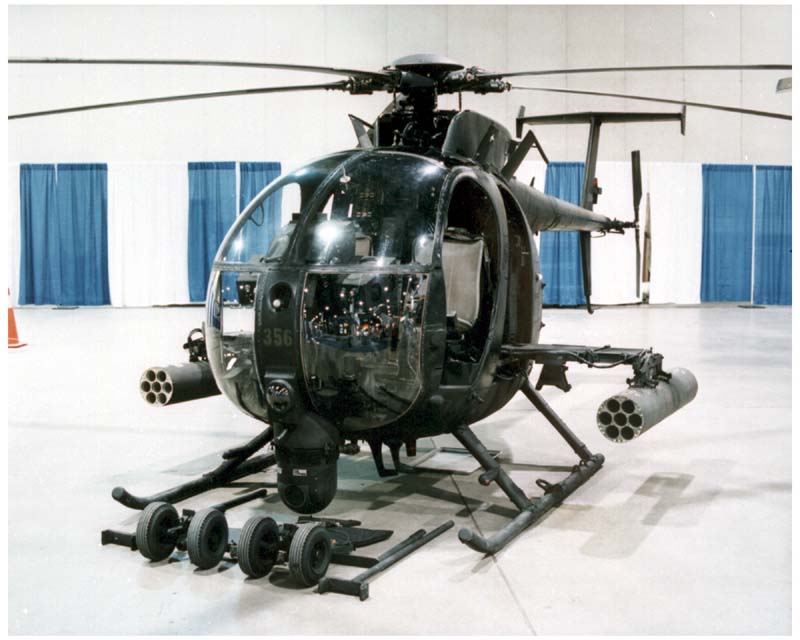
At the time of the requests, the IqAF relied on a small force of Russia’s popular Mi-8/17s, and a handful of refurbished Bell “Huey II” helicopters. While the Russian helicopters can be armed, their status as Iraq’s only medium utility helicopters makes them a poor fit for an ARH role. Instead, Iraq chose between 2 competitors. Bell’s 407 bears a close resemblance to the OH-58 scout helicopters used by the US Army, and the 407-derived ARH-70A won the American ARH competition before running into trouble. Boeing’s AH-6 “Little Bird” light attack helicopters are used by US Special Forces, are very effective in urban settings, and provided critical fire support during the 1991 “Blackhawk Down” incident. Iraq went on to pick Bell as its its ARH winner.
Contracts and Key Events
(click to view full)
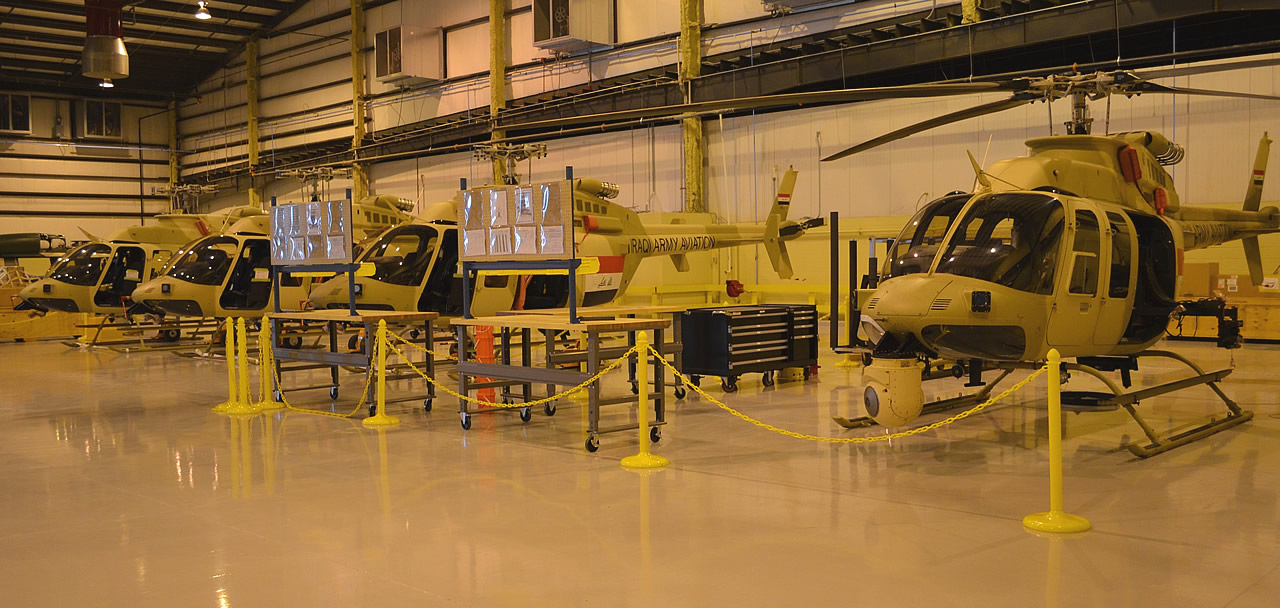
Jordan and Saudi Arabia ended up choosing Boeing’s AH-6i, but Iraq’s choice was the Bell 407. The USA ended up canceling its own armed ARH-70 Arapaho, but the US Army has supervised an “Iraqi Armed 407” variant that will carry a surveillance turret, datalinks, and weapons including .50-caliber machine guns and 2.75-inch/ 70mm rockets. Despite the presence of Hellfire missiles in Iraq’s official 2008 DSCA request, the US military’s IA-407 description omits any mention of guided missile capabilities, which are currently restricted to Iraq’s Cessna AC-208B Combat Caravans. On the other hand, a June 2011 order for turrets that include laser designation opens the door for AGM-114 Hellfire missile or laser-guided 70mm rocket capabilities.
This approach is radically different from the standard Foreign Military Sale case, where a customer picks a fully-configured system and has the contractor make some changes to it. 24 operational helicopters doesn’t seem like a lot, but the process took about 4 years from the 2009 conceptual phase, through design and testing, to final delivery in 2013. The US Army learned a lot doing it, and they intend to apply a number of lessons to the OH-58F program upgrade their own OH-58D Kiowa Warrior armed scouts.
2010 – 2014
Bell 407s all delivered; Support contracts; Eurocopter EC635s will also be armed scouts.

(click to view full)
Nov 12/14: Weapons. The US DSCA announces the Shi’ite government of Iraq’s official export request for up to 2,000 APKWS laser-guided rockets, weapon and test support equipment, spare and repair parts, publications and technical documentation, personnel training and training equipment, transportation, and other forms of US government and contractor support. The estimated cost is up to $97 million.
Iraq’s most likely platform for these rockets is its IA-407 armed scout helicopters, which are qualified for 70mm rockets and can also carry Hellfire missiles. Its AC-208B Combat Caravan prop planes might need additional integration, but their current tiny load of just 2 Hellfire missiles has been an operational problem. Adding laser-guided rockets would greatly improve their combat effectiveness.
The principal contractor will be BAE Systems in Nashua, NH. The proposed sale will involve multiple trips to Iraq involving U.S. government and contractor representatives for approximately 3 years for program management, program and technical reviews, training, maintenance support, and site surveys. Sources: US DSCA #14-35, “Iraq – Advanced Precision Kill Weapon System (APKWS)”.
DSCA request: APKWS guided rockets (2,000)
Oct 8/14: Shot down. The Islamic State proves once again that they’re well-armed and well-trained, shooting down an Iraqi Mi-35M attack helicopter and an IA-407 armed scout this week, and killing all personnel on board. The Iraqis aren’t the only combatants with shoulder-fired anti-aircraft missiles on hand.
Helicopters are inherently vulnerable to those kinds of measures. The Soviets discovered this in Afghanistan, losing earlier Mi-24 variants of the Mi-35M. As for the IA-407, the similar OH-58D was a key player during Operation Iraqi Freedom, but the USA had quite a few of them shot out of the sky. Sources: Defense News, “IS downs another Iraqi helicopter”.
Shot down
July 29/14: Support. The US DSCA announces an official export request from Iraq for a 5-year continuation of contractor logistics support for its Bell 407 (T-407 and IA-407), OH-58, and Huey II helicopters. This will include maintenance support, personnel training and training equipment, publications and technical documentation, site surveys, life support costs to sustain and protect the contractors, Quality Assurance Teams, and US government and contractor support. The estimated cost is up to $500 million.
The principal contractor will be Bell Helicopter Textron Inc. of Fort Worth, TX, and implementation will require 5 US Government and 25 contractor representatives to travel to or reside in Iraq for a period of 5 years. They’ll handle maintenance support, on-the-job maintenance training, and maintenance advice. Sources: US DSCA #14-05, “Iraq – Helicopter Sustainment Support”.
DSCA request: Support
Jan 7/14: Bell Helicopter Textron Inc. in Hurst, TX receives an $18.6 million contract modification for 6 additional months of contractor logistics support, covering the Bell 407, [UH-1 Twin] Huey, [Bell 206] Jet Ranger, and OH-58A&C helicopters in Al Taji, Iraq. Work will be performed in Iraq and Piney Flats, TN until Aug 8/14. US Army Contracting Command in Redstone Arsenal, AL acts as Iraq’s agent (W58RGZ-12-C-0030, PO 0009).
A very similar announcement with an identical contract number was issued on Dec 18/13, which referenced DSCA Foreign Military Sales case IQ-B-UDZ, and had only half of the funds committed. This looks like an amendment.
May 21/13: Delivery. The US Army delivers the 24th and last IA-407 to Iraq (8 deliveries x 3 helos per C-17), to accompany the 3 T-407 trainers. Another 3 prototype helicopters will remain at Redstone Arsenal, AL for future testing and integration work, unless the Iraqis ask for them to be equipped to operational standard and delivered. US Army.
Deliveries done
May 14/13: Support. Bell Helicopter Textron Inc. in Hurst, TX receives a maximum $85.4 million cost-plus-fixed-fee, foreign military sales (FMS) contract for engineering and technical support services to Iraq and Taiwan. Orders will be placed as required.
Iraq operates its Bell 407s, and also has a handful of UH-1N twin-Hueys. Taiwan’s heliborne strike force currently relies on OH-58D Kiowa Warrior scouts and AH-1W Super Cobra attack helicopters, and a dwindling stock of aging single-engine UH-1H Hueys remains the backbone of their utility helicopter fleet. It’s reasonable to assume that most of these funds will be spent in Taiwan.
US Army Contracting Command in Redstone Arsenal, AL received 1 bid (W58RGZ-13-D-0131).
Jan 18/13: Delivery. The USA delivers 3 more Bell 407 Scout helicopters to Iraqi Army Aviation. “This marks the 6th completed delivery of Iraqi Armed 407 Scout helicopters through the Foreign Military Sales case that began in 2010.”
Based on promises to deliver all of Iraq’s helicopters in 2012, they’re running a bit behind. US Army.
April 30/12: Update. WSFA in Mongomery, AL sheds some light on Iraq’s IA-407 helicopter project. Redstone Arsenal’s Foreign Military Sales (FMS) group expects to deliver the 27 armed IA-407s in 2012, joining the 3 T-407 training helicopters that arrived in December 2010.
The IA-407’s custom design was reportedly specified by Iraq, but it’s feeding back into American projects. Many members of the US Army’s OH-58 Cockpit and Sensor Upgrade Program (CASUP) team also worked with the FMS group, which will influence the USA’s OH-58F fleet life extension program. IA-1407 Program Manager Lt. Col. Courtney Cote says that:
“We learned a lot of lessons on how to do design, integration and qualification… on this program that are leveraged now… [in] the [USA’s] OH-58F program”
April 9/12: Support. Bell Helicopter Textron, Inc. in Fort Worth, TX receives a $15.4 million cost-plus-fixed-fee contract, buying contractor logistics support for 30 Bell 407 helicopters. That 30 involves 3 T-407 training helicopters, plus a fleet that has grown to 27 IA-407 armed reconnaissance helicopters.
Work will be performed in Al Taji, Iraq, and Piney Flats, TN, with an estimated completion date of July 31/13. One bid was solicited, with one bid received by U.S. Army Contracting Command in Redstone Arsenal, AL (W58RGZ-12-C-0030).
April 30/12: IA-407 to OH-58F. WSFA TV in Mongomery, AL sheds some light on Iraq’s IA-407 helicopter project. Many members of the US Army’s OH-58 Cockpit and Sensor Upgrade Program (CASUP) team also worked with Redstone Arsenal’s Foreign Military Sales group, and IA-1407 Program Manager Lt. Col. Courtney Cote says that:
“We learned a lot of lessons on how to do design, integration and qualification… on this program that are leveraged now… [in] the [USA’s] OH-58F program”
June 12/11: More armed scouts. DJ Elliott’s “ISF Order of Battle” for June 2011 reports that Iraq’s EC635 helicopters will be armed scouts as well. Their configuration will be based on the SAWS collaboration between Eurocopter and South Africa’s ATE, which includes Denel’s Ingwe beam-riding anti-tank missile, plus 20mm and 12.7mm gun pods from France’s Nexter and Belgium’s FN Herstal. Read “Iraq Orders Eurocopter’s EC635s” for full details.
June 1/11: Sensors. L-3 Communications EO/IR, Inc. in Santa Rosa, CA receives a $21.2 million firm-fixed-price contract for 22 MX-15Di surveillance and targeting turrets, with laser designators, for installation on Iraqi Armed 407 helicopters. The laser designators are significant, because it means the helicopters can independently target laser-guided missiles like Hellfires, or 70mm guided rockets like APKWS, DAGR, TALON, etc.
Work will be performed in Santa Rosa, CA, and Burlington, Ontario, Canada, with an estimated completion date of Dec 31/11. One bid was solicited, with one bid received by Army Contracting Command at Redstone Arsenal, AL, on behalf of their Foreign Military Sale client (W58RGZ-11-C-0114).
Dec 11/10: T407 Arrival. A USAF C-17 arrives in Iraq with 3 T-407 training helicopters, which will train the 21st IqAAC Squadron to fly the Iraqi Armed 407 (IA-407). They are being reassembled and flight tested, with their official delivery ceremony in Taji scheduled for Dec 15/10.
The Iraqi Army already has 2 newly-qualified instructor pilots, who along with their USF-I advisor counterparts, will soon begin the process of developing a cadre of instructor pilots to establish a self-sustaining program. A total of 27 IA-407s are scheduled for delivery to the 21st Squadron in late 2011 and early 2012. Pentagon DVIDS.
2008 – 2009
Bell 407 beats Boeing AH-6; Contracts placed for up to 50 helicopters; US Army will handle militarization and arming.
(click to view full)
Sept 23/09: +3 Training. Bell Helicopter Textron Inc. in Hurst, TX received a $6.9 million firm-fixed-price contract for 3 Bell 407 commercial helicopters. These helicopters will be used as the training platform for the Iraqi Armed 407 program, as described in Foreign Military Sale case E4-B-UBY.
Work is to be performed in Fort Worth, TX (55%) and Mirabel, Quebec, Canada (45%) with an estimated completion date of Dec 31/10. One bid was solicited with 1 bid received, since the Iraqis had already picked their helicopter. The U.S. Army Aviation & Missile Command, CCAM-AR-B at Redstone Arsenal, AL manages this contract (W58RGZ-09-C-0249).
Contract: 3 Bell 407s
April 29/09: Base contract. Bell Helicopter Textron Inc. in Hurst, TX received a $60.3 million firm-fixed-price contract for 24 Bell 407 helicopters for the country of Iraq, with an option to buy up to 26 additional helicopters. This contract will be fulfilled over the next 27 months, with an additional 13 month period of performance if the option is exercised. Work is to be performed in Alliance, TX (55%) and Mirabel, Canada (45%) with an estimated completion date of Sept 30/12. The U.S. Army Aviation & Missile Command in Redstone Arsenal, AL will manage the contract (W58RGZ-09-C-0160).
According to Bell Helicopter officials, this contract is for plain commercial Bell 407 airframes. The US Army is in charge of the militarization process to meet the mission requirements of the Iraqi Air Force. Bell Helicopter is prepared to assist with that process if contracted to do so. Adding options that found their way into the US Army’s ARH-70 test aircraft, such as the larger engine, different engine cowling, airframe modifications for weapons carriage and use, and array of new electronics, will be handled by the US Army as a go-between for the helicopters’ foreign customer.
Note that before the ARH-70 program was canceled, the additional equipment and integration had lifted their unit cost to about $12-14 million each.
Contract: 24-50 Bell 407s
March 25/09: EC635s. France and Iraq sign a EUR 360 million ($488 million equivalent) order for 24 EC635 helicopters.
The EC635 can be seen as the modern successor to the SA 341/342 Gazelle, which Saddam Hussein’s forces used in an armed scout and light attack role. Like its predecessor, it can be used in any of the light utility, search-and-rescue, or armed scout roles.
March 16/09: Clarification. At a DoD roundtable [PDF], Col. Lawrence Avery Jr., the US force deputy director of MNSTC-I’s security assistance office, establishes the Dec 10/08 request as an additional, follow-on request:
“…they are in the process of purchasing Bell — in — Bell 407 armed scout, which’ll be a lightly armed — lightly armed helicopter. The first deliveries will be in a couple of years from now. And they purchased 24 of those, and they have a request in, as they evaluate their budget, for potentially buying 26 more, for a total of 50. So that’s what they’re — that’s what they’re in the process of buying.
They have Mi-17s that they already own. They have Mi-17s — the 22 that were talked about earlier that are (in bounds/inbound ?) that — they’re looking at options for maybe arming some of those. So as far as, you know, what all their desirements are, I can’t really speak to that. I do know they are – the armed capabilities, I know their purchasing for helicopters is through Bell 407 armed scout program.”
(click to view full)
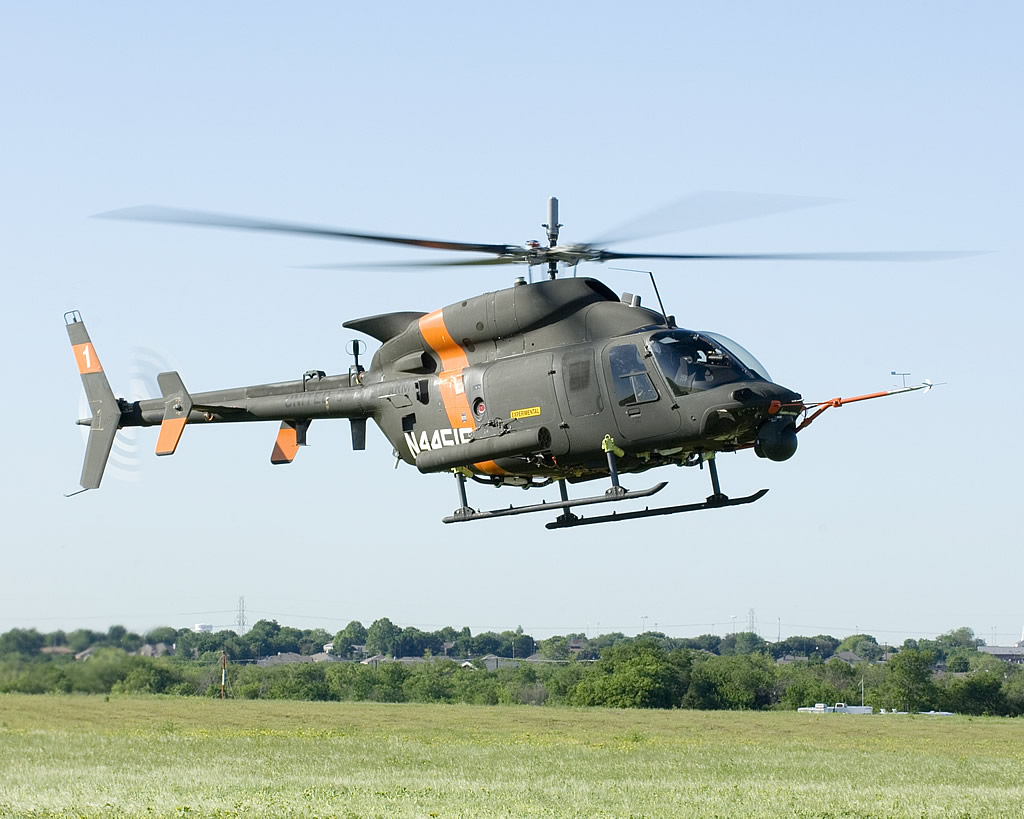
Dec 10/08: The US DSCA announces [PDF] an official request from Iraq, which appears to have selected a winner in its own Armed Reconnaissance Helicopter competition. Bells 407 ARH appears to have beaten Boeing’s AH-6 ARH, as Iraq asks for another squadrons’ worth (24 + 2 training/ spares):
26 Bell Armed 407 Helicopters
26 Rolls Royce 250-C-30 Engines
26 “M280” 2.75-inch/ 70mm rocket Launchers (see below, may be a typo)
26 XM296 .50 Cal. Machine Guns with 500 Round Ammunition Box
26 M299 Hellfire Guided Missile Launchers
The estimated cost is $366 million, to be finalized in forthcoming contract negotiations. Bell recently had this model canceled as the winner of the USA’s ARH-70 Arapaho competition, after continuing development with private funds for over a year. This order would throw their helicopter a critical lifeline at a critical time, and may even suffice to give it the market foothold Bell needs. The Long War Journal has reported [PDF] that Iraq’s initial ARH buy is just the first of several, and that the IqAF intends to field up to 5 squadrons by 2015.
The request also includes test, measurement and diagnostics equipment, spare and repair parts, support equipment, publications and technical data, personnel training and training equipment, U.S. Government and contractor engineering and logistics personnel services, and other forms of support, which will involve contractors and military representatives in country but have not been defined yet.
Bell 407 wins: DSCA export request
Nov 2/08: Iraqi plans. A briefing [PDF transcript] from Iraqi General Nasier Abadi, Vice Chief of Staff of the Iraqi Joint Forces, includes this item:
“Expansion of reconnaissance and air surveillance and with King Air aircraft. and there have been a contract with helicopter to support the aerial support. There are 24 aircraft from Bell 407, 24 aircraft from Eurocopter 635, and 24 support aircraft AT-6B and 36 jet fighters of 516.”
The EC635 is a successor to the French Gazelle helicopters used in Iraq by Saddam’s forces, and by opposing British forces as well. They can be armed, and neighboring Jordan has ordered a handful. See the linked article below that covers Iraq’s EC635 purchase.
(click to view full)
Oct 7/08: AH-6. Boeing appears to be using Iraq’s request as a more general template, as it announces the AH-6 Armed Reconnaissance Helicopter’s addition to its product line. The AH-6 features an advanced communications package, a surveillance and targeting turret, as well as a weapon set that includes Hellfire missiles, the M260 7-rocket pod, a machine gun, and a mini-gun integrated with a sensor system.
Boeing will produce the AH-6 ARH at its Rotorcraft Systems facility in Mesa, AZ. Dave Palm, director of Boeing Rotorcraft Business Development, said that:
“Boeing has been approached by several potential customers seeking light attack and reconnaissance capabilities in a flexible rotorcraft platform… We believe this system is a perfect fit for those customers seeking long endurance, proven performance and 2,000-pound payload within an affordable helicopter.”
A number of countries use the related MD500 family in this role, arming them with TOW anti-armor missiles, rocket pods, and/or miniguns. The AH-6 ARH updates that niche, and could gain traction. If so, however, it will be at the expense of MD Helicopters, which is trying to revive its fortunes. MD Helicopters lost its opportunity to return to the military market when America’s ARH contract went to Bell’s 407, and the LUH contract went to Eurocopter’s EC145. Attempting to compete in the ARH segment against Boeing would be extremely difficult and costly. MD Helicopters would face long odds, despite a fair claim of better but less battle-proven helicopter technology. Boeing release.
July 30/08: Export request. Iraq issues its initial request, which includes both alternatives for its ARH platform, and a wide array of weapons and supplementary equipment, to match the 26 Mi-17 medium helicopters in 15th Special Ops squadron:
* 24 Bell Armed 407 Helicopters, similar to the American ARH-70 program; or Boeing AH-6 “Little Bird” Helicopters. The AH-6 is the specialized attack version of the MH-6, designed to mount missiles, guns, and/or 7-tube rocket launchers.
* 24 Rolls Royce 250-C-30 Engines. Actually made by its subsidiary Allison. The Allison 250 powers both the MH-6 and the commercial Bell 407, but not the ARH-70 which used Honeywell’s HTS900-2 turbine.
* 24 of Lockheed Martin’s M299 Guided Missile Launchers. Can launch Hellfire missiles, or DAGR laser-guided 2.75″ rockets
* 200 of Lockheed Martin’s AGM-114M Hellfire II missiles. Laser-guided, which means the helicopters will either need a sensor/targeting turret, or be forced to rely on ground troops “painting” the target with systems of their own. Standard blast/fragmentation warhead.
* 16 M36 Hellfire Training Missiles
* 24 “M280 2.75-inch Launchers.” This may be a typo. The usual launchers are the 7-rocket M260 or the 19-round M261. Helicopters in this class are more likely to use the M260.
* 15,000 2.75-inch/70mm Rockets. Standard unguided rockets.
* 24 XM296 .50 Cal. Machine Guns with 500 Round Ammunition Box
* 24 M134 7.62mm Mini-Guns
Land Systems
* 565 M120 120mm Mortars. General Dynamics makes most of these for the US armed forces.
* Unspecified 120mm ammunition
* 665 M252 81mm Mortars
* Unspecified 81mm ammunition
Plus test measurement and diagnostics equipment, spare and repair parts, support equipment, publications and technical data, personnel training and training equipment, U.S. Government and contractor engineering and logistics personnel services, and other related elements of logistics support.
The principal contractors listed in the July 30/08 DSCA request were Bell Helicopter Textron, Inc. in Hurst, TX or Boeing Integrated Defense Systems in Seattle, WA. Iraq appears to have picked Bell’s 407, which removes Boeing from that list. U.S. Government and Contractor technical assistance will be required, but had not been fully defined when the DSCA requests were made.
US DSCA export request
The Shape of Things to Come: A View from 2008

(click to view full)
The DSCA adds that:
“The proposed sale of these helicopters, missiles, and mortar systems will be used to develop new Iraqi Air Force (IAF) squadrons and/or wings, and to enhance the ability of the IAF to sustain itself in its efforts to bring stability to Iraq.”
DID reader DJ Elliott, who is the prime author of the Iraqi Security Forces Order of Battle at the respected Long War Journal, believes that these helicopters are destined for Iraqi Special Operations support alongside the 26 Mi-17v5s of 15th Special Operations Squadron.
He also points to July 2008 rumors of interest in up to 50 used SA 341/342 Gazelle helicopters from France or Britain, however, which could change the wider implications of this purchase from “likely special forces support” to “the beginning of a wider push to deploy close support aviation.” An agreement for EC635 helicopters was signed in March 2009, but their planned role remains unclear.
Meanwhile, progress continues on the fixed wing front. The “jet fighters of 516” mentioned by Iraqi General Nasier Abadi in the Nov 2/08 briefing is likely a transcript error, which meant to say F-16. Iraq has submitted an official DSCA request to buy AT-6B trainer and light attack aircraft. A similar DSCA request is also reportedly in the works for F-16s, but has not been issued as of March 2009. Official government requests indicate that the slot between the prop-driven AT-6B and the F-16 looks set to be filled by Korea’s supersonic T/A-50 Golden Eagle, which can be given decent air-to-air and air-to-ground capabilities.
Postscript: The EC635s went on to become armed scouts, thanks to a collaboration with South Africa’s Denel. That gives Iraq at least 3 armed helicopter types: IA-407, EC635, and Mi-17. Iraq did eventually place orders for F-16s, but their effective use is still 5 or more years away. They never did order AT-6B COIN aircraft, but they did order Czech L-159s that could function as COIN aircraft, or as intermediate to advanced jet trainers. As of 2013, the L-159s aren’t operational yet.
Additional Readings
* DID – APKWS II: Laser-Guided Hydra Rockets in Production At Last.
* DID – 22 More Mi-17s for Iraq. These medium helicopters can be armed – and have been.
* DID – Iraq Orders Eurocopter’s EC635s. They work as armed scouts, and also serve in a light utility and SAR (Search And Rescue) role.
* Boeing (Oct 7/08) – Boeing Announces New Rotorcraft Program: AH-6. Didn’t win here, but the Saudis bought some.
* The Long War Journal (Aug 4/08) – Iraqi Security Forces Order of Battle: August 2008 Update. Overall analysis of Iraq’s recent purchases, and their likely destinations.