

(click to view full)
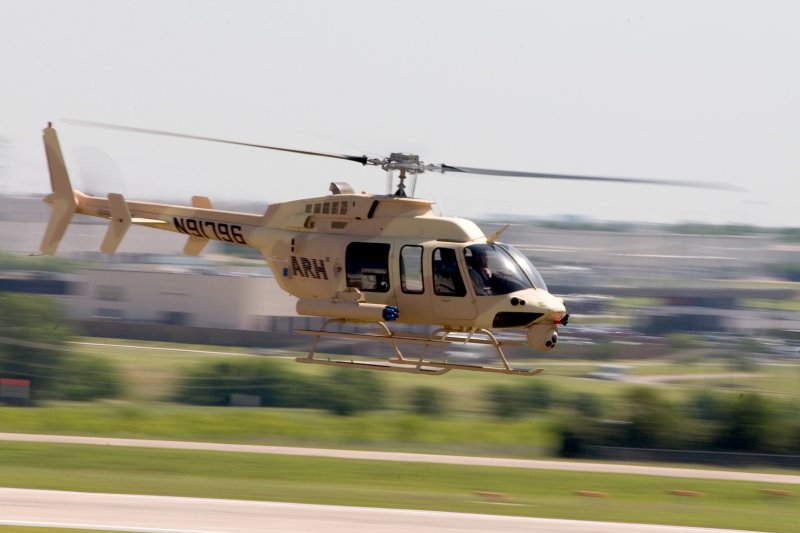
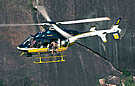
The US Army’s Armed Reconnaissance Helicopter (ARH) program aimed to replace around 375 Bell Textron OH-58D Kiowa Warrior helicopters, after the $14.6 billion RAH-66 Comanche program, was canceled in 2004. Instead, the Army would buy a larger number of less expensive platforms, with reduced capabilities. Bell Helicopter Textron initially won the ARH competition with a militarized version of its highly successful 407 single-engine commercial helicopter, but despite significant private investment after Army funding stopped in March 2007, spiraling costs killed the ARH-70 in October 2008.
What hasn’t changed is the battlefield need for on-call, front-line aerial surveillance and fire support. With its existing OH-58D stock wither wearing down, or shot down, the Army needs to do something. But what? The eventual answer: scrap the Kiowa fleet for a combination of attack helicopters and UAVs.
AAS: Now What?
Timeline & Choices

(click to view full)
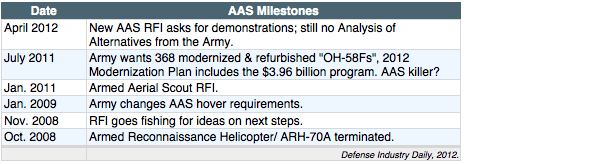
Canceling the ARH program didn’t cancel the battlefield need for a machine that did its job.
At present, the US Army believes that OH-58F upgrades to the existing OH-58D helicopter fleet would allow them to field the 1st unit in FY 2016, and would cost between $3.0 – $4.1 billion.
In the current budgetary environment, money doesn’t just talk, it votes. If the Army picks a different Armed Aerial Scout (AAS) helicopter to replace the OH-58s, design and testing will push the expected fielding date to FY 2022, and estimated program costs rise to $4.8 billion – $12.1 billion, depending on the Army’s choices and requirement tradeoffs. As one example, the current AAS needs to hover out of ground effect at 6,000 feet and 95 degree temperatures, with full payload (vid. Jan 12/09 entry, below). That requires higher-end machines. Relaxing the standard would lower costs, but then the AAS would come up short in places like Afghanistan. The Army hopes to find less risky tradeoffs, in order to keep costs low enough to make the AAS a competitive choice.
The future also has a vote. Some planners believe that the battlefields of 2040 will need a better helicopter than any conventional OH-58 design can offer. The Army’s current uncertainties revolve around whether they believe they can field something that’s a step or more ahead of the OH-58F, for only a little bit more money. A couple of manufacturers are touting that kind of breakthrough possibility, but the Army isn’t sure.
They Army was sure that existing OH-58D Kiowa Warriors won’t stop wearing out, and that the Army won’t be able to field replacements by 2013-14, as planned. Which still leaves them with key choices to make, 3 years after the first AAS Request for Information. The original 2005 ARH contract was a straight competition between Boeing/MD Helicopters’ MD530, and Bell’s 407. The renewed AAS competition is already much more lively. The Army openly announced that it was considering:
* AAS = OH-58F+. No AAS, just OH-58D refurbishment & upgrades. Subsequently, the Army’s FY 2014 RDT&E budget justification states that “KW CASUP current program baseline is not the alternative solution to meet the Armed Scout Helicopter (Project 53Z) capability.” Reality: whether or not the Army openly says so, it is.
* Off the shelf. AAS, using a commercial off-the-shelf armed design with minor modifications. The EADS/Lockheed AAS-72X, Boeing AH-6i, AW169 AAS, and MD-540F are examples of this option. After the Iraqi IA-407 ARH and US Navy MQ-8C UAV programs, so is Bell Helicopter’s 407. The OH-58F program might be truncated to a fairly short bridging program if this happens.
* New platform. AAS, paying to develop a new helicopter or modification kit, because the added capabilities are so significant. It need not involve a totally new helicopter, like Sikorsky’s compound S-97 Raider. AVX’s compound helicopter modifications to the existing OH-58 Kiowa fleet would also qualify under this heading. Depending on how long it takes to develop, test, and certify them, this option may add extra costs by forcing the Army to conduct all or almost all of the OH-58F program while they wait.
Eventual decision: none of the above.
AAS Competitors
(click to view full)
As this list demonstrates, the pressures of combat in Afghanistan and Iraq led manufacturers to invest in developing low-budget Armed Reconnaissance helicopters. Some were derivatives of existing machines. Others saw the ARH cancellation opening a window to truly new technologies and approaches.
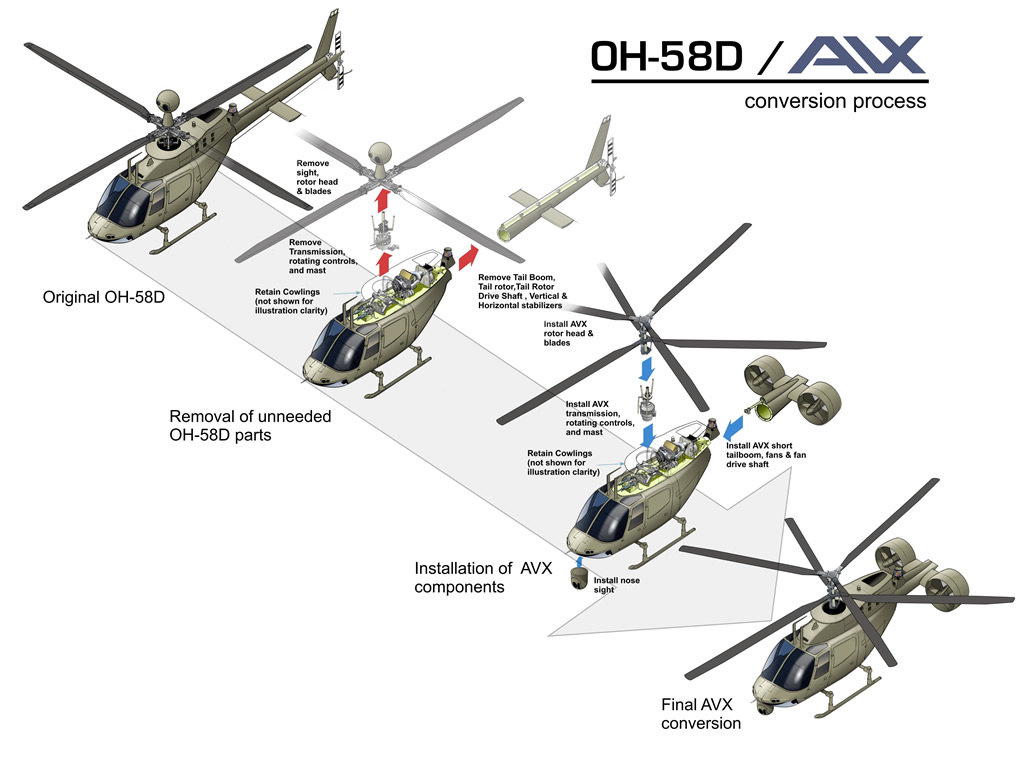
AVX: A team of former Bell Helicopter engineers at AVX has an idea that’s at once more radical, and less: convert the existing OH-58D fleet to compound OH-58 AVX helicopters sporting coaxial sets of rotors, and twin fans instead of a tail rotor. They believe their modifications would nearly double range, add about 50% to speed, and improve performance in hot and/or high altitude conditions, while keeping investment low. The risks are high, as the company is very new, and AVX will require some government investment to prove out their concept. On the other hand, the team is experienced, and the combination seems very close to what the Army is looking for. Funding contracts for R&D related to JMR-FVL and other programs are helping AVX into the game.
AgustaWestland: They’re currently offering the AW169 5-ton, twin, engine helicopter, but their choices have changed a lot over time. Late 2010 releases pointed to a derivative of the 6,300 pound AW119 for AAS, in order to meet the USA’s high-altitude hover requirement. In 2013, they unveiled the twin-engine, 10,000 pound class AW169 AAS, and announced that they’d offer it instead. Their rationale is straightforward: if the Army really wants to escape current speed and weapon limitations in hot and high conditions, they need more power and a bigger helicopter. Have they just offered the solution the Army must have, or have they misread the customer?
(click to view full)
Boeing: Their AH-6i ARH is based on the AH-6M “Little Bird” platform used by American Special Forces. Saudi Arabia purchased some, and there have been rumors of a signed contract in Jordan. There are also reports that the firm may be preparing a lighter version of its AH-64 Apache helicopter gunship, which often finds itself performing armed scout roles on the front lines. They would need to remove more than half the cost, in order to make a lighter AH-64 a viable option. Which is why the AH-6i is far more likely.
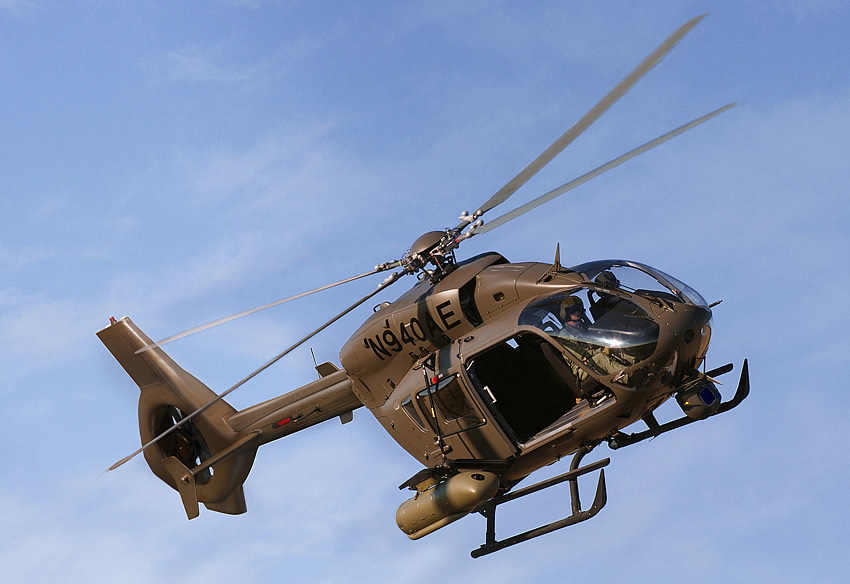
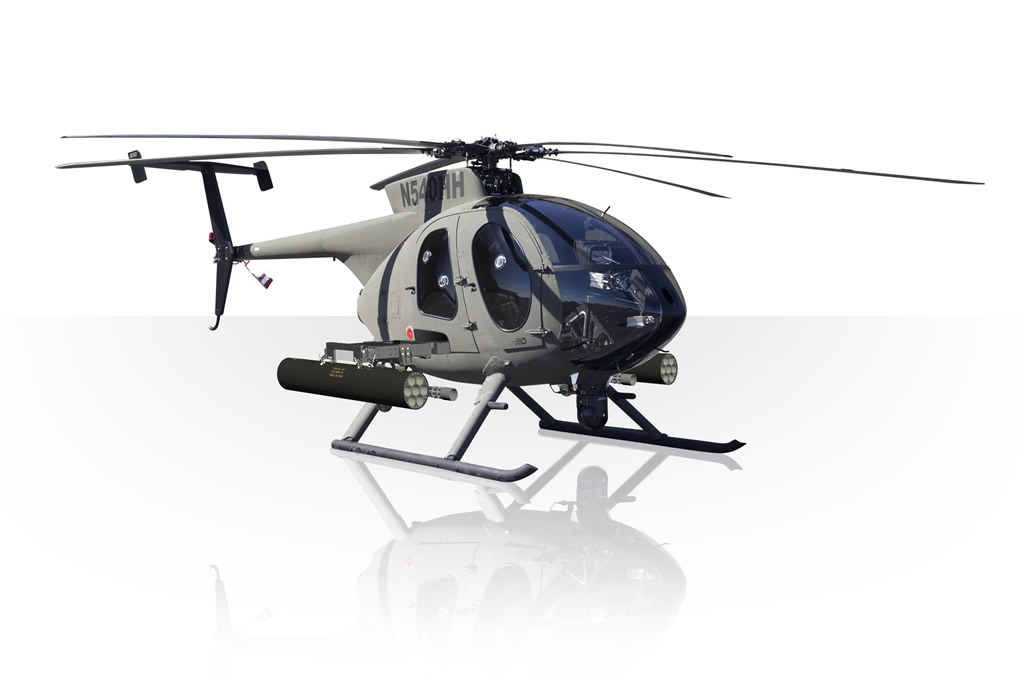
Eurocopter: They’ve teamed with Lockheed Martin to offer the EC645/ AAS-72X. It’s an armed scout cousin to the Army’s unarmed UH-72A Lakota Light Utility Helicopter, a new US Army platform with a very good delivery, cost, and service record. The final airframe seems to be based on the EC145 T2+, rather than the UH-72A’s EC145 base. The uprated engines and fenestron shrouded tail rotor reduce commonality benefits, but may improve performance. The team’s challenge will be to leverage Lockheed Martin’s experience to convince the Army that an AAS-72 would avoid the same conversion issues that plagued the 407/ ARH-70, while providing cost savings via some UH-72A commonality.
AAS’ January 2014 cancellation made this an expensive venture, but by the end of 2014, the team had sold 20 of these helicopters: 15 for Germany’s KSK special forces, and 5 for the Thai Navy.
MD Helicopters: They’re reportedly cooperating with Boeing on AH-6i sales to foreign governments, but they’ve also created an MD-540F armed scout helicopter that leverages their 530F model, which is specifically designed for high altitudes and hot temperatures. The MD-530F made the government of Afghanistan its 1st military customer, and is looking to for other opportunities. Since MDHI descended from a Boeing spinout, however, its AAS entry may be about to create a legal battle on the sidelines.
(click to view full)
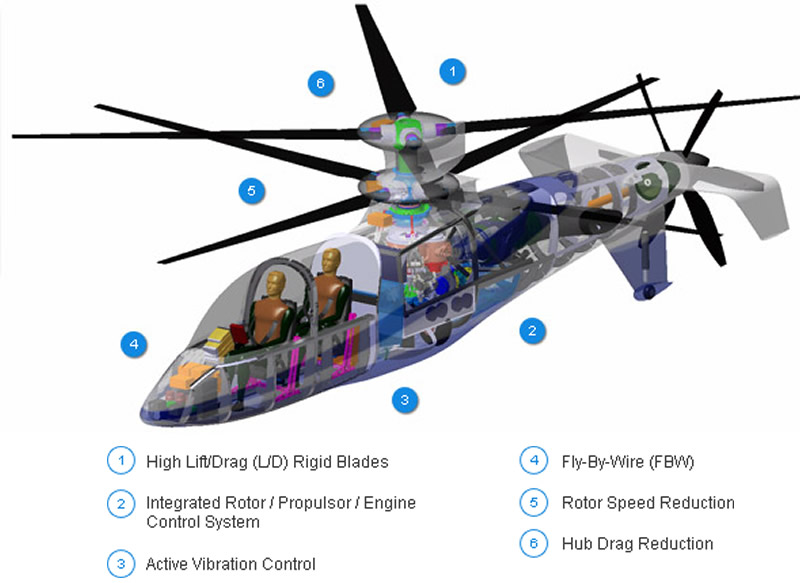
Sikorsky: They can offer “Battlehawk” armed kits that would equip existing Army UH-60Ms, thanks to corporate investment and a pioneering deal with the UAE. It’s a cheap option that would allow the existing Black Hawk fleet to do double duty as utility and/or armed scout helicopters.
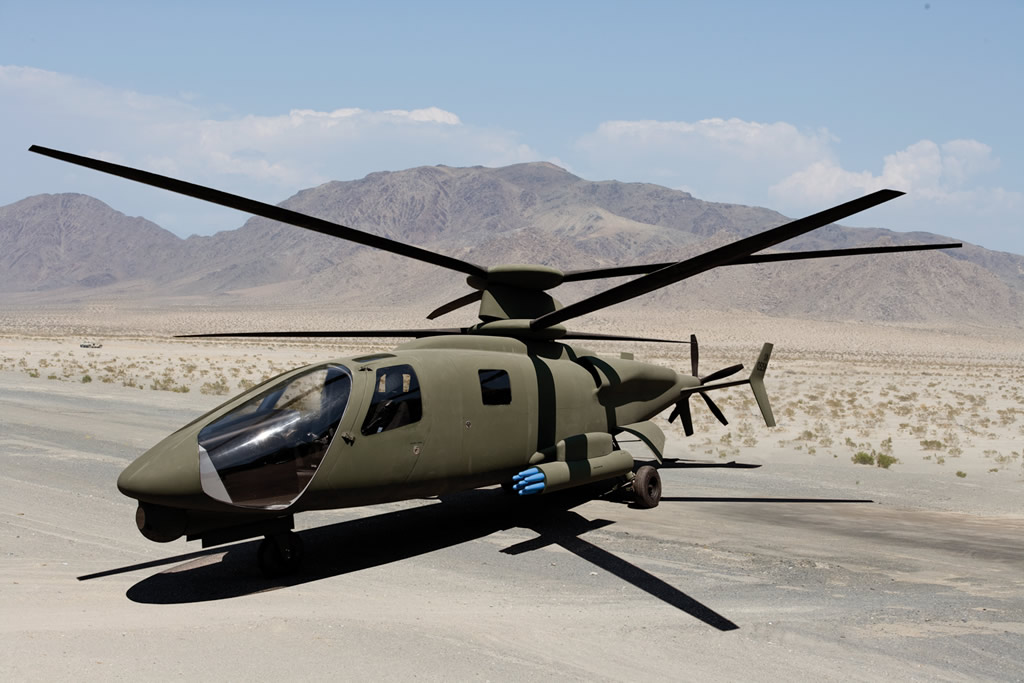
Sikorsky can also offer a revolutionary compound helicopter design based on their X-2 technology, which goes a step beyond even the OH-58D AVX’s notional performance. The S-97 Raider would add a unique niche to the AAS’ repertoire, because it would be able to keep up with and escort V-22 tilt-rotors at full speed. It will also have some troop-carrying capability, and is being touted for special operations roles. X2 demonstrator flight tests are underway, and Sikorsky is expecting a 1st flight for their S-97 prototype by 2014.
Textron Bell isn’t standing still. They provided Bell 407s to Iraq, which were militarized into IA-407 armed scouts by the US Army’s Redstone Arsenal. Bell is also collaborating with Northrop Grumman on the Fire-X unmanned 407 derivative, which has received an April 2012 development contract from the US Navy to become the “MQ-8C”. An optionally manned armed scout is a unique feature that could renew Army interest in their ARH-70 Arapaho design.
Bell Helicopter’s backup plan is already in place: the “OH-58F” upgrade option for the existing Kiowa Warrior fleet, relying on Army requirements as a base.
All of this assumes that a budget-pressed US Army doesn’t simply decide to rely on its existing UAVs and precision artillery for surveillance and aerial support, while allowing its fleet of armed scout helicopters to dwindle and disappear. Advances in UAVs, and in precision artillery of all kinds, made that an unpalatable but thinkable proposition. In time, it became their chosen path.
ARH-AAS: Contracts & Events
DID has decided to cover both the AAS competition and the OH-58F program in one article. Despite the Army’s denials, the progress of the OH-58F program will affect the AAS’ odds of survival in a tightening budget environment. Splitting the 2 programs would be “cleaner,” but it would lose important information.
FY 2019
No AAS, and no OH-58F.
[youtube:v=k2qZ7bKvJQY]
May 22/19: Hellenic Forces Greece received 70 Bell OH-58D Kiowa Warrior armed reconnaissance helicopters and one Boeing CH-47D Chinook heavy-lift helo. The Hellenic Army purchased the OH-58Ds through the US Excess Defense Articles program. The shipment consists of 36 fully equipped aircraft, plus 24 that lack certain avionics, navigation, and communication equipment, and will be dedicated to training. The remaining 10 airframes are to be used for spares. Six of the helicopters came ready to fly. The deal for the Kiowa Warriors is valued at $44,2 million.
FY 2014
Jan 14/14: All Alternatives Scrapped. The OH-58 fleet will be retired, without a successor. Instead of 15 Combat Aviation Brigades, the Army is likely to drop to 10-13.
US Army Aviation Center of Excellence commander Maj. Gen. Kevin W. Mangum finally discusses the Army’s 2010 ARH Analysis of Alternatives, which recommended a mix of AH-64Es and UAVs to take on the Army’s scout helicopter role. So, why did the Army keep pushing for a new Armed Aerial Scout? Magnum says they didn’t have enough money to buy enough AH-64s. What changed? A smaller Army doesn’t need as many. The current leadership has decided that 698 AH-64Es, who will be able to control the planned fleets of unarmed RQ-7B Shadow and armed MQ-1C Gray Eagle UAVs from the air, will provide an “80% solution.”
The AH-64D to AH-64E upgrades will be funded by avoiding Kiowa modernization or replacement, and the Army also axed 15 military specialties that were unique to the OH-58D. Some rebalancing will need to move more UH-60s to the National Guard, where they can offer useful capabilities during natural disasters etc., while shifting AH-64s to the active-duty force. Gen. Magnum adds that investment of all kinds is going to be slim:
“I tell youngsters who are in the Basic Officer Leader Course that when some of you retire from the Army in 20, we still will not have finished fielding the UH-60M and AH-64E. That’s how far we’ve pushed these programs.”
Especially with AH-64s and UH-60s costing a good deal more to fuel and maintain than Kiowas. The question is whether the sequester’s recent rollback will create pushback on Capitol Hill, if National Guard drawdowns affect local bases. If so, will that pushback be enough? The Army does seem determined to do this. Sources: US Army, “Army aviation flying smarter into fiscal squeeze” | Alabama.com, “Army planning to scrap OH-58 Kiowa Warriors helicopter fleet: Reports” | Jackson Sun, “National Guard: Tennessee could lose 30 OH-58D helicopters, including at Jackson flight facility, under proposed Army plan” | The Motley Fool, “The U.S. Army Is About to Make a Huge Mistake”.
End of the Scout helicopters
FY 2013
Army wants a competition, then steps back to re-think; Boeing & MD Helicopters at odds; OH-58F makes ceremonial 1st flight.
(click to view full)
Sept 20/13: S-97. The first composite fuselage arrives from sub-contractor Aurora Flight Sciences,at Sikorsky’s Development Flight Center in West Palm Beach, FL. Sikorsky will use it as the base for a 36-foot-long, 11,000-pound gross weight S-97 Raider prototype. Sources: Sikorsky, Sept 26/13 release.
Aug 26/13: OH-58. Bell Helicopter Textron, Inc. in Hurst, TX receives a $61.1 million firm-fixed-price, no option contract modification for 12 new metal scout (OH-58D) helicopter cabins, 12 supplemental parts kits, and associated over and above effort demands.
Work will be performed in Amarillo, TX (97%) and Hurst, TX (3%). This contract was a non-competitive acquisition by US Army Contracting Command , Aviation in Redstone Arsenal, AL (W58RGZ-11-C-0016, PO 0046).
Aug 1/13: OH-58F. Bell Helicopter Textron Inc. in Hurst, TX receives a maximum $7.7 million firm-fixed-price contract for OH-58F A-Kit long lead time materials. The award uses FY 2013 procurement funds, and 1ne bid was solicited, with 1 bid received by US Army Contracting Command at Redstone Arsenal, AL (W58RGZ-13-C-0131).
April 30/13: OH-58F. The refurbished helicopter makes its official 1st flight at Redstone Arsenal, AL, but it isn’t the 1st time the new model has flown. According to the Army release, the Milestone C production decision has been pushed back about a year to 2015, with 60 LRIP machines followed by Full Rate Production beginning in 2017. US Army.
OH-58F “1st flight”
April 12/13: Delay. PEO Army Aviation Maj.-Gen. Tim Crosby says that AAS is being reconsidered, again:
“I know we told you we were going ahead [with an AAS competition], but the truth changed…. We are taking a few steps back, so we don’t rush to failure”
AAS is competing with an Improved Turbine Engine Program to boost Army UH-60 Black Hawk utility and AH-64 Apache attack helicopters, the bleeding-edge Future Vertical Lift program that’s trying to replace both the Black Hawk and the Apache with the same core design (!?!), and a new fixed-wing utility plane to replace aging C-12 King Airs. Meanwhile, the heavy-lift CH-47F helicopter’s multi-year buy commits a large block of Army aviation funds for a few more years. Aviation Week.
April 11/13: AW169 AAS. AgustaWestland officially unveils their new AAS entry, the AW169. The question is whether they’ve read their customer right, or are offering something that’s too expensive for the competition.
The AW169’s enhanced PW210A engines give it an extra power margin, even if an engine is destroyed, and its fully modern cockpit includes an unspecified Helmet-Mounted Display. A manned-unmanned teaming workstation positions them for the future. The 5-ton helicopter is very large compared to its competitors, however, even though AgustaWestland has smaller machines to offer. They’ve decided on the AW169 instead of the AW119, differentiating by offering more room for soldiers, extended-range tanks, and command-and-control functions. The AW169’s 4 prototypes have logged over 200 flight hours in the past 9 months, but it’s still in development, and won’t fully enter the market until 2014 – about the time the commercial AW169 will be certified. AgustaWestland.
Jan 9/13: Army Wants a Competition. US Army AAS program manager Col. John Lynch says that the Army was recommending a competition for 368 new helicopters, but vice chief of staff Gen. Lloyd Austin III wanted more data from the voluntary flight demonstrations before he’d approve that. He also wanted the Army to consider the pace of UAV development and advances in other technologies, and their implications for this role.
Lynch believes that the many of the new-buy options would cost more than the Pentagon’s stated $13-15 million per machine for development and production, and believed that industry could meet the Army’s needs for fast delivery. That could be a problem, especially if the bids come in and they’re all high. As Lynch acknowledges, “We have to get this one right because it is probably the last chance….” Aviation Week.
Nov 27/12: Boeing vs. MDHI. Shephard’s Rotorhub reports that a legal dispute is brewing between Boeing and MD Helicopters, over MDHI’s decision to offer the MD-540F in the American AAS competition, against Boeing’s AH-6i and other competitors.
Hughes Helicopters was sold to McDonnell Douglas in 1984, and that firm was acquired by Boeing in 1997. Boeing then spun off MDHI in 1999, under the terms of a specific agreement. The key question is what that spinoff agreement said, and what permissions were given to MDHI to compete in the military market against Boeing. MDHI personnel told Rotorhub that they believe the agreement gives them this latitude.
The larger question is whether the roster of outside competitors even matters at this point.
Oct 12/12: AAS-72X. The US Army holds preliminary flying tests of Eurocopter’s EC145-T2 at Fort Hood, TX. The tests are related to the AAS program, but they’re flying the civilian base helicopter instead of the AAS-72X+ prototype. DVIDS.
FY 2012
Contenders. RFI for demonstrations.
(click to view full)
April 30/12: OH-58F. WSFA TV in Mongomery, AL sheds some light on Iraq’s IA-407 helicopter project. Many members of the US Army’s OH-58 Cockpit and Sensor Upgrade Program (CASUP) team also worked with Redstone Arsenal’s Foreign Military Sales group, and IA-1407 Program Manager Lt. Col. Courtney Cote says that:
“We learned a lot of lessons on how to do design, integration and qualification… on this program that are leveraged now… [in] the [USA’s] OH-58F program”
April 25/12: RFI for demonstrations. The US Army’s new AAS RFI spells out the OH-58D’s shortcomings, including speed, range and endurance; the performance margin to operate in high and hot environments; and limited weapon-carry capacity. This is especially true in environments like Iraq and Afghanistan, where OH-58Ds have had to operate with partly-filled fuel and tanks and fewer weapons, in order to save weight.
The Army would prefer not to have to make those choices, but after 3 years, they’re still trying to define what they want. To that end, the RFI includes a request for uncompensated “air vehicle technologies” demonstrations from manufacturers, to help give the Army a better idea of what they can ask for, and what they can afford within their budget. Those demonstrations would take place in summer-fall 2012, but they’re voluntary, and don’t affect RFP eligibility. They might affect RFP specifications, though, if the Army sees something it likes. US FBO.gov | US Army.
April 2/12: AAS-72X+. American Eurocopter unveils its AAS-72X+ contender for the Army’s Armed Aerial Scout, which may or may not become a program. Unlike the LUH, it will be based on Eurocopter’s EC-145 T2, which adds more powerful 1,038 shp Turbomeca Arriel 2E engines, replaces the dual-tail rear rotor with an enclosed Fenestron, and uses the Helionix glass cockpit and avionics suite instead of Thales Meghas. American Eurocopter.
Jan 30/12: Budget realities. Aviation Week discusses the parameters of the AAS competition, and the fundamental funding choices confronting the US Army. The bottom line? Whatever the Army chooses to do will need to be taken from some other Army aviation program.
“Lt. Gen. Robert Lenox, deputy chief of staff for programs and resources, laid out the conundrum in financial terms during this month’s [AUSA] aviation symposium… Upgrading the Kiowa fleet with avionics and new sensors, with a first unit to be equipped in fiscal 2016 would cost $2.98 billion to $4.1 billion. A new aircraft effort, with a first unit equipped in fiscal 2022 would cost from $4.8 billion to $12.1 billion, depending on what requirements are prioritized. One onerous requirement for the AAS program has been to demonstrate hover-out-of-ground effect at 6,000 ft. and 95F, for example. But, Army officials want to know whether they can find a “sweet spot” of price and optimum capability somewhere between the $4.1 billion Kiowa upgrade and the $12.1 billion outer limit for an AAS.”
(click to view full)
Jan 13/12: S-97 team. Sikorsky announces its supplier team to build 2 prototype S-97 Raider X2 helicopters for US Army evaluation. The team is geographically dispersed, which may help in building political support, but budget issues may leave the US Army little choice except an OH-58F+ upgrade. Special Forces does need to replenish its helicopters, however; if everything goes very well, they could become a customer after 2016 or so, though 2018 or later is more likely.
Structures: Aurora (VA, MS); Cytec (CA, NY); East/West Industries (NY); Fischer (Germany); Hexcel (CT, Utah); PPG (CA); Triumph Group (WA).
Avionics: Avionics Instruments (NJ); BAE Systems (NY); Eaton (MS); Esterline Control Systems (CA, IL, WA); Garmin (KS); Goodrich (FL, MN); Hamilton Sundstrand (CT); Honeywell (AZ); Lockheed Martin (NY); Northrop Grumman (CA).
Propulsion: Ametek (NY); Ducommun (NY); Eaton (MI); General Electric (MA); Honeywell (AZ); Liquid Measurement Systems (VT); Meggitt-USA (GA, CA); Spectrum (CT); TIGHITCO (CT).
Rotors and transmission: Emerson-McGill (IN); Fatigue Technology (WA); FAG Canada; Goodrich (NY); Hamilton Sundstrand (CT, IL); Kamatics (CT); LORD Corp. (PA); Pankl Aerospace (CA); Parker Aerospace (CA, GA); Schultz (CA); SIFCO (OH); Triumph Group (UT, MI).
Blades: Cytec (CA, NY); Eagle Aviation Technologies (VA); Hexcel (CT, UT); Rotating Composites (CT).
FY 2011
OH-58F Block II.
[youtube:v=7J6os9IwDFw]
click for video
Sept 29/11: AVX. AVX gets a $4 million contract from the US Army, as one of several firms asked to conduct configuration studies on a future “JMR” medium-heavy utility helicopter, using its design combination of compound helicopter and ducted fans. It’s not directly related to AAS, except to the extent that it helps to keep the young company’s doors open, and shows that their technology is being taken seriously. AVX release [PDF] | AVX concept graphic.

July 26/11: S-97 Presenting at the annual Oshkosh AirVenture, Sikorsky says they intend to begin manufacturing their initial pair of self-funded X2 prototypes in August 2011. The firm plans to offer civilian versions as well, and their next X2 development steps after the S-97 will involve replacement options for their own H-60 Black Hawk, and Boeing’s AH-64 Apache. Even so, the first S-97 flight isn’t expected until 2014. Flight International.
July 5/11: OH-58F. The US Army Modernization Plan 2012 includes Kiowa Warrior OH-58D to F conversions as one of its priority programs. The requested amount for FY 2012 is $249.5 million, though the report does stress that:
“The CASUP is not a service life extension program and does not “zero time” the airframe. First unit equipped for the OH-58F KW helicopters is forecasted for FY15. The [OH-58F] CASUP is post Milestone B and has entered the Engineering and Manufacturing Development phase of the program.”
At the same time, FY 2012 funding for the Armed Aerial Scout (AAS) is $78.7M, all for Research, Development, Test and Evaluation (RDTE). The question for other AAS contenders has to be whether the 2 programs will eventually merge, to include full airframe reset and other upgrades. US Army release | Full 2012 plan [PDF] | Army modernization strategy page.
June 27/11: OH-58F. Bell Helicopter announces that its “OH-58 Block II” demonstrator has successfully proved hover out of ground effect performance that exceeds the Army’s requirement of 5,500 pound maximum gross weight at 6,000 feet, in 95F degree weather (2,495 kg at 1,829 m, in 35C), during test flights conducted in Colorado.
If that turns out to be the core of the US Army’s Armed Aerial Scout requirements, it will be very hard to beat the OH-58F Block II on fielding time, risk, or costs.
April 14/11: OH-58F. Bell Helicopter is jumping on the OH-58F idea, and its privately-funded OH-58 Block II demonstrator flies at the firm’s Xworx research and development facility in Fort Worth, TX. The point of their “Block II” prototyping is to achieve the required 6,000 foot hover out of ground effect performance in 95 degree environments for the Armed Aerial Scout program.
They hope that “a new engine, transmission and rotor system” will get them there, and mesh with their proposed F model Cockpit and Sensor Upgrade Program (CASUP) improvements. They’re also planning to join the trend of full systems monitoring and reporting via HUMS/ condition-based maintenance (CBM) technologies, in order to cut life cycle costs. Bell Helicopter.
March 15/11: OH-58F. While it waits for its ARH/AAS program to take off again, the Army’s OH-58D fleet is seeing usage rates of over 90 hours per month/ 1,080 hours per year on the battlefield, about 700% of the normal usage rate. 94 of the Army’s OH-58D Kiowa Warrior scout helicopters currently serve on the front lines.
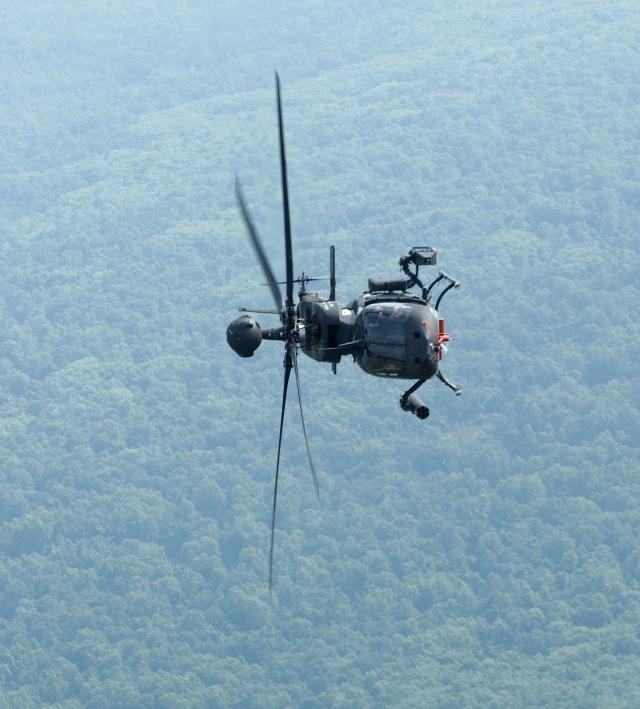
In response, it is preparing an OH-58F program that would make a few basic changes, while resetting the airframe to let it last until 2025. Key technical changes involve removing the mast-mounted sights, and replacing them with a nose mounted Raytheon AN/AAS-53 Common Sensor Payload turret; redesigned transmission mounting structures; an improved cockpit using Control and Display Subsystem v5 electronics; an FBCB2 “Blue Force Tracker” v1/v2 display screen; a dual-channel full-authority digital engine-controller; and Level 2 Manned-Unmanned Teaming (MUM-T), which lets the helicopter view feeds from nearby unmanned aircraft systems in real time. The Army’s Redstone Arsenal facility is working with Bell Helicopter, Honeywell, and Rolls Royce on the project.
The Army says it eventually wants 368 OH-58Fs – the exact total of the original ARH program. In a constrained budgetary environment, one has to wonder whether the OH-58F will effectively become the Armed Aerial Scout follow-on program, short circuiting the expected competition – or even similar but more radical refurbishment approaches like the proposed OH-58 AVX (vid. April 13/10 entry). US Army.
March 13/11: AH-6i. MD Helicopters announces that it’s working with Boeing to finalize a July 2010 Memorandum of Understanding to cooperate on Boeing’s AH-6i Light Attack Helicopter project. Jordan and Saudi Arabia have already picked the helicopter, but neither has signed a contract yet.
As an interesting aside, Boeing was MD Helicopter’s original partner for its ARH bid, but Boeing pulled out before the ARH bid deadline, and was replaced by a set of supporting firms in MD Helicopters’ losing bid. MD Helicopters [PDF].
Dec 8/10: AAS-72X. The Armed Aerial Scout 72X team of Lockheed Martin, Eurocopter, and American Eurocopter announces the 1st flight of the company-funded AAS-72X Technical Demonstration Aircraft (TDA), at the American Eurocopter facility in Grand Prairie, TX, using TDA helicopter #2. Objectives of the 40-minute flight included demonstrations of the integrated targeting sensor, manned/unmanned teaming (MUM-T), and communications and navigation capabilities. See also EADS NA reparations release, April 15/10 entry.
Oct 20/10: X2 LTH to S-97 Raider. Sikorsky and its partner firms declare that they’ll privately fund 2 prototypes of their “S-97 Raider,” the new name for their X2 light tactical compound helicopter. The Raider will be a scout/ light utility/ light attack machine, with CV-22 class speed, but the safety and lower costs of a helicopter design. First flight is expected in 2014. Sikorsky, incl. video.
FY 2010
Sources Sought, part II.
(click to view full)
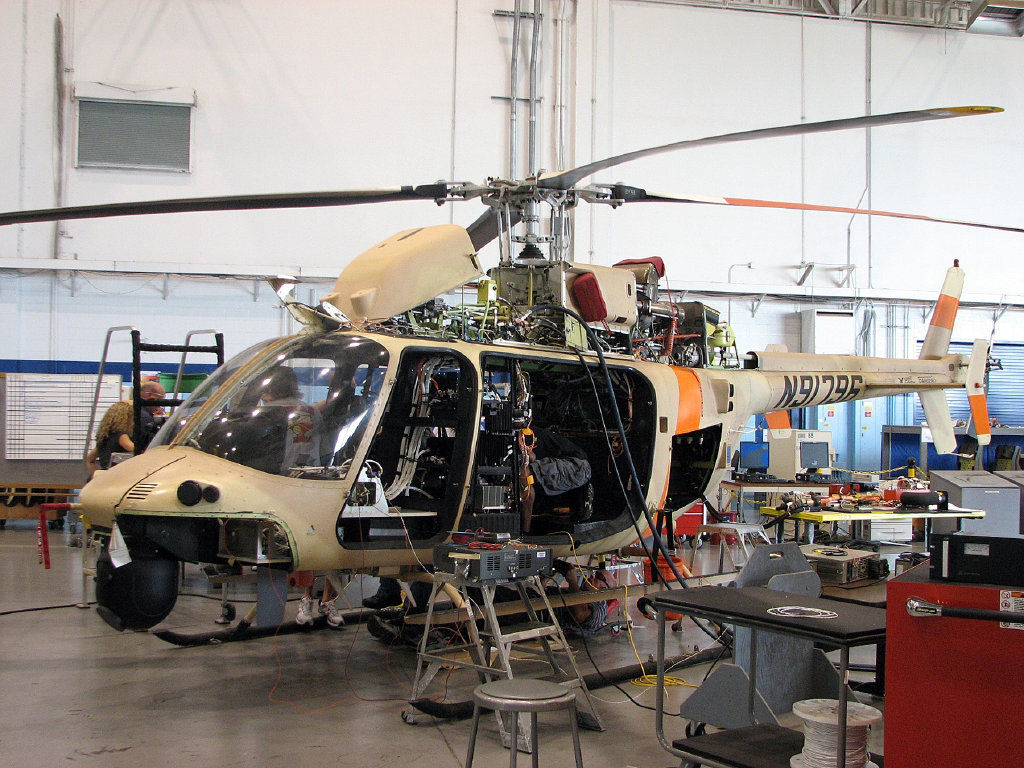
Sept 15/10: X2. Sikorsky’s X2 Technology demonstrator achieves a speed of 250 knots (288 mph, 463 kph) true air speed in level flight at the Sikorsky Development Flight Center, during a 1.1-hour flight. That’s an unofficial speed record for a helicopter, and compares well to the tilt-rotor MV-22. The demonstrator also reached 260 knots in a very shallow dive during the flight. Sikorsky.
May 4/10: Fire-X 407 VTUAV. Northrop Grumman announces a private development partnership with Bell Helicopter Textron to turn Bell’s 407 helicopter into a medium-range “Fire-X” VTUAV, using Fire Scout’s systems, for a US Navy medium VTUAV competition expected to begin in 2011. When questioned by DID, Northrop Grumman representatives said that:
“We plan to conduct that demo at the Yuma Proving Grounds… We consider Fire Scout and Fire-X to bemembers of the same portfolio of unmanned systems… We have not been notified of any changes on the MQ-8B Fire Scout program of record.”
An optionally manned, armed 407 may also have uses in other programs, of course, with AAS being an obvious choice. The firms are moving ahead on a fast track, and Fire-X’s first flight is expected by the end of CY 2010. Fire-X will carry ISR sensors, offer cargo capabilities, and is expected to provide weapons integration as well. Control will be via the Navy’s Tactical Control Station, the U.S. Army’s One System ground control station, or other standards-based systems. Northrop Grumman | The DEW Line.
April 15/10: AAS-72X team will build 3. EADS North America and its industry team of American Eurocopter and Lockheed Martin announce that they will independently fund and develop 3 armed scout AAS-72X helicopter variants, in order to demonstrate the design’s performance and (they hope) its low risk.
The first AAS-72X Technical Demonstration Aircraft (TDA) is scheduled to be operational in late 2010, and will be used for mission equipment and weapon system integration, performance testing and survivability validations. In addition to the 3 demonstration helicopters, Lockheed Martin has established a high-fidelity systems integration lab for the AAS-72X at its Orlando, FL facility. EADS NA.
April 15/10: X2 LTH. Sikorsky Aircraft Corp. announces that they’ve submitted a Light Tactical Helicopter concept using their X2(TM) compound helicopter technologies for the U.S. Army’s Armed Aerial Scout Program, in response to the March 17/10 RFI.
It’s a bold bid, but Sikorsky did hedge its bets, including options like their Army-standard UH-60M Black Hawk helicopter with the Battlehawk kit. It all depends on how the AAS requirements are eventually defined, and the US Army is preparing for Phase II of their Analysis of Alternatives to ido just that. See also Aviation Week.
April 13/10: OH-58 AVX? Aviation Week reports that the former Bell engineers at AVX Aircraft in Forth Worth, TX are looking to enter the Army’s Armed Aerial Scout competition with a very upgraded OH-58D Kiowa Warrior. Their “OH-58 AVX” helicopters would lose their mast-mounted sight in favor of an off-the-shelf chin turret, convert to a compound helicopter via coaxial rotors, and add twin ducted tail fans instead of the tail rotor. The engineers believe they could significantly improve hot weather and high altitude performance this way, as well as speed (+50%), and range (almost double) while using the same engine and existing OH-58D helicopter bodies.
AVX was founded in 2005, and the private firm has reportedly spent $4 million so far on design studies. They believe they’d need $30 million to build a “bare bones” concept demonstrator that could fly within 18 months, and are working to raise more money privately. They’re also hoping the Army might help fund that development, as part of a prototyping phase leading up to an AAS buy.
Jan 26/10: AAS RFI. The US Army issues a second “sources sought” solicitation (see Nov 7/08 entry for the first) for its Armed Aerial Scout helicopter:
“Since the November 2008, sources sought, the Department of Defense has embarked upon an Analysis of Alternatives… Although the Army has not established formal requirements for this program, PM ARH is asking for information to better understand a full range of options for aircraft ranging in size from light armed reconnaissance to heavy attack with performance capability from Standard Sea Level to 6K/95 [DID: 6,000 feet hover out of ground effect at 95 F temperature].”
FY 2009
Requirements change. AAS-72X.

(click to view full)
Aug 11/09: AAS-72X. EADS North America announces that Gary M. Bishop has joined them as VP of the Armed Scout 645 program. Bishop previously led the Boeing industry team responsible for the U.S. Army’s Apache Longbow programs at Mesa, AZ, managing managed Apache Longbow remanufacture and new production programs for Block I, Block II, Extended Block II, and Wartime Replacement Aircraft. Bishop was also responsible for the Apache Block III developmental program. Before that, Bishop served as the United Kingdom Apache program manager, and the acting director for all International Apache Programs.
Bishop holds a bachelor’s degree from the U.S. Military Academy at West Point, NY; a master’s degree in aeronautical engineering from the U.S. Naval Postgraduate School in Monterey, CA; and a master’s degree in national security and strategic studies from the U.S. Naval War College in Newport, RI He also is a graduate of the Program Manager’s course at the Defense Systems Management College at Ft. Belvoir, VA.
July 29/09: AAS-72X. EADS North America announces a series of successful “high/hot” flight demonstrations of its UH-72A/ Armed Scout 645 platform near Alamosa, CO. Operating at a takeoff elevation of more than 7,500 feet and carrying a simulated 2,300-pound Mission Equipment Package (MEP), successfully hovered-out-of-ground-effect at a density altitude of 6,000 feet and 95 degrees Fahrenheit. This meets the requirement included in the Army’s October 2008 Sources Sought document, which reflects the mission environment in theaters like Afghanistan.
The demonstration flights were also used to validate controllability and tail rotor authority at full altitude and load, while a subsequent flight with the simulated MEP payload completed a 2:30 flight with a 35-minute fuel reserve. Looks like the competition just got hotter.
May 4/09: AAS-72X – LUH, reloaded. At Army Aviation Association of America 2009 in Nashville, TN, EADS North America announces that it has teamed with Lockheed Martin to offer an armed scout variant of its UH-72A Lakota for the ARH competition. The EC645 Armed Scout is based on the same Eurocopter EC145 commercial airframe, and would be produced at the same Columbus, MS facility that is delivering UH-72 Light Utility Helicopters to the US Army for non-combat duties. Team Site | EADS North America release | Flight International.
The UH-72A’s record of on-time, on budget delivery has been a threat to Bell’s 407 before, but the design had some initial problems with internal temperatures. Modifications have fixed these issues. US Army Aviation and Missile Command informs DID that the UH-72A has been certified as “operationally effective” in hot environments, clearing the way for its potential adoption in a front-line role.
April 24/09: Aerospace Daily reports that the Army has gone all the way back to the drawing board, and is looking beyond just manned helicopters. The report quotes Col. Frank Tate, action officer for attack and reconnaissance aviation programs, and Gen. William Crosby, the Army’s program executive officer for aviation.
“We’d hoped to come back in January [2009] with new KPPs [Key Performance Parameters] and proceed at a Milestone B level… We’re back to a pre-milestone A beginning… We will look at manned-unmanned teaming options to fulfill this requirement.”
Recent developments make that a credible concept, despite the narrower “soda straw” field of view inherent to UAVs. AH-64 Apache Block III attack helicopters will have the ability to control multiple UAVs with some added equipment, and the USA is stepping up buys of MC-12 King Air 350 ISR (Intelligence, Surveillance & Reconnaissance) planes that could host similar gear. At the same time, Boeing is testing the A160T Hummingbird Warrior, a long-endurance helicopter UAV with special rotor technology, and both the payload and wiring required to carry weapons.
Jan 12/09: Requirements change. Military.com reports that the US Army has redefined the ARH requirements. Maximum “Hover Out of Ground Effect” is now 6,000 ft. rather than 4,000, and this must be done during 95 degree Fahrenheit temperatures. Both height and heat thin air, reducing lift. The equivalent at standard temperatures is hovering at around 14,000 feet. At present, these kinds of conditions in Afghanistan have led the Army to use its AH-64 Apaches as scout/ attack helicopters.
Col. Randolph Rotte, Deputy Director for Aviation in the Army Chief of Staff’s office says that some helicopters on the market can meet those requirements. Can they meet them with a full load of sensors, weapons, and/or people, per the requirements?
“Because of that altitude and temperature that is pushing today’s current technology to the extreme limits. Big [helicopters] works there in those environments well, but to get it smaller to meet the needs of the manned light reconnaissance, that’s a challenge. So only those with some technological edges to it can attain that in the time frames without creating another Comanche program again which we don’t want to do with 10 to 15 years of R and D.”
Technological edges, however, raise costs for a program that was supposed to be inexpensive and off-the-shelf. “Gold-plating” requirements raise program failure risks, and the constant introduction of new requirements by the Army was one of the factors that led to the ARH-70’s spiraling price and resulating cancellation. DoD Buzz | DefenseTech.
Jan 9/09: Reports surface that retained ARH-70 program funds will be used by the Army. DoD Buzz reports that around $500 million will be split between OH-58D upgrades ($38 million), funds for a new helicopter ($50 million) and a new AH-64 Apache battalion for the Army National Guard.
On Jan 12/09, Aviation Week contends that the available finds are closer to $942 million, but adds that The U.S. Army is holding off on defining the scope of its OH-58D life extension plan pending a decision on ARH’s path forward. Decisions aren’t expected until after the next Joint Requirements Oversight Council meeting in February-March 2009. Meanwhile, the Army is “still negotiating” with Bell on fees to cover the contract’s cancellation, which would also come out of its retained budget.
(click to view full)
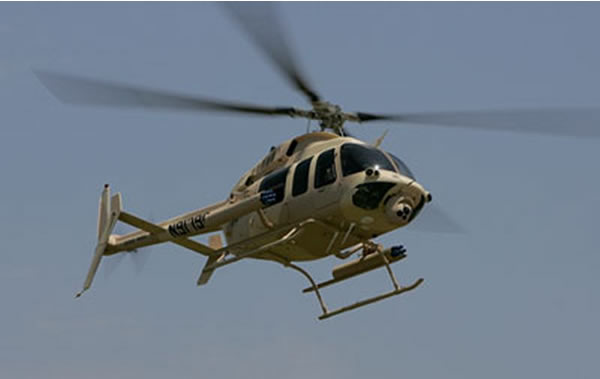
Dec 10/08: Iraqi Armed 407s. The US DSCA announces [PDF] an official request from Iraq, which appears to have selected a winner in its own Armed Reconnaissance Helicopter competition. Bells 407 ARH appears to have beaten Boeing’s AH-6 ARH, as Iraq asks for about a squadrons’ worth to match the 26 Mi-17s in 15th Special Ops squadron. The US Army will be responsible for militarizing the 407 airframe into an ARH for the Iraqis, who asked for:
26 Bell Armed 407 Helicopters
26 Rolls Royce 250-C-30 Engines
26 M280 2.75-inch/ 70mm rocket Launchers
26 XM296 .50 Cal. Machine Guns with 500 Round Ammunition Box
26 M299 Hellfire Guided Missile Launchers
The estimated cost is $366 million, to be finalized in forthcoming contract negotiations – which ended successfully, and included 3 training 407s and 27 IA-407s. This order will throw Bell’s 407 a military lifeline at a critical time, and may even suffice to give it the market foothold Bell needs. The Long War Journal has reported [PDF] that Iraq’s initial ARH buy is just the first of several, and that the IqAF intends to field up to 5 squadrons by 2015. See “Iraq Seeks Armed Reconnaissance Helicopters” for further details, and ongoing coverage.
Nov 17/08: ARH SAR – cancellation. From the US DoD’s Selected Acquisitions Review report:
<blockquote”Program costs decreased $4,748.0 million from $5,259.7 million to $501.7 million (-90.5%), due to program termination during the Nunn-McCurdy certification process.”
The remaining $501.7 million reflects ARH monies that had already been spent under the program, before the contract was canceled.
Nov 7/08: “What next?” RFI. The US Army issues a “sources sought” RFI (W58RGZ-09-R-0129), asking manufacturers to submit potential helicopter candidates along with cost, performance, maintenance, and production capacity information. Submissions are due no later than 1:00pm CST, Dec 5/08.
Despite the difficulties and cost inflation this program has experienced trying to modify civilian helicopters for armed military use, the notice does not feature criteria around armament configurations – just a question covering company “experience in integrating a Mission Equipment Package.” It remains to be seen whether these criteria will become stricter and more specific in any procurement RFP.
Oct 16/08: ARH Termination. The Department of Defense notifies Congress and Bell Helicopter, that it will not certify the current ARH program for continuation, and terminating the program’s contract “completely for the convenience of the government,” i.e. without penalty payments. The Army release adds:
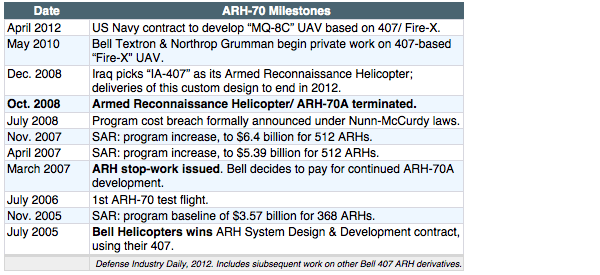
“The ARH contract was awarded for an expected development cost of $359 million and a procurement average unit cost of $8.56 million. Currently, DoD estimates that development will cost $942 million and the procurement average unit cost will be $14.48 million. Delivery of ARH to the Army was originally scheduled to take place by 2009, but the current projection is for 2013.”
US Secretary of the Army Pete Geren was blunt: “The cost and schedule that were the focus of the decision to award the contract to Bell Helicopter are no longer valid.” US Army director of operations Lt. Gen. James D. Thurman added that:
“This decision does not, in any way, diminish the imperative for [a manned, armed, reconnaissance helicopter]. Our operational tempo, attrition, and losses of six aircraft per year underscore the need to fill this requirement as quickly as possible. To this end, we will rapidly pursue a re-validation of [platform requirements] so that we can restart the process…”
See: Pentagon release | US Army release | Flight International.
ARH Termination
FY 2008
Cost breach.
(click to view full)
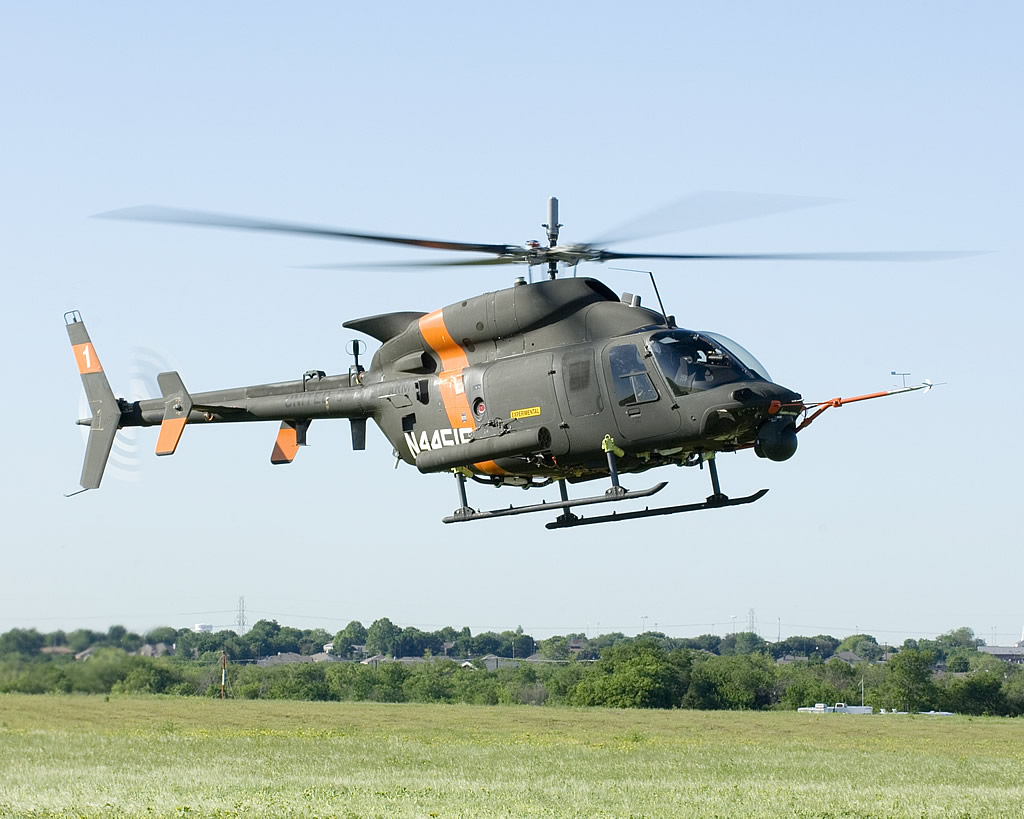
July 9/08: Program Cost Breach. The U.S. Army notifies Congress of a Nunn-McCurdy breach of cost growth in excess of 25% on the ARH program from the July 26/05 program baseline, following a July 3 critical program deviation report to the Under Secretary Of Defense – Acquisition, Technology And Logistics (USD-AT&L). The Army’s release:
“The Army’s requirement for the capability provided by the Armed Reconnaissance Helicopter continues to be valid and critically needed… Independent analysis verified the program manager’s cost-growth assessment. There are two primary reasons for the increase in the estimated production unit cost. First, the actual labor hours and material costs to complete the prototype aircraft were significantly higher than previously projected; and second, the contractor labor rates and overheads are increasing at a higher rate than previously projected.”
A more exact breakdown will follow in the Pentagon’s Selected Acquisition Review to June 2008, but the Fort Worth Star-Telegram reports that costs have risen 27% since April 2007. Bloomberg News reports that the July 2/08 summary to USD-AT&L placed the overall program cost per helicopter at $12.26 million, a 43.4% increase over the baseline of $8.55 million. Army spokesmen have been quoted saying that program cancellation, which is a possible consequence of a Nunn-McCurdy cost breach, is one of the options being considered.
See also the Nov 19/07 entry re: the previous SAR report to June 2007, which breaks down a reported 20% cost growth over the program baseline. Reuters.
Cost breach
Feb 28/08: GAU-19 gun. Defense News reports that the US Army plans to arm its ARH with the General Dynamics ATP’s GAU-19, a 3-barreled, .50 caliber gatling gun with a firing rate of over 1,000 rounds per minute. The gun weighs 932 pounds with ammunition, and work is apparently underway to reduce its weight.
The GAU-19 is currently mounted on helicopters in Turkey, and on Colombian Black Hawks. It’s usually mounted on a 14-inch NATO standard weapons rail and carried at the helicopter’s side, but door gunner modes with more flexible firing arcs are also possible for transport helicopters.
Feb 22/08: A short update from Bell Helicopter doesn’t tell us anything new, but does state that the program continues to move forward, financed by private funds:
“Bell’s program for the US Army, the Armed Reconnaissance Helicopter (ARH-70A) has accumulated more than 1,100 hours in the flight test program and continues to meet targets set in its aggressive development program. Currently the Army is requesting 512 of these helicopters.”
Nov 19/07: SAR spirals. The Pentagon releases their latest Selected Acquisition Report, and the ARH-70A is included:
“The SAR was submitted to report a unit cost increase of approximately 20% higher than the current baseline estimate, which resulted in a “significant” Nunn-McCurdy breach. Program costs increased $1,009.1 million (+18.7%) from $5,390.2 million to $6,399.3 million, due primarily to an increase in airframe manufacturing labor and material costs (+$345.5 million), higher System Development and Demonstration (SDD) costs (+$290.9 million), and implementation of an upgrade to the main rotor system (+205.5 million).”
This is not good news for a program that just had its FY 2008 defense budget request zeroed out. The only bright spot for Bell is the UH-72A Light Utility Helicopter’s recent difficulties with cabin heating in warm weather, which makes the option of an ARH switch-in and common ARH/LUH helicopter platform much less likely.
SAR
Nov 7/07: New TASS? Raytheon Co. in McKinney, TX received a delivery order amount of $11 million as part of an $800 million firm-fixed-price and cost-plus-fixed-fee contract for common sensors for the ARH-70A helicopter and the MQ-1C Sky Warrior ER/MP UAV. Work will be performed in McKinney, TX and is expected to be complete by Oct. 31, 2016. Bids were solicited via the World Wide Web on April 24, 2007, and 5 bids were received by the U.S. Army Communications-Electronics Command in Fort Monmouth, NJ (W15P7T-08-D-S602).
Raytheon’s release adds that the program calls for design and development, testing and air vehicle integration of a variant of Raytheon’s Multi-spectral Targeting System, in a project could be worth up to $1.2 billion for 875 units, if all options are exercised. See also Common Sensor Platform product page.
Nov 1/07: Bell Helicopter announces that the ARH-70 program has surpassed 1,000 flight test hours in under 15 months of flying. ARH program Executive director Bob Ellithorpe notes that “With each flight, the flight envelope is expanded and another test card is complete.” The ARH-70A is still being developed with private funds but US Army cooperation at this point, in the wake of the March 21/07 stop-work order.
U.S. Army pilots have completed individual training and are conducting crew training at Yuma Proving Grounds, as the ARH Program continues preparation for Limited User Test (LUT) in early November 2007. The purpose of the LUT is to verify the integrated system performance for the FLIR Systems International “Target Acquisition Sensor System” (TASS) and the “Common Avionics Architecture System” (CAAS) made by Rockwell Collins. Additionally, the LUT will evaluate the performance of the Honeywell HTS-900-2 turbine engine into the Bell 407 airframe.
FY 2007
Stop work. ARH reprieve.

(click to view full)
July 8/07: DTS. Elbit Systems of America subsidiary EFW Inc. (EFW) in Fort Worth, TX has been chosen by Bell Helicopter to supply their ARH-70’s Data Transfer System (DTS). The DTS uses solid-state memory cartridges, and links with the helicopter’s communications, navigation, aircraft survivability equipment and mission equipment subsystems to automate both the mission data input process and in-flight recording.
For example, using a ground mission planning station, communication, navigation and mission equipment parameters are stored on a removable memory card, and downloaded to the avionics system via the DTS. In-flight aircraft audio and video are recorded and stored as standard, synchronized audio/video files on the DTS for easy playback and debrief after flight.
EFW also supplies the Helmet Display and Tracking System (HDTS) that provides helmet-mounted night vision, flight data, and weapons targeting information.
May 18/07: ARH reprieve. During the ARH Special Army Systems Acquisition Review Council, “the Army evaluated and considered options in the procurement of the Armed Reconnaissance Helicopter to replace the rapidly aging and depleted fleet of OH-58D Kiowa Warriors. The Army will continue with Bell Helicopter/Textron Inc. as the prime contractor for the Armed Reconnaissance Helicopter.”
The recommendation was approved by the Acting Secretary of the Army. US Army release.
May 10/07: Progress report. Bell Helicopter Textron puts out a release that details the ARH-70s progress within the SDD program. Note that as a result of the March 21/07 letter, all development expenses are being funded by Bell Helicopter funds.
Bell representatives report to DID that FLIR Systems’ BRITE Star II(R) /TASS sensor turret is now integrated and tested; another integrated helicopter is currently being built to comply with program requirements. Recent SDD efforts have also included “a recent demonstration of the ARH digital battlefield capabilities” at the Bell Xworx facility’s ARH Mobile Systems Integration Laboratory (SIL) in Arlington, TX. The ARH SIL was connected over the tactical internet using the Force XXI Battle Command Brigade and Below (FBCB2, Blue Force Tracker/L-band), with simulated CH-47F, UH-60M, and OH-58D platforms located in Huntsville, AL. This demonstrated the threshold criteria for the US Army’s Net Ready Key Performance Parameter (KPP).
May 9/07: The US House Armed Service Committee submits its FY 2008 budget recommendation, which retains the ARH’s $470 million funding cut, and urges another competition to meet the requirement. See full HASC release and details [PDF format]. A relevant section of the full committee report reads:
“…Current estimates are for procurement unit cost growth to double from original estimates of approximately $5.2 million per aircraft to well over $10.0 million per aircraft. The schedule is currently estimated to slip one year. The committee recommends that the Army terminate this program and initiate a new source selection for the procurement of an ARH. The committee also recommends that the Army consider minor modification of its key performance parameters, to allow more competitors to compete for this program [DID: extending the “ready to fight after unloading from a transport aircraft” requirement from 15 minutes to 30 minutes would apparently allow one additional competitor]. The committee recommends no funds for procurement of ARH; $50.0 million, a decrease of $32.3 million, in PE 64220A for ARH [DID: the R&D program]; and 51.8 million, an increase of $31.0 million, for additional OH-58 modifications. The committee recommends no funds in title XV of this Act [DID: supplemental funding] for ARH.”
A US Army Systems Acquisition Review Council (ASARC) is currently scheduled; it will make a decision re: the program’s future by the end of May 2007 [it did – see May 18/07].
May 1/07: Rep. Neil Abercrombie [D-HI], now Chairman of the House Armed Service committee’s Air-Land subcommittee, issues a release noting their recommendation of termination and a full cut of $470-million in the ARH program request for FY 2008, “which has been behind schedule and over budget.”
Capitol Hill staffers who talked to DID added that the supposed $5.2 million per helicopter figure in the original proposal has become a sticking point, in light of a unit cost heading toward $10 million. Especially when the less complex and demanding Light Utility Helicopter (Eurocopter’s UH-145) had a higher per-helicopter bid; the word “lowball” was used. Bell Helicopter spokespeople, however, say that they offered a legitimate bid based on the specifications given to them by the Army.
April 25/07: An Early User Test (EUT) is completed at the Joint Reserve Base in Fort Worth, TX. It tested the Army’s requirement is for an ARH-70A to be flight-ready within 15 minutes of arrival in a transport aircraft like the Air Force’s C-130 Hercules or C-17 Globemaster III; the test was completed in under 13 minutes. From Bell Helicopter’s May 10/07 release.
April 18/07: Washington think-tank the Lexington Institute weighs in on the ARH issue. Loren Thompson, who needs to shed all those inhibitions and start telling us what he really thinks:
“Now, in 2007, this dysfunctional bureaucracy has found another candidate for termination: the new armed reconnaissance helicopter it began developing after Comanche was killed three years ago. The program has satisfied every one of the “key performance parameters” established at its inception, from survivability to sustainability to transportability to lethality, but Army executives say it is taking too long and will cost too much money. So there is a move afoot to cancel the program and start over.
Maybe I’m just dense, but isn’t canceling the program and starting over likely to require a lot more time and money than just fixing it? The Army seems to feel that would send the wrong signal, rewarding the contractor for doing a bad job. Of course, that ignores the fact that the program has met all its performance goals, and that the delays are largely traceable to actions the service itself took — like awarding a contract for a “commercial off-the-shelf” purchase, and then continuously tinkering with the on-board equipment.”
(click to view larger)
April 9/07: More ARHs? The Pentagon’s Selected Acquisition Report as of December 2006 notes a rise in the planned buy of ARH-70 helicopters from 368 to 512, and other changes since the November 2005 SAR:
“Program costs increased $1,787.4 million (+49.6 percent) from $3,602.8 million to $5,390.2 million, due primarily to a quantity increase of 144 aircraft from 368 to 512 aircraft to support the Air National Guard combat aviation brigades (+$901.6 million). There were estimating allocations* (+$85.0 million) as well as increased spares and support (+$570.3 million) associated with the quantity increase. Costs also increased due to higher estimates for production (+$295.7 million) and the application of revised escalation indices (+$41.0 million).”
March 21/07: Stop work. James Ganoe, the Army’s contracting officer for the ARH, sends a stop-work letter to Bell Helicopter re: the ARH program. See DID’s archived copy in PDF format, via the US House Armed Services Committee. The order is rescinded just under a week later, in order to allow Bell to continue to work on the program at its own expense.
As of June 2008, Bell Helicopter is still doing all work on the ARH program at its own expense. The US Army, meanwhile, continues to cooperate with the program by providing personnel et. al.
Stop work
February 2007: TASS trouble. Integration of the BRITE Star TASS will delay the ARH program by at least 6 weeks, pushing back test and fielding dates. The office of the secretary of defense had originally wanted the first ARH unit equipped by the summer of 2009, but senior Army officials pressed for a September 2008 deadline. It would appear that summer of 2009 is now the most likely schedule… IF there are no more schedule slips. National Defense magazine has the details.
Feb 21/07: Accident. Rotorhub reports that a Bell ARH appears severely damaged, following an auto-rotation on to the 4th hole of the Mansfield golf course south of Bell’s Arlington XworkX facility. The aircraft apparently made a short ground-run before the left skid dug in and caused a roll-over. A Bell spokesman later confirmed the incident, which happened 30 minutes into the maiden flight of the SDD #4 aircraft. An investigation is pending, as always, and Rotorhub believes the incident may be fuel-related. Both pilots were unhurt, and the ARH wasn’t carrying its TASS sensor.
Jan 9/07: Brite STAR TASS. FLIR Systems, Inc. announced that it has received a $26.4 million order from Bell Helicopter for its BRITE Star II stabilized multi sensor systems. The order is for production units for the Target Acquisition Sensor Suite (TASS) as part of the US Army’s ARH Program. Work will be performed at FLIR’s facilities in Portland, OR and Orlando, FL; and Deliveries will begin in the second half of 2007.
FY 2005 – 2006
Milestone B. Bell wins ARH. 1st flight for ARH-70A

(click to view full)
Nov 16/06: HMD. Elbit Systems of America subsidiary EFW announces a $51 million contract through 2012 to supply their Helmet Display and Tracking System (HDTS) for the ARH-70. The HDTS is based on EFW’s ANVIS/HUD (Aviator’s Night Vision Imaging System / Head-Up Display) in use on the USA’s H-60, CH-53, CH-47, CH-46, H-1N/AH-W, and V-22 platforms. HDTS also features a tracking system for pilot targeting and cueing, including Line of Sight (LOS) cueing between pilots or feeds from electro-optical turrets.
This places the HDTS somewhere between ANVIS/HUD, and EFW’s Integrated Helmet and Display Sighting System (IHADSS) used by US Army AH-64 Apache attack helicopter pilots. EFW is also a partner in the JHMCS helmet used by fighter pilots, and the F-35’s HMDS.
July 20/06: 1st test flight. Bell’s ARH-70A makes its first test flight. The aircraft took off from Bell XworX in Arlington, Texas and flew multiple handling maneuvers, flew in a hover for both in and out of ground effect, and flew in a traffic pattern reaching 80 knots, 500 ft. altitude, with banks up to 30 degrees for a little more than 1.5 hours of flight. While prototype YRH-70 aircraft had flown before, this is the first production aircraft to do so. These initial ARH-70As will be used for flight testing. Bell Helicopter’s press release has more.
1st test flight
July 11/06: FLIR. Bell Helicopter Textron announces that it has selected FLIR Systems’ BRITE Star II(R) airborne stabilized multi-sensor system as the Target Acquisition Sensor Suite (TASS) for the US Army’s ARH-70A. The BRITE Star II is an upgrade to the previous BRITE Star system fielded on the US Marine Corps’ fleet of UH-1N Huey helicopters. It incorporates an advanced third-generation thermal imager, a CCD-TV camera, a laser designator and a laser rangefinder. FLIR Systems was selected following a “Dual Path Development” program designed to reduce program risk, wherein 2 suppliers are selected and the platform is initially designed to include either one.
Nov 15/05: SAR baseline. The Pentagon’s Selected Acquisition Reports as of September 2005 displays the initial SAR submission for the ARH-70 program, following approval to proceed into System Development and Demonstration (Milestone B) on July 26/05. The program’s total cost, including R&D, is pegged at $3.57 billion for 368 machines; with R&D amortized per helicopter, that’s about $10.3 million each.
(click to view full)
July 29/05: Bell wins ARH. Bell Helicopter Textron, Inc. of Fort Worth, TX received a $210.7 million cost-plus-incentive-fee contract for the system development and demonstration (SDD) of the U.S. Armed Reconnaissance Helicopter (ARH) program, including sub-system integration and testing as well as training-device development (W58RGZ-05-C-0234).
Work on the Bell LRH SDD contract will be performed at Fort Worth, TX and is estimated to be complete on Sept 30/08. There were 11 bids solicited on Dec 8/04, and 2 bids were received. The U.S. Army Aviation and Missile Command at Redstone Arsenal, AL issued the contract. Their public affairs office can be reached at (256) 955-9174.
Appendix B: Initial Winner – Bell’s ARH-70

(click to view full)
Overall, Bell Helicopter’s ARH-70A has more space and weight available for fuel, ammunition, and troops than its OH-58D Kiowa Warrior predecessor. The Bell ARH was also touted as being 18 times more reliable than the OH-58D Kiowa Warrior, based on Bell 407 commercial data. Military usage patterns give such comparisons limited usefulness, but there’s no doubt that the Bell 407 single engine commercial helicopter has been highly successful. Over 600 have been produced, accumulating over 1.2 million flight-hours in conditions ranging from arctic to desert and high-altitude environments.
The militarized ARH-70s were set to receive a power boost from the Honeywell HTS900-2 turbine engine, rated at 970 shp. In addition to being designed for extremely low Direct Operating Costs (DOC), the HTS900-2 is equipped with a sophisticated dual-channel full authority digital engine control (FADEC) system, based on T800 technology. To complement the ARH’s engine upgrade, an upgraded tail rotor from the Bell 427 was added to provide greater directional stability and control authority.
For defense, the helicopter would have the expected exhaust infrared suppressor/diffuser, and use BAE’s Common Missile Warning System (CMWS) defensive kit – another Comanche program reallocation.

(click to view full)
As Systems Integration Leader, Bell Helicopter worked with Lockheed Martin, the prime contractor for the Army’s Technical Integration Center, to reduce cycle time and risk in integrating the ARH Mission Equipment Package (MEP) into the U.S. Army’s Net Centric Environment. Rockwell Collins, Honeywell, FLIR Systems, L-3 Communications, Flight Safety (FSI) and Computer Sciences Corporation were other key members of the team.
The ARH-70’s “glass cockpit” (i.e. all-digital, using display screens) was based on the Common Avionics Architecture System (CAAS). Weapons carried will include Hellfire 2 laser-guided missiles, a GAU-19 gatling gun, and 70mm Hydra rockets including the laser-guided APKWS II “Hellfire Jr.” versions. It was also envisioned to be digitally integrated with UAVs, ground command, and other aircraft, possibly including the ability to control UAVs from the helicopter. Key digital systems included:
Helmet Display and Tracking System (HDTS). The HDTS is based on Elbit EFW’s ANVIS/HUD (Aviator’s Night Vision Imaging System / Head-Up Display) in use on the USA’s H-60, CH-53, CH-47, CH-46, H-1, and V-22 platforms. HDTS also features a tracking system for pilot targeting and cueing, including Line of Sight (LOS) cueing between pilots or feeds from electro-optical turrets. This places the HDTS somewhere between ANVIS/HUD and EFW’s Integrated Helmet and Display Sighting System (IHADSS) used by US Army AH-64 Apache attack helicopter pilots. It will be linked to the…
BRITE Star-II surveillance and targeting turret. This replaces the OH-58D Kiowa Helicotpers’ mast-mounted sight. FLIR Systems’ BRITE Star II is also deployed on Bell’s UH-1Y Venom helicopters, which are just entering service with the US Marine Corps. These chin-mounted turrets provide stabilized high magnification viewing in daylight or infrared view, and include built in laser rangefinding and targeting systems so the helicopter can kill what it finds. Full integration of the BRITE Star turret with all helicopter sub-systems proved to be an unexpectedly difficult hurdle, however, delaying the program and raising costs.
Other systems would have included:
* H-76 ACE Global Navigation System
* MMR “Tophat” (VOR/ILS/GS/Marker Beacon)
* Common Avionics Architecture System (CAAS)
* (MFD, CDU, PSM, ASPP, MFCU)
* ARN-153-V4 TACAN
* AN/ARC-231 Radio (HAVEQUICK II, SINCGARS, SATCOM, COMSEC, FM, VHF, UHF)
* AN-ARC-201D (SINCGARS, ESIP, FM, VHF)
* EPLRS and Blue Force Tracker
* MD-1359/A Improved
* SDI-599 Secure Digital ICS
* Data Transfer Systems (DTS) from Elbit subsidiary EFW for mission data input & flight recording. See July 8/07 item.
Deployability requirements involve the ability to load a pair of ARH helicopters aboard a C-130, then have them unloaded, flyable, and ready to fight within 15 minutes of the completed landing. In a 2007 test, the ARH-70A was ready in under 13 minutes.
Appendix A: The ARH Program – What Happened?


(click to view full)
Back in 2004, the Armed Reconnaissance Helicopter (ARH) was one of several spinouts in the Army Aviation Modernization Program, after the RAH-66 Comanche (co-MAN-chee) program was canceled. Instead, the funds would be invested in ARH, along with the $3 billion Light Utility Helicopter contract for over 300 Eurocopter UH-145s, the MQ-1C Grey Eagle UAV and the C-27J Joint Cargo Aircraft to replace the Army’s C-123 Sherpa light transport planes.
The ARH program’s goal was an inexpensive, modified commercial dual-crew, single-pilot helicopter, capable of operating worldwide and accomplishing armed reconnaissance, light attack, troop insertion, and special operations missions. The helicopter’s avionics and targeting sensors would be able to operate during the day and at night, as well as during bad weather or periods of poor visibility.
Its derivation from a certified civilian aircraft was critical, in order to lower initial price, R&D expenses, and maintenance into the required cost range. The technical term for that is a modified off-the-shelf (OTS) airframe, integrated with a non-development item (NDI) mission equipment package that can be assembled from existing products on the market. The original contract with Bell Helicopter, for a derivative of its civilian Bell 407, called for 368 ARH-70 aircraft during FY 2006 – 2013, at a cost of about $6 million each. That request was later raised to 512 aircraft. Full-rate production of the ARH-70 was scheduled to run through 2013-2014, synchronized with OH-58D retirements.
Program execution was another matter. The Army and the Pentagon underestimated the difficulties involved in converting a commercial helicopter for these missions. Then they made decisions that made them their own program’s worst enemy.
One of the most fateful decisions involved program timing. The original summer 2009 deadline would still have been a remarkably fast fielding time from contract to IOC (Initial Operating Capability). Unfortunately, the toll of wear and front-line losses faced by the US Army’s OH-58D Kiowa Warriors pushed them to try to move the ARH Program’s schedule forward. A successful limited-user test would have launched low-rate initial production for up to 48 ARH-70s, including 30 to stand up the first unit, by September 2008.

(click to view full)
It didn’t happen that way.
By the end of 2006, the Army had moved to raise the number of ARH helicopters in the program from 368 to 512. By that time it was released in an official Pentagon report, however, delays and cost changes had already led the Army to suspend funding for the program in March 2007. Initial difficulties with the engines, a raft of specification changes from the US Army after the contract was signed, and initial difficulties integrating the sensor turret, all combined to drive up costs, and delayed IOC projections to 2011.
In May 2007, the US Army considered its options, and decided to stay with Bell Helicopter rather than re-competing the contract. For its own part, Bell Helicopter decided to continue funding the program out of its own pockets, and the Army continued to participate in the development program in all other ways by providing personnel, facilities, etc. If progress eventually lifted the stop-work order, annual budgets would reimburse some development costs, and begin buying machines.
Political observers were less sanguine than the Bell/Army team, and as estimated costs rose, so did hostility from lawmakers on both sides of the aisle. Some even stated to DID that they believe Bell’s original ARH bid had been “lowballed,” with the intent of raising prices later. In response, Bell Helicopter vigorously insisted that its conduct has been 100% above board. They answered the lowballing charges by pointing to the firm’s decision to invest millions of their own dollars in the development program, after problems arose.
It was a good answer, but even private financing couldn’t save the ARH-70 if Congress refused to fund further testing or production, and July 2008 revelations of spiraling costs per helicopter triggered an automatic program review under Nunn-McCurdy legislation. That was a dangerous juncture for Bell Textron. Too dangerous.
Overall, a helicopter initially bid at around $6 million per aircraft had climbed to a suggested unit cost of $12-14 million. That may represent a 67% savings over the much more advanced Comanche’s $36 million, but it’s also more than 100% above original projections. In hard dollars, overall development and production program cost estimates had risen to about $8.35 billion, up from the baseline of $3.60 billion, while helicopter numbers had jumped from 368 to 512. In other words, the planned order quantity rose nearly 40%, while program cost rose 132%. In July 2007, DID had said that:
“The US Army knows only that it needs to begin receiving working replacements for its shrinking Kiowa Warrior fleet, and it needs to begin receiving them soon. The consequences of the specification changes they made after the contract was signed, and the overall progress of this program, incline the Army to caution now that they’ve reassessed what’s involved in converting a civilian helicopter for front-line military use.
The ARH program’ fate and future course will be decided by the interactions among those 3 corners of the political-military-industrial triangle. America’s politicians ultimately hold the purse strings, and can force the issue if enough of them are determined to do so. Bell’s job, and the Army’s too as long as it holds to its choice of Bell’s helicopter, is to make sure this does not happen. Meanwhile, Bell must continue to show good faith and good progress to its Army customer, while convincing them that any substitute model would encounter issues that are at least as difficult and expensive. The Army’s hard-won caution certainly remains a powerful force in Bell’s favor, but there is always a breaking point. Shaky political support for the program, coupled with costs that sharply reduce the number of ARH helicopters the Army can buy, could create enough pain that even a risky re-compete would become attractive to the US military.”
That breaking point was reached. In October 2008 (Q1 FY 2009), the contract and program were terminated when the US Army said that it would “not certify the… ARH program for continuation.”
Appendix B: Weary Warriors – From the OH-58D Kiowa Warrior to the OH-58F

(click to view full)
In 2012, Ellis Golsen, director of the Capability Development and Integration Directorate at the U.S. Army Aviation Center of Excellence, restated the core case for armed scout helicopters:
“The Kiowa Warrior, in its current form, is still the basic airframe of an OH-58A/C that we flew in Vietnam… If you look at the history so far, we have corrected or adjusted or fielded an upgraded system for everything except [Armed Aerial Scout]… But those are the guys that are continuing to have to fly in a hostile environment, to provide close support to ground Soldiers.”
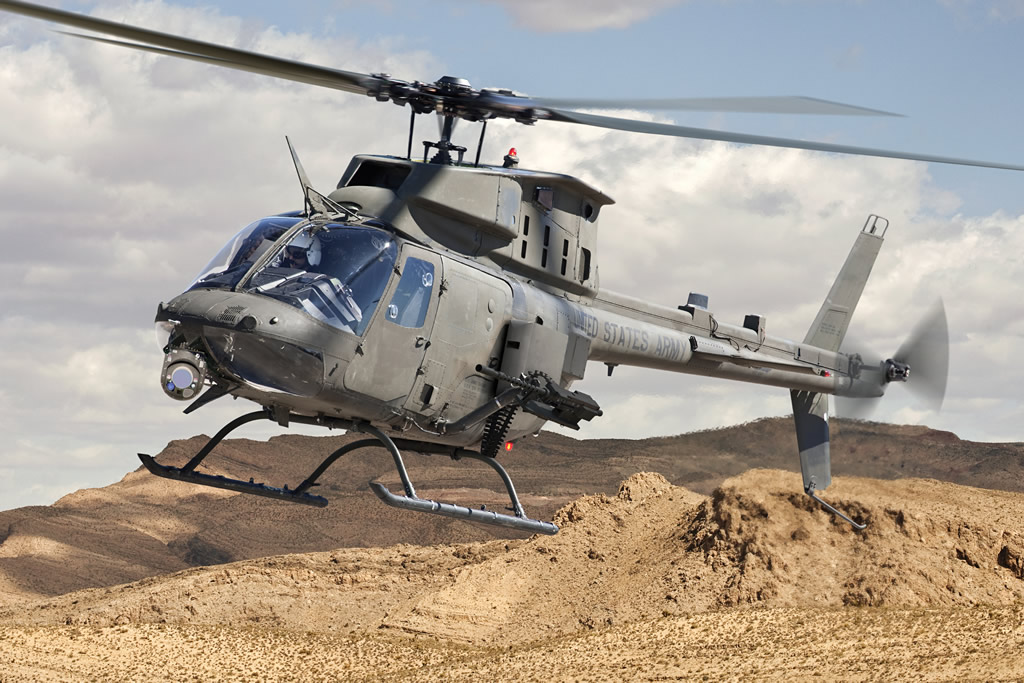
First fielded in 1985, Bell Helicopter’s OH-58D Kiowa Warriors were the US Army’s first fully digitized helicopters. Their original role involved using the advanced sensors in their mast-mounted sights to target Soviet tanks and anti-aircraft assets from behind the tree line.
Their sensor package has proven to be equally effective in a new kind of war, however, where fast location and tracking of small targets for rapid attack is the name of the game. Kiowa Warrior pilots like Sarah “Saint” Piro of the 3rd Armored Cavalry Regiment are making their mark in Iraq; the OH-58D’s combination of advanced sensors, advanced communications, plus weapons on hand to deal with anything it finds, have put the aircraft in demand:
“The Kiowa’s reconnaissance role also appeals to the pilots because it gives them more autonomy. “I have freedom to maneuver on the battlefield and I pick a target,” said [Monica] Strye, who flew hundreds of hours in combat with the 101st Airborne Division during the invasion of Iraq, including heavy fighting in Najaf, Karbala and Hilla. “I suppressed enemy mortar teams, called in indirect [fire] on buildings, using artillery or the Air Force to drop bombs on targets I identified.”
The Army says that it needs 368 Kiowas within its force structure, but the total continues to shrink. The USA’s Kiowa Warrior fleet passed the 1.1 million flight hour and 200,000 combat flight hour marks some time ago. Nor has that been the only factor taking a toll on the fleet.
By April 206, Aviation News had reported 28 OH-58Ds lost to accidents, age, and enemy fire during Operation Iraqi Freedom. Given the nature of their combat roles, and lack of heavy protection that equips gunships like the AH-64 Apaches, those figures weren’t a surprise to informed observers. by October 2010, the US Army said there were just 331 OH-58Ds on hand, and confirmed 44 helicopters lost to enemy fire and accidents since 2003.
The Long Bridge: OH-58(I) CDS4 & OH-58D(R)

(click to view full)
Under the ARH program’s original plans, the OH-58Ds would have remained in Army inventory until 2016. Plans would have upgraded up to 72 OH-58Ds per year, reducing their weight and improving their armor protection. Those programs have continued, and the fleet has benefited.
SEP: The Safety Enhancement Program (SEP – OSIP 2-97-01-0115) completed in September 2011. Energy attenuating seats and cockpit airbags improved crew protection. Engine barrier filters improved operations in sandy/ dusty areas. Rolls Royce M250-C30R/3 Engines with Full Authority Digital Electronic Control (FADEC) increase control responsiveness, overcome a rotor droop anomaly by providing faster response time to power demands, and improve reliability. An Improved Master Controller Processor Unit (IMCPU) increased memory and throughput, while reducing both base weight and Operating and Support (O&S) costs. IMCPU also accommodates upgraded software for digital communications, including the Variable Message Format (VMF).
The SEP modification converts OH-58D(I) with CDS2 (Control and Display Subsystem v2) into OH-58(R) CDS4 helicopters.
FFU-WRI: The Fielded Fleet Upgrades and Weight Reduction initiative (OSIP 2-02-01-0116) addressed OH-58D(R)s, reducing weight to restore the safety margin for auto-rotation emergency landings. Weight improvements include upgraded mission computers and software, lightweight multi-function displays, a lighter weight and better positioned common transponder, improved lightweight heater system, and improved armor panels, including lightweight floor armor. FFU improves maintenance by making the engine FADEC dual-channel for reliability, and adds a Health Usage Monitoring System (HUMS) for maintenance diagnosis and warnings. Weapons and defense are improved by adding AN/AAR-57 Common Missile Warning System (CMWS), improved Level 2 Manned-Unmanned (L2MUM) Teaming that can receive sensor feeds up to full motion video from UAVs, a Mast Mounted Sight (MMS) laser pointer, a lightweight composite Universal Weapons Pylon, reduced weight M279A1 Hellfire missile launchers, and an improved .50 cal machine gun.
The OH-58F
(click to view full)
As good as these improvements are, they still leave the Army with a serious age-out problem. With the demise of the Kiowa Warriors’ ARH-70 Armed Reconnaissance Helicopter replacement program, and continued uncertainty around its Armed Aerial Scout replacement, improved OH-58Ds weren’t going to be enough.
The first part of the solution involves War Replacement Aircraft, to replace those lost. Initial production will take cabins from retired OH-58A Kiowas, strip them, and send them to Bell Helicopter for modification into OH-58D(R) Kiowa Warrior CDS4 cabins. The Corpus Christi Army Depot (CCAD) then installs all remaining structure, equipment, and modifications to bring them to current fleet standard. There aren’t enough OH-58As for this, so Bell Helicopter is working on creating the tooling and production capacity for new cabins as well.
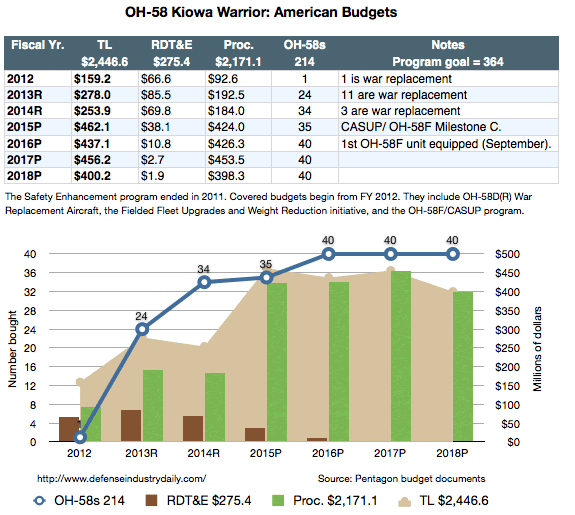
The $3.9 billion OH-58F program is the Army’s long-term solution, and it will eventually take in the War Replacement Aircraft as well.
Even in an era of tight budgets, the Army has made the OH-58F upgrade program one of its highest priorities. The current acquisition strategy is to modify the entire OH-58D fleet. Seven helicopters will be produced during the OH-58F’s Engineering and Manufacturing Development (EMD) phase. After that, the target is 368. The Army plans to field 4 helicopters modified with RDTE funding, once the test program is done. A series of Low-Rate Initial Production lots will build 60 machines, and upgrade associated training devices and simulators. The final 304 helicopters would be delivered during the Full-rate Production period. The OH-58Fs would then remain in US Army inventory until 2036.
OH-58F changes build on the SEP and FFU-WRI, and include…
Airframes: A new-build cabin will replace about 60% of the OH-58D’s airframe, but that still leaves 40% of the airframe that’s as much as 55 years old by the time production finishes. Army budget documents still say that “Recapitalization Program in combination with the KW CASUP results in production of zero-timed [flight hours equivalent] OH-58F airframes and eliminates post production structural overhauls”.
CASUP: Under the Kiowa Warrior Cockpit and Sensor Upgrade Program (CASUP – OSIP 2-08-01-0117), weight reductions continue, with the most significant being replacement of the Mast Mounted Sight designed to look over trees at Russian tanks with a lighter, nose-mounted AN/AAS-53 Common Sensor Payload surveillance and targeting turret. The AAS-53 gives up some tactical options, but it’s lighter, requires less maintenance, and is better suited to deserts, mountains, and the man-made “canyons” of urban warfare.
A redesigned aircraft wiring harness and MIL-STD-1760 digital interface will improve the range of weapons it can carry. Other efforts include Increased Height Landing Gear, as well as further upgrades to the Control Display Subsystem mission computers, independent digital displays for the pilot and co-pilot; and improved avionics, intercom system, aircraft survivability systems, weapon systems, electrical systems.
The cumulative effects strip 160 pounds of weight out, which should help to improve sluggish performance in hot or high-altitude conditions. In more hospitable environments, it should allow the Kiowa to make less restrictive tradeoffs between full fuel and full weapons.
The question is whether this program will leave any budgetary room for a new Armed Aerial Scout helicopter. The answer: there wasn’t even enough room for the OH-58F.
Additional Readings & Sources
* FedBizOpps (Jan 26/10) – 15–Armed Aerial Scout Helicopter Request for Information. Solicitation Number: W58RGZ-10-R-0175
* GlobalSecurity.org – Armed Reconnaissance Helicopter (ARH)
* Bell Helicopter Textron – The Bell ARH-70. See also: Bell ARH Corporate Product Data Sheet [PDF format]
* EADS N.A. – Armed Scout 645. Team web site with Lockheed Martin. The UH-72A Lakota is back – and this time, it’s armed. See also their AAS-72X web site.
* AgustaWestland (April 27/09) – AgustaWestland Unveils The TUHP 149 Helicopter To Meet The Turkish Utility Helicopter Programme. Armed versions available, intended complement their jointly-produced AW129T attack helicopter. Could become an American ARH candidate.
* US Army – The OH-58F Kiowa Warrior.
* Army-Technology.com – OH-58D Kiowa Warrior Reconnaissance / Attack Helicopter, USA
* GlobalSecurity.org – RAH-66 Comanche
* Army-Technology.com – RAH-66 Comanche – Reconnaissance/Attack Helicopter, USA
* DID – Iraq Seeks Armed Reconaissance Helicopters. The DSCA request pitted the Bell 407 vs. Boeing’s updated AH-6 ARH. The 407 won, and militarization is being managed by the US Army.
* Defense Tech (April 2/08) – Why Do Commercial Platforms Make Such Lousy Military Aircraft? “The above is the question that the US Department of Defense is asking itself, courtesy of a new Defense Science Board Task Force chaired by Jacques Gansler…”
* DID (Dec 4/07) – Can the US Army Afford Helicopter Modernization? Even with the cheaper options at hand as Comanche alternatives, the Congressional Budget Office doesn’t think so.
* National Defense Magazine (July 2007) – Army Learns Tough Lessons From Armed Helicopter Letdown. For instance, “Commercial Off The Shelf” is only meaningful if the commercial certification took place under similar conditions and with similar equipment.
* National Defense Magazine (March 2007) – Delivery of armed recon helicopter delayed one year. Good overview of ARH program milestones to date.
* DID (Aug 2/05) – Bell Textron Wins $2.2B ARH Competition With 407 Variant. Also describes the competition.
* Bell Helicopter Textron (July 29/05) – Contract win corporate release.
* DID (June 20/05) – Eurocopter & Bell Battling for $500-600M Indian Army Contract
* Asia Pacific Aviation News – Bell Helicopter offers the Texas-built Bell ARH