

(click to view full)
Sen. Leahy’s [D-VT] worked in the mid-2000s to keep the Hydra 70mm rocket family alive through special appropriations, just in time for the Hydras’ potential on the battlefield to rise again. The key was the addition of low-cost precision guidance, which would expand the number of precision weapons carried by helicopters, aircraft, and even UAVs.
Over the last few years, the US Army’s 2nd attempt at an APKWS 70mm guided rocket had a near-death experience, before righting the program with Navy funding. Meanwhile, private development efforts are introducing new competitors into the precision-guided rocket space: Lockheed Martin, Thales TDA, and a raft of international partnerships involving major defense firms and partners in Korea, the UAE, Canada/Norway, and Israel. This DID FOCUS article covers the most prominent competitors within the guided rocket trend. Their products will sit between full anti-armor missiles like Hellfire, TOW, and Brimstone, and an emerging class of ultra-small precision attack weapons like Northrop Grumman’s Viper Strike, Raytheon’s Griffin, etc.
APKWS II: “To be, or not to be…”

(click to view full)
“APKWS II “Hellfire Jr.” Hydra Rockets Enter SDD Phase” is DID’s FOCUS article for the APKWS II program, noting updates and developments related to the BAE/ General Dynamics/ Northrop Grumman partnership and its project.
APKWS II’s seeker has a much narrower “cone” than Lockheed Martin’s DAGR competitor (+/- 4 degrees, vs. +/- 15 degrees), and BAE’s APKWS II system found itself “zeroed out” in the FY 2008 budget appropriations. Despite the emergence of privately funded competitors and allied partnerships, The US Navy elected to stick with APKWS-II, and stepped in as the main funding source in 2008. That move secured BAE’s place in the market, and ensured its integration with US Navy jets, helicopters, and UAVs. It has since spread to other platforms as well. See the full article for full coverage and current details.
Lockheed Martin: Is this a DAGR I see before me…?
(click to view full)
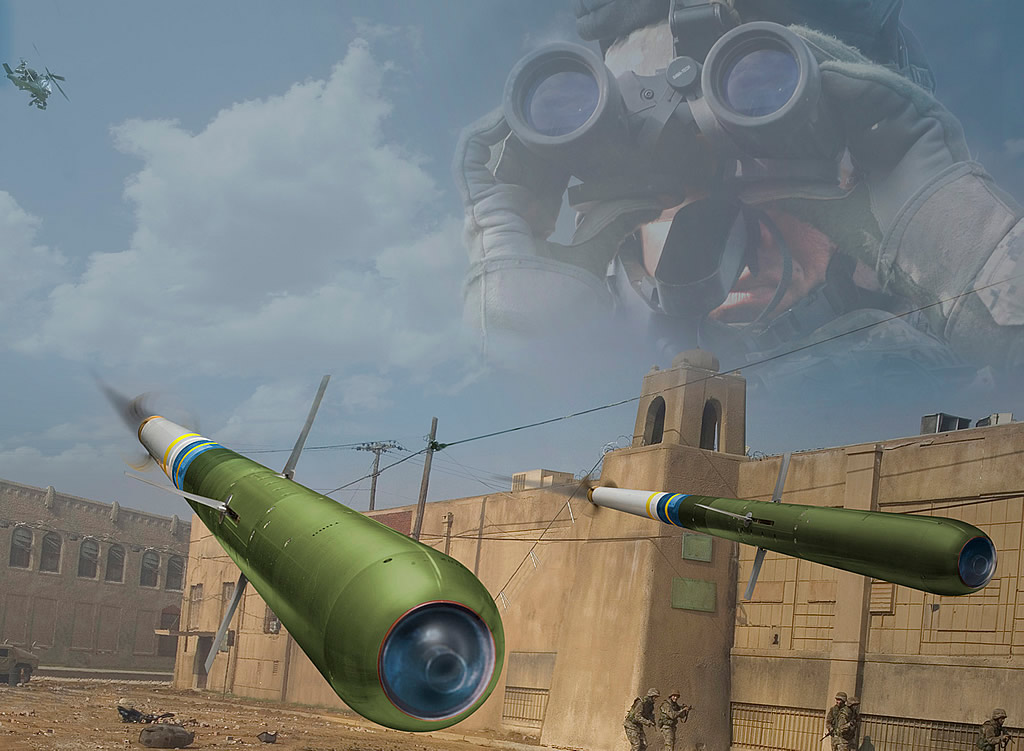
Leveraging existing Hellfire and Joint Common Missile technology, the semi-active DAGR guided rockets offer functionality comparable to the popular Hellfire missile, including lock-on-before-launch, lock-on-after-launch, target location handoff, enhanced built-in test, programmable laser coding, and flexible fly-out modes. DAGR rockets’ +/- 15 deg sighting cone offers a wider field of view than competitors. They can also be launched from any platform that currently supports the Hellfire weapon system, removing many requirements for additional integration, training, or infrastructure.
Lockheed Martin says that DAGR has customers, but will not name them.
March 19/14: Testing done. Lockheed Martin completes all 16 US Army Air Worthiness Release (AWR) live firing flight tests from AH-64D helicopters at Eglin AFB, FL. Each guided rocket flew between 1.5 – 5.1 km, and all hit the target within 1m of the laser spot. Lockheed Martin has also completed 30 System Qualification testing flights to validate the missile and rail-mounted canister.
DAGR has been now launched from the AH-64D Apache, AH-6 Little Bird, and OH-58 Kiowa Warrior helicopters; and from a ground-based Hellfire/DAGR pedestal launcher mounted on a JLTV vehicle. Sources: Lockheed Martin, “Lockheed Martin’s DAGR Missile Scores A Perfect 16 of 16 In Flight Tests for U.S. Army”.
May 8/12: Tests. Lockheed Martin touts a set of 4 successful DAGR tests from an AH-64 Apache attack helicopter at Yuma Proving Ground, AZ, all of which hit within 1 meter of the laser spot. A truck moving at 25 km/h was hit from 3.5 km was hit using lock-on before launch, and the other tests included a lock-on after launch shot, a 5 km strike, and a launch from 5 degrees offset.
This makes over 30 test flights so far, from AH-64D Apache, AH-6 Little Bird and OH-58 Kiowa Warrior helicopters.
June 20/10: Customers. Lockheed Martin tells Battlespace magazine that its DAGR system has 2 initial customers, and will enter low-rate initial production “early next year.”
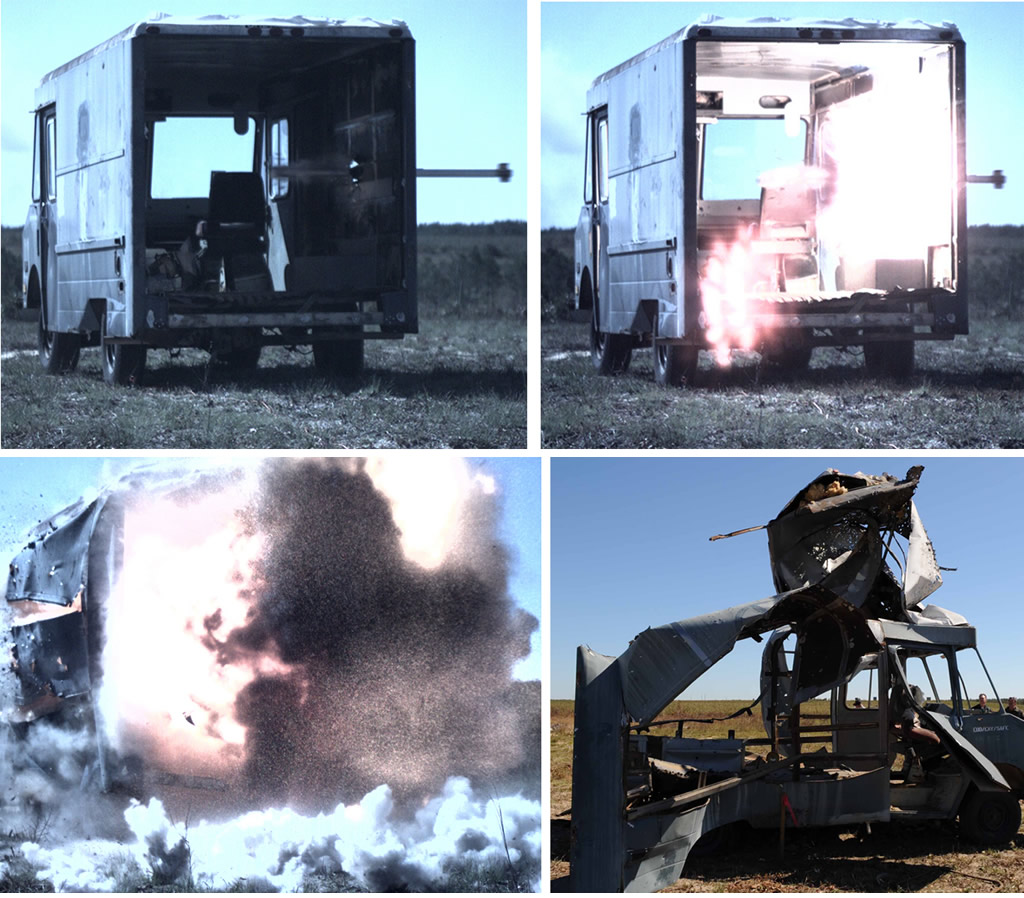
Jan 8/09: DAGR succeeds in its first live warhead launch, and penetrates the side of the target vehicle before exploding. Lockheed Martin says that the weapon is now 12 for 12 in tests.
Feb 28/08: Testing. Lockheed Martin announces 3 successful tests (2 guided flight, 1 multi-purpose sled) of the DAGR semi-active laser guidance kit for 2.75-inch/70mm rockets. The tests were designed to demonstrate the system’s accuracy, wide sighting capability, and delayed fuzing mode. Lockheed reports that DAGR is now 6-for-6 in control vehicle and guided test vehicle flights, which began in February 2006.

(click to view full)
Sept 17/07: Land-based? Flight International reports that a land-based version of DAGR could be deployed to Iraq soon. Randy Thomas, business development manager for DAGR, told them that the US Army wants to network DAGR rockets and AGM-114 Hellfire missiles with a network of tower-based sensors (very likely the RAID towers) at army bases in Iraq. The system would be used as a surveillance and suppress/ instant reply option against enemy mortar teams. Lockheed is also pushing for DAGR integration onto helicopters and UAVs.
If they succeed in these efforts, Lockheed Martin could wind up losing the formal competition, but winning the procurement competition by pre-empting their rival’s R&D cycle with a working solution whose initial deployment sidesteps the original competition. That doesn’t happen very often in US military procurement, which is another reason the “Guided Hydroids” competition is worth following closely.
Sept 11/07: Unveiled. Lockheed formally unveils the DAGR as a finished, for-sale at Britain’s DSEi defense show. The rockets can be fired from existing M299 and M310 Hellfire launchers, with 4-packs of DAGRs mounted to each Hellfire missile rail. As the maker of the Hellfire missile and launcher, they are uniquely positioned to offer this level of integration.
This clears the way for DAGR rockets to be employed immediately on larger unmanned aerial vehicles like the MQ-1 Predator, MQ-9 Reaper, MC-1C Sky Warrior, and MQ-8B Fire Scout; on AH-1 Cobra, AH-64 Apache, H-60 Seahawk, OH-58 Kiowa, and Eurocopter Tiger helicopters; and on the ARH-70A Armed Reconnaissance helicopter if and when it is delivered.
That kind of flexibility also positions Lockheed Martin for any situation in which APKWS II is shut down and turned into a “fly-off” competition, because of the extra flexibility their launcher options create.
DAGR formally unveiled
March 7/07: DAGR. Lockheed may have lost the APKWS II competition, but it didn’t give up. The DAGR (70mm Direct Attack Guided Rocket, not to be confused with DAGR hand-held GPS locators) completed development with company funding. Lockheed especially touts its wider boresight/ off-axis capability, which allows it to launch within a wider “flight cone” and still find its way to the target.
February 2007 flight tests demonstrated objective maneuverability capability for minimum range engagements. The DAGR rocket supports launch from unmanned aerial vehicle platforms; later in 2007, Lockheed Martin will complete a full test flight matrix for unmanned aerial vehicles and helicopters, as well as perform platform launch. See Lockheed Martin release.
LOGIR: “…the heavenly-harnessed team/ Begins his golden progress in the east…”
[youtube:http://www.youtube.com/watch?v=kC4W11cVz3Q]
(click for video)
From NAVAIR weapons development’s “Arming the Fleet” publication, 2005:
“The LOGIR project began in 2000 and is still under way. Its primary objective is to significantly improve the warfighter’s ability to address moving and fixed targets with an emphasis on moving targets. LOGIR allows the warfighter to designate the target using the existing targeting FLIR. Once designated, the pilot can fire the rocket and leave the area. LOGIR will use the FLIR(Forward-Looking Infa-Red) targeting data to fly to the target, and acquire and track the target to weapon impact.”
Using FLIR/ Imaging Infrared enables 1 platform with LOGIR rockets to simultaneously engage many small naval targets at once across a wide (90 degree plus) sighting cone, instead of having to use individual laser designation. That makes it a better weapon against threats like small boat swarms, though it does increase the price a bit.
Until May 2011, LOGIR was formally part of the Office of Naval Research’s Future Naval Capabilities Low-Cost Imaging Terminal Seeker (LCITS) program, as executed by NAVAIR Code 4.7’s Emergent Weapons Concepts Division. Test GR #3 officially shifted the LOGIR project from LCITS into the Medusa JCTD (Joint Capability Technology Demonstration) phase, but the USN’s MH-60 helicopters are likely to carry BAE’s APKWS rockets instead. As of November 2011, LOGIR has been fired from shore and from an AH-1 Cobra attack helicopter, including tests against moving targets. It’s still looking for its first order.
(click to view full)
Nov 3/11: Land-based. Twin test-firings of LCITS by the US ONR:
“In the Nov. 3 test, Naval Air Warfare Center Weapons Division engineers used a shore-based launcher to fire two LCITS rockets, one inert and the other with an explosive warhead. Using inertial guidance, they flew to a point where the infrared terminal guidance system took over. Onboard imaging infrared seekers identified their intended targets among five maneuvering small boats. The rockets adjusted trajectories to intercept and eliminate two of the boats.”
May 11/11: The US Office of Naval Research provides an update on the LCITS/LOGIR program, and touts its capabilities against small boats. Outside observers wonder what other applications might be found for the seeker. ONR | The Register.
May 1/10: Testing. LOGIR completes its concept demonstration phase with a successful launch from an AH-1W helicopter and a direct hit on a moving fast boat, at the Naval Air Warfare Center Weapons Division (NAWCWD) in Point Mugu, CA. NAWCWD Weapons and Energetics Department Precision Guidance Office head Howard McCauley says the test marks LOGIR’s technology as being mature enough to transition into a Navy program of record.
Until this test, LOGIR was part of the Office of Naval Research’s Future Naval Capabilities Low-Cost Imaging Terminal Seeker (LCITS) program, as executed by NAVAIR Code 4.7’s Emergent Weapons Concepts Division. Test GR #3 officially shifted the LOGIR project from LCITS into the Medusa Joint Capability Technology Demonstration phase. A Military Utility Assessment will be conducted during Medusa, to further LOGIR along the path to a buy decision and fleet introduction. US NAVAIR.
March 2/07: MoU. Korea and the United States have agreed to cooperate in developing guided air-launched rockets, signing a memorandum of understanding (MOU) for “LOGIR” (Low-Cost Guided Imaging Rocket) development. The budget for this project is reportedly more than $60 million.
“The LOGIR project is a main joint project for weapons development between South Korea and the U.S.,” said Park Young-wook, director of South Korea’s Defense Acquisition Program Administration’s (ROK DAPA) technology acquirement department. A ROK DAPA official added that “Korea will bear only several million won and the U.S. will be responsible for the rest amount… The allies will cooperate in development of running gear, guidance system, and detector on the base of LOGIR.” See KOIS report | DynamicKorea.com report.
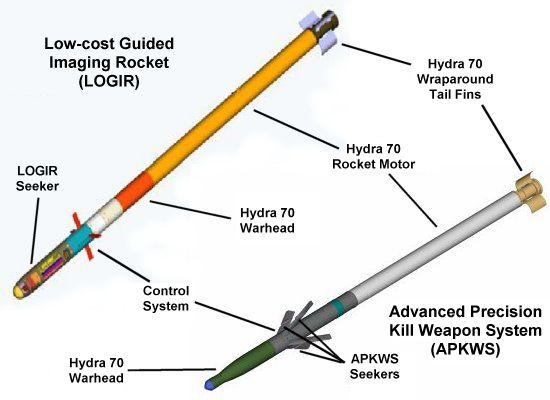
Sources indicate that LOGIR involves a Hydra 70 2.75-in. rocket with an inertial + infrared guidance kit added to the front. The kit consists of a low-cost uncooled imaging infrared focal plane array that can match a target profile with a pre-programmed (or transmitted) “image” in its memory, a low-cost micro electro-mechanical inertial measurement unit to track current and relative position and get the rocket near its target, a control actuation system for maneuvering, and computer electronics to tie it all together.
LOGIR won’t be quite as effective against mobile targets as a more expensive system that might use ongoing laser designation or millimeter-wave seekers. Instead, it offers fire-and-forget capability, works well against the relatively stationary targets that still make up a large percentage of precision attack missions (a building, a parked vehicle, an enemy machine-gun position, etc.), and has good enough effectiveness against moving targets to offer advantages against swarming tactics.
Raytheon and the UAE’s TALON: “Our remedies oft in ourselves do lie…”
[youtube:v=TmABY-katwg]
On May 7/08, a new competitor entered the fray with a semi-active laser guided screw-in module called TALON. Hussain I. Al Hammadi, Emirates Advanced Investments’ chief executive officer:
“The Laser Guided Rocket project with Raytheon is a very important defense industry initiative for the United Arab Emirates… that will provide future benefits for the armed forces of both our countries. It is designed to destroy targets ranging from tactical armored vehicles to high-speed naval craft and will provide a very affordable precision weapon for attack helicopters.”
Along the way, they had to deal with a lot of setbacks. Raytheon Missile Systems’ Laser Guided Rocket program manager Richard Janik touted TALON as a zero-development cost APKWS-II alternative while that program was foundering, but the US Navy stepped in and adopted BAE’s APKWS design in August 2008. After successful TALON testing from 2009 – 2011, the UAE placed a laser-guided rocket order with Turkey’s Roketsan for fully-assembled CIRIT rockets in February 2013.
Even so, Raytheon continued to invest. They’ve achieved full US Army air certification release for the AH-64D/E Apache attack helicopter, acquired OEM certification from MD Helicopters for their MD 530G armed aerial scout, and tested naval options. In 2014, that persistence was rewarded with a contract from the UAE – which may include deployment on ground vehicles.
Contracts and Key Events
[youtube:v=6O4gx17yniE]
September 05/17: General Dynamics Ordnance and Tactical Systems has been awarded a $60 million US Army contract modification to an earlier 2014 award for additional Hydra-70 air-to-ground rocket systems. The rockets will be for US combat aircraft and for customers of the US Foreign Military Sales (FMS) program. The unguided 2.75″/70mm Hydra-70 air-to-ground rocket comes in a wide variety of warhead configurations and is used by a variety of fixed-wing and rotary aircraft, including Apache and Cobra attack helicopters, F-16 Fighting Falcons and aircraft of other nations.
July 13/16: General Dynamics has been awarded a $169.6 million Foreign Military sales contract to provide Hydra rockets to Colombia, Afghanistan, Iraq, Qatar, United Arab Emirates, India, and Belgium. Completion of the contract is expected for January 31, 2019. The Hydra rocket family performs a variety of roles, including anti-materiel, anti-personnel and air-to-ground suppression missions.
[youtube:v=C3NlZRxfscE]
Oct 29/14: Testing. Raytheon and L-3 hold a 2nd firing test of the TALON Rocket Remote Weapon System (RRWS), which is meant for naval deployment on small boats but could be added to land vehicles. In this test, the RRWS received positioning information from a different sensor, followed by acquisition, designation, and a hit. The release also describe the RRWS in more detail, which weighs about 500 pounds:
“The TALON was fired from a LAU-68 launcher fitted to L-3’s Advanced Remote Weapon Station, using the company’s O•N•E 360™ situational awareness imaging system, and Sonoma 1205MD™ turret for laser designation. TALON RRWS has equipment from L-3’s Integrated Optical Systems, Sonoma EO and KEO business units.”
All links were added by DID. Sources: Raytheon, “Raytheon, L-3 complete second successful firing of TALON Rocket Remote Weapon System”.
Sept 15/14: UAE. Raytheon announces a $117 million sub-contract from the UAE Tawazun for TALON Laser Guided Rockets, as a follow-on to a 2013 contract given to Tawazun by the Armed Forces General Headquarters of the United Arab Emirates. Raytheon will maintain full integration of the TALON system into the UAE Armed Forces to include logistics, training and warranty support.
Tawazun also has a partnership with, and UAE orders for, Roketsan of Turkey’s CIRIT laser-guided weapons (q.v. CIRIT, Feb 19/13). The main difference is that CIRIT is an all-up round like a missile, while TALON can be retrofitted to existing Hydra rocket stocks.
Raytheon/EAI’s TALON rockets are qualified on AH-64D attack helicopters, and Raytheon says that they’re also exploring options to integrate it onto some of Tawazun’s locally-designed NIMR armored patrol vehicles. Over 1,500 NIMRs have been ordered by the UAE in various configurations, and others have been exported to neighboring countries like Libya, etc.
UAE orders TALON
July 31/14: Testing. Raytheon announces that a partnership with MD Helicopters has led to MD’s OEM certification of TALON on their new MD 530G armed aerial scout helicopter, an armed derivative of their MD 530F. Laser designation is provided by the L-3 WECAM MX-10D turret. The rockets themselves are carried on either a 7-shot M260 pod, or FN Herstal’s 3-shot Rocket Machine Gun Pod that pairs them with a 12.7mm gun and 250 rounds.
Integration and testing reportedly took just a few months, ending with a series of 4 test-firings under different mission profiles at Yuma Proving Ground, AZ. TALON LGR is currently the only OEM-certified guided rocket or missile for this platform. Sources: Raytheon, “Raytheon fires four TALON Laser-Guided Rockets from MD 530G helicopter”.
May 4/14: AH-64. Raytheon announces that they’ve completed TALON’s US Army certification process for air worthiness release on the AH-64D/E Apache attack helicopter. That clears the way for TALON’s employment from American or foreign Apache helicopters using standard M260/261 rocket launchers. The firm says that no hardware or software modifications are required to the helicopter or launcher. Sources: Raytheon, “Raytheon, US Army certify TALON Laser-Guided Rocket on Apache helicopter”.
AH-64 certified

(click to view full)
Jan 15/14: Naval testing. Raytheon hasn’t given up on TALON, and is touting it for naval use. They tout a successful land firing from a standard 7-rocket LAU-68 launcher mounted on L-3’s Advanced Remote Weapon Station. The full ARWS includes day/night cameras and a laser designator, and weighs about 500 pounds with the rockets equipped. That’s good, because as Raytheon puts it:
“It requires only a target queue to engage on-mount target tracking and can be integrated on ships ranging in size from riverine to major surface combatants.”
There’s definitely a niche for that kind of close-in precision attack weapon at sea, in a low-cost solution. Sources: Raytheon, “Raytheon, L-3 demonstrate new ship protection system”.
Nov 15/11: Testing. Raytheon announces that its partnership with Emirates Advanced Investments (EAI) Group has completed a TALON operational demonstration, going 3-for-3 from a UAE AH-64D Apache Longbow attack helicopter against stationary and moving targets. This marks the final step leading to production of TALON LGRs in the U.S. and the United Arab Emirates.
Sept 13/11: Testing. Raytheon announces a successful finish to additional testing of production configuration TALON rockets on the AH-64D Apache Longbow helicopter. The AH-64D is the UAE’s main attack helicopter, though it will soon be joined by UH-60M Black Hawks fitted with Level 3 Battlehawk kits. TALON test firings included hovering and moving platforms, at engagement ranges between 1.2 km/ 0.74 miles to 6.0 km/ 3.7 miles. Raytheon believes the rocket is now ready to begin full-rate production.
April 16/10: Testing. Raytheon and Emirates Advanced Investments (EAI) announce the end of 4 ground-based guided flight tests of the TALON Laser-Guided Rocket, after the rounds were “preconditioned” at extreme temperatures to test their reliability. The tests pave the way for TALON LGR airborne testing, including a series of live firings from the AH-64D Apache Longbow helicopter. Raytheon release.
Dec 22/09: Testing. The U.S. Army fires 2 TALON Laser-Guided Rocket guided test vehicle rounds from an OH-58D Kiowa Warrior, and hit targets at 3,500 meters (2.17 miles). The Raytheon release adds that “this exceeded accuracy requirements for the Department of Defense’s Advanced Precision Kill Weapon System II program. In September, the U.S. Army clearly stated the need for a guided munition capable of being launched from the OH-58D Kiowa Warrior…”
Oct 8/08: Testing. Raytheon announces the completion of tests for the Laser Guided Rocket in Buffalo, NY’s Calspan Transonic Wind Tunnel. It’s the first testing step in a 24-month development and qualification program, providing simulations and data that will help with autopilot design.
May 7/08: Joint development. Raytheon Company and Emirates Advanced Investments of Abu Dhabi in the United Arab Emirates announce a cooperative development agreement for a semi-active laser-guided 70 mm/ 2.75-inch rocket.
The agreement represents a full transfer of technology to the United Arab Emirates; subject to approval of the respective companies’ governments, Raytheon Missile Systems and Emirates Advanced Investments will produce the laser guided rocket for national and international customers. The agreement details a complete development and qualification program and provides for a follow-on proposal to supply a commercial off-the-shelf laser guided rocket for military customers in the United Arab Emirates, United States and other countries. Initially, the laser guided rocket will be qualified on a single United Arab Emirates’ platform, with later integration onto additional platforms. Raytheon
Development agreement
Other Entries: “Come unto these yellow sands…”
Moore’s Law continue to produce more powerful computer processors, and parallel developments in other technologies are driving down the cost of laser and infrared detectors. It’s hard to escape the conclusion that eventually, most unguided rockets will introduce guidance options over the next decade. Here are a few of the other contenders.
Turkey: Roketsan’s CIRIT
(click to view full)
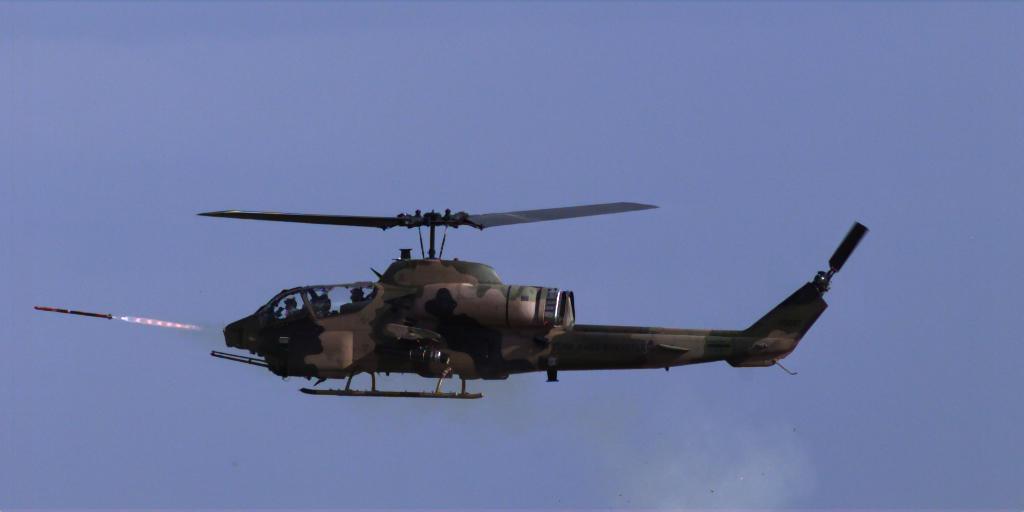
Turkey’s relationship with both Israel and the USA continues to deteriorate under the Islamist AKP party, removing the option of buying Elbit’s GATR. At the same time, the government is undertaking wide-ranging military modernization that emphasizes local design and production, while working to export local defense products and services to surrounding states. CIRIT is one of their early success stories. It’s sold as a complete missile with a range of 8 km, a reduced-smoke motor, and a tri-mode (fragmentation/ HEAT/ incendiary) warhead. The goal is a weapon that can be fired from standard M- and LAU- rocket launchers, as well as a 2-shot MIL-STD-1760 launcher developed by Roketsan. Customers to date include Turkey and the UAE.
[youtube:v=7GVnnWSbb4I]
May 22/14: Germany. Roketsan signs a Memorandum of Understanding with MBDA Deutschland. They’ll be offering Roketsan’s Cirit 70mm rocket as a solution for Germany’s EC665 Tiger UHT scout/attack helicopter fleet, with MBDA responsible for integration.
They’ll face competition that includes Elbit’s GATR. BAE’s APKWS-II and Raytheon’s TALON are also available, but local industrial partners will be needed. Sources: MBDA, “MBDA Deutschland GmbH in partnership with Roketsan” | Andalou Agency, “Turkish contractor signs deal with German weapons maker”.
May 5/14: UAE. Roketsan and Tawazun deliver the first 2,000 of 10,000 Cirit laser-guided rockets to the UAE, which reportedly intends to integrate them with ground vehicles as well as helicopters. The UAE’s AH-64D fleet is an obvious option, but the country is also arming its UH-60M Black Hawk utility helicopters. Sources: Turkey’s Daily Sabah, “Turkey Delivers First Huge Batch Of Cirit Missiles to UAE”.
Feb 19/13: UAE. At IDEX 2013, the UAE announces an AED 720 million (about $196 million) deal with Tawazun to supply laser-guided rockets to the UAE military, through a partnership with Roketsan.
That’s a very curious announcement. The UAE has its own Talon system, developed by the local firm EAI in collaboration with Raytheon. UAE The National.
UAE buys 10,000
July 10/12: Turkey. Hurriyet says deliveries have begun:
“Turkey’s missile maker Roketsan has delivered 100 laser-guided 70 mm rocket systems to the Turkish military, a defense source has told the Hürriyet Daily News.”
Delivery
March 27/12: Turkey’s SSM procurement agency has unveiled their new 5-year strategic plan, with timetables for key acquisitions. CIRIT is to be integrated with the T129 by the end of 2013, with deliveries beginning. Hurriyet Daily News
Sept 12/11: Goodrich Corporation announces its 1st production order from Turkey’s Roketsan Missiles Industries Inc., for its miniaturized, MEMS-reliant SiIMU02® inertial measurement unit (IMU). The production order follows successful customization and qualification of SiIMU02 package for CIRIT in 2011. The IMUs will be produced at Goodrich’s facility in Plymouth, UK.
May 12/11: Eurocopter EC635. Roketsan signs a Memorandum of Understanding with Eurocopter to integrate its Cirit on the EC635 light utility and scout helicopter, and run a test program. The EC635 has been ordered by Jordan, Iraq, and Switzerland, and those first 2 countries are certainly promising markets for Turkey.
Meanwhile, Roketsan President Huseyin Baysak touts Cirit’s envisaged 8km range as a differentiator, and videos show early tests from an AH-1 Cobra helicopter. They’ll also need to work with AgustaWestland, whose T129 will by Turkey’s next attack helicopter. Sources: Dogan News Agency, “Roketsan signs memorandum of understanding with Eurocopter at IDEF’11” | News.Az, “Turkey launches guided rocket system” | YouTube, “Roketsan Cirit 2.75″ Laser Seeking Rocket”.
Sept 23/10: Jane’s covers Roketsan’s display of its Cirit 70mm rockets and UMTAS/ OMTAS anti-tank missiles at AAD 2010. The 2.75in Cirit is now being qualified and will enter production “later this year.”
June 1/08: Australia. Roketsan Chairman R.Lt. General Mr. Ismail Ozalp sits down for an interview that covers the breadth of his company’s activities, from cooperation on programs like Stinger and ESSM to ground-launched rocket sales, missile devlopment, and Cirit. On which subject, “…we are also negotiating about the 2.75” Semi-Active Laser Guided Missile systems with Australia.”
Australia operates the EC665 Tiger ARH scout/ attack helicopter, and could also find a use for Cirit aboard its current (S-70B) and future naval helicopters. As of 2014, the idea hasn’t gone anywhere. Sources: Defence Turkey, “ROKETSAN: Turkish Defence Industry’s growing power”.
CRV7-PG
(click to view larger)
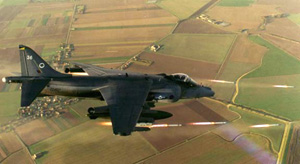
Defense Review cites the Magellan Aerospace/Kongsberg Defence & Aerorspace (KDA) CRV7-Precision Guided (CRV7-PG) 70mm rocket (2.75″ rocket). The UK/Canadian firm Magellan has produced excellent 70mm CRV7 rockets for quite some time. They are providing the rocket technology. Kongsberg is handling the guidance system, which is derived from its work on the Penguin anti-ship missile and Naval Strike Missile (NSM).
This CADSI (Canadian Association of Defence and Security Industries)
profile states that seeker options include semi-active radar, laser guidance, GPS, and anti-radiation; if so, the CRV-7PG would offer precision-strike 70mm rocket options for many existing fighter aircraft, as well as helicopters and UAVs. The development partnership was announced on June 15/06, at Eurosatory 2006.
GATR-L (Guided Advanced Tactical Rocket – Laser).
[youtube:v=Su3PKPIP1E4]
click for video
On July 9/08, Israel’s Elbit Systems Ltd. and American ammunition and rocketry expert Alliant Techsystems (ATK) announced a teaming agreement to develop the 70mm GATR-L for use on “fixed-wing, rotary-wing, and Unmanned Aerial Systems (UAS) platforms.”
GATR uses the same semi-active laser seeker as the Laser JDAM bomb, and employs a digitally-fuzed, fully-qualified M282 multi-purpose penetrating warhead. It can be fired using lock-on before or after launch, as well as autonomous or remote laser designation. The warhead is programmed from the cockpit for either point detonation, or delayed fuzing against hardened targets. ATK promotes GATR as having a firing envelope that’s “50 percent greater than [the weakest] currently-fielded laser-guided rockets.” The system can be deployed against targets at ranges from 1.5 km – over 8 km.
2014: Germany. Diehl Defence is cooperating with Elbit to offer a variant of GATR for Germany’s EC665 Tiger UHT scout and attack helicopters. they’re calling it GILA, for Guided Intelligent Light Armament. The minimum Level 1 offering requires no integration, and uses standard lock-on before launch. Level 2 would require some adaptation of the launchers used. Level 3 uses a different Smart Launcher and requires integration, in exchange for fuze programming and laser guidance code programming from the cockpit.
Diehl would be responsible for production of the guidance and control section, final assembly of the guided rocket, all simulation software, and helicopter integration and logistics. Sources: Diehl Defence, “Air-to-surface precision weapon for TIGER helicopter” | IHS Jane’s IDR, “Diehl Defence offers GILA for Tiger helos”.
May 22/13: SOCOM DAC. ATK announces a $3.2 million Defense Acquisition Challenge (DAC) contract to provide a low-cost, light-weight, precision guided missile for evaluation by U.S. Special Operations Command (USSOCOM). They’ll use their MH-60L/M helicopters as the operational evaluation platform.
ATK is submitting GATR and their Precision Guided Rocket Launcher (PGRL), which is available in 3, 7, and 19-tube variants. The PGRL works with current analog and digital fire control systems, and can provide digital stores management for weapons loaded into it. ATK.
June 24/10: Defense Review reports that ATK has teamed up with Northrop Grumman to market GATR-L in conjunction with NGC’s VENOM surveillance and targeting system, which can be mounted on ground vehicles.
That’s a nice fit for the Special Operations Forces Industry Conference 2010 venue, though the VENOM/GATR combination is also touted as working with manned and unmanned aircraft.
June 1/09: Successful flight tests in Israel. They include a test from a helicopter using lock-on before launch, in order to engage an off boresight target outside the rocket’s normal seeker cone, at a range of about 3 km. The tests validated flight worthiness, safe separation launch, and autonomous laser designated guided flight. ATK release.
Oct 6/08: Successful GATR-L flight tests at White Sands, NM, fired from an M261 launcher at ranges out to 6 km. Military Aerospace & Electronics report.
SYROCOT (Systeme de Roquette A Corrections de Trajectoire)
France is interested in this project, based on the ubiquitous SNEB 68mm rocket. Thales subsidiary TDA, who makes the SNEB, has experimented with both laser-guided and GPS-guided rockets, and plans to market a 70mm version of SYROCOT. News of this project has been absent for some time, however.
Oct 8/08: Thales announces the first successful test-firing of its laser-guided SYROCOT, in cooperation with France’s DGA procurement agency.
Ugroza/Kor.
Russia’s AMETEX began touting its ‘Ugroza’ (Menace) guided air-ground guided rocket systems at MAKS 1999. Ugroza can reportedly be fitted to the 57mm S-5, 80mm S-8, and 122mm S-13 rockets, adding the suffix “Kor” to their designation.
Bigger Boom: 127mm Zuni rocket options
(click to view full)
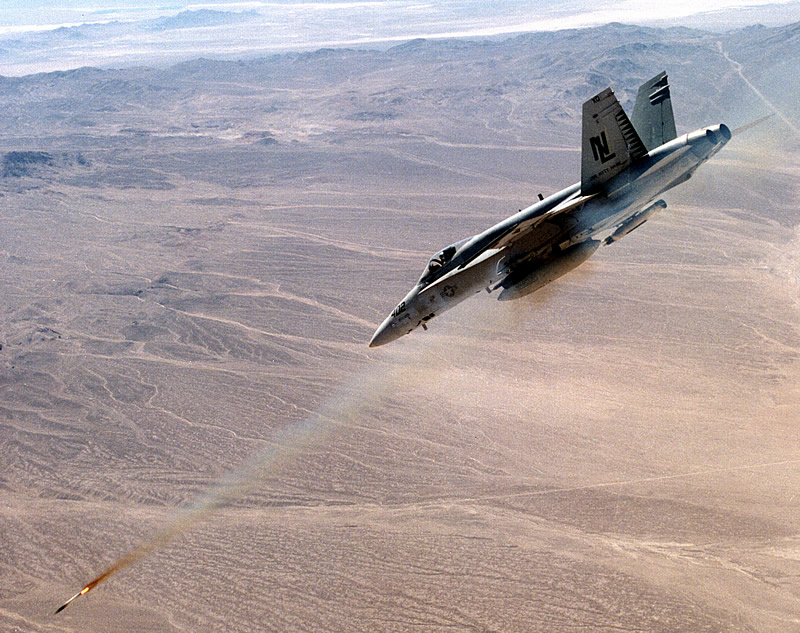
A Naval Air Warfare Center Weapons Division (NAWCWD) project in response to a US Marine Corps request to retrofit its 127mm Zuni rockets for semi-active laser guidance, allowing aircraft to fire them from existing 4-rocket LAU-10 pods with no modifications required. That program is included in the 2007 Marine Aviation plan.
NAWCWD developed the WGU-58/B guidance system in cooperation with European missile giant MBDA. Other industry partners include Elbit Systems of America in Fort Worth TX; General Dynamics in Healdsburg CA; and Honeywell in Minneapolis MN.
Oct 6/09: MBDA announces the successful demonstration of its own Semi-Active Laser-Guided Zuni rocket at the US Navy’s China Lake test facilities, this time against a moving target.
June 22/09: MBDA Incorporated announces the successful demonstration of a Semi-Active Laser Guided 5-inch Zuni rocket at a static target, at the US Navy’s China Lake, CA test facilities.
Additional Readings & Sources
Readers with corrections, comments, or information to contribute are encouraged to contact DID’s Founding Editor, Joe Katzman. We understand the industry – you will only be publicly recognized if you tell us that it’s OK to do so.
Background: Rockets & Competitors
* GlobalSecurity.org – Hydra-70 Rocket System. A General Dynamics product, which serves as the base for some add-on kits like DAGR & APKWS.
* ATK – Guided Advanced Tactical Rocket (GATR). In collaboration with Israel’s Elbit Systems.
* DID FOCUS Article – APKWS II “Hellfire Jr.” Hydra Rockets Enter SDD Phase. Focuses on the APKWS II competition, won by BAE Systems.
* Lockheed Martin – DAGR product page.
* Magellan Aerospace – CRV7-PG Rocket Weapon System. Uses the CRV-7 rocket as its base.
* Raytheon – TALON Laser-Guided Rocket (LGR).
* Roketsan – CIRIT | 2.75″ Laser Guided Missile. Turkish rocket & guidance.
* US Navy ONR – Low Cost Thermal Imaging Seeker. LCITS is the broader development program that includes LOGIR, interfaces to the helicopter’s infrared sensors, and the launcher.
* MBDA – Laser-Guided Zuni. Different class of weapon. Zunis are 127mm/ 5″ rockets carried by strike aircraft in 4-rocket LAU-10 launchers; LGZs compete with heavier AGM-65 Maverick missiles, rather than AGM-114 Hellfires.
News & Views
* StaretegyPage (Feb 9/11) – Images of Death. LOGIR, APKWS-II, and DAGR.
* Battlespace magazine (June 20/10, Vol.11, Issue 2) – The Race for the Guided 2.75 inch Rocket.
* Aeronautics.RU (December 1999) – Unguided rockets get guidance [dead link]. Mentions SYROCOT and Ugroza.
* US Senator Patrick Leahy (D-VT, May 5/05) – Army Awards $900 Million Contract To Burlington’s General Dynamics. . . Leahy Instrumental In Securing Funds.