

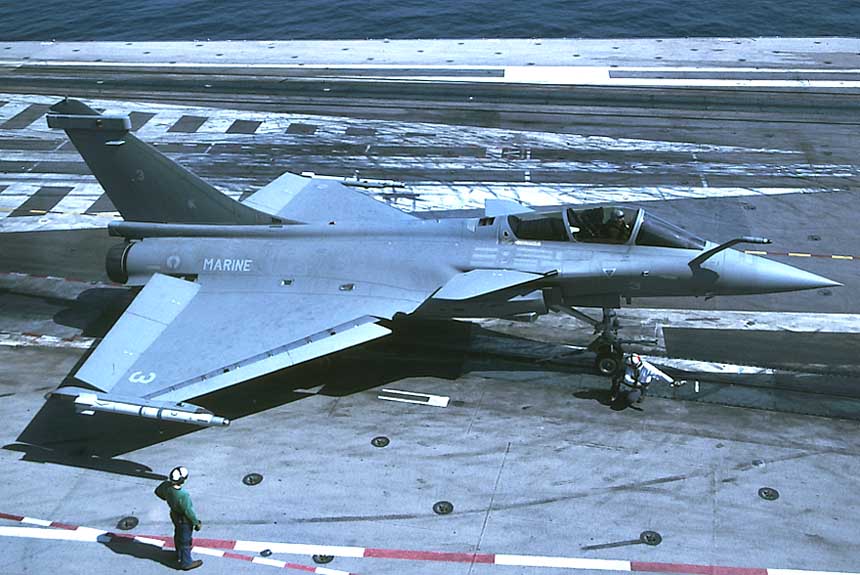
(click to view full)
The UK is the only Tier 1 F-35 partner aside from the USA, and with other participants wobbling and EU-related political pressures trying to pry members away, Britain’s ongoing participation matters a great deal to the program. As such, the escalating kerfuffle around technology transfer restrictions, F136 engine program cancellations and side steps, and escalating rumbles of discontent in Parliament have wider significance. At present, Britain is slated to buy 150 F-35B STOVL (Short Take-Off, Vertical Landing) fighters for use by the Royal Navy on its carriers et. al., complementing the RAF’s Eurofighters and possibly an upgraded set of Tornado GR4 strike fighters to form its fighter fleet from 2015-2030.
Britain and France announced their formal cooperation on their next-generation CVF/PA2 carriers. While negotiating that agreement in late January on Britain’s desired terms, however, Britain had another agreement offered – and promised to give it due consideration.
Enter Plan B…

(click to view full)
The Euroskeptic blog EU Referendum points to (and has scanned images of) a March 26, 2006 story in The Financial Mail, noting that the “unexpected verbal offer” to buy “up to 150” carrier-capable Rafale-M jets “came on 24 January when defence secretary John Reid met his opposite number, Michele Alliot-Marie, for crucial talks in London.”
The CVF may be designed as a STOVL carrier initially, but it has provisions for accommodating arrestor gear and a catapult launch system, once the CVN-21‘s improved EMALS system is perfected. An early inclusion of PA2 features such as steam catapults (despite their complexity and maintenance headaches), plus elimination of the “ski jump” ramp at the bow, would be sufficient to accommodate the fourth-generation Rafale-M.
Creating a naval version of the Eurofighter, which was originally floated as the UK’s Plan B, comes with inherent problems. Nevertheless, Defence Procurement Minister Paul Drayson noted back in November 2005 that “…there has to be a plan B” with regard to the fifth generation F-35B JSF program. “I have no sense we need an alternative plan today, and I am not saying we need to pull any levers on plan B today, absolutely not. But we need to make sure we have done the work needed to ensure we have an option.”
With the Rafale-M proposal, Lord Drayson now has a proven option. The French, meanwhile, have watched the Rafale’s export failures with alarm. They have been forced to cut back planned procurements slightly in order to put the money into ongoing upgrades, and observers have noted a sense of pressure on Dassault to find a major customer for their aircraft in order to keep its costs sustainable over the longer term. With another potential deal for the Rafale also looming in India, Britain’s ability to secure the Rafale’s future and significantly improve its chances in another sale would appear to put them in the driver’s seat – if they wish to take the offer.
Britain’s maneuvering window will last until the end of 2006 or early 2007, at which time the JSF program will move on to the next phase and participants will be asked to commit to and prepare for production.
Decisions, Decisions…

(click to view full)
On the one hand, the JSF is a more advanced aircraft than the Rafale, with improvements in radar signature, radar, computing, and sensors. These improvements translate directly into improved capabilities and survivability in air combat and strike missions.
The F-35B’s STOVL capabilities also offer basing advantages. On the ground, a wider selection of airfields are available as bases, instead of relying on full-size airports that tend to be near the most built-up areas in third-world countries (and hence vulnerable to guerrillas on take-off and landing). At sea, it provides the ability to base aircraft from smaller carriers or LHA/LHD amphibious assault ships, as well as the ability to recover aircraft to other ships in the face of carrier damage.
In war, flexibility is an asset and power all its own. There were several close calls during the Falklands War, for example, and Dr. James S. Corum of the U.S. School of Advanced Airpower Studies at Maxwell AFB also notes that the Atlantic Conveyor and Atlantic Causeway cargo vessels were modified with impromptu flight decks to transport and launch Sea Harriers [DID: scroll down for his report, and also British Major D.G. Wheen’s 1985 presentation to the USMC Command and Staff College].
On the other hand, observers like Defence-Aerospace.com’s Giovanni de Briganti argues that:
…there is no longer an absolute British need for a STOVL capability, even though it is one of the main reasons Britain opted for the Joint Strike Fighter in the first place. It is to acquire this capability that it would pay over $100 million for each JSF it buys, compared to about $60 million for the Dassault Rafale and about $80 million for the F-18E Super Hornet, the only two other Western carrier fighters in production.
Thus, the “STOVL Premium” is about $40 million per aircraft, which adds up to as much as $6 billion for Britain’s planned buy of 150 JSFs. In addition, Britain is expected to contribute another $2 billion in development costs, bringing this premium to $8 billion.
On the industrial level, a similar duality of arguments are playing themselves out. There’s the ongoing question of the UK’s economic participation levels in JSF production if the GE/Rolls Royce F136 engine isn’t reinstated by Congress, plus technology transfer issues et. al. If those are ironed out, the bright export prospects for the F-35 over its lifetimes makes it a compelling choice on the industrial level alone. If not, Giovanni de Briganti goes on to discuss “Plan B”:
… Buying the Rafale, on the other hand, would lower the acquisition and life-cycle costs of the future British carrier force because they would be shared with France across the board, and not simply on part of the ship design as is now the case. And with their main naval ports and air bases so close together, support would be far simpler than with JSF.
And, given the status of the Rafale program, Britain should be able to obtain very significant price concessions and offsets for a 150-aircraft buy. Best of all, from a British point of view Rafale is at an ideal phase for such a deal: naval Rafales have been operational long enough to iron out its kinks, yet production is not so far advanced as to make integration of a new partner impossible.”
Parliamentary Deliberations
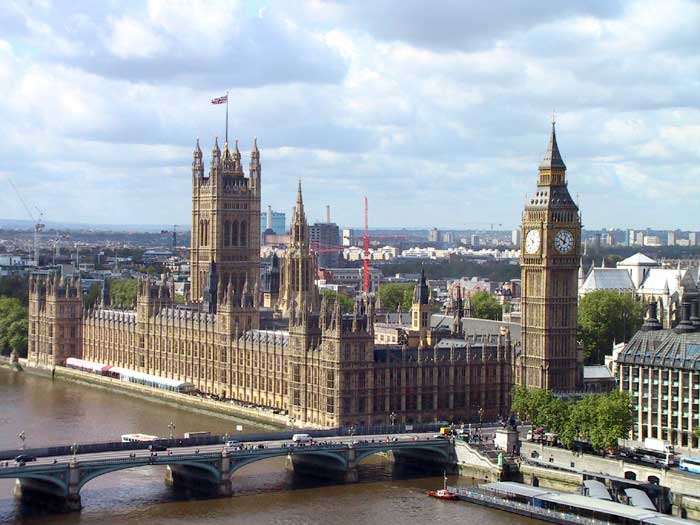
Parliament’s Defence Committee continues to discuss this question and receive government responses. The Chairman of the Defence Committee, the Rt. Hon. James Arbuthnot MP, said:
“We welcome the Government Response, although we remain concerned that there are a number of key issues on both the Future Carrier and Joint Strike Fighter programmes which are still to be addressed… On the Joint Strike Fighter, the Chief Executive of BAE Systems also told us on 28 February that he believed that the Joint Strike Fighter would proceed, but suggested that there should be an investigation into navalising Typhoon as a fall back solution. We look to MoD to give proper consideration to this suggestion.”
Some excerpts from that government response to key questions:
—
19. We have been assured that the STOVL variant of the JSF aircraft being procured by the UK and US are identical and are being designed to the same set of requirements, though, once delivered, the aircraft will be fitted with different weapons. (Paragraph 97)
The US is developing all three variants of the aircraft – Conventional Take Off and Landing (CTOL), Short Take Off and Vertical Landing (STOVL) and Carrier Variant (CV). The UK is currently planning on buying the STOVL version [DID: F-35B]. The configuration of each type can vary between platforms and users based on types of weapons carried, unique national requirements and mission specific equipment. However, the baseline configuration of the UK Joint Strike Fighters and the US jets are common.
20. We fully support MoD’s position that the ability to maintain and upgrade the JSF independently is vital. We would consider it unacceptable for the UK to get substantially into the JSF programme and then find out that it was not going to get all the technology and information transfer it required to ensure ‘sovereign capability’. This needs to be sorted out before further contracts are signed and we expect MoD to set a deadline by which the assurances need to be obtained. If the UK does not receive assurances that it will get all it requires to ensure sovereign capability, we would question whether the UK should continue to participate in the JSF programme. (Paragraph 107)
Information access to ensure our required levels of sovereign capability on JSF has been recognized by the US and UK in the Exchange of Letters signed between our respective Defence Secretaries. The Department also recognizes that demonstrated progress on Information Exchange is a critical enabler to the signature of the Production, Support and Follow On Development MOU planned for December 2006. An engagement strategy exists to ensure that progressive and targeted pressure is brought to bear at senior political levels in the US DoD and State Departments to deliver UK Requirements.
22. We note that good progress with the release of information and technological exchange on the JSF programme has been made to date, but concerns remain. MoD has focused its efforts on the US Administration to ensure that all the information and technology it requires on the JSF programme for the future is obtained in a timely fashion. In our view, dialogue with the US Administration is not sufficient given the key role played by the US Congress. We will support MoD on this issue where we can. We intend to visit Washington in the New Year and plan to raise this issue with the US Administration and with Members of Congress. (Paragraph 113)
Recent meetings between Officials and their US Counterparts have raised to the highest level the UK requirements for sovereign operations and the need for urgent progress. Substantial headway is being made and Industry and Government currently has the access it needs at this stage of the programme. The Department welcomes the Committee’s intention to raise this issue with the US Administration and with Members of Congress, but would wish to ensure that such engagement is planned and co-ordinated as part of the Department’s overall strategy.
—
JSF: The European Front
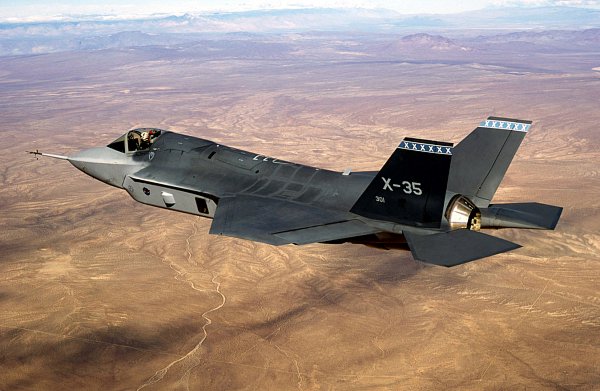
(click to view full)
On other fronts, JSF program representatives from Denmark, Italy, the Netherlands, Norway and Turkey met in Noordwijk, The Netherlands to discuss JSF cooperation if these European partner nations were to decide at the end of 2006 to participate in the F-35 JSF’s production, sustainment and follow-on development program. The Dutch Ministry of Defence noted that:
“At least two conditions should be met before a European plan can be formulated: the development of a shared European vision of the assembly and sustainment processes, and the support of the initiative by the US authorities and aircraft and engine producers, also with a view to technology transfer.”
…The next step is for the plan to be worked out in detail in consultation with the US authorities and the industries involved. The joint plan should be completed by the summer of 2006.
The joint plan can then be taken into consideration in the decision-making process on the Memorandum of Understanding in respect of the production and sustainment of the JSF, which is expected to be signed by all partners by the end of 2006.”
Updates
* DID (March 23/06) – British JSF Prospects Looking Up