

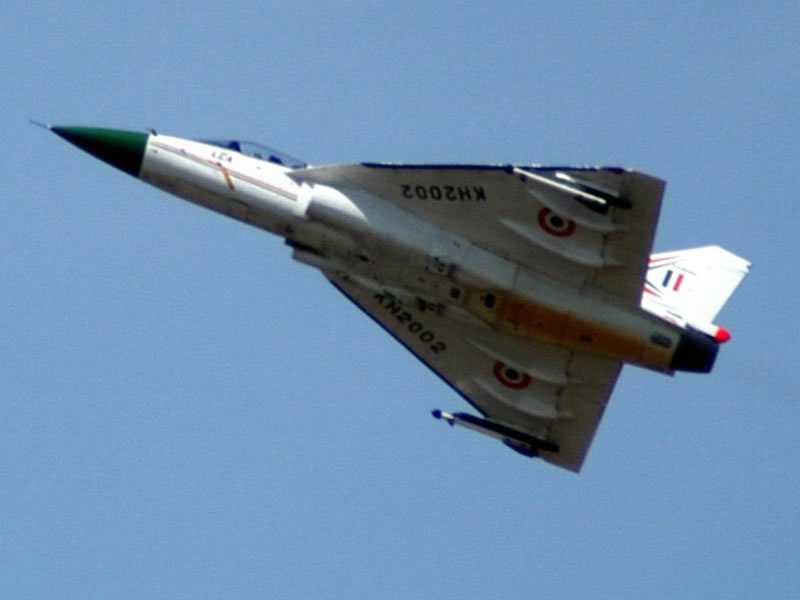
(click to view full)
India’s Light Combat Aircraft program is meant to boost its aviation industry, but it must also solve a pressing military problem. The IAF’s fighter strength has been declining as the MiG-21s that form the bulk of its fleet are lost in crashes, or retired due to age and wear. Most of India’s other Cold War vintage aircraft face similar problems.
In response, some MiG-21s have been modernized to MiG-21 ‘Bison’ configuration, and other current fighter types are undergoing modernization programs of their own. The IAF’s hope is that they can maintain an adequate force until the multi-billion dollar 126+ plane MMRCA competition delivers replacements, and more SU-30MKIs arrive from HAL. Which still leaves India without an affordable fighter solution. MMRCA can replace some of India’s mid-range fighters, but what about the MiG-21s? The MiG-21 Bison program adds years of life to those airframes, but even so, they’re likely to be gone by 2020.
That’s why India’s own Tejas Light Combat Aircraft (LCA) project is so important to the IAF’s future prospects. It’s also why India’s rigid domestic-only policies are gradually being relaxed, in order to field an operational and competitive aircraft. Even with that help, the program’s delays are a growing problem for the IAF. Meanwhile, the west’s near-abandonment of the global lightweight fighter market opens a global opportunity, if India can seize it with a compelling and timely product.
LCA Tejas: India’s Lightweight Fighter
(click to view full)
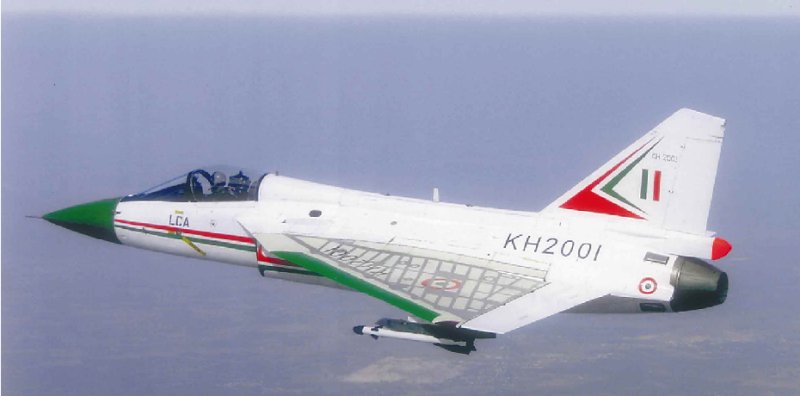
Within India’s force structure, the LCA is largely expected to replace its 400 or so MiG-21 aircraft with a more versatile and capable performer. The MiGs are being retired as age claims them, and even India’s 125 or so upgraded MiG-21 ‘Bisons’ are only scheduled to remain in service until 2018. The LCA’s overall performance is expected to be somewhat similar to India’s Mirage 2000s, with lower top speed but more modern electronics.
The Tejas LCA design uses a tailless compound delta plan that’s designed to be unstable, but controllable over an 8g / -3.5g flight range thanks to advanced flight software and quadruplex fly-by-wire technology. Composites are used heavily in order to to save weight, and proper placement can also lower the plane’s radar profile. Japan’s F-16-derived F-2 fighters also made heavy use of composite technologies, but Japanese issues with delamination and cracking required repairs and changes. ADA has conducted Static and fatigue strength studies on finite element models, and aeroservoelastic studies have been performed on the Tejas design; nevertheless, only full testing and actual service will reveal how it fares. So far, composites haven’t become a public problem for the aircraft.
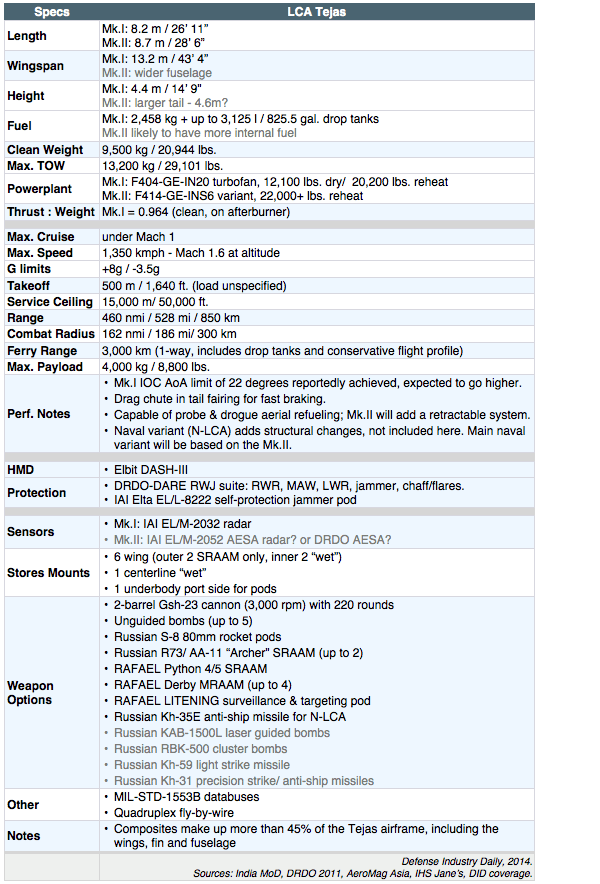
Unfortunately, reports indicate that the lack of early pilot input has compromised several aspects of the design, while a failure to consider maintenance up front has made key components difficult to reach. Barring published comparisons from experienced pilots or evaluating countries, it’s very difficult to pin down the extent or seriousness of these issues, but Tejas has certainly spent a very long time in testing.
The following sub-sections go into more detail about the fighter’s equipment rationales, and that equipment’s specific capabilities. The above list seems straightforward, but getting there has been anything but.
Electronics
The plane’s avionics architecture is configured around a 3 bus, distributed MIL-STD-1553B system, using a 32-bit Mission Computer (MC) and software written in Ada. A “glass cockpit” of colour Active Matrix Liquid Crystal Displays (AMLCDs) provides the pilot with information, and is supplemented by Elbit’s DASH helmet-mounted display for commonality with other IAF aircraft.
The Mk.II is slated to use a more advanced glass cockpit with better computing and graphics processors behind it, full-duplex cross-Switched Ethernet (AFDX) based back up avionics, and digital maps. Elsewhere on the plane, a Universal Pylon Interface Computer (UPIC) will replace the Pylon Interface Boxes.
Radar Love: Weapons & Fire Control
Radar Failure & Replacement
(click to view full)
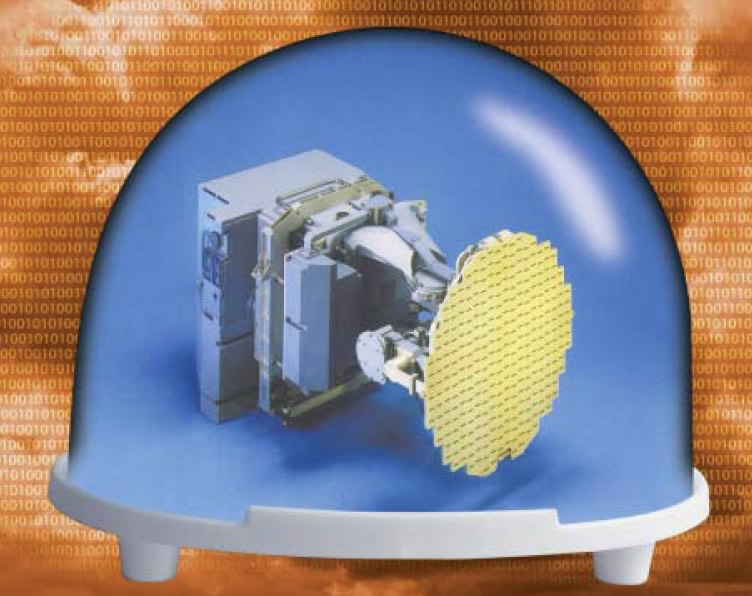
The Tejas project’s original radar, like its original engine choice, very nearly sank the project. The state-run Aeronautical Development Agency had originally intended to use Ericsson Microwave Systems’ PS-05/A radar, until they changed their mind and decided to develop their own. India’s Multi Mode Radar (MMR) program was started in June 1991, with a “Probable Date of Completion” of 6.5 years. More than 15 years later, development was still plodding away as a joint effort between Hindustan Aeronautics Limited in Hyderabad, India’s Electronics and Radar Development Laboratory in Bangalore, and the Centre for Airborne Studies. Even worse, test results for the radar were poor.
By August 2007, over 16 years into the project, even India’s MoD finally had to admit that the MMR faced serious problems. Radar co-development has now been initiated with Israel’s IAI Elta, with the EL/M-2032 as the radar base and interim solution. The EL/M-2032 multi-mode radar was originally developed for Israel’s Lavi fighter, and already equips India’s Sea Harrier fleet and Jaguar IM strike aircraft, and is popular around the world. M-2032s can be found on some F-16s in Israel and elsewhere, Kfir C10s flown by some Latin American customers, Chile’s upgraded F-5s, Romania’s MiG-21 Lancer upgrades, and South Korea’s FA-50 lightweight fighter. The radar features modular hardware design, with software control and flexible avionic interfaces, and a TWT coherent transmitter with a low-sidelobe planar antenna. The M-2032 functions in several air-to-air modes, as well as the air-to-ground, air-to-sea, ground-mapping in RBS, DBM, SAR with moving target tracking, and terrain avoidance modes.
Detection and classification ranges will vary depending on the aperture size. A radar adapted to fit in an F-5’s narrow nose will have lower performance than one that fits into a larger F-16. The Tejas’ dimensions suggest that performance may be near the radar’s claimed 80 nautical mile maximums for detection of fighter-sized objects.
There have been reports that the Tejas Mk.II and operational LCA Naval will fly with IAI’s EL/M-2052 AESA radar instead. That change would roughly double performance, while drastically reducing radar maintenance costs. These reports are unconfirmed, however, and other accounts cite American pressure to prevent Israeli AESA radar exports.
Other Sensors & Defensive

RAFAEL’s LITENING advanced surveillance and targeting pod will give Tejas long-range looks at ground targets, independent laser designation capability, and (rumored) fleet commonality with India’s Jaguars, MiG-27s, Mirage 2000s, and SU-30MKIs. The Mk.II will reportedly be adapted for a more advanced variant of the LITENING pod, but that means the pods would have to be bought and given to the Tejas fleet, rather than the SU-30MKI fleet for example.
The defensive system will be designed in India. Late testing means that it won’t be fully effective in the Mk.I aircraft, which must depend on an external Israel Aerospace Elta ELL/8-2222 jamming pod. The Mk.II is supposed to have a fully effective system of warning receivers, automated decoy dispensing, etc. In advanced western aircraft, these systems can even feed geolocation data from pinpointed threats into the plane’s targeting computers. Time will tell whether the Mk.II also has those capabilities.
Weapons
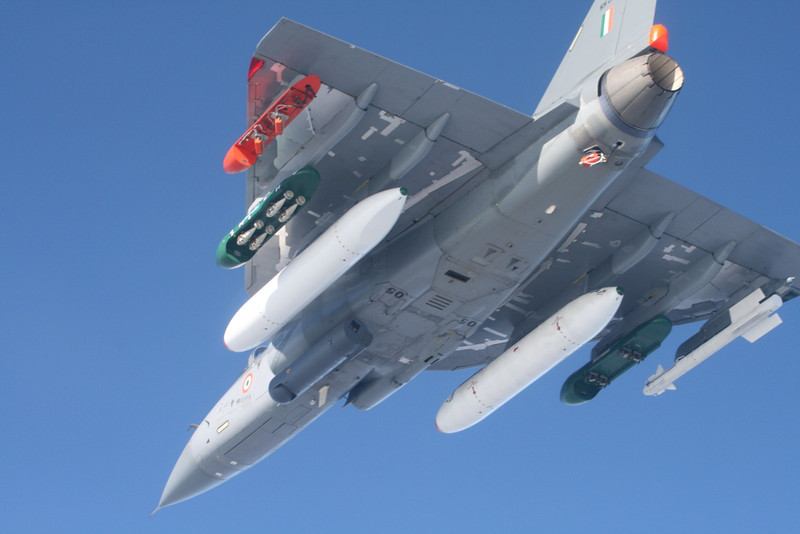
(click to view full)
Unsurprisingly, RAFAEL’s Derby radar-guided fire-and-forget missile will serve as the Tejas’ initial medium range air-air armament. It lacks the range and datalink of Raytheon’s AMRAAM or Russia’s R-77/AA-12, but in practice, positive identification requirements have kept most aerial fights within Derby range. Derby reportedly has good seeker cone coverage, which improves performance. It has already been integrated with the EL/M-2032 on India’s own Sea Harriers, and equips the country’s new SPYDER mobile anti-aircraft missile systems. If India’s own Astra MRAAM continues to progress, it will be integrated later.
For shorter-range engagements, Derby will be complemented by TMC’s infrared-guided Vympel R-73/AA-11 “Archer,” giving Tejas partial weapon commonality with India’s large MiG fleets. The R-73 is known for its exceptional maneuverability and a “wide boresight” seeker cone, a combination that inaugurated the era of 4th generation missiles. There’s even a rear-facing version, which offers enemies a nasty surprise. The jets will also carry RAFAEL’s Python 4/5, which can face forward and still hit targets behind their fighter.
Tejas planes are expected to carry a range of ground attack weapons, from ordinary bombs and unguided Russian S-8 80mm rockets, to precision munitions. Tests for unspecified laser-guided bombs and cluster bombs are expected, though they’re expected to be Russian KAB-1500L and RBK-500 weapons, along with Russian Kh-31/35/59 anti-ship and precision strike missiles. Specifications don’t mention a MIL-STD-1760 electrical interface with carriage stores, which is very helpful when integrating GPS-guided munitions. Time will tell, but the Tejas Mk.I’s initial weapons don’t include GPS guidance.
Engines & Alternatives

(click to see in sections)
With its radar issue solved by a foreign partnership, the fighter’s indigenous Kaveri engine (vid. Appendix B) was left as the project’s biggest unresolved issue. That was resolved with a stopgap, followed by a competition to field a working engine; even so, India’s DRDO continues to pour dollars and time into Kaveri development.
The removal of American arms trade sanctions allowed smooth incorporation of a slightly modified F404-GE-IN20 turbofan in initial Tejas Mk.I production models. Over the longer term, an international competition for the Tejas Mk.II’s engines had 2 shortlisted competitors, 1 unofficial competitor, and 1 winner in GE’s F414.
The winner: F414. GE’s F414 is that company’s more advanced alternative to the F404 family that equips the Tejas Mk.I; it currently equips Saab’s JAS-39NG Gripen and Boeing’s F/A-18 Super Hornet family. India’s F414-GE-INS6 engines will include the same single-engine FADEC modifications as the Gripen’s F414Gs, and may include some components of the F414-EPE research program for enhanced thrust. Standard F414 engines can reportedly produce up to 22,000 pounds of thrust on afterburners.
GE has been remarkably coy about its thrust in normal operation, but the figures it supplied to India were obviously good enough to beat Eurojet’s EJ200, which reportedly revised its bid too close to the deadline to change its fortunes.
Slow fade: Kaveri. This was supposed to be the fighter’s main engine, but India couldn’t develop a world-leading jet engine from a base of no experience. Kaveri was sidelined in 2008 by GE’s F404, in order to allow flight testing to go forward. DRDO finally admitted defeat in 2013 and stopped advocating Kaveri for the Tejas, after around 6 fruitless years of negotiations with French engine maker Snecma. A global re-tender for assistance was proposed, but late 2014 saw DRDO finally admit the obvious and file the paperwork to end the program.
In the Navy… Naval LCA
[youtube:v=xJjNXA9w3dg]
click for video
Indian officials were interested in an improved engine for 2 reasons. One is simply better performance, thanks to an improved thrust:weight ratio. Another is the need for additional thrust, in order to operate the Tejas successfully as a naval aircraft.
India will induct the 40,000t INS Vikramaditya in 2013, after extensive modifications to Russia’s former Admiral Gorshkov carrier. The navy is also proceeding with construction of 2 more 35,000t “air defence ship” Vikrant Class carriers, designed in collaboration with Fincantieri and built in India. Orders have been signed for 46 Russian MiG-29Ks, but India also wants to operate navalized LCA fighters from their decks.
These fighters are actually being designed in a trainer variant first, which will then be converted into a naval fighter. Key changes to the Naval LCA include:
* Dropped nose, for better visibility in high angle-of-attack (nose pointed up) landings.
* Leading edge vortex controls that can extend from the edges of the main wing. They help the aircraft safely sink faster to land in smaller spaces, and can also improve takeoff response.
* Arrester hook to catch landing wires.
* Strengthened spine and related systems, to absorb the high impact of carrier landings (7.1 m/s descent vs. 3m/s for IAF).
* Longer, strengthened undercarriage. That actually ended up being a bit overdesigned.
* Powered nose wheel steering for better maneuverability on deck.
* Fuel dump system that can shed 1,000 kg of fuel from the fighter’s wing tanks, in case of an emergency just after take-off. Fuel weighs a lot, and that added weight can imperil attempted emergency landings.
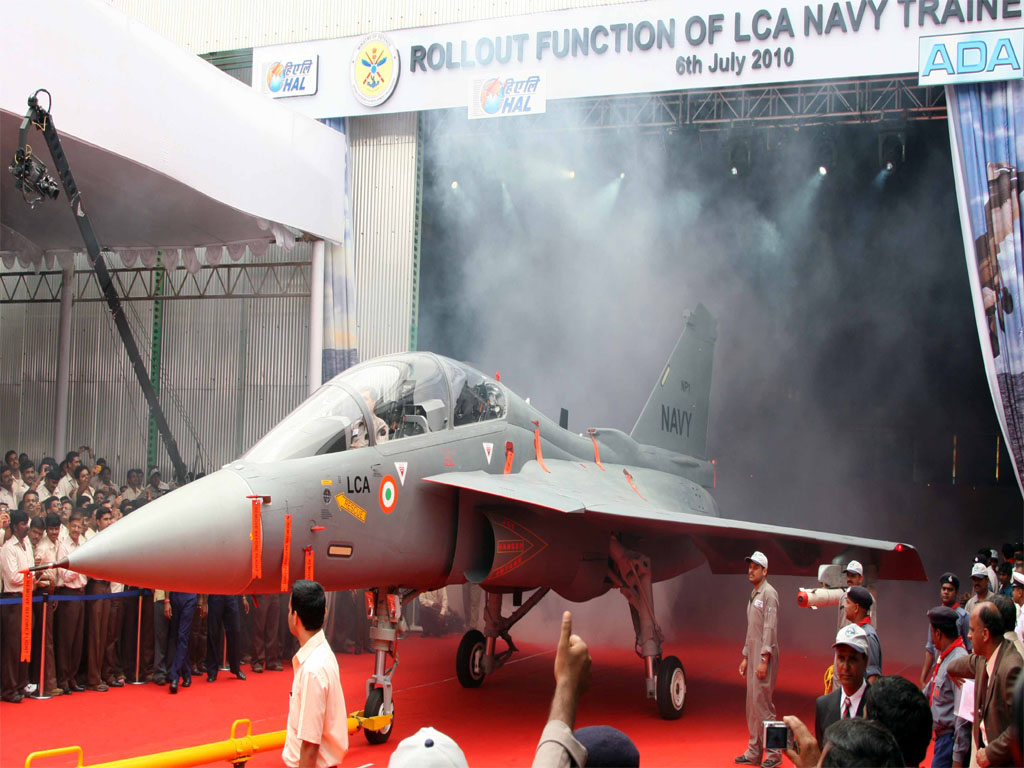
(click to view full)
The other change will be the engine. India’s military and designers believe that the naval Mk.I derivative, powered by the same F404-GE-IN20 engine in the IAF variant, can be used for training and testing. At the same time, they believe that only the a Tejas Mk.II derivative with its more powerful F414-GE-INS6 engine will be capable of loaded carrier operations from the Vikrant Class’ “ski jump” ramp, in just 200m of takeoff space.
The naval Tejas program began in 2003. Variant paper designs were produced, and an initial order placed in 2009 began turning those designs into prototypes. April 2012 saw the 1st flight of NP-1, and a 2012 decision gave the go-ahead for initial production of 8 planes. The naval variant is expected to receive a different designation than “Tejas.”
LCA Tejas: Program, Prospects, and Future
The Program
(click to view full)
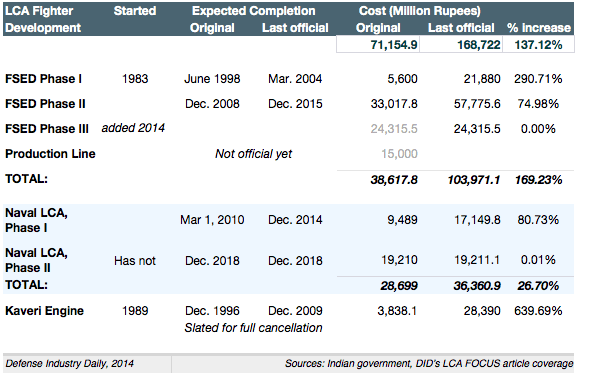
The Tejas Light Combat Aircraft program began in 1983, and is currently in Full-Scale Engineering Development (FSED) Phase-II, under which India’s DRDO was trying to deliver production fighters to the IAF by December 2010. Initial Operational Clearance wasn’t granted until January 2011, and then only with significant waivers. Limited Series Production aircraft in final configuration have arrived, but IOC wasn’t declared until November 2013, and even that was done under pressure from the ministry. The plane’s core self-protection systems were only installed in October 2013, most weapons haven’t been tested yet, and neither has aerial refueling. The ministry is pushing for Final Operational Clearance as a day/night, all-weather platform, and the official induction of a Tejas squadron at Sulur Air Base in Tamil Nadu near Sri Lanka, by the end of 2014. It isn’t clear that the fighter can actually achieve those performance goals in time.
So far, 40 Tejas Mk.I fighters have been ordered. Current plans call for another 100 aircraft (mostly Mk.II) for the air force, and up to 60 naval variants for the Navy.
When it was originally approved in 1983, the Tejas program’s cost was set at Rs 560 crore (5.6 billion rupees). The cost had risen to over 3,300 crore by the late 1980s, and has continued to rise since. The Times of India places the 2011 program total at 17,269 crore/ $3.77 billion for all variants. As shown above, subsequent reports show continued cost increases.
LCA Tejas Mk.II: Delhi, we have a problem…
(click to view full)
The first test-flight of the improved and re-engined Tejas Mark-II is currently scheduled for December 2014, with production beginning in June 2016. Unfortunately for the air force, those markers are looking less and less likely, and switching in a new engine adds design and testing changes that will complicate matters. Engineers must rebalance the aircraft’s weight, adjust fuel capacity for changed consumption rates, etc. It’s already known that the LCA will need to add 0.5m in length to fit the F414, and its air intakes offer inadequate airflow and will have to be redesigned.
One also expects that an LCA Mk.II will add newer technologies in some areas, and there are reports that India intends to upgrade from IAI’s ELM-2032 phased-array radar to the ELM-2052 AESA. India’s avionics industry also continues to advance, leading to potential component swaps and re-testing. Finally, Tejas Mk.I has placed many key components in inaccessible places. Unless significant redesigns are forthcoming in Mk.II, maintenance costs will be high, and readiness will be low.
Redesign processes usually takes several years, even in a best-case scenario. China’s shift to a Russian RD-33 engine for its J-10 fighter was the centerpiece of a redesign that took more than a decade. Sweden’s JAS-39 Gripen made a similar shift from Volvo’s F404-derived RM12 in the JAS-39 A-D models, to GE’s F414 for its new JAS-39E/F, over a few years. There was a standing offer to have Saab adopt a significant role in Mk.2 development, with strong support from DRDO, but that offer remains in limbo.
Major delays to Tejas Mk.I production mean that activity probably won’t end until 2018. The delays will buy time for Mk.II testing, at the cost of IAF readiness and force strength. If the Mk.II also runs into testing problems, the LCA program will face a hard choice: produce more than 40 Tejas Mk.Is, or buy Mk.IIs before testing is done, with the accompanying risk of expensive rework and fielding delays.
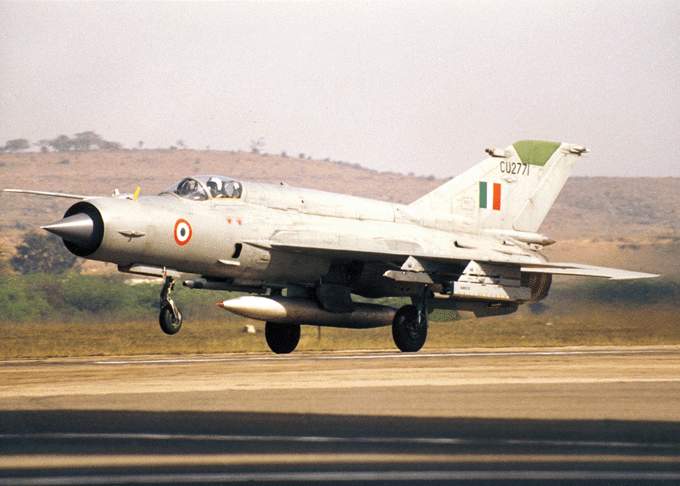
Meanwhile, India’s MiG-21 fleet continues to age out.
Industrial Team
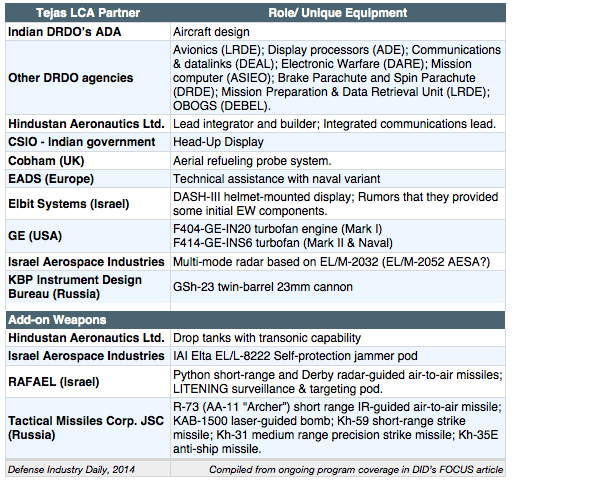
The Tejas industrial team is weighted toward government participation, which is one of the reasons for its long development cycle. Instead of buying finished and tested equipment from abroad, new designs had to be invented by government research agencies, then tested by themselves until they were ready, followed by integration testing with other elements. These choices were driven by India’s desire for long-term self-sufficiency in many aircraft sub-systems, in order to reduce their dependence of foreign suppliers.
There have also been a wide variety of sub-contracts to Indian firms for Tier 3 or Tier 4 participation to supply tooling, testing equipment, software development, or sub-assemblies. They are not covered in our list.
In late 2013, HAL told India’s Business Standard that it aimed to roll out the first 2 Tejas IOC fighters by March 2014, and deliver 8 more by the end of 2014. The next step after that will be to enhance to production line to 16 fighters per year, a task that might prove challenging without outside aid (q.v. Dec 9/12). That would leave 10 Tejas Mk.I IOC fighters to be built in 2015, whereupon HAL would be able to begin production of 20 Tejas Mk.I Full Operational Capability variants.
Required FOC upgrades to the IOC fleet, and initial naval production orders, will also compete for production space. An early 2013 interview with ADA director Shri PS Subramanyam saw 2018 as a realistic date for Mk.I production to end.
Tejas Prospects: Think Globally, Begin Locally

(click to view full)
Exports are important to fighter programs. The added buys keep production lines open at no cost to the home country, and drop prices per plane. A combination of profits and paid-for modifications would help keep the design current, allowing the plane to add new technology and remain relevant. On the industrial front, if ADA can move the plane from the current 55% Indian content to around 80% without creating more problems, it would help to insulate prices from currency exchange swings.
The Tejas Light Combat Aircraft’s exact per-plane flyaway price point isn’t known yet, but the goal is an inexpensive fighter in the $20-25 million range, with performance that compares well to early model F-16s and Mirage 2000s. Historically, the low end of the market is where the largest volume of global fighter buys have taken place. In recent years, however, pressure from home-country buyers has pushed the West into a niche of high-end platforms like the F-15, F-35, Eurofighter, and Rafale. Some mid-tier options exist, like new F-16s, the F/A-18 Super Hornet, and JAS-39 Gripens, but even those are fairly pricey for emerging economies. As regional tensions rise, it remains to be seen whether the last decade has seen a permanent shift toward mid-level and high-end platforms, or whether traditional buying patterns will reassert themselves through emerging economies.
Long-term Tejas competitors in the $20 – 40 million range include the market for second-hand F-16s, the Chinese/Pakistani JF-17, and Korea’s T-50 Golden Eagle family of supersonic trainers and light fighters. RAC MiG has received enough work from India and others to retain the MiG-29M family as a viable platform in this bracket; Russia’s chosen pricing approach will determine whether the thrust-vectoring MiG-35 multi-role fighter also becomes a competitor.
[youtube:v=0zsMbyX5VIk]
India’s growing geopolitical influence, and the ability to price toward this bracket’s low end, offers the Tejas decent prospects, even in this crowded field. HAL’s problem is that the Tejas must first achieve success in India.
Delays have taken their toll. Bangalore-based Aeronautics Development Agency (MoD ADA) chief R K Ramanathan promised a 2010 in-service date, while touting a reduction from over 30,000 components to around 7,000. Even that was a late milestone, fully 27 years after the program began, but it didn’t come close to happening. Plans to field 40-48 interim aircraft in the first 2 operational air force squadrons won’t take place until 2015 (32 years), and the final “Tejas Mk.II” version will be very hard-pressed to become operational before 2018 (35 years).
A lot can change in 35 years. Official plans still call for 100+ fighters, but the IAF has embarked on a wide set of upgrade and purchase commitments for existing MiG-29s and Mirage 2000s, the new mid-tier MMRCA fighter, and a high-end FGFA stealth fighter joint venture with Russia.
Meanwhile, the IAF is now taking something of a “wait and see” approach to a longer term commitment, until the final aircraft is delivered with working systems and the “Tejas Mark II” design has shown what it can do. One the one hand, the project’s long development period, and DRDO’s past performance on defense projects, tend to justify that wait-and-see approach. On the other hand, the project can easily run into danger without adequate military and political backing. On Feb 6/06, The Telegraph in Calcutta reported that:
“Though air headquarters has not said so in public, it is weighing whether it should commit funds because it is anticipating a resource crunch for the big ticket purchases of multi-role combat aircraft – that could cost the exchequer more than $5 billion over 10 years – and other equipment that it has projected as an immediate need.”
The rumored growth of the MRCA foreign fighter program to 170-200 aircraft, naval plans for 32 more ships in the next 10-15 years, submarine construction imperatives, and other planned capital purchases do indeed have the potential to squeeze the Tejas. The reality of limited funds and budget cuts began to hit home in 2013, and another global economic slowdown will press India into harder choices still. Confidence in the Tejas, or the lack of it, will influence India’s choices.
So will other negotiations. India’s choices mean that the MMRCA program will deliver fewer aircraft at a flyaway price tag of $100+ million each. That makes $25-35 million Tejas LCA fighters look more attractive, in order to plus up numbers. Just as long as the LCA can in fact be produced to that cost level, be delivered in time to replace the MiG-21s, and perform at an adequate level.
Unfortunately, every one of those variables is currently in question.
At present, the worst-case scenario for the Tejas program is truncated production at about 40 operational aircraft, which would doom exports. In that scenario, Tejas Mk.I is built, but other expenditures grab priority. The plane’s role is then divided among upgraded MiG-29UPGs, new naval MiG-29Ks, upgraded Mirage 2000s, and possibly even Hawk Mk.132 trainers that are armed in a backup role.
The generally accepted goal for Tejas is 5 IAF squadrons plus 2 Navy squadrons, or about 140-150 planes. Even that is a relatively short production run at full capacity, which is the rate India must use in order to field new lightweight fighters in time.
The best-case scenario would involve full production for the IAF that raises planned order totals beyond 120, a serving STOBAR (Short Take Off via ramps, But Assisted Recovery via arrester gear and wires) naval variant in service by 2020, and export successes that drive up production totals and help finance future upgrades.
Contracts and Key Events
2014-2022
[youtube:v=iQh8fSPR-RU]
April 1/22: JDAM India is getting a batch of JDAMs and these will be used to arm the indigenous Tejas fighter. Besides the JDAM, India is also procuring the French-made Armement Air-Sol Modulaire (AASM) precision-guided munition for the Tejas.
February 18/22: Showcase The Indian Air Force (IAF) is showcasing its Tejas Light Combat Aircraft (LCA) in Singapore for the first time as part of efforts to position the platform for requirements in the region. The service has deployed three airframes to the country as part of the aircraft’s debut at Singapore Airshow 2022, which runs from February 15 to 18. One of the airframes took part in a static display alongside a delegation of Indian government officials who were there to explain the various features of the LCA.
April 17/18: 1st combat exercise! India’s indigenous LCA Tejas fighter has participated in its first major combat exercise—Gagan Shakti. The exercise is taking place between April 10 to 23 and will see the Indian Air Force will mobilise more than 1100 combat, transport and rotary wing (helicopter) aircraft in order to practice the real time scenario, to be conducted day and night, of Combat with the enemy encompassing along Pakistan border in the Western areas and along China border in the Northern areas. During the event, the Tejas is expected to take part in both offensive and defensive roles from a forwarding base and will be tested on its air-to-air and air-to-ground capabilities.
December 28/17: RFP-Mk-1A Hindustan Aeronautics Ltd. (HAL) has received a request for proposals (RFP) for 83 Tejas Mk-1A light combat aircraft (LCA)for the Indian Air Force (IAF). The RFP comes following the November 2016 clearance for funds for the program by India’s Defence Acquisition Council (DAC), with production orders expected to be placed in late 2018. The Mk-1A variant offers a significantly modified version of the initial Tejas Mk-1 LCA, and will come equipped with the Israeli Elta 2052 AESA radar, podded Electronic Warfare (EW) suite and Cobham in-flight refuelling probe. Also in the mix are the addition of new air-to-air missiles and precision munitions, in addition to the R-73 and Rafael Derby BVRAAM, already integrated on Tejas Mk-1.
November 13/17: Woes Indian Air Force (IAF) officials have listed a number of deficiencies found with the Tejas Light Combat Aircraft (LCA) as part of efforts to argue for sourcing foreign-made fighter aircraft rather than increasing orders of the indigenous Tejas. Assessments made by the service and presented to government found that when compared to foreign-made fighter aircraft such as Saab’s JAS-39 Gripen and Lockheed Martin’s F-16, the Tejas posted poorer airborne endurance—59 minutes compared to two hours—and could carry less payload—three tons against nearly six tons and seven tons by the Gripen and F-16 respectively. Maintenance requirements were also greater on the Tejas with 20 hours of serving needed for every hour of flying against six hours for the Gripen and 3.5 hours for the F-16. The Tejas’ service life is also half that of the 40 years found in both the Gripen and F-16. While 123 Tejas fighters have been ordered for the IAF, only four have been delivered, and the IAF desperately needs additional single-engine fighter aircraft to fill a 42 fighter squadron requirement to fight a two-front war. Retirements of ageing MiG-21 aircraft is making the issue worse, with a further 11 of 33 available squadrons due for retirement over the next two years.
August 11/17: Deliveries of the LCA Tejas aircraft to the Indian Air Force (IAF) has been delayed after the Indian Ministry of Defense (MoD) announced that state-owned Hindustan Aeronautics Limited (HAL) has delivered only four aircraft to the IAF out of 40 ordered in 2005. The four aircraft so far delivered are from a batch of 20 designated for initial operational clearance (IOC), while the remaining 20 aircraft were designated for final operational clearance (FOC). In order to ramp up production, the government has established a second manufacturing line to support “structural and equipping activities. HAL has also altered the production of certain components and has reduced the manufacturing cycle time by improving supply chain management and boosting workforce.
July 13/17: Rafael has completed integration of its I-Derby air-to-air missiles on India’s Tejas Light Combat Aircraft (LCA), with test-firing scheduled for the end of 2017. The Israeli firm also confirmed earlier reports that the fighter could be equipped with the latest Extended Range (ER) version of the missile, and is also looking to offer its Spike ER air-to-surface missile to meet an Indian requirement for helicopter-launched weapons. The Spike tender will also come with a new launcher to meet New Delhi’s technical specifications.
June 23/17: Hindustan Aeronautics’ Tejas Light Combat Aircraft (LCA) is likely to be one of the first fighters equipped with the I-Darby Extended Range (ER) air-to-air missile, manufactured by Israel’s Rafael. Boasting an extended range of 100km, the missile comes with a new seeker that employs an advanced solid-state software-defined radar and can be carried on either rail launchers or on a “shove” pyrotechnic launcher. The original variant has already been used on the LCA and Su-30 fighter, and the company is now making efforts to have the I-Derby ER successfully integrated on both platforms. In February, Rafael offered New Delhi to locally build its Derby Mk III—the Indian version of the I-Derby ER— under the ‘Make in India’ initiative.
May 15/17: The Indian Air Force has successfully test-fired a Darby radar-guided air-to-air missile from one of its LCA Tejas fighters. Conducted on May 12, New Delhi’s announcement stated that “the missile launch was performed in Lock ON after Launch mode for a BVR target in the look down mode and the target was destroyed,” and that aircraft avionics, fire-control radar, launchers and Missile Weapon Delivery System all performed as required. The test is one of several steps needed to clear beyond visual range (BVR) capabilities for the LCA.
February 17/17: Saab is continuing a defense partnership with Indian industry, offering a sensor package for India’s s LCA Tejas fighter. Included in the technology transfer is the company’s Airborne Electronically Scanned Array (AESA) fighter radar integrated with a compact electronic warfare suite. The package will also have synergies with the systems developed for the Gripen fighter, currently being pitched to New Delhi to fill their Navy requirement for carrier-based fighters.
February 15/17: India’s Defense Minister has announced intentions to start a second production line for the HAL Tejas fighter within the next three months. Valued at $203.47 million, Manohar Parrikar said the line will produce 16 Tejas fighters for the Indian Air Force. News of the second production line points to the Indian government’s commitment to weaning itself from foreign defense products and encouraging indigenous industry, also known as “techno-nationalism.” This, however, hasn’t come without its problems after the Indian Navy rejected the navalized version of the Tejas for being too heavy.
February 10/17: Israel’s Rafael is ramping up efforts to offer their systems to India’s indigenous Tejas fighter. The Indian Air Force is currently evaluating the company’s Python 5 and 54nm (100km)-range I-Derby ER air-to-air missiles for the Tejas, while it is also promoting its Litening 5 targeting pod and BNET secure radio. Yuval Miller, executive vice-president and head of Rafael’s Air and C4I Systems division, stated that the wide cooperation involved on the Tejas’ development could make it easier to bring the Light Combat Aircraft to the 4.5-generation standard.
November 9/16: India’s Defense Acquisition Council (DAC) has approved the purchase of 83 Tejas Mk 1A fighters and 15 Light Combat Helicopters (LCH), marking the first clearances under the Indigenous Design Development and Manufacturing (IDDM) category. However, it was also reported that a hotly expected decision on whether New Delhi would sign off on purchasing 12 US-2 amphibious aircraft from Japan was deferred. DAC also cleared India’s new blacklisting policy.
October 14/16: In order to curry favor with the Indian government, Saab will share their Advanced Electronically Scanned Array (AESA) radar with Gallium Nitride (GaN) technology with India they if they select the Gripen fighter. The list of sweeteners also includes the previous offer of co-developing India’s indigenously manufactured fighter aircraft Tejas MK1A by setting up a production line in India under the “Make in India” scheme. Company officials said that both the LCA and the Gripen are of similar class and also share the same General Electric engine citing commonality in maintenance and operation.
May 19/16: Indian Air Force (IAF) chief Air Chief Marshal Arup Raha became the first chief to fly the indigenous HAL Light Combat Aircraft (LCA) Tejas fighter in a short sortie on Tuesday. Raha’s flight came during a visit to meet team LCA in Bengalaru which involved the inauguration of the Tejas’ painting hanger. The only other top IAF officer to have flown the LCA was Deputy chief of Air Staff Air Marshal SBP Sinha, in September 2014.
May 12/16: Ski-jump tests of a naval version of India’s Tejas Light Combat Aircraft (LCA) have been successful. The tests involved the aircraft taking off under 200 meters with the aid of a ski-jump while carrying two R-73 air-to-air missiles. Next up for the two prototype LCAs will involve touch-and-go testing on a simulated deck at the Shore Based Test Facility (SBTF) in Goa. The navalized versions will be added to the INS Vikrant aircraft carrier after it is commissioned in 2018.
February 9/16: Another milestone was made last Friday for the Light Combat Aircraft (LCA) Tejas fighter. The Indian jet successfully test fired a Derby Beyond Visual Range Air-to-Air Missile (BVRAAM) for the first time in a non-intercept mode, as part of a series of weapons trials needed to gain Final Operational Clearance (FOC). The trials will also see the Close Combat Missile (CCM) Python-5 missile tested. The Tejas’ weapons system will also include Paveway and Griffin Laser Guided Bombs (LBGs), the Russian made R-73 missile and Gsh-23 gun.
January 13/16: Hindustan Aeronautics Limited is making final preparations for their HAL Tejas lightweight fighter debut at the Bahrain Air Show next week. With plans to impress the experts and pick up a few potential customers along the way, HAL’s display apparently “significantly surpasses any aerobatics display the fighter has presented earlier”. The company plans to have gained final operating clearance (FOC) by mid-2016, and has also annouced that it is to test fire the Rafael Derby beyond-visual-range missile (BVRAAM) in March. The Israeli made missile has been bought as a stopgap arrangement as India grapples to make BVR missile Astra, which is still in development, operational.
October 27/15: India has offered Sri Lanka the Tejas Light Combat Aircraft as an alternative to the JF-17 Thunder, co-developed by China and Pakistan. Previous reports in June by the Pakistani press indicated that the Sri Lankans had signed for an undisclosed number of JF-17s, with this subsequently denied by the Sri Lankan Air Force which stated that it was still evaluating possible fighter options. However, Sri Lankan and Pakistani officials are due to meet in November to discuss the possible acquisition of the JF-17, with India likely looking to export the problematic Tejas LCA in an attempt to undermine strategic rival Pakistan.
October 8/15: The Indian government’s recent decision to procure seven squadrons of the heavily-criticized indigenous Tejas Mk.1A was pushed on the Indian Air Force by the Modi administration, according to a report by Reuters on Wednesday. The Indian Air Force had reportedly requested 44 additional Rafale fighters on top of the 36 announced in April turned down by the government, instead the Modi government pushed the Tejas on the IAF despite concern over the aircraft’s performance.
October 1/15: India will induct seven squadrons (112 to 126 aircraft) of Tejas Mk.I-A light combat aircraft, despite the aircraft’s Final Operating Clearance delayed in July until next year. Despite improvements to the heavily-criticized original indigenous Tejas Mk.I design, the Mk.I-A still has a fair share of problems, including issues with the aircraft’s radar and weapon payload. The fighters are slated for delivery from next year and are intended to provide the Indian Air Force with a much-needed air defense capability.
July 22/15: In a characteristic set-back, India’s Tejas Light Combat Aircraft (LCA) will see its Final Operating Clearance delayed until next year. The schedule has slipped consistently for the indigenous fighter, with FOC previously pushed back to December this year. The Indian Defense Ministry has blamed the delays on late delivery of components from foreign manufacturers; however the program also came under severe criticism from the Indian government’s principal oversight body in May, with the aircraft’s performance in question after over three decades of development. The new FOC for the aircraft is now reported to be timetabled for March 2016.
May 11/15: India’s indigenously-developed Tejas Mk I light combat aircraft has come under serious criticism from the country’s Comptroller and Auditor General (CAG), with 53 deficiencies cited in a recent report. A major concern is the lack of defensive countermeasure capability, with the jet reportedly failing to meet Indian Air Force (IAF) survivability standards. The LCA achieved initial operating clearance in December 2013, with the project severely delayed from its original scheduled induction date of 1994. The CAG report to Parliament also highlighted how the IAF will likely be forced to induct the aircraft without a trainer variant available for pilot training, with a repair and overhaul facility also yet to be established at manufacturer HAL’s facilities, a requirement previously set out by the IAF.
Nov 18/14: Kaveri. The DRDO is doing something unusual: submitting documents to cancel a major research project, after INR 21.06 billion has been spent by the Gas Turbine Research Establishment (GTRE) in Bangalore. The request to end the GTX-35VS Kaveri program must now be approved by the Ministry of Finance, and receive clearance from the top-level Cabinet Committee on Security. Which also helps explain why so few projects are canceled, but the biggest change required still involves the DRDO’s mentality. Director-General (Aero) Dr. K. Tamilmani indicates that elections do have consequences:
“These are part of the bold stand being taken by DRDO. Whereever we have found bottlenecks for long time, with no realistic solutions, it’s better to move on. It is an honest stand we are taking…. If you are fit to run only for 50 km, why attempt 100 km? DRDO has realized its mistakes of the past and we have no hesitation in taking some bold steps.”
It is an honest stand, and DRDO can take it without giving up on India’s strategic industrial policy to become more self-sufficient in jet engine technologies. The project delays created by Kaveri remain a total waste, but the research itself can be harvested. DRDO intends to press on with jet engine research, and it’s possible to undertake projects that are militarily useful but much less ambitious. INR 3 billion has reportedly been earmarked for such work, and DRDO wants to make progress is 12 identified technical areas. Sources: OneIndia, “OneIndia Exclusive: DRDO to abandon indigenous fighter jet engine Kaveri project”.
All Kaveri research to end
Oct 4/14: Industrial. Defense News quotes an unnamed source, who says that the Indian government has been talking to major private sector industrial players about setting up a full production line for up to 250 Tejas Mk.2s. That would certainly justify the investment.
If carried out, that move would sidestep HAL’s production difficulties (q.v. Dec 9/12) by partly or wholly removing Tejas from HAL’s purview, create a full competitor to HAL in the aerospace sector, and turn the winner into India’s 1st major private sector defense firm. It would also double planned Tejas Mk.2/naval buys, based on past reports (q.v. Jan 11/14).
Since it seems apparent that the Indian government would have to fund a new production line for HAL anyway, funding the line elsewhere and reaping the benefits of diversification and competition is a logical policy option. Especially since the resulting competitor would also be a potential source for programs like India’s light transport competition, which stalled out because the private sector can’t afford to set up a full production facility for just 40 planes.
The challenge is that setting up a production line for modern combat jets isn’t simple, and major problems could really mess with already chancy schedules for Tejas Mk.2 and the planned naval variant. One obvious way to reduce this risk would be to bring in a foreign firm like Boeing, Saab, Dassault, et. al. to help set up the plant, and assist with management for the first few years. If done in conjunction with Mk.2 design assistance (q.v. June 17/14), the Tejas program as a whole could get a substantial boost.
Tata Group, Mahindra & Mahindra and Larsen and Toubro have been mentioned, and L&T Heavy Engineering President Madhukar Vinayak Kotwal has confirmed that discussions are taking place, but that’s all he is prepared to say. Watch this space. Sources: Defense News, “India Offers To Spend $12B To Break Monopoly”.
Aug 17/14: Industrial. HAL and DRDO’s ADA are trying to encourage more small and mid-size manufacturers to make parts for the aircraft:
“They aim to raise the LCA’s indigenous content to 80 per cent in three years, up from the present 50 to 55 per cent…. HAL Chairman R.K. Tyagi told them that starting 2015–16, “we aim to roll out 16 LCAs every year, [increasing] from the initial target of eight a year”.
Currently, 168 of the 344 LCA components are made in the country.
A key defence scientist involved in the programme said HAL and ADA would help manufacturers to pick up at least 10 more simple components and offer the use of government-owned manufacturing and test facilities.”
If they can do that while maintaining quality, and pick manufacturers who are capable of further innovation, they would make future upgrades easier. More local content would also reduce cost shifts based on currency exchange rates, and create a wider base for future programs like the Su-50/FGFA. The bad news? This policy falls into the “simple, but not easy” category. Sources: The Hindu, “A few small production pushes for LCA”.
June 17/14: Saab for Mk.2? As M-MRCA negotiations to buy advanced Rafale fighters stall, and projected costs rise sharply, Saab remains in position with a different offer. Instead of touting their superior JAS-39E/F Gripen, they’ve proposed to take a 51% share of a joint venture company, then leverage their expertise to create the LCA Mk.2. DRDO chief Dr V K Saraswat was enthusiastic, and they issued an RFI in 2012 and an RFP in 2013.
It isn’t a crazy idea. The Indo-Russian BrahMos missile has been very successful using a similar structure, and a 51% share plus freedom from Indian government strictures would remove many of the program’s decision-making and organizational issues. Saab is the only aircraft major with single-engine fighter conversion experience from the F404 to the F414 engine, so tasks like stretching the fuselage 0.5m, changing the air intakes, etc. have already been thought through in another context. Their Gripen has also achieved low operating costs, in part due to maintenance-friendly design. That’s another Tejas weakness, thanks to very maintenance-unfriendly placement of key components.
Since LCA Mk.2 is also expected as a carrier fighter, success already matters to India. they need to complete development successfully. From the IAF’s perspective, replacing M-MRCA with Tejas Mk.2 would simplify their future high-medium-low mix by avoiding a 2nd fighter in the same class as the SU-30MKI, while allowing them to field more squadrons. The flip side is that their high-end capability becomes irretrievably Russian-dependent: SU-30MKIs now, and FGFA/SU-50s later. For Saab, a JV would give them a major new niche in the global marketplace, providing a low-end fighter in a class below the Gripen and its Western competitors.
The catch? Incoming DRDO chief Dr Avinash Chander is more focused on developing the Mk.2 alone, and believed that any foreign partnership would require a global tender. In India, that would take years. Re-opening the opportunity would depend on a failure of M-MRCA negotiations, and continued failure to field Tejas, pushing the new BJP government to take a second look at all of its options. Sources: India’s Business Standard, “Rafale contract elusive, Eurofighter and Saab remain hopeful”.
Feb 12/14: Costs. India’s MoD releases another set of official cost figures for the program, leaving out the Kaveri engine but adding a “Phase-III” development period. LCA development costs have now risen from an original INR 71.16 billion to INR 140.33 billion (+97.2%), or INR 168.72 billion (+137.1%) if one properly counts the Kaveri engine. Expected production line investments would push those figures even higher. India’s MoD was savvy enough to compare development costs to Saab’s more advanced Gripen NG:
“Developmental cost of Light Combat Aircraft (LCA), Tejas is Rs.7965.56 Crore ($1.09 Billion) including building of 15 aircraft and creation of infrastructure for production of 08 aircraft per annum. This compares with the developmental cost of JAS 39 NG Grippen is $1.80 Billion for developing 5 Proto Vehicles.”
That’s actually just the current predicted cost of the IAF’s MK.I/II development, minus the Kaveri engine, and arguably without creating infrastructure that could actually deliver 8 aircraft per year. The Gripen NG figure would need to be checked carefully, to see what it included and excluded. Even so, the simple act of making the comparison shows a greater sense of external awareness than we’re used to seeing from India’s MoD. Source: India MoD/ PIB, “Developmental Cost of LCA Project”.
Feb 10/14: A written reply from Minister of State for Defence Shri Jitendra Singh to Lok Sabha parliamentarians triggers stories about the IAF raising their planned LCA buys from 200 to 300. Unfortunately for the media reporting that story, it rests entirely on an error of logic. Here’s the exact quote, which can’t be linked anymore thanks to MoD web site changes:
“The MiG-21 and MiG-27 aircrafts of the IAF have already been upgraded and currently equip 14 combat squadrons. These aircraft, however, are planned for being phased out over the next few years and will be replaced by the LCA. Steps have been initiated for upgradation of other fighter aircrafts like MiG-29, Jaguar, Mirage-2000; transport aircraft like AN-32 and Mi-17/Mi-17 IV helicopters.”
What this statement does not say is that the replacement will happen on an equal basis. It’s perfectly possible to replace existing squadrons with fewer squadrons and fewer planes, if one is so inclined. The Americans have been doing so for decades, and they’re hardly alone. So far, firm IAF commitments involve 126 LCA Tejas planes: 6 squadrons of 21 planes each, with only 96 (16 x 6) as front-line fighters. Each squadron also has 3 rotation aircraft to cover maintenance absences or loss replacement, and 2 twin-seat trainers, to make 21. Beyond those 2 Tejas Mk.I squadrons and 4 Tejas Mk.II squadrons, we’ll have to see. Sources: India MoD, “Modernisation of IAF” | India’s Business Standard, “IAF will buy 14 Tejas squadrons, lowering costs”
Jan 12/14: Budgets. India’s defense budget will drop by INR 78 billion in 2013-14, after a drop of INR 100 billion in 2012-13. A more sluggish economy, and a weakened ruling Congress Party that’s trying to shore up its electoral base, are the issues. At the same time, India is negotiating the MMRCA deal for 126 Rafales, the FGFA deal with Russia for their future high-end stealth fighter, the Project 75i submarine buy that’s becoming an emergency, and attack and heavy-lift helicopter buys with Boeing. They also want to add to their fleet of P-8i long-range maritime patrol planes, buy AWACS early warning jets as a priority, and improve their aerial tanker fleet as a priority. Among other priorities.
That explains why the MoD asked for INR 400 billion more, instead of 78 billion less. Unless this gap changes, future Tejas production will find itself caught in an environment where everything can’t be funded, but big air force commitments have already been made. Sources: Times of India, “Despite budget cut, defence ministry continues with modernization drive”.
Jan 11/14: Pricing. Sources tell India’s Business Standard that HAL has quoted the Ministry a price of INR 1.62 billion (about $26.5 million) per plane for the first 20 Tejas Mk.I fighters. The Ministry wants to know why its 40% higher than the INR 1.165 billion quoted in 2006, and HAL has a good answer. One, inflation over the past 8 years takes a toll. Two, 45% of the plane’s cost involves imported parts, and the Indian rupee is sinking. Three, Tejas is still about half the $45.8 million price of a Mirage 2000 upgrade ({EUR 1.4 billion is now INR 118.3 billion + INR 2.02 billion to HAL}/ 49 jets = INR 2.8 billion or $45.8 million per), and those upgrades are even more dependent on currency rates.
HAL sees eventual purchases of 40 Mk.Is, 84 Mk.IIs, 11 naval trainers, and 46 naval variants (TL: 181), and recent government declaration have used 200 aircraft as a possible figure. Now that Tejas is on surer ground, and the opportunity is clearer, HAL is trying to control costs using longer-term commitments of its own. Step one reportedly involves Long Time Business Agreements (LTBAs) of 3-5 years and 40-50 aircraft sets with key sub-contractors, including clauses that let it vary annual production rates to some extent, a feature also seen in many of the US military’s multi-year purchase agreements. Long lead time components have been identified, and industrial improvements are underway. Practices like having 5-axis CNC machines on hand, and using computerized drilling of 8,000 holes or so in the composite wing skin, are more or less assumed in North America. They’re a step forward for HAL, which needs that kind of long-term investment in its industrial capacity.
Will that investment, and higher production, improve costs enough? Pakistan’s JF-17, which has already delivered 50 planes, is reportedly priced around $23-24 million per plane. If the Tejas Mk.II comes in around $30 million in current dollars, pointing to composite construction and supposedly better avionics isn’t going to cut it in export competitions as a reason for the 25% price difference. An AESA radar might, depending on what Pakistan does for the coming JF-17 Block II, and how much it costs. Sources: Business Standard, “HAL pegs price of Tejas fighter at Rs 162 crore”.
2013
GE F414 engine contract; No Kaveris for Tejas fleet; AESA radar?; Why the multi-year delay for self-protection EW?; IOC at last, but is the plane ready?
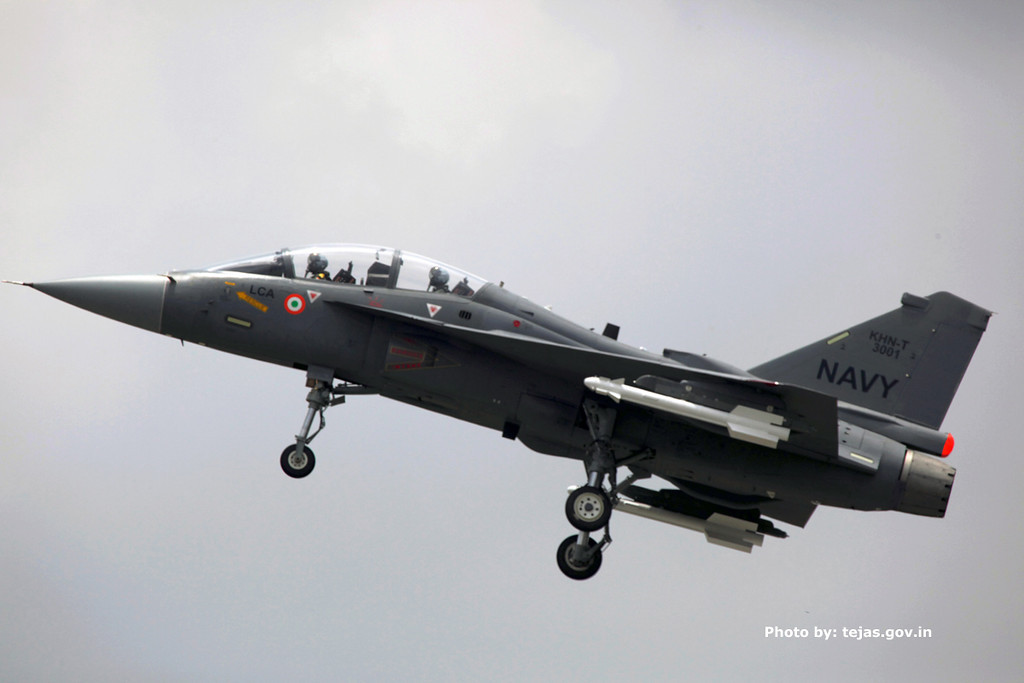
(click to view full)
Dec 20/13: IOC-2. the LCA program achieves Initial Operational Clearance II. This is closer to the F-35’s IOC than traditional American IOC designations: limited capabilities with some initial weapons, and more testing required, but regular air force pilots can now fly it. Sources: Economic Times of India, “Indigenous fighter aircraft LCA-Tejas gets Initial Operational Clearance”.
Dec 19/13: What’s next? Centre for Military Airworthiness and Certification Director-General Dr K Tamil Mani explains what’s next for Tejas, whose remaining testing and certification needs show the IOC-2 designation’s limits. The fighter needs to pass 6 milestones in the next 15 months, on the way to G=Final Operational Clearance. They include:
* Integrating the Russian GSH 23mm gun, which also requires certifying the surrounding LRU electronics boxes for much higher vibration levels.
* Integration of additional weapons, incl. Python 4/5 short-range air-to-air missiles and Derby medium range air-to-air missiles.
* Integrating Cobham’s air refueling probe.
* Increasing sustained Angle of Attack parameters from 22 – 24 degrees.
* Improved braking system with higher heat tolerance. They might even need to add fans, as they did for some of their MiGs.
* Change the nosecone from composite materials to a quartz-based material, in order to remove the current 45-50 km limit on the radar and bring it to its design level of 80+ km.
Sources: Indian Express, “Tejas Needs to Cross 6 Milestones in 15 Months”.
Dec 18/13: IOC process. India’s Centre for Military Airworthiness and Certification (CEMILAC) explains what IOC-2 certification involved to the Indian Express. The bureaucracy takes credit for the plane’s accident-free history, of course, and proudly notes their “concurrent participation in all development activities,” without discussing Tejas’ developmental delays.
The did have a lot to do between the incomplete Initial Operational Clearance on Dec 10/11, and IOC-2 about 2 years later. Full integration and testing of IAI’s ELM-2032 radar, testing of stores integration and release, flight envelope expansion from 17 degrees Angle of Attack to 22 degrees. Maximum flight parameters are now 6gs maneuvering, with a maximum speed of Mac 1.4 and a service ceiling to 50,000 feet. Safety-related work included safe emergency jettisoning of all stores, engine relight, wake penetration, night flying and all weather clearance. Sources: Indian Express, “Clearing Flight Test Parameters was a Challenge, Says Airworthiness Centre”.
Dec 17/13: Updates. India’s MoD summarizes the state of the LCA program. The key takeaways? As on Nov 30/13, they’ve conducted 2,415 flight tests using 15 Tejas Aircraft. A lot of reviews are riding herd on the program, which can add urgency or slow down actual work, depending on how that’s handled. Structurally, the Phased Development Approach has been changed to Concurrent Development Approach, which adds development risk but can cut time if it works, and Quick Reaction Teams have been formed to address design and production issues as they arise.
IOC-2 is still expected on Dec 20/13, but another release makes it clear that the Mk.II project continues to slip. The Probable Date of Completion for LCA Phase-II full-scale engineering design work is now December 2015: 9 months later than the previous March 2015 goal, and 7 years later than the original plan. Sources: India MoD, “LCA project” and DRDO projects“.
Dec 17/13: MiG-21 update. India’s MoD summarizes the state of the IAF’s MiG-21 fleet. The MiG-21FLs are retired now, but the answer shows that the remaining MiGs may have to serve longer than intended:
“254 MiG-21 aircraft are still in service with the Indian Air Force. During the last ten years (2003-2004 to 2012-2013) and the current year (upto 30.11.2013), a total of 38 MiG-21 aircraft have crashed.
Phasing out of aircraft and their replacement with new generation aircraft depends upon national security / strategic objectives and operational requirements of the defence forces and are reviewed by the Government from time to time. This is a continuous process.”
On Dec 12/13, Air Chief Marshal N A K Browne confirmed that the LCA Tejas would replace the MiG-21 in the IAF fleet. That may appear to have been obvious, but official confirmation indicates a greater degree of confidence in the program. Sources: India MoD, “MIG-21 Aircraft” | Indian Express, “Tejas to Officially Replace MiG-21 FL”.
Dec 9/13: Defence Minister A K Antony is scheduled to give the Tejas its Initial Operational Certificate (IOC) on Dec 20/13, which would allow Tejas to be flown by regular IAF personnel outside of the test pilot community. Note that IOC doesn’t include key performance parameters like qualification with many of the fighter’s weapons, basic self-protection systems, air-to-air refueling, or finalization of the Tejas Mk.I’s design. Those will have to wait for Final Operation Clearance (FOC), and an increasingly-impatient defense minister has reportedly ordered DRDO to ensure that FOC takes place before 2014 ends.
The first Tejas squadron of 18-20 fighters will be built to IOC standard, and based at Sulur AB in Tamil Nadu, near Sri Lanka. They should be able to handle the minimal threats from that quarter, and one hopes that reported problems (q.v. April 21/13) were either untrue, or have been fixed.
On the industrial front, HAL has told India’s Business Standard that it aims to roll out the first 2 Tejas IOC fighters by March 2014, and deliver 8 more by the end of 2014. The next step after that will be to enhance to production line to 16 fighters per year, a task that might prove challenging without outside aid (q.v. Dec 9/12). That would leave 10 Tejas Mk.I IOC fighters to be built in 2015, whereupon HAL would be able to begin production of 20 Tejas Mk.I FOC variants. Required FOC upgrades to the IOC fleet, and initial naval production orders, could probably keep HAL at a minimum activity level through 2017; but an early 2013 interview with ADA director Shri PS Subramanyam saw 2018 as a more realistic date for Mk.I production to end. That might actually be helpful. If Tejas Mk.II isn’t ready to begin production by time Mk.I is done, India will have an industrial problem on its hands. Sources: Business Standard, “Tejas LCA sprints towards IAF’s frontline squadron” | AeroMag Asia, Jan-Feb 2013 issue.
Dec 7/13: Testing. The LCA’s 1st firing of an AA-11 short range air-to-air missile is successful, as the missile hits a target that was towed by a drone. The demonstration was conducted off the coast of Goa, in the Arabian Sea. Sources: The Hindu Business Line, “Light combat aircraft Tejas fires missile on target”.
Dec 7/13: MiG-21FL retires. After 50 years of service, the IAF is about to phase out its MiG-21FL variant, which is prepping to fly its last sortie on Dec 11/ 13 over Kalaikunda AFS in Bengal. Other MiG-21 variants will remain in service, and current expectations will extend the most modern MiG-21 Bison variants to at least 2018. Sources: The Calcutta Telegraph, “Supersonic jet set for last sortie”.
Aug 7/13: Costs. A Parliamentary reply to Shri S. Thangavelu in Rajya Sabha sets out the costs for each phase of the Tejas program in slightly more detail. Our chart above has been amended to reflect the current figures.
India is still in Full Scale Engineering Development Phase II, which aims to build 3 prototypes and 8 Limited Series Production (LSP) aircraft, and establish infrastructure for producing 8 aircraft per year. LSP-8 made its maiden flight on March 31/13, but reports to date suggest that meeting the infrastructure goal will require a significant increase in development costs (q.v. Dec 9/12). India MoD.
[youtube:v=xZO_Il6-Puw]
click for video
Oct 16/13: Why no EW? The DRDO has finally fitted a Tejas fighter (PV-1) with electronic warfare/ self-protection systems, and intends to begin flight tests in November and December. Why has this key development been delayed for 5 years? Believe it or not, they thought it was more important to preserve the plane’s flight safety record:
“For almost eight years, a section of the aeronautical community has been resisting its fitment, anxious that the add-ons may cause a first crash…. They have been very keen on securing the operational clearance, initial as well as final from the Indian Air Force, even if the LCA did not have the electronic system…. no one wished to risk an add-on on the LCA that had not been tried. The idea was to defend the ‘zero crash’ record. This was made known sometimes explicitly to engineers and scientists working on the electronic systems, who, however, had been pressing for very long that the systems ought to be fitted and trials conducted to be able to fine-tune them.”
Unfortunately, PV-1 hasn’t been flying recently, so they may end up introducing risk that way. Tejas Mk.Is will have an Israeli IAI Elta jamming pod available as an external store, with the full RWJ system slated for the Mk.II. Sources: Deccan Herald, “Finally, Tejas gets electronic warfare systems”.
DRDO’s problems, in a nutshell
June 1/13: Excuses. DRDO chief V K Saraswat tries to deflect criticism of Tejas’ continuing delays, by citing the effects of sanctions that ended 13 years ago. Lack of cooperation and foreign help might explain why Tejas was slow to develop from the early 1980s to 2000. It doesn’t explain why DRDO didn’t follow professional practice by working with experienced pilots and the IAF, which created a multitude of poor design decisions that required years of delay to produce only partial fixes. Or the reason DRDO has wasted so much time with engine and radar choices that were obviously inadequate, all well after sanctions had ended. Or why, 13 years after sanctions had ended, Tejas isn’t ready for service yet, while Pakistan’s JF-17 equips 3 squadrons.
Weak excuses do not inspire future confidence. Brahmand Defence & Aerospace.
April 21/13: Tejas a lemon? The Sunday Standard reports that the Tejas is much farther away from viability than anyone is admitting, and says that DRDO’s notional stealth AMCA (Advanced Medium Combat Aircraft) has been put on hold until the LCA project can be made to work. A stealth FGFA/SU-50 is already in co-development with Russia, so AMCA’s value is unclear anyway. With respect to the Tejas LCA, the Sunday Standard’s unnamed sources say:
“The plane cannot fly on its own. It needs a lifeline in the form of support and monitoring of its systems from the ground by technicians…. The common man thinks the plane is doing fine, its engine sounds great and the manoeuvres are perfect. But those flying and weapons firing displays are done with ground monitoring and support. The plane is still not ready to flying on its own”…. the sources noted that LCA was grounded for three months between September and December 2012 following problems with its landing gear. “Normally, a combat plane is ready for its next sortie following a 30-minute [servicing]. In the case of LCA, after a single sortie of about an hour or so, it needs three days of servicing before it can go for its next sortie,” they said.”
These revelations come against a backdrop of pressure from India’s defense minister Antony and India’s government to buy designed-in-India items unless there’s no other choice. He’s selling changes to India’s Defence Procurement Policy as an anti-corruption effort – but what do you call spending billions of dollars on politically-allied state organizations, who don’t deliver on the critical defense projects assigned to them, and never pay any serious penalties for it? Their competitors in China and Pakistan are consistently faster and often better – while doing a better job developing their industries. See also India PIB.
March 20/13: More delays. A Parliamentary reply confirms the obvious, formally extending the scheduled end of the LCA’s Phase 2 Full Scale Engineering Development from December 2012 to March 2015.
The IAF has ordered 20 fighters in “Initial Operational Clearance” (January 2011) status, and another 20 in “Full Operational Clearance” (i.e. combat-ready) configuration. Full Operational Clearance is now expected in December 2014. PTI, via Zee News | India MoD.
Feb 6/13: AESA Radar? At Aero India 2013, Defense Update files a report that adds the short-range Python 5 air-to-air missile to the Tejas’ list of integrated weapons, alongside the Russian R-73/AA-11. It adds:
“The LCA will also carry the EL/M-2052 active electronically scanned array (AESA) radar developed by IAI Elta. Originally, the EL/M-2032 was selected but the new 2052 now available with a more compact antenna is best designed to fit the nose cones of LCA and Jaguar, offering enhanced capabilities for both fighters.”
If the Defense Update report is true, it would roughly double the Mk.II fighter’s radar performance, and sharply lower its maintenance costs. DID has been unable to confirm this report, and there have been previous reports (q.v. Jan 14/11 entry) that said M-2052 sales for the Tejas Mk.II had been barred by American pressure. Indeed, the Americans managed to pressure the Israelis not to install the M-2052 in their own F-16i fighters.
Feb 5/13: On the eve of Aero India 2013, Indian defense minister AK Antony tells DRDO that:
“I am happy for your achievements of DRDO but not fully happy. Delay in delivery is a real problem… Try to speed up your process and reduce time for research, development and production. [DRDO is getting ready for a 2nd initial clearance for Tejas, but] I am impatient for the Final Operational Clearance (FOC)….. Antony also expressed his disappointment over reported lack of cohesion between the aircraft development agencies under DRDO and aircraft maker HAL.”
In India, FOC means “ready for combat operations”, which is closer to the US military’s idea of “Initial Operational Capability.” The Pioneer.
Jan 20/13: F414 deal. India Strategic quotes DRDO Director General V.K. Saraswat, who says that India’s government has finalized the terms of GE’s F414 contract, including the difficult issues surrounding Indian production. That process took over 2 years, as the engine was picked in September 2010.
The deal is reportedly a Rs 3,000 crore (about $560 million) contract for 99 of the Tejas Mk.II’s F414-GE-INS6 engines, with an option to buy another 100 at fixed terms. IANS via Silicon India | Times of India.
F414 engine deal finalized
Jan 4/13: Kaveri. India’s Business Standard reports that India’s Ministry of Defence has failed in its 6 years of sole-source negotiations with Snecma, and will try a global tender to secure cooperation in developing the Kaveri engine. The engine’s development has hit a technical dead-end, and cannot incorporate key alloys, single-crystal blades, and other manufacturing and design technologies without foreign help. The DRDO’s GTRE department has also conceded defeat with respect to the LCA, according to its chief Dr. C.P. Ramnarayanan:
“We were planning to re-engine first 40 Tejas fighters with the Kaveri. But now they will continue to fly with the F-404 engine.”
DRDO swill use Kaveri for its UCAV, and still holds out hope that a redesigned Kaveri can power a locally designed AMCA twin-engined medium fighter. To power AMCA, the engine would need to improve afterburner performance of about 15,825 pounds thrust. That means foreign help, but DRDO has made global solicitations before, and had no takers beyond Snecma.
2012
Cert & program delays; Naval prototype flies; Kaveri for UCAV; Shaping up HAL – which clearly needs it.
[youtube:http://www.youtube.com/watch?v=q0SLhjYByUI]
(click for video)
Dec 26/12: Kaveri. India wants to develop a long-range, jet-powered armed drone, powered by a modified Kaveri engine (vid. March 21/12 entry). These are commonly called UCAVs (Unmanned Combat Air Vehicles), but India refers to their project as IUSAV (Indian Unmanned Strike Air Vehicle). Note that most of the video and pictures in the video are of other countries’ efforts, since India is at a very early stage.
Now DRDO’s GTRE has asked the Ministry for another Rs 595 crore (about $93 million), covering a 48-month program to develop 2 prototypes of a modified Kaveri engine with no afterburner. This includes removing the base design flaws detecting during 2010-11 testing in Russia, ground testing in Bangalore, and confirmatory tests in Russia at the Gromov Flight Research Institute. The program would be capped by flight testing of the 2 no-afterburner prototypes in LCA prototype PV-1.
This idea actually makes sense. The Missile Technology Control Regime makes it problematic for countries to sell India a USAV jet engine, since a cruise missile is also an armed unmanned aircraft. On the Indian side, the Kaveri engine has the most problems adding enough thrust in afterburner, but “dry” statistics of 11,060 pounds thrust are close to the project’s goal of 11,500. Dropping the afterburner sheds engine weight, which has been an issue for Kaveri, and UCAV engines to date don’t have afterburners anyway. Other countries’ UCAV designs have all been sub-sonic drones that rely on stealth or low-threat environments to survive. Business Standard.
UCAV: a good use for Kaveri
Dec 12/12: Naval LCA. India’s Navy is upset by the fact that only 1 naval LCA has been built, and need aircraft to train with. Media reports say they’re about to issue a an Rs 1,000 crore (about $185 million) RFP to produce the first 8 Limited Series Production Tejas naval fighters, which would include both single-seat test aircraft and 2-seat trainers. This would turn the Feb 27/12 approval into a contract after negotiations with HAL, and work is expected to begin in 2013. Whether HAL’s production capacity can handle it (vid. Dec 9/12) is another question.
Business Standard reports the Indian military’s current belief that the navalized Tejas Mk.I can be used for training, and the state-owned ADA is touting a 1st representative takeoff by mid-2013 and a 1st representative landing by the end of 2013. At the same time, they believe that only the Tejas Mk.II will be capable of loaded carrier operations, using just 200m of space and a “ski-jump” ramp. The design has also turned out to be harder than expected. Commodore CD Balaji, who directs the Naval LCA project at ADA told India’s Business Standard that:
“In the paper design it looked feasible [to convert the IAF’s Tejas], similar to what Eurofighter proposed for a navalised Typhoon; or what Gripen proposed for the Sea Gripen [DID: both of which are higher end designs, with better base performance]. But when we started the detailed design and the actual build… we realised the benefits of what Dassault had done with the Rafale. They designed and built the naval variant first, the Rafale Marine. The air force Rafale is just a subset of Rafale Marine. That is the easiest path.”
Dec 9/12: Industrial fail, more $. India’s Business Standard offers a scathing portrait of incompetence at HAL, which has been unable to set up and operate a production line for the LCA, even though many of its projects involve assembling foreign designs on production lines in India. On the other hand, see the March 24/11 entry, where HAL executives point out that it doesn’t make much sense to establish a full modern production line for a program that has only featured limited production orders and an uncertain future.
As a result, Tejas fighters built to date have been custom-built limited-production and prototype aircraft. The immediate consequence is that the Ministry of Defence has to budget another Rs 1,500 crore (about $277 million) to try and set up a modern production line. Air Marshal (ret.) Pranab K Barbora:
“HAL’s assembly line expertise is outdated by at least three decades. They have done nothing to upgrade their technology. Setting up a modern assembly line for the Tejas is far beyond HAL’s capabilities.”
The paper points out that HAL’s new CEO RK Tyagi has “no experience in aeronautical development or manufacture,” and openly doubts the government ADA’s program manager, P. Subramanyam. He promises that HAL will build 20 Tejas Mk.I fighters in 2.5 – 3 years, with production of the next 20 in just over 2 more years, by 2018. That might be possible if an experienced foreign manufacturer is contracted quickly to help set up production, and the MoD is reportedly studying that idea. By itself, however, HAL hasn’t been able to build even 2 Tejas fighters per year over a prolonged reference period, and India has no operational squadrons. Meanwhile, Pakistan has already fielded almost 3 squadrons of their JF-17 Thunder fighter, which began its design cycle after Tejas.
Note that the Business Standard’s figure of INR 155.470 billion (Rs 14,047 + 1,500 crore) for the entire LCA Tejas program is almost exactly double the Indian government’s official March 2012 figures. The math indicates that they’re probably including the Kaveri engine. DID considers the 2 programs to be separate, and pegs unofficial total Tejas development costs at INR 131.015 billion (Rs 13,101.5 crore, currently about $2.15 billion), including current and forecast costs for the naval variant, and the expected Rs 1500 crore for production line help. With Kaveri included, our figures rise to INR 144.405 billion, and are probably slightly behind actual Kaveri spending. Business Standard.
HAL: Industrial fail
Dec 3/12: Kaveri. India’s state-owned Gas Turbine Research Establishment (GTRE) aims to integrate the Kaveri powerplant with a Tejas fighter operated by India’s Aeronautical Development Agency (ADA), with the aim of flying it by the end of 2013. Whether it can perform to standard won’t change DRDO’s advocacy, but it may matter to the IAF. As of May 14/12 (q.v.), India’s Minister of Defence said that it couldn’t meet India’s 90kN/ 20,200 pound thrust requirement.
A March 21/12 answer to Parliament (q.v.) pegged the Kaveri’s development cost at INR 28.39 billion ($520 million), nearly 10 times greater than the original INR 3.83 billion. Flight International.
Aug. – Nov. 2012: Testing halted. The Tejas encounters a DASH of trouble, as India discovers that the top of the pilot’s DASH-III integrated helmet display can end up above the top of the Martin-Baker ejection seat. That’s a serious problem, because it means the helmet could hit the canopy as the seat rockets out of the cockpit, killing the ejecting pilot. India had to halt testing for 3 1/2 months before the problem was fixed. Their response was to modify the seat, and to provide a backup mechanism that they calculate will blow the canopy off before the pilot’s head can hit it. They had better be right.
DRDO chief V. K. Saraswat has confirmed to India’s Business Standard that the fixes are done, adding that ADA used the down time to make other modifications as a result of flight test feedback. Even so, a string of setbacks has shifted Tejas’ Initial Operation Clearance (IOC) from a re-baselined end-2010 to mid-2013 – if nothing else goes seriously wrong. Final Operational Clearance (FOC) for combat operations was scheduled for end-2012, and now looks unlikely until 2014-2015.
To the west, Pakistan has already inducted 3 squadrons of its comparable JF-17 fighters, whose joint development with China began 16 years after Tejas. India’s Business Standard.
A DASH of trouble
Oct 18/12: Lessons Learned. Air Commodore Muthanna’s “Challenges In Design To Deployment: Critical Lessons From the D&D of LCA” [PDF] has some interesting bits in it. The Commodore believes that the fighter deserves to enter service. Unfortunately, Indian officials and firms didn’t involve aviators in the initial design process, either by teaming with the IAF or by the widespread practice of embedding aviators in the design teams. The IAF had to get involved after the 2006 contract, and a lot of the time and cost slippage from then until now has involved RFAs aimed at fixing deficiencies that should have been addressed in design. Beyond that, he cites serious issues in management, manufacturing, and training:
“A fundamental challenge has been the structure of the Indian higher defense management. Broadly speaking, there are three verticals within the Indian Ministry of Defense that steer this program…. In this totally State funded and State managed program, interdepartmental oversight has been lacking. It is necessary that a single political entity take charge….
….[Transitioning from design to manufacture,] the necessity to convert frozen design drawings into production drawings…. [is] an elaborate process…. Other shortcomings are; inability to meet manufacturing tolerances; non availability of correct jigs, fixtures and tooling to mee t DAL requirements; non availability of suitable calibrating equipment; and, lack of trained manpower.
….With the flight simulators, however, it was a strange story. While the ASR did envisage the requirement of a simulator before deployment, no such development was undertaken…. there would be no representative flight simulator available for use by the customer aircrew. The situation will be aggravated by the non availability of a trainer variant of the aircraft in the required time frame.”
Lessons learned report
May 14/12: Kaveri. Minister of Defence Shri A K Antony replies to Shri Bal Kumar Patel in Lok Sabha. No, DRDO still has no time frame to fully develop its Kaveri engine. Antony reiterates that the engine does not meet requirements for the Tejas, but will be used in UAVs and marine applications. A technology demonstrator may fly in a Tejas Mk.I fighter around 2015. The operative word here is “may”.
April 27/12: Naval LCA. NP-1, the 1st Tejas naval prototype, has its maiden flight. The plane is piloted by chief test pilot of the Indian Air Force’s (IAF) national flight test centre (NFTC) Commodore TA Maolankar and co-piloted by the centre’s flight test engineer, Wing Commander Maltesh Prabhu. NP-2 will be the single-seat naval variant. Zee News.
Naval variant flies
March 21/12: Costs. Defence minister Antony answers a Parliamentary question, and provides cost and schedule slips for the LCA Tejas, LCA Naval, and Kaveri engine. Those are reproduced above along with other information. Antony also discusses what’s being done about these slips, which amounts to more oversight and monitoring. That won’t cure a system whose main problem is a lack of accountability or consequences for the state-run development agencies, and whose secondary problem is the system’s own red tape. On the other hand, the answer makes it sound like the government is doing something. Antony adds that:
“Tacit knowledge acquired by the DRDO scientists during this project will also be applied for further aerospace technology. Kaveri spin-off engine can be used as propulsion system for Indian Unmanned Strike Air Vehicle (USAV).”
Readers may note that he is not referring to the LCA Tejas program as a destination for Kaveri, despite DRDO’s wishes in the matter. See also Indian government PIB | Flight International.
March 14/12: Goal – 6 squadrons. Indian minister of state for defence M M Pallam Raju tels the Rajya Sabha upper chamber that the IAF plans to induct 6 LCA squadrons over the next decade or so, including 4 squadrons of Tejas Mk.II fighters. Given current schedules, past performance, and the extent of the redesign and testing involved, India may be lucky to induct any Mk.II fighters by 2022. Deccan Herald.
March 11/12: Naval LCA. India’s Sunday Guardian reports that India’s Centre for Military Airworthiness and Certification (CEMILAC) has refused flight certification for the Naval LCA, until the new landing gear’s weight is reduced, and its wing leading-edge vortex controls are redesigned. The US Navy and EADS are reportedly being consulted to help fix the problems.
CEMILAC’s decision will add further delays to a program that is already late, and effectively ends hopes for a March 2012 flight. The naval variant’s initial flight was initially slated to happen by the end of 2010, following a July 2010 roll-out. As of Sept 26/11, it had managed only an Engine Ground Run.
March 10/12: Testing. While Tejas continues to make test flights, and has been granted initial certification, final certification and full production continues to face delays, and will not come until late 2013 or even 2014 now.
New test aircraft LSP-7 had a maiden flight, without a chase plane, “to test many indigenously-developed instruments,” as well as the M-2032 radar and DASH helmet. It’s close enough to the final standard that it will be one of the planes offered for IAF user-evaluation trials, but the final-configuration LSP-8 won’t be ready until later in 2012. LSP-8 will be the version presented to CEMILAC for full certification and flight clearance, a necessary step before full production can begin for the two 20-plane orders. The Hindu.
Feb 29/12: HAL, shape up. India’s MoD explains that changes are coming to HAL, and cites the Tejas program as one reason behind the push:
“The Defence Minister Shri AK Antony today asked the Hindustan Aeronautics Limited (HAL) to realign its business processes for strategic alliances and joint ventures, as also, to step up R&D efforts to remain globally competitive… Keeping in mind the mammoth role that the HAL would assume in the coming years in the aerospace industry and the challenges that it would face, the government has set up an expert group under the chairmanship of Shri BK Chaturvedi, Member, Planning Commission to suggest measures to strengthen and restructure HAL… the Group will suggest how best the spin offs from HAL order book can be earnest to ensure better involvement of the private industry in the defence sector. It will also suggest measures to enhance the synergies between HAL, the private defence sector and the civilian industry.
“Taking part in the discussion the Members of Parliament appreciated the role played by HAL in the defence arena of the country over the years. They, however, pointed out certain shortcomings such as the delay in the induction of the Light Combat Aircraft in the Indian Air Force, delay in the development of Kaveri Engine, delay in phasing out of Mig-21 aircraft and lack of an aggressive strategy to export HAL products.”
See also March 24/11 entry, The Pioneer | Flight International | IN FOCUS: India advances air force modernisation.
Feb 27/12: Naval LCA. The Indian Ministry of Defence’s Defence Acquisition Council (DAC) has sanctioned the building of 8 Naval LCA aircraft by Hindustan Aeronautics Limited (HAL), and reportedly allocated the necessary funds for a contract. That does not mean a contract has been signed yet.
The 8 planes will be built as a mix of single-seat test fighters and twin-seat trainers, and would begin to add production fighters on top of the ordered fleet of 6 test aircraft. The first flight is announced for sometime in March, though talks last year of a maiden flight in July did not pan out. Business Standard.
2011
Tejas initial clearance; RAFAEL Derby picked as MRAAM; Kaveri engine still alive but in limbo; HAL pushed to outsource.
[youtube:http://www.youtube.com/watch?v=9S3TbhCaS-k]
(click to view video)
Dec 21/11: Kaveri. In response to Parliamentary questions, Defence Minister Antony explains the Kaveri engine’s current development status:
“So far 9 prototypes of Kaveri engines and 4 prototypes of Kabini (Core) engines have been developed. Total 2050 hours of testing have been conducted on various Kaveri and Kabini engines at ground and altitude conditions for various requirements including performance, operability, endurance, environmental, etc. Two major milestones viz. successful completion of Official Altitude Testing (OAT) and completion of first block of flights of Kaveri engine in Flying Test Bed (FTB) has demonstrated the technological capability and maturity of this indigenous effort. Kaveri engine prototype (K9) was integrated with IL-76 aircraft at Gromov Flight Research Institute (GFRI), Russia and flight tests have been successfully carried out up to 12 km maximum forward altitude and a maximum forward speed of 0.7 Mach No. Twenty seven flights for 55 hours duration have been completed on IL-76. Critical subsystems and its associated knowledge know-how and know-why has been acquired in association with Indian public & private sector industries, including certification methodologies.”
Nov 23/11: Kaveri. In response to Parliamentary questions, Defence Minister Antony says that nothing has changed with respect to the Kaveri engine’s successor. He doesn’t put it like that, but that’s the reality. India MoD.
Aug 8/11: Kaveri. In response to questions, the Indian MoD clarifies the status of the Kaveri engine project. There is no signed co-operation agreement with SNECMA, but the Air Force has reviewed the draft technical specification and approved it.
“The Defence Research and Development Organisation (DRDO) has made no agreement with a French firm to develop the Kaveria aero engine to be used for the Light Combat Aircraft, Tejas. However, DRDO is negotiating with M/s Snecma, France for co-development and co-production of Kaveri aero engine for the Light Combat Aircraft (LCA) Tejas MK-II. The project proposal will be put up for Cabinet Committee on Security (CCS) approval after the completion of price negotiation… IAF has further suggested that the engine design should have minimal impact on the LCA Tejas airframe for future retrofitment.”
If it succeeds, India’s Tejas fleet would have an alternative engine option, much like the popular F-16. Several countries fly F-16s, and even F-15s, with 2 different types of engine (PW F100 or GE F101) in their fleet, as insurance that keeps their air force flying even if an engine type develops problems. First, however, an agreement must be signed. Then, the development project must succeed at a reasonable cost.
July 20/11: Naval LCA. The naval Tejas will probably get a different name. Meanwhile, an F404-IN20-powered naval variant is undergoing ground integration tests at HAL’s Bangalore facility, followed by engine runs and ground runs in the coming weeks. A 1st flight within 3 months is considered optimistic.
Meanwhile, India’s ADA has asked the US Navy to help it define carrier suitability plans, and the US Navy is assisting. Flight International.
May 23/11: Testing & Weapons. Aviation Week reports that the Tejas Mk.I is due to undergo a 2nd phase of night trials. Aircraft LSP-5 reportedly made 6 night flights in April 2011, which tested avionics, the instrument landing system, and integration involving the IAI ELTA multimode radar, Elbit’s DASH helmet-mounted display, and RAFAEL’s LITENING pod. The push to finish night operations clearance will also include items waived for the IAF’s initial clearance (vid. Jan 10/11 entry) – waivers that the service does not intend to grant again.
The next 16 months will see assessments of Tejas’ angle of attack, g-forces and sustained turn rate, with limited series production aircraft #6 arriving to help speed things along. It will also see a greater focus on weapons integratiopn tests – so far, only R-73/AA-11 Archer short-range air-to-air missiles and standard bombs have been tested. Still to go: Laser-guided bombs, cluster bombs, and Russian 80mm S-8 rocket pods. RAFAEL’s Derby medium-range air-to-air missile isn’t set to test until mid-2012, and the IAF also expects Russian Kh-31/35/39 anti-ship and precision strike missiles as part of the Tejas Mk.I’s intended configuration.
March 24/11: Industrial. India’s Business Standard reports that the Indian DRDO is pushing HAL to outsource some Tejas production or set up joint ventures, in order to meet required delivery schedules and keep the IAF’s fighter fleet at acceptable numbers. The current line can reportedly produce just 8 planes per year, and a high-level HAL team has reportedly toured Boeing, Lockheed Martin, and Eurofighter GmbH facilities.
A request of this nature from the DRDO is nothing short of revolutionary. HAL has 2 serious problems, however, which make such a different approach thinkable for India’s bureaucrats. One is low real orders for Tejas. As one HAL executive put it: “…how much money could we have realistically invested in a production line?… So far, future Tejas orders of 100-120 more fighters are only plans.” The other problem is the load level on the state-owned firm’s Aircraft R&D Centre, which is is simultaneously trying to develop the Tejas Mark II; the Sitara Intermediate Jet Trainer (IJT); the Sukhoi-HAL Fifth Generation Fighter Aircraft (FGFA); and the Irkut-HAL Multi-Role Transport Aircraft (MRTA). The firm is also developing Dhruv helicopter variants, including a light attack helicopter. That’s a tremendous amount of competition for attention and resources, and HAL will face more strains if/when each project becomes a production demand.
Other likely candidates for partnerships wold have to include France’s Dassault Aviation, Sweden’s Saab, and Israel Aerospace Industries, as well as BAE and Northrop Grumman. The latter 3 firms have considerable experience as fighter program sub-contractors. Northrop Grumman is looking to sell its E-2D AWACS and Global Hawk UAVs to India; while IAI supplies a range of equipment to India already, and has industrial partnerships in place. So, too, does BAE, who is already working with HAL to produce its Hawk advanced trainer jets in India.
Feb 14/11: Tejas runs the Derby. Indian Aeronautical Development Agency director P.S. Subramanya says they have picked RAFAEL’s Derby as the Tejas’ initial beyond visual range air combat missile. He expects a contract by March 2011, with delivery expected in the second half of 2012, in time for the final phase of Tejas Mk.I testing.
Derby has range limitations, and was accepted on India’s Sea Harrier fleet despite not meeting the program’s original range goals. It also lacks a datalink. On the other hand, it offers a fire-and-forget weapon that’s already in India’s inventory, and integrated with Tejas’ EL/M-2032 radar, possessing what’s reported to be a wide boresight cone. It’s also true that given the need to avoid fratricide and positively identify targeted aircraft, most aerial engagements have taken place within Derby’s range, and future conflicts involving India are expected to feature that same limitation.
Long-term plans were to deploy the locally developed Astra missile as the Tejas BVRAAM, but in 2010 India decided to use a foreign missile and get Tejas into operational service. If Astra succeeds, it can always be integrated later. Meanwhile, Tejas gets ordnance commonality with India’s Sea Harriers, which also carry the EL/M-2032 radar, and with India’s SPYDER anti-aircraft systems. Defense Update | Livemint | RAFAEL on Derby | ACIG on Derby.
RAFAEL Derby BVRAAM picked
Feb 3/11: Kaveri. DRDO hasn’t given up trying to force the issue with its long-delayed Kaveri engine. After proposing it as a naval turbine, the newest gambit is to specify it for a proposed twin-engine Advanced Medium Combat Aircraft (A-MCA), which would be developed by 2020 and operational by 2025. The proposal is an aircraft somewhat comparable to America’s F-35 – not an encouraging comparison, given that plane’s development costs.
Government acceptance of that plan would buy the engine project another decade, but the question is whether the A-MCA project is even realistic. India’s M-MRCA medium fighter competition hopes to field an advanced 4+ generation plane by 2015, but deliveries will take years, and real operational capability isn’t likely until 2016 or later. Meanwhile, the 2020-2025 time frame is also the expected window for India’s FGFA 5th generation collaboration with Sukhoi. Both are very big budget programs, even as India looks to field a much larger Navy to counter Chinese ambitions in the Indian Ocean basin, and faces a growing need for expensive ballistic and cruise missile defenses. In that environment, MCA could easily find itself fighting hard to avoid becoming yet another sidelined Indian technology demonstrator project.
DRDO also hopes to muscle the Kaveri v2 engine into the Tejas. They want the Indian government to swap the engines in when the initial 40 GE F404 equipped Tejas Mk.Is come in for their scheduled overhauls, during the 2015-2020 time period. Flight International | The Hindu | UPI.
Jan 31/11: Kaveri. Livemint reports that India’s DRDO expects to close price negotiations for a Kaveri joint venture (JV) with France’s Snecma by the end of February 2011, following over 2 decades and INR 28.8 billion spent on the project in India. DRDO declined to reveal the estimated cost of the Snecma-GTRE project, which reportedly aims to produce a viable competitor to the GE F414 that powers the F/A-18 Super Hornet family, Saab’s JAS-39 Gripen NG, and will almost certainly power the Tejas Mk.II.
Reports suggest that Snecma will bring in critical technology for the hot engine core, which is key to the 38% thrust gain sought over existing Kaveri models, while DRDO’s Gas Turbine Research Establishment (GTRE) will work on the “cold” sections around it. GTRE would be left with complete know-how and intellectual property rights for the engine,which will also need to become lighter.
Jan 10/11: Tejas IOC. The Tejas LCA is given Initial Operational Clearance by the Indian Air Force, marking their first induction of an Indian designed and built front line fighter. It has been a long road. The Hindustan Times reports that: “The government has so far pumped Rs 14,428 crore into the LCA programme which was pegged at Rs 560 crore when conceived in 1983.” The program cost was set at over 3,300 crore by the late 1980s, and has continued to rise. At today’s exchange rates, the INR 144.28 billion figure translates into about $3.15 billion. The Times of India places the program total even higher, at 17,269 crore/ $3.77 billion for all variants.
Note that India’s IOC designation is not the same as Initial Operational Capability for America’s military, which represents a combat-ready unit. India doesn’t have that yet, and Tejas receives this designation without all of its advertised capabilities, such as air-air engagements using radar-guided missiles. Indeed, subsequent reports reveal that key criteria for even minimal operations were waived, including wake penetration tests, lightning clearances, and some basic all-weather and day/night items. What India’s IOC does, is allow regular IAF pilots to begin flying it.
Indian Air Force chief P.V. Naik says that Final Operational Clearance for induction and formation of a Tejas squadron isn’t expected until 2013 or 2014, an event that will take place at Sulur Air Base in Tamil Nadu. The first test flight of the Tejas Mark-II version is currently scheduled for December 2014, with production beginning in June 2016. Indian Government | Economic Times of India | The Hindu | Hindustan Times | IBNLive | LiveMint | New Delhi TV | Sify | Times of India | Times of India op-ed || BBC.
Tejas IOC
Jan 14/11: Radar. domain-b reports that American pressure has forced Israel to bar exports of its EL/M-2052 AESA radar to India. The radar was reportedly intended to replace the EL/M-2032 on the Tejas Mk.II aircraft, where it would sharply improve radar performance and sharply lower maintenance costs (q.v. Oct 3/08, Dec 4/09 entries).
Israel wanted to install the radar in its own F-16s and F-15s, but the Americans moved to strangle a potential competitor by telling the Israelis that installing the M-2052 would cut off all manufacturer support for its fighters. On the export front, the USA can use ITAR restrictions to block technologies developed with American assistance, and forced Israel to implement a set of military export controls that add up to unofficial American review. Israel has reportedly sold a limited number of M-2052s to 1 undisclosed customer, but use in the Tejas Mk.II would represent the radar’s 1st major sale anywhere.
2010
GE’s F414 engine for Tejas Mk.2/Naval; 1st Naval LCA prototype rolled out.

(click to view full)
Nov 21/10: Cost. The Times of India places the cost of India’s Tejas program at 17,269 crore, or over $3.7 billion. The report adds:
“Latest figures also show each of the first 40 Tejas fighters will cost around Rs 150 crore [DID: about $33 million], over and above the huge developmental cost… Tejas, incidentally, has clocked around 1,420 flights with 10 prototypes till date. Its FSED (full-scale engineering development) Phase-I till March 2004 cost Rs 2,188 crore [DID: 1 crore = 10 million rupees]. The Phase-II, to be completed by December 2012, will cost another Rs 5,778 crore. To add to that, there is fabrication of two Tejas Mark-II, with alternate engines, to be completed by Dec 2018 for Rs 2,432 crore, along with development of indigenous technologies for Rs 396 crore. Naval Tejas FSED Phase-I, in turn, is to be completed by Dec 2014 for Rs 1,715 crore, with Phase-II slated for completion by December 2018 for another Rs 1,921 crore.
Tejas will, of course, also be powered by American GE engines, with its indigenous Kaveri engine floundering despite Rs 2,839 crore being spent on its development since 1989. Towards this, India recently finalised a $822-million deal for 99 GE F-414 engines.”
These figures are later shown to fall short of government figures. India’s goal of a $20-25 million fighter at full rate production may still be achievable, but it will bear close watching. It is very normal for the first production sets of a fighter to cost far more than fighters at full-rate production, with figures of double or even triple the price common for aircraft with very long production runs.
Nov 6/10: F414. During President Obama’s visit, the White House provides further details regarding the F414 engine order, which it places at 107 engines:
“…Upon finalizing the contract, General Electric’s facility in Lynn, Massachusetts, and other sites across the United States will be positioned to export almost one billion dollars in high technology aerospace products. This transaction is tentatively valued at approximately $822 million, all of which is U.S. export content, supporting an estimated 4,440 jobs.”
This is strictly true, since any contract with GE would be 100% export content, but the deal itself may still contain provisos for technology transfer and related contracts in India. UK Financial Times Beyond BRICs blog | Hindu Business Line | Indo-Asian News Service (IANS) | NDTV | Sify | WSJ India Real Time blog.
Nov 3/10: At the end of the India-UK “Indra Dhanush 2010” exercise, Indian Air Chief Marshal P V Naik tells the media that LCA Mark-I will be inducted into operational squadrons by the middle of 2011, while the LCA Tejas Mark-II should be operational in the next 2-3 years, as “the process of selection of engine for LCA Mark-II is nearing completion.” It doesn’t happen that way.Deccan Herald.
Nov 1/10: Testing. Aviation Week reports that LSP-5, the 11th test jet and 1st final configuration Tejas Mk I aircraft, is readying for flight trials as the ADA tries to meer a Dec 27/10 deadline for release-to-service certification. Changes include internal cockpit lighting for night flying, a revised internal communication set similar to HAL’s Druhv helicopter, and National Aerospace Laboratories’ auto-pilot mode. Aviation week adds that:
“If the delivery schedules are met, then the Indian Air Force will have LSP-7 and LSP-8 for user evaluation trials by March 2011. LSP-6 will be a test vehicle for high angle of attack. The Tejas squadron is expected to be in Bengaluru by mid-2011 and the first two series production aircraft (SP-1, SP-2) also should be ready by then.”
Oct 25-28/10: Engine II. Report, and denial. After NewsX’s Vishal Thapar broadcasts a reports that a Eurojet consultant has been expelled from India for illegally obtaining information on GE’s bid, trying to substitute a new Eurojet bid by offering a monetary inducement, and then planting media reports that Eurojet was ahead on price. Thapar also claims that this is why the Indian MoD took the unusual step of announcing GE as its low-cost bidder, before a contract was signed.
The follow-on effects could be very severe if true, making it very difficult for India to pick the Eurofighter as its M-MRCA medium fighter. Eurojet’s communication agency subsequently issues the following denial. See Milplex | India Defence:
“Eurojet Turbo GmbH categorically denies unfounded allegations made in the NewsX report titled ” India expels arms dealer”, authored by Vishal Thapar and released on 23 October 2010. The report lacks any factual base and is a work of fiction.”
Oct 1/10: Engine II – F414. India’s Business Standard may want a word with its sources. GE announces that its F414 engine has been picked to power the Tejas Mk.II fighter. India’s Aeronautical Development Agency (ADA) will order 99 jet engines, with GE Aviation supplying the initial batch of F414-GE-INS6, engines and the rest manufactured in India under transfer of technology arrangements. When questioned by DID, GE sources confirmed that this is not a contract yet, merely preferred bidder status.
The selection of GE’s F414 deepens a relationship that has supplied 41 earlier model GE F404 engines so far, in order to power initial Tejas LCA Mk.I fighters and LCA Naval prototypes. GE describes the F414-GE-INS6 as “the highest-thrust F414 model,” without offering specifics, but is has been working on an F414 Enhanced Performance Engine. The INS6 will add single-engine safety features in its digital controls, something GE also installed in the F414 variant powering one M-MRCA candidate, the JAS-39 Gripen NG.
F414 engine picked for Tejas Mk.2
Sept 20/10: Engine II. India’s Business Standard reports that the European EJ200 engine may have the edge in the competition to supply the Tejas Mk.II fleet’s powerplants:
“Informed sources have told Business Standard that when the bids were opened last week, European consortium Eurojet bid $666 million for 99 EJ200 engines, against US rival General Electric, which quoted $822 million.”
Both engines have been ruled technically suitable, so the lower priced bid will win, but the bidding process isn’t 100% final yet. The paper also quotes Air Vice Marshall Kapil Kak (ret.) of the Indian Air Force’s Centre for Air Power Studies, who draws the obvious conclusion:
“It is as clear as daylight. Selecting the EJ200 for the Tejas would boost the Eurofighter’s prospects in the MMRCA contest. Its engines, which form about 15-20 per cent of the cost of a modern fighter, would be already manufactured in India for the Tejas [after the 1st 10 were built abroad]. For the same reason, rejecting the GE F-414 would diminish the chances of the two fighters [F/A-18 E/F Super Hornet and JAS-39NG/IN] that fly with that engine.”
Aug 25/10: Kaveri. Defence Minister Shri AK Antony updates progress in the Kaveri engine in a written reply to Shri N Balaganga of India’s Rajya Sabha (upper house of parliament). It’s phrased in terms of what DRDO is doing as development and testing continues, and gives various reasons why the engine is so late. It does not mention that the IAF isn’t interested, except to note at the end that “LCAs are, meanwhile, as decided by user, being fitted with imported engines.” Unlike some Indian programs, the Kaveri program has managed to spend most of its yearly budgets; over the last 3 years, these expenditures have been:
2007-2008: INR 1,525.1 million
2008-2009: INR 1,535.4 million
2009-2010: INR 1,220.6 million
As of Aug 25/10, INR 100 million = $2.15 million, so INR 1.2206 billion = $26.05 million.
July 6/10: Naval LCA. NP1, the first naval Tejas prototype, is rolled out. HAL will build NP1 and NP2 for testing, which will take place at a new facility in Goa. The naval variant adds a tailhook, strengthened undercarriage, leading-edge vortex controllers to slow down landings, auto-throttles, and a fuel dump system.
Naval LCA rollout
May 5/10: Engine II. GE describes 3 of the programs underway to improve its F414 engine. The most relevant is probably the F414 EPE (Enhanced Performance Engine), which has a new fan to increase airflow, and aims to increase thrust by 20%. It’s explicitly “targeted for potential international customers,” which includes India’s Tejas Mk.2.
The US Navy wants the F414 EDE (Enhanced Durability Engine), which uses an advanced high pressure turbine and 6-stage high pressure compressor (HPC) that offers a 2-3X hot-section durability gain, and reduced fuel consumption. F414 EDE forms the base of the EPE engine, but the gains will not be the same in both engines, owing to other design differences.
Crowded India may also appreciate the retrofittable F414 noise reduction kit project, with serrated edges where each “lobe” penetrates into or out of the primary airflow and generates a secondary flow, reducing jet noise by 2-3-decibels. The USN has identified funding for a program to mature the technology and prepare it for incorporation in the USN F414 engine fleet, with work scheduled to continue through 2011. GE Aviation.
Feb 3/10: Engine II. Eurojet says it will share single-crystal engine blade technologies with India if Eurofighter wins MMRCA, or the EJ200 engine is selected for the LCA Tejas Mk2.
Eurojet’s EJ200 equips the Eurofighter Typhoon. The EJ200 weighs about 2,200 pounds and produces 13,500 pounds of thrust in normal operation, or 20,000 pounds with afterburners. There were even rumors of a thrust-vectoring version, to improve Tejas maneuverability, but the engine lost the Tejas MK.II competition, then the Eurofighter was edged out by France’s Rafale in India’s M-MRCA finals.
Feb 2/10: Indian defence minister AK Antony watches flight demonstrations by twin-seat (PV-5), and single-seat (LCP-2) Tejas test aircraft, and declares: “Serious doubts were raised about Tejas… Now I can proudly say we will fly our own fighters.” He states Cabinet Committee of Security approval to add Rs 8,000 crore (about $1.73 billion) to the 27-year program for continued air force and naval development, and development of a new engine for the Mk.2, and expresses confidence in final operational clearance for the Mk.1 version by end of 2012. Antony also agreed that the government is in talks with parties abroad for the development of that Mk.2 engine, but would not be more specific.
The Indian Air Force has already ordered 20 LCAs, and has reportedly expressed interest in ordering another 20 aircraft. Meanwhile, the Navy is building 2-seat trainer (NP1) and a single-seat fighter (NP2) prototypes, with NP1 nearing completion of equipping after the structural assembly. NP1 is scheduled to roll out by April 2010, followed by a hoped-for first flight in June 2010. The single-seat NP2 is scheduled for its first flight by June 2011. India’s Business Standard | The Hindu | Indian Express | Times of India | Agence France Presse | The Asian Age.
2009
First 6 LCA Naval ordered; Tejas Angle of Attack flight issues; US red tape trips Lockheed Martin; Engine competition to equip Tejas Mk.II.

(click to view full)
Dec 31/09: Kaveri. The Hindu reports that India’s Defence Research and Development Organisation (DRDO) has been given government permission to accept an offer from France’s Snecma to ‘partner’ with the Gas Turbine Research Establishment (GTRE) to jointly develop a new version of the Kaveri jet engine. Senior GTRE officials tell The Hindu that talks could begin early in 2010. When that might result in a signed contract is anyone’s guess.
This article’s Dec 26/08 entry covers the verdict of a senior Indian committee, which had recommended against the DRDO-Snecma collaboration. The Hindu highlights the Matheswaran team’s criticism that using Snecma’s fully developed ‘Eco’ engine core would not create sufficient transfer or control of technology, but reports:
“Snecma, which indicated that an engine run of at least 250 is required to make their offer economically viable, agrees that an existing core would be at the heart… will take at least five years before the first production engine comes out. Snecma chairman and chief executive officer Philippe Petitcolin told The Hindu: “Yes we first stated a 15-year period to hand over the design technology, but now we have indicated that the technology can be given as fast as the Indians can assimilate it.”
Note that the article does not indicate commitment to use the “Kaveri II” engine for any particular purpose, or offer a likely timeline. Rather, the emphasis seems to be on continuing to develop India’s industrial capabilities, rather than fielding an operational engine. StrategyPage places the cost of that collaboration at $200 million, but this must be an estimate, as no firm deal has been negotiated. See also Sri Lanka Guardian. See also Aug 20/08 entry.
Dec 14/09: Kaveri. In a written Parliamentary reply, Defence Minister Shri AK Antony responds to Shri Gajanan D Babar:
“The proposal on the Kaveri-Snecma engine joint venture for the Light Combat Aircraft (LCA) Tejas is under consideration of the Government. Request for Proposal (RFP) for procuring 99 engines have been sent to two short-listed engine manufacturers, namely GE F414 from General Electric Aviation, USA and EJ200 from Eurojet Germany. The engine houses have responded to the RFP. Both Commercial and technical responses have been received for procurement of 99 engines along with Transfer of Technology.”
Dec 7/09: A Parliamentary response from defense minister Antony offers details regarding the initial Tejas Mk.1 contract:
“A contract for procurement of 20 Tejas Light Combat Aircraft (LCA) in Initial Operation Clearance (IOC) configuration, along with associated role equipment, reserve engines, engine support package, engine test bed and computer based training (CBT) package from Hindustan Aeronautics Limited (HAL) was signed in March 2006. The total contract cost is Rs. 2701.70 crores.” [currently about $580 million]
Dec 4/09: Radar – AESA? DRDO’s Bangalore-based Electronics & Radar Development Establishment (LRDE) reportedly invites global bids to become the development partner for a Tejas active electronically scanned array (AESA) radar. This would presumably replace the IAI Elta EL/M-2032 derivative that will requip Tejas Mk.1 fighters.
The Active Array Antenna Unit (AAAU) would be supplied by the development partner. Responsibilities would include “detailed design, development and realisation” of the antenna panel (main antenna, guard antenna and sidelobe cancellation antenna), transmit/receive modules/groups, the RF distribution network (RF manifold/combiners and RF interface), antenna/beam control chain (T/R control and T/R group control), and array calibration/BITE among other areas. Livefist.
Nov 26/09: Testing. Tejas PV-5, a 2-seat trainer version, makes its maiden flight. The Deccan Herald says that commonalities between the 2-seat trainer and Tejas naval version will help that sub-program as well, but it will take hundreds of flights over a year or more before the trainer version can be qualified for use by IAF, as a key step in pilot training and induction of the single-seat fighter into IAF operational service.
Sept 28/09: US red tape. India’s Business Standard reports that Lockheed Martin was selected in June 2009 as a consultant for developing the Naval version of the Tejas. Lockheed Martin has no serving carrier-borne fighters, but they’re developing the F-35B STOVL and F-35C Lightning II for use from carriers.
Unfortunately, delays in US government approval has led DRDO’s Aeronautical Development Agency to recommend that another consultant be chosen instead; Dassault (Rafale) and EADS (no carrier-borne aircraft) were recommended as alternatives,and EADS was eventually picked. Lockheed Martin is still fighting to get through the red tape and salvage the contract, and may continue trying until V K Saraswat, India’s Scientific Advisor to the Defence Minister, makes a decision.
This has happened before, and recently. Boeing was the front-runner for a similar role with respect to the main (IAF) version, and would be a logical consultant for any naval version – but the Indian MoD awarded EADS that contract in early 2009, after the US government failed to grant Boeing a Technical Assistance Agreement clearance in time.
Sept 21/09: Naval LCA. India’s Business Standard reports that the Tejas Mk.II is attracting funding from India’s Navy, who believes that a modified, EJ-200/F414 equipped Tejas would have the power required to operate from its future aircraft carriers in STOBAR (Short TakeOff But Assisted Recovery) mode:
“Business Standard has learnt that the navy has okayed the placement of an order for six Naval LCAs. At an approximate cost of Rs 150 crore per aircraft, that will provide a Rs 900 crore infusion into the Naval LCA programme.”
At today’s rates, Rs 900 crore = $187.8 million. Naval LCA fighters would operate from India’s 30,000t-35000t Indigenous Aircraft Carrier (IAC), which is being built at Cochin Shipyard with assistance from Italy’s Fincantieri, and is expected to join the fleet by 2014. That creates a potential timing issue, as the Tejas Mk.II’s engine selection and ordering process isn’t supposed to produce new engines before 2013-14. Aeronautical Development Agency director P S Subramaniam told Business Standard that they would fly the modified Naval Tejas airframe with the current GE-404 engine, to test its flight characteristics and structural strength. The new INS Hansa in Goa, with its land-based carrier deck outline and equipment, will be extremely helpful in that regard. If those tests go well, a naval Tejas variant would not operate from a carrier until the new engines were delivered and installed. See also: India Defence
India: 6 Naval LCA.
Aug 4/09: Engine II. Flight International reports that the Eurojet consortium has done tests regarding the EJ200’s fit into the Tejas’ space, and believes itself to be in a strong position for the expected 99-engine order to equip the Tejas Mk.II. The RFP response date is Oct 12/09.
Aug 3/09: Kaveri. India’s DRDO is attempting to resurrect the Kaveri engine project, but the IAF’s lack of enthusiasm is pointed. MoD release:
“Defence Research and Development Organisation (DRDO) has offered to co-develop and co-produce 90 kN thrust class of upgraded Kaveri engine with M/s Snecma, France to meet the operational requirement of Light Combat Aircraft (LCA), Tejas with 48 months from the date of project inception… The proposal for co-development was considered by Indian Air Force. Indian Air Force has suggested a proven engine that is already in production and flight worthy for meeting immediate requirement. Request for Proposal (RFP) has been issued to reputed engine manufacturers.”
A separate MoD release gives December 2012 as the target date for the LCA Tejas Mk.I’s “final Operational Clearance,” adding that project oversight currently involves a high level review by the Chief of Air Staff once per quarter, and by the Deputy Chief of Air Staff once per month.
March 4/09: Testing. India Defense reports that a multi-agency team is carrying out 2-weeks of Phase 2 weapon testing for the LCA Tejas. The focus is on safe separation, aerodynamic interference data, and complex weapon release algorithms in different modes of release. Note that the tests still involve aerodynamics, rather than full weapons system integration.
Feb 25/09: Government of India:
“A contract for 20 indigenous Light Combat Aircraft (LCA) has been signed. One IAF squadron is expected to be equipped with this aircraft in 2010-11. Government is not planning to set up a hi-tech facility at Nagpur costing about Rs. 300 crores [3 billion rupees, or about $60 million] for indigenizing components of these aircrafts. Product support including spare parts will be supplied by the vendor as per the terms of the contract that will be concluded.”
Feb 17/09: Engine II. Flight International reports that the Eurojet engine consortium may be about to change the competitive field for the expected RFP to equip LCA Tejas MkII aircraft. The firm has been working on a thrust-vectoring model of its engine, and the magazine reports that it will be offered to meet India’s expected RFP for up to 150 engines.
The Eurofighter is also an MMRCA medium fighter competitor, and twin wins for Eurojet could offer India important commonality benefits, even as they justified an in-country production line. Thrust vectoring would also offer the Tejas a level of maneuverability and performance that could be a difference-maker in combat, and on the international market. The Eurofighter is considered a long shot to win the MMRCA competition, however, and timelines could become an issue. Flight tests of a thrust vectoring EJ200 engine are not expected to begin for another 2 years.
Feb 6/09: Engine II. The Press Trust of India quotes Aeronautical Development Agency (ADA) Director P Subrahmanyam, who says that India’s state-run DRDO is still looking for partners to develop the indigenous Kaveri engine. That hasn’t stopped the Ministry of Defence’s ADA from preparing a competition to equip the LCA Mark II version from 2014 onward, after the initial aircraft are fielded with F404-IN-20 engines:
“We are looking to procure either the GE-414 from US or European consortium Eurojet’s EJ 200 to fly with the LCA Mk II version [after going through offers from various global manufacturers]. Request for Proposals (RFP) is just about to go out and very soon it would be floated.”
Eurojet’s EJ200 equips the Eurofighter Typhoon, while GE’s F414 equips Saab’s JAS-39NG Gripen and Boeing’s F/A-18 Super Hornet family. All 3 of these fighters are competitors in India’s MMRCA, which aims to buy at least 126 medium multi-role fighters to fill the gap between Tejas LCAs and India’s top-tier SU-30MKIs.
The article appears to indicate that India would be looking to switch production to the new engines, after low-rate initial production equips the first 2 IAF squadrons with 48 aircraft. In practice, required engineering changes and aircraft testing make such an early switch unlikely.
Jan 29/09: AoA issues. Indopia reports that India’s DRDO/ADA and HAL are proposing a $20 million collaboration with EADS to assist with flight trials, and help to increase the fighter’s flight envelope. Performance at high “angles of attack,” in which a fighter’s nose and wings are tilted at steep angles, will reportedly be the focus for EADS efforts.
At any aircraft’s critical angle of attack, the wing is no longer able to support the weight of the aircraft, causing a tail slide that generally worsens the problem and can lead to an aerodynamic stall. Different aircraft have different critical angles of attack, and design changes can lead to an expanded range for safe, sustained flight maneuvers. In some cases, such as India’s Sukhoi 30MKIs with their modern triplane configuration, the design’s flight envelope can become so large that maneuvers like the near 90 degree “Cobra” become safe and routine.
Jan 23/09: Testing. The Tejas LCA completes its 1,000th test flight since the first 18-minute flight by Technology Demonstrator-1 on 04 Jan 4/01. Frontier India | The Hindu | The Times of India.
Flight #1,000
2009
Why Kaveri was a failure, demonstrated; Kaveri for naval ships?
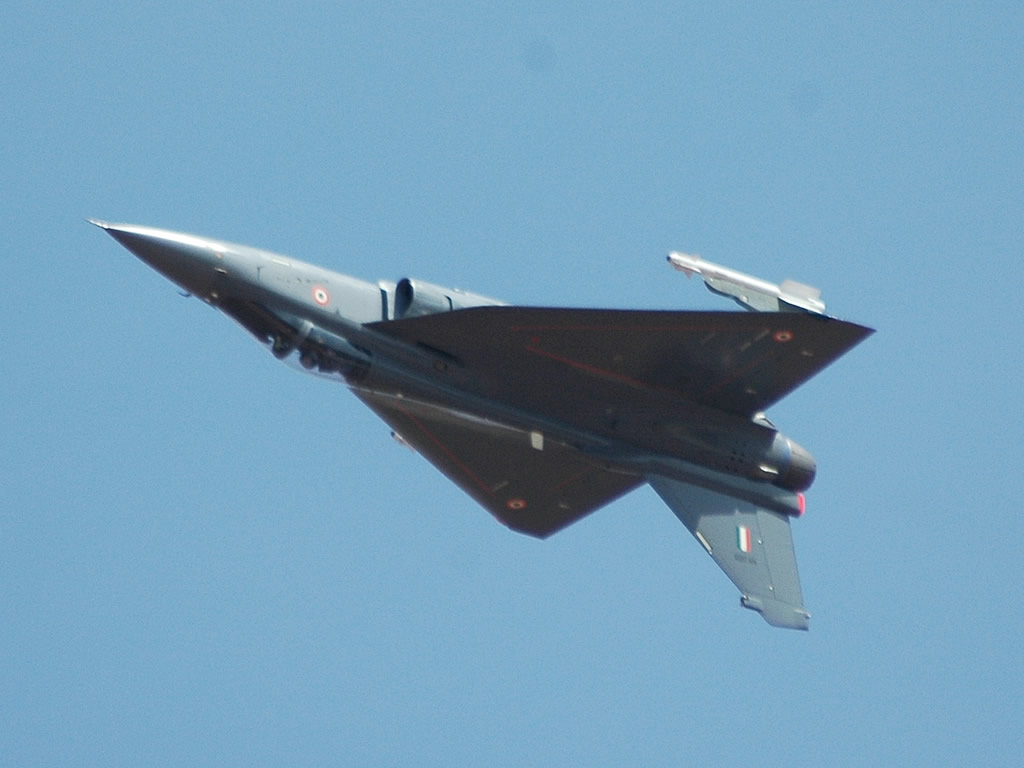
(click to view full)
Dec 26/08: Kaveri. The Hindu reports that a committee set up by the IAF in September 2008 has recommended against Snecma’s offer (see Aug 20/08 entry). The report says that the result would not be a co-designed, co-developed engine, but rather a license production arrangement. The group recommends continued development of the Kaveri engine and its core technologies instead, despite the failures to date.
These conclusions are less surprising when one examines the committee’s composition. Air Vice Marshal M. Matheswaran chaired the group, which included representatives from India’s state-run Aeronautical Development Agency (ADA), Hindustan Aeronautics Limited (HAL), the Centre for Military Airworthiness and Certification, and IAF officers posted at ADA, the National Flight Test Centre and the Aircraft Systems and Testing Establishment. All are state-run groups that have been involved in the Kaveri’s ongoing development, and have strong incentives to protect that turf.
Dec 13/08: Testing. A Tejas fighter prototype lands at Leh air base in the high-altitude Ladakh region of Jammu and Kashmir, at an altitude of 10,600 fee. Leh is one of the highest airfields in the world, with a temperature variation ranging from 5 to -20 C/ 41 to -4F. .
That was the whole point, of course: perform cold weather testing, while making an assessment of the aircraft’s performance in high-altitude conditions, without the confounding influence and additional challenge of high temperatures. India Defence
Oct 3/08: Radar. The Hindu newspaper relays news from ADA Programme Director P.S. Subramaniam that the Israeli Elta “EL/M-2052” radar has already undergone tests on the flight test bed and ground rig in Israel, and “airworthy units” are expected to arrive early next week.
There had been some unconfirmed mentions of EL/M-2052s in connection with the Tejas, and it’s possible that ADA is beginning tests related to the Mk.II. It’s more likely that the radars are IAI Eltas M-2032, instead of Elta’s AESA option. The Elta M-2032 multi-mode radar already serves on India’s Sea Harriers and some Jaguars, and was picked as an “interim option” until India’s indigenous radar program performs to the required standard. Because the indigenous radar has failed to perform to standard, the ADA has reportedly been running weaponization tests on the Tejas using a weapon delivery pod, and has been forced to keep critical tests on hold. Past experience suggests that the Tejas’ radar will remain an import.
Aug 20/08: Kaveri & Snecma. The Wall Street Journal’s partner LiveMint.com has an article that more or less sums up the Kaveri project in a nutshell, and also the DRDO: “In aircraft engine development, you cannot set a timeline.” The article interviews T. Mohana Rao, director of India’s state-run Gas Turbine Research Establishment (GTRE). Rao explains why the Kaveri engine is effectively dead as a fighter aircraft engine, leaving GE’s popular F404-GE-IN20 variant to power the Tejas for at least the next 4 years.
Rao quotes the Kaveri’s performance at 11,000 lbs./ 5,000 kg dry thrust at sea level, and 16,500 lbs./ 7,500 kg thrust on afterburners. That’s about 1,000 lbs./ 400 kg short of specifications. The engine is also overweight by 330 lbs./ 150 kg, and has yet to perform long-endurance tests to assess its durability.
The GTRE cannot promise any date for successful delivery, and so political approval was granted to form a partnership with a foreign engine firm on a risk-sharing basis. Russia’s NPO Saturn and France’s Snecma responded, while GE, Rolls-Royce, and Pratt and Whitney declined. After almost 2 1/2 years, the GTRE chose France’s Snecma, but there’s no contract yet. industrial issues need to be settled, and the government requires consultation with the Indian Air Force before any contract and requirements are signed.
Snecma’s proposal involves an engine core (compressor, combustor and high-pressure turbine) called Eco. Snecma would have a workshare of 45%, and GTRE’s would be 55%, with nearly 85% of the manufacturing within India. Snecma says the aircraft could be certified for fitting in the Tejas within 4 years. Assuming that project remains on time, of course. The policy question is whether this outcome was predictable from the outset. As the Live Mint article notes:
“Nearly 20 years after it promised an indigenous engine to power India’s light combat aircraft Tejas, the… country’s sole aero engine design house, is now seeking outside help…”
Aug 13/08: Kaveri KMGT. The DRDO’s GTRE in Bangalore believes it may have found a use for the Kaveri engine, in naval vessels. Using the core of the Kaveri engine, plus a low-pressure compressor and turbine, the engine would become a gas-fired 12 MW propulsion unit in warships up the he Rajput Class, or find uses as on-shore electricity generators. A Kaveri Marine Gas Turbine (KMGT) has been transported to naval dock yard at Vishakapatnam, and installed on to the marine gas turbine test bed there. Yahoo! India | RF Design.
The Rajput Class “destroyers” are modified Russian Kashin-II Class ships, though their top weight of just under 5,000 tons would mark them as large frigates in many navies.
Aug 3/08: Kaveri – And Replacements? The Wall Street Journal’s partner LiveMint.com reports that France’s Snecma will partner with India’s DRDO to develop a new engine, sidelining the Kaveri project.
“GTRE has spent nearly Rs1,900 crore of the Rs2,800 crore that was sanctioned since an engine project Kaveri, named after the river in southern India, began in 1989… Vincent Chappard, a Snecma spokesman in France, said he could not immediately confirm the development.”
While the IAF waits for Snecma’s efforts, reports also suggest that the DRDO’s Aeronautical Development Agency has invited both General Electric and Eurojet Turbo GmbH, a European engine consortium, to bid for higher-powered interim engines. GE offers the F414, and the Eurojet 2000 already has higher thrust, but the engines will have to fit the Tejas’ design – or vice-versa. These engines would be slated for Tejas aircraft produced beyond the initial 48 plane order, but before any indigenous engine is certified. WSJ partner Live Mint | domain-b
March 4/08: Radar. There are reports that Europe’s EADS has offered to co-develop an active electronically scanned array (AESA) radar with India, for installation on board the Tejas fighters. Work is currently underway on an AESA radar to equip EADS’ Eurofighter, which is a long shot in India’s 126-190 aircraft MMRCA fighter competition.
The nature of AESA radars makes it possible to scale them up or down while retaining high commonality with larger versions, the main difference being changes to radar power and hence overall performance. Northrop Grumman whose AN/APG-77 AESA radar equips America’s F-22, recently introduced its AESA Scalable Agile Beam Radar (SABR) at Singapore’s February 2007 air show. It’s designed to equip existing F-16 fighters with no modifications required, and is advertised as being scalable to other platforms.
A win for EADS in this area offers to solve a problem for India, while creating a commonality hook for the Eurofighter – or at worst, a supplier diversification option for India that adds external funding to help EADS catch up in this key technology area.
March 3/08: Indian Defence Minister Shri A K Antony responds to a Lok Sabha (lower house of Parliament) question by saying that the Tejas flight test program is:
“…progressing as per the schedule. So far, 829 flight tests have been completed. Efforts are being made to accelerate the flight tests… Presently, no need is felt for strategic partner. To complete the project at the earliest, a top level review is being conducted by the Chief of Air Staff once in every quarter and review by the Deputy Chief of Air Staff once in every month. So far, Rs. 4806.312 cr [DID: 48.063 billion rupees, or about $1.19 billion at current conversion] have been spent on development of various versions of Light Combat Aircraft.”
2006 – 2008
1st 20 production Tejas ordered; IAI to substitute for MMR radar failure; F404 engines ordered; AA-11 fired; Naval Tejas contemplated.
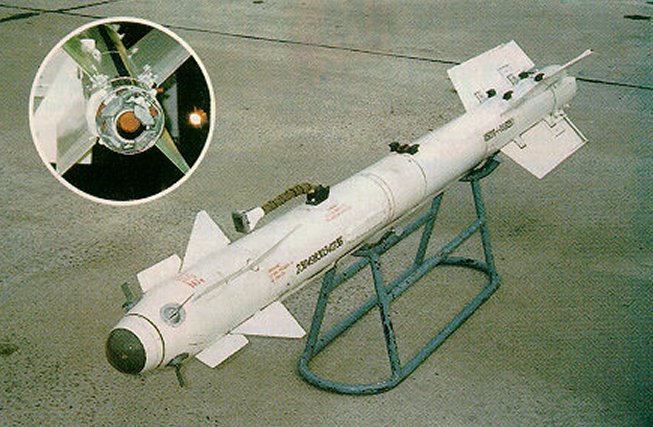
(click to view full)
Oct 25/07: Testing. The Tejas fires a missile for the first time: Vympel’s short-range, IR guided AA-11/R-73 Archer air-to-air missile. Test aircraft PV-1 fired the missile at 7 km altitude and 0.6 Mach within the naval air range off the coast of Goa, marking the beginning of weaponization as a prelude to initial operational clearance (IOC) phase of the Tejas program.
The main objectives of test firing were to validate safe separation of the missile, the effect of missile plume on the engine’s air-intake and on composite structures, the workings of the stores-management displays and software, and quality assessment. India DoD release | Times of India.
While the beginning of weaponization is a significant event, the state of the fighter’s indigenous radar development means that the critical weaponization event for the Tejas LCA will be its first successful test-firing of a radar-guided missile.
Aug 13/07: Radar – IAI. Defence Minister Shri AK Antony states the obvious in a written reply to Shri Sugrib Singh and others in Lok Sabha, but adds new information concerning foreign cooperation:
“There has been a time and cost overrun in the said project. The project to develop two MMR systems for ground testing was sanctioned at a cost of Rs.62.27 crore. This activity was completed in 2004 at a cost of Rs.105 crore.
Yes, but see poor testing results in the April 8/06 and May 1/06 entries, below. He does not mention them, but effectively concedes the point by adding that:
A co-development activity of MMR has been initiated for Limited Series Production and Series Production with M/s ELTA Systems Ltd, Israel, which has experience in developing similar types of radars. To expedite the project, close monitoring of activity at the highest level of Hindustan Aeronautics Limited (HAL) management has been put in place.”
See also India Defence follow-on | Flight International.
IAI Elta radar agreement
April 26/07: Testing. The 1st of the Limited Series Production Tejas jets (LSP-1), makes its successful maiden flight at HAL airport in Bangalore, reaching an altitude of 11 km/ 6.6 miles and a speed of Mach 1.1 during the 47 minute flight.
According to the Indian government release, LSP-1 marks the beginning of series production of Tejas for induction into the Air Force.
1st production flight
March 1/07: India’s Defence Minister Shri AK Antony offers an update re: the Tejas LCA:
“Five Tejas are currently being flight tested for Initial Operational Clearance by the Indian Air Force pilots posted at National Test Centre of Aeronautical Development Agency, Ministry of Defence. So far 629 flights accumulating 334 hours have been completed. Twenty aircraft have been ordered by the Indian Air Force as the first lot.”
Feb 7/07: F404. HAL ordered an additional 24 F404-GE-IN20 afterburning engines in a $100+ million contract, in order to power the first operational squadron of Tejas fighters for the Indian Air Force.
This buy follows a 2004 purchase of 17 F404-GE-IN20 engines, in order to power a limited series of operational production aircraft and naval prototypes.
F404 engine order #2
Jan 25/07: India tries to throw a large monkey wrench into Pakistan’s rival JF-17 project. They almost succeed.
Nov 22/06: Reuters India: “Pakistan set to get eight JF-17 fighter jets next year.” Anxieties are becoming more acute as Pakistan readies its JF-17 fighter developed in conjunction with China and Russia, and prepares to induct them into service in 2007-2008. The JF-17 is a sub-$20 million fighter designed to replace F-7P (MiG-21+) and Mirage 3/5 aircraft in Pakistan’s fleet, and is a comparable peer for the LCA Tejas.
Sept 19/06: India set to induct 28 LCA Tejas aircraft by 2007. They would have GE F404 engines rather than the Kaveri, says former project director Dr. Kota Harinarayana. As it turns out, India has 0 inducted aircraft, 5 years after that stated date.
May 2/06: India Defence reports that the Indian Navy may be interested in a Tejas LCA version of its own.
May 1/06: Radar. More bad news for the radar project. The Vijay Times also notes that that the performance of several radar modes being tested still “fell short of expectations,” and may force acquisition of American or Israeli radars (likely APG-68 or Elta’s EL/M-2032) as an interim measure.
April 8/06: Radar. The Sunday Telegraph reports that the Tejas’ radar, which was also set up as an indigenous project after foreign options like the JAS-39 Gripen’s fine PS05 radar were refused, could only perform at the most basic levels, putting tests on hold:
“According to the IAF, which proposes to buy 220 of the planes when they are ready, the radar is now “marooned in uncertainty”… While two basic radar modes have been tested, the other modes have failed, throwing up serious questions about the system’s fundamentals.
In written replies to queries sent by The Indian Express, DRDO chief M Natarajan said: “Because of the complexity of technologies involved (in the radar project) and the extent of testing to be done, help of specialists in the field may be sought to complete the task… When Natarajan was asked why there was uncertainty over the radar so long after development began, he said: “The radar is under development by HAL and not at LRDE (the DRDO’s lab).” This, even when the signal processor built by the DRDO is the very heart of the radar.
Security analyst K Subrahmanyam has earlier called the dogged refusal to entertain foreign help by the DRDO as reflective of the organisation’s bad project management.”
March 2006: Order #1. India signs a contract with HAL for 20 Tejas Light Combat Aircraft (LCA) in “Initial Operation Clearance (IOC) configuration,” along with associated role equipment, reserve engines, engine support package, engine test bed and computer based training (CBT) package.
The total contract cost is INR 27.017 billion. Source.
India: 20 LCA
February 2006: Kaveri. Jane’s claims that SNECMA won the contract to assist India in developing the Kaveri.
Appendix A: DID Analysis & Op/Ed (2006)

The complexities inherent in designing a new fighter from scratch are formidable, even for a lightweight fighter like the Tejas. As Air Marshal Philip Rajkumar (Retd) notes, India’s industry had significant experience deficits going into this project, which have delayed the project significantly, and raised costs. The insistence on pushing the envelope with a new fighter design, a new engine, and a new radar all at once has had consequences. In the long run, those consequences will lead to a smaller IAF, and could be set to create major force gaps if MiG-21 lifespans can’t be extended long enough.
As experts like Richard D. Fisher have noted, Chinese projects tend to quickly hand off significant components to others and confine the kinds of domestic expertise required. The J-10 has been an example, and the massive changes required when Israeli and Western cooperation ended made the project incredibly challenging. Only a Chinese decision to outsource major components like the engines to the Russians kept the project from failing completely.
As the J-10 shows, delays remain possible, even with extensive foreign cooperation. It’s also true that every new jet engine type can expect teething issues when it is first installed. This may explain why even Sweden, with their long history of indigenous fighter development, chose the less risky approach of adopting the proven GE F404 & F414 engines for the JAS-39 Gripen. They made minor modifications as required in conjunction with the manufacturer, then concentrated their design efforts elsewhere.
All the more reason, then, to bring in foreign partners for components like the engine etc., and minimize the complexities faced by India’s indigenous teams in its state-run organizations.
Sainis and Joseph’s examination of the benefits to Indian industry from the LCA program demonstrate that most industrial benefits would have been retained had India taken this route. So, too, would the project’s timelines, which have suffered instead as India’s fighter fleet dwindles.
In India’s case, these added complexities can also spill over onto the export front. If potential Tejas export customers aren’t offered a common, fully tested international engine like the GE F404, with a broad network of support and leverage across multiple aircraft types, risk calculations will get in the way of some sales. When deciding on their buy, potential customers will have to evaluate the Kaveri engine’s prospects for future spares, upgrades and support, available contractors with relevant skills in maintaining them, etc. This tends to make potential buyers more cautious, and is likely to reduce Kaveri’s odds when competing against options like the Chinese/Pakistani JF-17, which uses a modified version of the engine that equips many MiG-29s around the world.
As the French have found with the Rafale, lack of exports for a limited production indigenous fighter equals rising maintenance and upgrade burdens that hit right in the home budget, and make it that much harder for the design to keep up with contemporary threats over its lifetime. Which in turn affect export prospects in a vicious circle.
Will India’s decision to proceed with the Kaveri engine offer short-term customization benefits, at the expense of long-term pain? Or can HAL maintain the Tejas airframe design, and field a lightweight fighter that offers its customers a choice of engines?
Appendix B: The Kaveri Saga – Keystone, or Killer?
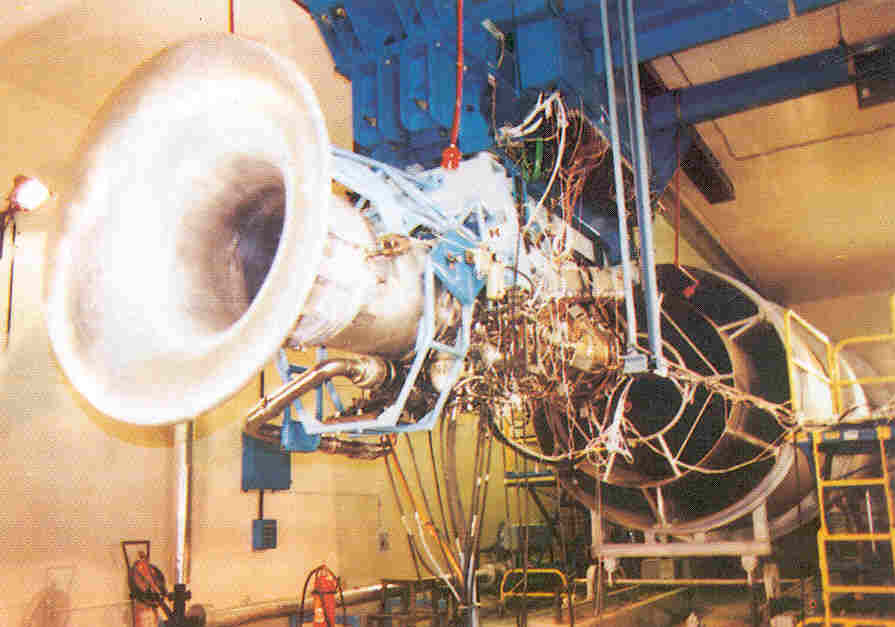
(click to view full)
The GTRE GTX-35VS Kaveri was envisioned as a variable cycle flat-rated engine, in which the thrust drop is compensated by increased turbine entry temperature at the spool. The variable cycle flat-rated engine would be controlled by a Kaveri full authority digital control unit (KADECU/ FADEC). The goal was a powerplant with slightly more thrust than GE’s F404 engines, whose characteristics were uniquely suited to India’s hot and humid environments.
India’s frequent goal of “100% made in India content” has derailed a number of its weapon projects over the last few decades, but foreign decisions also played an important role in the Kaveri project’s genesis. In 1998, India’s nuclear tests prompted the US to place sanctions on military exports, including GE’s F404 turbofans and Lockheed Martin’s assistance in developing the Tejas’ flight control system. In response, India began its program to develop an indigenous engine. As the Rediff’s Feb 5/06 report notes:
“DRDO scientists had kept the development of the Kaveri engine under wraps, exuding confidence that India had developed the technological edge to develop its own aircraft engine, so far confined to handful of developed countries.”
The prospect of ending that dependence is a powerful lure, but some of the reasons for that small club are technical. Modern jet engines are far more complex than even Vietnam-era engines like the GE J79 that equipped the F-4 Phantom. Producing a working, reliable engine that can operate at these high pressures and thrust ratings isn’t easy, and weaking and troubleshooting a new and unproven jet engine always involves a great deal of work and expense. The Kaveri engine’s climate performance targets added even more challenges to an already-full plate. That proved difficult for the program when the program’s entire context changed.
Eventually, the USA lifted its weapons export restrictions on India. In contrast, the natural barriers to developing an advanced engine from scratch, in a country with no past experience doing so, to technical specifications more challenging than current market mainstays, were not lifted so easily. The complexities inherent in this challenge belied DRDO’s apparent confidence, forcing India to bring in turbine experts from Snecma in France and from US firms like Pratt and Whitney.
In the end, the Indian DRDO was finally forced to look for a foreign technology partner, and issue an RFP. Even then, acceptance of program realities was slow in coming. In the initial stages, DRDO secretary M Natarajan referred to it as an effort to “add value and look for a partner to stand guarantee,” and stated that any partners would have to work to India’s terms. A committee in which IAF experts would be included would evaluate the bids to decide on:
“…how much to take and from whom… But Kaveri is and would remain an Indian project… We have gone this way to shorten time for making the engine airborne, as we don’t wont to delay the LCA induction schedule.”
Those goals did not prove to be compatible.
US engine manufacturer General Electric, who supplies the F404 jet engines that power initial Tejas models, seemed unenthralled with those proposed terms. They declined to respond to the RFP for foreign assistance. Eventually, India’s state agencies were forced to concede that they could not develop an engine with the required specifications, and that seeking foreign help to improve the basic design was also unlikely to produce a design that met the required specifications.
With no engine in production as late-stage aircraft testing began, and none forthcoming in the forseeable future, India’s drive to develop an indigenous “Kaveri” jet engine had become a key roadblock for the Tejas program in India – and very possibly, beyond India as well.
In contrast to the Kaveri, F404 family engines are already proven in a number of aircraft around the world including Saab’s 4th generation JAS-39 Gripen lightweight fighter, the F-117A Nighthawk stealth fighter, models A-D of the F/A-18 Hornet fighter aircraft in service around the world, South Korea’s T/A-50 Golden Eagle supersonic trainer & light attack aircraft, and Singapore’s soon to be retired A-4SU Super Skyhawk attack jets. Kaveris equipped with F404/F414 engines would present a lower risk profile to potential export customers, due to the engines’ long-proven performance, GE’s global support network, and the number on engines in operation around the world.
Kaveri would offer none of these important benefits, in exchange for one offsetting feature: foreign sales would not require US military export approval for the engines.
India has not been a major weapons exporter, so export realities didn’t carry a lot of weight. On the other hand, the technical and timeline difficulties experienced by the main Tejas program created a potential natiional defense crisis that could not be ignored. By August 2008, the Kaveri program had effectively been sidelined, in order to get the Tejas into service within an acceptable time frame and preserve India’s operational fighter strength. While political changes may resurrect the Kaveri program as a political exercise, the Tejas program’s technical procurement path has been moving in the other direction.
This kind of vague drift away from an indigenous option is common in India’s procurement history. It usually ends with off-the-shelf “interim” buys becoming permanent; and an indigenous program that’s either shelved, or bought in very low numbers alongside a much larger foreign purchase of similar equipment.
GE’s F404-IN20 will be the Tejas’ initial powerplant, to be followed by the F414-GE-INS6, which beat the Eurojet EJ200 as the Tejas Mk.II’s planned engine.
Even so, DRDO continued to fund and back its long-delayed project. By January 2013, they had abandoned negotiations with France’s Snecma to create a Kaveri 2.0 version using key Snecma engine technologies, and resolved to try yet another global tender. A Kaveri without an afterburner would power a notional UCAV strike drone, and DRDO specified a pair of Kaveri engines for a proposed “Advanced Medium Combat Aircraft” project.
These pursuits would have kept the Kaveri development project consuming defense funds for another decade. In May 2014, however, Narendra Modi’s BJP Party scored a crushing landslide victory, and vowed to shake up the way government was run. DRDO felt the change, shifted their prioritization methods, and decided in November 2014 that the Kaveri program should be abandoned entirely.
\Additional Readings & Sources
Background: LCA Tejas
* Indian Government – Tejas: India’s Light Combat Aircraft.
* India’s Aeronautical Development Establishment – Main site. Government agency developing the LCA family.
* DRDO – Light Combat Aircraft.
* Aerospace Web – Hindustan (HAL) Tejas / Light Combat Aircraft (LCA) Light Multi-Role Fighter.
* Air Force World – LCA. Chinese site.
* GlobalSecurity.org – Tejas Light Combat Aircraft (LCA).
* MILAVIA – ADA Tejas LCA (Light Combat Aircraft).
* Wikipedia – HAL Tejas. Detailed and well footnoted.
Background: Ancillary Technologies & Weapons
* General Electric – F404 engine family.
* IAI – EL/M-2032 – Multimode Airborne Fire Control Radar.
* ACIG Database – Kfir C.10. Includes a great deal of information concerning IAI Elta’s EL/M-2032 radar, and looks at the Derby missile.
* Tactical Missiles Corp. JSC – R-73E/R-73EL. AA-11 Archer short range air-to-air missile in the West.
* RAFAEL – DERBY Beyond Visual Range Air-to-Air Missile
* Tactical Missiles Corp. JSC – KAB-1500LG-Pr-E, KAB-1500LG-OD-E, KAB-1500LG-F-E. Laser guided bombs.
* Tactical Missiles Corp. JSC – Kh-59MK2 Air-Launched Missile. Short-range strike, similar to Raytheon’s AGM-65 Maverick.
* Tactical Missiles Corp. JSC – Kh-31A Medium Range Airborne Missile. AS-17 Krypton in the West, has several variants including the Kh-31P radar-killer.
* Tactical Missiles Corp. JSC – Kh-35E – Tactical Anti-Ship Missile. Sub-sonic, similar to Boeing’s Harpoon.
Background: Tejas Mk.II Technologies
* General Electric – F414 engine family. In Mk.II.
* Eurojet – EJ200. Lost Mk.II competition.
* India’s DRDO – Kaveri Engine. The state-owned R&D agency grudgingly abandoned their push to put this on the Tejas. For now.
* IAI – EL/M-2052 – Active Phased Array Airborne Fire Control Radar. Reportedly slated for Mk.II.
Official Reports
* India MoD (March 20/13) – Delay in Manufacturing of Tejas by DRDO.
* Air Commodore Muthanna (Oct 18/12) – Challenges In Design To Deployment: Critical Lessons From the D&D of LCA.
News & Views
* DID FOCUS – India’s MMRCA Fighter Competition. Covering the MRCA foreign competition, whose choices and success will affect the Tejas LCA project.
* DID – India’s DRDO Rethinking the Way it Does Business. Contains an extensive set of links to articles covering India’s defense sector and its organizational/ program issues. One of which is Tejas.
* Bharat Rakshak (Feb 11/13) – Interviews with LCA program test pilot Cmde Jaydeep Maolankar and N-LCA Deputy Project Director Cmdr Sukesh Nagaraj. Claimed. DID can’t confirm their authenticity, but we have no reason to disbelieve this account.
* AeroMag Asia – Jan-Feb 2013 issue [PDF] includes “LCA-Tejas: Sky is not the limit” | “TEJAS Programme is dashing towards the completion of IOC: Subramanyam” | “LCA-Navy can be a replacement for Sea Harrier: Balaji”.
* The Indian Express (Nov 15/06) – 23 yrs and first fighter aircraft hasn’t taken off. Says the LCA Tejas may face further delays, and the entire project could even be forced into a joint-venture in order to successfully deliver the aircraft.
* Vijay Times (May 1/06) – Glitches in LCA radar.
* The Sunday Express (April 8/06) – ‘Indigenous’ aircraft needs foreign lift, for its radar.
* Rediff (Feb 5/06) – Kaveri Engine – Reignited Hopes, Technological Edge?. Scroll to the right if necessary.
* Press Trust of India (Feb 2/06) – Light Combat Aircraft project to be completed in 2010. Scroll to the right if necessary.
* Frontier India (March 6/05) – Light Combat Aircraft – Tejas Testing. By Air Marshal Philip Rajkumar (Retd). Good description of the issues encountered trying to design and build the aircraft.
* Bharat Rakshak Monitor (March-April 2001) LCA Development and Costs. By Sunil Sainis and George Joseph. Contains the most detailed cost and industrial participation information we have found.