

(click to view full)
After a long hiatus in major arms purchases, and an equally long fall from its status as an ultra-modern Soviet arms client, Libya was among the countries discussed by Forecast International in its review of African defense market opportunities.
Libya’s military has traditionally been Soviet supplied, alongside some equipment from France and Brazil. The demise of the Soviet Union, the 1990s drop in oil prices, and Libya’s pariah status all combined to choke military modernization – but Libya’s new political direction, and the rise in oil prices, were beginning to change that. Widespread reports emerged in 2007 that France and Libya had signed a Memorandum of Understanding covering arms deals worth up to EUR 4.5 billion, including the first foreign sale of the Rafale fighter. Those reports weren’t followed by contract announcements – but 2009 reports and 2010 contracts showed that Russia was willing to fight to keep its old customer. Now, the question is where all of old the players fit in the new Libya, after Gadaffi’s fall:
* A Change in Libya [updated]
** Green Shoots in Libya
** A Spring Civil War, and Aftermath
* Contracts and Key Events [updated]
* Additional Readings [updated]
* Appendix A: The French Connection?
A Change In Libya
(click to view full)
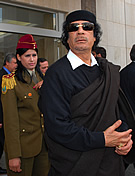
Libya’s political relationship with the outside world shifted during the 1st decade of the 21st century. Both of its major shifts were triggered by violence, however, and the second led to the end of the regime. In 2011, France and Britain led a multinational effort, using their armed forces to back a rebellion against the Gaddafi regime.
As Libya prepares for its future, the new government must cope with global food price inflation, the need to address an internal refugee problem, and the urgency of rebuilding the country’s damaged infrastructure. At the same time, there’s no escaping the medium term need to secure its maritime frontier, control its borders, and maintain some level of basic control over its airspace and sovereignty. With much of the old regime’s equipment destroyed by NATO airstrikes, and oil and gas output swiftly headed toward pre-war levels, Libya looks set to become an important customer for foreign-made weapons.
Green Shoots in Libya
The first shift appeared benign. In the wake of the US-led renewal of hostilities with Iraq, and the fall of Saddam Hussein’s regime, Libyan ruler Muammar Gaddafi shifted his country’s policies. Libya completely disclosed the surprising progress of its weapons of mass destruction programs, and moved from its infamous 1970s/80s rogue state status, to a policy that sought normalized relations with the western world.
In 2004 the European Union lifted a 1986 arms embargo against Libya. In 2006 the USA restored full diplomatic relations, but not military export clearance.
Many credit these shifts in part the influence of Gadaffi’s son Saif al-Islam (vid. BBC interview | TIME article), whose graduate degrees at the University of Vienna and the London School of Economics reportedly included work studying transitions from rentier states and dictatorships to free market societies. Saif has reportedly worked with Michael Porter to this end.
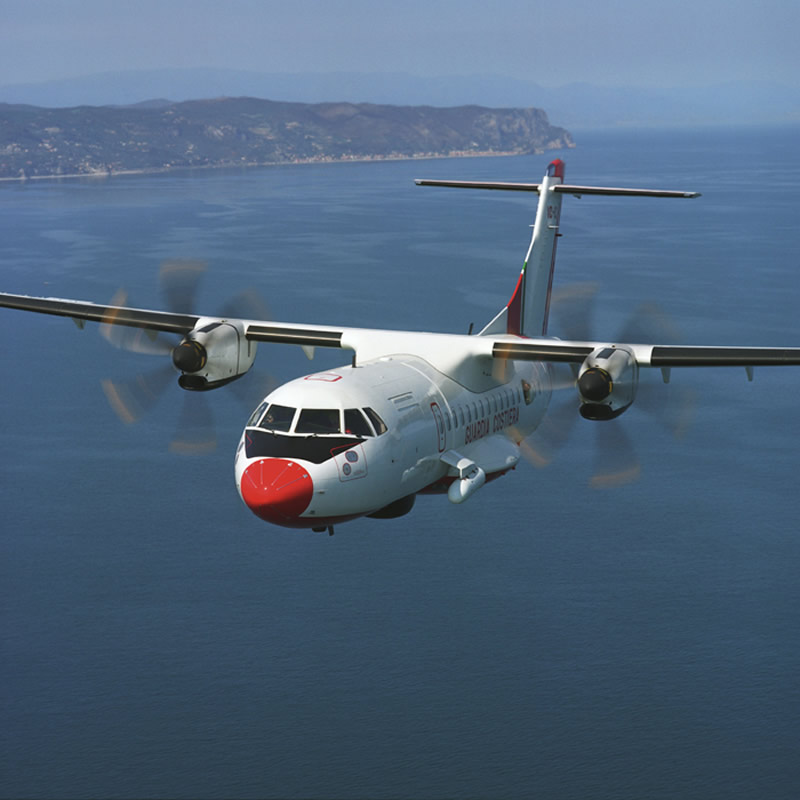
In January 2008 Libya bought 4 ATR-42MP maritime patrol aircraft from Italy’s Alenia.
Libya found itself in the news again in 2009, due to Britain’s release of a Lockerbie terrorist, and Libya’s warm welcome home for the man.
A Spring Civil War, and Aftermath
That 2009 setback became a downward slide in 2011. Saif’s reform campaign was either forestalled or abandoned, and the demonstration of the 2011 “Arab Spring” quickly gathered force in Libya. When push came to shove, Saif sided with his father, and supported firing on and even bombing civilian demonstrators.
That touched off a civil war, with Libya’s north-eastern provinces rebelling as a coherent bloc, and scattered revolts all around the country that included some military units. An Anglo-French intervention brought in other NATO powers, the USA, and even Arab states like Qatar and the UAE. Gadaffi’s regime fell, the dictator himself was killed, and Saif al-Islam Gadaffi was captured in the aftermath. Saif is wanted by the International Criminal Court, but the new Libyan regime has refused to provide any information about his whereabouts or status; he may be dead.
So, too, is much of the Libyan military’s equipment.
Even during the civil war, the Libya’s regimes military might was questionable. Like many other states in the region, Libya suffers from a culture whose norms deprecate maintenance and hands-on work, and also suffers from broad corruption. That combination is deadly to military readiness, and unlike some Middle Eastern neighbors, Libya had been unable to simply hire the problem away by contracting with western maintenance specialists.
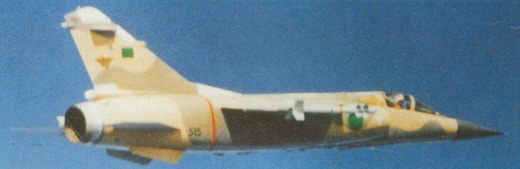
The results have been dire across the entire military, but they are most obvious in the Air Force. Combat Aircraft Magazine’s coverage of LAVEX 2009 provided a rare public window into the aircraft still in service within Libya, and also of their limitations conditions. Refurbished Mirage F1s were the primary new Libyan AF attraction, and LAVEX 09 also featured appearances by a visiting French Rafale B and an Italian Eurofighter. On the other hand, the Libyan AF’s MiG-21s did not fly at all due to reported serviceability issues, and a MiG-23UB that did participate in the display crashed. Of 170 MiG-23s delivered, Combat Aircraft’s sources estimated just 30-50 flyable aircraft remaining – and believed those ratios may be similar for several other platforms.
That was before the allied bombing campaign.
Beyond the air force, tanks and armored vehicles were used by the Gadaffi regime, and provided much of their initial armed advantage. Combat readiness was an issue here, too, but it doesn’t take very many armored vehicles to tip the scales, when facing a disorganized and lightly-armed infantry force in open terrain. Facing a sophisticated enemy is, of course, another matter entirely. Allied air forces took a heavy tool on combat-capable Libyan vehicles, using Brimstone missiles and precision-guided bombs.
In the wake of the war, therefore, Libya needs to do 3 things:
- Take inventory, and determine what’s left.
- Determine what should be salvaged, and what needs to be bought
- Replenish some level of aerial and naval surveillance capability, alongside vehicles and other ground equipment for territorial control.
Contracts and Key Events
(click to view full)
Longuet refers to Franco-Libyan cooperation as a long-term project, mentions training work toward the de-mining of Libya’s harbors, and nods to maritime and border needs by saying that “Il est de l’interet de tous que le trafic des hommes, des armes ou de la drogue soit neutralise”. At this stage, he isn’t pushing major sales like the Rafale, just laying the ground work, and moving to capitalize on France’s leadership role in ousting the Gadaffi regime. By working the National Transitional Council to help define their future military requirements, he places France is a role to steer the content of future defense buys. Expect counter-moves by Italy and Russia, at least. French MINDEF [in French] | Defense News.
Feb 27/11: Good news on the hydrocarbon front. Libya’s oil output hit 1.4 million barrels in February, close to its pre-war level of about 1.6 million. Libyan officials believe they will return to pre-war levels by mid-2012.
Meanwhile, natural gas production is up to 2.3 billion cubic feet per day, and oil exploration has resumed south of Tripoli. All this bodes well for Libyan budgets, which stand or fall on hydrocarbon exports. CNBC.
Feb 22/11: Libya’s 2 AWOL Mirage F1s are flown back to Libya from Malta.

(click to view full)
Nov 19/11: Saif al-Islam Gadaffi captured by Libyan guerrillas. He was the last major regime figure left in the country.
Oct 31/11: War’s over. NATO ends Operation Unified Protector over Libya.
Oct 20/12: Gadaffi dead. Gaddafi is captured alive in his home town of Sirte, after his convoy was attacked by NATO warplanes. He doesn’t stay that way. He is beaten, tortured, and killed on the spot by Libyan guerrillas. GlobalPost video.
Aug 5/11: Russia. China Daily reports that Russia is looking to redirect Libya’s order for 6 Yak-130 trainer and light attack aircraft:
“Another deal will be for six Yak-130 light attack aircraft originally intended for Libya before the United Nations imposed an arms embargo on Tripoli, cutting Moscow off from $2 billion in signed deals and another $2 billion in potential contracts. The top customer for the light attack aircraft is Kazakhstan which is trying to boost its regional clout, [CAST think-tank director] Pukhov said, citing defense industry sources.”
March 19/11: Civil War goes International. Foreign intervention in Libya’s civil war begins.
Feb 27/11: Russia. Russia’s Interfax news agency says that a recent UN embargo on arms sales to Libya, in the wake of the regime’s military attacks on demonstrators, could cost Russia $4 billion:
“The already-signed arms deals between Moscow and Tripoli amount to $2 billion, while deals for another $1.8 billion are in the final stage of readiness. In January 2010 the two sides agreed on supply of Russia’s small arms, six operational trainers Yak-130 and some armored vehicles for total of $US 1.3 billion. Libya has been supposed to become the first country to get Su-35 fighter jets, the contract to buy 15 jets for $800 million is fully accorded and ready to be signed. Tripoli also expressed interest in buying 10 Ka-52 Alligator assault helicopters, two advanced long range S–300PMU2 Favorit air defense missile system and about 40 short range Panzir C1 air defense complexes for a total over $1 billion. The Libyan military has also discussed possible supply of modern tanks, multiple rocket launcher systems, high speed missile boats etc.”
If the civil war drags on, don’t be surprised to see a number of these potential sales revived, even as other counter-insurgency related equipment steps to the fore. Russia could wind up finds ways to skirt UN sanctions and support its client, something that has been an issue before with countries like Sudan. China could do the same, and has a long history of supporting civil war factions without regard to human suffering or disposition, in exchange for medium-long term resource deals as the price of that help. Russia Today | AFP.
Feb 21/11: A pair of Libyan Mirage F1s land in Malta. Their pilots defected, rather than obey orders to bomb Libyan demonstrators in Benghazi. Examiner | Airplane Pictures.
July 23/10: Russia. Aviation Week reports from Farnborough 2010:
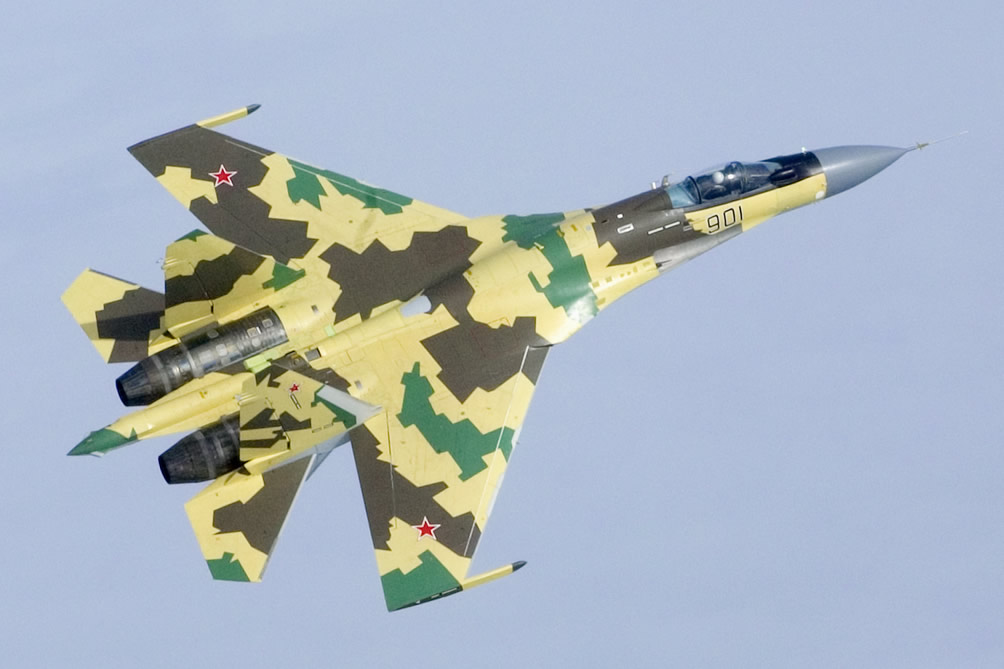
“Tripoli will likely be the launch export customer [for the SU-35S]. Alexander Mikheev, deputy head of Rosoboronexport, Russia’s state-owned arms export agency, confirmed at Farnborough that the contract for delivery of undisclosed number of aircraft to Libya, one of the traditional recipients of Soviet armaments, is expected to be signed this year. The first export production slots are available from 2012.”
Feb 15/10: Yak-130 contract. Russia’s Yakovlev Design Bureau offers initial specifics concerning the deal with Libya. Note that the language becomes much vaguer once it moves away from Yakovlev’s jets, and an order for tanks, which suggests that the SU-30 family and air defense purchases are still under discussion:
“Tripoli signed a $1.8-billion purchase agreement that includes acquisition of six YAK-130 advanced jet trainers for delivery in 2011-12, in addition to tanks. Libya has also expressed interest in acquiring 12 Su-35s, the latest Sukhoi fighter in production; four Su-30MK2s, as well as the advanced S-300PMU2 air-defense system.”
Yak-130s can serve as advanced trainers, or light attack aircraft. Yakovlev DB via defense aerospace | VITINFO [in Vietnamese].
Jan 30/10: Russia. Reports surface that Russia has signed a $2 billion arms deal with Libya. There is no official release, and details are largely absent, except for a quote from Vladimir Putin, who said the deal was “not only for small arms and light weapons.” Moscow Times | CNN.
Jan 26/10: Russia. Libya’s defense minister, Major General Abu-Bakr Yunis Jabr, arrives in Moscow for talks. A news conference is said to be scheduled for Jan 28/10, and Interfax cites “a military-diplomatic source” to say that:
“Libya is ready to buy around 20 fighter planes, not less than two divisions of S-300PMU-2 air defense systems, several dozen T-90S tanks from Russia, and also to modernize more than 140 T-72 tanks and other weapons.”
See also Agence France Presse | UPI.
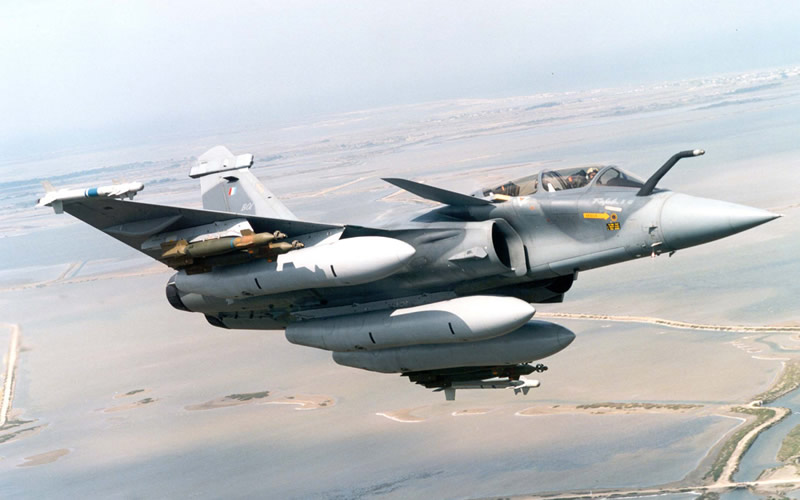
Jan 22/10: France. French Newspaper Les Echos reports ongoing talks while “high level military delegates” from Libya are in France. Anonymous French officials said “obstacles were still in the way of an announcement” regarding the Rafale, or other equipment.
(click to view full)
Oct 19/09: Russia. The Rafale purchase could be in danger. Russia’s Interfax media agency reports that Libya plans to buy 12-15 Sukhoi Su-35 multirole fighters, another 4 Su-30s as an immediate interim order, and 6 Yakovlev Yak-130 trainer and light attack aircraft aircraft. Reports indicate that a contract could be signed with state arms export agency Rosoboronexport by the end of 2009, or early 2010.
Russian reports added that Libya was also interested in the long-range, high-altitude S-300 air-defense system, the shorter-range Tor-M2E and BUK-M1 surface-to-air missile systems, combat helicopters, T-90 tanks, and at least one diesel-powered submarine.
Libya has also been in talks with France to buy its Rafale fighters since late 2007. A Sukhoi deal is likely to end the Rafale’s near-term chances in Libya. UPI report.
Oct 7/09: Border control contract. Finmeccanica subsidiary SELEX Sistemi Integrati recently announced a EUR 300 million (currently $442 million) contract with Libya for a large Border Security and Control System. The first tranche of EUR 150 million has already started.
Finmeccanica will provide all the typical functions of a C3 (Command, Control & Communication) system, such as command decision support tools, information processing, integration of data gathered by different sensors, the sensors themselves, and emergency management. SELEX-SI has prime responsibility for the architecture of Large Systems within Finmeccanica, and they will design, install and integrate all the subsystems on behalf of their customer, The Libyan General People’s Committee for General Security. SELEX-SI will also be responsible for the training of operators and maintenance staff, as well as the completion of all associated civil infrastructures required by the contract.
May 14/09: France. Asked about Libyan Rafale sales, Defense Minister Herve Morin dodges the question in an interview with TV news channel LCI and says that “the less we talk about [Rafale sales to Libya], the better.” Le Point [in French].
(click to view full)
Jan 17/08: Maritime patrol contract. Finmeccanica subsidiary Alenia Aeronautica announces that Libya’s Interiors Ministry has signed a EUR 31 million (about $45.5 million) contract for one (1) ATR-42MP Surveyor maritime patrol aircraft, plus pilot and systems operator training, logistic support, and spare parts.
Dec 9/07: French MoU? Initial reports surface concerning a Memorandum of Understanding between the French government and Libya, for a variety of military hardware. See Appendix A. If consummated, the deals could be worth several billion dollars.
All the same, the next 6-9 months must feature no sales gaffes of the type that killed the Moroccan Rafale deal, and no over-bundling of equipment of the type that helped kill the Saudi Rafale deal. This sales effort will be the first test of new President Sarkozy’s recent moves to streamline French arms exports – and real political prestige will be on the line if it fails. Agence-France Presse | Defense Aerospace | Ha’aretz | Reuters | Thomson Financial. Reuters re: Le Figaro’s withdrawal of its Rafale sale claim.
Aug 2/07: Milan missiles, Terta tech. Libya signs a confirmed EUR 296 million (about $405 million) deal with France for MBDA’s Milan anti-tank missiles, and Tetra communications equipment. China Daily | Spacewar | NTI profile covers Libyan missile stocks generally.
Additional Readings
* VectorSite – The Dassault Mirage F1
* DID – France’s Rafale Fighters: Au Courant In Time?
* DID – Russia’s SU-35 Super-Flanker: Mystery Fighter No More
* Wikipedia – 2011 military intervention in Libya
* ISN (Nov 17/09) – Arming the Maghreb. Discusses recent and prospective North African arms purchases in Libya, Morocco, and Algeria. ISN is a project of the Swiss Federal Institute of Technology’s Center for Security Studies (ETH Zurich’s CSS), and is jointly funded by the Swiss Department for Defence, Civil Protection and Sport (DDPS) and ETH Zurich.
The French Connection?

(click to view full)
In December 2007, media reports surfaced that a Memorandum of Understanding (MoU) with France covered: 14 Dassault Aviation Rafale combat aircraft and associated weapons, modernization of some of Libya’s Mirage F-1C fighters, a mix of Eurocopter Tiger, EC725 and AS550 Fennec helicopters, Ceasar truck-mounted 155mm howitzers, a mix of VAB, Sagaie, and VBL wheeled armored vehicles, fast patrol boats, and air defense radars. At the same time, Reuters reported Dassault CEO Charles Edelstenne as saying that:
“The governments signed a memorandum of understanding and that includes the opening of negotiations about the Libyan government buying 14 Rafale planes. That has been approved by Muammar Gadaffi… There is now a period for negotiations, we have set ourselves a deadline of the early July, late June to arrive at an agreement. The number of 14 is fixed, now we need to negotiate the price … the contract clauses, the payment conditions…”
On the other hand, Le Figaro pointedly withdrew its story concerning the Rafale purchase:
“The paper said it had wrongly interpreted information and would not publish the report in later editions… There will be no substitute story.”

(click to view full)
With no subsequent contract announcements, the status or even the existence of any MoU with France is unclear. What is clear is that Libya is interested in military modernization, and that it has expressed genuine interest in French equipment. A French sale offers distinct political advantages over Russian options, as it represents a visible sign of Libya’s increasing international acceptance that a sale from Russia cannot match. It also restores a set of relationships that were already in place, which is always easier to do than beginning new ones.
A January 2010 article in Les Echos reported that talks were ongoing, but that obstacles remained before any deals could be announced.
As those talks dragged on, other countries continued to look for opportunities to elbow in and fill these needs. Russia is always a potential competitor, for instance, and their 2010 deals indicate that they do not wish to give up this market.
That jockeying can be expected to continue, as the new regime looks for new equipment.