


(click to view full)
The US Air Force’s AN/TPS-75 radar has been in service since 1968. Threats have evolved, and they want to replace it as their main long-range, ground-based radar for detecting, identifying and tracking aircraft and missiles, then reporting them through the Ground Theater Air Control System. The US Marines are considering a similar move, to replace their own AN/TPS-59s. Hence the USA’s Three-Dimensional Expeditionary Long-Range Radar (3DELRR, pron. “Three Dealer”).
3DELRR is intended to provide up to 35 radars for long-range surveillance, air traffic control, and theater ballistic missile detection. It will correct AN/TPS-75 shortfalls by being easier to maintain, thanks to AESA technology, and by detecting and reporting highly maneuverable and/or stealthy targets. Its improved resolution may even allow it to classify and determine the type of non-cooperative aircraft that cannot or do not identify themselves – a trait that allows faster engagement of hostile planes, and reduces the odds of friendly fire incidents. As long as the program itself can avoid friendly fire from the USA’s budget wars.
3DELRR: Mission & Program

The FBO.gov solicitation for 3DELRR defines its purpose as follows:
“The primary mission of the 3DELRR will be to provide long-range surveillance, control of aircraft, and theater ballistic missile detection. The 3DELRR will provide air controllers with a precise, real-time air picture of sufficient quality to conduct close control of individual aircraft under a wide range of environmental and operational conditions. In the case of theater missile defense operations, the new radar will have the capability to detect, track, and disseminate target information to respective command and control nodes such as the USAF Control and Reporting Center to disseminate for warning and engagement. Similarly, the joint targeting process will benefit from trajectory information provided by the 3DELRR, which will include launch and impact location. The 3DELRR will correct current radar system shortfalls by providing the capability to detect and report highly maneuverable, small radar cross section targets as well as discriminate the type of a non-cooperative aircraft. It will also mitigate most of the sustainability and maintainability concerns which plague the current system.”
Once the Technical Development Phase was complete, the USAF initially intended to award the System Design & Development (SDD) to the winning team around 2011, but a combination of budget cuts and new procurement philosophies forced a shift.

By September 2011, that shift had become pronounced. By March 2012, the entire acquisition plan had changed, all the way through development of the operational system (EMD), and initial production & fielding (LRIP). The design and development award didn’t take place until 2014.
2012: A Change in Plans

Click here for the full-size graphic of plan changes.
Instead of awarding a Technology Development (TD) Phase 2 contract to either Sensis or Lockheed Martin, with built-in options to take the radar all the way into production, a contract around the end of FY 2012 threw the competition open again, awarding 3 fixed-price TD contracts worth $106 million in total.
That fixed-price type contract approach continued in the next 2 phases, then a single contractor was chosen in the project’s 3rd competition, and given a contract to take the project beyond Milestone B into production and fielding. That winning choice was based on “lowest price technically acceptable” criteria, rather than “best value.”
In sync with that shift, one of the TD Phase’s goals was to understand the cost/capability tradeoffs. Most cost is always tied up in design, which is to say in specifications. The Requirements Analysis in SOW Para 1.9.19 tried to reorder or change specifications, in order to eliminate requirements that drive high costs but don’t change the radar’s capabilities enough. The Army saw the cost drivers as “Mobility, Accuracy, False Alarms, Surveillance Volume, and Range,” but they were prepared to be surprised by industry offerings.
That decision pushed the competition toward existing designs and technologies, given the need for assured costs inherent in a fixed-price bid. Northrop Grumman certainly hoped so, as they believe that their existing USMC G/ATOR battlefield radar solution could be upgraded to handle 3DELRR as well. The Marines could then take advantage of the program, replacing existing AN/TPS-59 radars with the same technology used by their shorter-range G/ATOR companion.
Once this new “TD Review E” was done, a final specification allowed final Engineering & Manufacturing Development (EMD) Phase bids to be solicited from any qualified source, not just the TD Phase 2 winners.
These decisions were significant, because they opened the door for Raytheon to win.
The Milestone B decision to begin EMD development of the final 3DELRR system didn’t take place until Q1 FY 2015, and was delayed by a GAO protest. The Critical Design Review is expected in after a winner has been picked, instead of at the end of a single-contractor TD Phase.
The single EMD winner is expected to continue development into the end of 2017 (Q1 FY 2018), and the fall Milestone C decision that authorizes Low-Rate Initial Production. A new twist was introduced in early 2013 as the program office went beyond the EMD-LRIP scope of its RFP, and added a full rate production option that could raise the program’s value to $1.3 billion in total sales over the next 10 years.
Initial Operational Capability with the USAF is now tagged at fall 2019 (Q1 FY 2020).
Contracts and Key Events
Unless otherwise noted, contracts for the 3DELRR program are awarded by the Electronic Systems Center at Hanscom Air Force Base, MA.
2014 – 2015
Raytheon Wins; GAO challenge.

October 28/15: Raytheon has been denied a request that would have stopped the Air Force re-evaluate bids for the 3D Expeditionary Long-Range Radar (3DELRR) system. The program has seen several legal challenges by the three competitors – Raytheon, Northrop Grumman and Lockheed Martin – with Raytheon lodging an appeal in May against a federal judge’s decision to allow the Air Force to re-evaluate bids. The dispute centers on the Air Force’s decision to allow the recovery of internal research and development costs, with the service failing to notify Northrop Grumman and Lockheed Martin of this detail, allowing Raytheon to lower its bid price and win the competition.
May 13/15: Raytheon has further complicated the Air Force’s $1 billion 3DERLL radar program by appealing a federal judge’s decision last week to allow the Air Force to re-evaluate bids. The company previously filed a lawsuit when the Air Force tried to re-open the competition as a result of challenges by competitors Northrop Grumman and Lockheed Martin.
May 13/15: Raytheon suffered a setback this week, with a federal judge freeing the Air Force to re-evaluate bids for the 3D Expeditionary Long-Range Radar (3DERLL), with the company initially winning the lucrative contract in October last year. Raytheon filed a lawsuit against the Air Force when it tried to open up the competition through re-evaluating its original decision, with competitors Lockheed Martin and Northrop Grumman protesting the initial contract award. The value of the program could reach $1 billion, with the Air Force planning to buy sixty of the new radar systems.
Jan 21/15: Air Force Reconsiders.
Reuters quoted a source indicating that the Air Force was to take some form of corrective action in a renewed consideration.
Oct 21-22/14: GAO Protests. The USAF confirms that Northrop Grumman has formally issued a protest against the USAF’s 3DELRR award to Raytheon. The next day, Lockheed Martin confirms that they are also filing a protest.
That halts the program until the challenge receives a ruling, which could take up to 100 days. In order to succeed, the challengers need to show that either Raytheon’s radar isn’t technically acceptable, that it wasn’t the lowest priced – or that something in the process went awry, ensuring that that competitors were treated differently or criteria weren’t applied fairly. Sources: See DID’s GAO Primer | Defense News, “Northrop Challenges 3DELRR Contract Award” | Reuters, “UPDATE 1-Lockheed Martin challenges contract to Raytheon”.
Oct 6/14: Raytheon wins. Raytheon is on quite the radar streak lately, adding the USAF’s 3DELRR to its naval AMDR win. Raytheon IDS in Sudbury, MA receives a $19.5 million fixed-price-incentive-firm contract for 3DELRR’s initial EMD (engineering, manufacturing and development) phase. This base contract includes the purchase of 3 radar systems, and $11 million in FY 2014 USAF RDT&E budgets are committed immediately. Options could bring the total initial EMD contract to $71.8 million for 6 radars, plus product support.
Production orders for the other 29 can follow after that, but it’s also worth noting that 3DELRR is one of the first programs under the DoD’s Better Buying Power initiative to be designed for exportability.
Raytheon’s 3DELRR solution is a C-band radar that builds on their investments in gallium nitride (GaN) electronics, which offer better performance than conventional GaAs circuits at similar power levels. While radars like UHF/VHF are emphasized for detection of stealthy targets within the atmosphere, Raytheon says that they picked the C-band for “increased flexibility because that portion of the spectrum is relatively uncongested.” It should work fine against ballistic missiles, and the ability to avoid spectrum frequency conflicts with potential export customers may also become a selling point.
Work will be performed at Sudbury, MA and Andover, MA and the current contract award is expected to be complete by Oct 31/18. Their sub-contractor Saab Defense (formerly Sensis) will also benefit, and will add about 100 jobs at its DeWitt, NY facility. This award is the result of a competitive acquisition, with 3 offers received by the USAF Life Cycle Management Center’s Theater Battle Control Division at Hanscom AFB, MA (FA8730-15-C-0004). See also Raytheon, “Raytheon awarded contract to build new U.S. Air Force radar” | Syracuse.com, “Raytheon, Saab Defense of DeWitt win U.S. Air Force radar contract worth up to $1.3 billion”.
Raytheon wins EMD
FY 2012-2013
TD Phase 2. EMD-LRIP-FRP RFP; Demonstrations by Lockheed Martin, Northrop Grumman, and Raytheon.

(click to view full)
Aug 26/13: NGC. Northrop Grumman announces that they completed their 3DELRR demonstration back in July. They refer to it as “The U.S. Air Force system variant of the Department of Defense AN/TPS-80 radar…” but unlike the USMC’s current G/ATORs, this S-band radar uses Gallium Nitride transmit/receive modules. That technology is in the USMC’s plans, and the development work may pay off for the Marines, just as all the work on the USMC’s TPS-80 G/ATOR would offer dividends to the USAF.
As one might expect, given their design’s lineage, Northrop Grumman also touts “successful system ambient air cooling under extremely hot operating conditions,” as well as the radar’s well-developed system self-test and calibration capabilities. Sources: Northrop Grumman Aug 26/13 release.
July 29-30/13: Lockheed & Raytheon. Lockheed Martin and Raytheon announce that they’ve completed their 3DELRR radar demonstrations.
Lockheed Martin’s radar detected required targets of opportunity launched from the Syracuse airport and surrounding areas. They even hired additional test aircraft, in order to perform more advanced performance detection and tracking scenarios.
Raytheon’s C-band offering with GaN-based electronics was put through the same basic tests, and also demonstrated integration into the Air Force’s next-generation Command and Control system. Gallium Nitride electronics can get more performance from the same power inputs, which is an exceptionally helpful feature for radars. The flip side is that they cost more than conventional Gallium Arsenide electronics. Raytheon has made significant investments in GaN, and hopes to reap a competitive advantage by moving farther down the cost curve and higher up the performance curve than its rivals. Sources: Lockheed Martin July 29/13 release | Raytheon July 30/13 release.
March 29/13: Iterating through drafts. The program office is requesting participating contractors to review draft Revision F of their Technical Requirements Document (TRD), which supports Revision B of the draft RFP introduced in January. Sections L and M of this latest revision, reflecting instructions to offerors and evaluation factors for award, respectively, will be posted later. The TRD is available for parties under a Militarily Critical Technical Data Agreement. So far, this looks in line with the plan they announced 2 months ago. FBO.gov.
March 28/13: GAO Report. The US GAO tables its “Assessments of Selected Weapon Programs” for 2013. Which is actually a review for 2012, plus time to compile and publish.
For 3DELRR, the GAO estimates the total program cost at $FY13 2.1131 billion: $771.1 million RDT&E, plus $1.3421 billion for 35 systems and associated gear. The program still hopes to start system development by December 2013 (Q1 FY 2014), with Full Operational Capability still scheduled for late 2019 (Q1 FY 2020).
Cost & schedule estimates
March 27/13: NGC. Northrop Grumman touts a recent demonstration, in which a G/ATOR radar with some software modifications tracks 5 NASA ATREX suborbital rockets fired from Wallops Island, VA. The rockets release chemical tracer clouds into the high altitude jet stream, in order to exercise mind control through tinfoil hats help scientists study the jet stream’s flow 60-65 miles above the earth.
Northrop Grumman is touting G/ATOR’s ability to evolve into 3DELRR’s requirements (q.v. Readings), and this announcement is part of that campaign. The question that Northrop Grumman wouldn’t/ couldn’t answer for us involves whether the radar tracked the rockets as they were launched and boosting (easier technical problem, classic counterfire/ air defense, and Wallops is also a major radar test site), or picked up the rockets in mid-flight at high altitude (harder/ higher-power problem, classic BMD). NGC | NASA.
Jan 24/13: Draft RFP reshaped. In Industry Day briefing materials [PDF], program manager Lt. Col. Brian McDonalds explains that the scope of RFP R2278 (first released in June 2012) now includes Full Rate Production. With this new approach, the EMD+FRP RFP is expected to be finalized by July 2013, with an award in March 2014.
This resets the counter on draft revisions, with the most current material again dubbed Revision A. FRP would be contracted as Fixed Price Incentive Firm (FPIF) with 6 priced options. 3 radars would be delivered during EMD, 3 others during LRIP (FY18-FY20), and 29 at the full rate pace (FY19-FY24). Requirements are expressed in TRD Rev E, another iteration to Ref F is expected by the time the request is final.
The program office acknowledges that funding remains uncertain, and that there’s a lot of work ahead in order to finalize the new RFP terms without blowing the schedule.
August 20/12: TD Phase 2. All 3 firms receive firm-fixed-price contracts for continued 3DELRR technology development, and a Preliminary Design Review and Capability Demonstration for their radar prototypes. The contracts run until Nov 20/13.
Lockheed Martin Mission Systems and Sensors in Liverpool, NY receives $36 million (FA8707-12-C-0018).
Northrop Grumman’s Electronic Systems Division in Linthicum Heights, MD receives $34.8 million (FA8707-12-C-0019). NGC release.
Raytheon Integrated Defense Systems in Sudbury, MA receives $35.2 million (FA8707-12-C-0020).
Sensis is no longer part of the competition as a lead, but Raytheon had been producing their AESA, so they could be included in the Raytheon team.
TD Phase 2
June 20/12: EMD-LRIP RFP. Air Force Materiel Command posts solicitation R2278 for the next stage of the program.
March 6/12: New approach. At an Industry Day, the 3DELRR program lays out its new program approach. It’s driven by $80 million in budget cuts over the next 5 years and, they say, by the readiness of current technologies. The 3DELRR Program Office is planning for a Defense Acquisition Board in late April 2012, and an initial set of contracts to develop AESA radars with Gallium Nitride transistors is expected by the end of FY 2012.
The 3DELRR program has also been selected as a “designated system” to participate in the Defense Exportability Features Pilot Program. Focusing on exportability tends to keep costs down, and successful exports will produce both economic and military benefits. See details, above. FBO.gov, incl. Presentation [PDF] | USAF.
New plan
FY 2009-2011
Technology Development; Review is positive.

(click to view full)
April 2011: Tech review. An independent review team reports that 3DELRR successfully demonstrated its 8 critical technologies in a relevant environment during its initial prototyping effort. That’s a good sign; many Pentagon weapons programs don’t get to this point until late in System Design & Development/ EMD. Source: GAO.
Jan 6/11: Sensis. Sensis Corp. announces that its 3DELRR full-scale prototype have successfully completed testing, achieving all TD phase milestones after a development period of 19 months.
Sensis founder and CEO Jud Gostin was the principal system architect for the Marines’ AN/TPS-59. Raytheon IDS is responsible for the development and production of the team’s Active Electronically Scanned Array (AESA). Moog Inc.’s Space and Defense Group, a leader in precision motion control solutions, is producing, testing and integrating the team’s 3DELRR’s motion control subsystems.
Jan 21/11: The USAF offers a program update:
“The Air Force plans to buy 35 new radars to replace the existing TPS-75s. As the 3DELRR is intended to be a joint materiel solution, the Marine Corps is also contributing to its development and looking at the system for future production buys. In fact, the earliest origins of the 3DELRR program can be traced back to the Marine Corps-led Highly Expeditionary Long Range Air Surveillance Radar (HELRASR) that was discontinued in the Fiscal Year 2008 budget cycle.
In February, two 20-month contracts for the initial technology development phase of the 3DELRR, which were awarded to Lockheed Martin Corp. and Sensis Corp., will conclude…. “We anticipate release of the RFP to occur at or near the end of March 2011,” said Major McDonald. “It will be a full and open competition with a single contract award…. if the government elects to exercise all options, the value could approach $740 million.”
Sources: USAF, “Long-range radar program moving forward”.
Dec 16-17/10: LMCO. Lockheed Martin completes the 2nd and final demonstration under its May 2009 3DELRR contract, following an initial demonstration of critical technology elements in March 2010, and a Preliminary Design Review in October 2010.
During the demonstration, Lockheed Martin unveils a functioning system prototype to USAF and Marine Corps officials, to prove the radar’s maturity. The firm says that their radar “addresses 100 percent of 3DELRR requirements, including critical extended air surveillance reach for early warning from threats, such as aircraft and ballistic missiles.” Lockheed Martin.
Dec 21/09: Sensis. Sensis announces that it has completed the System Requirements Review (SRR) for the US Air Force’s 3DELRR program. During SRR, the U.S. Air Force, along with industry organizations, conducted a comprehensive review of the Sensis 3DELRR systems engineering, integration and test processes against overall systems requirements to ensure that the program meets U.S. Air Force requirements.
Oct 29/09: RFP. The Air Force launches the THREE-DIMENSIONAL EXPEDITIONARY LONG-RANGE RADAR Solicitation Number: R2278 formal solicitation for 3DELRR.
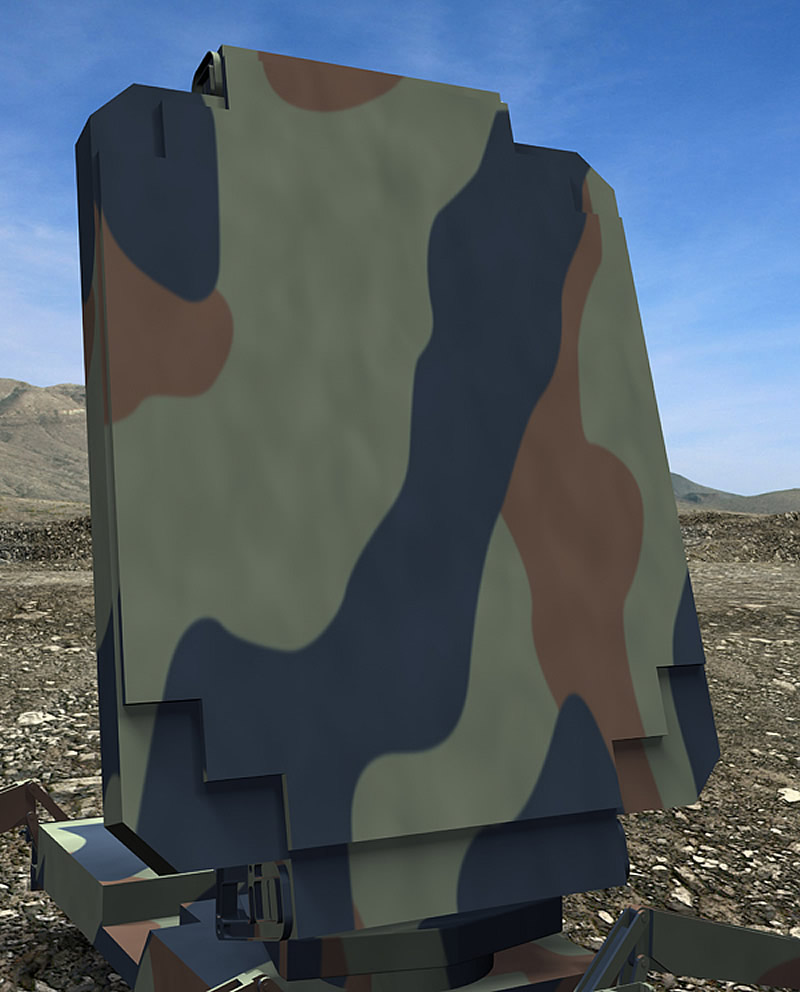
(click to view full)
May 12/09: The US Air Force awards [PDF] a firm-fixed-price $24.9 contract to Lockheed Martin in Liverpool, NY to provide radar engineering and design support to the government during the technology development phase of 3DELRR program. The Lockheed Martin team includes BAE Systems, Computer Sciences Corp., and ManTech. At this time, $9.9 million has been obligated (FA8722-09-C-0003). See also Lockheed Martin release.
May 12/09: The US Air Force awards [PDF] a $21.9 million firm-fixed-price contract to Sensis Corp. in East Syracuse NY to provide radar engineering and design support to the government during the technology development phase of 3DELRR program. The Sensis team includes Raytheon and Moog. At this time, $9.9 million has been obligated (FA8722-09-C-0001). See also: Sensis news release.
TD contracts
Additional Readings
Readers with corrections, comments, or information to contribute are encouraged to contact DID’s Founding Editor, Joe Katzman. We understand the industry – you will only be publicly recognized if you tell us that it’s OK to do so.
* US FBO.gov (Oct 29/09, #R2278) – Three-Dimensional Expeditionary Long-Range Radar. Very long-running solicitation, last update was March 2013. See esp. the March 2012 Industry Day slide presentation [PDF].
* USAF Electronic Systems Center – Three-Dimensional Expeditionary Long-Range Radar [dead link].
* GlobalSecurity.org – Three-Dimensional Expeditionary Long-Range Radar.
* Lockheed Martin – Three Dimensional Expeditionary Long-Range Radar (3DELRR).
* Northrop Grumman – Three-Dimensional Long-Range Radar (3DELRR) See also this 2012 snapshot re: G/ATOR for 3DELRR.
* Raytheon – Three-Dimensional Expeditionary Long-Range Radar (3DELRR).
* Microwave Journal (July 2009) – Lockheed Martin to Develop Long-range Radar for US Air Force.