

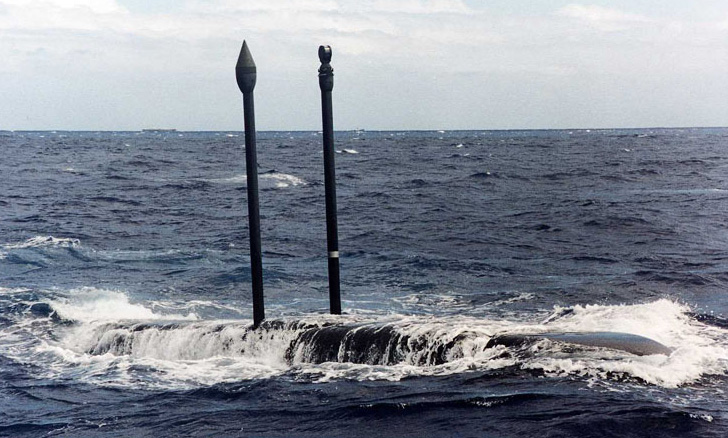
(click to view full)
Northrop Grumman’s ASDS “Advanced SEAL Delivery System” aimed to build mini-subs as successors to the current SDV (SEAL/Swimmer Delivery Vehicle). It began with great promise. The SDVs, carried on US modified Benjamin Franklin Class [SSBN-640] special warfare submarines, as well as new Ohio Class SSGNs, were old – and cold. ASDS would offer a modern, dry alternative, with advanced sensors besides.
In the end, however, technical and reliability issues proved insuperable. The program spiraled out of control, with cost overruns of 400+%. In its place, a less ambitious SWCS replacement program is beginning to take shape, even as the private sector begins to step in with options of its own. This DID FOCUS article chronicles the ASDS program’s history, its designated successors, and emerging privately-funded alternatives.
What’s Next? The SWCS/JMMS

(click to view full)
A US SOCOM solicitation explains the problem with the current SEAL Delivery Vehicle:
“The MK 8 MOD 1 SEAL Delivery Vehicle (SDV) is approaching the end of its service life. The system was originally designed around a standard 1553 data bus, making upgrades and replacements no longer cost effective due to obsolescence. In some cases, increased capability may be available but the lack of an open architecture prevents cost effective upgrade of the systems.”
In its place, the ASDS combatant submersible was intended to provide a one-atmosphere (that is, pressurized to sea level/outside), dry environment for SOF personnel. Unlike the SDV, which is flooded and requires SCUBA gear, the 16 Navy SEALs, MARSOC, or other covert action personnel in an ASDS can arrive at their mission drier, warmer, and less fatigued [1].
The sinking of the ASDS program, and ASDS-1’s subsequent destruction in a pierside fire, ended that initial attempt.
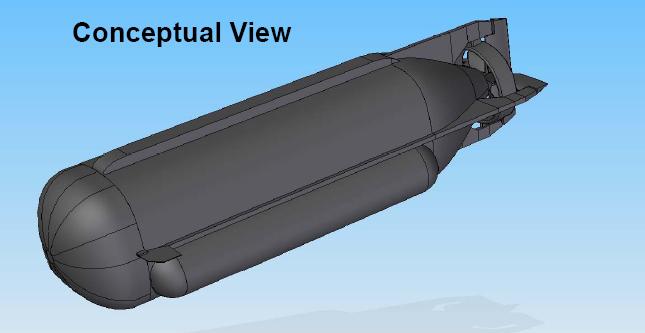
(click to view full)
US SOCOM’s SDV’s still need replacement, however, and Britain’s Special Boat Service commandos have the same problem. British media reports indicate that the follow-on program will be undertaken in partnership with Britain, but this is disputed by some American sources.
The replacement Shallow Water Combat Submersible (SWCS) vehicle is reportedly envisioned as a heavily updated system that will share the SDV’s “wet” mode of operation. From US FedBizOpps solicitations:
“The SWCS will require development of an IBS with an open architecture, a power and signal distribution system capable of integrating various electronic systems and sensors, and the capability to display operational data to the vehicle pilot and navigator… the SWCS shall have a modular subsystem design conducive to accommodating upgrades to processors and sensors. Operating in a free-flooding “wet” vehicle, the SWCS passengers and crew transit for extended durations (i.e. up to 12 hours) in a wet, variant temperature environment while breathing from SCUBA gear.”
The SWCS will also carry passive sonar, the ability to sense electromagnetic energies like radars, a navigation system with INS/ secure GPS capability, secure wireless underwater communication links, and the ability to operate down to at least down to 190-300 feet undersea.
FY 2010 Pentagon budget documents also refer to a Joint Multi-Mission submersible (JMMS) program. The Pentagon is asking for $43.4 million to begin the analysis and technology development phase.
JMMS is envisioned as a possible ASDS replacement, albeit in a smaller 30 vehicle that carries 6, instead of a 65 foot long vehicle that carries 8-14. Like ASDS, it would be a “dry” vehicle, with a longer range than SWCS. At present, JMMS is just a $43.4 million funding request for studies that would help the Navy understand its options better.
Meanwhile, the private sector may be about to race to the rescue. A Hawaiian company named Submergence Group LLC has designed its own S301 platform, which the Pentagon is currently leasing. Others, like Columbia Group’s Proteus, are in the pipeline.
To Davy Jones’ Locker & Back: Contracts and Key Events

(click to view larger)
Under the Phase One Critical Item Development (CID) Contract awarded in October 2010, 2 contractors developed a full-scale interior mockup of the SWCS vehicle, provided hull-form models, and demonstrated the system. Final proposals followed the CID phase, and Teledyne Brown was chosen to continue with this contract. Work will be performed in Huntsville, AL, and EDM is expected to be complete within 24 months from issuance of this delivery order. U.S. Special Operations Command, Program Executive Office-Maritime manages the contract (H92222-11-D-0002). Teledyne Brown Engineering. See also March 26/09 entry.
May 20/11: WIRED Danger Room reports on the Columbia Group’s self-funded Proteus, a 25-foot/ 7.62m long mini-sub with autonomous guidance, 400 pounds of sensor capacity, 3,200 pounds of cargo capacity, the ability to carry up to 1,600 pound weapons on either side, and the ability to use up to 7 tightly-squeezed commandos as cargo/weapon load. It isn’t scheduled to test until summer 2011, near the firm Panama City, FL HQ.
April 30/10: Northrop Grumman in Annapolis, MD received an $8.5 million modification under a previously awarded cost-plus-fixed-fee, indefinite-delivery/ indefinite-quantity contract (N00189-08-D-P002, P00002), exercising option year 2 for engineering and technical services supporting the Advanced SEAL Delivery System planning yard in Kittery, ME. We had thought the ASDS burned down on the docks (q.v. July 24/09 entry), so we asked Northrop Grumman about this. They replied that:
“The damage sustained by ASDS in the fire that you noted was somewhat less than your message suggested. But based on customer guidance, I am not able to elaborate on the work being done…”
Work will be performed in Annapolis, MD (95%), and Pearl Harbor, Hawaii (5%), and is expected to be complete by April 2011. Contract funds will expire before the end of the current fiscal year on Sept 30/10. This contract was not competitively procured by the Fleet and Industrial Supply Center Portsmouth Naval Shipyard Annex in New Hampshire.
Feb 21/10: The Honolulu Advertiser reports on Submergence Group LLC’s S301 dry mini-sub, whose private development was spurred by ASDS’s failure.
The Chester, CT firm developed the 25-foot-long S301 as a technology demonstrator in 2 years, at a cost of about $10 million. The 13-ton minisub can operate to at least 600 feet, has a lock-out for submerged entry, and is powered by lithium ion batteries. While it isn’t tested with submarine dry-deck shelters, the firm says it would fit, and is building a dry deck simulator at Pearl Harbor for underwater testing. The boat is made to civilian standards, however, so tests are conducted with civilian crews.
The 8-man (2 pilot, 6 diver) platform currently resides at Navy SEAL Delivery Vehicle Team One’s facility in Pearl City Peninsula, HI, and seems likely to be leased for another year. In response, Submergence Group LLC’s operations center has moved from Virginia to Pearl City. Honolulu Advertiser | WIRED Danger Room.
Feb 9/10: US FedBizOpps “SUBMERSIBLE-2010” Special Notice:
“The United States Special Operations Command (USSOCOM) Directorate of Procurement intends to negotiate on a sole source basis with Submergence Group, LLC… in accordance with 10 U.S.C. 2304c(1) and FAR 6.302-1. The purpose of this procurement action is for the lease of one operational diver lock-out submersible with the following demonstrated capabilities… The leased submersible will be used by field units for doctrinal, operational, and organizational purposes. The period of the lease is for six months with two – three month option periods, not to exceed one year… Based on results of market survey, Submergence Group’s S301 SDV is the only known submersible meeting the Government’s requirements… The Government intends to award a contract for performance to begin March 1, 2010.”
Aug 17/09: Inside the Navy:
“The Navy and U.S. Special Operations Command will try to take the “body of knowledge” learned from the failed Advanced SEAL Delivery System effort and apply it toward the replacement Joint Multi-Mission Submersible (JMMS), Rear Adm. William Hilarides, program executive officer for submarines, told Inside the Navy earlier this month…”
July 24/09: The U.S. Special Operations Command announces that it will scrap ASDS-1, rather than pay an estimated $237 million for repairs that would take almost 3 years. ASDS’ program budget was $57 million, or about $180 million short. The fire reportedly affected all of the boat’s operating systems, damaging its sonar, motor, controllers, anchor, battery system and hull.
The Navy has yet to decide exactly what they will do with the hulk. Meanwhile, USSOCOM spokesman Lt. Cmdr. Fred Kuebler was quoted in Navy Times as saying that:
“This is a capability that USSOCOM has deemed as a requirement for our special operations forces… Whether that’s an ASDS or a hull to be determined, the whole requirement for long-distance infiltration and exfiltration in a dry environment continues to be a high priority.”
This refers to the JMMS, rather than the “wet” SWCS design. See: Honolulu Advertiser | Gannett’s Navy Times | Virginia Pilot.
June 15/09: US FedBizOpps releases the solicitation related to their proposed SDV/ASDS replacement itself: “H92222-09-R-0032 for Wet Shallow Water Combat Submersible (SWCS). Like the previous solicitation, it is just research regarding the practicality of their requirements.
May 6/09: Son of ASDS? 2010 budget documents refer to the Joint Multi-Mission Submersible (JMMS), which “will provide improved performance over the ASDS and will permit small, highly-trained forces to operate in denied areas increasingly controlled by a sophisticated threat.”
Reports indicate that the effort will be undertaken in partnership with Britain, who wants a Shallow Water Combat Submersible (SWCS) for its SBS commandos. Aviaiton Week Ares | StrategyPage | UK Times Online.
March 26/09: Us FedBizOpps releases a solicitation that appears to be related to an ASDS replacement: “F2VUE0-09-RFI-Integrated Bridge System (IBS) for Wet Shallow Water Combat Submersible (SWCS)”. It includes a list of general performance and capability requirements, but all this is still just a “sense of the possible” RFI, not a proposed contract. FedBizOpps | Big Blue Tech | The Register.
Nov 9/08: Fire! The ASDS’ lithium-ion batteries are being charged on shore at Pearl Harbor NB when a fire erupts, and burns for 6 hours. Media reports say that firefighters sealed the sub to cut off the oxygen supply, while hosing down its exterior to cool hot spots. The ASDS remained reportedly remained sealed for 2 weeks or more before it was opened again.
The cause of the fire remains under investigation, but its burn time leaves little optimism that ASDS-1 will be salvageable. Honolulu Star Bulletin | Military.com | Navy-Seals.com unofficial site | Gannett’s Navy Times.
April 28/08: Northrop Grumman Systems Corp. in Annapolis, MD received a $7.9 million cost-plus-fixed-fee, indefinite-delivery/ indefinite-quantity contract for engineering and technical services supporting the Advanced SEAL Delivery System Planning Yard at Portsmouth Naval Shipyard.
This contract contains 4 one-year options which, if exercised, bring the total estimated value of the contract to $42.7 million. Work will be performed in Annapolis, MD (75%) and Pearl Harbor, HI (25%), and is expected to be complete by April 2009. Contract funds will expire at the end of the current fiscal year. This contract was not competitively procured by the Fleet and Industrial Supply Center Norfolk at Portsmouth Naval Shipyard Annex (N00189-08-D-P002).
March 2008: The ASDS is hosted on the new SSGN USS Michigan [SSGN 727] during Michigan’s Follow-on Test and Evaluation period (FOT&E). Operational evaluation of the submarine with ASDS was the final phase. During the test, the ASDS vehicle was launched and recovered by the USS Michigan across the full range of operational conditions, using the new “universal pylon” attachments. All tests were successful.
The trials are significant, and a step forward, but hosting issues have not been the ASDS’ main problem. NGC release.
May 24/07: The US GAO releases its report on the ASDS program: “Defense Acquisitions: Success of Advanced SEAL Delivery System Hinges on Establishing a Sound Contracting Strategy and Performance Criteria.” It isn’t very complimentary. An excerpt from the abstract:
“The Navy did not effectively oversee the contracts to maintain, repair, and upgrade the ASDS and failed to hold the prime contractor accountable for results. The Navy took responsibility for correcting the boat’s deficiencies while continuing to pay the costs and fees of the prime contractor under cost reimbursable contracts to execute the corrections. Before accepting the boat, the Navy went to sources other than the prime contractor to obtain better designs for the propeller and battery and then paid the prime contractor to install them. When the Navy accepted the ASDS in 2003 in an “as is” condition, it relieved the contractor from having to take any additional actions to correct known problems. Since then, the U.S. Special Operations Command has continued to invest millions of dollars to fix existing problems and address new ones in an attempt to make the boat operational. In making this additional investment, the Navy entered into contracts with the prime contractor that provided little incentive to control costs, authorized work before reaching agreement on the scope and price of the work to be performed, and failed to finalize the terms of the work within required time frames. Meanwhile, the contractor’s performance continued to be poor… A program decision is planned in mid-2008, after the ASDS improvement program and assessment of alternate material solutions are completed.”
July 31/06: Northrop Grumman Electronic Systems (NGES) in Annapolis, MD received an $18.6 million cost-plus-award-fee delivery order to a basic ordering agreement for the ARIP. Under this delivery order, NGES will perform critical system reviews to systematically review the ASDS-1 design in order to support the development of a plan for increasing the availability and reliability of ASDS, analyze supply support alternatives and diminished manufacturing sources, and provide other related support.
Work will be performed in Annapolis, MD (40.9%); Newport News, VA (42.6%); State College, PA (5.6%); West Bethesda, MD (4.5%); Groton, CT (2.6%); Bethpage, NY (0.9%); McLean, VA (0.8%); Rockville, MD (0.4%); Crane, IN (0.4%); Falls Church, VA (0.4%); Charlottesville, VA (0.4%); Torrance, CA (0.4%); and Knoxville, TN (0.1%) and is expected to be complete by May 2007. This contract was not competitively procured by the Naval Sea Systems Command in Washington, DC (N00024-04-G-6202).
April 19/06: “ASDS Mini-Sub Program Goes to Davey Jones’ Locker.” Failure to meet specifications, skyrocketing budgets, and the resulting political pressure have made the ASDS program a one-way mission. The program has been canceled; all that’s left is Kenneth Krieg’s April 6/06 acquisition decision memorandum directed the Navy and SOCOM to establish an ASDS-1 improvement program (ARIP) to boost the performance of the existing sub and complete its operational testing.
Meanwhile, US Special Operations Command (SOCOM), the US Navy, and the Joint Chiefs of Staff will look into alternatives that may fill the required role. A rebid with new designs is possible, but so is an approach that doesn’t involve a mini-sub or, one supposes, a rebuild and modification of existing assets like the older SDVs.
Dec 28/05: $9.5M Engineering Services Contract Includes ASDS Work. The Charles Stark Draper Laboratory in Cambridge, MA, which has been involved in some very high-end US projects, is being brought in to provide engineering and technical services in the areas of system integration, implementation, and management on 3 projects, including ASDS.
Appendix A: DID Op/Ed, December 2005
I’d be inclined to be less tolerant if someone working for me turned in a similar performance, though the switch-in of Newport News may have helped somewhat. While ASDS is admittedly a difficult program, the level and persistence of the difficulties here are concerning. Then, too, ASDS is a critical capability for US maritime Special Forces. Given increasing threats in the littorals and the nature of the current war, ASDS is the kind of resource that could find itself in heavy demand at any time. The program may not have the luxury of indefinite time to fix these problems, therefore, depending on events.
Experience building nuclear submarines per se isn’t always enough. Military mini-subs are a challenging competency all their own and involve a fundamentally different power source. Only a few nations (incl. Russia and Sweden) really have deep expertise to draw on.
Given the record to date, partnership options like Kockums AB – with strong experience in both mini subs and advanced battery/AIP power systems – might at least be something for SOCOM to consider.
Appendix B: The ASDS Program & Mission

(click to view full)
ASDS was designed to provide for rapid lock-out/lock-in of SOF and includes an aft compartment full hyperbaric chamber for the treatment of injured personnel. High-endurance batteries will provide onboard power. The submersible displaces 60 long tons with a beam of 6.75-feet, a height of 8.25-feet, and overall length of 65.2 feet. Propulsion is provided by a 62-horsepower electric motor driving a shrouded rear propeller and two forward and two aft thrusters for fine maneuvering.
ASDS aimed to offer full communications suite connectivity similar to a Los Angeles class submarine; a deployable periscope provides optical sighting and forward-looking sonar helps with mine detection, navigation, and collision avoidance in the littorals. The boat would be crewed by 2 pilots: a submariner in command, and a SEAL co-pilot who is responsible for coordination of mission-specific planning and operations with the embarked SOF unit: Navy SEALs, Marine Corps MARSOC, et. al.
A detailed design and manufacturing development contract was awarded in FY 1994; The SOF Undersea Mobility Program office (PMS399) of the program executive officer for submarines provides for technical, engineering, integration, material, and logistics support for ASDS.
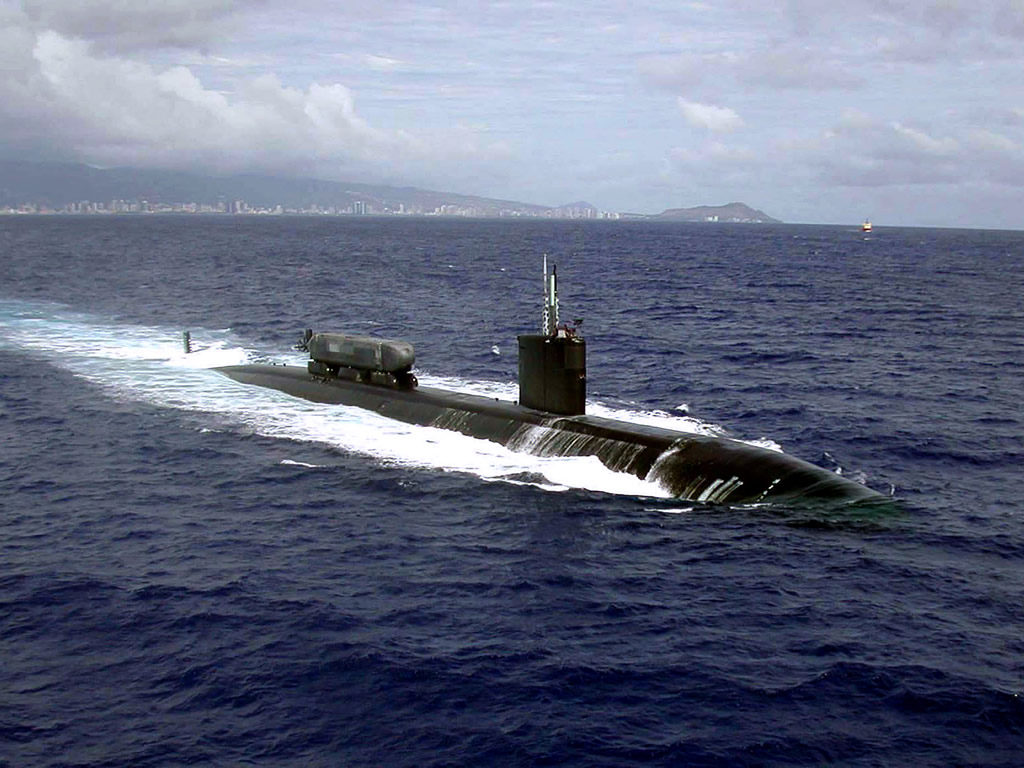
The ASDS was meant to be launched from the converted SSGN Ohio Class Special Ops/Land Strike submarines, and also from Virginia Class (SSN-744) submarines, from the improved Los Angeles Class SSN-688I subs Charlotte [SSN 766] and Greeneville [SSN 772], or from the well decks of amphibious assault ships like the LHD Wasp Class or LPD-17 San Antonio Class. The new mini-sub also fits in a C-17 Globemaster or C-5 Galaxy aircraft for rapid transport to an appropriate launch platform.
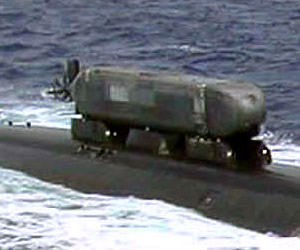
In practice, hosting the ASDS was limited to 2 Los Angeles class submarines – USS Greeneville [SSN 772] and USS Charlotte [SSN 766], using special transport and latching pylons designed specifically for these submarines. The March 2008 trials with USS Michigan used a new set of “universal pylons” from Northrop Grumman that are designed to fit SSN-688 Los Angeles class, SSGN-726 Ohio class and ultimately SSN-774 Virginia class submarines.
Appendix C: ASDS Takes on Water
(click to view full)
In an environment where major cost overruns and late delivery of mission-capable ships have become frequent occurrences for new American shipbuilding efforts, the ASDS program stood out as an especially troubled program.
In December 2005, The Richmond Times-Dispatch noted that the ASDS mini-subs were originally supposed to cost $80 million each, but numerous teething problems with the first boat had ballooned that cost to $446 million. Instead of completing integration and entering service in 2000, testing continued, and the first boat was officially delivered in July 2003.
On a macro level, GlobalSecurity adds that the entire program was initially projected to cost $527 million, but wound up predicted to cost more than $2 billion – significantly more than the $1.4 billion SSGN Tactical Trident nuclear submarine conversion program itself.
Problems with ASDS 1 have included original batteries that did not work as expected, a boat that was noisier than originally planned (hence much more detectable), and excessive vibrations created by subsequent measures taken to muffle the sound. New Lithium-Ion batteries had not been fully tested, and may have ended up being the boat’s doom.
The problems eventually grew to the point that US Special Operation Command stopped further tests on the first boat, delayed the next 2 boats, and re-examined the program as a whole. Funds for the 2nd and 3rd boats were diverted to further development of ASDS 1, under an improvement program called ARIP. All this, 5 years after the class’ planned in-service date, and a decade after development began.
Vice Adm. Eric Olson said, with a fine sense of understatement, that “the boat wasn’t ready from a reliability point of view.”
(click to view larger)
The 2005 Richmond Times-Dispatch article added the surprising revelation that the Northrop Grumman subsidiary holding the construction contract had no experience building submarines, and noted ominously that “a subcontractor built the first hull.”
While Northrop Grumman subsidiary Newport News Shipyard has built over 53 nuclear attack subs over the last 4 decades, they informed DID that they were pulled into the project in a subcontractor role after the ASDS 1 hull was built. They have been working on some design aspects, but could not tell DID who the original subcontractor was.
The problems facing the ASDS program were serious and long-running. Yet SOCOM’s chief acquisition executive Dale Uhler said in December 2005 that they had no intention of re-competing the ASDS contract with Northrop Grumman. “We’re going to go with the team we have.”
Ever since Pirates of the Caribbean II, Davy Jones has been having real trouble keeping his prizes. The advanced SEAL delivery system reliability improvement program (ASDS ARIP) continued to limp along for a couple of years, and hope remained alive in some quarters that enough problems might be sorted out in ARIP to revive the program. In the end, however, ASDS met its demise on shore, in a fire.
Appendix D: Additional Readings and Sources
Platforms
* Submergence Group LLC – S301 SDV Specs
* Special Operations.com – Advanced SEAL Delivery System (ASDS). See also the SEAL Delivery Vehicles page.
* Undersea Warfare Magazine (Winter/Spring 2002) – ASDS: The future of Submarine-based Special Operations. Illustrated some of the training and qualification processes associated with ASDS, including what it takes for a submariner to qualify as an ASDS pilot.
* GlobalSecurity.org – Advanced SEAL Delivery System (ASDS)
* Military.com – SECRET DELIVERY: Advanced SEAL Delivery System (ASDS)
* SpecWarNET – Advanced SEAL Delivery System
* Northrop-Grumman Capitol Source – ASDS
* Internet Wasteland – Navy Seal Submarine. Very good synthesis and summary, incl. key challenges and ASDS stats.
* Northrop-Grumman Newport News Shipyard Home Page
* Kockums AB – Sea Dagger mini-sub
Official Report
* US Government Accountability Office (#GAO-07-745 May 24/07) – Defense Acquisitions: Success of Advanced SEAL Delivery System Hinges on Establishing a Sound Contracting Strategy and Performance Criteria
Related News
* DID (March 7/06) – USA Spending $7.1M to Upgrade SEAL Delivery Vehicles
* US Special Operations Command (Nov 2/05) – Marine Corps to join Special Ops
* US DoD DefenseLINK (Nov 1/05) – Secretary of Defense Approves Marine Special Operations Command
* W. Thomas Smith at ReportingWar.com (Aug 16/05) – Marines, Navy SEALs forge new special operations team. See also his follow-up, Unconventional Marines, which describes MARSOC in more detail.
* DID (Dec 2/05) – $9.5M Engineering Services Contract Includes ASDS Work
* DID (Dec 9/05) – ASDS Woes & Electric Boat Layoffs Leading to Rebidding Pressure
* NavySeals.com (Dec 1/05) – SEAL Sub Program Scaled Back
* Richmond Times-Dispatch (Dec 1/05) – Mini-sub bugs: noisy, shaky and years late
Unconventional Mini-Subs
* Business 2.0 – The Technology Secrets of Cocaine, Inc. US Navy SEALs aren’t the only ones using mini-subs these days. The cocaine barons rely on surface ships instead of converted SSBNs to transport them, and use less sophisticated vessels; nevertheless, it’s an interesting indicator of the current global trend toward dangerous non-state actors with state-level resources. Note that US and British special forces have been used in the past to target the cocaine cartels’ operations.
* StrategyPage (Jan 6/10) – Everyone With Sneaky Needs Does It. “In the last four years, U.S., and other navy and coast guard ships off the coast between Mexico and Colombia, have detected over 150 of these subs. Between 2000 and 2007, only 23 of these boats were spotted. But last year, over 70 were detected or captured… Many of the captures are the result of intelligence information at the source, not air and naval patrols… It’s estimated that about 75 of these subs are being built in northwest Colombia each year, and sent on one way trips north. Each of these boats carries a four man crew and about seven tons of cocaine (worth nearly $200 million on the street).”
* The Economist (May 1/08) – Waving, not drowning. Documents the growth of mini-submersibles in maritime smuggling.
* WIRED Danger Room (Nov 12/07) – Colombia’s Cocaine Subs. They’re built by FARC, and they’re becoming increasingly sophisticated. LA Times: “Over the last two years, Colombian authorities and the U.S. Coast Guard and Navy have seized 13 submarine-like vessels outfitted for drug running.”
Footnotes:
fn1. Water conducts heat away from your body about 25 times more efficiently than air. Unless you’ve done some SCUBA diving, it’s hard to explain just how cold one can get after prolonged exposure to “warm” water, and how much this takes out of you. I’ll try with an example, however: the average person can walk around in 75F/23C degree weather wearing shorts, without discomfort, more or less indefinitely. The average person will be shivering continuously after about 20-30 minutes immersed in 75F/23C degree water. Indeed, people in BUDS (SEAL training) have opined that the extended wet/cold factor is what washes out more aspiring SEALs than anything else. A wetsuit can extend one’s viable time immersed in water, but it cannot entirely cancel the cooling effect, and there is still a large drain on the body’s energy levels from trying to keep itself warm.
If you’re a diver, here are some tips on staying warm underwater. [return to article]