


(click to view full)
At the end of September 2010, the USAF dropped something of a bombshell. Under their $2.3 billion Advanced Targeting Pod – Sensor Enhancement (ATP-SE) contract, the service that had begun standardizing on one future surveillance and targeting pod type decided to change course, and split its buys.
This decision is a huge breakthrough for Northrop Grumman, whose LITENING pod had lost the USAF’s initial 2001 Advanced Targeting Pod competition. As a result of that competition, the USAF’s buys had shifted from LITENING to Sniper pods, and Lockheed Martin’s Sniper became the pod of choice for integration onto new USAF platforms. Since then, both of these pods have chalked up procurement wins around the world, and both manufacturers kept improving their products. That continued competition would eventually change the landscape once again.
In January 2015, Rafael announced that their upcoming upgrade that they call G-4 Advanced outside the U.S., and “G-5” for the Americans will have air-to-air targeting capabilities.
In addition to more diverse targeting, the pods are said to feature inter-asset communications and sensor sharing capabilities – in essence some of the whiz-bang features touted in the F-35 platform that is supposed to push the F/A-18 into obsolescence.
ATP-SE: Evolution in Action

over Afghanistan
(click to view full)
In Desert Storm, aircraft using precision weapons typically used just 2 bombs to destroy targets which would have required 9,000 bombs in World War II, and 300 in Vietnam. The targeting pods used in Desert Storm were expensive single purpose systems, however, which required multiple pods to perform various missions. The Laser Infrared Targeting and Navigating (LITENING) pod changed that in 1992, combining multiple sensors for maximum flexibility in a single pod, at comparatively low cost.
That combination made LITENING popular, and a partnership between RAFAEL and Northrop Grumman extended its reach. Between the 2 firms, LITENING was sold to customers around the world, including the US military. Other pods eventually followed in its footsteps: Raytheon’s ATFLIR became the F/A-18E/F Super Hornet’s designated pod within the US Navy, and Lockheed Martin took a big step forward when its Sniper/Pantera pod won the USAF’s 2001 competition. Then all targeting pods took a big step forward after the 9/11 attacks, as they proved their effectiveness so well that troops and air forces alike began clamoring for more. For older fighters, an advanced surveillance and targeting pod became the ultimate accessory. For newer fighter designs, targeting pods’ fast improvements and quick-change modularity have made them a standard fixture.
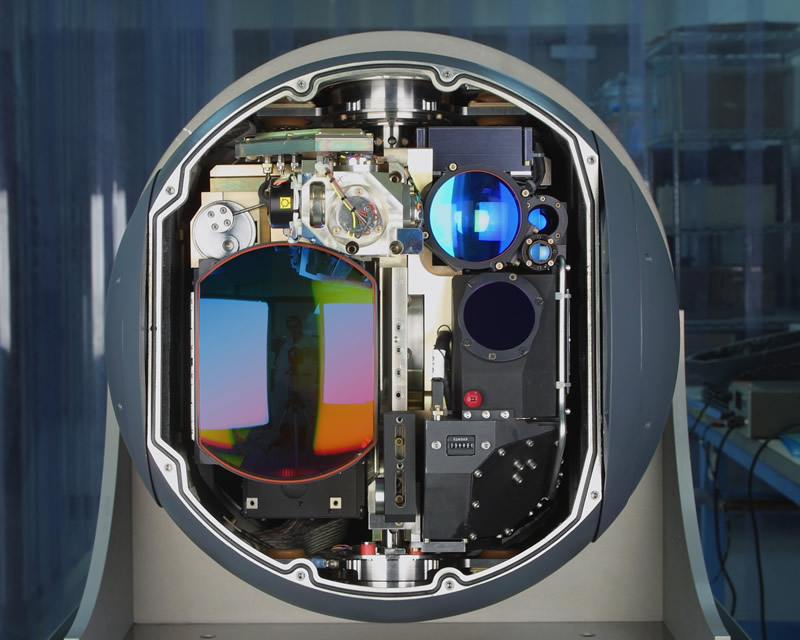
At the moment, core sensors on modern pods include a day camera, thermal imaging, laser rangefinding, laser designator, laser spot detection, inertial navigation, and GPS geolocation. This integrated array enables a pilot to effectively detect, recognize, identify, track and engage ground targets in day, night and under adverse weather conditions. Modern pods are so good that they’ve been used to watch individual people enter or exit a building.
(click to view full)
While the USAF was progressively standardizing on the AN/AAQ-33 Sniper, the Air Force Reserve and Air National Guard continued to be steady AN/AAQ-28 LITENING AT customers, alongside the US Marines. Northrop Grumman’s approach of steady improvement gave them an opportunity to show those customers the new G4 pod they had been developing. Interest apparently spread to the USAF, as they were brought into flight testing by US Air Force Reserve Command.
With the 2001 ATP contract expiring in 2009, the USAF decided to compete the follow-on order. Work on an RFP that could result in a new competitive landscape for targeting pods began in April 2008. The USAF hasn’t discussed its motives publicly, but new technological developments were given added impetus by the acquisition reforms that surfaced in December 2008. These aimed to institutionalize more competition for ongoing contracts, and the ATP-SE framework fits that mold.
By August 2009 the USAF had issued a draft RFP, with the formal ATP-SE RFP issued in January 2010. The split order was issued in September 2010.
Note that these pods’ modular construction means that existing LITENING AT pods can be upgraded to G4/SE status, and existing Sniper ATPs can be enhanced to the SE configuration. The Air Force’s ATP-SE contract doesn’t include upgrade kits at this point, however, just complete pods. The US military appears to have chosen to buy SE configuration upgrade kits under other contracts (vid Aug 29/09, Nov 7/11 entries) instead, and could modify its ATP-SE umbrella contract if it wished.
ATP-SE: The Competitors
Raytheon’s ATFLIR is only integrated with Boeing’s F/A-18 E/F Super Hornet, and foreign options like the Damocles pod by France’s Thales suffer from the same integration limitations. That left only 2 realistic contenders for the USAF’s ATP-SE.
Lockheed Martin’s Aerial Sniper

(click to view full)
Lockheed Martin’s AN/AAQ-33 Sniper ATP was designed to be a major step-change from the firm’s twin-pod LANTIRN systems, making use of a low radar signature profile and an advanced array of sensors and electronics, in order to offer longer range detection and identification. It also has an important time and money-saving feature: a sort of universal interface, which self-detects the plane type it’s on and automatically load the appropriate Operational Flight Program. It’s a simple change that saves a lot of money on testing and re-certiciation, as shown by the structure of the respective ATP-SE contracts.
Sniper ATP has also won competitions on straight performance. The British, for instance, explicitly cited the pod’s stand off detection and identification ranges as the reason they chose to equip their Harriers with Sniper pods for Afghan missions, rather than buy more of the LITENING-III pods that already equipped their Tornado and Eurofighter jets.
Key changes to the ATP-SE competition’s Sniper pods include new sensors (1k FLIR, HDTV), an evolution of the 2-way Compact Multi-Band Datalink (CMDL) that’s compatible with ROVER 3-5 per USAF requirements, and “automated capabilities” (all they’re allowed to say) to help the pilot perform ISR missions with less workload. Under the USAF’s NET-T Quick Reaction Capability contract, a point-to-multipoint data link architecture can provide an extended range “beyond line-of-sight” capability with the right positioning or infrastructure.
The USAF’s 2001 selection made Sniper a safe choice for international buys, and the LITENING pod’s Israeli origins has opened doors for Lockheed Martin in a number of Islamic countries. Sniper is currently integrated on the A-10A+/C, F-16 Block 25+ aircraft, F-15E/K/S/SG Strike Eagles, F/A-18A-D Hornets, and the B-52H and B-1B bombers. They were integrated with Harrier II GR7/9s, before Britain sold its fleet to the USMC for use as spare parts. Britain didn’t sell its Sniper pods, though, and Lockheed Martin says they’ve done some work on the Tornado GR4 (flight tests, but not operational yet), and on the Eurofighter Typhoon in cooperation with BAE.
As of June 2012, Sniper customers include the USAF (A-10C, F-15E, F-16, B-1B, B-52H), Belgium (F-16 MLU), Britain (Harrier GR7/9, all now sold to the USMC), Canada (“CF-18” F/A-18 AM/BM), Egypt (F-16), Morocco (F-16), Norway (F-16), Oman (F-16), Pakistan (F-16), Poland (F-16), Saudi Arabia (F-15S), South Korea (F-15K, phase 2 buy from earlier LANTIRN pod contract), Singapore (F-15SG, F-16s), and Turkey (F-16).
Northrop Grumman: LITENING in a Pod

(click to view full)
Northrop Grumman representatives informed DID that their pod will be an enhanced “LITENING SE” variant of their new LITENING G4, which has demonstrated both air-ground and air-air capabilities in testing. LITENING SE changes include an all-digital 1024 x 1024 pixel forward-looking infrared sensor (compared to the AT’s 640 x 512 pixel system); a similar 1K charge-coupled device TV sensor for daytime imaging; a Laser Target Imaging Program imaging system providing improved target recognition across a wide range of conditions; and a “plug and play” data link system that enables them to accept a variety of data links without further modifications to the pod or aircraft. Among other things, PNP-III (Plug N Play 3) is aligned with the ROVER 5 standard for 2-way transmissions with ground forces.
Northrop Grumman has sold its AN/AAQ-28 LITENING pods to a number of customers, for use on a number of different aircraft types. When looking at global coverage and customer bases, however, it’s important to note that Northrop Grumman is only 1 of 2 firms producing LITENING pods. Israel’s RAFAEL invented the LITENING, and has pursued parallel development and sales of their own LITENING I/II/III/EF models within the framework of their formal agreement with Northrop Grumman. At present, however, G4/SE technology is proprietary to Northrop Grumman, who is working on export clearances but hasn’t yet received them.
Overall, platforms known to have integrated at least one LITENING pod variant to at least the tested level include the AV-8B Harrier II, EA-6B Prowler, F-4E/F Phantom, F-5E variants, F-15E Strike Eagle, F-16 Block 15+, F/A-18 Hornet, F/A-18 E/F Super Hornet, JAS-39 A-D Gripen, MiG-21, Sukhoi/HAL SU-30MKI, Tornado, Eurofighter Typhoon, HC-130H Hercules, and B-52H. There are also reports of Jaguar IM, Mirage 2000 (reportedly used during the 1999 Kargil War), and/or MiG-27 integration work in India; and photos of Brazilian A-1/AMX and Colombian Kfir C10 fighters with LITENING pods.


w. LITENING AT
(click to view full)
In terms of Northrop Grumman’s sales, Israel flies a handful of older LITENING ER models on some of its F-16s. The US military’s pods are all at least LITENING AT standard, even those that began life as LITENING-IIs or LITENING ERs. They’re complemented by a handful of even more advanced LITENING G4s, and Northrop Grumman’s pods serve with the USAF, AFRC, US ANG, and USMC on A-10A/C, AV-8B, EA-6B, F-16 Block 30+, F/A-18 C/D, F-15E, and B-52H aircraft. The A-10Cs, B-52s, F-15Es, and F-16s are all slated to become compatible with the new G4s.
Northrop Grumman LITENING AT pods also serve with the Italian (AV-8B Harrier II), and Spanish (AV-8B) navies. The LITENING AT Block 2 pod, which is somewhere between the AT and G4, serves with Australia (F/A-18 Hornet HUG), Finland (F/A-18 C/D), the Netherlands (F-16 MLU), and Portugal (F-16 A/B Block 15 and F-16AM MLU). In 2012, Denmark added itself to the customer list, buying G4 pods for its F-16 MLUs.
By the time the ATP-SE contract was issued, the US military already had about 10-30 LITENING G4 pods in the field, from about 50 ordered in 2009 by the USMC/ US ANG/ USAF Reserves under existing contract vehicles (see section below). That lot of pods was slated to finish delivery in 2011, and did so.
The Israelis are notoriously tight lipped about their customers, but known sales from RAFAEL have occurred to the IAF (F-16s), as well as exports to Britain (Eurofighter, Tornado GR4), Germany (Eurofighter, Tornado IDS, possibly F-4F); and Greece (“Peace Icarus 2000” F-4E AUPs). There have also been reports of sales to Brazil (F-5BR), Chile (F-16); Colombia (Kfir C10), India (slated for Tejas LCA, on Mirage 2000, SU-30, others), Hungary (JAS-39), Singapore (F-16), South Africa (JAS-39, via Zeiss), Sweden (JAS-39), Romania (MiG-21 Lancer), Turkey (F-16, F-4E 2020), and Venezuela (F-16), among others.
Contracts & Key Events: ATP-SE
FY 2013-2019
(click to view full)
June 13/19: Upgrades Rafael together with IAI’s Elta Systems will upgrade the Litening 5 and Reccelite XR all-weather stand-off airborne electro-optic targeting pods with a synthetic aperture radar imagery intelligence payload, Jane’s reports. The Litening 5 is a high-resolution multi-sensor targeting pod, incorporating an upgraded 1.2K x 1.2K large aperture forward-looking mid-wave infrared and a short-wave infrared. In addition to more diverse targeting, the pods are said to feature inter-asset communications and sensor sharing capabilities. The fifth generation of the targeting pod is now capable of targeting from long range, enabling strike aircraft to employ guided weapons from standoff range without relying on external support. Litening 5 employs a new sensor package, utilizing an optical assembly and larger aperture tailored specifically for the new sensors, enabling the increased identification and recognition distance. Reccelite XR is a multi-spectral, multi-role, real-time standoff reconnaissance system that consists of an airborne pod, a wide digital datalink and a ground exploitation station. Similar to the Litening 5, Reccelite XR received an enhanced sensor package comprising megapixel-size arrays of near-infrared, mid-wave infrared, color sensors and short-wave infrared.
December 26/18: LITENING work Northrop Grumman is being contracted to support the US Air Force. The $1.3 billion IDIQ contract covers sustainment, modernization and development efforts of the LITENING advanced targeting pod. Designed to improve both day and night attack capabilities, AN/AAQ-28 pods provide pilots with advanced image processing for target identification and coordinate generation, a forward-looking infrared (FLIR) sensor, charge-coupled device television (CCD-TV) sensors, a laser spot tracker/ range finder, and infrared laser marker/ designators. It is fully operational 24 hours a day and in adverse weather conditions. Work will be performed at Northrop Grumman’s factory in Rolling Meadows, Illinois and is expected to be completed by the end of 2023.
March 16/17: Denmark has placed an order with Northrop Grumman to provide additional LITENING advanced targeting pods for their F-16s. First delivered in 2013, Denmark was the first international buyer of the LITENING G4 pod, and they are now looking to expand the use of the pod within the Royal Danish Air Force. Technologies found on the fourth generation pod include digital, high definition video, 1K forward-looking infrared and charge-coupled device sensors, laser imaging sensors and advanced data links. These advances deliver more accurate target identification and location at longer ranges than previous targeting pod systems, while also reducing pilot workload. It has been integrated on the A-10, AV-8B, B-52, C-130, F-15, F-16 and F/A-18.
October 9/15: Integration testing is underway to install a LITENING targeting pod onto the B-52H bomber, with ground laser testing recently taking place at Edwards AFB. The testing stems from calls by B-52H aircrews for additional targeting capability, with the LITENING pod using infrared and TV imagery along with three lasers to provide enhanced designation for weapon systems. The testing is due to move into flight testing next year.
September 22/15: Airbus Defence & Space is marketing the Rafael Advanced Defense Systems Litening 5 targeting pod as an option for future Eurofighter Typhoon customers. The pod will be installed on a company aircraft to demonstrate the improved capability. The system is reported to have already been purchased by a European Eurofighter operator. The Litening 5 was unveiled at the Paris Air Show earlier this year and uses two FLIR systems and a CCD HD-TV camera to improve target acquisition at long ranges. The pod is expected to becoming operational by the end of next year.
June 19/15: Lockheed Martin has been contracted to supply ten Sniper Advanced Targeting Pods to the Royal Jordanian Air Force, with the country currently engaged in airstrikes against Daesh in Iraq and Syria. The company was awarded a $485 million contract by the US Air Force in March, with a portion of this allocated for Foreign Military Sales. Jordan become the sixteenth Sniper ATP customer in 2013.
March 30/15:Lockheed Martin was awarded a $485 million IDIQ contract Friday for advanced targeting pods, a portion of which are earmarked for FMS. The Sniper pod is operational on the F-15, F-16, F-18, B-1, B-52 and A-10 platforms. Singapore, Saudi Arabia, Pakistan, Canada, the UK and Belgium are previous export customers. A separate $8.9 million contract will also see Lockheed provide the Jordanian Air Force with 10 of the targeting pods, through the UK as a third party.
Jan 15/15: In January 2015, Rafael announced that their upcoming upgrade that they call G-4 Advanced outside the U.S., and “G-5” for the Americans will have air-to-air targeting capabilities.
Jan 18/13: Net-T. The USAF is testing a wireless router addition to ATP-SE pods called Net-T, which would work in the background and help troops on the ground communicate with each other. ROVER systems already allow communications with the aircraft, and Net-T works with ROVER 5 to share voice, real-time information videos, images, maps, coordinates, or any other file type, without having to resort to satellite links and their scarce bandwidth. That’s very helpful in urban environments, mountains, dense vegetation, etc., where troops have a clear path to an aircraft, but don’t have line of sight to each other.
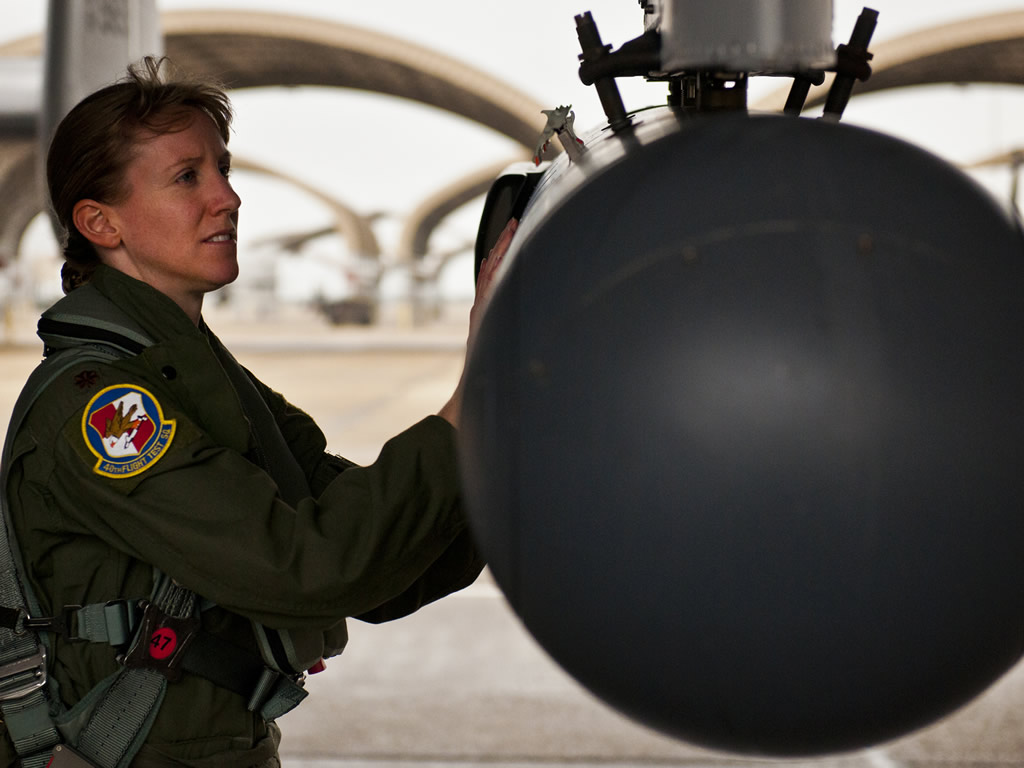
This high priority developmental test began in October 2012 with the A-10Cs, F-16s, and F-15Es of the 40th Flight Test Squadron, along with some visiting B-1 bombers. Beyond testing key metrics like effective distances, bandwidth, etc., they wanted to be sure Net-T wouldn’t interfere with the LITENING and Sniper pods’ other functions: day/night surveillance, laser illumination and tracking, automatic target searching and tracking, and automated target reconnaissance. Fortunately, once the frequencies and data rates are configured, it’s just a 1-button push for the pilot to initiate transmit-in-Net-T mode.
The goal is to send the testing report to the USAF’s Precision Attack Systems Program Office at Wright Patterson AFB, OH by February 2013, to be followed by operational testing with the 53rd Wing – and hopefully by fielding on ATP-SEs in February 2014. Eglin AFB.
Jan 16/13: Sniper. Lockheed Martin announces USAF approval to begin full-rate production of the Sniper-SE. At this point, Sniper-SE remains the only ATP-SE pod that’s integrated and operational on the F-15E Strike Eagle, and B-1 and B-52 bombers.
Sniper FRP
Nov 12/12: LITENING. Northrop Grumman Corporation announces a $71.5 million order from the USAF to begin full-rate production of LITENING SE advanced targeting pods and spares, under the ATP-SE program.
LITENING FRP
FY 2010 – 2012
ATP-SE award. Litening G4 for F-16s.

(click to view full)
Feb 13/12: LITENING. Northrop Grumman Corporation announces 2 follow-on Low Rate Initial Production delivery orders totaling a combined $66 million, to provide additional LITENING SEs. The orders were made under the Sept 30/10 contract.
Oct 24/11: LITENING. Northrop Grumman announces that the US Air National Guard Air Force Reserve Command Test Center (AATC) has recommended full fielding for LITENING G4 Advanced Targeting Pods on its F-16 C/D Block 25/30/32 aircraft, after a successful operational utility evaluation (OUE).
This is one of the plane sets mentioned in Northrop Grumman’s Sept 30/10 order, which included funds for testing and OUE. The pods, on the other hand, stem from the Oct 1/09 award noted in the “ATP-SE Lead Ins” section.
During the September 2010 – May 2011 OUE, LITENING G4 pods flew 530 sorties and accumulated more than 825 flight hours. According to the fielding recommendation issued by AATC to Air Combat Command:
“LITENING G4 provides a significant improvement in F-16 Block 30 mission area execution over baseline targeting pods. The addition of a short wave infrared sensor provides a unique capability to capture images in shadows where FLIR(Forward Looking InfraRed) or CCD [regular cameras] were ineffective.”
G4 OK for F-16s
Oct 18/10: LITENING. At a special event attended by senior members of Israel’s defense establishment, customers, and representatives of foreign militaries and airforces, Rafael Advanced Defense Systems Ltd. marked the sale of the 1,000th Litening Pod, including all partner sales. The event also included RAFAEL business partners Northrop Grumman from the USA, British firm Ultra Electronics, and Germany’s ZEISS.
According to Northrop Grumman sources, by early October 2010 they had total orders for 611 pods, and had delivered 523.
The RAFAEL release adds that “Litening pods have been procured by 26 countries. Litening pods have compiled, totally, more than a million flight hours.” Note that if all countries listed above as possible LITENING customers are included, it only adds up to 22. DID is certain of Northrop Grumman’s sales, but not of RAFAEL’s.

(click to view full)
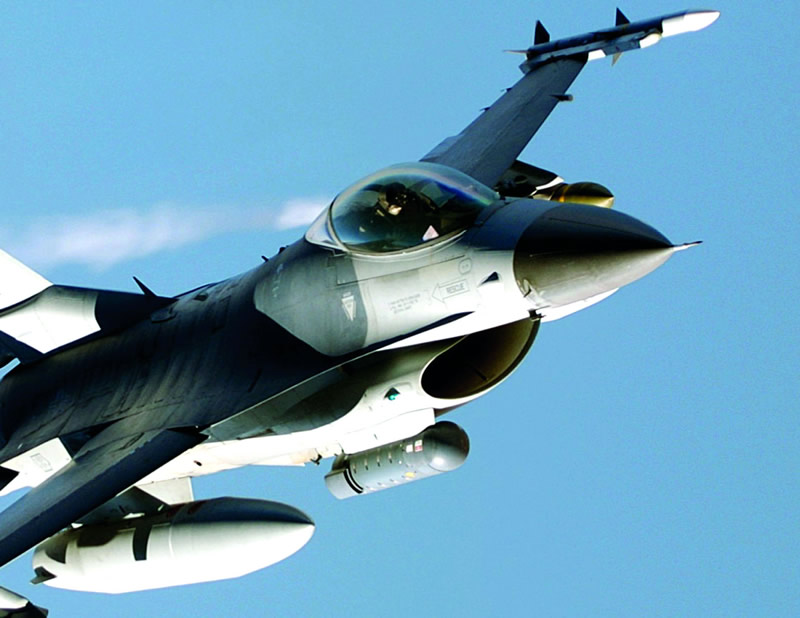
Sept 30/10: Lockheed Martin Corp. in Orlando, FL (FA8626-10-D-2133) and Northrop Grumman Systems Corp. in Meadows, IL (FA8626-10-D-2132) will split a $2.3 billion contract to provide new advanced targeting pods and associated support equipment, spares and product support. At this time, $23.7 million has been committed to Northrop, and $23.5 million has been committed to Lockheed Martin, in order to provide test pods for the government. The ASC/WNQK at Wright-Patterson AFB, OH manages this contracts.
Lockheed Martin later announces that the USAF has picked its Sniper ATP as the winner of the 60% share of its Advanced Targeting Pod-Sensor Enhancement (ATP-SE) competition.
Under the terms of this contract, Lockheed Martin says that the Government has options to buy up to 670 pods through 2017, with Lockheed Martin’s share of the program totaling more than $1 billion. Asked which platforms were covered in testing, Lockheed Martin personnel said that no additional per-platform testing was needed, just general performance testing.
(click to view full)
Northrop Grumman later announces that if the government exercises all of their options, the firm’s LITENING SE would pick up approximately $920 million in orders for up to 670 pods through 2017. The USAF’s initial order encompasses flight testing of the targeting systems on Air National Guard and Air Force Reserve F-16 Blocks 25/30/32, USAF F-16 Blocks 40/50, and A-10C aircraft, and the firm says this represents potential orders for as many as 250 targeting pods plus spares, training and logistics support. If the USAF wants to add additional platforms qualified for LITENING-SE, additional testing contracts will be required.
Northrop Grumman representatives tell DID that they can produce about 8-9 LITENING pods per month at the moment, but production is expected to rise to 12+ per month if budgets and orders under ATP-SE require it. They expect ATP-SE Production Lots 1 & 2 to finish delivery by early 2012.
ATP-SE award
Contracts & Key Events: ATP-SE Lead-Ins
FY 2011 – 2012
(click to view full)
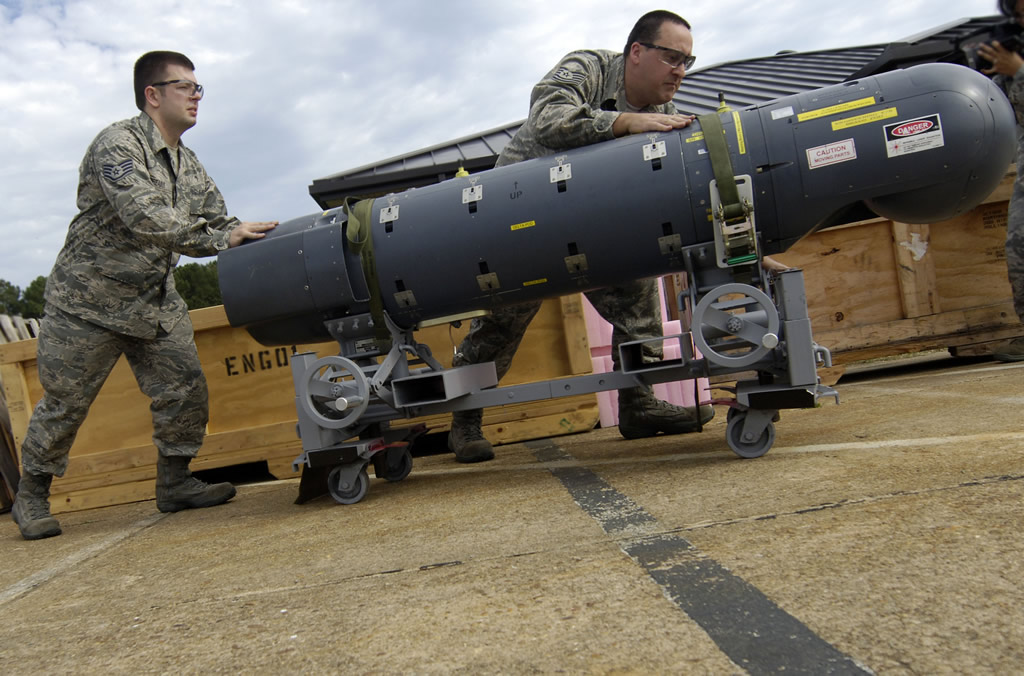
May 14/12: Northrop Grumman announces a $103 million delivery order from US Naval Air Systems Command, to equip the USMC’s aircraft with LITENING G4 pods. They’ll also provide G4 upgrade kits and spares to the US Air National Guard, to bring their earlier-model LITENING pods to the G4 configuration.
Northrop Grumman says that they’ve delivered more than 200 LITENING G4 systems so far, adding that all of its LITENING pods put together have achieved over 1.5 million flight hours.
June 19/15: Lockheed Martin has been contracted to supply ten Sniper Advanced Targeting Pods to the Royal Jordanian Air Force, with the country currently engaged in airstrikes against Daesh in Iraq and Syria. The company was awarded a $485 million contract by the US Air Force in March, with a portion of this allocated for Foreign Military Sales. Jordan become the sixteenth Sniper ATP customer in 2013.
March 13/12: LITENING G4 #100. Northrop Grumman announces the delivery of the 100th LITENING G4 targeting pod to meet a combination of USAF Lot 1/2 and US Marine Corps Lot 2/3/4 LITENING G4 production contracts. USAF Lot 2 will include the first LITENING-SEs.
Feb 6/12: LITENING G4 in combat. Northrop Grumman announces that its LITENING G4 has embarked on its first combat deployment, aboard US Air National Guard A-10Cs, and F-16C/D Block 30 aircraft. The pods will be used in Afghanistan.
Dec 5/11: LITENING. Northrop Grumman Systems Corp. in Rolling Meadows, IL receives a $690.1 million firm-fixed-price, fixed-price-incentive-firm, cost-plus-fixed-fee, cost-plus-incentive-firm, time-and-materials LITENING Targeting Pod System post-production support contract, which will run until Sept 18/18. It will:
“…address supply requirements centered on hardware and software upgrades and associated host platform integration, initial spares, technical manual and technical orders, repair data, studies, spares recapitalization and support for the standup of organic depot repair requirements for the sustainment of the legacy LITENING pod fleet.”
Queries to Northrop Grumman and the USAF established that this contract doesn’t cover support for LITENING-SE pods as the USAF takes delivery. It covers existing LITENING AT/G4 stocks, including integration and certification of the new LITENING G4s with US ANG F-16C/D Block 30-50s, USAF active duty F-16C/D Block 40-50s, F-15E Strike Eagles, the A-10C close-support plane, and the B-52H heavy bomber. The USAF also confirmed that the contract may fund upgrades of existing pods to the LITENING-SE standard. This was a sole-source acquisition by the ASC/WNQK at Wright-Patterson AFB, OH (FA8626-12-D-2137). See also Northrop Grumman’s mid-March 2012 release.
LITENING support & upgrades
Nov 7/11: Sniper. Lockheed Martin Missiles and Fire Control in Orlando, FL receives an $841.5 million firm-fixed-price post-production support contract for Sniper targeting pods. Work will include “sensor enhancement on hardware and software upgrades and associated host platform integration, initial spares, technical manual and technical orders, repair data, studies and spares recapitalization, and support the standup of organic depot repair requirements…” The ASC/WNQK at Wright Patterson AFB, OH manages the contract (FA8626-12-D-2138), and when queried, they had this to say:
“The contract will include a five-year base ordering period [to 2016] and two, one-year options [which could extend it to 2018]. This new effort will provide for hardware, software, and associated updates for 375 Sniper targeting pods delivered to Combat Air Forces (CAF) under a prior contract. Updates may include Sniper pod upgrades to the Sniper advanced targeting pod-sensor enhanced (ATP-SE) standard.”
See also Lockheed Martin’s March 2012 release.
Sniper support & upgrades
Oct 19/11: LITENING G4. Northrop Grumman finishes delivering the 1st Lot of 50 LITENING G4s, under the 2009, $227.8 million US ANG contract. Production Lot 2 will begin production of the USAF’s LITENING-SEs, and the USMC’s ordered G4s. Northrop Grumman.
FY 2004 – 2010

(click to view full)
Sept 13/10: Sniper. Lockheed Martin announces a $13 million contract to upgrade the Sniper ATP’s existing data link with an enhanced digital Compact Multi-band Data Link (CMDL), improving secure digital transmission of high definition imagery and metadata at extended ranges. CMDL communicates seamlessly with the fielded ROVER family of ground stations, including ROVER 5.
Lockheed’s final ATP-SE Sniper offering will build on this work, and this CMDL upgrade follows the S3.5 software upgrade of U.S. Air Force and coalition Sniper pods operational on F-16 Block 30/40/50, A-10C, F-15E and B-1 aircraft. The S3.5 added emerging aircraft interfaces to Sniper ATP and provides new capabilities in air-to-air and air-to-surface tracking and designation, selectable ground-stabilized fragmentation circles, unpowered built-in-test data download capability, and video data link metadata and symbology enhancements.
March 10/10: LITENING G4. Northrop Grumman announces that it successfully demonstrated its LITENING pod on the U.S. Navy’s F/A-18E/F Super Hornet at the US Naval Air Warfare Center Weapons Division, China Lake, CA, during a 1.5 hour flight under operationally representative conditions. DID has confirmed from a reliable source that the pod was a LITENING G4.
To this point, the Super Hornet has only been fielded with Raytheon’s ATFLIR surveillance and targeting pods; even LITENING customer Australia picked ATFLIR for its F-18F Super Hornets.
Super Hornet test
Oct 1/09: LITENING G4. Northrop Grumman announces a $153 million contract from the USAF to provide LITENING G4 targeting and sensor systems and related equipment. Under the terms of the agreement, Northrop Grumman will deliver LITENING G4 targeting and sensor pods to the active U.S. Air Force, as well as kits for the Air Force Reserve Command and Air National Guard to upgrade existing LITENING AT pods to the G4 configuration, and additional data links for the Air National Guard and active U.S. Air Force.
This contract modification under an existing agreement marks the first updates of existing Air Force Reserve Command (AFRC) and Air National Guard (ANG) LITENING pods to the G4 configuration, and the first sale to the USAF.
This order turned out to be a big deal, because it was part of the process of re-introducing competition to the USAF. The LITENING G4 sold here also forms the baseline for the company’s USAF Advanced Targeting Pod – Sensor Enhancement product.
LITENING G4 for US ANG/AFRC
Aug 29/10: Expeditionary/ TopLITE. Northrop Grumman Systems in Rolling Meadows, IL receives a $98.7 million ceiling-priced indefinite-delivery/ indefinite quantity contract for the procurement of Expeditionary Litening Pods (LPODs), upgrades to existing pods, and integration of LPODs into AV-8B Harriers (domestic and allied), F/A-18 Hornets (domestic and FMS), EA-6B Prowlers, C-130 Hercules, and Air Force platforms, including related parts and services. In addition, this contract provides for associated engineering and technical support and technical data.
Work will be performed in Rolling Meadows, IL, and is expected to be complete in June 2011. $16.1 million will expire at the end of the current fiscal year. This contract was not competitively procured pursuant to FAR 6.302-1. The Naval Air Systems Command in Patuxent River, MD manages this contract (N00019-09-D-0025).
They’re “Expeditionary” G4s because this is the US Marines and Navy contract, which is separate from USAF orders. With respect to the C-130, LITENING has been integrated on a US Coast Guard C-130 as a demo, but nothing ever came of it. The USMC contract is related to a program called Toplite, a surveillance oriented version of LITENING that’s similar to RAFAEL’s RecceLITE. Northrop Grumman sees this as an opportunity to explore integration on lower-g aircraft by separating the turret out, and moving the backing electronics out of a pod configuration and inside the plane.
LITENING G4 & TopLITE for USMC
Feb 12/04: Sniper Adapter. Lockheed Martin announces a contract to integrate the Sniper XR targeting pod on the A-10 aircraft in support of the A-10 Precision Engagement (PE) Program. The contract award follows a successful demonstration of the Sniper system during the A/OA-10 Precision Engagement upgrade program’s critical design review.
Some existing A-10s do fly with targeting pods, but they’re earlier models of Northrop Grumman’s LITENING pod. The USAF picked Sniper as its future targeting pod in 2001, and the current contract will ensure that Sniper pods work seamlessly with the A-10’s upgraded stores management systems, pilot displays, weapon targeting, etc.
As part of the integration effort, Lockheed Martin Missiles and Fire Control will develop the Pilot Vehicle Interface (PVI), pod Operational Flight Program (OFP) software, and pod interface adapter hardware for the A-10. Upon completion of this effort, the Sniper XR pod will self-detect and automatically load the appropriate Operational Flight Program when installed on either the A-10, F-16 or F-15E airframes. That work would pay dividends for a long time, by ensuring that new versions of the Sniper pod would remain compatible with certified jets. Otherwise, that certification takes months, and costs a lot of money (vid. ATP-SE award).
Additional Readings
* FedBizOpps (began April 2008) – 16–ASC/647 AESS ATP-SE IDIQ Task Order Contract FA8626-10-R-2098. Solicitation PIXS5613.
* Lockheed Martin – Sniper Advanced Targeting Pod. See also Sniper ATP micro-site.
* Northrop Grumman – AN/AAQ-28(V) LITENING Low Risk, Next Generation Targeting Pod
* DID (Nov 27/07) – $18M Prepares Datalinks for Next-Gen LITENING