


(click to view full)
It has been a long road for the Iraqi Air Force. According to Iraqi figures, the IqAF boasted more than 1,000 aircraft before the 1991 Gulf war – and around 300 after it. More than 6 years after Operation Iraqi Freedom began, and 4 years after the first Iraqi Provisional government was formed, the once-mighty IqAF still operates just a handful of mostly-unarmed propeller aircraft and helicopters.
Unarmed aircraft can still offer value, of course. Surveillance is critically important to Iraq, especially surveillance of national infrastructure like telecommunications lines, pipelines, and other facilities. In addition to its Cessna “Bird Dogs” and handful of other light spotter planes, the IqAF is strengthening its fleet with an unlikely star of the Iraq War: Hawker Beechcraft’s propeller-driven King Air.
87 Squadron has begun all-Iraqi operations with the new equipment, but recent articles and announcements illustrate that there’s a lot more to fielding new equipment than just signing the contract.
King of the Air: From C-12 to 350ER-ISR

Oct 22/08 flight
(click to view full)
Iraq has made King Air 350ERs the high end of its aerial surveillance capabilities, with 10 specialty 350ER-ISR variants ordered to date. Another 2 Iraqi King Air 350ERs have been ordered to date for type training, VIP transport, and light cargo duties.
Beechcraft’s smaller King Air 200 series already serves as the basis for the USAF’s C-12 Hurons, which are used to shuttle VIPs and small cargo items. An American variant called the C-12 Horned Owl has been outfitted with the AN/APY-8 Lynx ground-looking radar and electro-optical sensors for long range day and night viewing, and is used by the US Army as part of its highly successful Task Force ODIN effort that combines manned aircraft and UAVs. The King Air 350/350ER is a newer aircraft that has been ordered by the US Marines, and the specialized ISR version was subsequently ordered by the USAF and given the designation “RC-12W Liberty.”
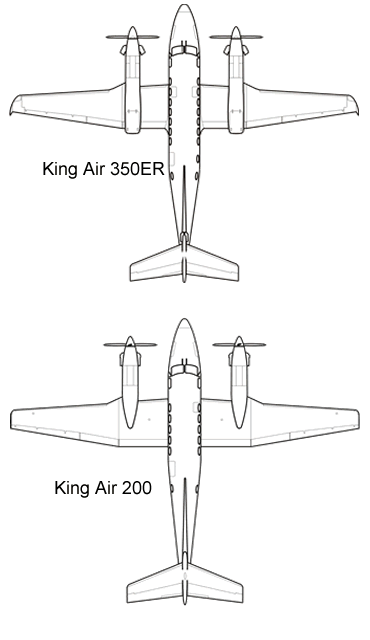
The 350 family is slightly larger than its King Air 200 counterparts, with a longer cabin and a slightly larger wingspan. The 200’s Pratt & Whitney Canada PT6A-52 engine and their 1,610 shp of thrust are replaced by PT6A-60As delivering 2,100 shp. As a result, operating weight and carrying capacity can rise from the 200 series 8,720 lb/ 3,955 kg with a useful load of 3,870 lb/ 1,755 kg, to the 350 series 9,526 lb with a useful load of 5,574 lb. Like other aircraft in their class, King Air 350s can operate on runways as short as 3,300 feet with a full load, and under 2,700 feet with a standard complement. This is very useful for businesses who buy these aircraft for fast, flexible transportation to a wide variety of locales and airfields. It is equally useful in Iraq.
(click to view full)
Aimed specifically at the special mission market, the Beechcraft King Air 350ER has extended endurance thanks to overwing engine nacelle fuel lockers and other modifications. They are able to fly out 100 nautical miles, perform a low altitude surveillance mission for up to 8 hours and fly back 100 nautical miles, and still land with over 45 minutes worth of fuel on board. Range for the 350ER version extends more than 33%, to 2,400 nautical miles.
Larger airframes and heavyweight landing gear allow them it to operate at a maximum gross takeoff weight of 16,500 pounds, vs. 15,000 pounds for a standard Beechcraft King Air 350. The King Air 350ER-ISR can accommodate up to 2 pilots and another 5 operators in its pressurized and heated cabin, with galley and lavatory facilities that can keep the crew alert and refreshed on those long surveillance missions.
The 350ER-ISRs (MC-12Ws, in USAF parlance) have a in-class conversion that gives them 360 degree radar surveillance capability, but the radar can also be removed without impairing the plane’s commercial value. The integrated sensor suite includes an MX-15 surveillance turret with long-range cameras and infrared to detect, track, classify and identify surface contacts. These capabilities can also be turned to limited maritime patrol, via long-range ship detection and imaging, and identification of small ocean targets in high sea states.
According to an article in the Long War Journal, Iraq’s King Airs will join their AC-208B Cessna Combat Caravans by adding 2 wing hardpoints for Hellfire laser-guided missiles or DAGR laser-guided rocket pods. This armament would be comparable to the USAF’s MQ-1 Predator UAVs.

(click to view full)
Alternatives to the IqAF’s choice did and do exist. Unlike the MQ-1/9 Predator family of UAVs, King Airs cannot stay aloft for over 20 hours. On the other hand, they offer a wider field of view, the ability to carry more electronic surveillance equipment than Predator family UAVs, crash far less often than UAVs, are exportable with fewer ITAR issues than an MQ-1 or MQ-9, can be used for light transport and resupply duties in an emergency, and offer pilots an easy step to flight certification once basic flying training is complete.
King Airs also lack some of the features present in dedicated reconnaissance aircraft like the Schweizer RU-38B Twin Condor. On the other hand, they offer more comfortable crew accommodations for long flights, service support that benefits from sizeable civilian and military fleets, and commonality with US military King Airs serving in theater for joint operations and support.
Contracts and Key Events
(click to view full)
Sept 22/14: Support. Beechcraft in Wichita, KS receives a $16.6 million contract modification for the 2nd option year of contractor logistics support under Iraq’s Peace Dragon King Air 350 Program. The King Airs will be extremely useful assets to Iraq’s Shi’ite government, amidst their civil war. Not that it will matter much if Iraqi ground forces can’t or won’t fight.
Work will be performed in Iraq, and is expected to be complete by Sept 30/15. The USAF Life Cycle Management Center at Wright-Patterson AFB, OH manages the contract on behalf of their Iraqi client (FA8620-11-C-3000 P00034).
June 30/14: +1. Hawker Beechcraft Corp. (now Textron) in Wichita, KS receives a $7.8 million firm-fixed-price contract for 1 King Air 350 Extended Range (ER) Aircraft. All funds are committed immediately, using Foreign Military Sales dollars from Iraq.
Work will be performed at Wichita, KS, and is expected to be complete by March 30/15. The USAF’s Life Cycle Management Center at Wright-Patterson AFB, OH, manages the FMS contract as Iraq’s agent (FA8620-14-C-4006).
1 more King Air
March 26/14: Support. Beechcraft in Wichita, KS receives a $24.5 million firm-fixed-price and cost-reimbursable, indefinite-delivery/ indefinite-quantity contract for King Air 350 aircraft maintenance training, based on standard commercial-off-the shelf configured King Air 350 using Rockwell Collins’ Proline 21 avionics.
Work will be performed at New Al-Muthana Airbase, Iraq and Wichita, KS, and is expected to be complete by Dec 31/15. This award is the result of a sole-source acquisition for Iraq, managed by the 338th Specialized Contracting Squadron at Joint Base San Antonio, Randolph AFB, TX (FA3002-14-D-0003).
Sept 12/13: Support. Hawker Beechcraft Corp. in Wichita, KS receives a $15.9 million contract modification, exercising Option Year 1 for Iraqi King Air 350 contractor logistics support from Oct 1/13 through Sept 30/14. Work will be performed in Iraq, and is managed by USAF Life Cycle Management Center/WINK at Wright-Patterson AFB, OH (FA8620-11-C-3000, PO 0023).
Aug 14/13: Support. Hawker Beechcraft Corp. in Wichita, KS receives a maximum $18.6 million modification to an unfinalized contract to reimburse them for hiring basic life support (BLS) and security services in Iraq. That has to be paid for independently by the Iraqis as of Sept 1/13, now that the US military is no longer there in force to provide it as a side benefit. The total cumulative face value of the contract is $47.8 million.
The contract runs until Sept 30/14, and is managed by USAF Life Cycle Management Center/WINK at Wright-Patterson AFB, OH (FA8620-11-C-3000, PO 0020).
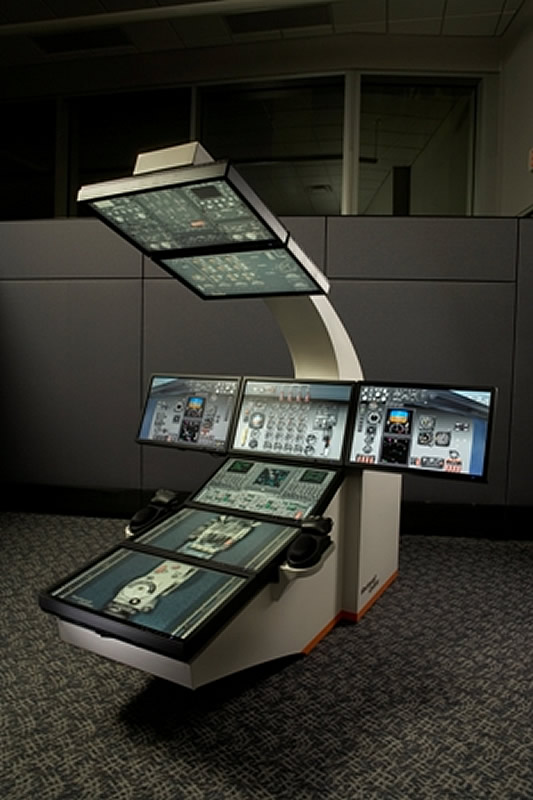
Oct 7/09: Training. Rockwell Collins announces delivery of the 1st Virtual Avionics Procedure Trainer (VAPT) to the USAF/US Navy team, who will use it to train Iraqi pilots flying King Air aircraft. The system is based on Rockwell Collins’ advanced CORE simulation architecture and features a modular, expandable and configurable combination of commercial-off-the-shelf (COTS) technology, PC-based hardware and Rockwell Collins re-hosted avionics software. This unique combination allows the VAPT to support multiple aircraft platforms or software configurations.
Electronics have advanced so quickly, that converting Iraqi pilots’ previous knowledge of their MiG fighter cockpits to the state-of-the-art systems used in quasi-civilian planes like the King Air is a challenge. VAPT offers them an in-classroom alternative that can prepare them for simulator work. It also helps Iraqi pilots train each other. USN Captain Scott Seeberger – Commander, King Air 350 Military Training Team:
“During its first week of operation, the VAPT has been embraced by the pilots of Iraqi Air Force King Air Squadron 87. The squadron’s senior qualified pilots are already using the device to teach those junior to them on the complex operation of the aircraft flight management and autoflight system.”
Aug 24/09: Training. A USAF article describes some of the challenges involved in standing up Iraq’s 87 Squadron and its King Air 350-ISRs. One is that an 18-year old applying to be part of the unit in 2009 would have been 13 when Operation Iraqi Freedom began, and he would also have had a less-than-ideal educational system before that. Training thus includes some remedial education, as well as basic computer proficiency.
“We will do two weeks’ worth of academics by going over all the systems in the aircraft including the ground equipment, such as the Spider laptops, and familiarization of the fixed ground station,” Sergeant Roden said. “After that, we give them a test and see where their competency levels are and how much they have retained.” Once the candidates have passed all the tests and are accepted into the program, they are given an orientation with the aircraft and the MSO equipment. They are then trained on a 19-ride syllabus followed by a flight evaluation to ensure that they are fully capable of performing the functions necessary to be an MSO.
“The people we are training and advising are very intelligent, but this technology is completely new to them, and our goal is to make the transition as easy as possible for the Iraqis,” Sergeant Roden said. “So, we developed a program that can take a person who has never seen a computer before and develop in them the ability to quickly learn the dynamics of a computer as well as the technology behind why the mission sensor equipment works.”
June 16/09: Trendsetter? Defense News reports that Iraq may be the forerunner of a much larger trend, in the USA (MC-12 Liberty project), and beyond:
“…in the coming decade [L-3 and HawkerBeechcraft] saw a potential domestic market for up to 75 of the [King Air 350 ISR] aircraft at a value of $1.3 billion. [L-3 VP Allison] Hartley said Africa, the Middle East and other regions were all potential markets. The international market could be worth double that in platform sales with a value of about $2.5 billion… She specifically named the United Kingdom as a potential sales opportunity. The British have already ordered a handful of King Airs for the ISR mission. One has been delivered.”
Oct 22/08: The Iraqi Air Force marshals out a King Air intelligence, surveillance and reconnaissance (ISR) aircraft at New Al-Muthana Air Base, for an historic flight. The flight marks the first all-Iraqi air force crew to fly an ISR mission since the fall of Saddam Hussein. Source.
All-Iraqi
click to play video
Sept 30/08: +6. Hawker Beechcraft Corp. of Wichita, KS receives a firm-fixed-price contract for $10.5 million, in exchange for 5 King Air 350 Extended Range (ER) Intelligence, Surveillance, and Reconnaissance (ISR) aircraft; 1 King Air 350 Light Transport Aircraft; plus spares and contractor logistics support. This is a foreign military sale to Iraq. At this time $2.9 million has been obligated (FA8620-07-C-4010).
The listed amount strongly suggests a long-lead parts contract, in preparation for the order that will pay for the rest of the aircraft and systems. In 2002, the average price of a civilian King Air 350 was about $6 million each.
6 King Air 350s
Sept 29/08: Iraq’s Defence Ministry announces that it has bought 12 new U.S.-built reconnaissance planes. This is true. March 2007’s 6 aircraft (5 350ER-ISR + 1 transport) order, plus the current 6 aircraft order (see above) equals 12 aircraft. AP, via USA Today.
Feb 27/08: Training. The USAF announces that IqAF pilots from its 3rd Squadron in Kirkuk recently took the controls of a IqAF King Air 350 for the first time. The aircraft will initially be used for training and VIP transport, but future aircraft will add ISR flights. In a recent mission featuring a different aircraft type, an all-Iraqi crew spotted several terrorists manufacturing improvised explosive devices land mines. The crewmembers alerted Iraqi police, who arrived on scene soon after.
Dec 28/07: Delivery. The IqAF receives its first King Air 350, in a ceremony. The initial aircraft is not fitted with sensors, and will be used for light cargo, VIP and training before the other 350s arrive. Deliveries of additional King Airs with ISR suites are scheduled to begin in about 4 months.
USAF Brig. Gen. Bob Allardice is the Coalition Air Force Transition Team commander. US DSCA release | MNF-I release (same).
1st delivery

(click to view full)
March 6/07: +6. Raytheon Aircraft company (now Hawker Beechcraft) announces a $132 million Foreign Military Sale to the Iraq Air Force. The USAF’s Aeronautical Systems Center will manage the contract for 5 Beechcraft King Air 350ER Intelligence, Surveillance, and Reconnaissance (ISR) aircraft and 1 Beechcraft King Air 350 light transport aircraft.
This contract will lay the foundations for the IqAF’s ability to field and use the King Air 350ER-ISR. It includes the integration of various electronic sensors, communications equipment, and defensive systems; along with fixed and portable ground station infrastructure, training, and spares and support. Deliveries will begin in late 2007 and, if all planned options for additional ISR and light transport aircraft are exercised, continue into 2010. RAC/Hawker Beechcraft release [PDF].
6 King Air 350s
September 27/06: The US Defense Security Cooperation Agency announces [PDF] Iraq’s formal request to buy 24 Beechcraft King Air 350ER surveillance aircraft, plus 24 more light transport aircraft which will either be King Air 350ERs or Polish PZL Skytruck STOL(Short Take Off and Landing) planes; as well as associated equipment and services. The total value, if all options are exercised, could be as high as $900 million, and items include:
* 24 King Air 350ER for Intelligence/Surveillance/Reconnaissance role. Each aircraft will be equipped with an L-3 Wescam MX-15 Electro Optics/Infrared (EO/IR) system, plus 1 of the following Synthetic Aperture Radar(SAR/ISAR)/Inverse Synthetic ground scan radars: APS-134 Sea Vue or APS-143 Ocean Eye or RDR-1700 or Lynx II (APY-8) or APS144 or APY-12 Phoenix.
* 24 Data Link Systems (T-Series Model-U or T-Series Model-N or ADL850 or TCDL or BMT-85). Their usefulness for a reconnaissance aircraft that must share its findings is obvious.
* 24 King Air 350ER or “PZL M-18 Skytruck” [sic] Aircraft for light transport role. Actually, the Skytruck is the PZL M28. the M18 Dromander is an agricultural sprayer aircraft, which Saddam’s air force would have found very useful but the current IqAF would not.
* 48 AAR-47 Missile Warning Systems; these are widely employed by coalition aircraft and helicopters, and represent the most modern system available.
* 48 ALE-47 Countermeasures Dispensing Systems.
* 6,000 M-206 Flare Cartridges. To keep the ALE-47s stocked.
* 50 Global Positioning System (GPS) and Embedded GPS/Inertial Navigation Systems (INS). 48 plus 2 spares.
Also included: support equipment, management support, spare and repair parts, supply support, training, personnel training and training equipment, publications and technical data, U.S. Government and contractor technical assistance and other related elements of logistics support.
DSCA: 24 King Air 350s
Additional Readings
* DID – Task Force ODIN: In the Valleys of the Blind…. Describes a concept the US Army proved in Iraq, involving a mix of UAVs, light surveillance aircraft, attack helicopters, precision artillery, and excellent communications and electronics to tie them together. An Iraqi variant would have its own mix, but many of the pieces are falling into place…
* DID – Bird Dogs for the Iraqi Air Force
* DID – The Penny Drops: Iraq Chooses its COIN Aircraft. They will be a natural complement to the King Airs, Cessna 208Bs, and armed scout helicopters, creating the potential for a structure similar to the USA’s Task Force ODIN.
* DID – Iraq Seeks Armed Reconnaissance Helicopters.
* DID – Command Tents and C3 for Iraq. The DRASH system, employed by the US military.
* DID – US Military Orders More King Air 350ER Aircraft. Many appear to be destined for use as ISR platforms, like their Iraqi counterparts.
* USAF (Nov 30/09) – Airman advises Iraqis on ISR missions
* Defense News, Paris Airshow 2009 (June 16/09) – Beechcraft May Add Weapon-Carrying Capability to King Air
* Reuters (March 31/09) – Iraq starts policing borders with unmanned planes. Type undisclosed. “Interior Ministry spokesman Major-General Abdul Karim Khalaf said the drones would police all Iraq’s borders and their first mission took place two weeks ago.”
* DID (Aug 24/08) – CENTCOM Looks to Boost ISR Capabilities in 2008-2009
* DID (July 16/08) – $48.8M Buys 6 King Air 350s for US Marines
* Wings Over Kansas Aviation News (Sept 20/05) – Raytheon Aircraft Company Certifies Heavy-Weight Beechcraft King Air 350. Covers the 350ER specifically.
* Aviation International News, Paris 2005 (June 13-15/05) – King Air set for special missions
* Aircraft Owners and Pilots Association, AOPA News (June 2002) – The Biggest King Air. In addition to describing the civilian features, handling, etc., the author describes a flight from Goose Bay, Canada to Rekjavik, Iceland and from there to Europe.