


(click to view full)
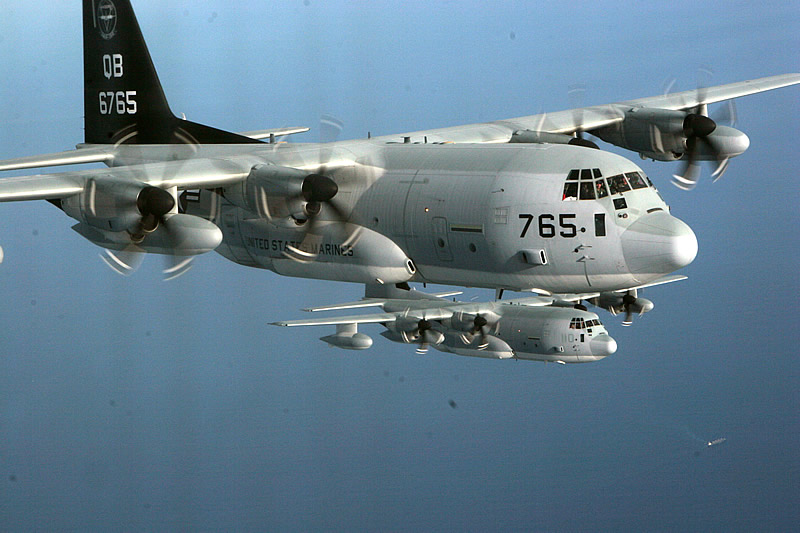
The Hill magazine reports that Lockheed Martin is lobbying the US Air Force to buy an additional 120 C-130J aircraft, under an offered multi-year contract worth more than $6 billion.
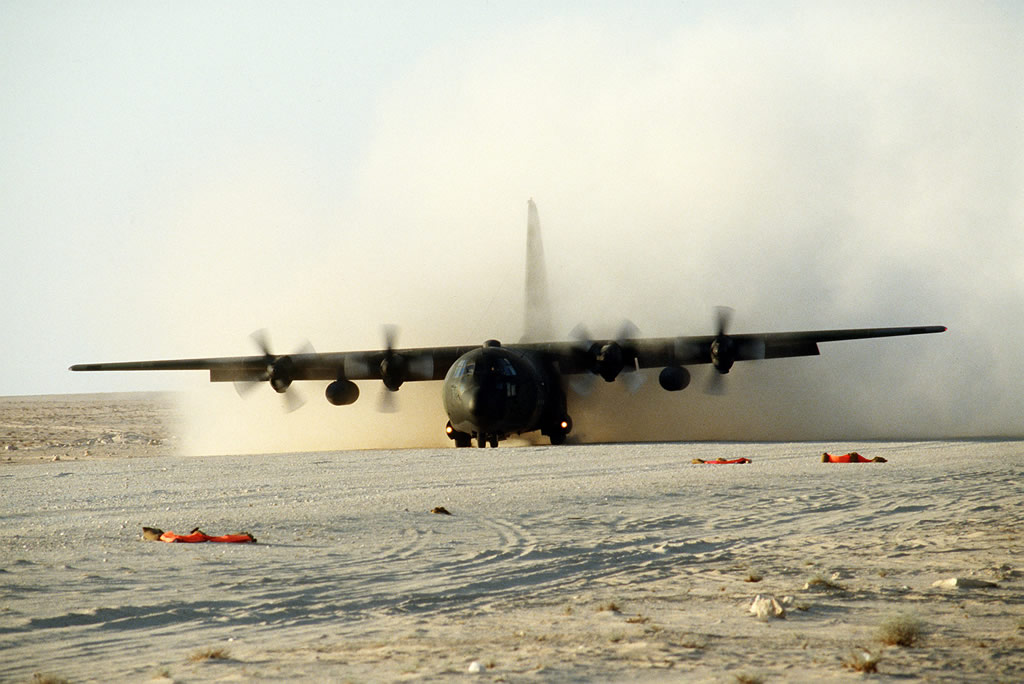
The USAF has about 20% of its C-130E/H Hercules fleet on the ground or under significant flight restrictions right now, and has been pleading to be able to retire them instead of spending time and maintenance dollars on aircraft that will probably never fly again. This percentage will continue to grow as the hours continue to pile up. Meanwhile, the C-130Js are performing well in Iraq and Afghanistan, where their performance suffers much less from the heat and high altitude than C-130E/H versions. US Special Forces are also looking to renew their aging C-130 specialty aircraft and gunship fleet, but they worry that platforms like the C-130 won’t be survivable 15 years from now.
Both groups have made noises lately about a competition that could involve Airbus’ recently-delayed A400M, which breaks through the 20-ton cargo barrier that has stymied several US armored vehicle programs. Those rumblings, and the delay, may have handed Lockheed both motive and opportunity to make its proposal…
(click to view full)
Lockheed’s offer reportedly involves 120 C-130J aircraft in different configurations between 2011-2015, at a production rate of 24 airplanes a year. This would double its existing production rate, and extend the line’s guaranteed operating period from 2010-2015.
Costs per C-130J-30 would reportedly drop from $60-70 million in current FY08 dollars to $50.4 million in constant FY08 dollars; the KC-130J tanker variant would be $51.8 million, and a shortened version (which was disqualified from the Joint Cargo Aircraft competition) would be $47.8 million. In real dollars with inflation et. al. factored in, this could rise to about $60-65 million per plane between 2011-2015.
Note that specialty versions like US SOCOM’s MC-130 Combat Talon/Shadow/Spear covert insertion planes, HC-130 King Bird SAR (Search And Rescue) & aerial tankers, EC-130H Compass Call electronic warfare aircraft, EC-130J Commando Solo flying broadcasters, and AC-130 Specter/Spooky gunships tend to be more expensive, as they involve substantial changes and costs beyond the basic aircraft. The proposed agreement does not cover aircraft of these types, but the basic airframes could be bought under this multi-year agreement, and extra funds appropriated for the refit work.
DID Analysis: Understanding the Offer’s Context
(click to view full)
With Airbus A400M production unlikely to begin at any serious level before 2011, and 190 orders already on the books that must be filled, Lockheed’s 2011-2015 deal offers the US military immediate relief for its aging force, before the competition can realistically deliver an alternative.
The important thing, from Lockheed Martin’s perspective, is to raise the size of the USA’s C-130J fleet high enough that competitive alternatives become too expensive due to the scale of duplication required for training, logistics, maintenance, et. al. An additional 120 aircraft would almost certainly achieve this goal, locking in a much larger volume of long-term orders, while keeping the production line open long past 2015 for other international customers.
The 20-ton space is likely to become rather crowded by 2020, however, with the Indo-Russian MRTA, Embraer C-390, and Chinese Y-9 all vying for market share, and the possibility of the American AJACS program as an additional complicating factor. Meanwhile, Airbus will be offering a competitor that offers major performance advantages, while remaining within the financial reach of existing customers like Chile, Malaysia, and South Africa.
For all of these reasons, the C-130J has little chance of duplicating its predecessors’ international success. Regardless, Lockheed Martin has invested $1 billion of private funds in the aircraft’s development, and wishes to recover them. To do so, however, it must remain in the competitive game. Offering substantial discounts now is a smart way to do it.
Additional Readings
* DID FOCUS article – The C-130J: New Hercules & Old Bottlenecks See esp., the Aug 3/07 item, and note the use of the word “contender” when Lt. Gen. Donald J. Hoffman, Military Deputy, Office of the Assistant Secretary of the Air Force for Acquisition at the Pentagon, says that: “As our aging intra-theater airlift and tanker fleets need replacing, we anticipate that the C-130J will be a competitive contender for those missions.”
* Deutsche Welle (Nov 6/07) – Report: Half of Germany’s Military Planes are in Shambles. “…corrosion and wear and tear have turned over half of Germany’s [C-160] Transall planes into decrepit machinery. The sources apparently said that it was becoming more difficult to locate spare parts for the planes, some of which are more than 40 years old… Germany had originally planned to replace the remaining Transall planes with Airbus’ new A400M model by 2014, but that schedule may have to be revised due to recently announced delays in delivery.”
* Defense News (Oct 29/07) – Airplanes on Life Support. Moseley, Wynne Plead: Let USAF Pull the Plug. They’re talking about aircraft that can’t fly but must be kept per Congressional directives, which includes a number of C-130E Hercules and KC-135E Stratotankers. “One C-130E Hercules from the 86th Airlift Wing at Ramstein Air Base, Germany, is so old and in such bad shape it cannot safely fly. Yet U.S. Air Force maintainers must tow it around the tarmac every so often to make sure its tires don’t go flat, and crank up the engines every month to make sure they still run… More than 20 percent of the service’s C-130Es are grounded or have significant flight restrictions…”
* The Hill (Oct 25/07) – Lockheed Pitches $6 billion C-130J Buy
* DID (April 4/07) – Keeping the C-130s Flying: Center Wing Box Replacements
SOCOM Needs
* Center for Strategic & Budgetary Assessments: Robert Martinage, Senior Fellow – Stealthy Mobility & Support: Aircraft for US Special Operations Forces. [PDF] Feb 22/07 Presentation at CSIS – Future of SOF Aviation Project. Note payload requirements of only 20,000-30,000 pounds, less than the C-130.
* Aviation Week (July 23/07) – Aircraft Requirements For AFSOC To Go Up. “Meanwhile, planners here also say requirements for specialized C-130-based transports and tankers for special operations could increase…”
* Aviation Week (July 22/07) – Future Bomber a Foundation for Next-Gen Gunship
* Military Aerospace Technology (March 16/05) – Next Generation Gunships. Includes significant details re: Lockheed Martin’s MACK concept, which may have a significant influence on future SOCOM aircraft.
* Jane’s (Feb 7/03) – Concepts vie to win US special ops aircraft race. But the designs, including Lockheed’s MACK concept, are also aimed at the medium transport market.
Competitors
* Airbus Military – Airbus A400M official site
* DID FOCUS Article – AJACS Load: US Begins (Another) Next-Gen Tactical Transport Project
* Flight International (April 19/07) – Embraer reveals details of C-390 military airlifter.
* DID – HAL and Irkut’s Joint Tactical Transport Project
* Aviation Week’s Defense Technology International (Jun 13/07) – A400M Could Dominate Strategic Lift. Also covers the C-17 program, and C-5 AMP/RERP upgrades. “The trend in airlift demand is going to place a premium on aircraft that carry more than a C-130. The goal of carrying Future Combat Systems vehicles on the C-130 has been abandoned. Even the new Mine Resistant Ambush Protected vehicles are so heavy that a C-130 will carry only one of them. And plans call for the Army to get bigger. If there is an airlift crisis in 2015-20, you read it first here.”
* Sino Defence – Y-9 Multipurpose Transport Aircraft
* National Defense Magazine (February 2000) – Industry Titans Vying for Early Lead in Cargo Aircraft Markets.