

(click to view full)
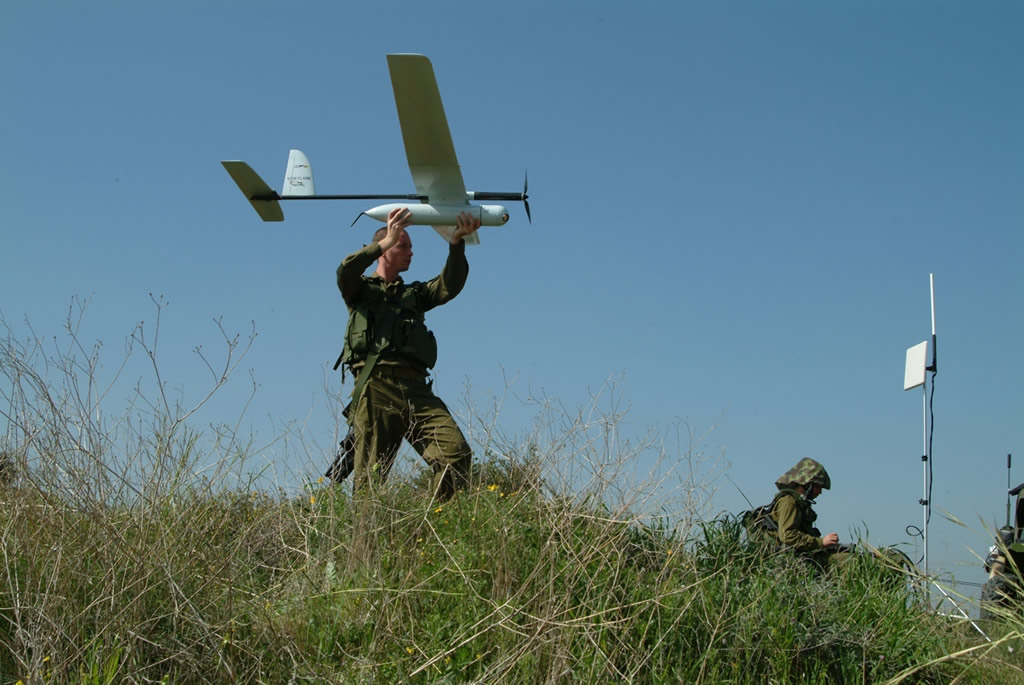
Elbit’s Skylark-I mini-UAV has become a popular choice for portable “over the hill” surveillance, as nations like Israel, Australia, Canada, France, Mexico, Poland, Sweden, et. al. adopt it for battlefield use. Bental’s electric propulsion system using brushless permanent magnetic motors is an especial benefit to Skylark operators, as its silent operation avoids warning enemy targets of its presence.
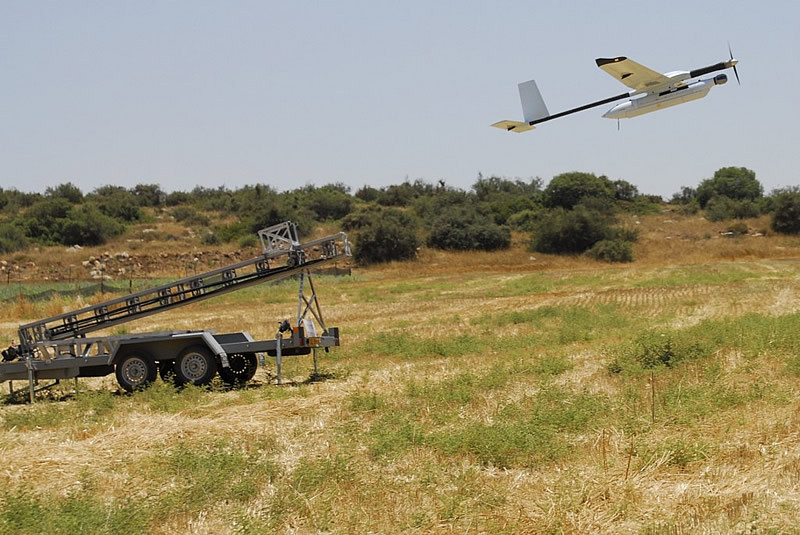
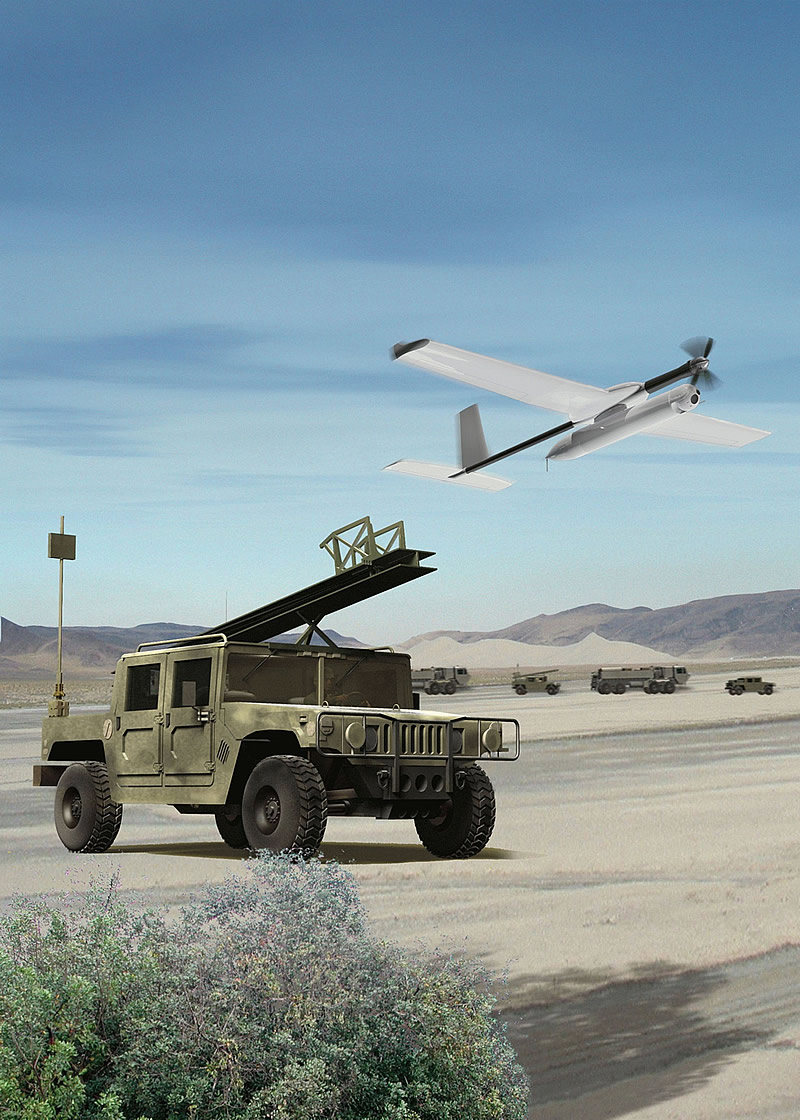
In an effort to build on that success, Elbit soon introduced the larger Skylark-II for battalion level UAV operations, fired from a rail launcher mounted on small wheeled vehicles rather than launched by hand. In exchange for the launcher requirement and a doubling of the crew size to 2, the Skylark-II gains a mission radius of 50-60 km instead of 10 km, and the ability to mount larger sensor packages. Awards soon followed from sources as varied as Popular Science and industry analysts Frost & Sullivan – but awards don’t pay the bills. Fortunately, orders have followed.
The UAVs
(click to view full)
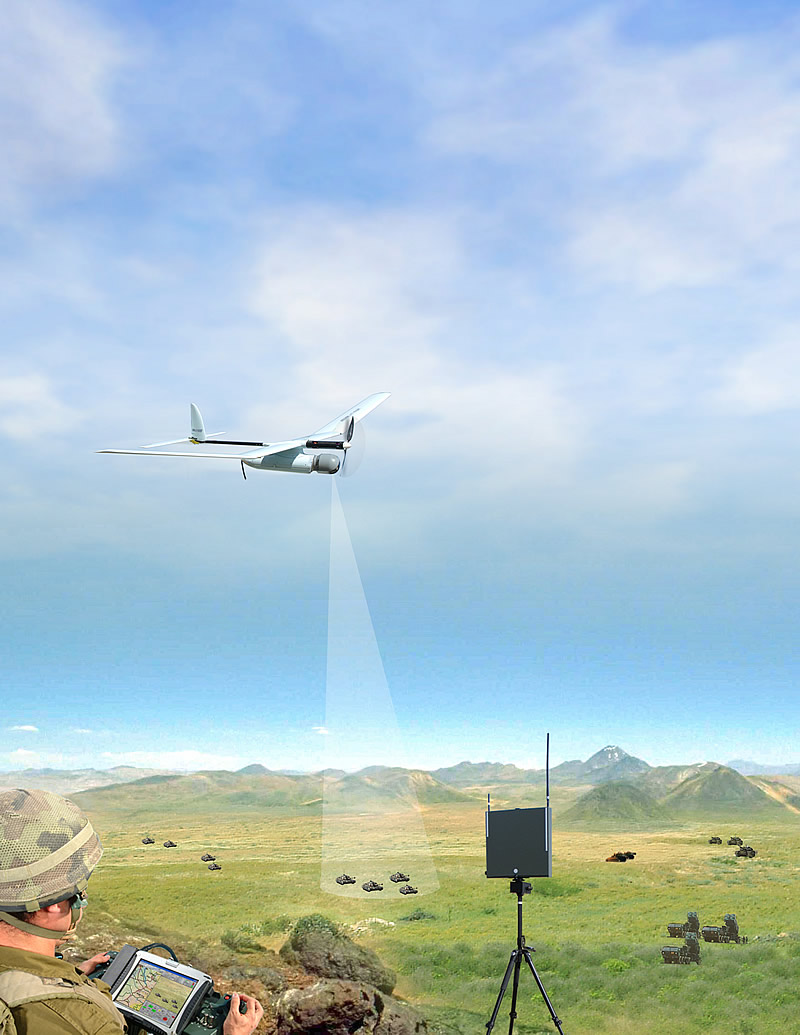
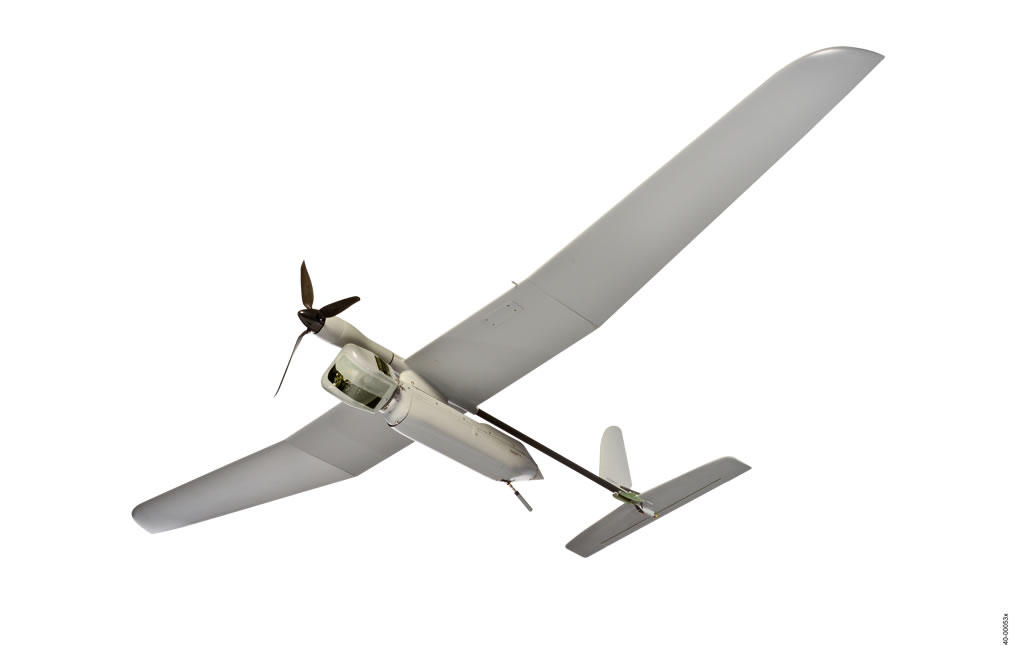
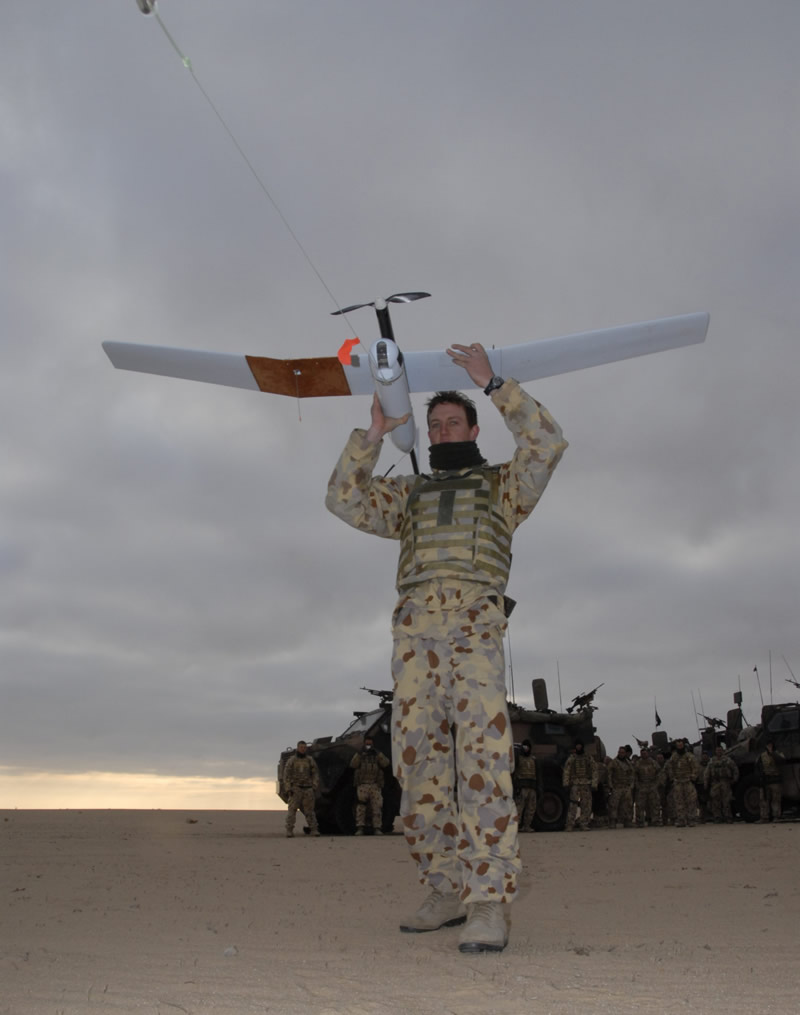
Skylark I comes in 2 versions. The standard Skylark I is launched by hand, and flies below 1,000 feet for up to 1.5 hours, with a mission range of 10 km/ 6 miles. Each “system” comprises 3 UAVs, 2 surveillance and targeting payloads, a ground station, an operating console and a communications link. Skylark I competes in the mini-UAV market, and remains a serious international competitor to Aerovironment’s popular RQ-11B Raven.
The new Skylark I-LE (long endurance) increases flight time from 1.5 hours to 3 hours, with a mission range “greater than 15 km.” It can carry the same payloads etc. as Skylark I, usually Controp’s D-STAMP or the new uncooled U-STAMP infrared payload.
The LE Block 2 swaps in a new engine and power system, and touts the performance of a Day/Night sensor payload – which is probably Controp’s M-STAMP.
(click to view full)
The larger Skylark II cannot be launched by hand, like its counterparts; it must use a rail launcher instead. The launcher is usually towed by a small wheeled vehicle, and requires 2 crew to operate. The UAV can fly at medium altitudes, with a flight time of around 6 hours, a mission radius of 50-60 km/ 30-36 miles, and larger sensor packages on board. Skylark II competes in the lower tier of the conventional UAV market, alongside models like Boeing’s ScanEagle/ Integrator, Textron AAI’s RQ-7 Shadow, Aeronautics’ Aerostar, IAI’s Searcher, etc.
Its standard mission package is a Micro-CoMPASS turret with a day sensor, cooled infrared night sensor, and a laser illuminator and tracker. An advanced digital communication system from Tadiran Spectralink rounds out its capabilities. Israeli forces will soon be swapping in Controp’s TD STAMP surveillance turret.
There’s also a Skylark II-LE, which could become the standard Skylark II export offering. It moves the engine to the rear, alters the fuselage, and adds a new tail configuration. Endurance has more than doubled to over 15 hours, and with its new datalink, it can operate out to 150 km. This will give it the ability to compete with popular offerings like Boeing’s ScanEagle.
Contracts & Key Events
Note that some sales may not be publicized, or may not be detailed, as is often the case with purchases from Israel. Reports of Skylark buys for Croatia, the Czech Republic, Hungary, Macedonia, and Slovakia have been rumored, but they aren’t reproduced here for lack of confirmation. Israel has also made large sales to countries like Azerbaijan and Georgia, but those sales have not been detailed, so it’s hard to tell if Skylarks have been part of the package.
2015 – 2019
(click to view full)
June 17/19: Philippine Drone Deal Israeli defense company Elbit Systems could possibly net a $180 million drone deal with the Philippines Army, Globes reports. Sources apparently say, that the deal, which includes the Hermes 900, Hermes 450, Skylark 1, and Skylark 3 UAV, could possibly be signed in the next couple of weeks. The Philippine Army will use these UAVs for intelligence gathering, patrols, and border defense missions. The Army will adapt the drones to homeland and internal security missions for the Philippines, a country of many islands that faces terrorist threats. The Hermes 450 and Hermes 900 are multi-role drones used for long-range missions. Skylark 1 and Skylark 3 are tactical UAVS designed mainly for use by field units for real time observation and intelligence gathering missions. Skylark 3 is optimized for both dismounted and vehicle-based operation.
August 19/16: Elbit Systems has launched a maritime variant of its Skylark I Mini UAV. Dubbed Skylark C, the new system offers the extended operational capabilities of its land-based counterpart and provides the ability to inspect maritime activities from a safe distance, observe targets, perform reconnaissance over coastal areas, and perform continuous covert surveillance. Those standing to benefit from this latest offering include special forces and other small-scale naval crews.
November 18/15: Uruguay has expressed an interest in purchasing a number of the Elbit Skylark I UAV after watching them being deployed by the Israeli Defence Forces. The UAV has been deployed extensively by the IDF at battalion-level system in support of artillery units and is operational in many militaries worldwide including Australia, Sweden and Canada. Uruguay would deploy the UAV in order to monitor areas which may potentially host terrorist threats. In August of this year, the Al-Qassam Brigades of Hamas captured one of the drones after it fell into the Gaza Strip. They claimed to have been able to make its services operational after checking it wasn’t booby trapped.
2012 – 2013
American SUAS ‘win’; Israeli Upgrades; I-LE Block 2 introduced;
Jan 3/13: SUAS 2013-2017. U.S. Army Contracting Command in Natick, MA awards a 5-year, $248 million multiple-vendor fixed-price Small UAS contract. From FBO.gov:
“The Army currently has fielded 1,798 RQ-11B systems and 325 RQ-20A systems and has a requirement to sustain and maintain this existing fleet. The Army has met 92% of the RQ-11B Army Acquisition Objective (AAO), and has met 83% of the anticipated need for RQ-20A (required by USFOR-A-issued JUONS). Additionally, the current [DID: RQ-11B & RQ-20A] fleet has pre-planned spiral upgrades such as the Gimbal payload, which will be competed and retrofitted under this effort. The need exists to complete the AAO; maintain, sustain and upgrade the fleet; and procure future SUAS Systems as required by DoD, Other Government Agencies (OGA) and foreign countries.”
Vendors will compete for each order, and work can include full Unmanned Aerial Systems, upgrades, testing, packaging, marking, and storage and shipping. Work location will be determined with each order, and the contract runs until Dec 20/17. The bid was solicited through the Internet, with 5 bids received. All 5 qualified to compete:
* RQ-11B Raven & RQ-20A Puma: AeroVironment Inc. in Monrovia, CA (W911QY-13-D-0073). Obviously, they’re in a strong position for fleet upgrades at least, as well as for additional UAVs.
* NOVA Block III: Altavian in Gainesville, FL (W911QY-13-D-0074). They’re not a household name, but their air/land UAV is working with the USACE (Army Corps of Engineers). They partner with ISR Group Inc. in Savannah, TN for support and service.
* Skylark I-LE Block 2: Elbit Systems of America LLC in Fort Worth, TX (W911QY-13-D-0075).
* Skystinger, and others: Innovative Automation Technologies LLC in Gainesville, FL (W911QY-13-D-0076). Skystinger is more like the RQ-11 Raven, while their AXO is closer to the RQ-20 Puma. Note that The Skystinger is the only UAS that IAT could confirm, but they did say there was more than 1 UAS offered.
* Desert Hawk III: Lockheed Martin Corporation, Owego, NY (W911QY-13-D-0077). The Desert Hawk has been successfully used on the front lines by British forces.
The AECV contract expires in 2013, so this appears to be the follow-on. See also: AeroVironment | Elbit Systems | Gainesville Sun.
SUAS multi-vendor
Dec 13/12: Israel. Israel’s Artillery Corps already employs Skylark I-LE UAVs within its “Sky Rider” unit. The unit is upgrading to the Skylark I-LE Block 2, with the “Version 10” operating system and new communications links. Artillery units are getting a new “Tamoon” command and control system, and the new UAVs will be compatible with Tamoon and with the Army-wide DAP (Digital Army Program). Once the UAV is attached to the DAP, Sky Rider Commander, Lt. Col. Uri Gonen says that battalion commanders will be able to pinpoint a UAV’s location on their screens, and determine the area it is observing.
The Artillery Corps is also looking at a brigade-level UAV, and has held some initial trials. That might be an opportunity for the Skylark II-LE, but there are a number of other UAVs within Israel that could compete for this role. This is Israel, so they expect the winning UAV to be in the field within 18 months. Source: Ba’Machane (official IDF magazine), via Elbit Systems. Note that the translation here is “Sky Rider,” not Sky Raider.”
Aug 2/12: I-LE block II. Elbit Systems announces that it will showcase the new Skylark I-LE Block II at this month’s AUVSI conference in Las Vegas, NV. The new UAV can be built in the USA, and adds a new engine and power system, plus an improved day/night sensor turret.
June 11/12: Sweden. AeroVironment announces that they’ve won Sweden’s competition, and will supply 12 SUAS systems in a mix of RQ-20A Puma AE and Wasp III air vehicles, plus a set of common ground stations, training, and logistics support. Contract options could increase the buy to a total of 30 systems. The firm adds a roundup of foreign RQ-11 Raven, RQ-20 Puma, and Wasp customers, which demonstrates why they’re Elbit’s top competitor:
“In addition to Sweden, other international governments that have purchased AeroVironment small UAS include Australia, the Czech Republic, Denmark, Estonia, France, Italy, Lebanon, the Netherlands, Norway, Saudi Arabia, Singapore, Spain, Thailand, Uganda, and the United Kingdom.”
Swedish loss
May 23/12: Airbag issues. Flight International:
“Israel Defense Forces confirms that operations of the mini-unmanned aerial vehicle have been halted until further notice, pending the completion of work to determine what caused its airbag to be deployed in flight several times during recent weeks… Flights… will resume immediately after the issue has been resolved, with the aircraft mainly used by artillery units to provide an “over-the-hill” intelligence capability.”
2008 – 2011
Wins in Israel, France; Canada goes another way; Skylark I-LE introduced.

(click to view full)
Dec 13/11: Sweden. Sweden bought 6 Skylark UAV systems in 2007, but it’s looking to replace them with a follow-on buy. Their FMV is reportedly looking to buy a 2-tier system with ranges of 10 and 20 km, respectively, plus associated common ground control stations.
That could open the door to a buy of Skylark 1LE and Skylark II UAVs, but it also introduces new competitors into the mix. Shephard Media.
Dec 1/11: The UAS Dynamics joint venture ends, as Elbit Systems USA buys General Dynamics’ share. It was marketing Elbit’s Skylark I/II, Hermes 90, and Hermes 450 UAVs in the USA. Elbit Systems.
UAS Dynamics
Dec 20/10: Elbit Systems Ltd. announces a $16 million contract from the Polish Ministry of National Defense to supply a testing set of mobile multi-sensor monitoring and surveillance systems for Poland’s Rosomak, a variant of Patria’s 8×8 AMV wheeled Armored Personnel Carrier. The systems include Skylark UAV integration. Read “Poland & Elbit to Cooperate on Rosomak APC Surveillance Upgrade” for more.
Poland
Aug 3/10: Canada. Canada, previously a Skylark customer, buys [PDF] 5 of Prioria Robotics Maveric mini-UAV systems for use in Afghanistan. See also Nov 19/06 entry.
March 8/10: France. France’s DGA delivers Skylark I and Wasp-III mini-UAVs to French Special Forces, less than 3 months after contracts were signed for Elbit Systems’ Skylark (Oct 18/09) and Aerovironment’s Wasp-III (Nov 4/09), following verification and testing.
The DGA says that the Skylark delivery completes a set, following earlier DGA deliveries in 2008 and 2009. The Wasp-IIIs, on the other hand, will be entering an operational evaluation phase to assess their future value. DGA [in French].
Jan 26/09: Israel. Elbit Systems issues a clarifying release [PDF], adding that that the Israeli “Sky Raider” contract is worth approximately $40 million.
Dec 16/08: Skylark I. Elbit systems announces that Israel’s Defense Ministry has picked the Skylark I-LE to fill the battalion-level “Sky Raider” IDF tender. The IDF has been operating Skylark Is since 2005, but this purchase will supply mini-UAVs for all IDF Ground Forces battalions, including training and logistics support battalions. When the non-linear battlefield makes front lines irrelevant, and your country is 15 km wide at its narrowest point, that’s a smart decision.
Defense Update reports that the IDF intends to buy up to 100 systems at an estimated cost of $50 million, and Flight International states that options could raise the deal’s value to $100 million equivalent. Each system comprises 3 UAVs, 2 U-STAMP uncooled surveillance and targeting payloads developed by Controp, plus a ground station, an operating console and a communications link.
Elbit’s Skylark I LE had to compete with several Israeli UAVs, owing to the country’s strength in that sector. Competing options included IAI’s Bird’s Eye 400/600; Aeronautics Defence Systems Ltd’s Orbiter, which has won some export success; RAFAEL’s shoulder-launched Skylite A and the larger 2-man Skylite B; and Top I Vision/Rotem’s Casper 250.
Note that Defense Update and Flight International have different accounts regarding the competitors and deal value. While DID respects Flight International, Defense Update has earned its reputation as the top source for developments in Israel. Elbit Systems release | Defense Update | Flight International.
Israel’s Sky Rider artillery UAV program
Sept 1/08: Skylark I. Elbit Systems Ltd. announces [PDF] a contract to supply Hermes 450 and Skylark 1 UAV systems to “a country in the Americas” for the total of approximately $25 million. All UAVs are to be delivered within a year.
New information points to Mexico as the customer, with 2 complete Hermes 450 systems and a complete Skylark system.
Mexico
(click to view full)
Aug 3/08: Skylark I. Australia places its 3rd Skylark I mini-UAV order, valued at “several million dollars.” Elbit informs DID that these are standard Skylark Is, not the new Skylark I-LE model.
Australia is also working with Boeing to lease ScanEagle UAV services as its mid-tier solution, instead of the canceled Project JP129 Elbit Systems release [PDF].
3rd Aussie order
June 18/08: Upgrades. UV-Online reports that Elbit has made significant changes to its line of Skylark UAVs:
“Meanwhile the work on the company’s Skylark UAVs has vastly improved the performance of both the Skylark I and II. The company has changed some of the elements of the airframe structure, integrated a new battery and looked at power management. According to officials the new Skylark I-Long Endurance (LE) and Skylark-II LE can now stay aloft a lot longer.
The Skylark I-LE has doubled its endurance from 90 minutes to three hours with a mission range greater than 15km. The Skylark II-LE is almost completely a new system in its outward image with a much changed aerostructure. The engine has bee moved to the rear, the fuselage has been altered and there is also a new tail configuration. The endurance has more than doubled to over 15 hours and with a new datalink it can operate out to 150km.”
March 24/08: Skylark I. Elbit Systems Ltd. announces [PDF format] that it has won “a tender involving 10 of the leading UAV manufacturers worldwide,” and will supply Skylark I UAV systems to France’s Special Forces. This contract marks Elbit Systems’ first UAV contract with France.
France
2005 – 2006
Wins in Australia, Canada, South Korea; Problems with Canadian UAVs; Skylark II introduced.
(click to view full)
Dec 17/07: Skylark II. Elbit System announces that the Skylark-II has been selected by the South Korean military as their “preferred solution” in ” a tender involving extensive technical tests and including UAV manufacturers from all over the world.” The first phase of the contract includes one comprehensive Skylark® II system. Additional systems are expected in the future.
The UAVs will be equipped with their standard-issue payload: Elbit subsidiary Elop’s advanced 8″ Micro-CoMPASS turret with a day sensor, cooled night sensor, laser illuminator and tracker; and an advanced digital communication system from Tadiran Spectralink, which is about to be wholly merged [PDF] into Elbit Systems. Elbit release.
South Korea
June 17/07: Recognition. Elbit Systems Ltd. announces that business research and consulting firm Frost & Sullivan has presented them with a “Best Innovative Product Award” for 2007 in the Aviation & Defense Category, for their Skylark-II. It is praised for bringing the capabilities of more expensive UAVs to a smaller and cheaper vehicle. Philadelphia Examiner | Israel Times.
Nov 19/06: Skylark I. Israel’s Globes business daily relays a Flight International report re: Canadian experiences with the Skylark I in Afghanistan:
“The British weekly quotes a technical director in the Canadian Army interim small UAV programme, Captain Rob Sanders as saying, “Most of them aren’t flying in Afghanistan. For some reason, in some parts of the country it will fly great, or today it will fly. The same one, at a separate time tonight, won’t fly. So they have grounded them all trying to figure out what is going on. We are sending a couple of specialists over there to sort that out.”
Despite requests, Elbit declines to provide updates concerning the resolution of this problem. On April 6/09, Boeing subsidiary Insitu receives an award to provide “small unmanned aerial vehicle (SUAV) services” to support the Canadian Forces in Afghanistan and elsewhere, using its ScanEagle UAV.
Canada problems, loss
Nov 8/06: Recognition. Elbit Systems Ltd. announces [PDF | HTML via Shepherd] that its Skylark II UAV has received a “2006 Best of What’s New” Award from Popular Science Magazine in the Aviation and Space category. If you haven’t heard of this feature before, the magazine explains:
“Each year, the editors of Popular Science review thousands of new products in search of the top 100 tech innovations of the year; breakthrough products and technologies that represent a significant leap in their categories. The winners – the Best of What’s New – are awarded inclusion in the much-anticipated December issue of Popular Science, the most widely read issue of the year since the debut of Best of What’s New in 1987. Best of What’s New awards are presented to 100 new products and technologies in 10 categories: Automotive, Aviation & Space, Computing, Engineering, Gadgets, General Innovation, Home Entertainment, Home Tech, Personal Health and Recreation.”
Oct 3/06: Skylark I. Canada joins Australia in choosing Elbit’s Skylark. The UAV was first ordered on a temporary basis, as part of the $200 million set of emergency purchases for Operation Archer in November 2005.
It was picked more formally as Canada’s future mini-UAV in October 2006, following a competition that reportedly included IAI’s I-View 50 with its unique parafoil landing system, and Boeing’s larger ScanEagle UAV. Thales Canada will act as the prime contractor.
Canada
June 13/06: Skylark II. Elbit Systems formally introduces the Skylark II “close range class tactical UAV system.” Release.
Skylark II
Nov 3/05: Skylark I. Australia chose Elbit’s Skylark as its mini-UAV, to complement Israel Aerospace Industries’ larger I-View 250 and some Boeing ScanEagles used at battalion and brigade levels.
Australia
Additional Readings
* Elbit Systems – Skylark I-LE
* Defense Update – Skylark 1 LE Mini Unmanned Aerial vehicle (Mini-UAV)
* Israeli Weapons – Skylark 1
* Controp – M-STAMP, Stabilized Miniature Payload
* Elbit Systems – Skylark II
* Elbit Systems El-op – Micro-CoMPASS for UAV [PDF]
* DID Spotlight – Raven UAVs Winning Gold in Afghanistan’s “Commando Olympics”. Covers a wide variety of mini-UAV buys for use in theater, including Skylarks.
* Aviation Week Defense Technology International (March 8/08) – Mini-UAVs Rack Up Big Gains
* Aviation Week & Space Technology (Aug 7/02, via AeroVironment) – War on Terrorism Boosts Deployment of Mini-UAVs