


(click to view full)
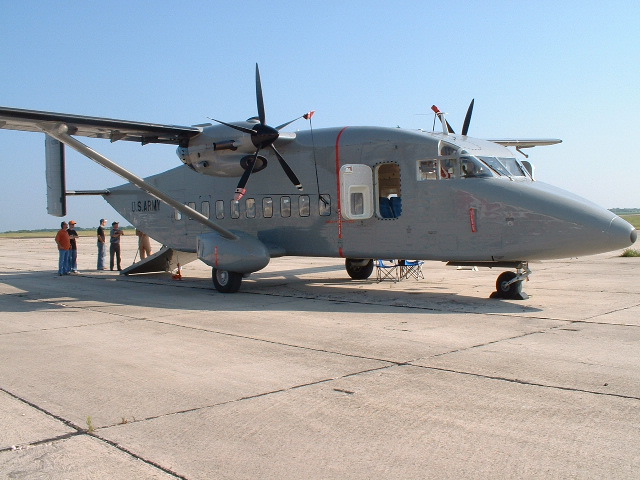
When the WALRUS super-heavy cargo airship was canceled, combat commanders complained that front-line airfields were often too short for the C-130 Hercules that make up the USAF’s tactical transport fleet. Delays in buying a small cargo aircraft to fill that role were making that problem worse. Starved of useful help due to USAF-sponsored delays, and the lack of appropriate aircraft in the USAF, the Army carried on with its aging C-23 Sherpas, and repurposed aircraft like the unprotected C-12 Hurons, in order to ferry troops, supplies, and/or very small vehicles within its theaters of operations.
The Joint Cargo Aircraft (JCA) could have been worth up to $6 billion before all was said and done, and the finalists were a familiar duo. After EADS-CASA’s CN-235 and a shortened version of Lockheed Martin’s C-130J were disqualified for failing to meet requirements, JCA became yet another international competition between EADS-CASA’s C-295M & Alenia’s C-27J. The C-27J team eventually won the delayed decision in June 2007, and prevailed in the subsequent contract protests from their rivals. What remained unclear was exactly what they had won. The joint-service decision and contract announcement didn’t end the inter-service and Congressional politicking, and the contractor side was equally fractious. This FOCUS article covers the JCA competition, and subsequent developments – including the Pentagon’s 2012 push to end the program, and sell its planes.
Canned Feud: The Transport of Seville vs. the Spartan Salesmen

(click to view full)
EADS-CASA partnered with Raytheon for the JCA competition. Their finalist the C-295M has a longer fuselage that can carry more cargo pallets than the C-27J, comes with a nifty pallet loading system, and is cheaper to maintain and fly. On the other hand, it lacks the internal dimensions and/or floor strength required for tactical loads like Humvees, small helicopters, et. al. C295 transport wins have included Spain, Algeria, Brazil, Czech Republic, Egypt, Finland, Ghana, Indonesia, Jordan, Kazakhstan, Mexico, Poland, and Portugal; and special mission versions serve with other countries beyond that list.
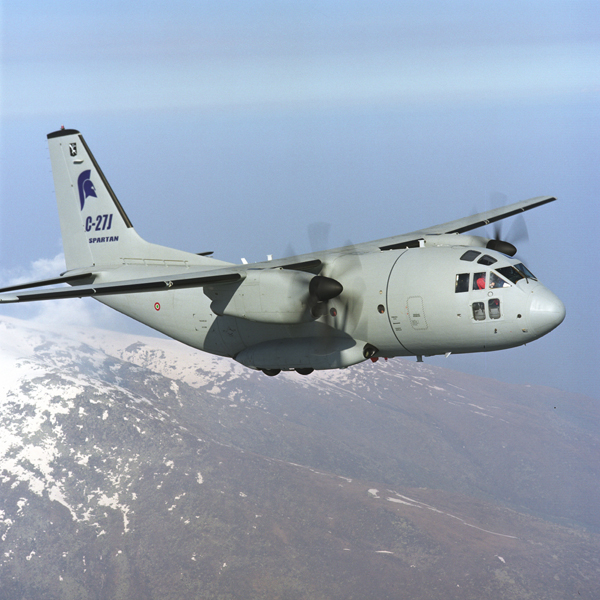
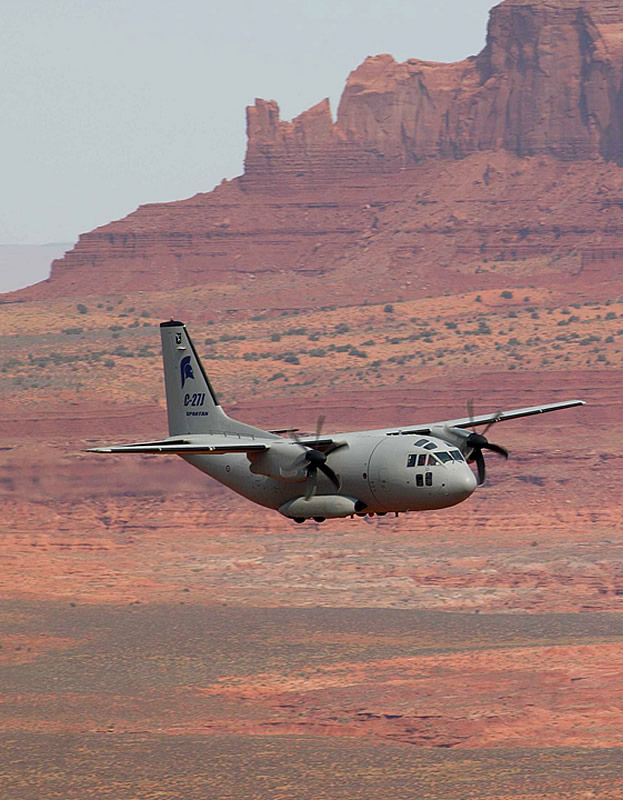
Alenia partnered with L-3 Communications and Boeing to offer the C-27J Spartan, aka. “Baby Herc” due to its profile, engine, and avionics commonality with the C-130J Hercules. EADS-CASA claims the C-27J’s fuel and maintenance needs give it operational costs that are over 50% more expensive than the C-295’s; but C-130J commonality may bring those numbers down slightly, and the C-27J’s internal dimensions and floor strength give it the flexibility to carry light tactical loads. C-27J wins as of August 2011 include Italy (12), Bulgaria (now 3 + 2 options), Greece (12, had some issues but appears to have resolved them [PDF]), Lithuania (3), Mexico (4), Romania (7), Morocco (4), and Slovakia (selected, no contract yet).
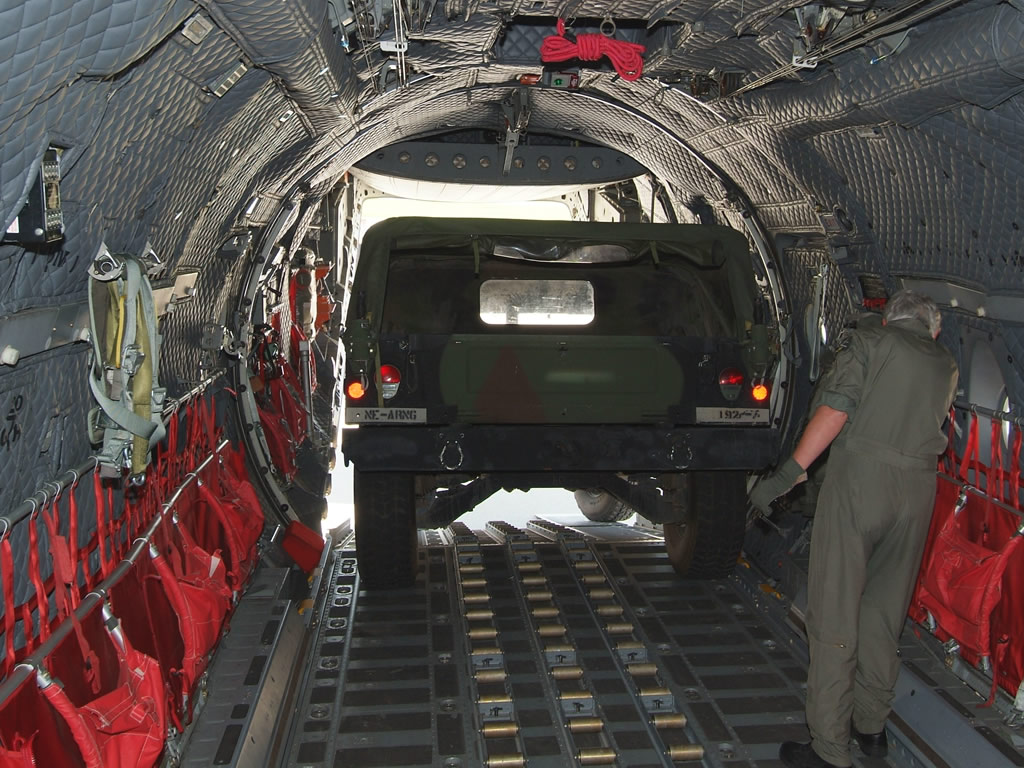
Surprisingly, word was that the US Army originally wanted the C-295 despite its tactical limitations, and the USAF originally wanted the C-27J despite is operating and maintenance costs. If the rumors about service preferences were true, testing pointed to the USAF’s choice – and the Army got more tactical flexibility.
That would come in handy later.
Hello, My Baby, Hello, My Honey…
(click to view full)
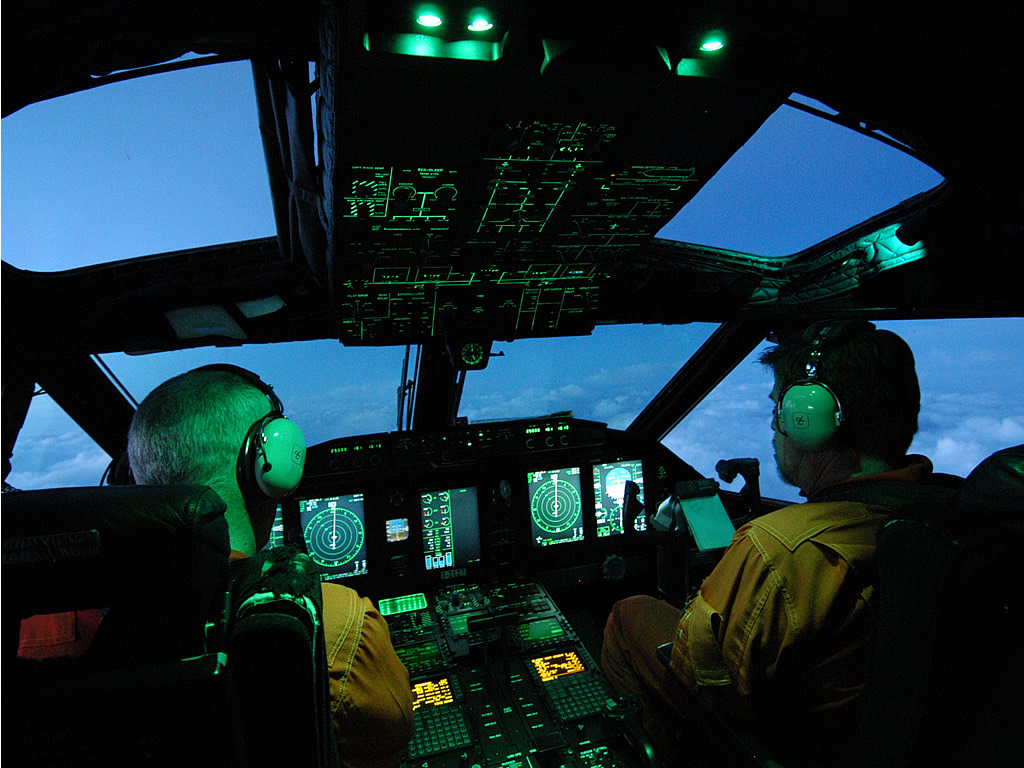
The C-27J team is led by GMAS (Global Military Aircraft Systems), a company owned 51% by Alenia Aeronautica and 49% by L-3 Communications. L-3 is formally the prime contractor within the USA, and Boeing Integrated Defense Systems is also a partner. Rolls Royce will supply the same AE2100 engines, and Dowty propellers, used by the 4-engined C-130J. Honeywell will enhance that commonality by offering the same avionics suite.
The GMAS team’s C-27J “Baby Herc” was set to replace the U.S. Army’s 43 C-23 Sherpas, and fill some roles currently flown by a handful of C-12 (based on the Beechcraft King Air twin turboprop) and C-26 Metroliner (based on the Fairchild Metro 23 twin turboprop) aircraft. In practice, it will also augment the U.S. Air Forces’ aging and partly-grounded fleet of C-130E/H intratheater airlifters, and replace a number of missions that are using very expensive-to-operate CH-47 helicopters as in-theater supply aircraft. The USAF has been making extensive use of intra-theater transports, and even C-17s with their short-field landing capabilities, in order to reduce the number of road supply convoys in Iraq. The C-27J’s ability to use even shorter runways will expand the number of sites available for use in Iraq, Afghanistan, and other fronts of the war.
Maj. Gen. Marshall K. Sabol, Air Force deputy chief of staff for Air, Space and Information Operations, Plans and Requirements, adds that the under-utilization of the C-130 is another reason the JCA program makes sense:
“The Air Force flew C-130 Hercules aircraft many times in Iraq, carrying just a few passengers or a single pallet of medical goods, because that is what the warfighters needed at that moment, he said. This is not a very efficient use of an aircraft, but the warfighters’ needs come first.”
Despite these testimonials, the USAF did exactly what their detractors expected them to do: scrap the fleet as soon as possible, using cost justifications that many people didn’t find credible. US Special Operations Command got 7 of the 21 ordered planes, for training use. The US Coast Guard got the other 14, for use as medium range maritime patrol and rescue aircraft alongside their HC-144 (CN-235) fleet.
Room And Bird: The National Guard Angle
(click to view full)
Under the joint Memorandum of Understanding signed in June 2006, JCA could have grown into a $6 billion program. Initial plans contemplated 145 aircraft – 75 USAF and 70 Army, and Finmeccanica projected a possible total of 207 JCA aircraft over the next 10 years. By 2009, however, consolidation under the US Air Force, which greatly prefers the larger C-130 Hercules and C-17 Globemaster transports, came with a sharp cut in the total program, to just 38 planes, all of which would serve with the USAF Air National Guard.
Meanwhile, state National Guard forces have seen their air transport assets dwindle as C-130s are based elsewhere in realignments, or just not flyable. They clamored to host C-27Js, whose short-field landing capabilities will be very welcome in the at-home disaster relief role.
The Army National Guard originally expected to receive the C-27J in 12 states, with each state hosting 4 aircraft: California, Florida, Georgia, Indiana, Kentucky, Missouri, Oklahoma, Oregon, Rhode Island, Texas, Alaska/Guam (shared), and Washington State. USAF Air National Guard deployments were also discussed for Connecticut, Michigan, Maryland, North Dakota, Ohio and Mississippi. As things stand now, however, many of these states will not get any planes. The C-27Js were set to base with Air National Guard detachments in groups of 4 at:
* Bradley International Airport AGS, Bradley, CT
* Martin State AGS, Baltimore, MD
* W.K. Kellogg Airport, Battle Creek, MI
* Key Field AGS, Meridian, MS (6 planes, incl. 2 training)
* Great Falls International Airport, MT
* Hector Field AGS in Fargo, ND
* Mansfield Lahm Regional Airport in Mansfield, OH
Plus 2 bases to be named later. The cancellation decision was not well received in these locales.
A Great Big Bunch of You: Contracts and Key Events
FY 2013 – 2019
MC-27J tests; Fleet goes directly to storage; USCG stands up project office, begin receiving C-27Js.

(click to view full)
March 1/19: C-27J for New Zealand? Northrop Grumman Australia and the Italian company Leonardo are partnering up to build and maintain troop carrier aircraft for New Zealand. They signed a Memorandum of Understanding to provide Leonardo’s C-27J aircraft to the Royal New Zealand Air Force (RNZAF). The two companies will jointly bid the Air Force’s incoming Future Air Mobility Capability (FAMC) Program. Through the partnership, Leonardo aims to bring a whole-of-life sustainment approach to the C-27J. Both companies will prepare a roadmap for future modernization and upgrades using reach-back and sovereign capabilities. The RNZAF can utilize the C-27J to perform a wide range of airlift missions in adverse environmental conditions, including humanitarian aid, disaster relief, transport, and search and rescue.
December 6/18: New C-27J baseline Leonardo’s new C-27J Spartan baseline configuration performs its first flight at the company’s Aircraft Division Turin plant. Launched in 1997, the C-27J Spartan tactical transport aircraft incorporates the same propulsion system and advanced avionics as the C-130J Hercules Transporter, giving it the name “Baby Herc”. The aircraft design is based on the proven G-222 airframe from Alenia, with turboprop engines from Allison and advanced systems from Lockheed Martin. The new base configuration comprises a new avionics system, new cockpit control panels and LED aircraft lights. Lucio Valerio Cioffi, Leonardo’s Aircraft Division Managing Director, said: “New operators will enjoy modern avionics and improved operational cost and performance within the aircraft flyaway price. The main benefits of the new C-27J baseline configuration are compliance with new civil aviation regulations and military requirements obsolescence risk reduction.” A total of 85 C-27Js are currently in service with 14 countries around the globe ranging from Greece to Chad.
July 10/18: Kenya purchase The Kenya Air Force will soon add three C-27J Spartan transport aircraft to its fleet. Kenya reportedly signed a $198 million loan agreement with Unitcredit Spa Bank late last year to finance the acquisition of the aircraft. Alenia partnered with L-3 Communications and Boeing to offer the C-27J Spartan. Launched in 1997, the C-27J Spartan tactical transport aircraft incorporates the same propulsion system and advanced avionics as the C-130J Hercules Transporter, giving it the name “Baby Herc”. The aircraft design is based on the proven G-222 airframe from Alenia, with turboprop engines from Allison and advanced systems from Lockheed Martin. The C-27J Spartan has the same logistical and maintenance characteristics of the Lockheed Martin C-130J Hercules medium tactical airlifter, and also shares commonality of the cargo capacity. The primary roles of the C-27J are cargo transport, troop transport, and material and paratroop air drop. Other missions include maritime patrol, tactical operations, medical evacuation, ground refueling, fire-fighting and aerial spraying. The planes delivery is scheduled for 2019.
April 27/18: Greece Spartans get guns Greek media reports that the country’s Governmental Council for Foreign Affairs and Defense decided on Monday, April 23, to weaponize its fleet of C-27J Spartan aircraft. While Athens operates eight vanilla versions of the Leonardo-manufactured transporter, other specialized variants in use by various militaries have been developed for maritime patrol, search and rescue, C3 ISR (command, control, communications, intelligence, surveillance and reconnaissance), fire support and electronic warfare and ground-attack missions. No details were given on what the Syriza-led government plans to arm its own Spartans with. Despite news of the armament sub-program, the government did not make any final decisions on its F-16 modernization program—for which $1.1 billion has been earmarked—or on the planned lease of two FREMM frigates from France this summer.
October 31/17: After a year’s delay, Slovakia received the first of two ordered C-27J Spartan military transporters. It landed at an airbase in Kuchyna, Záhorie region, on October 24 ahead of the official handover ceremony scheduled for tomorrow, October 31. Delivery of the second aircraft is expected for early next year. Manufactured by Italian aircraft-builder Leonardo, a Slovak government spokesperson said that the possibility of imposed penalties on the firm for the delayed delivery will only be announced once negotiations have been completed. The Spartans will fill Slovakia’s capability gap left by the phasing out of its Soviet-era An-24 transport planes—one of which crashed in 2006 resulting in 42 deaths, including a contingent of peacekeeping troops returning from duty in Kosovo.
November 16/16: Italy’s Leonardo-Finmeccanica has commenced a whistle-stop tour of Latin America with their C-27J Spartan tactical airlifter. Bolivia, Panama, and Argentina will be included on the tour following earlier displays of the the aircraft’s multimission capabilities in Mexico and Peru. According to the company, 82 units are already under contract with 14 operators.
Nov 13/14: USCG. The Coast Guard takes delivery of its first post-restoration C-27J Spartan, at the C-27J Asset Project Office (APO) in Elizabeth City, NC. It will be used to train and qualify Coast Guard aircrew and maintenance personnel, and to develop flight and maintenance procedures for Coast Guard-specific mission profiles.
While the aircraft was being restored by AMARG in Arizona, initial APO postings to Italy took place for training to be rated as C-27 pilots, and a hangar was prepped at the Aviation Logistics Center in Elizabeth City. A second C-27J should complete regeneration before the end of 2014, and 2 others are expected to finish by mid-2015. At some point, these planes must go through modification to become HC-27A maritime patrol and transport aircraft. Sources: USCG, “Acquisition Update: First Coast Guard C-27J Arrives At Elizabeth City” | Seapower, “Coast Guard Receives First C-27J for Modification”.
July 18/14: USCG. The Coast Guard stands up its C-27J Asset Project Office in Elizabeth City, NC. The APO will eventually consist of 56 civilian and uniformed personnel, and will be responsible for working with both the USAF and the original manufacturer to ensure restoration and certification of the stored USAF C-27Js. They’ll also prepare a plan to bring the aircraft into the USCG and ensure that all training, spares, etc. are in place. The same process will take place for “missionization,” where sensors are added to make the aircraft useful for land and maritime surveillance and rescue roles. Sources: USCG, “Acquisition Update: C-27J Asset Project Office Commissioned”.
Dec 26/13: USCG. The 2014 National Defense Authorization Act is signed into law, locking in the transfer of the USAF’s 14 remaining C-27Js to the Coast Guard. Initial flight operations are scheduled to begin within 6-12 months, but a Jan 6/14 Alenia North America release shows that there’s more expense to come:
“The company also anticipates the USCG will immediately begin the process for expanding the C-27J’s capabilities with tailored mission kits to include surface-search radars, electro-optical sensors and mission suites installed on all 14 planes.”
The other good news for Alenia is that the conversions will give it another tested market offering for the C-27J line. Canada’s semi-serious Search & Rescue competition is the most obvious opportunity, as Canada reportedly values the C-27J’s speed advantage over the C295, and its tactical airlift convertibility. Alenia improves their odds of winning by having the USCG use their solution as a lead customer, giving them parity with the fully integrated C295 MPA. It’s also better to have the USCG pay to integrate all of the required equipment, instead of adding that cost to their bid in Canada. Sources: Govtrack, “H.R. 1960: National Defense Authorization Act for Fiscal Year 2014” | Alenia NA, “14 Alenia Aermacchi C-27Js transferred to U.S. Coast Guard”.
Dec 11/13: 14 for USCG? USCG Vice-Commandant Vice Adm. John Currier testifies that the Coast Guard will halt its HC-144 Ocean Sentry (CN-235MP) buys at 18 planes. Instead of buying another 18 integrated HC-144s, they’ll integrate the equipment they want on a 2nd fleet of 14 C-27Js, which will be transferred free from the USAF.
This will save procurement costs for each base airframe, but the final savings could be a lot smaller than meets the eye. For starters, onboard sensors and equipment need to be bought, no matter which aircraft is used. Second, unless the MC-27J Praetorian gunship’s sensor fit-out and core architecture also meets the USCG’s needs, the USCG will also have to pay to integrate the new combination of plane and equipment. Once operational, the C-27J’s operating costs will be noticeably higher; it was designed for short take-off performance, tactical transport, and cruise speed, rather than for efficient flight and endurance. Finally, having a 2nd aircraft type adds costs for training infrastructure, spares, maintenance training, etc. Sources: US House Transportation Subcommittee on Coast Guard and Maritime Transportation, “Coast Guard Mission Execution: How is the Coast Guard Meeting Its Mission Goals?” | Examiner Science & Space, “Air Force to transfer aircraft to Coast Guard”.
Dec 9/13: Defense News conducts an interview with Finmeccanica North America CEO William Lynn. An excerpt:
“On the C-27 [cargo plane], I think most of the direct conversation is between the receiving entities in the Pentagon, the Coast Guard, the Forest Service and the special operations community. Right now, two-thirds of them will go to the Coast Guard and the other third will go to the special operations community. The Forest Service will get some Coast Guard C-130s. That is the way I understand. That seems to fit everyone, in that the C-27 is a very well positioned airplane for the Coast Guard mission. It is less well for the Forest Service, which could use a bigger airplane, hence the C-130.”
Sources: Defense News, “Finmeccanica Reworks To Strengthen US Presence” | Fire Aviation, “Legislation introduced to transfer 7 C-130Hs to US Forest Service”.
Nov 1/13: 7 to SOCOM. Defense News reports that SOCOM will receive 7 C-27Js for training purposes. None are being taken from “Type 1000” near-ready storage; 3 will go to JFK Special Warfare Center as training aircraft, instead of the boneyeard, and another 4 are still under construction. That leaves 13 in storage right now, with 1 more set to join them. The C-27Js need to be declared “excess defense articles” before they can be assigned outside the military, and that hasn’t happened yet. The Coast Guard and Forestry Service will need to wait. Sources: Defense News, “US SOCOM To Get 7 C-27Js From USAF”.
Oct 14/13: What’s up? Military.com runs down the various American service branches and agencies interested in the USAF’s 21 discarded C-27Js. Undersecretary of Defense for Acquisition, Technology and Logistics Frank Kendall will make the final decision. Until then, they’re just being shipped from the factory to storage at the AMARG “boneyard” in Tucson, AZ.
The US Coast Guard wants all 21, to serve as medium range maritime surveillance planes alongside the existing CN235/HC-144 fleet. They estimate $1 billion in savings, which is more than the foregone airframe costs involved in buying more HC-144s. The C-27J is more expensive to operate than the CN235, so the math is a bit puzzling.
US special Operations Command wants 8, to replace aged C212 training aircraft at the John F. Kennedy Special Warfare Center and School. SOCOM is a past operator of the C-27A.
The US Forestry Service wants 7 to serve as firefighting planes, and cites their excellent experiences with C-130s in this role. Then again, if the USAF gets its way, they may be able to pick up retired C-130s instead. Source: DoD Buzz, “Agencies Await Decision on C-27J’s Fate”.
Oct 7/13: Boneyard. Fox News:
“A dozen nearly new Italian-built C-27J Spartans have been shipped to an Air Force facility in Arizona dubbed “the boneyard,” and five more currently under construction are likely headed for the same fate, according to an investigation by the Dayton Daily News. The Air Force has spent $567 million on 21 of the planes since 2007, according to purchasing officials at Dayton’s Wright-Patterson Air Force Base. Of those, 16 have been delivered – with almost all sent directly to Davis-Monthan Air Force Base in Tucson…”
June 17/13: MC-27J. ATK and Alenia Aermacchi have made some progress on their armed variant, successfully completing Phase 1 with ground and flight tests of the GAU-23 Roll-On/Roll-Off 30mm Gun System pallet at Eglin AFB, FL. Interestingly, the test events were designed and certified by the USAF, and deemed successful by Air Force Special Operations Command.
SOCOM is the logical agency for this work, and had considered an AC-27J Stinger variant some time ago. One wonders if there’s any more to it than that, given the opportunity to pick up the airframes. Alenia.
May 10/13: The USAF issues a non-binding request to industry about buying more C-27Js, but it’s almost certainly an empty diversion. In response to a question from Military.com, USAF spokesperson Ann Stefanek writes that it’s:
“… in accordance with Congressional language that states “the Secretary of the Air Force shall obligate and expend funds previously appropriated for the procurement of C-27J Spartan aircraft for the purposes for which such funds were originally appropriated,”
The most likely outcome for the 21-plane fleet is conveyance to “The Boneyard” at Davis-Monthan AFB, AZ for storage – unless some other service claims them. FBO.gov | Military.com.
FY 2012
MC-27J armed variant. Clashing over costs, control, and doctrine. JCA to end?

(click to view full)
July 9/12: MC-27J. Alenia Aermacchi is going ahead with an armed MC-27J variant, creating a competition with EADS’ CN-235 gunship for countries that want a less expensive alternative to the C-130. The MC-27J is a collaboration with ATK, who was involved in Jordan’s CN-235 gunship conversion.
The MC-27J is designed to be a flexible special missions aircraft that can perform surveillance, gunship, command and control, or transport roles. Its RO-RO palletized system integrates enhanced electro-optical/infrared targeting sensors, a trainable 30mm cannon, precision guided munitions, advanced communications, and a networked mission management and fire control system. ATK will integrate precision weapons onto the platform, and developed a roll-on/ roll-off (RO-RO) GAU-23 30mm gun pallet that can be installed or removed in 4 hours.
Alenia has reportedly claimed interest from Australia (who is buying C-27Js) and Britain, and hopes this will add pressure to reverse the cancellation of American C-27J orders. Alenia Aermacchi | ATK | DoD Buzz.
March 13-17/12: Costs & Control Clash. Ohio Air National Guard Capt. Dave Lohrer publicly disputes the USAF’s operating cost figures for the C-27J. His brief argues that early analysis pegged the C-27J’s 25-year lifecycle costs at just $111 million, rather than the final $308 million figures used by the USAF in its justifications, and argues that the USAF both overstated flight-hour costs, and added 53 more airmen to staff and service the planes, pushing the cost up by over $100 million.
The USAF says the personnel numbers came from the Guard, and the Pentagon’s Cost Analysis and Program Evaluation (CAPE) group’s analysis suggests that the difference could stem from the basing of small 4-plane units at so many sites, instead of running much larger units from one base. The difference, if the C-27Js were based like C-130s? Just over $100 million, according to CAPE.
The more fundamental question is one of control. The USAF prefers to have pooled airlift assets, run from a central base, with scheduling several days in advance. That’s efficient from one perspective, but it loses both responsiveness, and the ability to substitute airlift for less efficient helicopter assets. The C-27J was based around a concept that gave control to the ground commander, a concept that was tried with both the C-130 test concept deployment, and the 2 C-27Js subsequently sent to Afghanistan. According to an Army briefing, 52% of planned C-27J sorties in Afghanistan changed within the 96-hour scheduling cycle. Naturally, the USAF doesn’t like this, and wants its go-forward understanding with the Army to give them the option of retaining control. Defense News | DoD Buzz | Gannett’s Air Force Times | Military.com.
March 11/12: USCG? Gannett’s Navy Times reports that Coast Guard Commandant Adm. Robert Papp maybe interested in the C-27Js, and has ordered a business case analysis for a mixed fleet of CN-235s (HC-144), HC-130Js, and C-27Js for maritime patrol. The Spartan’s C-130J commonality will help, but if it wants to mount the Coast Guard’s sensors, integration must be paid for. Still:
“[S]ometimes things fall in your laps and if we can get… basically free from the Air Force, we might be able to come up with the plan that would allow us a mix of the [CN-235s], a mix of the C-27s, and, oh by the way, that might put some extra money in our budget that we could devote to some of these other projects.”
Would the C-27J’s higher operating costs and shorter endurance than the HC-144 allow that happy financial outcome?
Feb 29/12: Air Force Secretary Michael Donley and Chief of Staff Gen. Norton Schwartz are grilled at Congressional hearings over the C-27J and RQ-4B Block 30 Global Hawk cuts. While the Global Hawks are going into “recoverable storage”, the C-27J cancellation and potential sale receives criticism from both sides of the political aisle. The general thrust: the planes are new, they’re capable, why not just use them?
This is likely to become a familiar refrain, given pressures from state delegations to keep their National Guard airlift in state. That pressure would only intensify, if Alenia’s embargo makes it impossible for the USAF to recover costs by selling the planes abroad. A second possibility might involve reassignment to US Special Operations Command, as a free platform for conversion to AC-27J Stinger light gunships, or a combat transport role similar to the MC-130J. Aviation Week.
Feb 27/12: We’re not gonna take it. Alenia Aermacchi CEO Giuseppi Giordo gives an interview at Singapore’s air show, which throws a major wrench in American plans to re-sell the C-27J fleet. The contract itself reportedly has clauses that given Alenia discretion over resales, and if the USAF doesn’t reassign or store the Spartans:
“In fact, we will do our best – not only us, but the Italian government – not to support those planes. They can sell, but as the original equipment manufacturer, I will not give spares, not guarantee configuration control, and so on… First of all, the price that we have with the U.S. government is a very, very, low, low price because to win the competition we had to reduce the price. Second, the volume at the beginning was 145, then 78, then 38, now 21 with firm, fixed price. We are losing money. So, how can I allow the U.S. government to sell 21 airplanes they have in their inventory where I lose money and they also kill my international marketing?”
Alenia is perfectly within its rights here, on all points. It may be possible for a customer to get support anyway, via separate deal with Rolls Royce for the engines, a similar direct relationship approach for avionics, and a combination of locally-engineered and gray market parts. On the other hand, it would be expensive and risky. Giordo mentions South Africa, Nigeria, Ghana (bought C295s), Taiwan, Egypt, Oman, Canada, Saudi Arabia, Indonesia (makes CN-235s bought C-295s), Qatar and the UAE as potential markets for the C-27J. Of this list, only Taiwan seems plausible as a willing customer for a manufacturer-embargoed plane, and then only if a direct sale ran into political difficulties involving Italy and China.
The USAF’s delay of its T-X trainer competition to 2016 weakens its position further, and Giordo explicitly denies any concern about linkage between future M-346 sales and the C-27J dispute. Whether or not this is true, it clearly shows that Alenia has decided to proceed as if that linkage did not exist. Defense News | Lexington Institute.
Feb 23/12: USAF Chief of Staff Gen. Norton Schwartz discusses the C-27J cut, at an AFA conference:
“The C-27 decision was a particularly difficult one for me, because Gen. George Casey, when he was chief of staff of the Army, and I agreed that we would migrate the C-27 to the Air Force and I assured him that I wouldn’t back out… But that was $487 billion dollars ago… In the interim, we have demonstrated, I think convincingly, that the C-130 can do virtually all of the direct, time-sensitive mission critical support that the Army needs… We are committed to doing that or we will die trying… depend instead on the remarkable capability of 318 C-130s and an abundance of airdrop capability and other means to provide time-sensitive, mission-critical support…”
The issue for the Army has always been the USAF’s lower priority given to timely front-line support, which had made planes like the Caribou early targets for USAF budget cuts in the past. Whether the USAF wanted to cut the C-27J’s capability is one question. Faced with the same financial straitjacket, would the Army have made that same cut? DoD Buzz.
Jan 26/12: JCA to End? Preliminary FY 2013 budget materials discuss coming shifts in Pentagon priorities, as the US defense department moves to make future cuts. The USAF’s 38-plane C-27 fleet will now be eliminated entirely, and sold:
“The new strategic guidance emphasizes flexibility and adaptability. The C-27J was developed and procured to provide a niche capability to directly support Army urgent needs in difficult environments such as Afghanistan where we thought the C?130 might not be able to operate effectively. However, in practice, we did not experience the anticipated airfield constraints for C-130 operations in Afghanistan and expect these constraints to be marginal in future scenarios. Since we have ample inventory of C-130s and the current cost to own and operate them is lower, we no longer need – nor can we afford – a niche capability like the C-?27J aircraft. The Air Force and the Army will establish joint doctrine relating to direct support.”
The USAF will also retire 27 of its oldest C-5A Galaxy planes, and 65 old C-130 Hercules. As for the C-27Js, Australia has a formal sales request for 10 C-27Js, and had wanted to interoperate with the USAF’s JCA. A second-hand sale could guarantee that. Canada has also been touted as an export destination, for its search and rescue needs.
Then again, Congress could look at their states’ National Guards, and decide that they want the local airlift capabilities kept, come hell or high water. The final budget will tell the tale. Pentagon release | “Defense Budget Priorities and Choices” [PDF]
Jan 17/12: DOT&E The Pentagon releases the FY2011 Annual Report from its Office of the Director, Operational Test & Evaluation (DOT&E). The C-27J is included. DOT&E deems the C-27J operationally effective, and it can operate from short (2,000 feet) unimproved or austere runways as promised. It isn’t “operationally suitable” yet, because required reliability and mission availability levels hadn’t been met yet. “Shortfalls in availability and in several subsystems adversely affect safety, situational awareness, or workload,” though correction had been implemented for the Heads-Up Display, and pallet jamming that was happening in the cargo handling system.
As of the report’s last collection date, which is a number of months ago, 10 C-27Js had been delivered, 20 crews had been trained, and 2 deployed to Afghanistan in August 2011.
Nov 8/11: At US Senate Armed Services Committee hearings on Counterfeit Electronic Parts in the DOD Supply Chain, it’s revealed that suspect electronic parts from China have been installed on a variety of military systems and subsystems, including C-27Js. This is, in part, a natural consequences of electronics life cycles vs. military life cycles, which forces the military to purchase parts from independent distributors or brokers. On the other hand, L-3 has a non-trivial problem:
“The Committee traced the counterfeit [display video memory] chips to Hong Dark Electronic Trade in Shenzhen, China, who sold the parts to Global IC Trading Group… which, in turn, sold them to L-3 Displays for use in display units. More than 500 display units containing suspect parts were sold to the Air Force, the Navy, and to defense contractors, intended for installation on the C-27J, C-130J, and C-17 aircraft, as well as on the CH-46… In total, the Committee identified nearly 30 shipments, totaling more than 28,000 electronic parts from Hong Dark to Global IC Trading Group that were subsequently sold to L-3. At least 14,000 of those parts have been identified as suspect counterfeit. Neither the Committee nor L-3 knows the status of the remaining 14,000 parts. L-3 has not yet identified what military systems they might be in.”
See: SASC hearing page | Testimony of L-3’s VP Corporate Procurement, Ralph L. DeNino | Sen. Levin Backgrounder | Boomberg.
FY 2011
Basing hot topic.
(click to view full)
Sept 19/11: L-3 Integrated Systems notifies the USAF that 38 suspect counterfeit Samsung video memory chips were installed in the display units on 8 of the first 11 C-27J aircraft delivered. L-3 Display Systems had notified Alenia in November 2010, but L-3 IS didn’t get the memo until September 2011. The suspect part is a commercial-grade Samsung video memory chip, whose failure could cause a display unit to show a degraded image, lose data, or even go blank. L-3’s VP Corporate Procurement, Ralph L. DeNino later says:
“L-3 IS will take whatever corrective action its customer requests, and the current remedy is to replace the VRAM chips during normal scheduled depot maintenance unless a failure occurs for any reason that would necessitate immediate repairs… The C-27J program tracks avionics performance and failures by means of a Failure Reporting And Corrective Action System (FRACAS). After analyzing the FRACAS history through this past summer, there have been no abnormal failures attributed or noticed for the affected Mission Computers, CMDUs, BAUs or CMDS Test Sets. No degradation to performance has been observed due to these parts.”
August 15/11: Inauguration in Baltimore, MD of the 1st C-27J (of an expected 4, as per the above) in the 175th Wing. The Air National Guard in Maryland had lost its C-130Js in the BRAC process. 175th Wing.
August 5/11: Pending the results of an environmental review, the 120th Fighter Wing of the Montana Air National Guard (MANG) in Great Falls should be the location for a new Target Production Intelligence Group, where 4 C-27s are also scheduled to be transferred. See also Oct. 13/10 entry. Great Falls Tribune.
August 4/11: 2 C-27Js from the Ohio ANG’s 164th Airlift Squadron (part of 179th Airlift Wing) take off from Kandahar for their maiden combat flight. These planes operate within the new 702nd Expeditionary Airlift Squadron (EAS), a joint unit of the Air Force and Army. 451st Air Expeditionary Wing, Flight International | Mansfield News Journal.
July 20/11: L-3 Communications Integrated Systems in Greenville, TX receives a $16.9 million firm-fixed-price delivery order to “incorporate the purchase of deployment labor required to support the deployment of C-27J aircraft to Afghanistan.” The ASC/WLNJ at Wright-Patterson AFB, OH manages the contract (W58RGZ-07-D-0099).
June 27/11: Basing continues to be a hot topic, as Senators and state National Guard Adjutant Generals push to revise the Pentagon’s plans for buying and basing the C-27J.
The current plan is for 38 planes at 9 bases, with 4 planes at 8 Air National Guard bases, and 6 planes in the operational and training base in Meridian, MS. The argument is that 2 of the planes in each state are likely to be overseas, and 1 in maintenance assuming a pretty good 75% readiness rate. That would leave just 1 operational plane in each state to respond to state emergencies, or conduct training.
The Adjutants General in the 7 states named to host C-27Js so far want the USAF to change to 42 C-27Js, basing 5 each in 7 states, with 7 in Mississippi. That would leave one unassigned spare airframe, while 2 states that were to be named for C-27J bases would go without. Great Falls Tribune | Mansfield News Journal.
Dec 6/10: Aviation Week reports that some Italian C-27Js will be fitted with jamming equipment and ground-penetrating radar for the anti land-mine role. The USA’s larger EC-130H “Compass Call” Hercules aircraft can act in a similar jamming role, but lack the accompanying radar. Could a similar equipment set be in America’s future plans as well?
Oct 13/10: The USAF picks Great Falls International Airport, MT, as its preferred alternative to be the 7th operational location for C-27Js, holding 4 aircraft. This final basing decision for the 7th operational base is pending completion of environmental impact analysis, expected by May 2011. A final announcement is expected in June 2011, with aircraft delivery to the airport expected in mid-2014. USAF.
FY 2010
Effect of cutting units ordered.
(click to view full)
Aug 14-15/10: The 179th Airlift wing, based at Mansfield Lahm Airport in Ohio, becomes the first unit to formally convert to C-27J operations. The 179th previously flew C-130s. WMFD.
June 8-9/10: A group of airmen at Scott AB test C-27J aeromedical evacuation capabilities. The effort builds on a February 2010 exercise that tested several patient-carrying configurations, and standardized on 4. Work this time included electromagnetic interference evaluation of the aeromedical evacuation equipment, and timed evacuations of all patients and aircrew through all doors, including one of the emergency escape hatches, and other exercises. The goal was twofold: finishing C-27J MEDEVAC training regulations and operating instructions, and preparing for the C-27J’s Multi-Service Operational Test and Evaluation in summer 2010.
The C-27J’s short field capabilities mean that MEDEVAC shuttle roles may fall on it more heavily, since it can land on smaller strips and get closer to the front lines than a C-130 or C-17, while offering almost 3 times the speed of a helicopter. USAF.
June 7/10: Alenia North America announces a $319 million additional order for 8 C-27J JCAs. These aircraft are scheduled for delivery to Finmeccanica’s US partner L-3 Communications in 2012.
Finmeccanica marks US orders to date at $812 million for 21 C-27Js. The FY 2011 budget, as passed by the House, would include $351 million for another 8 planes. It must still be reconciled with any Senate bill, however, and then signed into law. Finmeccanica [PDF] | L-3 Communications
April 23/10: USAF officials release their C-27J basing choice criteria. After the release of the candidate bases, site surveys will be conducted and the formal environmental impact analysis process will begin. USAF officials expect to announce the candidate bases for C-27J formal training units in May 2010, and C-27J operations in June 2010. USAF | National Guard.
April 1/10: The Pentagon releases its April 2010 Selected Acquisitions Report, covering major program changes up to December 2009. It sketches out the effects of the sharp cut in the C-27J buy:
“JCA (Joint Cargo Aircraft) – Program costs decreased $2,077.3 million (-50.8%) from $4,087.8 million to $2,010.5 million, due primarily to a quantity decrease of 40 aircraft from 78 to 38 aircraft (-$1,370.0 million), and lower support costs associated with the quantity decrease (-$196.3 million). There were additional decreases due to a reduction in the estimate for maintenance training and depot standup costs (-$241.8 million), a reduction in estimated support costs based on a change to a firm-fixed price contract (-$155.1 million), and the application of revised escalation indices (-$89.6 million).”
Dec 9/09: The C-27J Joint Cargo Aircraft Schoolhouse formally opens at Warner Robbins AFB, GA. It will be used to train USAF and US Army pilots and loadmasters. The school actually transferred from Waco, TX and began operations here on Sept 9/10, when the first of 2 C-27J planes arrived, but the school will be under development through 2011. A mockup cockpit has already been installed, but not an operational flight trainer or a fuselage trainer.
Development of the school is a $1.8 million project, which includes $300,000 from the state of Georgia, $125,000 from the city of Warner Robins, GA and the Houston County Development Authority, and $50,000 from the Macon-Bibb Development Authority. At the ceremony, Army Col. Anthony Potts, the project manager for aviation systems, outlines the plane’s core rationale. In reality, the distinction is usually closer to 250 miles vs. 50 miles, but…
“This aircraft will provide the capability to fly in Afghanistan where they do not have the infrastructure to handle our larger aircraft… It will have the capability to get supplies not within 50 miles of our forces but within the last tactical mile.”
Nov 5/09: The front line “direct support” mission CONOP (CONcept of OPerations) test begins, using 2 USANG C-130s as C-27J surrogates since the C-27J won’t be operational until 2010. The concept gives the Senior Army Aviation Authority, or SAAA, tactical control of C-27J Air Force assets, which will be embedded with the SAAA.
According to Col. Gary McCue, the air liaison officer with the 3rd Infantry Division in Iraq, the direct support “squadron” flies 1 aircraft daily, with the 2nd aircraft on standby for immediate response, if necessary. Efforts will continue through December 2009. USAF.
Nov 2/09: A USAF article notes that the Air Force will fund the Army’s completion of the Multi-Service Operational Test and Evaluation, or MOT&E, since the Army lost its FY 2010 monies due to the RMD 802 memo. The MOT&E is scheduled for April 2010.
Air National Guard pilots and loadmasters from the 179th Airlift Wing in Mansfield, OH, and the 175th Wing in Baltimore, MD, will be the first operational C-27J crews to be trained and deployed. Another 2 Army National Guard units, Company H, 171st Aviation Regiment from Georgia and 1st Battalion, 245th Airfield Operations Battalion from Oklahoma, also will participate in the MOT&E.
Air Force officials expect to field 24 C-27Js at Air National Guard units in the following locations: Baltimore, MD; Mansfield, OH; Fargo, ND; Bradley Air Field, CT; Battle Creek, MI; and Meridian, MS.
Oct 26/09: A USAF article offers assurances that despite the program’s transfer to the USAF through the Pentagon’s April 2009 Resource Management Decision 802, work to get the aircraft ready for deployment continues, and expectations for the plane remain positive. Lt. Col. Gene Capone, AMC’s C-27J test manager at the Joint Program Office:
“The program is in transition from an Army-led joint program to a sole Air Force program… Making a switch like this is no small affair, especially at this phase in the acquisition process.”
Oct 19/09: Flight International has a video of 2 USAF Colonels who are answering questions regarding a number of C-130-related programs, including potential future gunships like the AC-27J, programs to add weapons to C-130s beyond the USMC’s KC-130Js, SOCOM programs, etc.
FY 2009
In budget crosshairs for no good reason?

(click to view full)
Sept 29/09: Flight International reports that 2 Ohio National Guard C-130s will deploy to Iraq in October to pose as surrogate platforms for the C-27J’s “direct support” mission. They will be assigned to a US Army brigade commander, rather than scheduled through a centrally planned transportation network, allowing them to move small amounts of cargo at will like the existing C-23B Sherpas.
Sept 16/09: Georgia’s adjutant general Maj. Gen. Terry Nesbitt isn’t happy with the JCA program cuts:
“If there has ever been a joint program that’s been done right, it’s this one. It went through several years of work. Now, somebody with the stroke of a pen decided to change all of that… [This kind of shift] has been tried a number of times, most notably in Vietnam. There they took the C-7 Caribous the Army was using and transferred them to the Air Force and it did not have a very good outcome. At least one division commander said he lost lives because he could not move troops, equipment and supplies around the battlefield the way he could when he managed that fixed-wing asset.”
Aug 11/09: Lt. Gen. Harry Wyatt III, director of the US Air National Guard, comments on the effects that the reduced C-27J buy will have on ANG units. Issues include more rotation of crews through overseas duties, 4 crews per plane rather than 2, heavier usage to keep al of those crews flight-ready, and higher maintenance and operating costs per plane:
“The concept of employment is that a rather large percentage of the 38 will be employed to theatre… (With 78 aircraft it) allows you to have a lower crew ratio because you have more aircraft to rotate through theatre and you have more crews… Because you’re going to be required to fly more hours, we’re probably going to have to look at increasing the amount of maintenance.”
May 15/09:. Gannett’s Air Force times reports that Air Force Special Operations Command’s plan to buy 16 C-27Js under the Joint Cargo Aircraft program, for conversion to AC-27J Stinger II gunships, has fallen apart with the removal of Army C-27J funding in the FY 2010 budget.
In response, they’re investigating a “Plan B” that would add roll-on, roll-off kits to its MC-130W Combat Spear fleet. The MC-130W program began in 2006 to replace combat losses of the MC-130E/H Combat Talon, but it is converted from older C-130H aircraft rather than the new “J” version of the Hercules. Read “The Right to Bear Arms: Gunship Kits for America’s C-130s” for the full report.
April 21/08: The Hill reports that the JCA program may become a quiet victim of the FY 2010 budget process:
“The Army, and in particular the Army National Guard, likely will no longer receive the C-27J Spartan, also known as the Joint Cargo Aircraft (JCA), under a new Pentagon plan, according to multiple sources at the Defense Department, in Congress and the defense industry… Instead of purchasing 78 or more C-27Js, the Pentagon could end up buying only 38 [and putting the USAF in charge of them], the sources told The Hill. Those who spoke asked for anonymity because details about the fate of the program have not been made public. Those details will be revealed when the Pentagon submits its budget request for fiscal 2010 in early May.”
Those rumors turn out to be true, via Resource Memorandum Decision 802. This is a somewhat puzzling move for a Secretary of Defense who has killed other programs by arguing that the Pentagon is shortchanging the current needs of troops on the ground. Those comments may be turned around and thrown back during a strong fight from affected state Congressional delegations – especially those whose state Air National Guard detachments have limited or no flying hours left in their C-130E/H aircraft.
April 20/09: L-3 Communications announces a $203 million order from the JCA Joint Program Office for 7 more C-27Js, bringing the current order total to 13. The original $2.04 billion contract included 3 Low-Rate Initial Production years; according to L-3 representatives, this would be the 3rd and final LRIP lot. After that, the 2007 contract for up to 78 planes is supposed to transition into 2 Full-Rate Production years before it ends in June 2012. L-3’s release adds that:
“With the first two C-27J aircraft delivered and crew training under way, the program continues to progress on schedule and on budget. Following the on-time delivery of the first aircraft in 2008, the first C-27J JCA training class commenced in November 2008, preparing pilots and loadmasters to perform multiple mission roles and serve as instructors.”
On the other hand, manufacturing is still taking place in Europe. Defense News reports that Alenia’s on-again, off-again talks with Boeing to run a final assembly line in Jacksonville, FL broke off again in February 2009. Alenia is reportedly prepared to go it alone if necessary, and now plans to have a Jacksonville final assembly plant operational in April 2010 – just in time for the full-rate production orders.
Whether this trans-Atlantic arrangement would immediately be able to handle full-rate production volumes that would have to produce 32 aircraft per year, in order to deliver all 78 C-27Js envisaged under the 2007 contract, is less clear.
Oct 16/08: Florida Governor Charlie Crist witnesses the official signing of an agreement between Jacksonville Mayor John Peyton and executives from Alenia North America. In it, Alenia commits to a C-27J final assembly and delivery center at Cecil Commerce Center in Jacksonville. Alenia plans to add 300 new jobs, and invest about $42 million in manufacturing equipment, technology, infrastructure and furniture, along with $65 million in construction costs.
The project received $1.9 million in state incentives, as well as economic incentives from the city and the Jacksonville Airport Authority (JAA). Local Congressman Ander Crenshaw [R-FL]:
“I worked hard with my colleagues on the House Appropriations Committee to ensure full funding for this vital national security program in the recent Department of Defense spending bill. It was a tough fight, but in the end the needs of our men and women in uniform prevailed… This announcement continues to solidify Jacksonville’s reputation as a military aviation center of excellence and I look forward to working with this team in Jacksonville and Washington.”
Oct 16/08: The first of 78 C-27Js Spartans ordered under the JCA program is delivered in a formal ceremony held in Waco, TX. The aircraft had been presented to the joint program office, on time and on budget, on Sept 25/08. L-3 presentation release | Finmeccanica ceremony release.
Oct 13/08: Gannett’s Air Force Times reports that:
“Two conflicting congressional estimates on the cost of the C-130J and hearty endorsements from the Air Force Chief of Staff are blunting the impact of a congressional recommendation that the Air Force stop buying the JCA…”
FY 2008
Milestone C. Not so joint in spirit.
(click to view full)
Sept 9/08: DoD Buzz reports that Lt. Gen. Donald Wurster, commander of Air Force Special Operations Command, reiterated his strong support for the C-27J “Stinger II” gunship at the US Air Force Association’s annual meeting. During his presentation, Wurster said AFSOC is looking to field about 16 of these aircraft.
Read “AC-XX Gunship Lite: A C-27J ‘Baby Spooky’ ” for more.
Aug 18/08: The US DoD releases its current Selected Acquisition Reports, and the JCA is included as a new program, adding that “The USD (AT&L) approved the Milestone C Decision in an Acquisition Program Baseline dated April 17, 2008.”
Baseline funding is set at $4.088 billion, which at least establishes the base program as a full joint endeavor for the initially contemplated 145 aircraft. The long-term question is whether that status will last.
July 25/08: Aviation Week’s aerospace daily and defense report notes that the Pentagon’s 2008 budget reprogramming request includes $32 million to turn a C-27J into a small prototype gunship, using “proven/known” weapons and systems. Aviation Week also asserts that negotiations with Boeing to build an American C-27J plant in Jacksonville, FL have restarted.
July 13/08: EADS North America COO John Young is quoted pre-Farnborough, and says that his firm has no plans to assemble the C-27J at the planned Mobile, AL factory. He also says that to his knowledge, no conversations have taken place with Alenia. A Defense News report adds that impromptu talks could still be held at Farnborough, but observes that internal politics and EADS-CASA’s likely objections would make this a difficult sell within EADS. Meanwhile, Finmecanica does need to arrive at a solution:
“The decision has to be made very soon, because if it’s Jacksonville, work must start on building the line by year end,” the Alenia spokesman said.”
July 7/08: Defense News floats rumors that Alenia may seek a partnership with EADS and Northrop Grumman, in order to begin building the C-27J at the Mobile, AL facility that is slated to assemble the A330F and the USA’s KC-45 aerial tanker. This would give the Mobile, AL facility a solid block of orders that would let it staff up and gain experience, while the USA’s tanker selection process is delayed in a renewed selection process and political infighting.
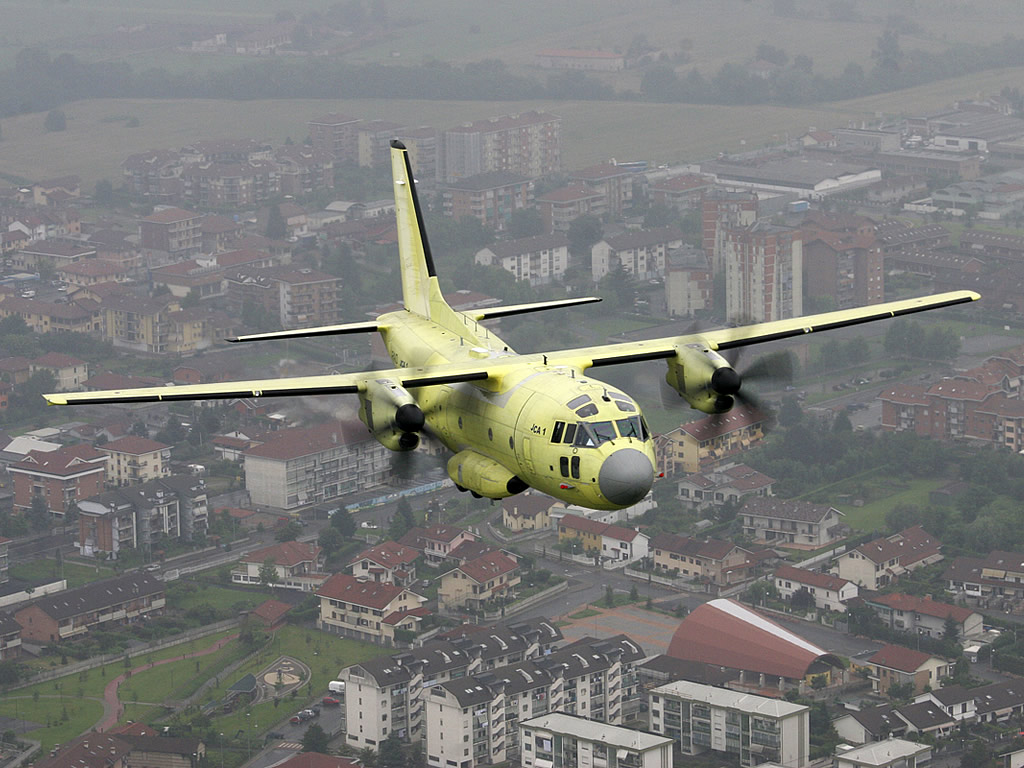
June 16/08: The first C-27J for the Army’s JCA program makes its maiden flight in “poor” weather conditions near turn, Italy. JCA #1 took off from Alenia’s Caselle plant, marking the beginning of a flight test campaign including approximately 70 hours of flight and 180 hours of ground tests. Alenia release [PDF]
June 5/08: Reports indicate that Boeing has pulled out of its partnership with Alenia, after failing to reach agreement on sub-contracting arrangements that would have created a new production facility in Jacksonville, FL. An Alenia official said the C-27J would still be assembled in Jacksonville, and reiterated their commitment to delivering the aircraft on time. The Hill | Forbes
Feb 14/08: Perhaps the forced conversion of the C-27J to a joint program was a serious mistake. Aviation Week reports that studies contend the USAF will have little use for the C-27J, though the US Army needs it. Key excerpts:
“…the reports – including a study by Rand Corp. and the separate Joint Intra-theater Airlift Fleet Analysis Mix – are complete… all the reports contend that the U.S. Air Force should not acquire the two-engine Joint Cargo Aircraft (JCA)… “We operated C-27s in Panama for years and the [benefit] doesn’t justify the cost,” says a long-time airlift commander and acquisition official. “And we know that the Rand report pooh-poohs JCA for the Air Force. The Army needs it, but the Air Force has no business with a two-engine aircraft…
By comparison, the Army vice chief of staff, Gen. Richard Cody, told JCA briefers that he cared far less about efficient airlift, according to a participant in the discussion. “Instead, he wanted effective airlift that is available when he needs it…”
Meanwhile, Air Force Special Operations Command (AFSOC) wants to turn the C-27J into a light gunship that can get in and out of small landing strips, and has placed $74.8 million for 2 C-27Bs in its FY 2008 unfunded requirements list. Gunships can be huge difference-makers in counterinsurgency firefights, and the request would see AFSOC gain new light transports 2 years ahead of schedule. Aviation Week: “Pentagon Withholding Airlift Info.”
Oct 15/07: US Air Force Association’s Daily Report has a blurb about JCA:
“JCA Face-off Coming: Apparently the Army vice chief of staff, Gen. Richard Cody, has made at least one call to further the Army’s push to retain control of its own fixed-wing tactical airlift capability, specifically the new Joint Cargo Aircraft. One call went to Sen. Carl Levin, who responded with some questions in a letter to Cody, a copy of which we obtained. The Army and Air Force jointly have pursued the JCA program, but lawmakers have been at odds over the role of the Army in tactical airlift. Some say the Army should continue to fly its own fixed wing airlifters, while others believe the issue is part of a larger roles and missions creep that has led to duplication of effort. The matter, writes Levin, will be subject of discussion in the conference over the 2008 defense authorization bill. He asked Cody to respond to eight questions by Oct. 12. Levin questions whether the Pentagon will gain greater effectiveness and efficiency from two services performing the same mission and why the Army believes the Air National Guard would provide “reduced support” compared to the Army National Guard if ANG flies the tactical airlift missions for homeland defense and disaster relief. (We’ve reproduced the letter here [PDF].)”
“[The C-27J] a rugged, reliable airplane, and it’ll do wonders for short-range airlift. That is, if the services can stop fighting over the plane and focus on getting it into service. You see, no sooner had the so-called “Joint Cargo Aircraft” program picked up steam than the Air Force started calling into question the very notion of the Army having its own fixed-wing planes. Now Congress has entered the fray, slicing one of the first four C-27s from the budget and asking for more “roles and missions” studies…”
Oct 10/07: GAO decisions may not be released to the public until weeks after the decision date. Aviation Week’s Aerospace Daily & Defense Report says that the U.S. Army picked the C-27J for the Joint Cargo Aircraft (JCA) program, despite its higher cost, because of concerns about the C-295’s ability to meet certain performance requirements. Evaluators decided that the C-27J had a “superior military operational envelope,” and provided superior military utility, demonstrating an ability to exceed many of basic performance requirements by significant margins. The C-295 was able to demonstrate the required performance during the program’s Early User Survey (EUS), but only with caveats, the details of which were withheld by GAO.
One hint from the GAO decision is that the C-295 reportedly raised concerns about its ability to meet the “threshold” requirement to fly at 25,000 feet pressure altitude while carrying a crew of 4, a 12,000-pound payload, and enough fuel for a 1,200-nautical mile mission plus 45 minutes reserve. GAO did disclose that the C-295 could only meet that and certain other JCA requirements through the use of a “new operational mode,” which was not described but was confirmed as not yet certified by the FAA(Federal Aviation Administration). Aviation Week report | Full GAO decision [PDF]
FY 2007
GAO protest from losers dismissed.
Sept 27/07: The Congressional Government Accountability Office (GAO) dismisses the Raytheon/EADS protest (see June 22/07 item), and reconfirms the selection of the C-27J Spartan for the U.S. Army and the U.S. Air Force Joint Cargo Aircraft program. Alenia North America release [PDF format] | Finmeccanica release [PDF].
June 26/07: Stephen Trimble of Flight International Magazine says JCA should stand for “Just Confusing Aircraft”:
“The plot continues to thicken on the mystery of the Joint Cargo Aircraft contract. As I reported in Flight International magazine this week, I have received three different official estimates for cost and aircraft quantity, The joint programme office says the contract will cost $2 billion to buy 78 aircraft [DID: $26.15M each]. L-3 Communications, the selected prime contractor, claims the $2 billion will buy 55 aircraft [DID: $37.1M each]. The US Air Force, meanwhile, tells me that they’re both wrong and that the whole $2 billion figure is a “misprint”. According to the USAF, the actual cost is $1.5 billion and it’s going to buy 40 aircraft [DID: $37.5M each]. I have not seen a more confusing post-contract award scenario yet.”
June 22/07: The Team JCA partnership led by Raytheon Company and EADS CASA North America files an award protest with the US Congress’ Government Accountability Office.
The protest centers on 3 key claims: (1) That the JCA source selection board rated Team JCA equal to its competitor on all non-price factors in its criteria, including technical, logistics, management/production and past performance. (2) That they beat its competition’s price by more than 15% (3) That there were errors in the specific evaluation of data and the application of the evaluation criteria. Raytheon release.
(click to view full)
June 12/07: L-3 Communications Integrated Systems, LP of Greenville, TX received a firm-fixed price contract estimated at $2.04 billion for up to 78 Joint Cargo Aircraft (C-27J Spartan). This includes pilot and loadmaster training, and contractor logistics support for the United States Army and Air Force. A total of 4 bids were received under the full and open competition in response to the March 17/06, request for proposals (Team L-3/Alenia’s C-27J; Team Raytheon/EADS-CASA C-295M and C-235; Lockheed Martin’s shortened C-130J).
The contract consists of three 12-month ordering periods for Low-Rate Initial Production, plus two 12-month options for Full-Rate Production. Work in the United States will be performed at Waco, TX. Aircraft manufacture will occur in Pomigliano (near Naples) and Turin-Caselle in Italy; and in The Czech Republic). Work is to be complete by June 30/12. The U.S. Army Aviation and Missile Command at Redstone Arsenal, AL issued the contract (W58RGZ-07-0099). GMAS release [PDF] | Finmeccanica release [PDF format] | L-3 release [PDF format]
March 7/07: In testimony before the House Armed Services Committee Air & Land Forces Subcommittee, Congressional Research Service defense specialist Christopher Bolkcom says, inter alia [PDF format]:
“The C-130 may be too big to adequately support these operations as it generally requires 3,500 – 5,000 feet of runway to operate. In South America and Central America, for instance, only 5% of all airstrips are 5,000 feet or longer. In Africa, only 15% of all airstrips meet this criterion. While the Air Force C-130 community is rightly proud of its ability to operate from unprepared surfaces such as roads or even fields, such operations are the exception, and not the norm.”
His testimony also looks into the issues involved in operating from unprepared runways, the difficulties that can be involved in supplying these remote air bases, UAVs’ potential for very light remote resupply (something SOCOM is already doing), and the tentative nature of the JCA program owing to the USAF’s lack of commitment.
Earlier developments… For an examination of the different levels of urgency and priority in the US Army and US Air Force and the resulting Congressional SNAFUs, and covered early-stage developments leading up to the award, see: “The JCA Program: Key West Sabotage?”
Additional Readings
Background: JCA
* Alenia Aermacchi – C-27J
* Alenia/ L-3/ Boeing JCA Team (C-27J) official site
* USAF Air University’s Air & Space Power magazine, via WayBack (Summer 2010) – Beddown Options for Air National Guard C-27J Aircraft: Supporting Domestic Response. A key concern of many states, who are faced with losing that capability as their ANG C-130s age out.
* US Army (June 19/07) – C-27J Spartan named as Joint Cargo Aircraft
Background: Competitive Aircraft
* Airbus Military – C295
* Air Force Technology – C-295M Twin-Turboprop Transport Aircraft, Spain
* EADS-CASA/ Raytheon Team JCA (C-295M) official site. No longer active.
* FAS – C-23 Sherpa
* The Aviation Zone – Beech C-12 Huron
* Global Security – C-26 Metroliner
* DID – Presidential’s Transport Contracts for the Central Asian Front. Private contractors are hired to use small-airfield light transports – in this case, EADS-CASA’s C212, though that contract was expanded to other firms and planes.
* DID – DynCorp Receives $30.9M to Upgrade USAF VIP Transports. But the upgrades don’t include defensive systems, whose absence is a problem in theater when these planes are used as light supply aircraft. The JCA will be equipped with defensive systems.
News & Views
* DID – RAND on Counter-Insurgency Airlift. Lots of implications for the JCA in this 2007 report; it mostly serves to make a strong case for the buy.
* DID Spotlight – Alenia’s C-27J Wins Romanian Contract. But only after a very similar legal challenge from EADS.
* Military Journalist David Axe, via WayBack (Oct 17/07) – Army to Air Force: Hands Off Our Airlifters!
* Military journalist David Axe, via WayBack (May 3/07) – Airlift Confusion. Neatly sets out the way airlift worked at the beginning of the Iraq war – and why that has broken down.
* USAF, via Combat Airlifter (Jan 15/06) – Hub-and-spoke missions provide tactical airlift in Iraq. The JCA aircraft would be expected to play strong roles in these kinds of missions.
* Inside the Air Force (March 27/06) – Could nimble JCA become 21st century ‘surrogate’ for C-130 fleet?. Subscription required.