

(click to view full)
Turkey has been looking to modernize its attack helicopter fleet since the mid-1990s, but the process has mostly served as an object lesson in how not to buy defense equipment. This competition faced many difficulties; after numerous snafus, technology transfer and production issues, and canceled competitions, all 3 invited American manufacturers had abandoned the competition entirely.
Even the “final” round seemed imperiled, following reports of the Turkish military’s deep dissatisfaction with the choices. Nevertheless, the competition survived long enough to pick a winner, and signed contracts with AgustaWestland. But Turkey didn’t just buy helicopters. They bought the A129 model – lock, stock, and rotor.
T129 Program Snapshot: Feb. 2014
(click to view full)
The contract for 51 T129B ATAK helicopters (+41 options) was signed on Sept 7/07, with Turkey and TAI acquiring all design and future production rights for their derivative of AgustaWestland’s A129i scout/attack helicopter. The total value isn’t clear, but AgustaWestland placed its own share at around EUR 1.2 billion. Deterioration of Turkey’s existing attack helicopter fleet, coupled with pressure from Kurdish insurgents, forced an emergency purchase of 9 “Early Delivery Helicopter” configuration T129As on Nov 8/10.
The T129 was scheduled for official delivery and acceptance in 2013, complete with Roketsan’s Cirit laser-guided 70mm rockets, but that hasn’t happened yet. Cirit rocket deliveries have begun, and a January 2014 statement by Turkey’s defense minister said that Turkey’s UMTAS anti-tank missile had also completed qualification trials, so that isn’t what’s holding up the program. The Turkish SSM’s program page states that: “Currently, qualification phase is in progress and production of 6(six) helicopters has been completed.”
ATAK is an attack helicopter, but it’s smaller and lighter than classic competitors like Russia’s Mi-28 or the USA’s AH-64 Apache. Other competitors include Bell’s AH-1Z Viper, Denel of South Africa’s AH-2 Rooivalk, Eurocopter’s EC665 Tiger, and Russian Mi-35M /Ka-52 offerings. The T129 has started flying in foreign air shows, and is being marketed abroad, but doesn’t have any wins or contracts yet beyond Turkey.
Program and Finalists
Beginning With An Own Goal in Mind
(click to view full)
At present, Turkey’s attack helicopter fleet is made of its 6 remaining AH-1W Super Cobra attack helicopters, and about 20-23 earlier model AH-1 Cobras. The earlier model Cobras lack some useful modern capabilities. Worse, low numbers and age-related availability issues are straining the fleet’s capacity, making operations in Turkey and Iraq’s Kurdish regions more difficult.
The new AH-1Z had come out on top in a previous Turkish competition, but 4 years of negotiations with Bell Helicopter to jointly produce the AH-1Z Super Cobra failed in 2004. Major price differences and licensing demands sank the deal.
The Turkish SSM responded by opening a fresh international competition in February 2005, but did so in a way that magnified the problems again rather than solving them. They were immediately confronted by serious objections from global manufacturers, which forced the SSM to change the RFP in May 2005. Even then, Bell Helicopter and Boeing looked at Turkish demands, and dropped out.
Defense Minister Gonul made the Turkish perspective clear long ago when he noted that “the goal is to co-produce the helicopters, not to buy them off the shelf.” The Houston Chronicle reported that bidding rules also included full access to the aircraft’s specific software codes, and a written guarantee from the provider’s government that there would be no political obstacles to Turkish exports of the licensed helicopters.
T129: The Program

(click to view full)
In July 2006, Turkish Defense Minister Vecdi Gonul announced that Turkey would continue talks with Denel of South Africa (AH-2A Rooivalk) and Agusta Aerospace of Italy (A129 International) for Turkey’s Land Forces Command’s Tactical Reconnaissance & Attack Helicopter (ATAK) Project. The Franco-German EADS Eurocopter (Tiger) and Kamov of Russia (Ka-50-2 Erdogan, with IAI) were eliminated.
Neither of the finalists had been exported before, and at the time, they were competing for co-production of 30 helicopters and options for 20 more. That projected $1.6 billion contract was still well short of the 91 attack helicopters originally called for when the program began, but it was progress. In the end, Turkey found a way to bridge the gap. A contract was signed in September 2007 for 51 “T129 ATAK” helicopters from AgustaWestland, plus another 41 on option under the same terms. Some of those options were exercised in 2010, when Turkey ordered 9 “Early Delivery Helicopter” T129s to reinforce its dwindling attack helicopter fleet.
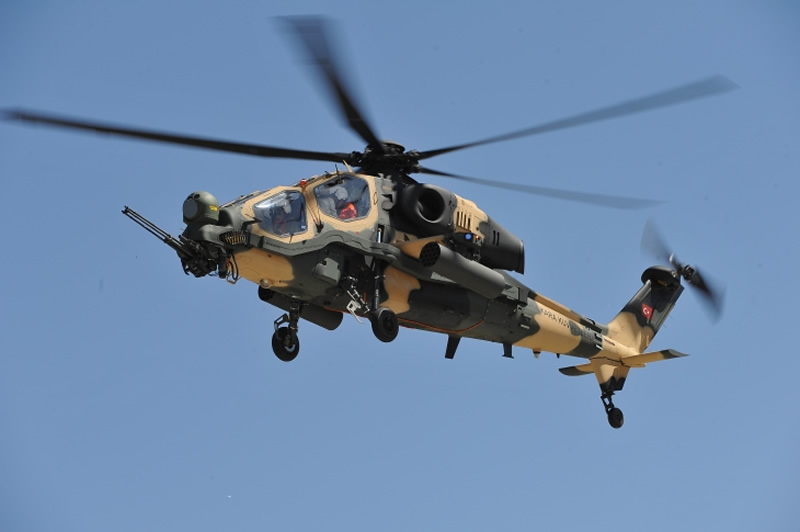
The T129A EDH carries the nose-mounted 20mm cannon turret with 500 rounds, and 4 pylons for unguided rockets. The T129B version will add Roketsan’s MIZRAK (formerly UMTAS) missiles and CIRIT 70 mm Laser Guided Rockets, and Raytheon’s FIM-92 Stinger air-to-air missiles.
Turkish Aerospace Industries is the T129’s prime contractor. Aselsan and AgustaWestland will be the subcontractors, under a collaboration agreement in which TAI shares ownership of intellectual property rights for the new A129 configuration with AgustaWestland. TAI will also become the sole source for the production of the whole fuselage, including final assembly and flight operations, and will be responsible for marketing the “T-129 attack helicopters” to the world.
As of February 2014, initial inquiries have reportedly been received from Azerbaijan, Jordan, and Pakistan. There are less conclusive reports that Malaysia may be interested. Confirmed export losses include a public competition in South Korea, won by Boeing’s AH-64E Apache Guardian.
T129: The Winner

(click to view full)
The A129 Mangusta (trans. “Mongoose”) entered service with the Italian Army in 1989; AgustaWestland offered it as a base for the Franco-German Tiger partnership, but cooperation was declined in favor of a Franco-German R&D program. The current Italian service inventory is 60 machines, 15 of which are the more modern A129 International/AW129 standard with uprated engines (LHTEC replaced earlier Rolls Royce Gem) and rotors (5-bladed vs. 4), plus new weapons, avionics, and defensive systems. The other 45 Italian A129 CBT helicopters received rotor, transmission, weapon, defensive, and electronics upgrades under a multi-year contract signed in 2002.
This A129 family is notable for their low frontal profile, and offer a good mix of surveillance, gun and missile capabilities. A mast-mounted sight offers the potential for further improvements, but the type had not been successful in export competitions before the 2007 Turkish order. The A129 has seen service with Italian forces in Afghanistan, Angola, Macedonia, Somalia, and Iraq.
Like the A129I, the Turkish T129s are powered by 2 Rolls Royce/ Honeywell LHTEC CTS800-4A turboshafts, each generating 1,361 shp. They can drive the helicopter to speeds of 269 kph/ 145 kts, and allow hover out of ground effect to 10,000 feet. Endurance is about 3 hours, with a maximum range of 561 km/ 303 nm.
The Turkish ASELFLIR 300T will replace the AW129’s Honeywell surveillance and targeting systems. The helicopter always has its 3-barreled 20mm chin turret, and certified weapons for its 4 side pylons include its 12.7mm machine gun pods, 70mm unguided Hydra and guided Cirit rockets, anti-tank missiles (TOW, Spike-ER, Hellfire), and Air-to-Air Missiles (Stinger, Mistral). Turkey is also working to develop and then certify its own IIR-guided UMTAS anti-tank missile for the T129.
Contracts & Key Events
2013 – 2018
Possible interest in Brazil, Pakistan; Loss in South Korea.
(click to view full)
December 11/18: Philippine interest The Philippine Air Force plans to boost its strike capability with Turkey’s T-129 ATAK helicopter. Philippine Defense Secretary Delfin Lorenzana told Philstar newspaper that “the Air Force has also chosen the T-129 ATAK helicopter. I think we can only get less than 10, maybe eight.” The proposed purchase is part of a larger procurement process that also includes the acquisition of new transport helicopters. It has yet not been disclosed how much the Philippine Air Force is willing to spend on Turkey’s ATAK, but it says that its overall budget of $240 million will be enough for buying 16 Black Hawks and 8 to 10 T-129s. The T-129 is an attack helicopter, but a bit smaller and lighter than classic competitors like Russia’s Mi-28 or the USA’s AH-64 Apache. The T129A EDH carries the nose-mounted 20mm cannon turret with 500 rounds, and 4 pylons for unguided rockets. The aircraft is designed for advanced attack and reconnaissance missions in hot and high environments and rough geography in both day and night conditions. Philippine officials have yet to formally announce the deal.
December 3/18: Export workaround Turkish daily newspaper Hurriyet reports, that Turkish Aerospace Industries (TAI) has found a solution to finalising a defense order with Pakistan. The order sees for the delivery of 30 T129 ATAK helicopters to Pakistan. This $1.5 billion deal was stalled due to the US DoD refusing to issue the Turkish company with an export license. This forced TAI to look for a replacement of the US and British-made LHTEC CTS800-4A turboshaft engines. Turkey and Pakistan have now agreed to acquiring a replacement variant for the engines. According to Hurriyet producers in France and Poland are being considered as potential suppliers, provided that the new engine shows adequate performance in high-altitude and bad weather conditions during upcoming tests.
August 15/18: Diplomatic row Turkey may lose a $1.5 billion defense deal as the diplomatic crisis with the US escalates. The contract in question is Pakistan’s planned acquisition of 30 Turkish-made T129 ATAK helicopter gunships. The T129 is produced by Turkish Aerospace Industries but partly uses US-made engine parts for which TAI will need US export licenses. If those licenses are not issued Turkey cannot legally export the gunships to Pakistan. The helicopter is powered by two CTS800-4A turboshaft engines that are manufactured by LHTEC, a joint venture between the American firm Honeywell and the British company Rolls-Royce. Turkey and Pakistan signed a deal July 13th for 30 T129 ATAK helicopter gunships.
July 24/18: More sales? Turkish Aerospace expects a sales boost for its T-129 attack helicopter. The company is currently in the process of finalizing the necessary formalities with the Turkish and Italian defense ministries needed to export 30 T-129s to Pakistan. The company’s corporate marketing manager Gorkem Bilgi expects the delivery to commence within three months after all formalities are sorted. He further adds “Pakistan is a tough customer. We went to the Himalayas for high altitude tests, we went to desert for testing in hot conditions at 52C. They tested the helicopter for four years. It’s kind of a diploma – if you sell a helicopter to Pakistan, then all countries are interested.” The T-129 is derivative of Leonardo’s A-129 and is the first indigenously produced Turkish attack helicopter. The T129A EDH carries the nose-mounted 20mm cannon turret with 500 rounds, and 4 pylons for unguided rockets. The T129B version will add Roketsan’s MIZRAK (formerly UMTAS) missiles and CIRIT 70 mm Laser Guided Rockets, and Raytheon’s FIM-92 Stinger air-to-air missiles. Countries that are currently interested in the helicopter include Morocco, Thailand and Bangladesh.
June 22/18: Next customer? The Moroccan Royal Armed Forces are currently negotiating the purchase of T-129 attack helicopters from Turkey. The T-129 ATAK is an attack helicopter, but it’s smaller and lighter than classic competitors like Russia’s Mi-28 or the USA’s AH-64 Apache. The T129A EDH carries the nose-mounted 20mm cannon turret with 500 rounds, and 4 pylons for unguided rockets. The T129B version will add Roketsan’s MIZRAK (formerly UMTAS) missiles and CIRIT 70 mm Laser Guided Rockets, and Raytheon’s FIM-92 Stinger air-to-air missiles. The aircraft is designed for advanced attack and reconnaissance in hot and high environments and rough geography in both day and night conditions. Morocco wants to strengthen its helicopter fleet that mainly consists of reconnaissance and combat helicopters of the types Gazelle, Bell 205 and Bell 206, Chinooks and Predator drones. The north African kingdom is an important US strategic partner in the fight against terrorism. The Turkish-made T-129 would boost Morocco’s deterrence capacity.
May 29/18: Pakistan orders T-129 Pakistan is set to receive thirty T-129 attack helicopters from Turkey. Pakistan is known to have evaluated the Turkish-built attack helicopter as part of an ongoing effort to procure a new attack helicopter for the country’s army. The T-129 is based on the AugustaWestland (now Leonardo) produced A-129 Mangusta. Turkish Aerospace Industries is the T-129’s prime contractor. The aircraft is notable for its low frontal profile, and offers a good mix of surveillance, gun and missile capabilities. The T-129A EDH carries the nose-mounted 20mm cannon turret with 500 rounds, and 4 pylons for unguided rockets. The T-129B version will add Roketsan’s MIZRAK missiles and CIRIT 70 mm Laser Guided Rockets, and Raytheon’s FIM-92 Stinger air-to-air missiles. Pakistan currently has US-built Bell AH-1Z Vipers, Bell AH-1 Cobras and four Mi-35s in its inventory. The T129 competed against the Chinese-built Z-10.
September 29/17: Turkish Aerospace Industries (TAI) has announced the commencement of a series of new programs: a heavyweight variant of the T129 ATAK; the HurJet advanced jet trainer; a 10-ton utility helicopter; and a lightweight geosynchronous equatorial orbit (GEO) communication satellite (SATCOM). Pictures of the Hurjet released on Wednesday shows a twin-engine aircraft with twin vertical stabilizers and armed light-fighter variant. The 10-ton helicopter will be analogous to the Lockheed Martin/Sikorsky S-70 Black Hawk and will expand TAI’s transport helicopter portfolio, while the T129 ATAK would likely be in analogous in size to the Bell Helicopter AH-1Z Viper. Finally, the GEO satellite will weigh one ton, will have 22 transponders, and is likely to be marketed as a commercial solution.
June 13/17: Turkey’s armed forces has officially inducted Rokesan’s UMTAS infrared guided anti-tank missile into service. OMTAS is a semi-active laser-homing ATGM with a range of 500-8,000 m that Ankara will use as the main weapon of the Turkish Aerospace Industries (TAI) T129 attack helicopter, with Roketsan hoping to sell additional launchers and missiles to the Air Force and Navy as well. The system has also been tested on TAI’s Hürkus-C close air support and counterinsurgency attack aircraft and is being marketed for export to several governments including Pakistan.
May 2/17: Havelsan has announced that it will showcase its simulator system  developed for the Turkish Aerospace Industries (TAI) T-129 ATAK attack helicopter at this month’s International Defence Industry Fair (IDEF) in Istanbul. Developed to match with real-world conditions as closely as possible, the system employs the use of satellite images, 3D models, environmental challenges and technical malfunctions, and comprises of two simulator systems which allows trainee pilots to separately learn how to use the T-129’s flight and avionics systems, followed by its weapon systems. This dual system is believed to acclimate pilots to the T-129 as well as prepare them for potential challenges.
February 15/17: Turkey’s Undersecretariat for Defence Industries (SSM) has awarded TUSA? Engine Industries (TEI) a contract to develop and manufacture a new indigenous turboshaft engine. The engine will be used in Turkish Aerospace Industries (TAI) new clean-sheet T-625 utility helicopter, as well as the TAI T-129 ATAK attack helicopter and TAI Hürku? turboprop-powered trainer and light combat aircraft. At present, Ankara depends on foreign turboshaft designs, such as the General Electric T700, which require them to secure licenses and approval for exports.
June 8/16: The newly appointed defense minister of Turkey, Fikri Isik and his Pakistani counterpart met to discuss increasing bilateral defense ties. Among last Friday’s discussions was the potential sale of Turkish developed T129 attack helicopters. Other potential deals include the purchase by Turkey of the Pakistani-made Super Mushshak basic trainer aircraft.
April 23/14: Delivery. Turkey formally delivers the first 9 T129 basic configuration models (q.v. Nov 8/10) to the Turkish armed forces.
It’s Turkey’s National Sovereignty Day and Children’s Day, when children take seats in Parliament and symbolically govern the country for a day. Erm… perhaps delivering these toys the day after might be wise? Just a suggestion. Sources: TAI, “Ulusal Egemenlik Bayrami’nda Egemen Urunumuz T129 ATAK’i Teslim Ettik…” | AgustaWestland, “Turkish Armed Forces Takes Delivery of T129 ATAK Helicopter”.
T129 basic models delivered
Feb 18/14: Industrial. Turkey’s SSM procurement agency announces the launch of a Rotor Technology Center (DKTM) to perform R&D, and train Turkish personnel in this area of aerospace technology.
It’s part of a June 2013 contract with TAI to create the country’s first indigenous helicopter, a 5-tonne twin-engine replacement for Turkey’s existing UH-1 Huey fleet. Even so, its scope ensures that it will affect the T129 platform going forward. Sources: Hurriyet Daily News, “Turkey gears up efforts for indigenous rotor production”.
Jan 29/14: Budget. Turkey’s 2014 defense budget projects a 7% increase, and Defence Turkey reports on aspects related to the T129:
“National Defence Minister Ismet Yilmaz explained that within the scope of Attack Tactical Reconnaissance Helicopter Project /T129, out of 13 Early Delivery Helicopters (EDH) that are to be purchased within the context of urgent need, 4 of them were completely produced and stated that their acceptance procedure continued…. Yilmaz mentioned that final qualification phase of the missiles developed as one of the main ammunitions of T-129 helicopter within the scope of Long-Range Antitank Missile Project was reached and added that being the modern tanks’ nightmare around the World with its armour piercing cap, UMTAS would contribute greatly to TSK’s firepower.”
Sources: Defence Turkey, “Turkey’s Defence Budget of 2014”.
Jan 16/14: Marketing. The T129 has begun showing up at air shows and performing flight demonstrations. The Bahrain International Air Show 2014 (BIAS) featured a flight demonstration, with a clear focus on the Mideast market. Arab states remain somewhat wary of Turkey, and many of them (Egypt, Kuwait, Saudi Arabia, UAE) have opted for the heavier AH-64 Apache instead, but opportunities remain. Bahrain, for example, operates older AI-1E/P Cobras, and GCC states Qatar and Oman don’t have any dedicated scout/attack helicopters in their force. These shows also reach beyond the Middle East, drawing interest and attendance from potential customers like Pakistan (q.v. Sept 16/13) and Malaysia (q.v. July 30/13). Sources: TAI, “TAI’s T129 ATAK Helicopter Performs Flight Demonstration at BIAS 2014”.
Sept 16/13: Pakistan. Pakistan is running short on AH-1Fs, in part because the money to maintain them has been funneled into various private pockets. A long-term improvement in corruption is unlikely under current leadership, and the Pakistani economy is weak, but the country needs attack helicopters.
Pakistan reportedly expressed interest in the T129 several years ago (q.v. Oct 1/09), but those talks have reportedly gained force. Any breakthrough would involve a Memorandum of Understanding, which would allow Pakistani officials and PAC engineers to discuss the mechanics and logistics of joint production.
Part of those mechanics may involve export clearance from the USA, as the T129’s LHTEC 800 engines are a joint product of Rolls Royce and Honeywell. The USA could use delays or even refusal as an underhanded tactic, and they do have a record of behaving this way in other competitions. On the other hand, angering both Turkey and Pakistan might be a higher diplomatic price than they’re prepared to pay, just to push Bell Helicopter’s AH-1Z. Rather than using export denial, the USA may have a better lever via military aid financing, which could be used to buy made-in-America AH-1Zs, but not T129s. If Turkey can offer good financing terms of its own, on the other hand, local anti-American sentiment and Turkey’s perceived political reliability may offer them some levers, too. Sources: Pakistan’s The National, “Pak-Turkish pact on combat copters on cards” | Defense News, “Turkey Pushes T-129 Gunships for Pakistan, but US Could Scupper Deal” | iHLS, “Turkey Angers the U.S. by Offering Helicopters to Pakistan”.
Aug 22/13: Brazil. Turkey and Brazil are forming a number of working groups on defense cooperation. Their release specifically mentions that the aeronautics working group will be studying the assembly of Turkish helicopters in Brazil. The T129 is the only candidate that fits. Note that Brazil already fields a handful of Russian Mi-35M attack helicopters, with a limited secondary capability as transports. On the other hand, they could definitely use more armed helicopters, and local production appeals. AgustaWestland just expanded its Brazilian facilities in Sao Paulo, with enough space to add a production line.
The flip side is that Turkey would be studying the assembly of Brazilian aircraft in Turkey. Embraer offers the Super Tucano, a number of military aircraft based on their ERJ 145 regional jetliner, and the KC-390 medium transport. Turkey is committed to buy 10 A400M medium transports, but they have 32 C160 and C-130 medium transports to replace, so a future KC-390 buy is possible. Other possibilities are more restricted, as Turkey already has projects or orders in those categories: KAI’s KT-1 for training, Boeing’s E-737 AWACS for aerial surveillance, and Airbus ATR-72s and CN-235s for maritime patrol. Sources: Brazil MdD [in Portuguese] | AgustaWestland Aug 14/13 release.
July 30/13: Malaysia. Malaysia hasn’t made a fighter decision as planned, and may even be backing away from a new fighter order altogether. During a press conference with French Prime Minister Jean-Marc Ayrault, Malaysia’s Datuk Seri Najib Tun Razak referred to a recent incursion in Sabah, Borneo by Philippine terrorists. He was quoted in the Malaysia Star:
“We have other hardware being considered, including the attack helicopter, and weapons of that nature. We are looking at some of the requirements, not just the multi-role combat aircraft…”
April 17/13: South Korea loss. South Korea announces that the AH-64E Apache Guardian has beaten the AH-1Z Viper and T129 ATAK helicopters for a 1.8 trillion won ($1.6 billion), 36-machine order. The attack helicopter decision had been due in October 2012, but was put on hold until after the elections. The ROK hopes to have the helicopters between 2016 and 2018.
The AH-1Z would have represented continuity with the ROK’s existing AH-1S fleet, and a September 2012 DSCA export request was already approved. The T129 would have been a reciprocal deal with a major arms export customer (vid. Aug 9/10, but Turkey has also bought South Korea trainers, tanks & artillery). A DAPA official is quoted as saying that the AH-64E’s superior target acquisition capability, power, and weapons load gave it the edge, and so South Korea will begin the acquisition process. The Apache is certainly much more heavily armored than its counterparts, and its combination of modernized optics and MMW radar or UAV control does give it an edge in target acquisition. Sources: Korea Herald, “Seoul to purchase 36 Apache helicopters” | Reuters, “South Korea to buy $1.6 billion worth of Boeing helicopters”.
Loss in South Korea
2010 – 2012
9 “basic” T129s as interim buy; AH-1Ws as interim buy; TopOwl picked as HMD; Prototype crash; Competing in South Korea.

(click to view larger)
Dec 11/12: South Korea. The ROK government’s decision to delay their attack helicopter decision until after the Dec 19/12 elections is seen as a positive development for the T129. Its problem is that the country’s military is widely believed to prefer the AH-64 Apache. If true, TAI’s challenge is to find other decision centers within the government who might be swayed toward their product. Turkish Daily.
July 10/12: Weapons. Hurriyet says that deliveries of Turkey’s 70mm laser-guided Cirit rocket have begun. The Cirit is expected to be an important part of the T129s arsenal:
“Turkey’s missile maker Roketsan has delivered 100 laser-guided 70 mm rocket systems to the Turkish military, a defense source has told the Hürriyet Daily News.”
May 2012: South Korea. The T129 is shortlisted alongside Bell Helicopter’s AH-1Z Viper and Boeing’s AH-64D Apache Block III for South Korea’s attack helicopter competition. A decision is expected by October 2012. Source.
March 27/12: Turkey’s SSM procurement agency has unveiled their new 5-year strategic plan, with timetables for key acquisitions. The plan commits to begin delivery of the T129 ATAK by 2013, and CIRIT laser-guided 70mm rockets for the ATAKs by 2016. Hurriyet Daily News.
Oct 31/11: AH-1W stopgap. With Turkey’s fleet of serviceable AH-1F/W Cobra attack helicopters dwindling, demands from the Army for helicopters to use against the Marxist Kurdish PKK in Turkey and Iraq, and no arrival of even base configuration T129s before mid-2012, Turkey launches an official request [PDF] for 3 AH-1W Super Cobra attack helicopters from US Marine Corps stocks. They’ll also get 7 T700-GE-401 engines (6 installed/ 1 spare), plus inspections and modifications, spare and repair parts, personnel training and training equipment, publications and technical documentation, and U.S. Government and contractor support.
The estimated cost is $111 million, and all sale proceeds will be reprogrammed into the USMC’s H-1 helicopter upgrade program to build UH-1Y Venom armed utility and AH-1Z Viper attack helicopters. Implementation of this proposed sale will require the assignment of approximately 5 contractor representatives to Turkey for a period of up to 90 days, for differences training between U.S. and Turkish AH-1Ws helicopters. See also Oct 26/09.
DSCA request: 3 AH-1W Super Cobras
Nov 8/10: AgustaWestland announces a EUR 150 million contract for 9 “basic configuration”/ “partially armed” T129 combat helicopters, plus spare parts. The releases do not say, but it’s reasonable to expect only base AW129 capabilities, without provisions for new Turkish weapons like UMTAS. The stopgap attack helicopters will be assembled by Turkish Aerospace Industries, Inc. (TAI) and delivered by mid 2012, one year earlier than the 51 T129s already on order.
AgustaWestland says that the T129 program remains on schedule with both the System Requirements Review and Preliminary Design Review completed in 2009. The Critical Design Review will be completed shortly. Prototypes are being assembled in both Italy and Turkey, and they expect to start the flight test program in January 2011. AgustaWestland | Hurriyet Daily News.
Emergency buy: 9 T129 “basic configuration”
Aug 9/10: Korean Quid Pro Quo? DAPA aircraft programs director Maj. Gen. Choi Cha-kyu says that Turkey is actively considering a partner role in the K-FX fighter program as their indigenous fighter design project. Turkey would bear the same 20% project share as Indonesia if they come on board, with South Korea responsible for 60%. There are reports that in return, Turkey wants South Korea to pick the T129 ATAK helicopter as their future AH-X heavy attack helicopter.
Turkey eventually seemed to go their own way on their indigenous future fighter, and T129 lost South Korea’s attack helicopter competition. Korea Times | Hurriyet.
June 16/10: A129 interim. Turkey has launched “urgent” talks with AgustaWestland for 9 A129 Mangusta attack helicopters, as a stopgap measure to keep their attack helicopter fleet viable until 2014, when the first T129s are supposed to become available. The parties are expected to meet over the next few weeks to negotiate a price and delivery schedule, but reports say that the Turks are looking for deliveries within the next 2 years.
The Kurdish separatist PKK has stepped up attacks on Turkish targets this spring, and the military is finding existing resources inadequate. With Israeli heavy UAV options in question, attack helicopters become a very important military options in the mountainous terrain of Kurdistan and Iraq. Unfortunately, Turkey’s byzantine and bare-knuckled procurement process has delayed their efforts, leading to the current gap. See also Oct 26/09 entry.
Similar delays continue to hold up Turkey’s Utility Helicopter replacement program, which is a competition between AgustaWestland (TUHP 149) and Sikorsky (S-70i). Hurriyet | Defense News.
April 14/10: TopOwl for HMD. Turkey’s SSM procurement agency picks Thales as its helmet mounted display system partner. Their TopOwl HMDS already equips the US Marines’ new UH-1Y Venom utility and AH-1Z Viper attack helicopters, Eurocopter’s Tiger scout/attack helicopter, and the NH90 medium utility helicopter. Like TopOwl, Turkey’s derivative Helmet Integrated Cueing System (HICS) will incorporate latest-generation image intensifier tubes for tactical night flight; plus a wide-field (40°) binocular cueing system visor that will display flight and targeting data, symbology, and images from other sensors.
More precisely, Turkey picked state-owned Aselsan, who then picked Thales. Thales’ main competitor is Israel’s Elbit Systems, whose offerings range from the comparable JEDEYE to the less sophisticated ANVIS/HUD and IHADDS for AH-64 Apaches. Thales Group’s release quotes Aselsan Director of Airborne and Naval Programmes Metin Sancar:
“After a competitive process with the major suppliers of helmet mounted sights for helicopters, Aselsan was selected in partnership with Thales… more than 700 [TopOwl] units have been delivered to date. Turkish pilots who evaluated the system in flight were impressed by the comfort of the helmet system and fully appreciated the benefits of visor projection technology, and this played a role in the procurement decision.”
March 19/10: Turkey’s T129 prototype crash-lands near Verbania in Italy. The 2 Italian pilots were injured, but their condition is not life-threatening. In a statement, TAI says that: “The accident is not expected to affect the ATAK program’s development timetable.” Defense News.
Crash
2006 – 2009
Competition finally ends, with T129 as the winner; 1st flight; Interest from Jordan & Pakistan; Turkey needs a stopgap.

(click to view full)
Oct 26/09: Interim AH-1Ws. Turkey reportedly has just 6 of its original 12 AH-1W Super Cobra attack helicopters in service, to accompany an estimated 23 earlier-model AH-1F Cobras. An interim attack helicopter buy was deemed necessary until the T129s are operational. A Sunday Zaman report quotes US Ambassador to Turkey James Jeffrey, who said that the USA has agreed to sell Turkey an unannounced number of AH-1W attack helicopters from the US Marines’ inventory. It adds that:
“Early this year Turkey sought the purchase of about 10 Cobra helicopters estimated to cost about $1.5 billion from the US to meet its stop-gap measures in the fight against the outlawed Kurdistan Workers’ Party (PKK). Upon the US decision to sell an unidentified number of Cobras to Turkey, Sunday’s Zaman learned that Turkey has abandoned talks with Russia on the purchase of several Mi-28 helicopters.”
Oct 1/09: Export interest & Dates. Flight International reports that Jordan and Pakistan have both asked about the T129.
Within the program, AgustaWestland’s CEO says the T129 is on time and on cost. Turkey Unique Configuration prototype kits are scheduled for delivery to TAI in April and August 2010 for assembly and trials. Critical Design Reviews are scheduled for spring 2010, and handover to Turkey is scheduled for fall 2013. Sources: Flight International, “ATAK team outlines progress of Turkey’s T129 project, after first flight success”.
Sept 28/09: 1st flight. AgustaWestland announces the maiden flight of the T129 P1 prototype, during an official ceremony held at AgustaWestland facilities in Vergiate, Italy.
1st flight
June 1/09: Arabian Aerospace points out the secondary commercial benefits of AgustaWestland’s deal with Turkey:
“AgustaWestland’s opening of a regional business headquarters in Turkey in 2008 signified its intention to increase its presence in the Middle East market. The Ankara base is seen as an ideal platform to build on the company’s growing share of the market in Turkey and will also manage the Tactical Reconnaissance and Attack (ATAK) programme… Elsewhere, the AW139 is enjoying success in the region.”
June 24/08: Formal effect. The agreement between AgustaWestland and TAI formally comes into effect. The program is expected to last for 114 months (9.5 years), and the 1st “T129” attack helicopter will be delivered to Turkey in June 2013. Other international orders may follow, if TAI can win them. AgustaWestland release:
“AgustaWestland is pleased to announce that the contracts of the Turkish Attack and Reconnaissance Helicopter (ATAK) Program have become effective and the program has officially started at the ceremony held at the facilities of the Turkish Aerospace Industries, Inc. (TAI) today… having the right to use and administer the intellectual property of the T129 ATAK Helicopter, TAI shall be the sole source for its work share under the ATAK program for all potential future worldwide sales of the T129 ATAK Helicopter. The Collaboration Agreement also provides TAI with the right to sell and market the T129 ATAK Helicopter worldwide.”
Sept 7/07: The Turkish SSM procurement agency announces the signing of industrial arrangements contracts with AgustaWestland:
“Within the framework of ATAK Program as per Defence Industry Executive Committee Decree dated 30th of March 2007, Contracts between SSM, TUSAS (TAI), AGUSTAWESTLAND and ASELSAN have been signed on 7th of September, 2007. Official signature ceremony will be held soon.”
Some unresolved questions remained, but both were cleared up by the Sept 17/07 TAI release. Defense-Aerospace reports that Turkey will take over the entire A129 Mangusta program, and transfer the production line to Turkish Aerospace Industries’ facility outside Ankara. This was confirmed.
The second question concerns the number of helicopters, which has now been resolved. Previous reports in the Turkish press gave figures of 30 helicopters + 20 optional, a far cry from the 91 originally desired. Finmeccanica’s Sept 11/07 announcement [PDF], set the number at 51 A129 helicopters, with an estimated value for AgustaWestland of around EUR 1.2 billion, and no mention of options. TAI’s Sept 17/07 release, however, clearly notes the deal’s structure of 51 helicopters + 41 options, for a total of 92.
T129 contract: 51 + 41 options
March 30/07: A129 picked. Finmeccanica subsidiary AgustaWestland anounces:
“The Turkish Executive Committee has announced today that it is to start contract negotiations with AgustaWestland, in partnership with Turkish Aviation Industry (TAI), for the Tactical Reconnaissance and Attack Helicopter – ATAK Project – for the Turkish Land Forces Command. The estimated value of this programme to AgustaWestland is in excess of 1.2 billion EURO based on the requirement for 51 A129 helicopters.” [DID: then about $1.6 billion]
“…The AgustaWestland proposal includes significant industrial benefits for Turkey. Several leading Turkish aerospace companies, such as TAI and Aselsan, will be involved in the programme. Final assembly, delivery and acceptance of the aircraft will also take place in Turkey. The A129 is a multi-role combat helicopter designed for day/night and adverse weather combat operations. The A129, powered by two LHTEC T800 turboshaft engines, has a state-of-the-art cockpit…”
Note that the release merely announces the beginning of negotiations. While “preferred source” negotiations usually have a strong record of success, this is the exact stage in the process where previous acquisition attempts have failed. The Turkish News quoted an industry source some time ago, who reminded onlookers that:
“Our procurement history is full of illusions of victory… When a bidder wins a contract it thinks the game is over. It may not be so.”
Dec 2/06: Turkish Daily News reports that the competition is stalled, and will either be formally canceled or simply frozen into immobility:
“Under pressure from the end-user, procurement authorities will likely cancel the existing competition, defense officials admit. “None of the short-listed solutions fully satisfies the end-user,” said one official. “We may renew the competition, or go for an off-the-shelf purchase. That’s unknown for the moment…”
“Turkey’s top governmental panel that oversees procurement decisions will convene on Dec. 12 to discuss the attack helicopter program along with others, most notably a decision to opt for the U.S.-led Joint Strike Fighter F-35 fighter aircraft… The attack helicopter program will be discussed, probably with no full agreement. “There may or may not be an official announcement for the cancellation of the current bidding process,” a procurement official familiar with the program said. “But in any case it would not be realistic to expect any progress, with the military deeply dissatisfied over the existing bids.” The Defense Industry Executive Committee is chaired by Prime Minister Recep Tayyip Erdogan, and includes Defense Minister Vecdi Gonul, Chief of General Staff Gen. Yasar Buyukanıt and head of the [SSM] procurement office… Murad Bayar.”
Appendix A: “I Coulda Been A Contenda…”
(click to view full)
Boeing (AH-64 Apache), Bell Textron (AH-1Z Viper, who won the previous Turkish competition in 2004 until the deal fell through), and Sikorsky (S-70 Strikehawk variant of the Black Hawk utility helicopter in service with the Turkish Armed Forces) were uninterested in the production arrangement described above, and could not offer such guarantees under US export control arrangements; as such, none of them bid this round by the Dec. 5, 2005 bidding deadline.
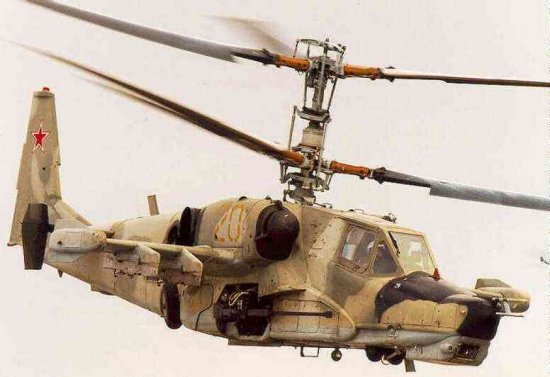
EADS Eurocopter’s Tiger and Kamov/IAI’s KA-50/KA-52 were reportedly eliminated when the Turkish government chose the two lowest-cost bidders.
(click to view full)
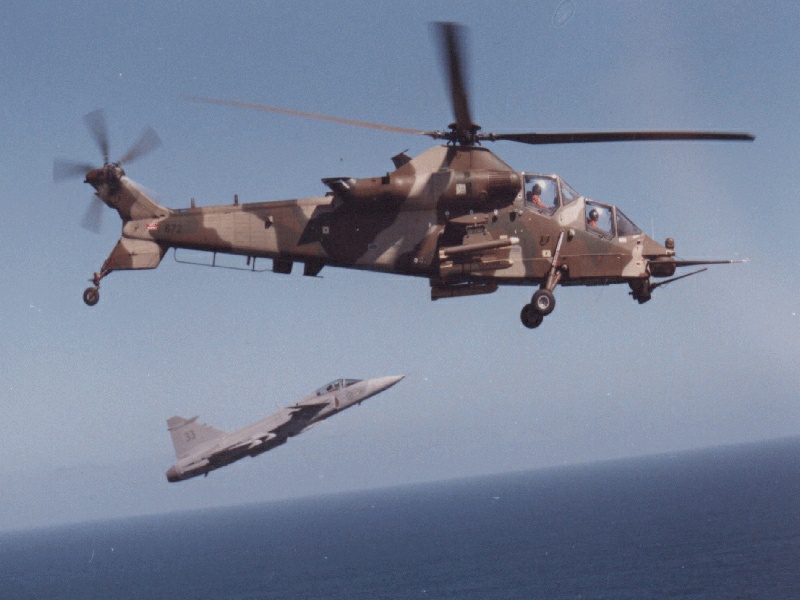
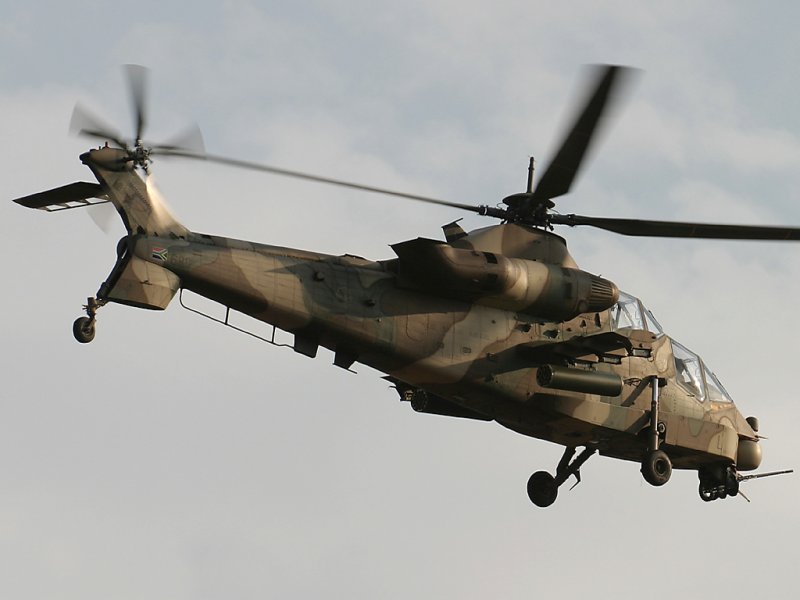
The Denel Rooivalk (trans. “Red Hawk,” or more properly “Kestrel”) is a heavier attack helicopter, with fewer integrated weapons systems than the A129. One of its key features is that it has been designed to operate in very basic surroundings for prolonged periods without sophisticated support. At present, the only Rooivalks produced since the helicopter’s inauguration in 1999 have been 12 machines for the South African Defense Forces. The Malaysian Defence Force supposedly has plans to acquire Rooivalk helicopters “when funding is available,” and South Africa’s Port Elizabeth Herald quotes analysts who believe that a win in Turkey might also tip Pakistan toward the platform.
Middle Eastern Newsline offers a further report that South Africa has outlined plans to co-produce a range of platforms in Turkey as part of a defense partnership based on Ankara’s attack helicopter program. They said South Africa has offered one of the most generous offset deals as part of its offer of the Rooivalk attack helicopter to the Turkish Army. “Under the offer, Turkey and South Africa would create a strategic defense partnership that would rapidly develop out defense industries,” a Turkish official said.
On the flip side, the Turkish Daily News reported that Eurocopter who supplies the Rooivalk’s engines and some spare parts, has said that it would not guarantee a supply line for Turkey if Ankara chose the Rooivalk.
Note that both Agusta and Denel propose moving their production lines to Turkey.
The shortlist was something of a surprise to many observers; at the time, the Turkish Daily News reports that it may even lead to friction between the government and the military. Turkey’s military, which has a large political role as the de facto guarantor of Kemal Attaturk’s secularist vision, was reportedly split between the Eurocopter Tiger and Boeing Apache. The paper further noted that Land Forces Commander Gen. Yasar Buyukanit, the most critical military figure concerning the attack helicopter program and possibly the next Chief of Staff, was not present at the meeting.
Appendix B: Additional Readings & Sources
Readers with corrections or information to contribute are encouraged to Contact us. We understand the industry – you will only be publicly recognized if you tell us that it’s OK to do so. Thanks to reader Keith Campbell for his added precision in the translation of “Rooivalk”.
Background: ATAK Program
* Turkish SSM – Tactical Reconnaissance and Attack Helicopter (ATAK) Project.
* AgustaWestland – T129
* TAI – T129 Attack Helicopter
* Army Technology – A129 International Multi-Role Combat Helicopter, Italy
* Army Technology – Rooivalk Attack Helicopter, South Africa
* Turkish Daily News, via WayBack – How not to buy weapons systems. Offers a timeline of the program from 1995-2005.
Background: Ancillary Systems
* Aselsan – ASELFLIR 300T Aviyonik Termal Goruntuleme Sistemi.
* Roketsan – CIRIT | 2.75″ Laser Guided Missile. 70mm laser-guided rocket. T129B only.
* Roketsan – MIZRAK-U | Long Range Anti Tank Missile. Formerly UMTAS. Uses Imaging Infrared guidance, has an alternative laser seeker option. T129B only.
News & Views
* Defence Turkey (Jan 29/14) – Turkey’s Defence Budget of 2014. Includes the status of the T129 and UMTAS.
* Turkish Daily News (Dec 2/06) – Back to square one in attack helicopter plan: Ankara preparing to scrap bidding. Via NOSINT.
* The Herald Online (July 5/06) – Turkey shortlists Rooivalk attack chopper [dead link]
* Turkish Daily News, via WayBack (July 4/06) – Helicopter contest may divide government, military
* Middle Eastern Newsline, via WayBack (July 4/06) – S. Africa Offers Missile Projects To Turkey
* Turkish Press, via WayBack (July 4/06) – Defense Industry Executive Committee Meeting
* AP, via Houston Chronicle (June 30/06) – Turkey Shortlists Firms for Helicopter [dead link]
* DID (Sept 29/05) – Turkish Attack Heli Competition Stumbles Again
* DID – Turkey Sticks With Sikorsky: $3.5b for over 100 H-60 Family Helicopters. Some may also feature a weapons package.