Plate Inserts for US Body Armor: SAPI, ESAPI, XSAPI (2004-2012)

IOTV: key features
(click to view full)
When reading about modern body armor one often hears about small arms protective inserts (SAPI) or Enhanced SAPI (ESAPI) ceramic plate inserts. While these inserts are more fragile than past generations of inserts, they offer a significant improvement over their 1990s predecessors in terms of both weight and protection. After episodic issues with production ramp-up and quality control, this gear is widely fielded with the US Army and several allied militaries. The US Marines replaced it with the MTV. The Army itself has introduced the Improved OTV. Privately developed body armors like Blackwater Gear were also present in theater. All of these designs rely on a “vest and plates” approach that uses a similar set of inserts to give the vests most of their bullet-stopping power.
This DID spotlight article covers the USA’s purchases in this area from mid-2004 to the end of 2012.
ESAPI & XSAPI, Explained
Boron Carbide
(click to view full)
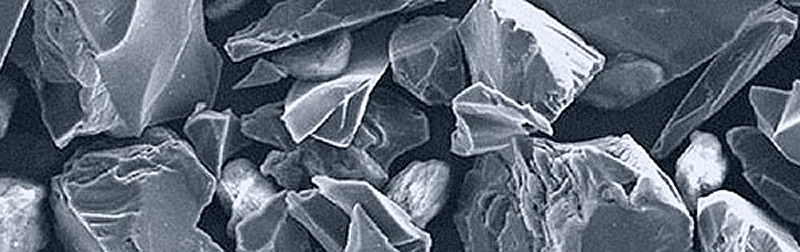
Current US body armor plates are made of boron carbide ceramics, a material whose properties are used in a number of applications, including nuclear reactors. For various reasons, China is a significant boron carbide producer. Plate manufacturer Ceradyne is vertically integrated in this area, however, thanks to its August 2004 acquisition of German producer ESK, who manufactures boron carbide in a electric arc furnace at their Kempten, Germany facility.
At the beginning of 2003, ceramic small arms protective inserts (SAPI) plates were experimental; the 2,000 or so plates the military had were used by special operations forces. In the meantime, servicemembers went to war with regular protective vests. Thanks to a major upgrade effort completed in early 2004, ceramic plates are now standard issue and a major market has developed.
SAPI plates were the initial design, but increased use of armor-piercing bullets that SAPI couldn’t handle prompted further research. ESAPI introduces a thicker ceramic plate that provides superior (but not complete) protection against armor piercing bullets up to 7.62mm. The U.S. military’s plan aimed to replace most of their 2MM-2.5MM SAPI plates with ESAPI. At approximately $600 per plate, ESAPI costs about 50% more.
Fielding ESAPI took a long time, and as Military.com reports, several factors were involved. An initial shortage of the raw material that is needed to strengthen the plates was one issue, and concerns about the 18 pound weight of the new armor (about 1 pound heavier) and its effects on overall combat performance in Iraq’s 100+ degree heat was another.
There was also a controversy about wearing the side plate inserts, which provide extra protection but make it more difficult to move within or quickly get out of vehicles like the Hummers. Some soldiers serving on the front lines believe that even more weight and restricted mobility (especially in Hummers) is more likely to get them hurt than protect them. Army Secretary Francis Harvey, on the other hand, believed that every GI should wear a couple of extra protective panels along the sides of the armor vest. Those side panels are referred to as ESBI (Amy) and S-SAPI (Marines) inserts.
Previous military studies had highlighted body armor weight and bulk as an issue, but in the end protective performance apparently won out. As a small concession, local combat commanders will order which inserts must be worn, but a steady flow of orders for ESBI and S-SAPI plates makes it clear that a new demand driver was at work.
Ceramic plates of all types remain regular procurement items. In addition to the demand for side plates, and the ESAPI upgrade, there also a continuous replacement requirement. One might note the “Do Not Drop” lettering in the above picture, for instance. Or the fact that plates tend to crack or even powder when hit by bullets. Though they are tested for a certain level of multi-hit protection, after absorbing a couple of hits it’s often time to get a new plate. This is a tradeoff of ceramic vs. metal plate inserts, in exchange for less weight and better protection.
In May/June 2007, a follow-on solicitation was issued by the US Army for “X-SAPI.” It was intended to be a next-generation insert that can stop certain 7.62mm armor-piercing rounds that will penetrate SAPI and ESAPI boron carbide plates, but will only weigh a pound more than current ESAPI kits. Flexible armors are now permitted under the solicitation, but caveats made participation difficult for certain manufacturers like Dragon Skin’s maker Pinnacle. In the end, XSAPI plates would retain the basic “vest plus inserts” approach used to date. See “Additional Readings” section for X-SAPI resources.
Contracts & Key Events
Unless otherwise noted, the Defense Supply Center Philadelphia (now Defense Logistics Agency Troop Support) in Philadelphia, PA issued the contracts.
Interceptor OTV
(click to enlarge)
Nov 29/12: 3M buys Ceradyne. 3M buys Ceradyne at $35/share, and merges 3M’s wholly owned subsidiary, Cyborg Acquisition Corporation with and into Ceradyne as a wholly owned subsidiary of 3M:
“The depositary for the tender offer has advised that, as of such time, a total of 21,093,164 shares were validly tendered and not withdrawn in the offer, representing approximately 87.7% of Ceradyne’s currently outstanding shares (or approximately 85.8% calculated on a fully diluted basis). In addition, Notices of Guaranteed Delivery have been delivered with respect to 1,824,343 shares that have not yet been tendered, representing approximately 7.6% of Ceradyne’s currently outstanding shares. 3M has accepted for payment all validly tendered shares…. 3M will exercise the “top-up option” under the merger agreement, pursuant to which Cyborg Acquisition Corporation will purchase from Ceradyne additional shares of Ceradyne common stock, and intends to complete the second and final step of the acquisition, a short-form merger under Delaware law, later today, pursuant to which Cyborg Acquisition Corporation will merge with and into Ceradyne and each share of Ceradyne common stock not tendered in the tender offer, other than those as to which holders exercise appraisal rights under Delaware law and those held by 3M or Ceradyne or their respective wholly owned subsidiaries, will be converted into the right to receive $35.00 per share in cash, without interest and less any required withholding taxes. This is the same price per share paid in the tender offer.”
Sources: Ceradyne, “3M Successfully Completes Ceradyne Tender Offer; Acquisition Expected Today” and “3M Completes Acquisition of Ceradyne”.
3M buys Ceradyne
Jan 12/12: BAE Systems announces a $15.8 million US Army award for XSBI side protection plates,as a follow-on to their Sept 24/10 order, bringing the total value so far to $50.6 million. The plates will be delivered by the end of February 2012. BAE says that they have delivered over 1 million SAPI, ESAPI, and XSBI plates from their Phoenix, AZ facility since 1998 (W91CRB-10-C-0311).
Oct 4/11: Ceradyne, Inc. announces $6.9 million in ceramic body armor delivery orders from United States Special Operations Command, for “special ergonomic designed systems that Ceradyne has produced for USSOCOM in the past.”
Sept 23/11: Ceradyne, Inc. in Costa Mesa, CA, receives the 1st delivery order under a new 3-year, $127.3 million firm-fixed-price contract for ESAPI plates, for delivery to the US Army, Navy, USAF, and USMC. Work will be performed in California and Kentucky, until March 31/13 (SPM1C1-11-D-1061, DO 0001). See also Ceradyne release.
August 1/11: The DOD’s Inspector General releases report D-2011-088 with this lead: Ballistic Testing for Interceptor Body Armor Inserts Needs Improvement [PDF]. In response to a congressional request, the audit evaluated product quality assurance for 7 Army contracts valued at $2.5 billion, for ballistic inserts awarded between 2004 – 2006. The report found that:
The Army Program Manager Soldier Equipment (PM SEQ) could provide only limited assurance that approved ballistic materials for approximately 5 million inserts on 7 contracts met the contract requirements. This occurred because PM SEQ did not consistently enforce the requirements for testing the body armor ballistic inserts. Specifically on 2 contracts, PM SEQ did not conduct all the required tests because they had no protection performance concerns on these inserts. On all 7 contracts, PM SEQ did not always use the correct size ballistic insert for FATs, use a consistent methodology for measuring the proper velocity, or enforce the humidity and temperature requirements. In addition, PM SEQ did not require weathered and altitude tests on 6 of the 7 contracts.”
The Inspector General recommends that the PM SEQ revise the Contract Purchase Description (COPD) to clearly define the point at which velocity is to be measured and performs the required weathered and altitude tests. See also Jan 29/09 entry.
July 18/11: Ceradyne, Inc. announces a $36.2 million delivery order for ESAPI ceramic body armor plates. Ceradyne will begin shipping this order in Q4 2011, and finish in Q1 2012. It is not completely clear whether or not this is the same as the April 4/11 order.
The order was issued under October 2008’s 5-year, $2.37 billion contract; Ceradyne says there is a balance of approximately $2.0 billion remaining.
June 01/11: Ceradyne, Inc. announces that it has received a $10 million order for X-level XBSI side plate inserts. Ceradyne plans to begin shipments late in Q2, with completion estimated to be by Q3 2011. David P. Reed, Ceradyne President, North American Operations, commented: “We are pleased to have been awarded this XSBI contract. We have already ramped up our Lexington, Kentucky and Irvine, California facilities.”
April 4/11: Ceradyne, Inc. in Costa Mesa, CA wins a $36 million firm-fixed-price contract for 80,000 SAPI plates. Work will be performed in Costa Mesa, CA, with an estimated completion date of Sept 30/11. Three bids were solicited with 2 bids received by U.S. Army Research, Development and Engineering Command at Aberdeen Proving Ground, MD (W91CRB-09-D-0001).
March 31/11: Ceradyne’s release describes an order for $36 million of high-level XSAPI plates, which it plans to ship them between Q2-Q3 2011. It is not clear whether this is in fact the same order as the April 4/11 Pentagon announcement, which mentions only s”small arms protective inserts”.
The order was issued under October 2008’s 5-year, $2.37 billion contract; Ceradyne says there is a balance of approximately $2.1 billion remaining.
March 22/11: BAE Systems Protection Systems in Phoenix, AZ delivers their 1,000,000th SAPI/ESAPI body armor insert plate. This is a bit like those McDonald’s “x billion served” signs that really counted their french fries, since a delivered armor plate set always includes a number of plates. BAE Systems.
March 7/11: Ceradyne, Inc. in Costa Mesa, CA receives a $56.6 million firm-fixed-price contract for 120,000 ESAPI plates. Work will be performed in Costa Mesa, CA, with an estimated completion date of Sept 30/11, the end of the current fiscal year. Three bids were solicited with 3 bids received by US Army Contracting Command at Aberdeen Proving Ground, MD (W91CRB-09-D-0001). See also Ceradyne release. The order was issued under October 2008’s 5-year, $2.37 billion contract; Ceradyne says there is a balance of approximately $2.1 billion remaining.
The order was issued under the $2.37 billion October 2008 contract (vid. Oct 6/08 entry) and is scheduled to expire in September 2013. At present, the remaining contract balance is approximately $2.1 billion. Ceradyne.
Jan 31/11: Tencate Advanced Armor USA, Inc. in Newark, OH wins an $8.1 million firm-fixed-price contract to provide SAPI plates “for Afghanistan.” It is unclear if this means for the Afghan National Army and government, or for use in the Afghan theater.
Work will be performed in Newark, OH, with an estimated completion date of June 30/11. The U.S. Army Contracting Command at Aberdeen Proving Ground, MD solicited 4 bids, with 4 bids received (W91CRB-08-D-0063).
Jan 4/11: Ceradyne, Inc. announces a $5.8 million ESAPI delivery order order is a delivery order under the October 2008 framework, issued by the U.S. Army RDECOM ACO Center at Aberdeen Proving Ground, MD. Ceradyne expects to ship the plates within Q1 2011.
Sept 24/10: BAE Systems in Phoenix, AZ wins a $34.8 million firm-fixed-price contract for 160,000 Personal Armor X-side ballistic inserts. BAE has confirmed that these plates are part of the XSAPI program.
Work will be performed at Phoenix, AZ, with an estimated completion date of March 31/11. Five bids were solicited with 5 received by US Army Research Development & Engineering Command Contracting Center at Aberdeen Proving Ground, MD (W91CRB-10-C-0311; Serial #2024).
Sept 24/10: Armor Works Enterprises, LLC in Chandler, AZ received a $15.9 million firm-fixed-price contract for 90,000 Personal Armor X-side ballistic inserts.
Work will be performed at Chandler, AZ, with an estimated completion date of March 31/11. Five bids were solicited with 5 received by US Army Research Development & Engineering Command Contracting Center at Aberdeen Proving Ground, MD (W91CRB-10-C-0309; Serial #2023).
Aug 26/10: Ceradyne, Inc. in Costa Mesa, CA receives a $21.7 million firm-fixed-price contract for spall cover repairs for an estimated 447,852 X-SAPI/ ESAPI plates over the remaining ordering period of the contract.
Work is to be performed in Costa Mesa, CA, with an estimated completion date of Oct 2/13. One bid was solicited with one received by the US Army Research Development & Engineering Command Contracting Center at Aberdeen Proving Ground, MD (W91CRB-09-D-001; Serial No. 1759).
Jan 12/10: Ceradyne announces a $12.4 million order for SAPI lightweight ceramic body armor.
The order was issued by the US Army RDECOM at Aberdeen Proving Grounds in Maryland, and the company expects shipments to be completed in the first quarter 2010 – but the order itself is a foreign military sale. David Reed, President of Ceradyne North American Operations:
“We are very pleased to receive this additional FMS body armor order. We believe that the government placed this order with Ceradyne, at least in part, due to its reliable delivery, quality performance on previous SAPI procurements and competitive pricing. This is a new order from the U.S. Army and should not be confused with the XSAPI/ESAPI 5-year procurement previously announced.”
Nov 30/09: Armorworks in Chandler, AZ received a maximum $21.6 million firm-fixed-price, indefinite-quantity/ indefinite-delivery, partial-set-aside contract (SPM1C1-08-D-1023) for ESAPI plates used as personal armor by US troops. This contract is exercising a second option year period. The date of performance completion is Nov 30/10.
Nov 30/09: BAE Systems Aerospace & Defense Group in Phoenix, AZ received a maximum $20.3 million firm-fixed-price, indefinite-quantity/ indefinite-delivery partial-set-aside contract (SPM1C1-08-D-1024) for ESAPI plates used as personal armor by US troops. This contract is exercising a second option year period. The date of performance completion is Nov 30/10.
Sept 17/09: Ceradyne received an $8 million ESAPI (Enhanced Small Arms Protective Inserts) order which is expected to be shipped in the first quarter of 2010. This order is a delivery order issued against a larger 3-year indefinite-delivery/ indefinite quantity contract issued in December 2007 (see Dec 11/07 entry).
Sept 2/09: Armorworks in Chandler, AZ received a $10.8 million delivery order #0002 against a previously awarded firm-fixed price, indefinite-delivery/indefinite-quantity contract (M67854-06-D-3072) for ESAPI plates used as personal armor by US Marines. Work will be performed in Chandler and is expected to be completed in August 2010. Contract funds in the amount of $10.8 million will expire at the end of the current fiscal year. Marine Corps Systems Command in Quantico, VA manages the contract.
Sept 2/09: BAE Systems Aerospace & Defense Group in Phoenix, AZ received a $6.2 million delivery order #0006 against a previously awarded firm-fixed price, indefinite-delivery/indefinite-quantity contract (M67854-06-D-3031) for ESAPI plates. Work will be performed in Phoenix, AZ and is expected to be completed in August 2010. Marine Corps Systems Command in Quantico, VA manages the contract.
Aug 27/09: Ceradyne announces a $16.4 million ESAPI order to be delivered in the 4th quarter of 2009. This order is a delivery order issued by the Defense Supply Center Philadelphia against a larger ID/IQ 3-year contract issued in December 2007.
Aug 7/09: Eagle Industries Unlimited, Inc. in Fenton, MO received a $20.6 million modification to a previously awarded firm-fixed-price contract (M67854-08-C-3009) for an additional 49,500 ESAPI carriers. The carriers help add the ESAPI plates to tactical vests.
The work will be performed in Lares, Puerto Rico, and is expected to be completed in February 2010. All contract funds will expire at the end of the current fiscal year. This contract was a sole source award issued pursuant to the statutory authority under 10 U.S.C. §2304c2, as implemented by FAR 6.302-2, “Unusual and Compelling Urgency.” The IS Marine Corps Systems Command in Quantico, VA manages the contract.
July 21/09: Ceradyne announces an $18.7 million order for SAPI lightweight ceramic body armor to be delivered by Dec 31/09. The order was issued by the U.S. Army RDECOM, Aberdeen Proving Grounds, MD. The order is a foreign military sales (FMS) requirement.
June 18/09: Ceradyne announces a $8.3 million ESAPI order to be delivered to the US Marine Corps in Quantico, VA by September 2009.
June 18/09: Armorworks, Inc. in Chandler, AZ received a $7 million delivery order against a previously awarded contract for ESAPI plates, from the Marine Corps Systems Command in Quantico, VA.
See the Jan 29/09 entries for more information concerning First Article Testing controversies surrounding the firm’s plates, and the company’s response.
Work will be performed in Chandler, AZ and is expected to be complete in December 2009. All contract funds will expire at the end of the current fiscal year, on Sept 30/09 (M67854-06-D-3071).
May 21/09: Ceradyne announces a $7.3 million ESAPI order to be delivered in the 3rd quarter of 2009. This order is a delivery order issued by the Defense Supply Center Philadelphia against a larger ID/IQ 3-year contract issued in December 2007.
April 14/09: Ceradyne announces an $8.1 million order for SAPI lightweight ceramic body armor to be delivered by Sept 10/09. The order was issued by the US Army RDECOM, Aberdeen Proving Grounds, MD. The order is a foreign military sales (FMS) requirement.
March 31/09: Ceradyne announces a $77 million order for XSAPI ceramic body armor plates to be delivered by the 4th quarter of 2009. The order was issued under the $2.37 billion 5-year ID/IQ contract announced in October 2008. This initial XSAPI production order replaces the $73 million XSAPI production order announced by Ceradyne on Oct 9/08; that order was subsequently withdrawn when a competitor protested the award.
Feb 20/09: Ceradyne announces a $12.1 million ESAPI order to be delivered in the 1st and 2nd quarter of 2009. This order is a delivery order issued by the Defense Supply Center Philadelphia against a larger ID/IQ 3-year contract issued in December 2007.
Feb 4/09: The House Armed Services Committee holds a joint session of the air and land forces subcommittee and the seapower and expeditionary forces subcommittee, looking at the issue of body armor. Staff Sgt. Fred Rowe of the 101st Airborne Division, quoted in a US Army release:
“It comes to a point where you are more mission incapable of doing our job or you’re more at risk or vulnerable with all the equipment on… There’s times I’ve been on a mission where I could have gotten out of the firefight a lot quicker and I could have handled business a lot easier if I was able to be more mobile or be more effective with less weight… I think it should be left up to the commanders or to the independent leaders on the ground to decide what kind of armor we need to take out — or if we can downgrade… There’s a risk all Soldiers are willing to take… I think that (in) certain situations – mission dependent – as Soldiers we would be happy to take off some of the body armor to be more mission capable, more mobile on the ground, more flexible, faster.”
Jan 29/09: Army Secretary Pete Geren orders more than 16,000 sets of body armor recalled, after a Defense Department Inspector General audit concluded that some of the plates had failed tests, and faulted the Army for flawed testing procedures. The DoD IG investigated plates made under contract #W91CRB-04-D-0040 (see Aug 20/04, below), and concluded that because the Army didn’t perform or score the tests consistently, 3 of the 8 ballistic insert designs that passed first article testing actually failed. Army testers disagree.
The DoD IG report isn’t public yet, but Associated Press managed to receive an advance copy. Geren insisted that the armor was not deficient, but chose to recall the sets as a “precaution” until the Deputy Secretary of Defense could adjudicate the ongoing disagreement between the Army and the DoD IG regarding its testing procedures.
Rep. Louise Slaughter [D-N.Y.] was the motive force behind the audit, after complaining that the first audit she had asked for in 2006 wasn’t thorough enough. She is now focused on finding out exactly which contracts are associated with potentially deficient plates. Associated Press | Washington Times exclusive | Rochester (NY) Democrat and Chronicle newspaper | CNN | FOX News | WIRED Danger Room.
Jan 29/09: A Defense Daily article confirms that the plates in question were from Armorworks, Inc. Armorworks in Chandler, AZ issues a statement:
“ArmorWorks’ quality management and manufacturing processes strictly adhere to the government’s stringent contract requirements. Every ArmorWorks body armor plate shipped to the US Military has passed the government’s inspection procedures including first article testing of each design as well as production lot testing as products are delivered. Additionally, the company’s internal procedures include thorough testing of raw materials, processes, and finished armor plates.
Regarding a recent AP article on armor testing procedures, Bill Perciballi, president of ArmorWorks said, “Our Department of Defense test records show that all of our armor delivered to the military passed all tests and were approved and accepted prior to shipment.”
Nov 5/08: Ceradyne announces a $21.9 million ESAPI order to be delivered late in 2008 with completion in 1st quarter 2009. This order is a delivery order issued by the Defense Supply Center Philadelphia against a larger ID/IQ 3-year contract issued in December 2007.
Oct 16/08: Defense Tech follows up the December 2007 postponement of body armor tests, noting that the Army has rejected all flexible-plate systems:
“Remember, the Army solicitation… called for X-SAPI to defeat “future” AP threats — namely the M993 — and also asked for submission of “flexible” systems to be designated “F-SAPI?” This, in part, answered the mail after hearings in the House regarding the Dragon Skin tests by Army officials… These were supposed to be the “head-to-head” tests — or something loosely approximating that — Neal was asking for and lawmakers acquiesced to. Well, the Army has deemed the technology too immature, telling me only E-SAPI and X-SAPI vendors qualified, including Ceradyne, BAE, Protective Group and Armacel, for the tests.
“An F-SAPI capability has not reached the level [of] technical maturity to protect Soldiers in combat,” PEO Soldier said.”
A subsequent article covering Evolution Armor’s new Skalar Exoskin Gen 4+ flexible armor adds that the Army will begin testing in November 2008 on the approved E-SAPI and X-SAPI designs.
Oct 6/08: Ceradyne announces an ID/IQ contract for both its XSAPI and ESAPI personal ceramic armor plates from the US Army RDECOM, Aberdeen Proving Grounds, MD. The total amount of this contract is approximately $2.37 billion and covers a period of approximately 5 years. This ID/IQ contract is for both XSAPI and ESAPI armor plates (front and back). The U.S. Army can order one or both types of plates over the 5-year life of the contract. The contract provides for a minimum of 500 sets per year to a maximum of 240,000 sets per year.
Sept 30/08: Ceradyne announces a $14.1 million order for SAPI lightweight ceramic body armor to be delivered by May 1/09. The order was issued by the US Army RDECOM, Aberdeen Proving Grounds, MD. This new order brings Ceradyne’s recent SAPI awards to a total of $39.2 million. The order is a foreign military sales (FMS) requirement.
Sept 29/08: Ceradyne announces a $25.1 million order for SAPI lightweight ceramic body armor to be delivered by May 1/09. The order was issued by the US Army RDECOM, Aberdeen Proving Grounds, MD. The order is a foreign military sales (FMS) requirement.
Aug 20/08: Point Blank Solutions, Inc. announces that wholly owned subsidiary, Protective Apparel Corporation of America (PACA) has received an $8.3 million contract award from the Joint Contracting Command – Iraq/Afghanistan for 30,000 tactical, concealable vests and 60,000 Level IV plates. The Company expects to complete production by December 2008. The release describes it as an “international” order, which strongly implies that these vests will equip allied Iraqi and/or Afghan forces.
April 22/08: Point Blank Solutions, Inc.’s wholly owned subsidiary, Protective Apparel Corporation of America (PACA) announces a new, $13.5 million contract from the U.S. Department of the Army, Joint Contracting Command-Iraq. The firm received the award through the U.S. General Services Administration (GSA), and will begin production immediately.
This new purchase and delivery order is for approximately 42,500 Level IIIA concealable, ballistic vests, along with Level IV plates that can be utilized with any level and model soft body armor vest. The packages produced are designed to stop small arms fire, and are equipped with large, integrated front and rear plate pockets. PACA expects to complete the order by August 2008. Point Blank responded to DID’s follow-on questions, noting National Institute of Justice certification levels that apply to police and law enforcement gear provided to SWAT teams, FBI, et. al.:
“…the plates aren’t ESAPI per se (term used more for military application). As highlighted in the press release, they are stand-alone NIJ Level IV plates that can be employed in any level and model soft armor vest. In other words, it is a family of plates certified by NIJ that can be used for military or law enforcement applications. In the case of our recent contract, those plates meet the specific requirements for the Army.”
April 11/08: Ceradyne, Inc. announces a $32.3 million ESAPI (Enhanced Small Arms Protective Inserts) order to be delivered in the 2nd and 3rd quarters of 2008. This is a delivery order issued by the Defense Supply Center Philadelphia against a larger ID/IQ (Indefinite Delivery/Indefinite Quantity) 3-year contract issued in December 2007. Ceradyne release.
April 1/08: Ceradyne, Inc. announces ceramic body armor delivery order for $41.1 million from the U.S. Army at Aberdeen Proving Ground, MD for Enhanced Side Ballistic Inserts (ESBI). These inserts will be delivered from June 2008 through September 2008, and are shipped against a 5-year indefinite delivery/ indefinite quantity contract announced in July 2006.
March 13/08: Ceradyne, Inc. announces a $9.1 million delivery order from the United States Special Operations Command (USSOCOM) at MacDill Air Force Base, FL for the family of Ballistic Plates for Body Armor Load Carriage Systems (BALCS). This is the 2nd BALCS delivery order (see also Jan 4/08 entry) issued by SOCOM against the maximum value $400 million contract.
March 7/08: Ceradyne, Inc. announces a $32.3 million ESAPI (Enhanced Small Arms Protective Inserts) order to be delivered in the 2nd and 3rd quarter of 2008. This is a delivery order issued by the Defense Supply Center Philadelphia against a larger 3-year contract issued in December 2007.
Jan 10/08: Ceradyne, Inc. announces a $9.6 million order for Small Arms Protective Inserts (SAPI) from ‘Federal Prisons Industries, Federal Correctional Institution, UNICOR’ in Washington, D.C., for delivery from February 2008 – early April 2008. David P. Reed, Ceradyne President North American Operations, commented:
“We are pleased to have received this new order… It represents a new market for Ceradyne’s lightweight ceramic armor as contrasted to its large direct sales to the various U.S. Armed Services procurement agencies.”
Jan 4/08: Ceradyne, Inc. announces an indefinite delivery/ indefinite quantity 5-year order from the United States Special Operations Command (USSOCOM) at MacDill Air Force Base, FL for the Family of Ballistic Plates for Body Armor Load Carriage System (BALCS).. The order is estimated to have less than a $6 million minimum value, and a maximum value in excess of $400 million. The initial delivery order against the ID/IQ contract is $4.9 million, and is scheduled for delivery in early 2008.
Dec 20/07: Military.com reports that Brig. Gen. Mark Brown, head of the US Army’s Program Executive Office Soldier, has told them that test firing on so-called “XSAPI” and “FSAPI” armor would be held off until March 2008 because “some body armor manufacturers told us they needed a little more time to get long-lead materials and to test new designs before they could submit them to us.” The key challenge is providing this level of protection without adding too much extra weight, which harms the tactical and situational mobility of troops and can become a net negative from a protection point of view.
Brig. Gen. Brown said the new armor designs would likely be tested at Aberdeen Test Center, MD beginning in March 2008, and finishing up up by June 2008.
The report indicates interest in XSAPI testing from Pinnacle Armor in participating, but adds that another firm named Evolution Armor will not be submitting the Skalar Exo-Skin Gen4 design that it touts on its website as “capable of addressing the ESAPI and XSAPI requirements.” Evolution uses an interesting Evo-Flex set of bi-directional laminates for its armors, and some designs also use overlapping titanium plates. The X-SAPI selection process requires considerable up front investment before a contract might be awarded, however, which tends to keep smaller firms out of the competition and looking to easier markets in the USA and abroad.
Dec 11/07: Ceradyne, Incorporated in Costa Mesa, CA won a maximum $48.7 million firm-fixed-price, indefinite-quantity/ indefinite-delivery contract for enhanced small arms protective inserts (ESAPI) plates on behalf of the US Army, Navy, Air Force, and Marine Corps. Work will be performed in Costa Mesa and in Irvine, CA. The original proposal was web solicited with 6 responses. Date of performance completion is Dec 2/08 (SPM1C1-08-D-1022).
Dec 11/07: Small business qualifier ArmorWorks Enterprises, LLC. in Chandler, AZ won a maximum $47.1 million firm-fixed-price, indefinite-quantity/ indefinite-delivery contract for enhanced small arms protective inserts (ESAPI) plates on behalf of the US Army, Navy, Air Force, and Marine Corps. The original proposal was web solicited with 6 responses. Date of performance completion is Dec 2/08 (SPM1C1-08-D-1023).
Dec 11/07: BAE Armor Holdings subsidiary Simula Aerospace and Defense Group. in Phoenix, AZ received a maximum $46.4 million firm-fixed-price, indefinite-quantity/ indefinite-delivery contract for enhanced small arms protective inserts (ESAPI) plates on behalf of the US Army, Navy, Air Force, and Marine Corps. The original proposal was web solicited with 6 responses. Date of performance completion is Dec 2/08 (SPM1C1-08-D-1024).
Nov 30/07: A Ceradyne release touts a $107 million delivery order for ESAPI (Enhanced Small Arms Protective Inserts) from the U.S. Army, Aberdeen Proving Ground, Maryland.
“This new delivery order is scheduled to be shipped beginning January 2008 through May 2008. This delivery order will be shipped against a larger indefinite delivery/indefinite quantity (ID/IQ) contract. The Company records as firm orders only delivery orders, such as the above, that have firm scheduled delivery dates.”
Aug 8/07: Ceradyne Inc., Costa Mesa, Calif., was awarded on July 26, 2007, a delivery order amount of $78.5 million as part of a $603.6 million firm-fixed-price contract for enhanced small arms protective inserts (ESAPI). Work will be performed in Lexington, KY; and in Costa Mesa and Irvine, CA, and is scheduled to be shipped beginning September 2007 through December 2007. Bids were solicited via the World Wide Web on May 19/04, and 16 bids were received by the U.S. Army Research, Development, and Engineering Command (ARDEC) at Aberdeen Proving Ground, MD (W91CRB-04-D-0039). Ceradyne release.
June 2007: The US Army issues a solicitation for “X-SAPI”, the next generation of tactical vest inserts. It aims to provide greater protection than ESAPI, while weighing less than a pound more. The request was originally put out in May 2007, but was modified to include flexible/”scalar” systems as well following some contentious hearing in Congress re: Pinnacle’s “Dragon Skin” armor. There is one key caveat, however:
“3.6.5 Thickness. The XSAPI in finished form will have uniform thickness throughout. The tolerance of the thickness shall not exceed 1/8 inches between any two measurements.”
Since Pinnacle’s Dragon Skin system uses rounded disks, this requirement is likely to exclude them from the competition. See “Additional Readings” section for X-SAPI resources.
April 17/07: ArmorWorks Enterprises, LLC announces the receipt of a $5.2 million contract from The Defense Supply Center Philadelphia (DSCP) for Enhanced Side Ballistic Inserts (ESBI) for the U.S. Air Force. These fit into bulletproof vests in side pockets, and provide the same armor protection as their SAPI and ESAPI inserts. This contract will be fulfilled by July 2007.
The U.S. Army awarded the company a $543 million indefinite delivery, indefinite quantity (ID/IQ) contract for ESBI in 2006.
March 29/07: ArmorWorks of Chandler, AZ announces a $5.6 million contract from the United States Marine Corps for 14,000 sets of Enhanced Side Small Arms Protective Inserts (S-SAPI) tp protect U.S. troops’ sides. The S-SAPIs use the same armor technology as SAPI inserts. The contract is to be fulfilled by the end of 2007.
See also Sept 26/06 entry.
Jan 31/07: Ceradyne announces a $113 million delivery order for ESAPI (Enhanced Small Arms Protective Inserts) from the U.S. Army at Aberdeen Proving Ground, Maryland. This new delivery order is scheduled to be shipped beginning April 2007 through early September 2007, and is part of a larger indefinite-delivery / indefinite quantity (ID/IQ) contract announced earlier. Ceradyne only records firm orders for delivery orders, such as the above, that have firm scheduled delivery dates. In Ceradyne’s release, President North American Operations Dave Reed commented:
“This delivery order is the largest single ESAPI order ever received by Ceradyne. It represents an increase in the shipping rates of approximately 17% to the U.S. Army compared to 2006. Utilizing the Lexington, Kentucky facility and the Costa Mesa and Irvine, California plants, we expect to meet the Army’s quality and delivery requirements. We believe that the increase in delivery rates is due to our prior quality and delivery performance.”
Jan 17/07: Ceradyne, Inc. announces receipt of a $6 million delivery order for Enhanced Small Arms Protective Inserts (ESAPI) from the U.S. Marine Corps in Quantico, VA. This order is to be delivered in the first half of 2007. Ceradyne release.
Dec 22/06: Ceradyne, Inc. announces “a $133 million delivery order for ESBI (Enhanced Side Ballistic Inserts) from the U.S. Army, Aberdeen Proving Ground, Maryland. This new delivery order is scheduled to be shipped beginning April 2007 through November 2007. The order will be shipped against a larger indefinite delivery/indefinite quantity (ID/IQ) contract announced earlier. The Company records as firm orders only delivery orders, such as the above, that have scheduled delivery dates.”
Nov 6/06: Ceradyne, Inc. announces 2 ceramic body armor delivery orders totaling $122.2 million from the U.S. Army, Aberdeen Proving Ground, Maryland. “The orders are for $57.3 million of ESAPI and $64.9 million of ESBI (side plates) to be shipped from December 2006 through March 2007. These new delivery orders will be shipped against larger indefinite delivery/indefinite quantity (ID/IQ) contracts announced earlier.”
Oct 11/06: ArmorWorks of Chandler, AZ announces from the AUSA (Association of the United States Army) Annual Meeting in Washington, DC the receipt of a $5.4 million follow-on delivery order for Enhanced Small Arms Protective Inserts (ESAPI) under a multi-year ID/IQ contract administered by the multi-service Defense Logistics Agency. With this order, the company announces that its current contracts with the United States Department of Defense exceed $100 million.
Sept 26/06: ArmorWorks of Chandler, AZ announces 2 indefinite delivery/indefinite quantity contracts, totaling up to $33 million, to provide the U.S. Marine Corps with Side-mounted Small Arms Protective Inserts (S-SAPI) and carriers. S-SAPI incorporates both ceramic armor inserts and soft armor [i.e. ballistic vest add-ons], and uses the firm’s patented C2 armor technology.
ArmorWorks currently supplies the U.S. Marine Corps, U.S. Army, U.S. Navy, and U.S. Air Force with body armor, vehicle armor, and aircraft armor including lightweight armor for the Marines’ CH-46E helicopter fleet and the U.S. Navy’s Landing Craft-Air Cushion (LCAC) that transports U.S. Marines from ship to shore.
Sept 13/06: ArmorWorks of Chandler, AZ announces a $5.4 million follow-on delivery order for Enhanced Small Arms Protective Inserts (ESAPI) for protection of Air Force combat personnel. This order was placed under a multi-year ID/IQ contract administered by the multi-service Defense Logistics Agency on behalf of the Air Force.
Sept 12/06: Ceradyne, Inc. announces “new delivery orders for approximately $9.1 million of its lightweight ceramic body armor, enhanced small arms protective inserts (ESAPI). These orders were placed by the Defense Supply Center Philadelphia (DSCP) for delivery late this year and early 2007. These orders were placed against a larger indefinite delivery/ indefinite quantity (ID/IQ) contract announced previously.”
Sept 11/06: Ceradyne, Inc. announces 2 ceramic body armor delivery orders totaling $13.3 million from the U.S. Army, Aberdeen Proving Ground, Maryland. “The orders are for $9.9 million of ESAPI and $3.4 million of ESBI (side plates) to be shipped in fourth-quarter 2006. These new delivery orders will be shipped against larger indefinite delivery/indefinite quantity (ID/IQ) contracts announced earlier.”
Sept 11/06: ArmorWorks of Tempe, AZ and technical ceramics supplier Morgan AM&T announce the successful operation of Morgan’s new production line. The line is dedicated to the supply of ceramic plates for ArmorWorks’ side armor systems, and ArmorWorks hopes it will help accelerate fulfillment of their maximum $543 million ID/IQ contract with the U.S. Army.
Aug 29/06: ArmorWorks of Tempe, AZ announces its first shipment of Enhanced Side Ballistic Inserts (ESBI) to the U.S. Army, 60 days ahead of the delivery requirement. This delivery commences fulfillment of the company’s previously announced multi-year ESBI award from the U.S. Army of up to $543 million.
July 10/06: Ceradyne Inc. in Costa Mesa, CA received a delivery order amount of $59.8 million as part of a $611.7 million firm-fixed-price contract for enhanced side ballistic inserts with carriers. Work will be performed in Costa Mesa, CA and is expected to be complete by June 30, 2011. Bids solicited via the World Wide Web on Feb. 17, 2006, and 16 bids were received by the Army Research, Development, and Engineering Command at Aberdeen Proving Ground, MD (W91CRB-06-D-0028).
July 7/06: ArmorWorks of Tempe, AZ announces a maximum $543 million contract from the United States Army for Enhanced Side Ballistic Inserts, protecting U.S. troops’ sides with ceramic and composite armor technology. The 3-4 year Indefinite Delivery/Indefinite Quantity (ID/IQ) contract represents ceramic body armor production for U.S. troops worldwide.
President and CEO Bill Perciballi told the Phoenix Business Journal that this is the largest deal in the company’s 8-year history, and came about because the Army wanted to expand the number of SAPIs it distributed to soldiers. Over the next 3-4 years the Army will receive 829,000 sets of SAPIs (2 plates per set), and the Marines will receive 120,000 – 250,000 plates. At the time, ArmorWorks employed about 200 people, and expected that number to rise to about 250 by the end of 2006. ArmorWorks release | Phoenix Business Journal
July 3/06: Ceradyne, Inc. announces a new 5-Year $611.7 Million Indefinite Delivery/ Indefinite Quantity (ID/IQ) government contract for Enhanced Side Ballistic Inserts (ESBI) with a maximum value of $611.7 million. Simultaneously, the Company received an initial delivery order for $59.8 million, scheduled to be shipped from July 2006 to November 2006. The contract was awarded to Ceradyne by the U.S. Army, Aberdeen Proving Ground, MD. David Reed, Ceradyne president of North American operations, commented
“We have been manufacturing these ESBI side plates since January 2006 and continue to believe that our extensive research into the Ceradyne optimum design was a key factor in the decision to award Ceradyne this contract,” Reed stated. “And from a capacity perspective, the August 2004 acquisition of ESK Ceramics assures us a supply of the finest boron carbide powders, which are the starting materials for Ceradyne’s armor system technology. The combination of having these starting materials, in conjunction with our Kentucky and California hot pressing plants, and our recently announced Irvine, California, assembly operation expansion, results in a vertically integrated manufacturing operation.”
May 31/06: Ceradyne, Inc. announced 3 ceramic body armor delivery orders from the U.S. Marine Corps in Quantico, VA totaling over $15.8 million. Shipments are expected to commence early in 3rd Quarter 2006 and be complete by the end of this year. Dave Reed, Ceradyne President North American Operations, commented:
“These orders include both ESAPI and side plates. We are pleased that the U.S. Marines have continued to issue orders to our Company that meet their ceramic armor requirements. With our increasing capacity from Ceradyne’s Lexington, Kentucky, armor facility, we anticipate that we will continue to deliver a quality part, on time.”
April 4/06: Ceradyne, Inc. announces a sole-source contract from the United States Special Operations Command not to exceed $8.8 million for next-generation ceramic body armor components:
“These new components, developed by Ceradyne’s research and development team to meet the Special Operations’ unusual and compelling urgency, are scheduled to be shipped in the second and third quarters of 2006. Joel Moskowitz, Ceradyne chief executive officer, stated that this order represents the first of what may be a new series of lightweight ceramic armor components to be used initially by the Special Operations Command and that he is proud of the level of effort and results that had been obtained by Ceradyne’s in-house ballistic development team. He anticipates that these new components may become standard issue and, if that becomes the case, the next series of orders might be placed on an open and competitive basis. Moskowitz added that Ceradyne will be competing for future orders for this new-generation armor.”
Feb 27/06: Ceradyne, Inc. announces a $42.8 million delivery order for its lightweight ceramic body armor. This is the 8th delivery order received under the $461 million indefinite delivery/indefinite quantity (ID/IQ) contract announced on August 20, 2004. “Including this delivery order, orders received under this contract total approximately $335 million, with approximately $126 million in unplaced options.” The contract was awarded to Ceradyne by the U.S. Army Unique Missions Division at Aberdeen Proving Grounds, Maryland.
Jan 25/06: Point Blank Body Armor Inc. in Pompano Beach, FL, who one of two companies that makes the Interceptor OTV bullet-resistant vests, received an $18.9 firm-fixed-price contract for Enhanced Side Ballistic Insert Carriers. Work will be performed in Pompano Beach, FL and is expected to be complete by April 30, 2006. Bids were solicited via the World Wide Web on Jan. 12, 2006, and one bid was received (W91CRB-06-F-0098).
Jan 20/06: Ceradyne Inc in Costa Mesa, CA received a $70 million firm-fixed-price contract for Enhanced Side Ballistics Inserts (ESBI) and Carriers. Work will be performed in Costa Mesa, CA, and is expected to be complete by June 30, 2006. This was a sole source contract initiated on Jan. 11, 2006 (W91CRB-06-C-0002). Ceradyne CEO Moskowitz added that:
“On January 12, 2006, the U.S. Army issued a presolicitation notice regarding a significant proposed 5-year requirement for side plate protection. It is anticipated that the government will issue orders against their 5-year requirement early in 2006, with initial deliveries starting in third-quarter 2006.”
Dec 27/05: Ceradyne announces a $9.3 million order for its lightweight ceramic body armor system for use by the U.S. Marine Corps. Shipments are expected to commence in January 2006 and be completed in the second quarter 2006.
Nov 7/05: Ceradyne announces a $6.0 million order for its lightweight ceramic body armor system for the U.S. Marine Corps. Shipments are expected to commence in December 2005 and be completed in the second quarter 2006.
Oct 31/05: Ceradyne announces an order totaling approximately $17.8 million for its lightweight ceramic armor systems for use by the U.S. Air Force. Shipments are expected to commence in January 2006 and be completed by September 2006.
Sept 30/05: Ceradyne announces orders totaling $17.4 million for its lightweight ceramic armor systems for the U.S. Army, U.S. Marine Corps, and USAF.
The Army & USMC orders include approximately $4.9 million for the U.S. Army’s ESAPI requirements and approximately $4.2 million for specialty designed body armor for the U.S. Marine Corps. Shipments are expected to commence in October 2005 and be completed by February 2006.
The USAF order totals $8.3 million. Shipments are expected to commence in November 2005 and be completed by March 2006.
The order was placed by the Defense Supply Center, Philadelphia (DSCP), which is part of the Defense Logistics Agency.
Sept 20/05: Ceradyne announced orders totaling $14.6 million for its lightweight ceramic armor systems: approximately $12 million for certain elite U.S. fighting units and $2.6 million for the U.S. Marine Corps. Approximately $1.56 million of the above orders are for specially designed body armor, shaped to protect other areas of the body in addition to the chest and back.
These new orders are separate from the contracts for SAPI and ESAPI Interceptor body armor inserts. Shipments are expected to commence in October 2005 and be completed by August 2006.
Aug 22/05: ArmorWorks Inc. in Tempe AZ received a $12.4 million firm-fixed-price delivery order against a previously awarded contract (M67854-04-D-3005) for Enhanced Small Arms Protective Inserts (ESAPI). Work will be performed in Tempe, AZ and is expected to be completed January 2006. The initial contract was competitively awarded with three offers received in response to this small business set-aside. The Marine Corps Systems Command in Quantico, VA issued the contract.
Aug 11/05: Ceradyne, Inc. hosts the grand opening of its new 115,000-square-foot facility in Lexington, KY manufacturing. lightweight ceramic body armor systems and silicon nitride technical ceramic components for diesel engines. In its corporate release, Ceradyne Chairman of the Board and Chief Executive Officer Joel Moskowitz remarks:
“This new plant encompasses cutting-edge advanced technical ceramic technology in two of our core competencies — hot pressing lightweight, extremely hard boron carbide ceramic needed to meet recent increased military requirements for body armor, and Ceradyne’s silicon nitride ceramics for use as components in diesel engines and other industrial and energy-related applications where erosion and corrosion resistance are required… This increase in manufacturing capacity and Kentucky’s competitive energy rates are anticipated to allow Ceradyne to meet its growth projections and enhanced productivity objectives for both its defense and industrial markets.”
Aug 4/05: Armor Holdings subsidiary Simula Aerospace and Defense Group Inc. in Phoenix AZ won a $12.6 million firm-fixed-price delivery order against a previously awarded contract (M67854-04-D-3117) for Enhanced Small Arms Protective Inserts (ESAPI) for the front and back of the Interceptor Outer Tactical Vest. Work on this contract will be performed by Simula in Phoenix, AZ and is expected to be complete in December 2005. The initial contract was competitively awarded on Aug. 26, 2004; a total of nine proposals were received.
June 28/05: Ceradyne announces a $75.5 million delivery order for its lightweight ceramic body armor. This is the 3rd delivery order received under the $461 million indefinite delivery/indefinite quantity (ID/IQ) contract announced on August 20, 2004. Including this delivery order, orders received under this contract total approximately $179 million, with approximately $282 million in unplaced options. The contract was awarded to Ceradyne by the U.S. Army Unique Missions Division, Aberdeen Proving Ground, Maryland.
April 21/05: Ceradyne, Inc. announces an order for approximately $1.1 million of its lightweight ceramic body armor components scheduled to be delivered in the second and third quarters of 2005. Joel Moskowitz, Ceradyne chief executive officer, commented:
“These components are generally smaller shapes than full chest and back body armor and are used to protect other body areas of our soldiers. Ceradyne continues to develop improved compositions of lightweight ceramics and is also working with our customers to develop next generation shapes and uses.”
The firm also announces an $8.5 million order for ceramic body armor systems used to protect certain elite U.S. military personnel, which is scheduled to be shipped starting in June 2006 and completed by March 2007. Ceradyne CEO Joel Moskowitz emphasizes that:
“This order represents Ceradyne’s state-of-the-art ballistically enhanced systems and are different and separate from the large orders for Small Arms Protective Inserts (SAPI) and the enhanced Small Arms Protective Inserts (ESAPI) the Company previously announced.”
March 31/05: ArmorWorks of Tempe, AZ announces that it has signed a Basic Order Agreement (BOA) with U.S. Army TACOM Ground Systems Industrial Enterprise (GSIE) to manufacture and assemble vehicle armor that will protect U.S. troops and military vehicles in combat. The GSIE is responsible for the oversight and management of Army installations and Depots that are producing add on armor to protect vehicles which were not designed or previously required to be protected against small arms and Improvised Explosive Device (IED) attacks. Combined, ArmorWorks and GSIE have produced over 14,000 HMMWV add on armor kits.
Feb 17/05: Ceradyne, Inc. announces a $5.3 million order for ceramic body armor systems used to protect certain elite U.S. military personnel, which is scheduled to be shipped “during the first six months of 2006”. Ceradyne CEO Joel Moskowitz emphasizes that:
“This order represents Ceradyne’s state-of-the-art ballistically enhanced systems and are different and separate from the large orders for Small Arms Protective Inserts (SAPI) and the enhanced Small Arms Protective Inserts (ESAPI) the Company previously announced.”
Aug 27/04: The Phoenix Business Journal reports that ArmorWorks LLC of Tempe, AZ, has completed its acquisition of PTI, based in Glendora, CA, on undisclosed terms. PTI is a supplier of specialty materials to the armor industry, whose technology controls critical designs for ballistic fabrics. ArmorWorks intends to combine ArmorWorks armor technology with PTI’s patented high-performance fabrics. Phoenix Business Journal.
Aug 26/04: Ceradyne, Inc. announces that it has completed the acquisition of ESK Ceramics GmbH & Co. KG, a German-based manufacturer of industrial technical ceramic powders (incl. boron carbide) and advanced technical ceramic products. ESK has manufacturing plants in Kempten, Germany and Bazet, France that make products from Advanced Ceramics, Boron Compounds and Functional Coatings.
The purchase price, including the amount paid to the seller and assumed liabilities, is approximately $142 million at an exchange rate of $1.2338/Euro. The purchase price was funded with a $110 million term loan provided by a syndicate of lenders led by Wachovia Bank, and the balance with a portion of Ceradyne’s existing cash. Interest on the term loan is LIBOR +2%. Joel Moskowitz, Ceradyne chief executive officer, commented:
“The acquisition of ESK is one of the most exciting milestones in the Company’s 37-year history. It provides Ceradyne substantive product, market and global diversity by reducing our dependence on military spending and, at the same time, allowing us rapid access to industrial markets of Europe and Southeast Asia, particularly China and India.
The timing of this acquisition couldn’t have been better since ESK is Ceradyne’s primary source of boron carbide powder, which is the starting material for the Company’s state-of-the-art lightweight ceramic armor, and just last week Ceradyne announced that it had received its largest armor order ever, a 36-month lightweight ceramic body armor contract that relies on a substantial requirement for ESK’s boron carbide powders. This acquisition assures a steady supply of boron carbide powders…
We have been working with ESK since 1971. Although I believe it will take time to fully integrate this 82 year old advanced technical ceramic producer into Ceradyne’s market driven entrepreneurial culture, the established science, technology, facilities and intellectual property and markets of ESK should provide a substantive base for growth and profitability… During the past 6 months, we have come to understand ESK more in depth and believe that the Ceradyne/ESK team will be a synergistic one…”
See also: Ceradyne release | Ceradyne ESK background page | ESK site.
Later discussion with Ceradyne confirms that the ESK site in Kempten, Germany manufactures all of the boron carbide used by Ceradyne, “and many of our competitors”:
“The raw materials are placed in a electric arc furnice which is on the Kempten site – it is about a 30 day process to produce a 30 ton raw “brick” of B4C – 7 days to cool – which is then broken down first with a big chisel on a skid loader – big rocks into little rocks and then smaller rocks till we take it all the way down to different grades of powder.”
Aug 20/04: Ceradyne, Inc received a delivery order amount of $28.1 million as part of a $461 million firm fixed price fee contract for interceptor body armor inserts. Work will be performed in Costa Mesa, CA, and is expected to be complete by Aug. 19, 2007. Bids were solicited on the web on May 19/04 and 16 bids were received by the U.S. Army Research, Development and Engineering Command Acquisition Center at Aberdeen Proving Ground, MD (W91CRB-04-D-0039).
Aug 20/04: Armor Works, LLC received a $10.6 million delivery order as part of a maximum $461 million firm-fixed-price fee contract for interceptor body armor inserts. That maximum is almost certain not to be reached, as they will be competing with several other firms for delivery orders.
Work will be performed in Tempe, AZ, and is expected to be complete by Aug 19/07. Bids were solicited on the web on May 19/04 and 16 bids were received by the U.S. Army Research, Development and Engineering Command Acquisition Center (ARDEC) at Aberdeen Proving Ground, MD (W91CRB-04-D-0040).
Though no further DefenseLINK announcements were issued, a subsequent DoD inspector General’s report said that the US Army bought 51,334 sets of the protective inserts under this contract, for a total of just over $57 million. See Jan 28/09 entry.
rmor Works LLC, was awarded on, Aug. 19, 2004, a delivery order amount of $10,624,028 as part of a $276,796,511 firm fixed price fee contract for interceptor body armor inserts. Work will be performed in Tempe, Ariz., and is expected to be completed by August 19, 2007. Contract funds will not expire at the end of the current fiscal year. Bids were solicited on the web on May 19, 2004 and 16 bids were received. The U.S. Army Research, Development and Engineering Command Acquisition Center, Aberdeen Proving Ground, Md. is the contracting activity (W91CRB-04-D-0040).
Aug 20/04: ForceOne LLC received a $5.1 million delivery order as part of a maximum $461 million firm-fixed-price fee contract for interceptor body armor inserts. That maximum is almost certain not to be reached, as they will be competing with several other firms for delivery orders.
Work will be performed in Spruce Pine, NC, and is expected to be completed by Aug 19/07. Bids were solicited on the web on May 19/04 and 16 bids were received by the U.S. Army Research, Development and Engineering Command Acquisition Center (ARDEC) at Aberdeen Proving Ground, MD (W91CRB-04-D-0041).
Aug 20/04: Simula, Inc. received a $5.3 million delivery order as part of a maximum $461 million firm-fixed-price fee contract for interceptor body armor inserts. That maximum is almost certain not to be reached, as they will be competing with several other firms for delivery orders.
Work will be performed in Phoenix, AZ, and is expected to be completed by Aug 19/07. Bids were solicited on the web on May 19/04 and 16 bids were received by the U.S. Army Research, Development and Engineering Command Acquisition Center (ARDEC) at Aberdeen Proving Ground, MD (W91CRB-04-D-0042).
Aug 20/04: Cercom, Inc. received a $5.9 million delivery order as part of a maximum $461 million firm-fixed-price fee contract for interceptor body armor inserts. That maximum is almost certain not to be reached, as they will be competing with several other firms for delivery orders.
Work will be performed in Vista, CA, and is expected to be completed by Aug 19/07. Bids were solicited on the web on May 19/04 and 16 bids were received by the U.S. Army Research, Development and Engineering Command Acquisition Center (ARDEC) at Aberdeen Proving Ground, MD (W91CRB-04-D-0043).
Aug 20/04: Composix Co., received a $5.1 million delivery order as part of a maximum $461 million firm-fixed-price fee contract for interceptor body armor inserts. That maximum is almost certain not to be reached, as they will be competing with several other firms for delivery orders.
Work will be performed in Newark, OH, and is expected to be complete by Aug 19/07. Bids were solicited on the web on May 19/04 and 16 bids were received by the U.S. Army Research, Development and Engineering Command Acquisition Center (ARDEC) at Aberdeen Proving Ground, MD (W91CRB-04-D-0044).
July 23/04: Small business qualifier ArmorWorks, Inc. in Tempe, AZ won a $6.4 million firm-fixed-price, indefinite-quantity/ indefinite-delivery contract for small arms protective insert (SAPI). SAPI are interchangeable ceramic plates, which are inserted into the front and back of the outer tactical vest (OTV). Work will be performed in Tempe AZ, and is expected to be complete in July 2009. This contract was competitively procured, with 2 offers received in response to this small business set-aside by the Marine Corps Systems Command in Quantico, VA (M67854-04-D-3005).
July 1/04: Ceradyne, Inc. holds a teleconference today at 8 a.m. PDT (11 a.m. EDT) to discuss the announcement of its agreement to acquire ESK Ceramics (ESK). See also AZOM coverage | Farlex Free Library version of the Business Wire release.
May 26/04: The Phoenix Business Journal reports that ArmorWorks of Tempe, AZ has secured a $9.2 million contract to provide the U.S Air Force with more than 29,000 protective inserts to be worn in armored vests.
April 26/04: ArmorWorks LLC in Tempe, AZ received a $5.85 million firm-fixed priced contract for SAPI plates. Work will be performed in Tempe, AZ, and is expected to be completed by August 2004. The Marine Corps Systems Command is the contracting activity (M67854-04-C-3075). See also Phoenix Business Journal | Congressman J.D. Hayworth [R-AZ] release.
Additional Readings
* Point Blank Body Armor – Interceptor OTV.
* Armor Works – Body Armor Page (incl. SAPI insert specs).
* Ceradyne – Advanced Body Armor Systems. Ceradyne is part of 3M, as of Nov 29/11.
* Evolution Armor – “Flexible Rifle Resistant Armor Vs. Monolith Hard Plate Inserts“. CEO Allan D. Bain explains the flexible armor controversy and testing in some detail. Note that his own Skaalar Exo-Skin is a flexible armor system based on overlapping titanium disks, so his discussion on how to look for the weak points of flexible armor designs is germane.
Official Reports
* US GAO (Oct 16/09) – Warfighter Support: Independent Expert Assessment of Army Body Armor Test Results and Procedures Needed Before Fielding.
* US GAO (April 26/07, #GAO-07-662R) – Defense Logistics: Army and Marine Corps’ Individual Body Armor System Issues.
News & Views
* American Forces Press Service (Nov 18/05) – Some Protective Vests Recalled, But Wearers Never at Risk. “The Army and Marine Corps are recalling about 18,000 protective vests, but officials emphasize that troops wearing them aren’t at risk and that the recall has nothing to do with ballistic plate protection. The recall, announced Nov. 17, affects 18,425 Outer Tactical Vests – 8,083 from the Army and 10,342 from the Marine Corps, defense officials said.”
* DID (May 11/05) – Quality Issues with USMC Body Armor Force Recall.
* Gannett’s Marine Corps Times, via Wayback Machine (May 8/05) – The Marines’ flawed body armor.
* MARADMIN 211/05: PRECAUTIONARY RECALL OF SELECTED OUTER TACTICAL VEST (OTV) LOTS.
* American Forces Press Service (April 18/05) – Soldier Owes Life to Ballistic Plate.
* American Forces Press Service (Oct 9/04) – Pace Discusses Allies, Supplies at Mississippi Speech. “He said that at the beginning of the war, the SAPI plates were experimental and the military had only 2,000. They sent those off with special operations forces. In the meantime, servicemembers went to war with regular protective vests. The feedback on the SAPI plates was that they worked, and the military went to Congress and asked for the money to get that equipment to the rest of the military personnel deployed overseas. Congress approved and industry responded, churning out 20,000 SAPI plates a month. With 160,000 troops based overseas, it took eight months to get servicemembers the best protection. “The complaint wasn’t that they didn’t have any protection,” Pace said, “but that they had old protection.”
* RDECOM Magazione (March 2004) – Study says combat load too heavy.
* The Washington Post (Dec 4/03) – Body Armor Saves U.S. Lives in Iraq.
* American Forces Press Service (Oct 31/03) – Army, Marines Rushing Body Armor to Troops in Combat Zones.
X-SAPI
* US Army (June 14/07) – Purchase Description, Personal Armor: X Small Arms Protective Insert [PDF, dead link]. Attachment 002, Revised Amendment 0002.
* Defense Tech (June 27/07) – Army Seeks Body Armor for New Threat. The article refers to the military’s new X-SAPI solicitation.