


(click to view full)
The USA’s Mine-Resistant, Ambush Protected (MRAP) program has been a long road for BAE Systems. In the wake of the US Army’s belated realization that mine protection was critical for vehicles in theater, BAE’s designs, long-standing experience in the field, and production capacity had made them an early favorite. Early results were a deeply humbling experience for the firm, but a combination of acquisitions, persistence, and product development combined to recover 2nd place status by the time MRAP orders ceased.
This in-depth, updated DID feature shines a spotlight on BAE Systems’ family of MRAP offerings, order record, and associated contracts. That includes its RG-33 family, the derivative MRRMV recovery vehicle, and the FMTV-based Caiman family, but not the RG-31s offered in partnership with General Dynamics. The MRAP program appears to have reached its vehicle limit, but upgrades and maintenance contracts are still a significant source of business.
BAE MRAP: The Vehicles

(click to view full)
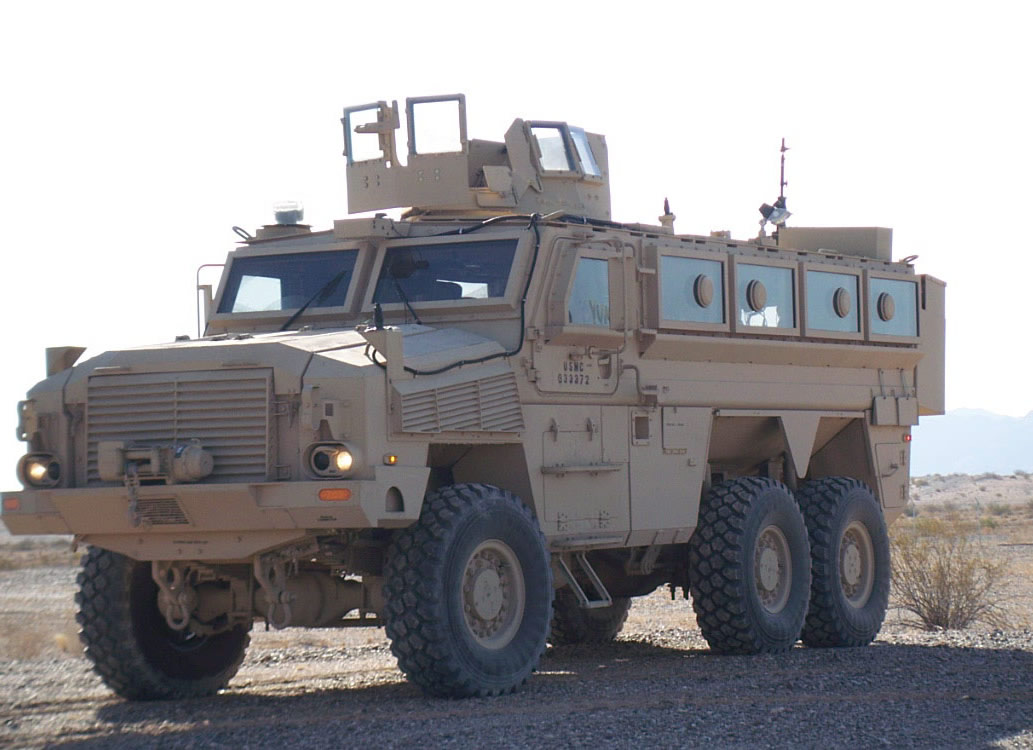
The RG-33L’s unique features make it a very strong contender for Explosive Ordnance Disposal roles, route-proving, and other classic MRAP Category II tasks that need a larger vehicle. It is a 6×6 vehicle designed to maximize interior space and visibility, while remaining well-protected and transportable by C-130 Hercules. At 38,700 pounds empty, it’s a close fit, and a fully-loaded vehicle can weigh up to 58,000 pounds. Compare this with an up-armored Hummer’s 9,000 pound empty weight and 12,000 pound total weight when fully loaded.
The optional robotic arm is probably the RG-33L’s most recognizable feature, allowing it to probe, remove, and/or place destruction charges near possible land mines from a safe distance. This feature helped the vehicle win the US Army’s 2,500 vehicle MMPV competition to equip its engineer and EOD (Explosive Ordnance Disposal) units. It can be fielded without the arm, and some variants like the RG-33 Heavy Armored Ground Ambulance MEDEVAC variant are never equipped with it.
The RG-33L’s standard armor is designed to offer protection up to medium machine gun fire, while its monocoque v-hull is designed to deflect blasts away from the vehicle offer protection against IED land mines. Its windows use TRAPP transparent armor, and the vehicle is equipped to handle the weight of additional tailored armor packages if desired. It’s also equipped with run-flat tires, multi-positional mine protected seating, and other survivability equipment such as extinguishers.
An hydraulic ramp, a transparent armor gunner’s shield, dedicated space for equipment stowage, and enough power generation to operate mission electronics and air conditioning round out the RG-33L’s key features. That last item may seem like a luxury, but when it’s 110 degrees outside the vehicle and you’re wearing body armor or a full explosives protection suit, air conditioning is necessary in order to arrive in a fit state to perform one’s duties… like defusing touchy explosives. The vehicle can carry up to 14 people, including the driver & front seat.
The shorter 4×4 RG-33 has 90% commonality with its larger cousin, and is the same width and height, but loses the robotic arm. It weighs 29,700 pounds empty, with a maximum weight fully loaded of up to 38,000 pounds. They are BAE’s high-end Category I patrol vehicle offering, designed to carry up to 8 people. They are also used in reconnaissance roles, and have been equipped with hydraulic masts that carry electro-optical long-range surveillance/ infrared/ laser-targeting turrets. A special variant of the RG-33 serves with US Special Operations Command as their MRAP vehicle of choice.
A number of RG-33 variants have been upgraded with Independent Suspension System kits, which make them better at handling difficult off-road terrain like Afghanistan’s. The contracts have involved Oshkosh’s TAK-4 suspension system, which is also installed in USMC MTVR and LVSR trucks, the Army’s FHTV heavy truck fleet, Oshkosh’s M-ATV, and GDLS’ RG-31 and Cougar MRAPs.
(click to view full)
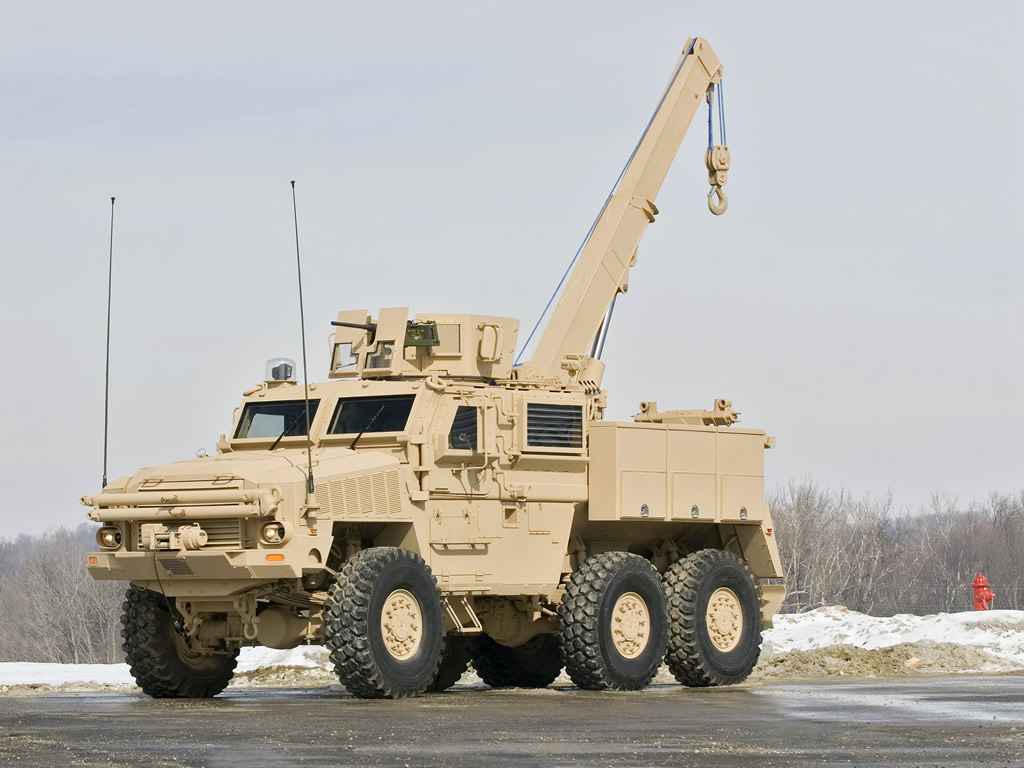
BAE’s 40-ton MRRMV recovery vehicle is also based on the RG-33. As militaries internalize the need for mine-protection on combat vehicles, a couple of corollaries become obvious. One is that heavier blast-resistant vehicles need heavy wheeled recovery vehicles that can tow them out of mud, canals, etc. – or haul a vehicle that has had an axle destroyed by land mines back to base. The other corollary is that recovery vehicles intended to work in in areas where land mines are a common weapon of war must also be blast-resistant.
The privately-developed MRRMV carries a 2-man crew, plus equipment and spare parts to conduct on-site vehicle repairs, including field maintenance tasks that require lifting, welding, cutting and heating. It also maintains space to carry 2 recovered crew, and other combat spares. The MRRMV is capable of up-righting, winching and towing Hummers and M1117 ASVs, plus all MRAP, MMPV and Stryker class vehicles. Indeed, BAE claims that it has the capacity to recover all types of U.S. tracked and wheeled combat vehicles, with the exception of M1 Abrams battle tanks and the M88 Hercules tracked recovery vehicle. Unfortunately, in late 2010, BAE’s MMRV appeared to lose out to Navistar’s MaxxPro MRV for American orders.
(click to view full)
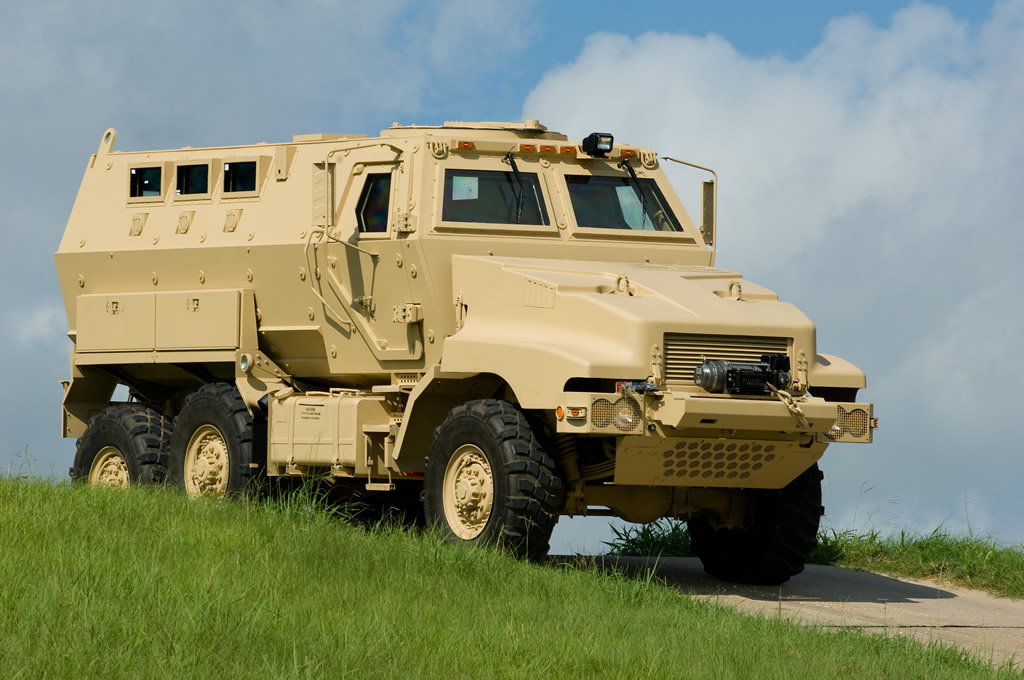
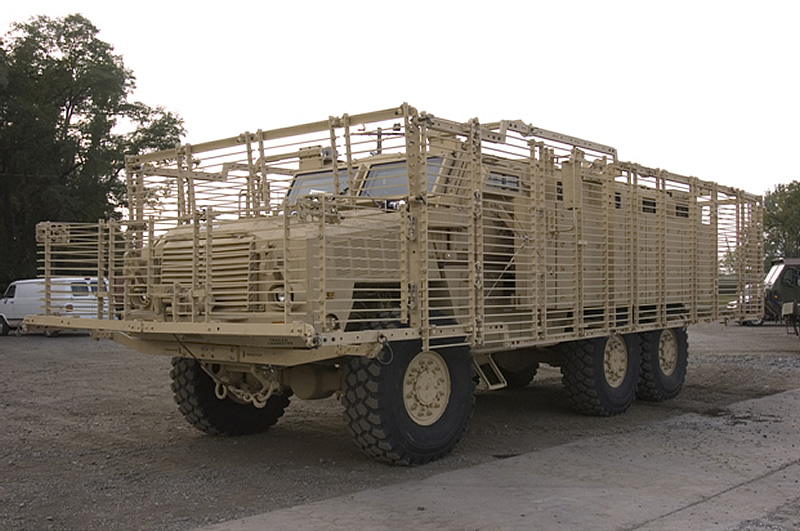
BAE’s new subsidiary Armor Holdings was offering the Caiman MRAP vehicle before the acquisition, and is now known as BAE Tactical Vehicle Systems (BAE-TVS). Caiman is a v-hulled capsule design, mounted on the US Army’s standard FMTV medium trucks. This is not entirely surprising; one of the salient features of the trend toward mine-resistant vehicles is the use of truck chassis instead of standard automotive bases, in order to accommodate the extra armor and body weight associated with these kinds of vehicle designs. It also allows BAE to offer mine-protected cargo carrier versions of its vehicle in future.
Compared to the RG-33 family, the Caiman is slightly narrower (94 vs. 96 inches) and not quite as tall (111 vs. 136 inches). As a “v-capsule” design, Caiman acquires some of the classic drawbacks of easier “mobility kills” and a potentially higher center of gravity, in exchange for easier production due to commonality with the popular and successful FMTV truck that makes up the backbone of the US Army’s medium truck fleet.
While there are technically 2 types of Caiman on offer for the MRAP program, they are actually the same vehicle with different numbers of seats installed inside. A smaller Caiman version did not make it through testing, and the decision was made to use the larger CAT-II vehicle design and install fewer seats to create the CAT-I offering. Caiman vehicles can carry up to 10 soldiers, including the driver and front seat.
More Caiman variants have come out since then. The firm’s “Caiman Light” was designed to be smaller and provide more mobility in Afghanistan, but most of those orders went to Navistar’s MaxxPro Dash. A further step was taken with a Caiman M-ATV design that lightened the vehicle further, and lengthened its nose to provide better balance for all-terrain mobility, but reduced the number of troops that can be carried. In the end, however, the caiman M-ATV lost to Oshkosh’s entry. In 2010, however, a conversion kit created the the Caiman Multi-Terrain Vehicle upgrade, which the US Army has bought. caiman MTV integrates a refurbished and improved armored capsule, better blast-absorbing seats, and a new high-power, wider track automotive powertrain, chassis and independent suspension. It also upgrades the interior climate control system, to protect both soldiers and electronics from hot and cold extremes.
As of late 2010, an advanced caiman MTV Ambulance variant was also under development.
BAE MRAP: The Current Tally

(click to view full)
Despite their status as early favorites, by June 20/07 contracts had been issued for 3,266 Category I patrol & Category II squad-sized MRAP vehicles, fully 42% of a the program’s planned 7,774 orders. Force Protection had racked up orders for 1,780 Cougar vehicles, and Navistar/Plasan Sasa had come out of the tests at Aberdeen with orders for 1,216 of its MaxxPro joint design. BAE sat in 4th place with orders for just 90 vehicles – 2.8% of the total. It had to be a humbling experience for the firm that went into 2004 as the world leader in the field.
BAE has worked hard to catch up, even as the number of MRAPs in the program more than doubled to over 15,000. The final tally gave them a wide 2nd place lead over 3rd place firm Force Protection. It also made them one of just 2 firms with a foothold under new MRAP-II qualifications, which includes protection against EFP (explosively-formed projectile) land mines that fire the equivalent of a cannon shell at the vehicle, in addition to the standard under-body blasts.
As of December 2007, more than 2,000 BAE Systems employees in the United States and 400 in South Africa (BAE OMC, producing General Dynamics’ entry) were producing vehicles with the support of suppliers in more than 30 states across the United States. Key production locations include York, PA; Fairfield, OH; Aiken, SC, and Sealy, TX, with production assistance from partners Spartan Motors Chassis and Demmer Corporation. The overall MRAP competition breaks down as follows:
| Manufacturer | CAT I | CAT II | Notes |
| Navistar | MaxxPro MaxxPro AF MaxxPro Dash/ DXM MaxxPro Plus MaxxPro ambulance (Dash) |
MaxxPro MaxxPro MRV recovery |
Top finisher in number of MRAP orders. |
| BAE Systems | RG-33 RG-33 SOCOM Caiman Caiman MTV |
RG-33L RG-33 HAGA (ambulance) Caiman Caiman MTV-ambulance |
Won MMPV with RG-33L derivative. |
| General Dynamics | RG-31 Mk.5/ RG-31A2 | RG-31 Mk.5E | Partnered with BAE OMC, Canadian government CCC. Also received orders before MRAP began. |
| Force Protection (now GDLS) | Cougar 4×4 Cougar ISS |
Cougar 6×6 | Also received orders before MRAP began. Its Buffalo MRAP CAT-III is unique, and sole-source. |
| Oskkosh | Alpha (w. PVI) |
Bushmaster (w. Thales) |
No MRAP orders, but sole winner of related M-ATV program with its own design. |
| PVI | Alpha serve w. US Border Patrol |
Golan (w. RAFAEL) |
Alpha failed MRAP testing; 2008 firm bankruptcy & fire-sale acquisition |
| Textron | M1117 ICV | M1117 ICV | Failed MRAP testing; no MRAP orders, but ASV variant widely ordered by Military Police and fire targeting units. |
Of the envisaged 15,771 vehicles in the MRAP-I program as of March 31/08, all have now been ordered – and follow-ons have grown the total further, even as related programs like the more mobile M-ATV and the Army’s MMPV engineer vehicle have grown the overall fleet of blast-resistant platforms. Thus far, BAE has directly received basic MRAP contract orders for 5,244 vehicles:
* 31 RG-33 MRAP CAT-I
* 462 RG-33 MRAP CAT-I SOCOM variant
* 1,710 RG-33L (MRAP CAT-II w. optional robotic arm)
* 181 RG-33 HAGA Ambulance variant
* 2,178 BAE-TVS Caimans, CAT-I seating internally
* 684 BAE-TVS Caimans, CAT-II seating internally
* Caiman Ambulance variant in development
Based on these orders, BAE remains 2nd place in the initial MRAP CAT-I/II race, with 29.6% of all orders to date. This is a major improvement from its position earlier in the competition, and its own high-end RG-33 vehicles now own a respectable 13.3% share. General Dynamics Land Systems has also been contracted to supply RG-31 MRAP program vehicles to the US military, in partnership with the Canadian government and BAE OMC of South Africa. RG-31 orders actually began before the MRAP program, and are not included in the above figures. If RG-31 MRAP program orders are also folded into BAE’s share, it rises to 38.9%.
The leader is still Navistar with 42.7%, a lead that widened recently when its lighter “MaxxPro Dash” was selected by the US Army in recent orders for the Afghan theater. One-time MRAP leader Force Protection has slipped to a distant 3rd place at 17.5% and is unlikely to receive further MRAP orders.
BAE MRAP: Contracts & Key Events

(click to view full)
Unless otherwise noted, the Marine Corps Systems Command in Quantico, VA buys MRAP vehicles on behalf of requests from the US Army (12,000), USMC (2,225), Air Force (558), Navy (544), SOCOM (344), and production verification testing (100). The USMC reduced its requirements in the wake of their campaign’s smashing success in Iraq’s Anbar Province, and so did the Air Force, but the Army’s increased orders for use in Afghanistan and Iraq caused the overall target number to rise slightly.
Delivery orders and quantities include:
RG-33 Family
#001: Testing vehicles
#002: 15 RG-33; 75 RG-33L
#003: 255 RG-33 (239 later modified to RG-33L); 170 RG-33 SOCOM; 16 RG-33 Ambulance
#004: 89 RG-33 SOCOM
#005: 399 RG-33L; 112 RG-33L Ambulance
#006: 600 RG-33L with enhanced armor
#007: 3 RG-33 SOCOM; 393 RG-33L; 51 RG-33 Ambulance
#008: 40 RG-33 SOCOM
#009: 36 RG-33 SOCOM; 2 RG-33L; 2 RG-33 Ambulance – all modified designs.
#010: 8 RG-33 SOCOM with modifications
#012: 58 RG-33 SOCOM vehicles with modifications
#013: 32 RG-33 SOCOM vehicles
#014: 26 RG-33 SOCOM vehicles
Caiman Family
#001: Testing vehicles
#002: 1,154 CAT I; 16 CAT II
#003: 668 CAT II
#004: 1,024 CAT I
#005: Upgrades to 1,800 vehicles
#009: MTV Upgrades to 1,700 vehicles, plus 371 MTV “rolling chassis”
#010: ECP Retrofits
Unless otherwise noted, BAE Systems Land & Armaments LP’s Ground Systems Division in York, PA is the contractor. Note that references to BAE-TVS indicate Caiman family vehicles.
FY 2012 – 2014

(click to view full)
Sept 26/14: UAE. The US DSCA announces the United Arab Emirates’ official export request for the refurbishment and modification of 4,569 used Mine Resistant Ambush Protected (MRAP) Vehicles:
* 729 Navistar MaxxPro Base
* 283 MaxxPro MRAP Expedient Armor Program (MEAP) without armor
* 264 MaxxPro Base/MEAP capsules without armor
* 29 MaxxPro Long Wheel Base (LWB)
* 1,085 MaxxPro LWB chassis
* 970 MaxxPro Plus
* 15 MaxxPro MRVs (MRAP Recovery Vehicles)
* 1,150 upgraded BAE Caiman Multi-Terrain Vehicles “without armor,” which are based on the FMTV truck chassis. Note that the V-hull is not “armor,” it’s an intrinsic part of the vehicle.
* 44 Oshkosh M-ATVs; they would be added to the UAE’s existing order for 800.
* Plus Underbody Improvement Kits, spare and repair parts, support equipment, personnel training and training equipment, publications and technical documentation, Field Service Representatives’ support, and other US Government and contractor support.
They’re being sold as Excess Defense Articles (EDA) from US Army stock, pursuant to section 21 of the Arms Export Control Act, as amended. Notification for the sale from stock of the MRAP vehicles referenced above has been provided separately, pursuant to the requirements of section 7016 of the 2014 Consolidated Appropriations Act, and section 516 of the 1961 Foreign Assistance Act. The estimated cost is up to $2.5 billion, which isn’t all that far from the cost of buying new.
To date, the UAE’s biggest patrol vehicle fleets have been its own Nimr design (1,700 total), which has also been exported within the region. Its Oshkosh M-ATV fleet (750) was second. This request would completely change the force’s configuration by adding 3,375 MaxxPros and 1,150 Caimans, giving the UAE a patrol vehicle fleet that is overwhelmingly protected against mines as well as weapons of urban unrest.
The principal contractors will be Navistar Defense in Lisle, IL (MaxxPro); BAE Systems in Sealy, TX (Caiman); and Oshkosh Defense in Oshkosh, WI (M-ATV). If the sales are concluded, implementation will require multiple trips to the UAE involving “many” US Government and contractor representatives for 3+ years to provide program support and training. Sources: US DSCA #14-26, “UAE – Mine Resistant Ambush Protected (MRAP) Vehicles”.
DSCA request: UAE (3,375 MaxxPros of 4,569 MRAP vehicles)
Nov 30/12: MMPV. Under a $37.6 million contract, BAE will provide spare parts and kits needed to convert 250 RG-33 MRAP Class II vehicles into MMPVs. The conversion includes new heating and air conditioning, and the MMPV’s rear ramp. BAE has confirmed to DID that none of these vehicles will have the robotic “interrogator arm”.
The spare parts and kits will be assembled by the existing workforce at the BAE Systems facility in Anniston, AL, with the contract running until Oct 31/13. While the contract lists as managed by US Army Contracting Command in Chambersburg, PA, it’s really the Letterkenny Army Depot (W911N2-13-C-0011).
(click to view full)
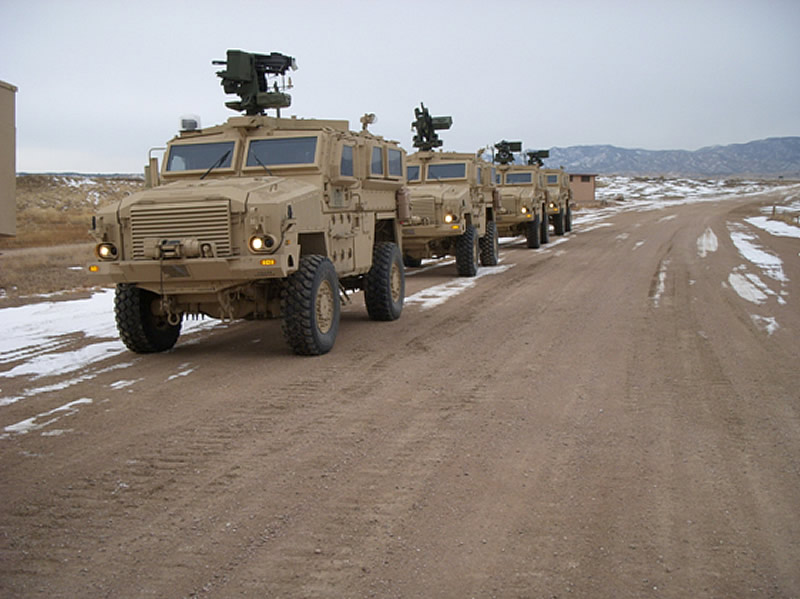
Jan 24/12: Caiman MTV conversions. BAE-TVS in Sealy, TX receives a $118.4 million for firm-fixed-price, indefinite-delivery/ indefinite-quantity delivery order modification for 371 Caiman MTV rolling chassis, with overpack kits and Caiman underbody survivability kits. Fellow MRAP-maker Navistar has also received rolling chassis orders, which are used to upgrade older vehicles the the newest configuration with independent suspension and other enhancements. Essentially, the old cab is removed and placed on the new rolling chassis, creating an upgraded and mostly-new vehicle.
Work will be performed in Sealy, TX, and is expected to be complete by December 2012. All contract funds will expire at the end of the current fiscal year, on Sept 30/12 (M67854-07-D-5030, to DO 0009).
Jan 24/12: BAE-TVS in Sealy, TX receives a $23.7 million firm-fixed-price, indefinite-delivery/ indefinite-quantity delivery order for continental United States integration and repair of Caiman MTVs. Work will be performed in Sealy, TX, and is expected to be complete by December 2012. All contract funds will expire at the end of the current fiscal year, on Sept 30/12 (M67854-07-D-5030, #0012).
Jan 24/12: BAE-TVS in Sealy, TX receives $6.6 million for firm-fixed-price, indefinite-delivery/indefinite-quantity delivery order modification for caiman MTV ECP(Engineering Change Proposal) upgrade kits. Work will be performed in Sealy, TX, and is expected to be complete by January 2013. All contract funds will expire at the end of the current fiscal year, on Sept 30/12 (M67854-07-D-5030, to DO 0010).
Dec 9/11: BAE-TVS in Sealy, TX receives $22.2 million for an indefinite-delivery/ indefinite-quantity contract delivery order buying field service representatives and mechanics to conduct maintenance work on the Caiman family MRAP fleet in Afghanistan. Work will be performed in Afghanistan, and is expected to be complete by Dec 31/12. US Marine Corps Systems Command in Quantico, VA manages the contract (M67854-07-D-5030, #0011).
FY 2011
(click to view full)
Aug 31/11: A $22 million firm-fixed-priced contract modification for RG-33 MRAP vehicle maintenance support in Kandahar, Afghanistan. Work is expected to be complete by December 2012, but $16.5 million will expire at the end of the current fiscal year, on Sept 30/11 (M67854-07-D-5025, #0015).
July 19/11: BAE-TVS in Sealy, TX receives a $10.2 million indefinite-delivery/ indefinite-quantity delivery order for field service representative mechanics in Afghanistan. The contract will run to Dec 31/11 (M67854-07-D-5030, #0011).
July 15/11: Shortly after outgoing US Secretary of Defense Robert M. Gates cites increased covert shipments of EFP land mines from Iran into Iraq, Ashton Carter specifically notes efforts to add “armor plates on the side of the Caiman,” “with EFP’s specifically in mind… This is a very important effort so those vehicles are strengthened.” The Pentagon MRAP program office set an accelerated delivery schedule for 1,140 upgrade kits in the next few months. Bloomberg.
July 13/11: Merger rumors. From the UK’s This Is Money:
“London-based aerospace and defence group BAE Systems was back on the radar of not only fund managers but professional punters as rumours of a ‘friendly’ £15bn-plus or 450p a share cash bid from Boeing did the rounds… Rumours were rife that Boeing has been given the green light by both the US and UK authorities to make a move on BAE…”
See also this interesting LinkedIn discussion; caveat reader.
June 9/11: A $10.4 million firm-fixed-priced contract modification for RG-33 family field representative support within and outside the continental United States.
Work will be performed in Tampa, FL (14.5%), and in Iraq (85.5%), and is expected to be complete by December 2011. All contract funds will expire at the end of the current fiscal year, on Sept 30/11 (M67854-07-D-5025, #0011)
June 7/11: A $7.1 million indefinite-delivery/ indefinite-quantity delivery order for RG-33 family maintenance support in Bagram, Afghanistan.
Work is expected to be complete by December 2011, and all contract funds will expire at the end of the current fiscal year, on Sept 30/11 (M67854-07-D-5025, #0015).
April 29/11: An $8.2 million firm-fixed-priced modification to delivery order #011 for US Special Operations Command. The money will buy logistics support technical documentation, A1 technical data maintenance; USSOCOM Armored Utility Variant (AUV) technical data maintenance; Independent Suspension System engineering change proposal (ISS ECP) kit replacement parts; USSOCOM A1 additional automotive test support; USSOCOM AUV additional automotive test support; and ISS ECP replacement kits.
Work will be performed in York, PA (93%), and Yuma, AZ (7%), and is expected to be complete by December 2011. $8,111,000 will expire at the end of the current fiscal year, on Sept 30/11 (M67854-07-D-5025, #0011).
April 6/11: An $11.4 million firm-fixed-priced delivery order modification buys field service representative support outside the USA, to help with installation of RG-33 independent suspension kits, engineering change proposal kits, and vehicle emergency egress windows; perform U.S. Special Operations Command A1 vehicle physical configuration audits; and provide FSR support in Kuwait.
Work will be performed at the MRAP sustainment facilities in Iraq and Kuwait (69%), and in York, PA (31%), and is expected to be completed by December 2011. $3,500,820 will expire at the end of the current fiscal year, on Sept 30/11 (M67854-07-D-5025, #0011).
March 23/11: BAE-TVS in Sealy, TX receives a $11.3 million firm-fixed-priced delivery order for the following caiman Engineering Change Proposals: rear door handle kits; overhead gunner protection kit (OGPK) spotlight kits; OGPK aluminum spacers; and improved rear door combat locks and dual hole roxtec.
Work will be performed in Sealy, TX, and is expected to be complete by the end of March 2012 (M67854-07-D-5030, #0010).
Dec 28/10: A $37.4 million delivery order under the indefinite-delivery/ indefinite-quantity delivery order for 26 more U.S. Special Operations Command MRAP vehicles and associated integrated support & sustainment. US SOCOM has also been buying M-ATV vehicles lately, so the continued purchase of RG-33 SOCOM vehicles is good news for BAE.
Work will be performed in York, PA, and is expected to be complete by October 2011 (M67854-07-D-5025, #0014).
Dec 14/10: BAE Systems Land & Armaments LP’s Ground Systems Division in York, PA received a $41.9 million firm-fixed-priced delivery order modification for MRAP field service representative support, in and outside the continental United States.
Work will be performed in Tampa, FL, and in Iraq, and is expected to be complete by December 2011. All funds will expire at the end of the current fiscal year, on Sept 30/11 (M67854-07-D-5025, #0011).
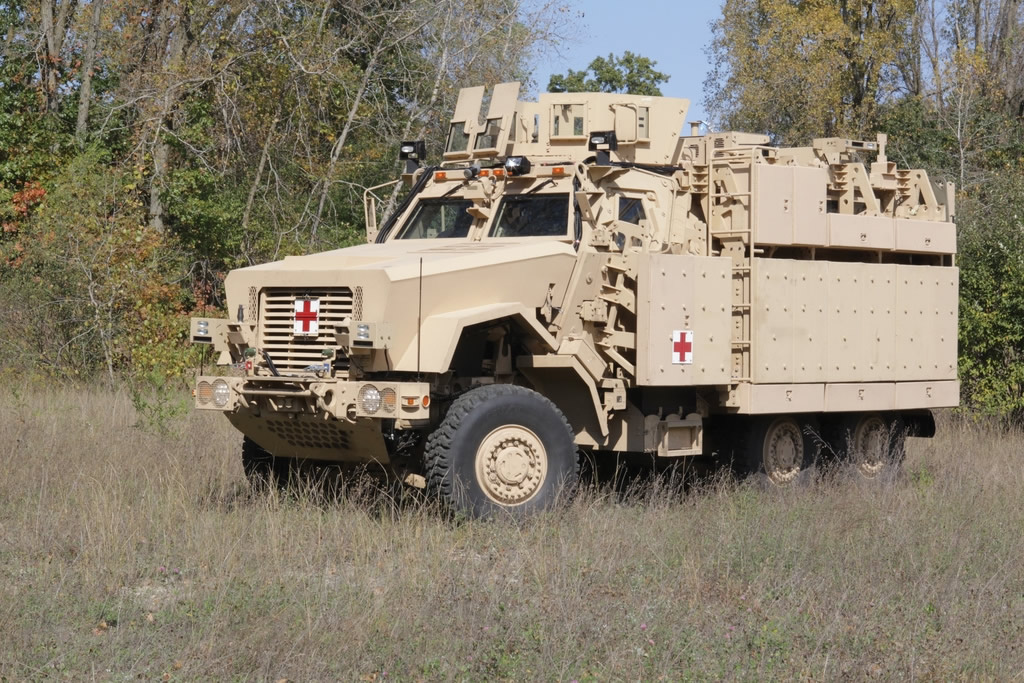
Nov 18/10: caiman Ambulance. JPO MRAP, US Army Medical Command and BAE Systems are working to build a new Caiman ambulance variant for Ground Ambulance and Area Support Medical Companies, to join existing MaxxPro Ambulance and heavier RG-33 HAGA vehicles in the field. The new prototype Caiman Ambulance includes space for 4 litters and an attendant, or 6 “walking wounded”, or any combination that adds up to 6 footprint slots litters are 1.33 each). That would reportedly be the most litter patients of any fielded MRAP to date.
The work involved completely gutting the existing design, and adding a host of technologies and improvements that begin with a wider 48″ rear door, a litter lift system, a new digi-rack for communications equipment, an attendant’s seat, an upgraded HVAC system with an additional fresh air handler, an ambulance-unique lighting system, integrated floor that allows for low-level disinfection, and mounting provisions for medical equipment.
To ensure that the medical equipment has the power it needs, 2 570-amp alternators and as many as 36 AC power outlets can recharge battery-powered medical devices, or support the Special Medical Emergency Evacuation Device (SMEED). SMEED handles critical-care patients with its Ventilator/Portable Oxygen Tank, Patient Monitor/Defibrillator, suction device, and 2-4 infusion pumps. Standard medical gear will include a Vital Sign Monitor, On-Board Suction, O2 Concentrator (produces it own oxygen), Blood/Fluid Warmer, Pulse Oximeter and the MRAP Medical Equipment Set (MES).
The vehicle has a 450hp Caterpillar C9 engine, integrated to a Caterpillar CX28 transmission, and a 2-speed Caterpillar Transfer case, riding on an independent suspension of 3 Arvin Meritor 50 Series HMIS [High Mobility Independent Suspension] modules. US Army.
Nov 1/10: BAE-TVS in Sealy, TX receives $25.6 milllion modification of a firm-fixed-priced delivery order for Caiman Multi-Terrain Vehicle (CMTV) spare parts. These parts include the CMTV deprocessing kit; plus items on the CMTV authorized stockage list; the CMTV prescribed load list; and CMTV battle damage assessment repair items related to the 1,700 Caiman upgrades under delivery order #009.
Work will be performed in the continental United States, and is expected to be complete in December 2011. All contract funds in the amount of $25,634,704 will expire at the end of the current fiscal year, on Sept 30/11 (M67854-07-D-5030, #0009, modification #02).
Oct 25/10: BAE Systems announces an ambulance configuration of its Caiman Multi-Terrain Vehicle (MTV), which has an improved suspension system for off-road use. The 6-wheeled vehicle can carry up to 4 ramp-loaded litters, or 6 patients upright, while using a sophisticated HVAC system to keep the interior temperature stable. The firm adds that:
“Earlier this month, the U.S. Mine Resistant Ambush Protected (MRAP) Joint Program Office (JPO) purchased a proof concept ambulance vehicle. The sale of the vehicle coincided with the completion of user juries by Army personnel. In anticipation of production, the assessments from the user juries will be used to improve the vehicle’s design.”
Oct 25/10: V-hulled HMMWVs: MRAP recap, or JLTV Plan B? At AUSA 2010, BAE Systems announces its “Integrated Smart V,” a lightweight monocoque V-hull HMMWV that reuses a large percentage of existing HMMWV components, including the power train and wheel assemblies. It adds a layered monocoque hull with a V-shaped underbody that totally encapsulates the crew, and BAE line lead Chris Chambers adds that “…using clips attached to the monocoque V-hull, the ISV provides a rigid, uncompromising protection solution at an affordable price.”
BAE’s ISV solution comes as budget cuts make the future JLTV program an attractive target, and the USMC looks for an option that will meet its height requirements for stowage aboard ship. They’re not the only firm to be thinking along those lines – Textron has a “capsulized” HMMWV of its own, and have teamed with another firm that has done work along similar lines: Granite Tactical Vehicles.
BAE’s land systems business, which has been hurt by its loss of FMTV truck production and the end of MRAP main production orders. If the Marines and/or other services decide to adopt this approach, and BAE manages to win, it would be very significant for the company. BAE Systems.
FY 2010
(click to view full)
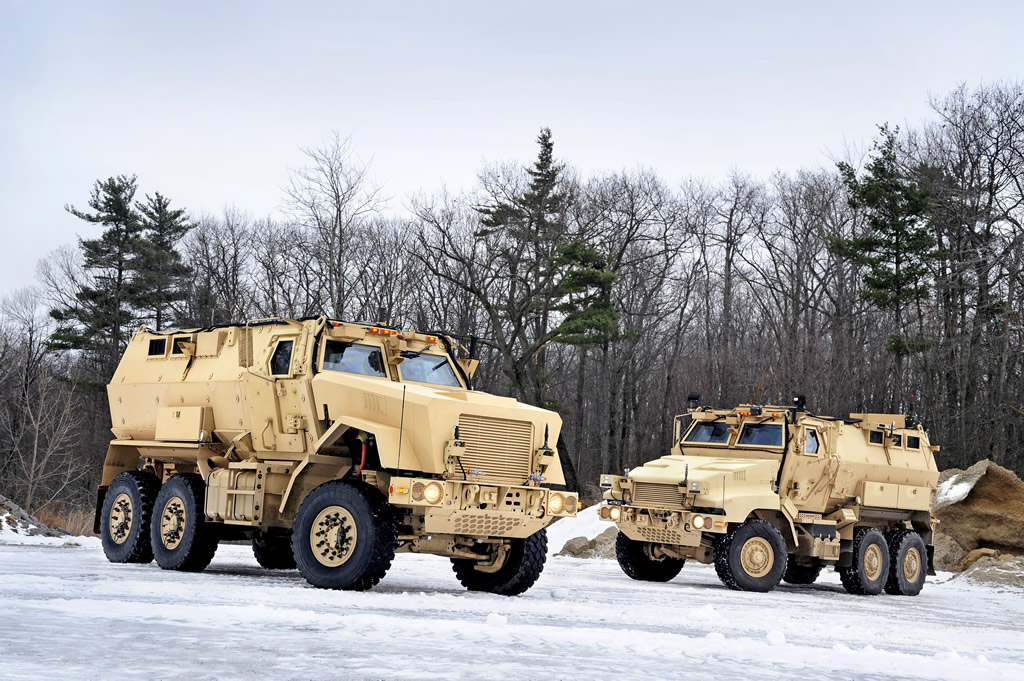
Aug 27/10: caiman MTV. BAE Systems Tactical Vehicle LP in Sealy, TX received a $629 million firm-fixed-priced delivery order to modify 1,700 Caiman vehicles. This looks like good news for the future of the Caiman fleet. Given recent rumors about rationalizing the US military’s MRAP fleet down to fewer types, a major investment of this kind is a good sign for the platform.
The Engineering Change Proposal creates the Caiman MTV, which integrates a refurbished and improved armored capsule and better blast-absorbing seats with a new high-power, wider track automotive powertrain, chassis and independent suspension. It also upgrades the interior climate control system, to protect both soldiers and electronics from hot and cold extremes. Items provided include: CMTV Chassis (strengthened frame), Caiman Underbody Survivability Kit (enhanced monolithic floor), CMTV Integration Recon, Kuwait; CMTV Training and Integration Support, Kuwait, Commercial Off The Shelf Manual (Operator and Maintenance), New Equipment Training package (Operator New Equipment Training and Field Maintenance New Equipment Training, CMTV Integration Manual, CMTV Deprocessing Kit, CMTV Authorized Stockage List, CMTV Prescribed Load List, and CMTV Battle Damage Assessment and Repair.
BAE Systems introduced the Caiman MTV earlier in 2010, following a rapid design and development program. Work will be performed in Kuwait (90%) and Texarkana, TX (10%), and is expected to be complete by the end of December 2011 (M67854-07-D-5030, #0009). See also BAE Systems release.
Aug 24/10: The US Congressional Research Service releases the latest version [PDF] of its report “Mine-Resistant, Ambush-Protected (MRAP) Vehicles: Background and Issues for Congress. Excerpts:
“As of June 28, 2010, more than 8,500 MRAPs had reportedly been shipped to Afghanistan, with over 3,500 of those being the newer M-ATVs. The Army has recently said that it will begin development of yet another MRAP version – the “Ultra-Lite MRAP” – which raises questions about possible vehicle redundancies. The Marines, although voicing support for the M-ATV program, have retrofitted a number of MRAPs with new suspension systems and reportedly are satisfied with the results. This apparent success calls into question not only if the Marines need all of the M-ATVs allocated to them by DOD but also if the Marines’ retrofitted suspension system might be a more cost-effective alternative for the other services… Among potential issues for congressional consideration are the status of almost 5,000 MRAPS in Afghanistan that are reportedly not being used because of their size and weight.”
In terms of overall budgets:
“Through FY2010, Congress appropriated $34.95 billion for all versions of the MRAP. In March 2010, DOD reprogrammed an additional $3.9 billion from the Overseas Contingency Operations fund to MRAP procurement. Congress approved an additional $1.2 billion for MRAP procurement, included in the FY2010 Supplemental Appropriations Act (P.L. 111-212). The full FY2011 DOD budget request of $3.4 billion for the MRAP Vehicle Fund has been authorized by the House (H.R. 5136).”
Aug 17/10: DoD Buzz reports that the US Army’s latest Tactical Vehicle Strategy looks like bad news for the JLTV, with small buys spaced over time to equip deployed units. It may also affect MRAP maintenance revenues. See the full Army Tactical Vehicle Strategy [PDF]. Bottom line?
“Here’s the basic plan. Overall, the Army will shrink its fleet of HUMVEEs, MRAPs and medium trucks to 244,000 by 2025 from its current 260,000. How? The service will rid itself of 4,000 of the hardest to maintain and most beat up MRAPS by 2025…”
July 29/10: A $64.8 million modification to previously awarded indefinite-delivery/ indefinite-quantity delivery order for 32 U.S. SOCOM MRAP armored utility vehicles and associated integrated logistics support.
Work will be performed in York, PA, and is expected to be complete by July 2011. $24.4 million will expire at the end of the current fiscal year t (M67854-07-D-5025, #0013). BAE Release
July 19/10: BAE Systems Land & Armaments, LP in Santa Clara, CA receives a $10.5 million firm-fixed-price contract. This contract is for the procurement of 2,476 split up-armored turret hatch assemblies, which are required for instalation of CROWS-II unmanned weapon and surveillance turrets that can be operated from inside the vehicle.
Work is to be performed in Afghanistan, with an estimated completion date of Dec 30/10. One bid was solicited with one bid received (W56HZV-10-C-0301).
May 11/10: Spartan Motors Chassis, Inc. announces a $6.8 million subcontract order from BAE Systems. Spartan will supply and integrate key chassis components, including independent suspension systems, for RG-33 SOCOM MRAP vehicles in the 3rd and 4th quarters of 2010. The units will then ship to Letterkenny Army Depot for final assembly and acceptance by the U.S. Government.
May 4/10: BAE-TVS in Sealy, TX receives a $14.1 million firm-fixed-priced delivery order for MRAP vehicle university field services representatives and instructors to service its Caiman MRAP vehicles. Work will be performed inside and beyond the continental United States, and is expected to be completed by the end of December 2010. All contract funds will expire at the end of the current fiscal year, on Sept 30/10 (M67854-07-D-5030, #0006).
April 2/10: An $82.1 million modification to a previously awarded delivery order #0011 under existing firm-fixed-price contract (M67854-07-D-5025) for field service representative support to install TAK-4 independent suspension kits and engineering change proposal kit upgrades on MRAP RG-33 vehicles.
Work will be performed at the MRAP Sustainment Facilities in Iraq and Afghanistan, and work is expected to be complete by May 2011. All contract funds will expire at the end of the current fiscal year, on Sept 30/10.
March 12/10: A $44.1 million modification to previously awarded delivery order #0011 under firm-fixed-priced contract (M67854-07-D-5025) for field service representatives and instructors. They will provide support, inside and outside the continental United States, for BAE’s MRAP vehicles.
Work will be performed in York, PA, and is expected to be complete by December 2010. All contract funds will expire at the end of the current fiscal year, on Sept 30/10.
Feb 16/10: RG33 SOCOM. BAE Systems Land & Armaments Ground Systems Division in York, PA received a $90.6 million indefinite-delivery/ indefinite-quantity delivery order #0012 for 58 U.S. SOCOM RG-33 vehicles, including improved TAK-4 independent suspension systems, engineering change proposals and integrated logistics support sustainment.
Work will be performed in York, PA, and is expected to be complete by March 2011. Contract funds of $44.8 million will expire at the end of the current fiscal year (M67854-07-D-5025). BAE release
FY 2009
(click to view full)
Sept 28/09: TAK-4 ISS. Oshkosh announces orders valued at $24 million to supply its TAK-4 independent suspension system for more than 300 BAE Systems USCS RG-33 Mine Resistant Ambush Protected (MRAP) vehicles (q.v. July 28/09 entry). The vehicles will be upgraded in theater, with work expected to be complete by March 31/10.
TAK-4 is quickly becoming a significant player in US military vehicles. Oshkosh Defense is working with multiple manufacturers of legacy MRAPs and has now received orders for more than 2,300 TAK-4 systems for the vehicles from Force Protection, BAE, and Navistar. It’s also installed on Oshkosh’s new MRAP-All Terrain Vehicle (M-ATV), the U.S. Army’s FHTV Palletized Load System (PLS A1) heavy trucks, and the U.S. Marine Corps’ Medium Tactical Vehicle Replacement (MTVR) medium trucks and Logistics Vehicle System Replacement (LVSR) heavy trucks.
Sept 04/09: caiman seat upgrades. BAE Systems Tactical Vehicle Systems (BAE-TVS) in Sealy, TX received a $31.2 million firm-fixed-priced modification to a previously awarded contract (M67854-07-D-5030), delivery order #0003, for the purchase of field service representatives to support training for the 1,800 vehicles procured under this contract, and to upgrade the entire Caiman fleet’s troop seats.
The training will be performed at various locations throughout US Central Command’s area of responsibility. The period of performance is expected to be completed by Sept 30/10. The base contract was competitively awarded, and the new requirements are sole source additions to the contract.
In an effort to make the Caiman vehicles more resistant to IEDs, BAE Systems is working to improve the seat design. One improvement is to suspend the seats from the ceiling, which prevents the transfer of energy up the spine of soldiers in the vehicle if a mine explodes underneath.
Aug 06/09: $28.5 million in firm-fixed-priced modifications to previous delivery orders were awarded for MRAP vehicle field service representative (FSR) instructors, covering each set of BAE MRAPs:
BAE Systems Tactical Vehicle Systems, LLP (BAE-TVS) in Sealy, TX received an $11 million delivery order modification for FSR instructors to support training for 1,800 Caiman MRAP vehicles. The training will be performed at various locations throughout the CENTCOM area of responsibility, and the contract will expire at the end of FY 2010: Sept 30/10. The listed delivery order is (M67854-07-D-5030, #0003).
BAE Systems Land & Armaments, LP, Ground Systems Division in York, PA received an $8.9 million modification to a delivery order (M67854-07-D-5025, #0004) for OCONUS (Outside the CONtinental US) instructors to support RG-33 SOCOM vehicles. Work will be performed in Iraq and is expected to be completed by December 2009.
July 28/09: TAK-4 ISS. BAE Systems Land & Armaments, LP, Ground Systems Division in York, PA receives 3 firm-fixed-priced modifications to previous delivery orders, worth $96.7 million, to upgrade RG-33 SOCOM vehicles with Oshkosh’s TAK-4 independent suspension kits. Work will be performed in Operation Iraqi Freedom/ Operation Enduring Freedom areas of responsibility, and is expected to be completed by March 31/10. Contracts include:
* $52.5 million modification to delivery order #0003, to upgrade 170 vehicles.
* $28.6 million modification to delivery order #0004, to upgrade 89 vehicles.
* $15.6 million modification to delivery order #0009, to upgrade 35 vehicles.
TAK-4 suspensions give the vehicles greater off-road mobility. They are used in the US Marne Corps’ MTVR medium trucks, Oshkosh’s MRAP-ATV competition winner, and as an ongoing retrofit to over 1,300 of Force Protection’s Cougar family MRAPs.
July 27/09: BAE Systems Tactical Vehicle Systems LP in Sealy, TX received a maximum $34.1 million firm-fixed-price, sole-source contract for axle assembly parts in support of its Caiman MRAPs. Contract funds will expire at the end of the current fiscal year, on Sept 30/09, but the contract will run to March 24/11. The Defense Logistics Agency, Warren (DSCC-ZG) in Warren, I manages this contract (SPRDL1-09-C-0121).
May 18/09: BAE Systems Land & Armaments, Ground Systems Division in York, PA received a $14.3 million a firm-fixed-priced modification of a previously awarded delivery order (M67854-07-D-5025, #004), for field service representatives and instructors to support RG-33 SOCOM vehicles. BAE Systems expects to complete the work by December 2009.
May 14/09: RG-33 SOCOM. BAE Systems Land & Armaments, Ground Systems Division in York, PA received a $7.1 million indefinite-delivery/ indefinite-quantity delivery order under a previously awarded contract (M67854-07-D-5025, #010). The delivery order buys 8 US Special Operations Command CAT I, vehicles including technical changes from the baseline RG-33 SOCOM design that have been made in light of operational experience. Work will be performed in York, PA and is expected to be complete by November 2009.
April 24/09: caiman upgrades. BAE Systems Tactical Vehicle Systems LLP (BAE-TVS) in Sealy, TX received a $19 million firm-fixed-priced modification to a previously awarded contract (M67854-07-D-5030, #0005), to buy Capability Insertion Engineering upgrades for 1,800 MRAP vehicles
Work will be performed at Kuwait Refurbishment Facility, and the final deliveries associated with this delivery order are expected to be completed by July 30/10.
April 9/09: A $47.2 million firm-fixed-priced modification to a previously awarded delivery order (M67854-07-D-5025, #006) for MRAP field service representatives and instructors in Iraq. Work is expected to be complete by the December 2009.
March 11/09: BAE Systems Tactical Vehicle Systems LLP in Sealy, TX received a $33.2 million firm-fixed-priced modification to a previously awarded contract (M67854-07-D-5030, #0003). This modification updates the unit cost for the following contract line item numbers related to their Caiman vehicles:
CLIN 0241 – Improved Front Seat – LRIP 10
CLIN 0251 – ECP 12 Pin/24V Electrical Connector for Towing
CLIN 0252 – ECP Door Assist System (DAS) Safety Strip – Retrofit
In addition, the following CLINs have been added to the contract:
CLIN 0031 – Technical Manual Verification
CLIN 0255 – MEAP Technical Bulletin
CLIN 0258 – MAMA Bear IBOM LRIP 11
CLIN 0260 – Repair Damage Vehicles at SPAWAR
CLIN 0262 – Developing CAIMAN DEMIL Procedures
CLIN 1015 – CONUS (inside the CONtinental US) Instructors
CLIN 1016 – OCONUS (Outside the CONtinental US) Instructors
CLIN 1017 – OCONUS Field Service Representatives
The Authorized Stock List Supplemental Spares parts will be delivered to SR W4GG at HQ US Army TACOM in Warren, MI and the Defense Distribution System at Red River, Texarkana, TX. Deliveries associated with this delivery order will take place after receipt of this modification. The work is expected to be complete in January 2010.
Feb 3/09: A contract worth up to $355 million contract awarded to ManTech by VSE Corporation, acting on behalf of the U.S. Army’s PEO Combat Support and Combat Service Support, and TACOM Product Manager for Assured Mobility Systems.
ManTech will provide maintenance, sustainment and logistics analysis to BAE/GDLS’ RG-31 and BAE’s RG-33 MRAPs. This contract extends current support and expands services to include maintenance and logistics for the RG-33 for TACOM. This contract is requirements driven, and will be heavily dependent on operational tempo in the Southwest Asia region. ManTech.

(click to view full)
Nov 20/08: caiman Production Ends. BAE Systems holds a ceremony to mark the end of Caiman MRAP production at the BAE Systems’ FMTV truck production facility in Sealy, TX. The event celebrates the 2,868th Caiman to roll off the assembly line, completing the vehicle’s 22-month production run. During that production run, Caiman was the #1 MRAP vehicle in terms of its on-time to promised delivery ratio. It also delivered to a weekly schedule, instead of the monthly schedule that was standard for a number of other vendors.
As noted below, ongoing modification and maintenance work can be expected for the existing fleet. Should MRAP-II lead to a new set of orders for EFP-resistant vehicles, production could restart as BAE’s Caiman and Oshkosh/ Ceradyne/ i3’s Bull are the 2 qualifying contenders. In the meantime, the Sealy production line will continue to build FMTV medium trucks for the US Army.
Nov 5/08: BAE Systems Land & Armaments, Ground Systems Division in York, PA received a $31.7 million firm-fixed-priced modification to a previously awarded delivery order (M67854-07-D-5025, #005) for field service representatives and instructors to support its RG-33L and RG-33L Ambulance MRAP vehicles. Work will be performed in York, PA, and is expected to be complete by January 2009.
Nov 5/08: BAE Systems Land & Armaments, Ground Systems Division in York, PA received a $8.7 million firm-fixed-priced modification to a previously awarded delivery order (M67854-07-D-5025, #004) for field service representatives and instructors to support Caiman MRAP vehicles. Work will be performed in York, PA, and is expected to be complete by January 2009.
Oct 24/08: Defense News reports that more mine-resistant vehicles could be in the order pipeline. The U.S. Army and Marine Corps reportedly plan to rapidly develop and buy a fleet of lighter 7-10 ton vehicles that offer better mine resistance than Hummers, but better off-road mobility than MRAPs. Afghanistan is seen as an especial focus for these vehicles.
Defense News places potential military demand at 2,000- 5,000 bridge buy vehicles – assuming that issues with JLTV issues don’t lead to the bridge becoming the road.
The Oshkosh/Plasan Sasa Sandcat and Force Protection’s Cheetah vehicle are seen as potential candidates for that bridge buy. Navistar’s MaxxPro must also be placed in this category, given recent the MRAP orders for deployment of their lightened MaxxPro Dash variant to Afghanistan. Iveco’s MLV is in service with many European armies, and is beginning to see front-line action; it appears to be qualified, if an American production solution can be found. BAE’s RG-33 and Caiman, however, are both too heavy, even in their Category 1 versions. Their RG-32M meets the weight requirement, but may not suffice for protection; a lightened RG-31 variant might do better, and a September 2008 R&D contract to that effect has been issued via BAE OMC’s General Dynamics/Governent of Canada partnership.
Oct 23/08: A $22.9 million firm-fixed-priced modification to previously awarded delivery order #0004 under contract (M67854-07-D-5025) for Field Service Representatives (FSR) and Instructors to support Mine Resistant Ambush Protected (MRAP) vehicles. Order #004 involved 1,024 Caiman MRAPs, derived from the Army’s FMTV medium truck.
Work will be performed in York, PA, and is expected to be complete by January 2009.
Oct 10/08: An $8 million firm-fixed-priced modification to previously awarded delivery order #0003 under a previously awarded contract (M67854-07-D-5025) for integrated logistics support to support Mine Resistant Ambush Protected (MRAP) vehicles.
See Dec 18/07 entry; that order involved 668 Caiman MRAP vehicles with the 4-passenger CAT I seating configuration. The Caiman shares substantial commonality with the Army’s standard FMTV medium trucks. Work will be performed in York, PA, and is expected to be complete by January 2009.
Oct 7/08: BAE Tactical Vehicle Systems in Sealy, TX received a $19 million firm fixed price contract for MRAP parts. Work will be performed in Humble, TX; Lufkin, TX; and Houston, TX; with an estimated completion date of Aug 5/08. One bid was solicited and one bid was received. US Army TACOM in Warren, MI manages this contract (W56HZV-09-C-0010).
Sept 26/08: U.S. Special Operations Command issues the first 3 delivery orders to Raytheon Co. in Fort Wayne, IN, under a 3-year indefinite-delivery/ indefinite-quantity contract with a ceiling of $54 million. The contract covers Multiband Multimission Radio (MBMMR) Systems, in support of the RG-31 & RG-33 SOF vehicles. The radios will be produced in Fort Wayne, IN and Largo, FL (H92222-08-D-0003). Awards under this Raytheon contract include:
* Delivery order 0001: $274,626
* Delivery order 0002: $10.8 million
* Delivery order 0003: $10.5 million, 26-month delivery order with a completion date of November 2010.
Note that other radio contracts have been issued to Harris Corp. for installation in MRAP vehicles, but specific vehicle types have not been mentioned.
FY 2008

(click to view full)
Sept 22/08: An $11 million firm fixed priced modification 05 to delivery order #0006 under contract M67854-07-D-5025, for spares and sustainment items needed to support Category II MRAP vehicles in theater. Work will be performed in York, PA and the support contract will end in April 2009.
Sept 22/08: BAE Systems Land & Armaments, Ground Systems Division, York, PA is being awarded a $43.9 million firm-fixed-priced modification 03 to delivery order #0007 under previously awarded contract M67854-07-D-5025, for spares and sustainment items needed to support Category II and Heavy Armored Ground Ambulance MRAP vehicles in theater. This support contract ends in April 2009. BAE Systems release.
Sept 9/08: BAE Systems Survivability Systems, LLC in Fairfield, OH received a maximum $9.8 million fixed price with economic price adjustment, indefinite-quantity, sole-source, un-definitized bilateral contract modification for Mine Resistant Ambush Protected Vehicle Replacement (MRAP) spare parts.
Using services are Army and Marine Corps. There was originally one proposal solicited with one response. Work under this modification will end on Feb 10/09. The Defense Supply Center Columbus in Columbus, OH (SPM750-05-D-7426) manages the contract.
Aug 8/08: BAE Systems Tactical Vehicle Systems LLP (BAE-TVS) in Sealy, TX received a $318 million firm-fixed-priced modification to a previously awarded contract (M67854-07-D-5030, #0004). It covers vehicle modifications, support, and spares for the 1,024 vehicles included in that order. Work will be performed in Sealy, TX (58%) and Fairfield, OH (42%), and is expected to be complete in December 2008.
July 18/08: $60.3 million for delivery order #0009 under previously awarded firms-fixed-price, indefinite-delivery/indefinite-quantity contract (M67854-07-D-5025). It covers 36 United States Special Operations Command (USSOCOM) MRAP Category I vehicles including technical insertion engineering change proposals (ECPs), another 2 RG-33L MRAP Category II vehicles including technical insertion ECPs, and 2 RG-33L MRAP Category II Ambulance vehicles including technical insertion ECPs.
Work will be performed in York, PA, and is expected to be complete in March 2009.
May 30/08: A $162.1 million firm-fixed-priced modification to Delivery Order #0007 under previously awarded contract (M67854-07-D-5025) for engineering change proposals to modify BAE’s MRAP designs. Work will be performed in York, PA, and is expected to be complete by December 2008.
May 20/08: A $24 million firm-fixed-priced modification to previously awarded delivery order #0003 under contract (M67854-07-D-5025) for integrated logistic support sustainment to support MRAP vehicles. Work will be performed in York, PA and is expected to be complete by January 2009.
May 20/08: A $35.2 million firm-fixed-priced modification to previously awarded delivery order #0005 under contract (M67854-07-D-5025) for integrated logistic support sustainment to support MRAP vehicles. Work will be performed in York, PA and is expected to be complete by January 2009.
May 6/08: L-ROD. BAE Systems announces that it has received a $23.7 million contract from the Army’s Tank-Automotive and Armaments Command Life Cycle Management Command to equip 371 RG-31 vehicles and 174 MRAP-II vehicles (545 total) with its lightweight L-ROD bar-armor kits. The kits are designed to provide partial protection against anti-tank rockets, and are used widely on the US Army’s MRAP Class III Buffalo ordnance disposal vehicles. See also DID’s coverage of the LROD system, which explains how it works.
May 2/08: RG-33 SOCOM. BAE Systems Land & Armaments’ Ground Systems Division in York, PA received a $53.2 million firm-fixed-priced delivery order under a previously awarded contract (M67854-07-D-5025, #0008) for 40 “Category I U.S. Special Operations Command armored utility variant vehicles.” BAE has confirmed to DID that these are the RG-33 4×4 SOCOM variant. Work will be performed in York, PA and is expected to be complete by February 2009.
March 20/08: BAE Systems received a U.S. Army contract worth up to $47.2 million to manufacture 65,000 Expanded Metal Armor plates, and fund tooling to establish additional production capacity at the company’s Anniston, AL facility. The contract is currently funded at $23.6 million and not to exceed $47.2 million.
The program, “developed by BAE Systems for use on future MRAP vehicles,” will add 30 jobs at the Anniston facility. BAE Systems release.
March 14/08: caiman. BAE’s Stewart & Stevenson Tactical Vehicle in Sealy, TX received a $481.8 million for firm-fixed-priced delivery order (M67854-07-D-5030, #0004) for 1,024 “Mine Resistant Ambush Protected Category (CAT) II vehicles with CAT I seating configuration.” As noted above, this is exactly what the “Caiman Category I” is. Work will be performed in Sealy, TX and is expected to be complete in November 2008.
BAE’s release adds that:
“When the additional awards are combined with previous contracts, the total value of BAE Systems’ MRAP contracts increases to $2.95 billion to build three of the five MRAP variants… The Joint Program Office anticipates ordering approximately $174 million worth of Engineering Change Proposals (ECP) to achieve high levels of survivability with enhanced mobility. Spares and increased contractor logistic support associated with this award are also anticipated. This brings the total value of the Caiman program to $1.77 billion since the program began in early 2007.”
March 14/08: RG-33 Variants. BAE Systems Land & Armaments, LP. Ground Systems Division, York, Pa., is being awarded $234,043,500 for firm-fixed-priced delivery order #0007 under previously awarded contract (M67854-07-D-5025) for the purchase of 3 Special Operations Command variants, 51 Ambulance variants, and 393 Category II variants of the Mine Resistant Ambush Protected (MRAP) vehicles. Work will be performed in York, PA, and is expected to be completed by November 2008.
Feb 19/08: MMRV introduced. BAE announces the RG-33 MRRMV recovery vehicle. The 40-ton wheeled vehicle has a 2-man crew and carries equipment and spare parts to conduct on-site vehicle repairs, including field maintenance tasks that require lifting, welding, cutting and heating. It also maintains space to carry 2 recovered crew and combat spares.
The MRRMV is capable of up-righting, winching and towing Hummers and M1117 ASVs, all MRAP, MMPV and Stryker class vehicles. Indeed, BAE claims that it has the capacity to recover all types of U.S. tracked and wheeled combat vehicles, with the exception of M1 Abrams battle tanks and the M88 Hercules tracked recovery vehicle.
Feb 18/08: BAE announces a pair of MRAP support contracts. the first is a $10.3 million modification to provide training, documentation and technical support for RG33 MRAP vehicles. A second, $11 million modification, calls for BAE Systems to provide spare parts for the vehicles. According to BAE, these modifications bring the total value of the contracts BAE Systems has been awarded on MRAP RG33 vehicles to $1.3 billion.
Dec 19/07: BAE Systems Land & Armaments Ground Systems Division in York, PA received a $10.3 million firm-fixed-priced modification under previously awarded contract (M67854-07-D-5025) for Integrated Logistic Support sustainment. Work will be performed in York, PA and is expected to be completed by Jan. 2009. This contract was competitively procured.
Dec 18/07: BAE Systems Land and Armaments LP Ground Systems in Santa Clara, CA received a $5.8 million firm-fixed-price delivery order under a previously awarded contract (M67854-08-D-5001, #0001) for MRAP-II test vehicles. Work will be performed in Sealy, TX; York, PA; and Fairfield, OH, and is expected to be complete July 2008. This contract was competitively procured, and at this point the only other winner is The Bull from Oshkosh/ Ceradyne/ I3. BAE has submitted the Caiman 6×6 as its MRAP-II CAT I entry, and the RG-33L 6×6 as its MRAP-II CAT II entry. See BAE Systems release.
The MRAP-II contracts are a developmental effort to purchase test vehicles and armor for enhanced MRAP survivability against explosively formed penetrator (EFP) land mines, and for mobility tests. The initial testing at Aberdeen served to disqualify vehicles that didn’t meet the standard. More copies of the winning test vehicles will now be delivered to Aberdeen Test Center for comprehensive testing, and the 2 MRAP-II contracts issued today also contain ordering options for production quantities under a $12.5 billion indefinite-delivery/ indefinite-quantity multiple vendor contract for up to 20,500 vehicles.
Competitors who did not receive MRAP-II orders include Force Dynamics (reinforced Cougar), GDLS Canada (upgraded BAE OMC RG-31), Navistar subsidiary IMG (upgraded MaxxPro), and Protected Vehicles, Inc. (upgraded Golan vehicle, with improved side doors and different armor; arrived on last day). Note that the MRAP-II is still run by the Marine Corps Systems Command in Quantico, VA, and is considered a subsidiary effort within the MRAP program generally.
Dec 18/07: RG-33s. BAE Systems Land & Armaments, LP Ground Systems Division in York, PA won a $645.4 million for firm-fixed-priced delivery order under a previously awarded contract (M67854-07-D-5025, #006) to purchase 600 survivability-enhanced RG-33L MRAP CAT-II vehicles, incorporating various engineering change proposals and delivering vehicle sustainment Integrated Logistics Support (ILS). John Swift, BAE Systems’ MRAP program manager, adds that:
“The enhanced version has markedly improved the RG33 and incorporates the most advanced suite of armor protection giving its crew a decided edge in combat survivability.”
Work will be performed at BAE facilities in York, PA; Aiken, SC; and Sealy, TX; with assistance from Spartan Motors Chassis’ facility in Charlotte, MI and Demmer Corporation’s facility in Lansing, MI. Deliveries are expected to begin in May 2008 and be completed by June 2008. This contract was competitively procured.
Dec 18/07: caimans. Armor Holdings’ Stewart & Stevenson Tactical Vehicle division in Sealy, TX, currently doing business as BAE-TVS, won $458.1 million for a firm-fixed-priced delivery order under a previously awarded contract (M67854-07-D-5030, #003). They will deliver 668 Caiman CAT II MRAP vehicles with the 4-passenger CAT I seating configuration, incorporating engineering change proposals for survivability enhancement and delivering sustainment parts and support. Work will be performed in Sealy, TX, and Fairfield, OH; deliveries will commence in May 2008 and are expected to be completed by July 2008. This contract was competitively procured.
As this accompanying DoD release notes, the Marine Corps issued a number of MRAP orders on this day. See also BAE Systems Dec 19/07 release.
Nov 8/07: The Stewart & Stevenson Tactical Vehicle Division of BAE Armor Holdings in Sealy, TX received a $50.2 million firm-fixed-priced delivery order #0002 under previously awarded contract (M67854-07-D-5030) for the purchase of Prescribed Load List (PLL) sustainment parts, Authorized Stockage List (ASL) sustainment parts, MRAP University Training, new equipment training and logistics demonstration support. Work will be performed in Sealy, TX and is expected to be complete October 2008.
Oct 30/07: A $36.3 million firm-fixed-priced modification under previously awarded contract (M67854-07-D-5025) for Integrated Logistics Support sustainment. Work will be performed in York, PA and is expected to be complete by January 2008.
Oct 18/07: RG-33s. $278.4 million for firm-fixed-price delivery order #0005 under previously awarded contract (M67854-07-D-5025) for another 399 Mine Resistant Ambush Protected Category II vehicles (RG-33L), and another 112 MRAP Category II Ambulance Variant (RG-33 MEDEVAC) vehicles. Work will be performed in York, PA and is expected to be complete by April 2008. This contract was competitively procured.
BAE also received a $44.3 million for firm-fixed-price delivery order #0004 under previously awarded contract ( M67854-07-D-5025) for the purchase of 89 MRAP vehicle Category I United States Special Operations Command Variants (RG-33 SOCOM), and vehicle sustainment Integrated Logistic Support. Work will be performed in York, PA and is expected to be complete by April 2008. This contract was competitively procured.
A Nov 6/06 BAE Systems release addressed these orders, adding that production will be performed at BAE Systems’ facilities, in York, PA; Aiken, SC; and Sealy, TX; Spartan Motors Chassis’ facility in Charlotte, MI; and Demmer Corporation’s facility in Lansing, MI. Deliveries are expected to be complete by March 2008 for the Category I RG-33 4×4 vehicles, and April 2008 for the Category II RG-33L/MEDEVAC vehicles.
Oct 9/07: BAE Systems and the Red River Army Depot (RRAD) signed a Memorandum of Intent for a partnership to support production of Mine Resistant Ambush Protected (MRAP) vehicles during the Association of the U.S. Army’s (AUSA 2007) Annual Symposium and Exhibition in Washington, DC.
The memorandum states that RRAD and BAE Systems have agreed to enter into a Public Private Partnership for MRAP production and follow-on support, similar to the existing M2/M3 Bradley public-private remanufacture program undertaken with RRAD. BAE notes that they are “contracted to build three of the five MRAP variants,” and imply that the agreement covers all of them – if so, General Dynamics’ orders would also be covered. Further specifics were not included in BAE’s Oct 31/07 release
FY 2007
(click to view full)
July 16/07: RG-33 shift. The mystery of the missing Category II JERRV orders for BAE’s RG-33L appears to have been solved via a $21.9 million modification to previously awarded contract (M67854-07-D-5025) for Delivery Order #0003, which changes 239 MRAP orders from CAT I RG-33s to CAT II RG-33L vehicles. Work will be performed in York, PA, and is expected to be completed by July 2008. Contract funds will not expire at the end of the current fiscal year. The Marine Corps Systems Command, Quantico, VA issued the contract.
BAE has confirmed the exact breakdown to DID; the US SOCOM CAT I order remains stable, leaving them with a revised order of $235.8 million for:
* 16 RG-33 Category I MRUV patrol vehicles;
* 170 RG-33 Category I vehicles modified for US Special Operations Command, out of their total MRAP allotment of 333 vehicles;
* 239 RG-33L Category II JERRV squad/specialty EOD vehicles
* 16 RG-33L Category II Ambulance variants, the first vehicles in the competition listed specifically for the ambulance role. According to BAE, this version includes “a novel litter lift system. The vehicle also provides space for a medic work station and key medical equipment.”
As of this date, 62.7% of the MRAP program’s 7,774 vehicle orders have been issued. With this modification, BAE Systems’ share of orders to date rises to 34.9% (31 RG-33, 170 RG-33 SOCOM, 314 RG-33L, 16 RG-33L Ambulance = 531 vehicles + Armor Holdings 1,170 Caimans), vaulting them into a close second place behind Force Protection, Inc’s 36.5%. This modification doesn’t change the overall numbers, but does provide BAE Systems with more of a balanced MRAP vehicle portfolio.

(click to view full)
July 13/07: caimans. BAE Systems’ new subsidiary Armor Holdings, Inc. received a $518.5 million firm-fixed-priced delivery order under a previously-awarded indefinite-delivery/indefinite-quantity contract (M67854-07-D-5030, #002) for the purchase of 1,154 MRAP Category I MRUV patrol vehicles, and 16 MRAP Category II JERRV squad/specialty vehicles.
According to Armor Holdings’ release, the vehicles will be the FMTV Truck based Caiman design they originally submitted to the competition – not more BAE RG-33 vehicles. Work will be performed in Sealy, TX, and is expected to be complete in February 2008.
June 28/07: RG-33s. BAE Systems Land & Armaments Ground Systems Division in York, PA received $213.9 million for firm-fixed-priced delivery order #0003 under previously awarded contract (M67854-07-D-5025). Production will take place at BAE Systems’ York, PA and Aiken, SC facilities, and at “major partner facilities” (likely Armor Holdings) in Lansing, MI and Charlotte, MI; work is expected to be complete by July 2008.
Order #1 had been for test vehicles, while order #2 involved 15 RG-33s and 75 of the larger RG-33Ls with their robotic arm. This order was revised, and covers:
* 255 RG-33 Category I MRUV patrol vehicles;
* 170 RG-33 variants for US Special Operations Command, out of their total MRAP allotment of 333 vehicles;
* 16 RG-33L Category II Ambulance variants, the first vehicles in the competition listed specifically for the ambulance role. According to BAE, this version includes “a novel litter lift system. The vehicle also provides space for a medic work station and key medical equipment.”
At the time, DID wondered about the RG-33L’s absence, but that has since been remedied in spades. We said:
“The surprising absence here was the RG-33L, whose unique features appeared to make it a very strong contender for Explosive Ordnance Disposal roles, route-proving, and other classic Category II tasks. In one of the marked departures from normal procurement procedures that characterizes the urgent nature of the MRAP program, BAE’s new offering had generated enough initial interest to justify a 75 vehicle order at the very beginning of the competition, even before testing had begun.
The RG-33’s win in the SOCOM role is an especial vote of confidence, and offers a strong base to build on for BAE in conjunction with the RG-33L’s ambulance win. Nevertheless, the curious incident of the mainstream RG-33L orders remains one of the salient features of this contract.”
Like all of the MRAP orders, this contract includes sustainment and Integrated Logistics Support (ILS) of 90 days worth of spares, forward deployment blocks, maintenance workshop blocks, field service representatives, and operator and maintenance training. See also BAE Systems’ release.
April 3/07: An $8.2 million for firm-fixed-priced modification to existing delivery order #0002 under previously awarded contract (M67854-07-D-5025) for MRAP Low Rate Initial Production vehicle sustainment Integrated Logistic Support. Work will be performed in York, PA, and is expected to be complete by April 2008. All contract funds will expire at the end of the current fiscal year.
Due to the urgency of getting vehicles in theater, designs deemed low risk are being contracted for fielding even before testing is complete and a field support system exists. Hence the Feb 14/07 order for 75 RG-33Ls and 15 RG-33s. This contract provides that field support via the contractor, and will consist of 90 day consumables, forward deployment blocks, maintenance workshop blocks, field service representatives, operator and maintenance training, and contract data requirements lists.
Feb 14/07: RG-33s. BAE Systems Ground Systems Division in Santa Clara, CA receives a $55.4 million firm-fixed-price delivery order under previously awarded indefinite-delivery/ indefinite-quantity contract # M67854-07-D-5025 for 90 MRAP vehicles: 15 Category I, and 75 Category II. All will be built in York, PA.
DID has talked to the MRAP Program Office, who confirms that BAE will be delivering 75 of their new RG-33Ls as the Category II delivery order, and 15 RG-33s as the Category I delivery order.
Appendix A: MRAP Competition Half-Time Update, June 28/07

(click to view full)
We are very close to the halfway mark. Of the envisaged 7,774 vehicles, 3,707 (46.7%) have now been ordered. Thus far, BAE Systems’ share is 14.3%, in 3rd place behind Force Protection (48%) and Navistar (32.8%).
The program will continue to issue new orders as production gets close to fulfilling existing contracts. In other words, once one’s vehicles are tested and approved, the race for MRAP share becomes a function of quality production rate. Key rival Force Protection recently stated that they plan to reach a production rate of 400 vehicles per month through their Force Dynamics joint venture by February 2008. BAE has augmented its own capabilities in the meantime, by acquiring MRAP rival Armor Holdings.
In order to finish strong in the MRAP competition and win significant share, BAE has its benchmark in front of it. Now it comes down to operational execution… and perhaps a solution to the mystery of the RG-33L’s weak performance thus far.
(Updated July 2007) The RG-33L mystery appears to have been solved. The use of an order shift to redistribute RG-33 production to RG-33Ls within the July 16/07 order, however, rather than just ordering additional vehicles, suggests production capacity limits for BAE that are surpassed by its rivals. With MRAP shaping up as a production race, this could become a competitive issue for its high-end vehicle set.
Additional Readings
* BAE Systems – Wheeled Vehicles Electronic Information Kit
* Defense News (Oct 1/07) – MRAP II Deadline Passes. Notes some of the other competitors, but doesn’t mention BAE.