

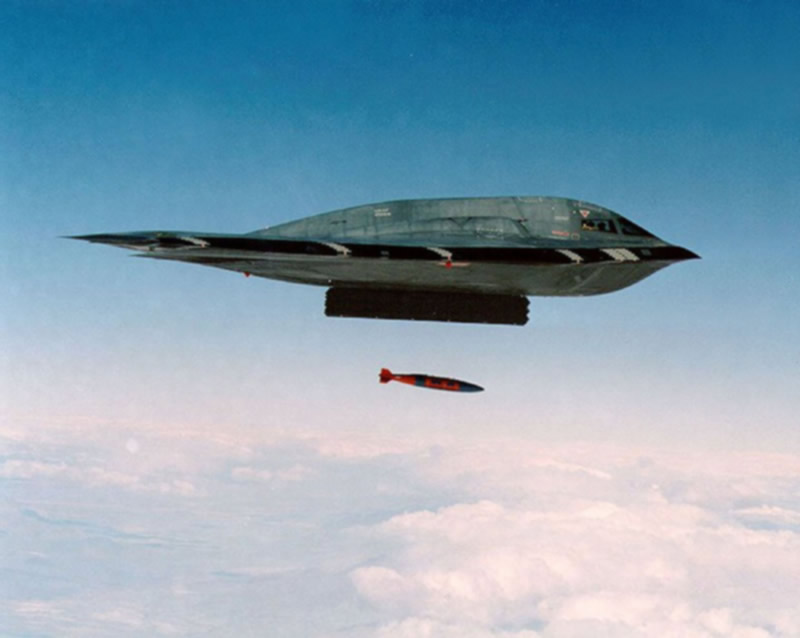
(click to view full)
Precision bombing has been a significant military goal since the invention of the Norden bomb sight in the 1920s, but its application remained elusive. Over 30 years later, in Vietnam, the destruction of a single target could require 300 bombs, which meant sending an appropriate number of fighters or bombers into harm’s way to deliver them. Even the 1991 Desert Storm war with Iraq featured unguided munitions for the most part. The USAF some laser and TV-guided weapons like Paveway bombs and Maverick missiles, but they were very expensive, and only effective in good weather. If precision bombing was finally to become a reality throughout the Air Force, a new approach would be needed. The Joint Direct Attack Munition (JDAM) became that alternative, an engine of military transformation that was also a model of procurement transformation.
DID’s FOCUS articles offer in-depth, updated looks at significant military programs of record. This DID FOCUS Article looks at the transformational history of the JDAM GPS-guided bomb program, the ongoing efforts to bring its capabilities up to and beyond the level of dual-mode guidance kits like Israel’s Spice and Raytheon’s Enhanced Paveway, and the contracts issued under the JDAM program since its inception.[updated]
JDAM: A Timely History of Transformation
(click to view full)
JDAM’s core concept goes back several decades. A group of researchers and engineers at Eglin AFB in Florida had been looking at a new way to guide a bomb to its target since the 1980s. This group came up with the idea of using inertial navigation systems (INS), which measure acceleration to compute distance and direction traveled from a known point, in order to guide a device to another pre-plotted point.
After the USAF’s review of the 1991 Desert Storm conflict and its subsequent findings, the technology was ready to be taken off the shelf. By that time, the USA had also built a robust Global Positioning System, with capabilities reserved only for military users. The GPS system itself was capable of unaided accuracy to within about 3 feet, no matter what the weather was like. The reaction times involved in guiding a bomb wouldn’t achieve 3-foot accuracy, and even 3 feet wasn’t quite as accurate as laser-guided weapons. Nor would the initial JDAMs be able to hit moving targets, as laser-guided weapons did. On the other hand, lasers could be blocked by fog, sand, etc., while JDAM’s INS/GPS guidance modes were impervious to weather.
Initial development work showed promise. Unfortunately, that only solved part of the problem. Laser and TV guided precision weapons were expensive. JDAM already had promise as one thing they weren’t: an all-weather weapon. To become more than a niche player, however, it would have to be something else its competition wasn’t: cheap.
A bit of luck helped the program along that path. The stepped up urgency around the JDAM program coincided with some of the 1990s military acquisition reform initiatives, which aimed to reduce the system’s immense bureaucratic weight. JDAM was one of just 7 pilot programs to receive special waivers that sidestepped a number of expensive and time-consuming regulations. The program took full and proper advantage. Roy Handsel, a project manager with the JDAM Squadron:
“Previously, companies dealing with the government were required to provide extensive cost data to justify prices. This complicated and labor intensive information gathering put many small manufacturing shops out of the running for government contracts. But with waivers … small businesses across America could be subcontracted … to produce the subassemblies that make up a JDAM.”
(click to view full)
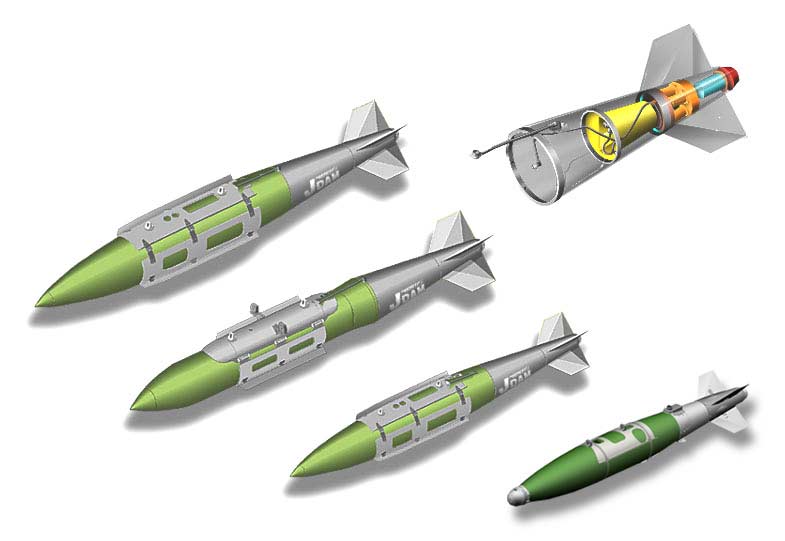
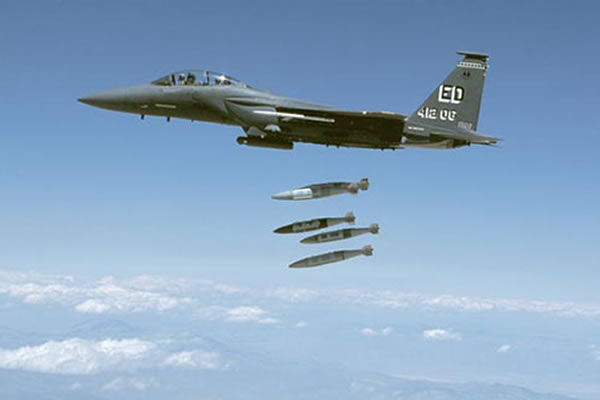
By the time they were done, JDAM was a tail kit that could be attached to existing Mk 80 family ‘dumb’ bombs, turning them into affordable precision weapons with a range of up to 15 miles, depending on their altitude and speed at the release point.
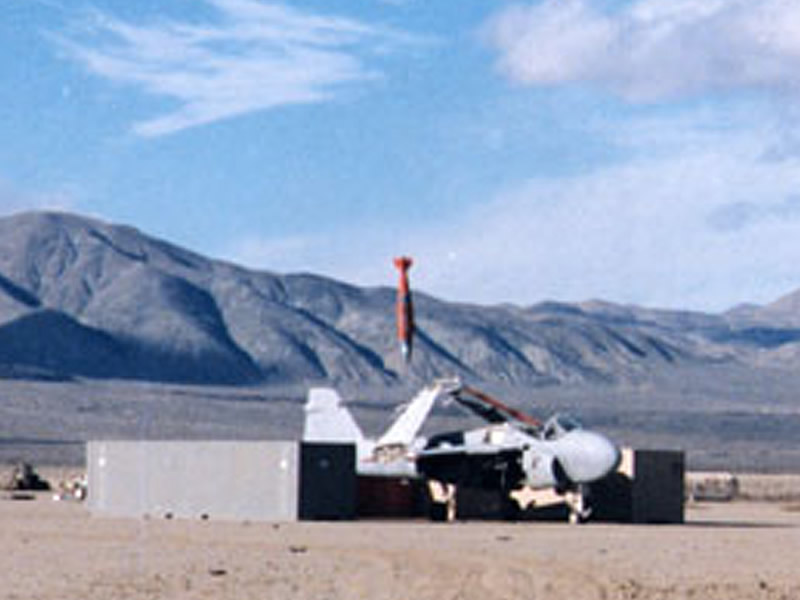
The JDAM program was accelerated in 1995, as low-rate initial production was moved up 9 months, to the latter half of FY 1997. All 22 weapons tested during this interval performed successfully, including overall Circular Error Probable (CEP) of 10.3 meters, significantly better than the program’s 13 meter requirement. JDAM was certified as operational capable on the B-2 in July 1997. Limited Initial Operational Capability was achieved on the B-52 in December 1998.
Then came Kosovo, aka. Operation Allied Force in 1999. JDAMs were used from B-2 bombers at rate that nearly equaled manufacturing capacity. Approximately 650 JDAMs, containing approximately 1.4 million pounds of high explosive, were dropped on military and infrastructure targets. The Joint Chiefs of Staff directed rapid acceleration of production, and soon F/A-18 Hornets were also formally authorized as JDAM-capable, with other aircraft certifications following as the program ramped up. The DoD eventually picked McDonnell Douglas to develop 87,000 of these tail kits over the program’s lifetime for the USAF and Navy – at just $18,000 apiece in then-year dollars, instead of the original $40,000 estimate.

(click to view full)
Two years later, as the ruins of the World Trade Center were still smoking, the USAF was ready.
By mid-December 2001, the first 9 weeks of intense air strikes over Afghanistan had consumed about half of the 10,000 or so JDAM kits in inventory. Among the 18,000 munitions expended, half were precision-guided. Fully half of those were JDAMs, and they were put to very creative uses by Special Forces teams on the ground. From Bob Woodward’s book “Bush At War“:
“The Northern Alliance was trying to induce defections from the Taliban itself, but the CIA could come in and offer cash. The agency’s hand would often be hidden as the negotiations began — $10,000 for this sub-commander and his dozens of fighters, $50,000 for this bigger commander and his hundreds of fighters. In one case, $50,000 was offered to a commander to defect. Let me think about it, the commander said. So the Special Forces A-team directed a J-DAM precision bomb right outside the commander’s headquarters. The next day, they called the commander back. How about $40,000? He accepted.”
The JDAM kits’ price rose slightly with inflation etc. to about $30,000 each, but FY 2010 figures indicate a drop back to about $25,000. Their bargain basement price and proven performance have made JDAM a standout on both the battlefield and the procurement field. Pentagon documents give an official figure of less than 5 meters CEP (50% of bombs fall within 5m of target) when GPS is available, and less than 20 meters CEP using inertial navigation if GPS is absent or jammed.
As JDAM’s success gathers steam, the transformation it brought has spread beyond its associated programs. American weapons like the AGM-154 JSOW long-range glide bomb/cruise missile have incorporated aspects of JDAM technology, and the JDAM concept – whether implemented via Navstar GPS, Russia’s GLONASS, or other systems – can be expected to be a standard feature of future weapons around the world. China’s Lei Shi 6 glide bomb, France’s rocket-boosted AASM, Russia’s KAB-500S-E, South Africa’s Umbani/ Al-Tariq, and other foreign products are already competing directly with JDAM. In the dual-guidance LJDAM’s market segments, Sagem’s AASM, RAFAEL’s GPS/IIR Spice, and Raytheon/Lockheed enhanced Paveway variants have created an even more competitive environment.
JDAM: Program & Variants
According to Boeing, by 2012 over 230,000 JDAM kits had been bought by the USA and “more than 26” allied countries. Conversations with Boeing, and DID research, indicate that the following platforms have been integrated to use JDAMs:
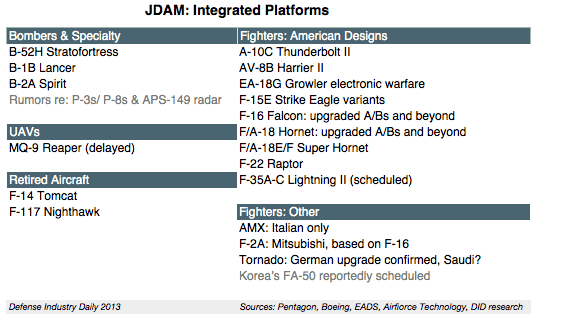
Boeing would not confirm integrations beyond US military platforms, except to state that JDAMs have also been integrated with “earlier” F-16 and F/A-18 variants, and that that all F-15E Strike Eagle family variants are JDAM compatible. This includes the new stealth-enhanced F-15SE.

By early 2002, the Boeing JDAM production facility in St. Charles, MO was working 3 shifts around the clock; Boeing ramped up deliveries from 750 a month during winter 2001, to 2,000 per month in October 2002, and 2,800 per month by August 2003. Production was expected to increase to 5,000 per month with the addition of a new assembly line, and the need to replenish stocks drawn down by war on the Afghan and Iraqi fronts kept demand high. US orders have tailed off sharply, but JDAM’s popularity around the world ensures that the line won’t be closing any time soon. US budgetary requests have included both regular buys, and supplemental/”OCO” purchases to replenish wartime use:
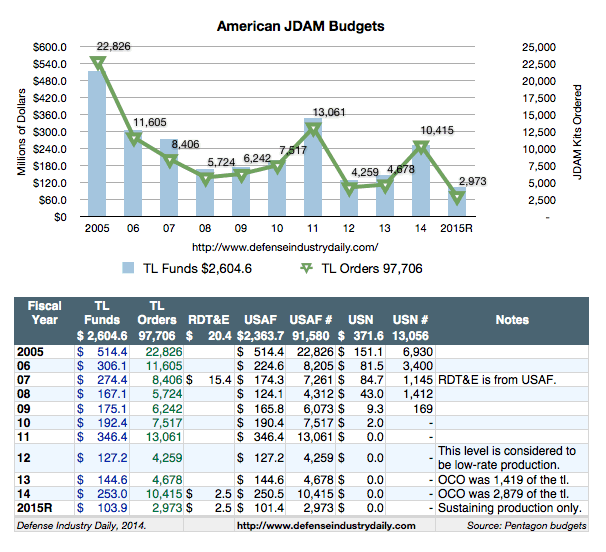
In addition to Boeing, the core JDAM production team includes:

DID doesn’t cover the GFE items as part of this article; obviously, both items have applications that reach far beyond JDAM. The Joint Programmable Fuze System has a variable delay setting that may be programmed manually or from the cockpit, giving their attached bombs good versatility against a range of targets.
JDAM: Variants
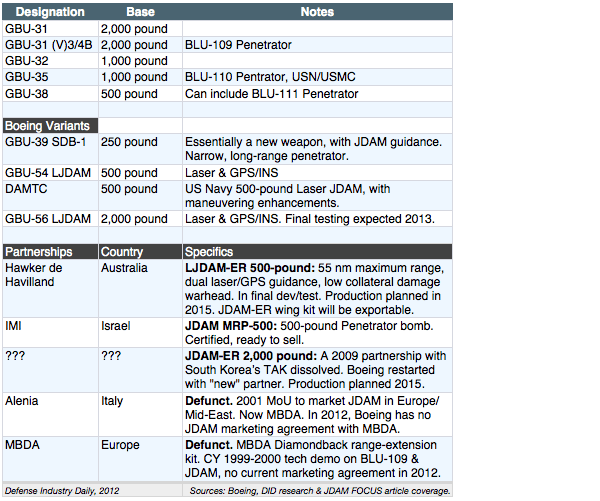
The tail kit + a Mk.80 family weapon creates a JDAM. If a nose kit is added, other targeting modes like laser guidance can be added. To extend range, a wing kit can be attached to the main bomb body. Mixing and matching Mk.80 bomb bodies with the tail kit, plus some combination of optional nose or wing kits creates the full range of JDAM models. Completed JDAM weapons have designations that primarily reflect the size of the base bomb.
Sub-designations exist to distinguish USAF from USMC/USN weapons, but DID has left those out for simplicity. The big difference? Naval variants are “thermally protected,” which means they use explosives that are less likely to detonate if the ship they’re on is hit.
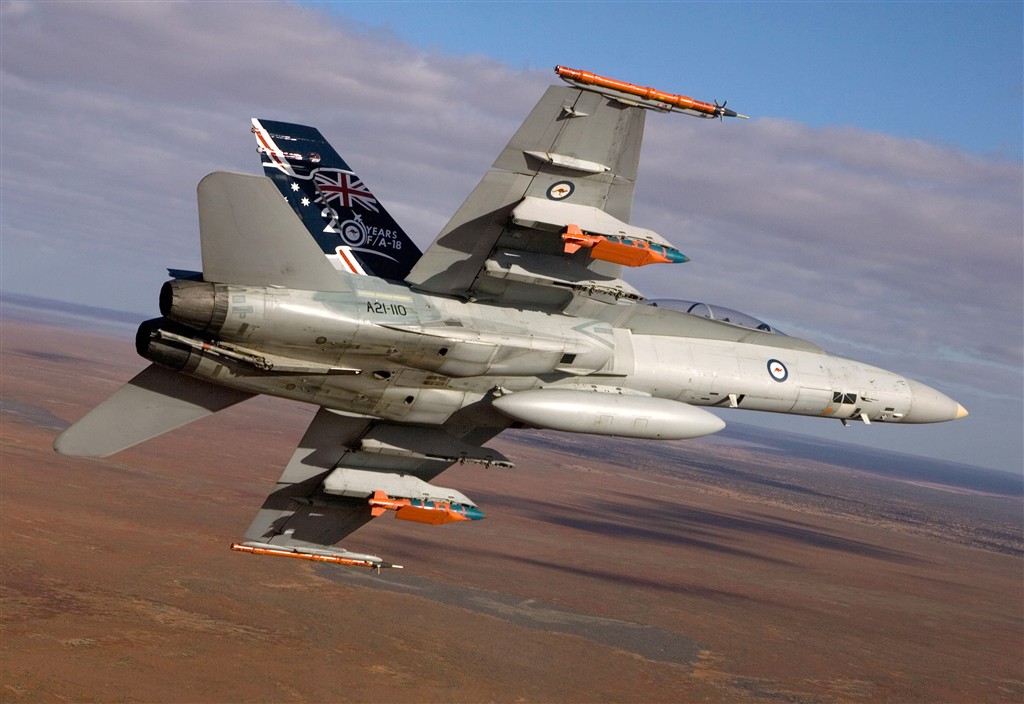
with JDAM-ERs
(click to view full)
As the chart above shows, JDAM’s spreading popularity means is creating demands for new variants and add-ons, official or otherwise. While there’s no co-marketing agreement in place, European firm MBDA is already touting its own “Diamondback” kit as a potential add-on; Diamondback equips the Small Diameter Bomb, and was originally tested in 2000 with full JDAM versions.
In an odd turn of fate, JDAM’s popularity is even causing it to lose its “alternative” status, and emulate the very laser-guided weapons it was intended to supplant.
The LJDAM (Laser JDAM) kit adds a DSU-38 or DSU-40 laser guidance module to the standard JDAM INS/GPS kit. The combination improves accuracy to 1m CEP or less. It also allows the weapon to target moving objects, using GPS/INS to get the weapon into the vicinity, and laser guidance for the final strike. This combination creates a more versatile and standardized weapon set, and gives aircraft on station an option that lets them hit transient “pop up” targets of opportunity, without having to be within laser sighting range themselves. In exchange, of course, LJDAM costs more. LJDAM’s 1st combat use came in Iraq, in August 2008.
The closely related US Navy Direct Attack Moving Target Capability (DAMTC) weapon was first delivered in October 2008. It’s very similar to LJDAM, with some maneuvering enhancements, explosive materials optimized for naval use, and a few minor configuration changes.

(click to view full)
The 250 pound GBU-39 Small Diameter Bomb program is a direct outgrowth of JDAM technology. It incorporates a more streamlined bomb shape and pop-out wings. These modifications give it a longer glide range, as well as performance against hardened targets equivalent to a 2,000 pound conventional bomb. The difference is an aircraft that can carry 8 GBU-39s in place of a single 2,000 pound GBU-31 bomb, dramatically expanding its capabilities.
JDAM: Contracts and Key Events
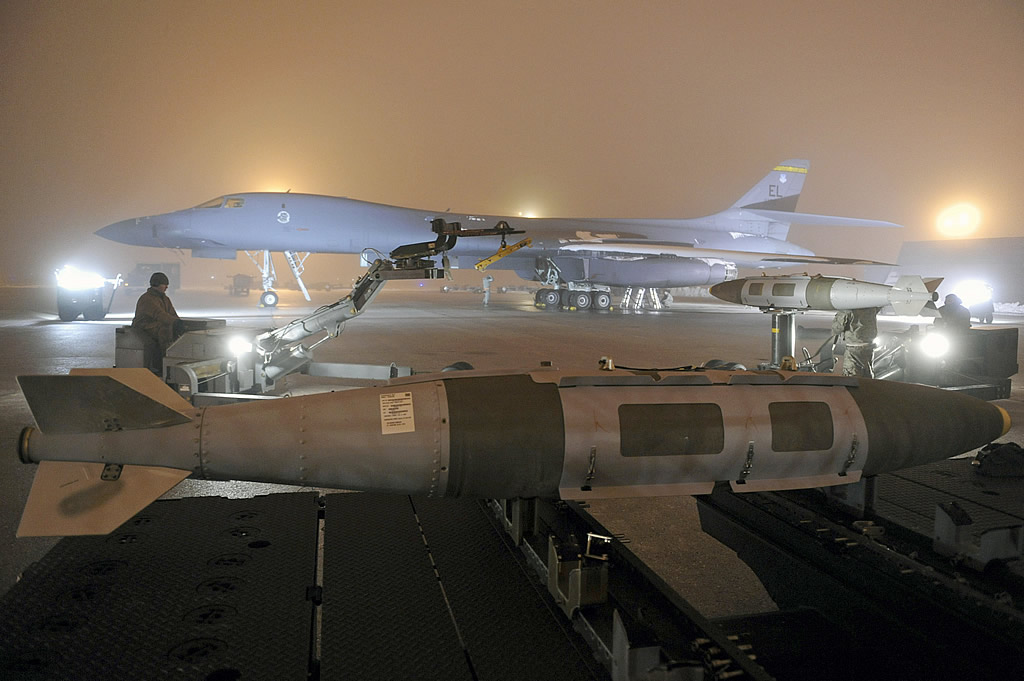
Libya 2011
(click to view full)
Unless otherwise specified, contracts are awarded by The Headquarters 308th Armament Systems Wing at Eglin Air Force Base, FL. Unless otherwise specified, contracts are issued to Boeing subsidiary McDonnell Douglas Corp. in St Louis, MO.
DID doesn’t cover Joint Programmable Fuze contracts here. They are used in JDAM variants, offering variable detonation delay settings that may be programmed manually or from the cockpit, but they’re also used in other weapons.
FY 2016 – 2019
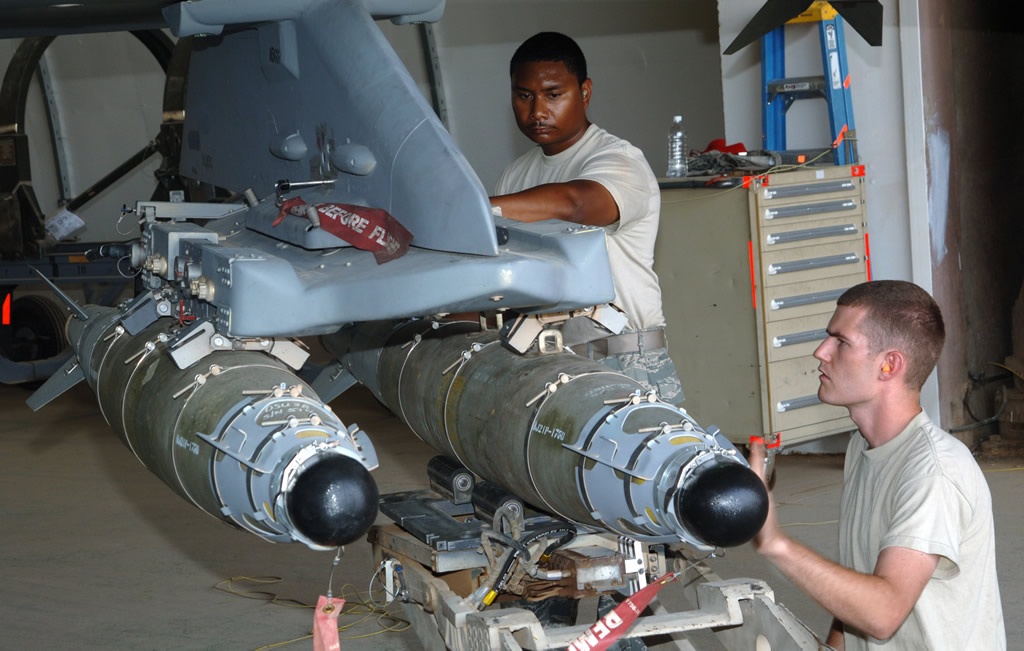
(click to view full)
June 17/19: Contract Extension The US Air Force Life Cycle Management Center in Utah awarded Boeing a five-year-extension to an earlier contract for JDAM guided bomb tailkits, spares, repairs and technical services. This deal increases the contract ceiling by over $6.5 billion. The Joint Direct Attack Munition guidance kit features a GPS-aided inertial navigational system that essentially converts “dumb” gravity bombs into accurate, guided “smart bombs“, improving their accuracy. Once released, the JDAM autonomously navigates to the designated coordinates. In April, Boeing won a $250 million, 10-year contract for Joint Direct Attack Munition guidance kit services. The extension includes Foreign Military Sales funds. Work will take place in St. Louis, Missouri, and will be completed by February 28, 2025.
May 15/19: More JDAM The US Navy awarded Boeing a $139.8 million modification to continue manufacturing precision laser guidance sets for the Laser Joint Direct Attack Munition (JDAM). Boeing received a $357.8 million contract in 2015 to manufacture precision laser guided sets for the Navy, the US Air Force and multiple Foreign Military Sales clients. The JDAM is a low-cost guidance kit that converts existing unguided free-fall bombs into accurately guided “smart” weapons. The kit consists of a new tail section that contains an inertial navigation system/global positioning system (INS/GPS) and body strakes for additional stability and lift. The company will supply the military service with 12,000 additional JDAM kits. Work will take place in the US and is expected to be completed in April 2020.
April 3/19: Laser JDAM The US Air Force contracted Boeing $250 million for the Joint Direct Attack Munition (JDAM) guidance kit services for the Air Force, Navy and allies. The deal will have Boeing Defense Space and Security build the JMAD and supply Laser Joint Direct Attack Munition technical services, aircraft integration and sustainment. The JDAM is a guidance tail kit that converts existing unguided free-fall bombs into accurate, adverse weather smart munitions. JDAM enables employment of accurate air-to-surface weapons against high priority fixed and relocatable targets from fighter and bomber aircraft. Boeing has manufactured more than 260,000 JDAM guidance kits at its production facility in St. Charles since 1998. The JDAM was first used during Operation Allied Force in the Balkans in 1999. Laser JDAM is operational on US Air Force F-15Es and F-16s, and US Navy F/A-18s and A/V-8Bs. The contract also includes JDAM/LJDAM-specific activities like technical services, aircraft integration, and sustainment. Work will take place in St. Louis and is expected to be complete by March 2029.
October 05/18: Smartening-Up The US Air Force is procuring technical support for its Joint Direct Attack Munition (JDAM) from Boeing. Boeing will provide the service with studies and analysis, product improvement efforts, upgrades and integration work at a cost of $45 million. The JDAM program essentially makes ‘dumb’ bombs ‘smart’ by adding sophisticated rear guidance sections. This tail kit includes adjustable tail fins, a control computer, an inertial guidance system and a GPS receiver. Before release, the aircraft tells the bomb its current position and the GPS coordinates of the target. According to the US Air Force, the system is accurate to within 40 feet. One JDAM tail kit costs about $20.000 making it significantly cheaper than laser-guided bombs. Work will be performed at Boeing’s facility in St. Louis, Missouri and is expected to be completed by March 31st, 2019.
March 04/18: Contract Modification-Tail Kits Orders Boeing has been awarded a ceiling increase modification to a previously awarded contract for the provision of Joint Direct Attack Munition (JDAM) tail kits. The modification is valued at over $311 million. The deal provides for JDAM strap-on inertial guidance kits with the capability to receive guidance updates from GPS which increases the weapon’s accuracy. JDAM tail kits turn previously unguided free-fall munitions such as the 2,000-pound BLU-109/MK 84 or the smaller 500-pound BLU-111/MK 82 warhead, into guided air-to-surface munitions. The awarding of the modification brings the total cumulative face value of the contract to $1.23 billion. Work will be performed at Boeing’s St. Louis, Missouri, facility and is scheduled for completion by March 2020.
February 6/18: Contract Modification-Tail Kit Orders Boeing was awarded Thursday, February 1, a $195 million contract modification for the provision of additional Joint Direct Attack Munition (JDAM) tail kits. The awarding of the USAF contract brings the total cumulative face value of the contract to $927,581,526. Work will take place at Boeing’s St. Louis, Missouri, facility with an expected completion date set for January 30, 2020. JDAM tail kits turn previously unguided free-fall munitions such as the 2,000-pound BLU-109/MK 84 or the smaller 500-pound BLU-111/MK 82 warhead, into guided air-to-surface munitions.
December 28/16: Kuwait has been cleared by the US State Department for the purchase of 750 Joint Direct Attack Munition (JDAM) Tail Kits. The $37 million deal is divided into three equal number purchases for the GBU-31, GBU-32 and GBU-38 munitions. JDAM tail kits contain a global positioning system and an inertial navigational system to improve accuracy, and are an integral part of the guidance kit that converts unguided bombs into precision-guided weapons.
September 9/16: Boeing has been awarded a $10 million contract to integrate the 2,000 lb GBU-56(V)4/B dual-mode Joint Direct Attack Munition (JDAM) on the F/A-18 Super Hornet. The deal covers the systems engineering and logistic support planning required for production acceptance testing and evaluation of the DSU-42/B precision laser guidance set and the KMU-558 series guidance set of the GBU-56(V)4/B PGM as well as integration for Navy and USMC F/A-18. GBU-56s are cleared for carriage on the Boeing F-15E Strike Eagle, F-16, F/A-18, McDonnell Douglas AV-8B Harrier, Fairchild-Republic A-10 Thunderbolt II, Rockwell B-1B Lancer, Boeing B-52H Stratofortress, Panavia Tornado, and Eurofighter Typhoon.
December 30/15: More Joint Direct Attack Munitions (JDAM) look to be on their way to the Middle East. Boeing has won a $357.9 million contract to produce Lots 4-8 of the DSU-38 A/B Precision Laser Guided Sets (PLGSs) for the US Navy, US Air Force and foreign military sales to UAE, Belgium, Turkey, Morocco and Saudi Arabia. When the PLGS are combined with the KMU-572 guidance set, air forces are able to cheaply convert unguided munitions into smart munitions as part of the JDAM system. Work is scheduled to be completed by December 2021.
December 9/15: Turkey is to receive $70 million worth of Joint Direct Attack Munitions (JDAM) and associated equipment, parts and technical support after being approved by the US State Department. The approval was procured through the Defense Security Cooperation Agency (DSCA) with the aim of helping with Turkish participation in NATO missions in the region. Sales of JDAM kits have been an extremely popular order from foreign nations as they allow for the cheap conversion of unguided bombs into smart munition. The kits are to be supplied by Boeing.
November 6/15: The United Arab Emirates has requested thousands of Joint Direct Attack Munition kits (JDAMs) and bombs from the US, along with sustainment and support services in a deal estimated to value $380 million. The request – approved by the State Department and now referred to Congress – includes 3,250 GBU-31V1s with associated MK-84/BLU-117 bombs, 750 GBU-31V3s with BLU-109 bombs and 1,000 GBU-12s with MK-82/BLU-111 bombs, as well as fuzes and other equipment. The UAE is engaged in combat operations as part of the Operation Inherent Resolve coalition against ISIS.
FY 2014 – 2015
May 21/15: Israel has requested 14,500 JDAM tail kits in a potential sale worth $1.9 billion. Israel previously ordered 3,000 upgraded JDAM kits in November last year, with these upgrades for the ultra-tightly coupled (UTC) capability, with that delivery set for November 2016.
March 2/15: New wing kits extend range, get new designation. Australia tests new wing kits called the JDAM ER (standing for extended range), tripling range from 24 miles to 72 miles. They were launched out of F/A-18s. The RAAF will purchase the kits later in 2015 pending additional certification tests.
Nov 24/14: Israel. Israel is buying 3,000 JDAM tail kits with “the ultra-tightly coupled capability,” using a maximum $82.6 million firm-fixed-price contract modification. This isn’t Israel’s first buy (q.v. Dec 12/10 request, April 12/13).
Work will be performed at St. Louis, MO, and is expected to be complete by Nov 30/16. The USAF Life Cycle Management Center at Hill AFB, UT (FA8213-15-D-0002, DO 0001, MOD 02).
Israel: 3,000
July 7/14: Singapore. The US DSCA officially announces Singapore’s export request for JDAM and LJDAM kits, “to sustain its air-to-ground weapons stockpiles and to accommodate training expenditures.” The DSCA explains that beyond building their stocks on Singapore:
“Singapore maintains a large CONUS F-15SG training presence at Mountain Home AFB. A portion of these munitions are anticipated for use at this CONUS training facility, and will enable RSAF pilots to practice using GPS-guided munitions that will further refine their combat capability.”
The JDAMs could also be used by Singapore’s F-16C/Ds. Boeing in St. Louis is the prime contractor, and the estimated cost is $63 million for:
* 913 KMU-556B/B JDAM kits for Mk-84 2000 lb bombs
* 100 FMU-152A/B fuzes
* 300 DSU-40 Precision Laser Guidance Sets
* Containers, munition trailers, support equipment, spare and repair parts, test equipment, publications and technical documentation, personnel training and training equipment, and other forms of support.
Sources: DSCA #14-18, “Singapore – Joint Direct Attack Munition (JDAM) Kits”.
DSCA: Singapore request for JDAM/LJDAM
April 17/14: SAR. The Pentagon releases its Dec 31/13 Selected Acquisitions Report. For JDAM, program cost is going up because they’re ordering more:
“Program costs increased $788.0 million (+12.2%) from $6,441.8 million to $7,229.8 million, due primarily to a quantity increase of 30,758 tailkits from 181,830 to 212,588 (+$712.6 million) and associated schedule and estimating allocations (+$68.0 million).”
Orders up
April 1/14: R&D. A maximum $80 million indefinite-delivery/ indefinite-quantity contract covers JDAM technical support for studies and analysis, product improvement, upgrades, integration (including, but not limited to, software integration, aircraft integration, and associated hardware) and testing. Work will be performed in Missouri with an expected completion date of March 31/19.
$4.3 million is committed immediately, using FY14 USAF and USN funding. This is a sole source acquisition by USAF Life Cycle Management Center/EBDK at Eglin AFB, FL (FA8681-14-D-0028).
Feb 27/14: A $49.8 million contract modification to a previously awarded firm-fixed-price contract for the full rate production of 3,500 Precision Laser Guidance Set (PLGS) units and 5,000 kits to convert the PLGS units from the DSU-38/B configuration to the DSU-38A/B for the USAF. These are the front ends used in LJDAMs (q.v. April 19/13), and it’s our guess that the key change involves retrofitting tougher sapphire lenses (q.v. Jan 17/13).
All funds are committed, using FY 2014 USAF ammunition budgets. Work will be performed in Fort Worth, TX (57%); St. Charles, MO (17%); Cincinnati, OH (12%); Greenville, SC (5%); Minneapolis, MN (4%); Glen Riddle, PA (3%); Danville, VA (1%); and Georgetown, TX (1%), and is expected to be complete in February 2016. US NAVAIR in Patuxent River, MD manages the contract (N00019-10-C-0030).
Jan 28/14: DOT&E Testing Report. The Pentagon releases the FY 2013 Annual Report from its Office of the Director, Operational Test & Evaluation (DOT&E). The JDAM is included, but only under systems like the F-35 that have been testing it. The MQ-9 continues to have issues:
“DOT&E rescinded the 2009 GBU-38 500-pound JDAM FDE plan in February 2013 due to lack of progress in maturing software capabilities to support an operational evaluation with the current MQ-9 OFPs. AFOTEC will test JDAM during FOT&E of the MQ-9 Increment One system.”
FY 2013
Lot 17 buys; Request and purchase from Israel; Foreign sales; Laser SDB-I; JDAM-ER production partner picked; South Korea competes with their KGGB.
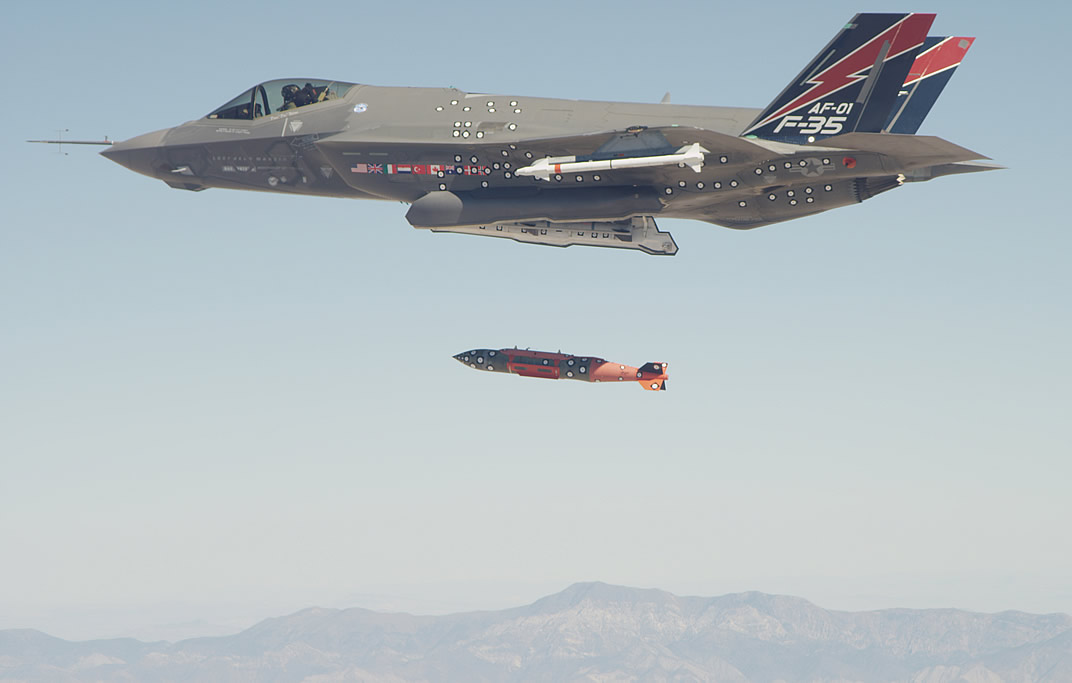
(click to view full)
June 27/13: Lot 17. A $39.5 million contract option adds 1,601 JDAM tailkits to Lot 17 (q.v. Dec 21/12), split $14.9 million baseline funds plus $24.6 million supplementary (OCO) funds. This brings the total contract to $141.9 million. Pro-rating this cost per tailkit would give us 5,751 for FY 2013, though the American budget for that year is 4,678.
All funds are committed immediately, using FY 2013 Ammunition budgets. Work will be performed at Saint Charles, MO, and is expected to be complete by March 31/15. The USAF Life Cycle Management Center/EBDK at Eglin AFB, FL manages the contract (FA8681-13-C-0063, PO 0006).
April 19/13: A $17.7 million firm-fixed-price contract modification for full rate production of Laser JDAM front ends. The total contract involves 1,496 DSU-38/B precision laser guidance sets and appropriate shipping containers for the US Navy (509/ $5.6M/ 31%), USAF (463/ $5.1M/ 29%) and the governments of Saudi Arabia (496/ $6.7M/ 38%) and Japan (28/ $375,970/ 2%). The buy will use Foreign Military Sale funds, as well as FY 2013 USAF and USN ammunition budgets.
Work will be performed in St. Charles, MO, and is expected to be complete in February 2015. US Naval Air Systems Command, Patuxent River, MD manages the contract (N00019-10-C-0030).
LJDAM: USA, Saudi Arabia, Japan
April 12/13: Israel. A $65.9 million firm-fixed-price contract for 2,701 JDAM tail kits, which would only represent a part of Dec 10/12 DSCA request.
Work will be performed at St. Louis, MO, and is expected to be completed by March 31/15. The contract involves foreign military sales (FMS) to Israel, with the AFLCMC/EBDKI at Eglin AFB, FL acting as Israel’s FMS agent (FA8681-13-C-0093).
Israel
March 15/13: FMS. Boeing in St. Louis, MO receives a $99.9 million firm-fixed-price, cost-plus-fixed-fee and indefinite-quantity/ indefinite-delivery contract for production assets (JDAM kits), spares, repairs and sustainment. The contract involves foreign military sales, but they won’t say to whom.
Work will be performed in St. Louis, MO, until Jan 31/16, using foreign military sales funding. USAF Life Cycle Management Command’s EBDK at Eglin AFB, FL manages this contract, as an agent for its foreign customer (FA8681-13-D-0102).
Purchase – but by whom?
March 13/13: JDAM-ER. The Royal Australian Air Force became Boeing’s first JDAM-ER customer in 2011. Now, Boeing announces that they’ve picked Ferra Engineering in Australia to build the wing kits, after partnering with Hawker de Havilland to create them. The kit is reported to give this 500-pound laser/GPS dual-guidance weapon a range of up to 55 nm/ 102 km, when launched at high speed and altitude. By now, however, this is no longer a unique offering. In September 2012, South Africa’s Denel and the UAE’s Tawazun signed a partnership to take their similar but larger Umbani (“Al-Tariq”) GPS glide bomb concept to market around the globe.
Ferra was Boeing’s 2011 International Supplier of the Year, who also does work for the Boeing P-8A Poseidon maritime patrol aircraft, F/A-18E/F Super Hornet fighter, and for Boeing’s Commercial Aviation Services group. Boeing.
Jan 17/13: DOT&E Testing Report. The Pentagon releases the FY 2012 Annual Report from its Office of the Director, Operational Test & Evaluation (DOT&E). The F-22A Raptor’s radar and sensors let it drop JDAMs and SDB-I bombs accurately and reliably, but the MQ-9 Reaper drone remains in limbo with JDAM, and hasn’t resolved and tested the fuzing and weapons envelope discrepancies identified in 2010. Meanwhile, the Laser JDAM’s glass lens covering took a real beating in Afghanistan, to the point that Boeing had to develop a sapphire lens instead.
The Navy’s DAMTC LJDAM gets the most coverage. It benefited from the sapphire lens switch, and reliability was 98%, but 3 operator errors and an unexplained miss knocked it down to 77%. Demonstrated accuracy was 5.8m CEP in self-lasing mode, but buddy lasing tests went poorly. DOT&E think test range and target limitations may be the difference, and isn’t overly concerned. They also cite the high cockpit workload of using LJDAM, but that’s the same problem faced by all laser-guided weapons. Apparently, targeting pod limitations are the common cause.
DOT&E is very critical of the dense wiring inside the DAMTC tail kit, which makes verifying fuze arming and function settings extremely difficult, especially at night. Workarounds are worse than the problem, and they’d like this issue fixed. Since DOT&E declared DAMTC operationally effective and suitable, however, their recommendation doesn’t have a lot of push behind it. It will be up to the US Navy.
Jan 14/13: KGGB competitor. South Korea’s Agency for Defense Development (ADD) and 20 defense firms, including LIG Nex1, have jointly developed the extended range, 500 pound Korea GPS-Guided Bomb (KGGB) with a 5-year, KRW 40 billion ($378 million) budget. The bombs include GPS/INS guidance and a wing kit, with a claimed range of 100 km at maximum launch altitude and speed. Cost is reportedly KRW 100 million each (about $97,600).
The KGGB is “designed to take out North Korean artillery positions concealed behind mountains.” The weapon’s big question is accuracy, depending on its allowed level of GPS M-code signal access. Then again, if the core problem is the artillery and rockets near Seoul, ground stations could be used to create fantastic GPS precision on top of a civilian signal.
This isn’t a JDAM modification – it’s a JDAM competitor. South Korea’s ADD is talking about using these bombs on old F-5 and F-4 fighters, which implies an integration method that doesn’t require rewiring the planes, or adding MIL-STD-1760 databus technology. That could make the KGGB attractive on the export market. The standard alternatives in the industry are to either rely on pre-programmed targets that are set before takeoff, or use a wireless link and a separate control pad for the pilot. Yonhap News | Chosun Ilbo | Korea Times.
Dec 21/12: Lot 17. A $118 million firm-fixed-price contract to procure JDAM Production Lot 17 Guided Vehicle kits. Work will be performed in St. Charles, MO until March 31/15 (FA8681-13-C-0063)
Dec 19/12: Laser SDB. An $8.9 million firm-fixed price and cost-plus-fixed-fee contract for Laser Small Diameter Bombs (LSDB) retrofits, LSDB guided test vehicles, storage/shipping containers; and production, engineering, integration and test support. Work will be performed in St. Louis, MO, and is expected to be complete by Dec 31/13 (FA8656-13-C-0053).
The AFLCMC/PZJ at Eglin Air Force Base, FL is listed as the managing agency, but inquiries are directed to US SOCOM, who do not respond to questions. The is a GBU-53 SDB-II program underway top field a tri-mode GPS/laser/MW radar guided weapon, but a near-term laser retrofit would allow SDB-I capable aircraft and UAVs to begin attacking moving targets. SOCOM’s MQ-9 MALET/Reaper UAVs would be an obvious candidate, since the SDB’s all-weather versatility and precision strike design fit extremely well with SOCOM’s needs. Beyond US SOCOM, the USAF’s high-end F-22A Raptor would probably be the most immediate beneficiary of a Laser SDB.
Laser SDB-I
Dec 10/12: Israel. The US DSCA announces [PDF] Israel’s formal request to buy a variety of JDAM-related items, at an estimated cost of up to $647 million. The request includes 6,900 JDAM tail kits and their associated bombs, whose numbers match exactly. That’s significant, because IMI makes its own JDAM-certified MPR-500 bomb for hardened targets. The exact requests break down as:
* 1,725 MK-82 500 pound bombs
* 1,725 KMU-572 tail kits for MK-82s, creating GBU-38s
* 3,450 MK-84 2,000 pound bombs
* 3,450 JDAM Anti-Jam KMU-556 tail kits for MK-84s, creating GBU-31s
* 1,725 BLU-109 2,000 pound “bunker buster” forged casing bombs
* 1,725 KMU-557 tail kits for BLU-109s, creating the GBU-31v3/B
* 3,450 GBU-39s: 250 pound Small Diameter Bombs
* 11,500 FMU-139 Fuses
* 11,500 FMU-143 Fuses
* 11,500 FMU-152 Fuses
Plus spare and repair parts, support equipment, personnel training and training equipment, publications and technical documentation, and other forms of US Government and contractor support. The principal contractors will be:
* The Boeing Company in St. Charles, MO (JDAMs, SDB-I)
* General Dynamics in Garland, TX (Bombs)
* Kaman Dayron in Orlando, FL (Fuzes)
* ATK in Edina, MI
* Elwood National Forge Co. in Irvine, PA
* KDI Precision Products in Cincinnati, OH
* Lockheed-Martin Missile and Fire Control in Archibald, TN
* Raytheon Missile Systems in Tucson, AZ
Israel already has these weapons in inventory, and implementation of this proposed sale won’t require any additional personnel from the USA.
Israel request
FY 2012
DAMTC, JDAM-ER variants.
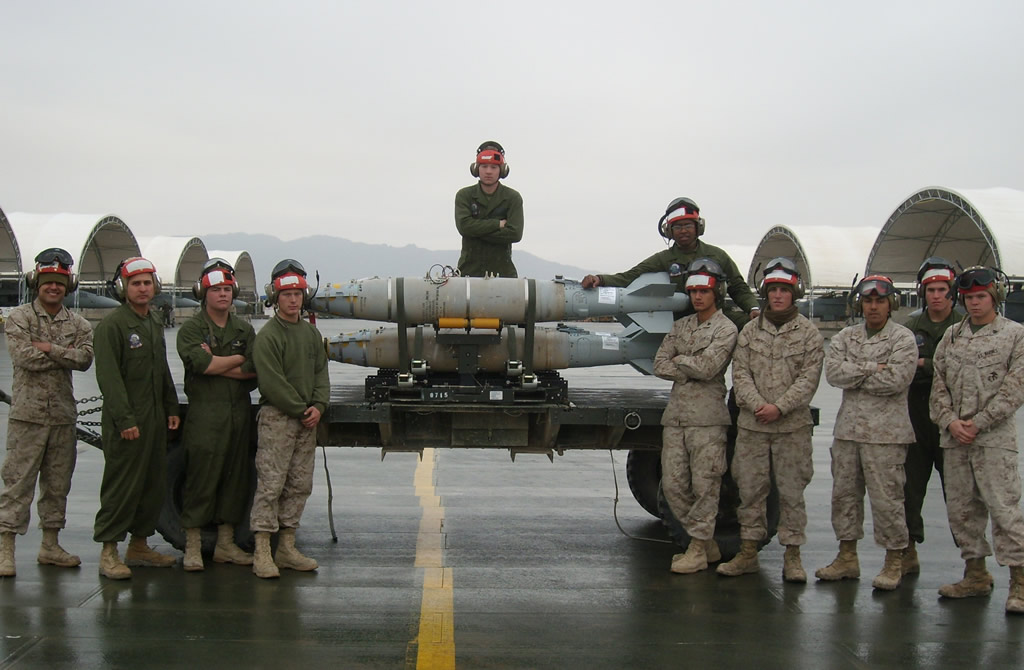
VFMA-122, Kandahar
(click for full picture)
July 16/12: DAMTC/LJDAM. A $22.8 million firm-fixed-price contract modification exercises an option for 2,384 US Navy Direct Attack Moving Target (DAMTC, Laser JDAM variant) weapons, including shipping containers.
Work will be performed in St. Charles, MO, and is expected to be complete in February 2014. Contract funds will not expire at the end of the current fiscal year, on Sept 30/12. US Naval Air Systems Command in Patuxent River, MD manages this contract (N00019-10-C-0030)
July 10/12: Australia’s JDAM-ER. Australia’s government announces that their Enhanced JDAM has completed its 1st round of testing, and provides details regarding this variant.
Australia’s JDAM-ER will have the Extended Range wing kit that boost range to over 40 miles, developed as part of a Capability and Technology Demonstrator (CTD) program by Australia’s DSTO and Boeing. That kit is likely to be available for international sale through the newly established Australian Military Sales Office.
Australia’s final bombs will actually be more like LJDAM-ERs, with dual-mode laser/GPS guidance, and a warhead designed for low collateral damage. The program began on Oct 19/05, with a contract for Australia’s “AIR 5409 Bomb Improvement Program.” Australian DoD | Boeing.
May 14-16/12: LJDAMs from B-1B. B-1 Lancer aircrews from Ellsworth AFB, SD employ GBU-54 Laser JDAMs against moving targets during the Combat Hammer exercise, from May 14 – 16. It’s the 1st operational release from this type of aircraft. USAF.
LJDAM on B-1B
May 10/12: A $24 million cost-plus-fixed-fee and firm-fixed-price contract for indefinite-delivery/ indefinite-quantity for JDAM technical support, to include non-warranty induction and repair, annual software updates, mission planning support, studies, and analysis.
Work will be performed in St. Louis, MO by Dec 31/13. The AAC/EBDK at Eglin AFB, FL is the contracting activity (FA8681-05-D-0277, PO 0025).
March 12/12: DAMTC/ LJDAM. A $12.6 million firm-fixed-price contract modification, exercising an option for 1,116 DAMTC laser/GPS guidance kits and appropriate shipping containers, plus 640 hours of production engineering and logistics support services. This is NAVAIR’s 3rd Low Rate Initial Production order for its Direct Attack Moving Target Capability (DAMTC).
Work will be performed in St. Charles, MO, and deliveries are expected to be complete in February 2013. This contract is managed by US Naval Air Systems Command, in Patuxent River, MD (N00019-10-C-0030). See also Boeing release.
Feb 14/12: Lot 16. Boeing receives an $111.4 million “predominantly firm-fixed-price contract” for 4,844 JDAMs. Work will be performed in St. Charles, MO, and is expected to be complete by May 2014 (FA8681-12-C-0160, PO 0002). When asked, Boeing said that:
“In 2011, the U.S. Air Force announced contract awards totaling $180 million for nearly 7,500 Lot 15 JDAM tail kits. Boeing received a $126 million contract from the U.S. Air Force on Nov. 30, 2011, and [this contract, too], for approximately 10,000 JDAM tail kits for Lot 16. Deliveries for these [Lot 16] tail kits will begin in May 2013 and continue through May 2014.”
Feb 12/12: MPR-500 JDAM. Israel Military Industries announces [PDF] that their Multi-Purpose Rigid 500-pound bomb has been certified with Boeing for use with the JDAM kit. It has more penetrating power and less fragmentation than the conventional Mk.82.
Israeli variant
Feb 3/12: Polish request. The US DSCA announces Poland’s official request for F-16 weapons, as well as a 5 year fleet support contract that includes associated equipment, parts, and training. The entire contract set could be worth up to $447 million, and includes up to “200 GBU-54 (2000 lb) Laser Joint Direct Attack Munitions (JDAM) Bombs”. Which doesn’t make sense, because the GBU-54 is a 500 pound weapon. What Boeing could say, was that:
“The GBU-56 Laser JDAM [DID: q.v. Sept 28/10 entry] includes the 2,000-pound MK-84 warhead and has been developed by Boeing. Final certification flight testing is planned by the USAF on behalf of our international customers and is expected to be completed within the next 12-18 months… you’ll need to contact the Dept. of Defense or DCMA for clarification on whether they meant GBU-54 or GBU-56.”
See “2012-02: Poland Requests F-16 Weapons, Support” for full coverage.
Poland & the GBU-56
Jan 30/12: An $8.3 million firm-fixed-price contract modification for another 700 precision laser guidance set kits. The US Air Force will receive them, and subsequent releases reveal that they’ll be used to maintain GBU-54 Laser JDAM inventory levels.
Work will be performed in Haifa, Israel (37%); Fort Worth, TX (32%); and St. Charles, MO (31%), and is expected to be complete in August 2012. $1.3 million will expire at the end of the current fiscal year. US Naval Air Systems Command in Patuxent River, MD manages the contract (N00019-10-C-0030).
Dec 2/11: Lot 16. A $125.9 million firm-fixed-price contract for Production Lot 16: 4,977 JDAM Guided Vehicle tail kits of various types. This is actually a contract option, but it’s exercised as a separate contract. Work will be performed at St. Charles, MO, and is expected to be completed May 31/14 (FA8681-12-C-0160).
See also Boeing release, which states that a full-rate production decision on the Laser JDAM sensors is expected in “early 2012.”
Nov 30/11: UAE request. The US DSCA announces [PDF] the UAE’s official request to buy 4,900 JDAM kits for up to $304 million, which breaks out as:
* 304 GBU-54 Laser JDAM kits for 500 pound bombs, with 304 DSU-40 Laser Sensors
* 3,000 GBU-38v1 JDAM GPS/INS kits and BLU-111 500 pound bombs
* 1,000 GBU-31v1 JDAM GPS/INS kits and BLU-117 2,000 pound bombs
* 600 GBU-31v3 JDAM GPS/INS kits and BLU-109 2,000 pound Hard Target Penetrator bombs
* 4 BDU-50C inert bombs
* Plus fuzes, weapons integration, munitions trainers, personnel training and training equipment, spare and repair parts, support equipment, and other US government and contractor support.
The weapons are explicitly slated for the UAE’s F-16E/F Block 60 fleet, which may be slated to grow soon, and are designed to “help the UAE AF&AD become one of the most capable air forces in the region, thereby serving U.S. interests by deterring regional aggression. These munitions will be used to complement the normal war-readiness reserve stockpile of munitions and provide munitions for routine training requirements.”
UAE request
FY 2011
LJDAM production. Poland, UAE.
(click to view full)
Aug 31/11: A $14.4 million firm-fixed-price contract modification for 602 JDAMs, type unspecified (FA8681-11-C-0111, PO 0004).
May 16/11: Lot 15. Boeing in St. Louis, MO received a $9.3 million firm-fixed-price contract modification for 389 MK-82 SAASM/AJ JDAMs under production Lot 15. In English, those are 500 pound JDAM bomb kits, with improved jamming resistance (FA8681-11-C-0111, PO 0003).
May 2/11: Lot 15. A Boeing release refers to:
“The U.S. Air Force announced a $92 million contract for more than 4,000 Lot 15 JDAM kits on March 14. This follows an $88 million contract awarded Jan. 14 for the first 3,500 tail kits in the same lot.”
The award does not list on DefenseLINK for March 14/11 or surrounding days, though the Jan 14/11 award is present and listed below.
May 2/11: LJDAM/DAMTC. US NAVAIR announces that the Navy’s Direct Attack Moving Target Capability (Laser JDAM) has successfully completed the 18th integrated test.
That was supposed to be the final test, but during the testing process, DAMTC made a configuration change to replace the current glass window with one made of sapphire, in order to improve resistance to weather and the elements. To ensure the change doesn’t create problems, 3 additional regression tests were added in July 2011. Operational testing is expected to begin in late summer 2011, with DAMTC slated to reach formal Initial Operating Capability on all F/A-18 family and AV-8B Harrier fighters by late winter 2012. Meanwhile, the weapons are already being used on the front lines.
March 16/11: LJDAM. An $8 million firm-fixed-price contract modification covers first article testing and 700 Low Rate Initial Production laser JDAM retrofit kits, as well as accompanying technical data. The Pentagon’s wording was very unclear, but a Boeing representative said:
“This contract is for the laser sensor kits that can be added to a conventional Mk 82 500-lb JDAM, which turns it into a [GBU-54] Laser JDAM. The sensor allows a conventional JDAM to have the flexibility to prosecute moving targets, relocatable targets and even maritime targets.”
This is LJDAM’s 1st major production order. Work will be performed in St. Charles, MO, and is expected to be complete in March 2012 (N00019-10-C-0030). See also Boeing release.
1st LJDAM production order
Feb 8/11: F-15K integration. The Chosun Ilbo quotes the South Korean ROKAF, who says it has integrated the 2,000 pound GBU-31 JDAM with its KF-16 fighters, as well as its F-15K “Slam Eagles.” After developing the software, the ROKAF successfully carried out 3 tests, and finished pilot training at the end of January 2011.
The report also mentions wing kits, which are absent from normal JDAMs – but not from the 2,000 pound JDAM Extended Range kit, which was being developed by Boeing and South Korea.
KF-16, F-15K… and JDAM-ER?
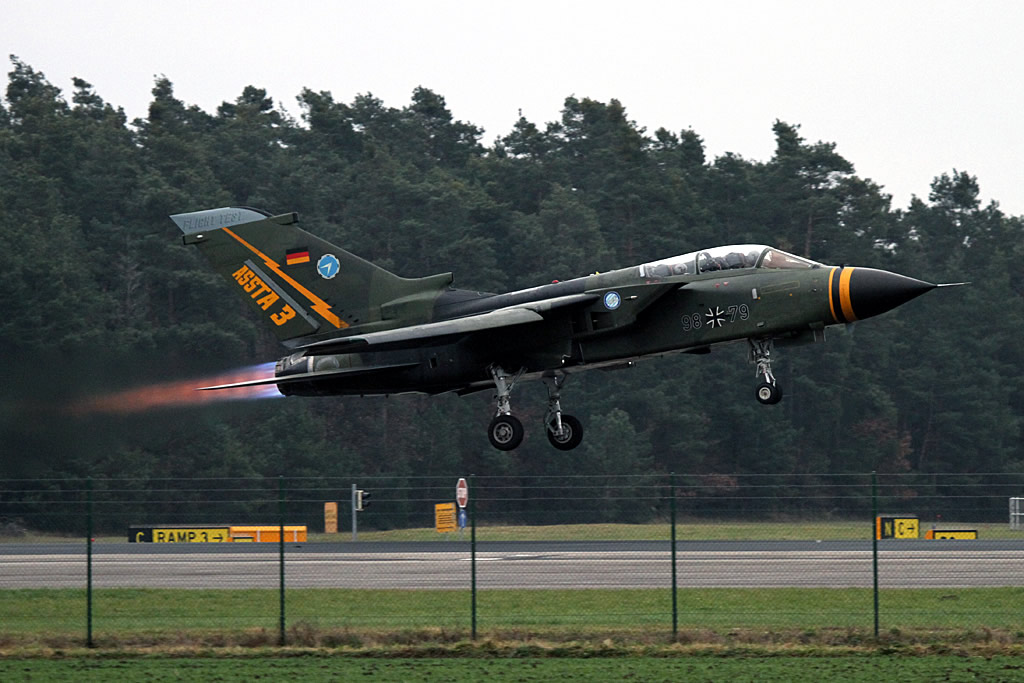
Feb 7/11: Tornado integration. EADS Cassidian discusses ongoing upgrades of German Luftwaffe Tornado strike/wild weasel aircraft to the ASSTA 3 (Avionics Software System Tornado Ada) standard. Adding Link-16 shared battlespace awareness via MIDS Low Volume Terminals are a key part of that upgrade, which also includes the latest generation radios, a digital video and voice recorder (DVDR), and the dual-guidance Laser Joint Direct Attack Munition (LJDAM).
LJDAM integration and launch behavior was verified during test flights in Vidsel, Sweden, in September 2010. In January 2011, Cassidian in Manching, Germany began the flight testing of a Tornado with an ASSTA 3 hardware and software configuration approximating that of series production. As of early February 2011, EADS Cassidian has already started to upgrade the first series aircraft in Manching, and deliveries are scheduled to start in mid-2012.
LJDAM on Tornado
Jan 14/11: Lot 15. An $88 million contract for 3,500 JDAM “Guided Vehicle kits”, or about $25,000 per kit. At this time, the entire amount has been committed (FA8681-11-C-0111).
FY 2010
Lot 14. Singapore.
(click for full picture)
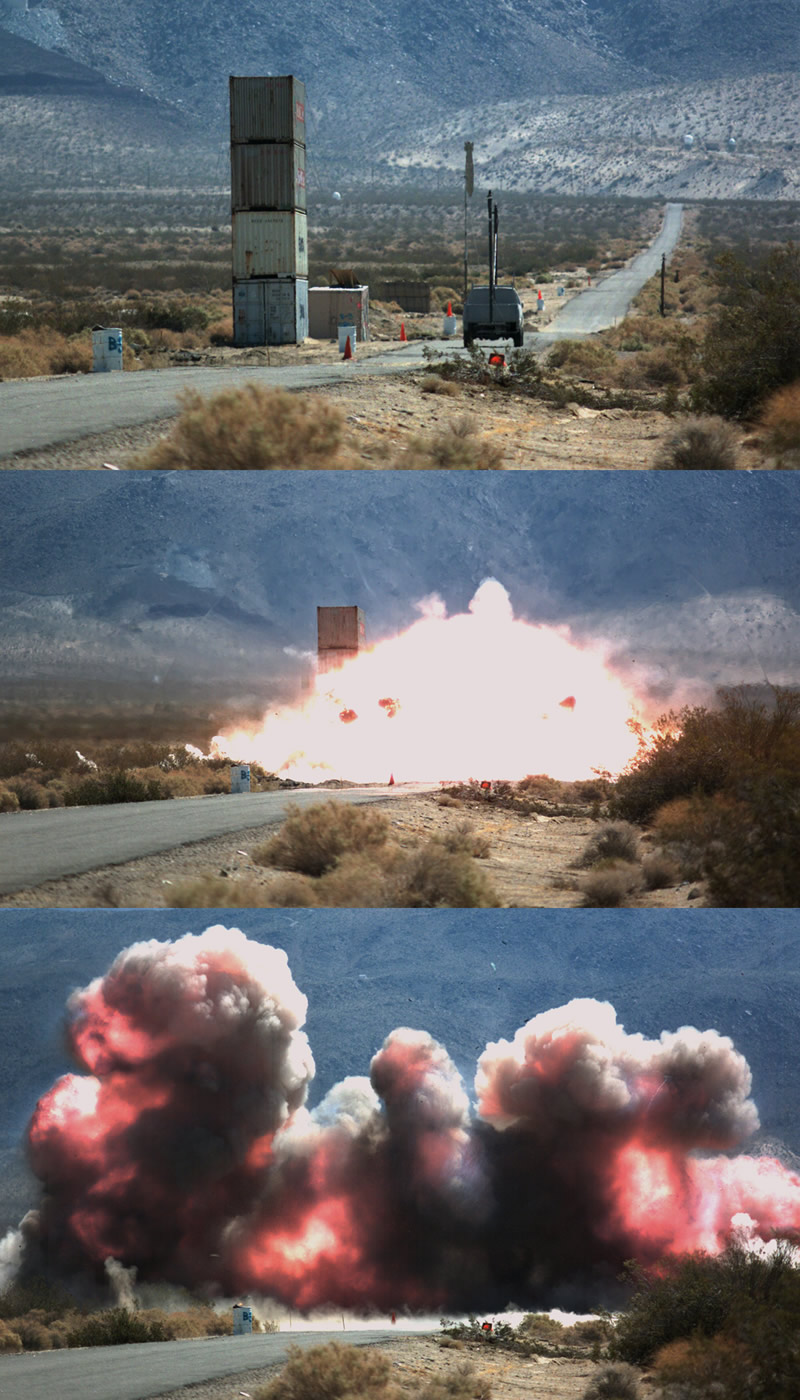
Sept 28/10: LJDAM GBU-56. Boeing announces successful tests of the 2,000 pound MK-84 bomb with a Laser Joint Direct Attack Munition (Laser JDAM) kit. The tests took place in July 2010 at Eglin Air Force Base, FL. The first 2 of 7 planned tests were dropped from a USAF F-16 test aircraft, flying sub-sonic at 30,000 feet.
An existing JDAM becomes a Laser JDAM with the installation of the Precision Laser Guidance Set (PLGS). The MK-84 PLGS uses the same laser sensor as the 500-pound MK-82’s Laser JDAM kit, which has already been fielded as the GBU-54 with the USAF, US Navy, and internationally.
March 8/10: Lot 14. A $148.7 million contract for 6,565 JDAM guided vehicle kits, under production Lot 14. At this time, all funds have been committed (FA8681-10-C-0072, P00003).
This is the 3rd procurement of a 6-year contract that Boeing received in January 2008. The modification increases the overall value of this phase from $72 million to $229 million, and the overall agreement now has a potential total value of $1.3 billion with deliveries extending through 2015, if all options are exercised. See also Boeing release.
March 2/10: LJDAM/ DAMTC. Boeing announces an $11.4 million contract to supply Laser JDAMs for the U.S. Navy’s Direct Attack Moving Target Capability (DAMTC) initiative. The initial contract calls for the delivery of 23 smart bombs for testing and evaluation, and is expected to lead to a production contract in 2011. With follow-on options, total DAMTC deliveries could reach 11,000 units, and the total contract value could exceed $91 million.
The Navy already operates Laser JDAMs, as well as Lockheed Martin’s similar DMLGB kit, and Raytheon’s Paveway offerings which can include the dual-mode Paveway Plus. Boeing Weapons VP Debbie Rub says that their winning DAMTC offering will improve the Laser JDAM’s moving and maneuvering capability, in order to make it more useful against fast and/or maneuvering targets.
Nov 16/09: Singapore request. The US DSCA announces [PDF] Singapore’s official request for JDAM and LJDAM kits, plus support equipment, repair and return, tools and test equipment, spare and repair parts, publications and technical documentation, personnel training and training equipment, and other related support. The estimated cost is $40 million, and the request includes:
* 670 KMU-572B/B Joint Direct Attack Munitions (JDAM) Guidance Kits. These fit on 500 pound Mk82 bombs to create GBU-32 JDAMs, and the “B/B” means they include pin-lock actuators and SAASM (Selective Availability/Anti-Spoofing Module) capability.
* 670 DSU-38/B Precision Laser Guidance kits, to turn GBU-32 JDAMs into GBU-54v1/B LJDAMs. The Precision Laser Guidance Set consists of the LDSU-38 laser Seeker itself, and a wire harness fixed under the bomb body to connect the DSU-38/B with the JDAM guidance tailkit. For some reason, the DSCA announced this element twice.
* 670 KMU-572B/B Joint Direct Attack Munitions (JDAM) Guidance Kits for 500 pound GBU-28Bv1/B Paveway-II laser-guided bombs.
Singapore already has JDAM guidance kits in its inventory, and will not require the assignment of any additional U.S. Government and contractor representatives to Singapore.
Singapore request
Oct 28/09: Lot 14. A $72 million contract for Lot XIV JDAM production: 2,925 JDAM Guided Vehicle kits that are attached to the tails of ordinary 500 – 2,000 pound bombs, giving them inertial navigation system and GPS-based guidance (FA8681-10-C-0072).
Oct 8/09: LJDAM exports. Boeing announces Foreign Military Sales (FMS) contracts to provide Laser Joint Direct Attack Munitions (JDAM) to 2 unnamed international customers, as part of Aug 17/09’s $98 million contract. The weapons are scheduled for delivery in 2010. Dan Jaspering, Boeing director of Direct Attack Programs, adds that “There are more than 20 countries that have JDAM, and we expect many of them will adopt Laser JDAM within the next few years.”
Other recent developments include a recent Block 08 update to the weapon system’s software, to improve Laser JDAM’s effectiveness against targets that are turning, accelerating or decelerating. Boeing has completed 2 successful maneuvering target missions with the Block 08 software, which is expected to be fielded in 2010.
LJDAM orders
FY 2009
Lot 14. JDAM-ER.

(click for full picture)
Aug 17/09: LJDAM. A $98 million cost plus fixed-fee contract to provide production of the Laser JDAM, and integration onto “various Foreign Military Sales aircraft platforms” throughout the life of the contract. At this time no funds have been obligated, which means funds will be spent as orders and tasks come in. The 680th ARSSG/PK at Eglin AFB, FL manages the contract (FA8681-09-D-0065).
Feb 27/09: GBU-31 JDAM-ER. Boeing signs an agreement with Times Aerospace Korea, LLC (TAK) to jointly develop a wing assembly that will create an 2,000 pound JDAM Extended Range (JDAM-ER) variant.
Under the teaming arrangement for this 40-month development program, Boeing and TAK will co-develop, test, and field a JDAM-ER wing kit to convert the 2,000-pound GBU-31 JDAM into a JDAM-ER. Boeing will provide support to help TAK improve its aerospace capabilities, including preparations for production of the JDAM ER wing assembly. Once development and flight tests are successful, TAK would become Boeing’s primary supplier of wing assemblies for all 2,000 pound JDAM-ERs sold around the world. Boeing’s release adds that as of March 31/09, “the baseline JDAM has been sold to the U.S. Air Force and the U.S. Navy, as well as to 22 international customers.”
POSTSCRIPT: Boeing later tells DID that: “TAK management changes resulted in funding challenges and the co-development contract was mutually terminated. However, in March 2012, Boeing selected a development partner to complete the design…”
Dev: 2000 lb. JDAM-ER
Dec 12/08: Israel. The Jerusalem Post reports that the Israeli Air Force is considering JDAM-ER kits, one version of which is under development by Boeing and the Royal Australian Air Force. Their 500 pound JDAM-ER collaboration is expected to enter Australian service in 2010.
Dec 5/08: Lot 13. A firm fixed price, $106.9 million contract for Lot XIII JDAM production: 4,372 Joint Direct Attack Munition Guided Vehicle kits, for delivery in 2010 and 2011. At this time, the entire amount has been committed (FA8681-09-C-0057). See also Boeing release.
This appears to be a higher number of JDAMs than the official FY 2009 budget request.
Nov 25/08: JDAM-ER. Boeing announces that its Joint Direct Attack Munition Extended Range (JDAM ER) successfully completed testing with HUG-upgraded Royal Australian Air Force (RAAF) F/A-18s in August 2008, exceeding the RAAF’s range and accuracy requirements. Work at the Woomera Test Facility in South Australia was led by the Australian DoD, with support from Boeing. In addition to the firm’s prime integrator role, Boeing subsidiary Hawker de Havilland is the developer of the 500-pound JDAM ER’s wing kits.
Boeing’s JDAM-ER program manager Kevin Holt says that he expects JDAM-ER to move from the flight demonstration phase into Low Rate Initial Production beginning in calendar year 2010. That would turn out to be premature, with testing still ongoing in 2012.
Nov 14/08: LJDAM & A-10C. The USAF announces that an upgraded USAF A-10C has dropped the GBU-54 LJDAM in a successful test. The next step is operational testing to develop tactics and techniques for employing the weapon. If those tests continue to go well, Eglin AFB’s test team may have their feedback as early as January. The goal is to have the LJDAM/A-10C combination deployed on the front lines by early 2009.
A-10C L-JDAM
Nov 7/08: LJDAM to USN. NAVAIR delivers the first GBU-54 Laser JDAM to the fleet. (See May 18/07 entry). Additional flight tests and clearance activities on the F/A-18 E/F Super Hornet are expected to begin later in 2008.
The USN also has the DMLGB program underway, in which Lockheed Martin is converting about 7,000 stockpiled laser-only Paveway guidance kits to dual laser/GPS-INS guidance.NAVAIR | Boeing release.
FY 2008
Germany, South Korea, UAE.
(click to view full)
Sept 17/08: #200,000. Boeing delivers the 200,000th JDAM tailkit to the USAF, just 10 years after JDAM guidance tailkit deliveries to the United States and allied countries began.
Boeing’s release adds that it is currently under contract to build an additional 11,670 JDAM tailkits for the United States and its allies in the coming years, with additional quantities in the planning stages.
200,000
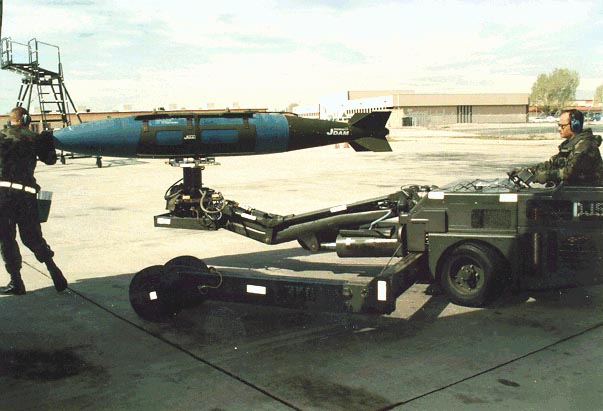
Sept 15/08: LJDAM & B-52H. Airmen at Barksdale Air Force Base (AFB), LA, load a Boeing Laser Joint Direct Attack Munition (LJDAM) onto a B-52H aircraft for a demonstration flight. It was the first time the LJDAM had been carried and delivered from a B-52H. Boeing photo release.
B-52H L-JDAM
July 24/08: Germany orders LJDAM. Boeing announces that it has signed a contract with Germany for 500 lb. Laser JDAM kits, plus integration support to add them to that country’s Tornado aircraft. This is the first international sale of the LJDAM weapon system. Oddly, it was completed as a mere commercial contract, rather than a foreign military sale of weapons; as such, there is no disclosure requirement regarding costs or numbers.
Delivery of the kits is expected to begin in mid-2009, and the unknown order includes options for unspecified additional kits in 2009.
1st L-JDAM export
June 20/08: South Korean request. South Korea is requesting additional air-air missiles and precision attack weapons for its F-15Ks: 280 JDAM tail kits, 2 load/build trainers; plus AIM-120-C7 AMRAAMs, AGM-54G Mavericks, Paveway II/IIIs, and chaff. Read “South Korea Buying Weapons for its new F-15Ks.”
South Korea request
May 30/08: An $8.6 million contract modification for 300 JDAM High Data Rate Compact Telemetry Units, which are used to gather real-time JDAM weapon data during testing. This procurement also includes 100 HCTM Adapter Kits in support of Test and Integration activities. At this time all funds have been obligated (FA8681-07-C-0002 P00004).
Jan 10/08: Lot 12. A firm-fixed price contract for $115.6 million for 4,907 JDAM Lot 12 Guided Vehicle kits for existing 500, 1000, 2000 pound bombs. At this time all funds have been obligated. The 678 ARSS/PK at Eglin Air Force Base, FL issued the contract (FA8681-08-C-0001).
Jan 3/08: UAE request. The US DSCA announces the United Arab Emirates’ formal request for 200 GBU-31 JDAM tail kits, as part of a larger weapons request that also includes 224 of the Mk84 2,000 pound bombs they fit to. See full DID coverage.
UAE request
FY 2007
Lot 11. Israel.

(click to view full)
Aug 3/07: Israel request. The US DSCA announces [PDF] a formal weapons request from Israel that includes 10,000 JDAM kits. The request does not specify which bomb body sizes the tail kits are for, and the rest of the request involves bomb bodies and Paveway laser or laser/GPS kits.
See “Israel Looks to Replenish Bomb Stocks” for full coverage.
Israel request
May 29/07: IGAS anti-jam. Successful completion of developmental flight testing for the JDAM’s forthcoming Integrated GPS Anti-Jam System (IGAS) at the U.S. Naval Air Warfare Center, China Lake, CA. IGAS uses digital signal processing to significantly reduce the impact of GPS jamming.
During the program, testers released five weapons from a U.S. Navy F/A-18 under various mission and GPS jamming scenarios. All five weapons acquired and maintained their GPS coordinates while flying to their targets. Boeing will complete IGAS development in 2007, with deliveries planned to begin in 2008. Boeing release.
May 18/07: LJDAM. A $28.8 million firm-fixed-price contract to provide for Laser Joint Direct Attack Munition (LJDAM) Precision Laser Guidance Set (PLGS), quantity of 600 (400 USAF, 200 USN) “In response to a compelling and urgent operational need…”
This effort also involves the management, engineering and logistics support necessary for production qualification and performance verification of the non-development PLGS. At this time, $2.8 million have been obligated. Work will be complete June 2009. The Headquarters Air to Ground Munitions Systems Wing at Eglin Air Force Base, FL issued the contract (FA8681-07-C-0209). Boeing June 9/07 release.
March 19/07: JDAM-ER. Flying at 20,000 feet over the Woomera Prohibited Area in South Australia, a RAAF F/A-18B released a pair of 500-pound Mk82 JDAM Extended Range (JDAM-ER) weapons and scored a direct hit on their respective targets. The JDAM-ER uses Australian-designed and built modular wing kit developed by Hawker de Havilland, based on technology licensed by Australia Defence Science & Technology Organization. The ER wing kit provides more than three times the range of a baseline JDAM (i.e. over 45 miles) and is designed to be installed in the field as an addition to existing JDAM weapons.
The AIR 5425 JDAM ER test program is a joint effort with the Australian Defence Materiel Organisation, Hawker de Havilland Aerospace Pty. Ltd., and Boeing Integrated Defense Systems. The test team conducted the technology demonstration under the Australian Capability Technology Demonstrator Program, managed by the Australian Defence Science and Technology Organisation (DSTO), but the design will be exportable to Boeing’s 16 international JDAM customers, some of whom have shown interest in this variant. MBDA’s Diamond Back wing kit is also designed to extend the range of JDAM weapons, and is used on the 250 pound Small Diameter Bomb variant. Boeing release.
Feb 6/07: Lot 11. A $20.6 million firm-fixed-price contract modification for another 784 JDAM production lot 11 Guided Vehicle kits. At this time, total funds have been obligated; work will be complete March 2009 (FA8681-07-C-0002/P00001).
Nov 14/06: Lot 11. A $296 million firm-fixed-price with cost reimbursement contract for 12,889 Joint Direct Attack Munition (JDAM) Lot 11 Guided Vehicle (GV) kits. At this time, total funds have been obligated. Solicitations began July 2006, negotiations were complete November 2006, and work will be complete March 2009 (FA8681-07-C-0002).
FY 2006
Lot 10. Pakistan, Norway.
(click to view full)
Sept 8/06: An $8.2 million firm-fixed-price contract modification for 287 JDAM High Data Rate Compact Telemetry Units (HCTMs). The JDAM HCTMs are flight test instrumentation hardware, which is used to gather real-time JDAM weapon data during testing. Work will be complete September 2008 (FA8681-06-C-0058/P00004).
June 30/06: LJDAM. A 500 pound Joint Direct Attack Munition with a laser guidance add-on (LJDAM) bomb scores a direct hit from 4 miles away, when dropped by a U.S. Air Force F-16 flying at 20,000 feet over Eglin AFB, FL. Just to make things interesting, the target Armored Personnel Carrier (APC) was moving at 25 mph.
Boeing will complete its development of the 500-pound LJDAM in 2006. Initial production deliveries are planned to begin as early as 2007, giving it a weapon with capabilities similar to Israel’s existing Spice. A previous May 2005 test had also been successful. Boeing release.
June 30/06: Lot 10. A $28 million firm-fixed-price with a cost-reimbursement contract modification for an additional 1,288 lot 10 JDAM guided vehicle kits. At this time, total funds have been obligated. Negotiations were complete in June 2006, and work will be complete March 2008 (FA8681-06-C-0058/P00002).
June 28/06: Pakistan request. Pakistan requests 500 JDAM kits as part of a proposed $5.1 billion deal for F-16 C/Ds (Block 50/52), F-16 fleet upgrades, and weapons. Pakistan eventually buys all of those F-16s and upgrades. Read “$5.1B Proposed in Sales, Upgrades, Weapons for Pakistan’s F-16s” for full coverage.
Pakistan request
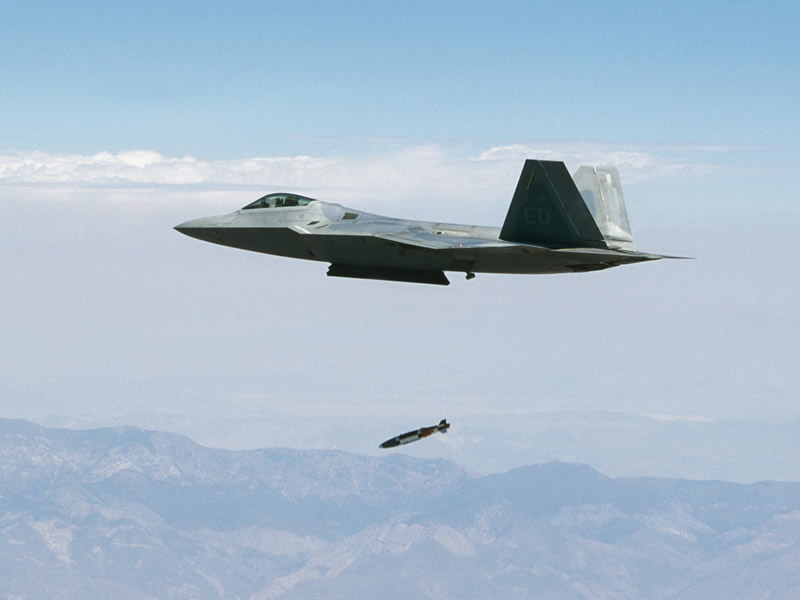
June 12/06: JDAM & F-22. The F-22 Combined Test Force team of The Boeing Company, Lockheed Martin, and the US Air Force successfully tested the F-22’s precision strike capabilities at White Sands Missile Range, NM. The F-22 flew at a speed of Mach 1.5 at 50,000 feet, released a 1,000 pound JDAM from a range of 24 nautical miles to destroy a ground target.
Note the extended range. The drop tested the Raptor’s Launch Acceptability Region (LAR) supersonic algorithm, developed by a Boeing collaboration of F-22, Phantom Works and JDAM engineers. It defines the area in the sky from which the pilot can release a weapon to successfully attack the desired target, factoring in navigation, weather, target and weapon information. Not to mention that range-boosting supersonic speed. See Boeing release.
F-22 supersonic drop
June 1/06: Integration. Boeing subsidiary McDonnell Douglas Corp. in St Louis, MO received a $70 million cost-plus fixed-fee and firm-fixed-price contract. This indefinite-delivery/ indefinite-quantity basic contract is for aircraft integration with the Joint Direct Attack Munition (JDAM) weapon system. The Air Force can issue delivery orders totaling up to the maximum amount indicated above. Solicitations began January 2006, negotiations were complete in May 2006, and work will be complete April 2011. The Air Armament Center at Eglin Air Force Base, FL issued the contract. (FA8681-06-D-0021). As a reminder, the current US Air Force JDAM Fact Sheet notes that:
“JDAM is currently compatible with B-1B, B-2A, B-52H, F-15E, F-14A/B/D, F/A-18E/F, F-16C/D, F/A-22 and F/A-18C/D aircraft. Follow-on integration efforts are currently underway or planned to evaluate compatibility with the A-10, F-117, AV-8B, S-3, Joint Strike Fighter, and unmanned aerial vehicles.”
April 18/06: Super Hornet Hand-off. Boeing F/A-18E/F Super Hornet Demonstrates Network Capability in Multiple JDAM Drop. Boeing has successfully demonstrated the capability of an F/A-18E/F Super Hornet to provide targeting coordinates to other aircraft using the Raytheon APG-79 Active Electronically Scanned Array (AESA) radar system.
During the test at the Naval Air Weapons Center at China Lake, Calif., an AESA-equipped F/A-18F created a long-range, high resolution synthetic aperture radar map and designated 4 closely-spaced stationary targets. The aircraft then data-linked 2 target designations to non-AESA equipped Super Hornets, which successfully delivered 4 JDAMs (2,000 lb.) “within lethal distance.” The targeting Super Hornet then used the AESA to provide highly detailed bomb damage assessments to confirm the hits. Boeing release.
March 3/06: Lot 10. A $240.6 million firm fixed price with cost reimbursement type for alternate disputes resolution contract for 10,000 Joint Direct Attack Munition (JDAM) Lot 10 Guided Vehicle (GV) kits. At this time, total funds have been obligated. Solicitations began in November 2005, negotiations were complete in March 2006, and work will be complete March 2008. The Headquarters Air to Ground Munitions Systems Wing at Eglin Air Force Base, FL issued the contract (FA8681-06-C-0058).
Feb 20/06: Norway order. Boeing reaches an agreement with Norway to provide the JDAM system to the Royal Norwegian Air Force (RNoAF) F-16s. The contract includes JDAM guidance kits, F-16 weapon system integration and operational support.
Boeing says that Norway is the 5th member of the European Participating Air Forces (EPAF) to select JDAM, and the 14th international customer. Boeing has produced more than 140,000 JDAM guidance kits from 1998 to February 2006, for the USA and for 14 international customers. Boeing release.
Norway
Feb 13/06: Support. A $45 million time and material, firm-fixed-price and cost-plus fixed-fee contract for technical support for the Joint Direct Attack Munition (JDAM) weapon system until the end of 2010. This includes non-warranty inductions and repair, annual software updates, mission planning support and studies/analysis. The Air Force can issue delivery orders totaling up to the maximum amount indicated above, but doesn’t have to spend the full amount. Solicitations began October 2005, negotiations were complete December 2005, and work will be complete by December 2010. The Headquarters Air Armament Center at Eglin Air Force Base, FL issued the contract (FA8681-05-D-0277)
Nov 1/05: GPS. Harris Corporation, best known for its success in the tactical radio market, announced that it has been awarded an $18.2 million follow-on contract by Boeing Integrated Defense Systems to provide Anti-Jam Global Positioning System (AJ GPS) modules for Boeing’s Joint Direct Attack Munition (JDAM) program that turns conventional bombs into smart bombs.
The initial development contract was valued at approximately $3.9 million, bringing the total value of the program for Harris to more than $21 million since 2003. Full production and future options could increase the program’s value for Harris to more than $50 million by 2008.
Oct 25/05: Greece request. Greece requests 6 JDAMs as part of its F-16 C/D (Block 50/52) sale and weapons package. Greece would go on to buy those F-16s.
Greece request
Oct 19/05: JDAM-ER. Australia picks Boeing to provide the JDAM for the AIR 5409 Bomb Improvement Program. The contract covers Australia’s upgraded F/A-18A aircraft, and includes JDAM guidance kits, F/A-18 weapon system integration, and operational support. Numbers and figures were not disclosed. Boeing release.
Dev: Australia’s JDAM-ER
FY 2002 – 2005
Lot 8. HART. Singapore.
(click to view full)
Sept 20/05: HART Test. A low-cost, UHF network-capable weapon data link from Harris Corporation provided target updates in the successful demonstration of the F/A-18E/F Super Hornet’s ability to engage moving land targets with Boeing’s JDAM at the Naval Air Warfare Center in China Lake, California. The inert weapon was delivered within two meters of the moving target, a radio-controlled panel-side truck. The 2-way link also demonstrated the ability of the weapon data link to transmit real-time weapon status back to the host F/A-18 aircraft during the JDAM’s free fall.
Harris’ Falcon II radio from its RF Communications Division and Improved Data Modem technology from Innovative Concepts, Inc. were used to create the two ends of the data linkage from aircraft to JDAM. See the Oct 21/03 entry for more background. Harris release.
Aug 23/05: Singapore. Singapore notifies the USA that it wants 150 JDAM kits as part of a $741 million complementary weapons order to go with its F-15SG Strike Eagles. The F-15SG order is finalized with a contract on Dec 13/06, clearing the way for the complementary weapon purchases.
Read “F-15E Strike Eagle Taking Off With Singapore Contract?” for full coverage.
Singapore request
Dec 2/04: #100,000. Boeing delivers the 100,000th JDAM Tail Kit. The original production estimate had been 87,000 JDAMs for the entire program.
100,000
March 01/04: Lot 8 & integration. Boeing Integrated Defense Systems announces 2 key JDAM contracts worth $857 million total.
The first contract, worth $642 million, is for more than 32,000 JDAM Lot 8 guidance kits for the U.S. Air Force and Navy. The kits will convert existing 500, 1000 and 2000-pound unguided free-fall bombs into cost-effective and capable air-to-surface “smart” weapons. The JDAM kits will be delivered by February 2006.
The second contract, worth $215 million, is a 5-year Indefinite Delivery Indefinite Quantity (IDIQ) contract for future integration of JDAM (and JDAM derivative weapons) on various foreign military sales aircraft. The first order issued on the contract was valued at $1 million. At the time, Boeing had 7 active international customers; integration is scheduled for completion by December 2008. Boeing release.
Oct 21/03: HART. Boeing announces a $121 million undefinitized contract for system development and demonstration of the Hornet Autonomous Real-time Targeting (HART) system. HART adds a precision guidance capability to Joint Direct Attack Munition (JDAM) that enables aircrews to designate targets and deploy JDAM based on aircraft sensors, rather than depending on pre-planned coordinates or uploads.
HART builds on a previous DAMASK effort, and also aims to provide a production imaging seeker for the JDAM, which incorporates the capability to download an image from the aircraft’s targeting pod. It can also work with other sensors, as Boeing advertises that the aircraft’s AN/APG-79 AESA radar can be used to acquire and designate a target, and transfer a reference SAR radar image of the target to the JDAM. After release, the weapon compares the reference image to that in its sensor’s field of view, guiding it to the point designated in the target scene. The HART guidance kit includes an infrared sensor, a processor, and image-matching software.
Plans call for a low rate initial production decision on HART in late 2006, with initial operational capability expected in December 2007. Boeing would expect to produce approximately 600 units during Long Range Initial Production (LRIP) 1. Follow on production contracts would bring the total kits produced to 6000 through 2011. Boeing release.
HART SDD
Sept 13/02: Boeing announces a $378 million contract for an additional 18,840 JDAM kits by the JDAM Joint Program Office. The new contract is for a mix of GBU-31 (2,000 lb. warhead) kits and GBU-32 (1,000 lb. warhead) kits for both the U.S. Air Force and U.S. Navy to be delivered between October 2002 and March 2004.
The new contract will require Boeing to deliver kits to both the U.S. Air Force and U.S. Navy at a production rate of 2,800 kits per month by August 2003. In response, Boeing is expanding its production facility in St. Charles, MO. Boeing release.
May 14/02: An F-15E Strike Eagle releases 5 JDAMs at 5 different targets in a single drop. Boeing.
FY 1996 – 2001
Full rate production. 1st export: Israel.

July 18/01: Alenia team-up. Boeing Company and Alenia Marconi Systems announce a teaming agreement under which Alenia will market JDAM throughout much of Europe and the Middle East. It may also assemble JDAMs and derivative weapons that its customers purchase commercially, rather than through the U.S. foreign military sales program.
Alenia eventually became MBDA as a result of Europe’s government-driven mergers. By 2012, the partnership was no longer operational. Boeing release.
April 04/01: Boeing announces a $235 million contract for the production of 11,054 Joint Direct Attack Munition (JDAM) kits. Boeing will deliver 10,382 JDAM kits to the U.S. Air Force. The U.S. Navy will receive 672 kits and has an option for an additional 1,150. The contract includes a $25 million option for an additional 1,150 kits. The U.S. Air Force Air Armament Center at Eglin Air Force Base, FL is the contracting agency.
The award follows the Milestone III decision by the Pentagon’s Defense Acquisition Board earlier in April 2001, allowing the program to enter full-rate production.
Milestone III/ FRP
Sept 29/2000: 500 pound JDAM. Boeing announces a $45 million award to engineer, manufacture and develop (EMD) a version of the JDAM for 500 pound Mk80 bombs. The weapon will be integrated in to the F-16, F/A-18, and B-2 bombers during the EMD period. Work is scheduled to be completed by the Boeing weapons facility in St. Charles, MO by December 2002.
500 lb. JDAM
June 1/2000: Israeli integration. First International JDAM Sale: Boeing to Integrate Weapon on Israeli F-16 Aircraft. Boeing release.
1st export
April 28/2000: McDonnell Douglas Corp. in Berkeley, MO received a $5.65 million modification to a firm-fixed-price contract to provide for incorporation of Pin-Lock Tail Actuator System technology into the production effort for 8,163 Joint Direct Attack Munition kits. The Pin-Lock Tail Actuator System provides a more durable and accurate method of maneuvering the tail fins of the JDAM than the existing Friction Brake technology. Contract completion date was 31 March 2001.
Feb 24/2000: LRIP-4. A $162 million award for production of 7,247 JDAMs for the USAF, and 916 for the U.S. Navy. LRIP began in the spring of 1997; this is the 4th lot of low-rate initial production JDAM kits, and a decision on full-rate production is expected later in 2000. To this point, Boeing has received orders for approximately 16,000 kits of the 87,000 that the U.S. government has plans to procure.
Production of Lot 4 will begin in March 2001, and ramp up to a rate of 700 kits per month in the Boeing weapons facility in St. Charles, MO. Production is scheduled to run through February 2002. Boeing release.
April 2/99: LRIP-3. A $50.5 million face value increase to a firm-fixed-price contract to provide for low rate initial production of 2,527 Joint Direct Attack Munition kits. The work was complete by January 2001.
June 24/98: 1st JDAM delivered. Boeing Delivers First JDAM.
Delivery
April 30/97: LRIP-1. The USAF announced the decision to initiate low-rate initial production (LRIP) of JDAM, with the first production lot of 937 JDAM kits. MDC release.
Production begins
Oct 24/96: JDAM Guided Flight Tests Begin.
Additional Readings & Sources
JDAM Family
* Boeing – Joint Direct Attack Munition
* Designation Systems – Boeing (McDonnell Douglas) JDAM: (GBU-29/B, GBU-30/B, GBU-31/B, GBU-32/B, GBU-34/B, GBU-35/B, GBU-38/B, GBU-54/B, GBU-55/B, GBU-56/B)
* GlobalSecurity.org – Joint Direct Attack Munition (JDAM). See also sub-pages, especially the JDAM program history.
* Wikipedia – Joint Direct Attack Munition
* Australian Air Power – The Agile Gliding Weapon. The The Kerkanya glide bomb, whose rights were acquired by Hawker de Havilland, and used as the basis for Australia’s JDAM-ER.
* Australian Air Power – JDAM Matures: Parts 1 and 2. Includes background covering HART, and Australia’s JDAM-ER.
Competitiors
* DID – France’s AASM Precision-Guided Bombs. Uses a rocket booster to extend range, and comes in GPS, GPS/IIR, and GPS/laser variants.
* Mectron – Armamentos Intelligentes. The Brazilian firm’s products include ACAUAN GPS/INS guidance kits.
* DID – The US Navy’s DMLGB Program. Lockheed Martin product, separate from Boeing’s DAMTC naval Laser JDAM.
* LIG Nex1 – KGGB. The South Korean firm’s strap-on glide-bomb kit creates an extended range GPS/INS weapon.
* RAF – Enhanced Paveway (II/III). Raytheon’s Laser/GPS in 1,000 and 2,000 pound weapons.
* DID – Paveway IV: British Dual-Guidance Bomb. A Raytheon UK Laser/GPS, just 500 pounds. The USA tried to block its exports to the Middle East in favor of American options, but eventually had to give in.
News & Views
* US Air Force Association (September 2006) – The JDAM Revolution
* US Air Force Link (March 17/06) – JDAM continues to be warfighter’s weapon of choice
* US Air Force Association (November 2003) – Precision: The Next Generation
* NASA Tech Briefs (March 2001) – Diamond back boosts range. Refers to MBDA’s Diamond Back wing kit.
* Air & Space Power Journal, Chronicles Online Supplement (July 26/00) – Expanding the Envelope – Stealth and Other Strike Roles. Discusses concepts of operations for the combination of JDAM-family bombs and stealthy aircraft like the B-2, F-22, and F-35.