


(click to view full)
LPD-17 San Antonio class amphibious assault support vessels are just entering service with the US Navy, and 11 ships of this class are eventually slated to replace up to 41 previous ships. Much like their smaller predecessors, their mission is to embark, transport, land, and support elements of a US Marine Corps Landing Force. The difference is found in these ships’ size, their cost, and the capabilities and technologies used to perform those missions. Among other additions, this new ship is designed to operate the Marines’ new MV-22 Osprey tilt-rotor aircraft, alongside the standard well decks for hovercraft and amphibious armored personnel carriers.
While its design incorporates notable advances, the number of serious issues encountered in this ship class have been much higher than usual, and more extensive. The New Orleans shipyard to which most of this contract was assigned appears to be part of the problem. Initial ships have been criticized, often, for sub-standard workmanship, and it took 2 1/2 years after the initial ship of class was delivered before any of them could be sent on an operational cruise. Whereupon the USS San Antonio promptly found itself laid up Bahrain, due to oil leaks. It hasn’t been the only ship of its class hurt by serious mechanical issues. Meanwhile, costs are almost twice the originally promised amounts, reaching over $1.6 billion per ship – 2 to 3 times as much as many foreign LPDs like the Rotterdam Class, and more than 10 times as much as Singapore’s 6,600 ton Endurance Class LPD. This article covers the LPD-17 San Antonio Class program, including its technologies, its problems, and ongoing contracts and events.
LPD-17 San Antonio Class: Capabilities and Features
Roles and Innovations

(click to view full)
The LPD-17 Class featured both an innovative development process, and 21st century features that optimize them for a number of roles. These range from an assault ship that carries and sustains Marine Expeditionary Units, to use as a US Navy command node, the ability to play the lead roles in disaster relief operations, etc.
The ships will operate as part of larger Amphibious Task Forces (ATFs) in conjunction with a full set of airpower, additional assault ships, and air and sub-surface defense vessels. They can also be parceled out as the keystones of smaller three-ship Amphibious Ready Groups (ARGs)/ Expeditionary Strike Groups (ESGs). At minimum, they can operate independently in low-threat scenarios during “split-ARG” operations, helping the group cover multiple areas of responsibility and respond to more than one contingency simultaneously.
A total of 11 ships of this class are slated to assume the functional duties of up to 41 previous ships, including the USA’s older LSD-36 USS Anchorage class dock landing ships (all decommissioned as of 2004, LSD-36 and LSD-38 transferred to Taiwan) and its LPD-4 USS Austin Class ships (12 built and serving, LPD 14 Trenton now India’s INS Jalashva). The San Antonio class ships may also replace 2 classes of ships currently mothballed and held in reserve status under the Amphibious Lift Enhancement Program (ALEP): the LST-1179 Newport class tank landing ships, and LKA-113 Charleston class amphibious cargo ships.

The San Antonio Class will also serve in a number of roles beyond combat.
While LPD-17 vessels will have their own helicopter contingent for patrols and transport operations, their large deck also makes them useful inshore “lilly pads” that can quickly refuel and turn around rotary aircraft from elsewhere in order to keep them on station longer. The ships are also designed to function as casualty receiving and treatment vessels, with 24 beds and two operating rooms. With communications capabilities that surpass most US and foreign vessels,
San Antonio Class vessels are potential command ships for US and joint task forces, and should make excellent UAV hosts and/or controllers.
Their 72,000 gallon per day reverse-osmosis water production certainly improves onboard creature comforts. It also allows the ship to operate in a critical lifesaving role in the wake of natural disasters like Hurricane Katrina or the 2005 Asian tsunami, when fresh water is often the most urgent and difficult requirement.
Yet the ships’ combat role remains top-of-mind, and reminders of their purpose are deeply embedded in the names – and in some cases, the very fabric – of these ships. The USS New York [LPD 21] incorporated bow steel cast from salvaged remains of the World Trade Center. Later vessels in its class include USS Arlington [LPD 24], named after the section of the Pentagon that was also hit by an airliner on September 11. USS Somerset [LPD 25] is named in memory of United Flight 93, whose passengers’ heroic struggles with al-Qaeda hijackers crashed the plane in a Somerset County, PA field instead of the intended targets of the Capitol building or White House.
Basic Specifications

More Fun Facts
* The US Navy has taken a tip from the cruise ship industry, and relied on heavy automation to bring down crew size. That frees up more space for troops, but these systems’ performance and resilience have become an issue.
* The ship auxiliary systems are all electric, including electric heating and water heaters, 7 big York air-conditioning units (which will be appreciated by many troops), and a 72,000 gallon per day reverse osmosis water-generating plant.
* A new high-power “low-drag” propeller hub design provides improved propeller efficiency, and helps them power the ship to speeds above 20 knots.
* Within the ship, passageways are 25-30% wider than previous LPDs so combat-loaded Marines can move in full gear inside the skin of the ship just as if they were topside.
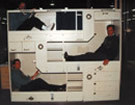
* Those L-shaped berthing spaces have an extra 1-2 feet of headroom, enough for sailors and Marines to sit up in their racks. Personal storage space in all the berthing areas has gone up by 40%, compared to past LPDs.
* The ships are also designed from the outset to accommodate the modern reality of mixed-gender sailors and Marines.
* Food service has been modeled for maximum efficiency on both ends via simulation and task/traffic flow analysis that aim to keep both chow line waits and food production humming along.
* San Antonio Class ships also feature amenities such as a ship services mall to ease long deployments, a fitness center, and learning resource center/electronic classroom enabled by the ship’s improved bandwidth and computing capabilities.
Self-Defense & Survivability: Options & Issues
In order to survive both their missions and the need for upgrades during their long service lives, LPD-17 ships have incorporated significant advances in ship self-defense, survivability, and C4I systems. The question is whether they will be enough, given the ships’ size and cost.
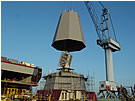
Step 1 involves making detection and lock-on harder. The San Antonio Class was intended to have a significantly reduced radar cross section signature (1/100th of the LSD-41 Class). Indeed, the San Antonio Class works to minimize its signature across a number of spectra. It optimizes radar cross-section by streamlining topside layout, and incorporating reduced radar signature technologies and design. Relevant design features include a boat valley instead of a boat deck, removable coverings over the rescue boat and fueling at sea stations, and accommodation ladders that fold into the ship’s hull. Meanwhile, the advanced composite-enclosed mast/sensors, which cover the ship’s SPS-48E and SPQ-9B radars and its communications antennas, give the ship its distinctive profile. In the end LPD-17 designs do have a smaller signature than the ship classes that preceded them, but a July 2007 article in the San Antonio Express-News points out that the ship’s radar signature won’t be reduced as much as planned, compromising its survivability in near-shore regions.
A minor consolation of the class’ stealth design is that there are fewer edges and seams to collect rust, and corrosion-resistant paint and composite building materials were expected to reduce future maintenance and painting costs. Unfortunately, serious construction flaws in several ships of class are quickly piling up maintenance costs in other, unexpected areas.

Step 2 is active defense. The class will use Raytheon’s SSDS combat system, which will control and partially automate a set of air, surface, and navigation radars, as well as electronic countermeasures systems, towed torpedo decoys, missile decoy systems, and air defense that will include the short-range RAM missile system. That single layer of active protection has been highlighted as a weakness in Pentagon reports, which state that the ship’s radar and defensive systems can’t defend the ship reliably against the most advanced anti-ship missile threats. That may prompt the Navy to add bolt-on launchers for the medium-range RIM-162 Evolved Sea Sparrow missiles that equip many advanced NATO warships. For close-in defense, the LPD-17 class will use the MK46 stabilized 30mm autocannon with advanced sensors, as well as traditional .50 caliber machine guns mounted about the ship.
Step 3 involves the ability take a punch and keep fighting. The ship’s design worked to optimize the separation of redundant vital systems, and possesses a diverse suite of fire-fighting options. Fiber-optic wiring throughout the ship is designed for high-bandwidth SWAN (Shipboard Wide Area Network) applications, and features long-term upgradeability, redundancy, and durability. It will also help the automated ship control systems manage ship systems, and quickly make changes in the event of damage. It is also used as part of an advanced lighting system that improves visual stealth, lowers power requirements, and makes it easy to switch the entire ship to specified lighting modes.
Unfortunately, these features have not lived up to their promise. Pentagon reports cite reliability and effectiveness issues with the Engineering Control System (ECS), the electrical distribution system, and the SWAN, saying that they may magnify the effects of a crisis, instead of helping the crew save the ship.
Other shipboard vulnerability upgrades include improved fragmentation and nuclear blast protection, and a shock-hardened structure with upgraded whipping resistance and structural connections.
Overall, Pentagon reports rate the class as more survivable than previous LPDs, but question whether they are survivable enough for the modern environment. This reflects the horns of their basic design dilemma. If a ship is made very large, it offers peacetime efficiencies and better capability per ton, but its cost will rise to a level that pushes it toward the addition of advanced radars, defensive systems, etc. These additions improve the odds that one’s ship won’t be lost and destroy the entire naval mission, but they also drive each ship’s price even higher.
The other classic approach to this problem is to build more but smaller ships, which tends to add costs by using more raw materials and building more hulls. On the other hand, cost per ship drops sharply – foreign LPDs tend to be somewhere between 1/3 to 1/10 the price of an LPD-17. With more hulls in the water, the loss of one ship is less likely to destroy an entire mission, and less expensive defensive systems can be used.
LPD-17 San Antonio Class: Program, Budgets & Timelines

(click to view full)
The original December 1996 US Navy contract was awarded to an industrial alliance led by Northrop Grumman Ship Systems (formerly Litton Avondale, now Huntington Ingalls Industries), with General Dynamics Bath Iron Works, Raytheon Electronic Systems and Intergraph Corporation, to design and construct the first of an anticipated 12 ships under the Navy’s LPD-17 program.
Avondale was supposed to build 8 of these ships, while Bath Iron Works would build 4 ships. In June 2002, however, a revised Memorandum of Understanding was signed with Northrop Grumman and Bath Iron Works. Northrop Grumman would be responsible for the construction of all LPD-17 San Antonio Class vessels, but they would trade construction of 4 of the USA $1.5 billion DDG-51 Arleigh Burke Class destroyers to Bath Iron Works.
LPD-17 production, originally authorized for 11 or 12 vessels as functional replacements for 41 1960s-era ships, dropped to just 9 as cost spirals took their toll, and was eventually forced back up to 11 with extra spending. 2013 Navy budget documents show an average cost per ship of over $1.6 billion through all vessels, which offers the unusual phenomenon of no reduction in cost vs. the first ship of class.
According to official Pentagon budget documents, recent funding for the LPD-17 class has included:

(click to view full)

Even by 2002, Research, Development, Testing & Evaluation (RDT&E) was mostly complete for this class, and the vast majority of funds spent under the program have been focused on building ships. Note that requests for a given year generally include both funds to finish building a ship, and funds for long lead-time items like engines, “government-furnished equipment” that isn’t bought by the shipbuilder, and other items that must be ordered early so construction of the next ship can start on time.
FY 2010 funding would technically buy 0 ships; it finishes LPD 26, and buys long lead time items for LPD 27. FY 2011 funding was the bare minimum, and the LPD 27 order hung on passing a FY 2012 budget. The final shipbuilding contract was placed in July 2012.
Timelines
Current and planned ships in this class, and key milestones include:

(click to view full)
For some ships still in progress, we’ve noted discrepancies between announced or estimated dates earlier in a contract, and completion dates for key milestones. For ships that are already in service, noticing the time lapses between key stages for an individual ship, and in the progression of ships through a given stage, provides its own indication of problems that have arisen. The effect of August 2005’s Class 5 Hurricane Katrina can certainly be seen in several of the ship timelines above. So, too, can the effect of manufacturing quality problems.
Flight II: What’s Next

(click to view full)
The LPD-17s aren’t quite done production yet, but unless the shipyard receives new orders, that time is coming soon. HII’s response has been to look ahead, and look beyond amphibious ships.
An LX(R) competition looks to replace existing LSD-41/49 amphibious ships with up to 10 new amphibious support vessels, in the unlikely event that programs like the F-35 and SSBN(X) don’t gut US Navy procurement. The stated goal is 10 ships, with the 1st ship delivered between 2018 – 2022. HII’s response is the LPD Flight II, which keeps the same basic hull, but carries fewer Marines, holds less cargo, and removes a number of elements that add costs. Their stated target is a 30% cost reduction; unfortunately, that still makes their 23,000t design about twice as expensive as a foreign 17,000t LPD like the Dutch Johann De Witt. The benefits of using a mature production line and many common elements are real, but a $1.1 billion price tag per ship simply may not be affordable amidst hugely expensive programs and fiscal crises.
Fortunately for Huntington Ingalls, they didn’t stop there. Once they had stripped the LPD-17 design down and removed the hangar and some superstructure, they realized that they had a platform for other roles as well.
Joint Command and Control. The US Navy currently operates 4 dedicated command ships, all of which are over 30 years old. At some point soon, the Navy must either replace them of forego them. The LPD Flight IIs begin with advanced communication suites, and contain all the space one might require to house and run a full theater command. HII would have some decisions to make about organic on-board helicopter capability, but otherwise, most of the modifications would involve internal layouts and wiring. The big question remains the same: could this be done more cheaply by using another platform?
Hospital Ship. The USNS Comfort and USNS Mercy are converted oil supertankers, originally launched in 1975 and 1976. The San Antonio Class has an internal hospital with 24 beds; in contrast, the USA’s hospital ships can hold and care for up to 1,000 patients, complete with a full pharmacy, advanced tools like radiology, optometry, testing lab, etc. The LPD Flight II is far smaller than these 65,000t+ behemoths, but it does have a good deal of internal space that could be put to good use, and that capacity may be more than adequate for most deployments. Innovative approaches could even modify the Flight II’s enhanced deck space to stack containerized TransHospital systems, for medical satellite deployments ashore.
USNS Mercy actually sat pierside from 1991 – 2004, whereas a platform that could operate at lower cost would be easier and more tempting to deploy. If the Navy can get beyond its steeper acquisition cost.
[youtube:v=VxJIizedUsU]
click for video
Ballistic Missile Defense. This seems like the most radical change, but it isn’t if you think of the ship as specialized for this air and space defense role. A Flight II BMD ship would remove the well deck, in favor of a deck elevator that leads down to a helicopter hangar. It would also add a superstructure with the 21′ AMDR-S radar that the Navy considers ideal for ballistic missile defense, but which current destroyers cannot carry. The AEGIS BMD combat system would be installed, and the space cleared by the removal of most LPD-17 Class superstructure would be used to mount vertical launch cells around the edges. Notional designs show a nearly-ridiculous 288 Mk.41 VLS cells, or they could cut the number of cells and improve survivability by switching to the same Mk.57 PVLS on board the DDG-1000 Zumwalt Class battlecruisers.
Effectively, a FLT II BMD aerospace warfare cruiser would create a more potent air and missile defense platform than current American destroyers, at a similar cost, in exchange for less versatility. US Navy 2009 estimates pegged a similar arsenal ship concept at around $2.55 billion, which still seems about right as a starting point. The Flight II BMD design would be more costly than existing LPD-17s, or existing DDG-51 Flight IIA BMD destroyers (around $1.8 – 2 billion). It might be cheaper than the $2.5 – 3 billion estimates rumored for DDG-51 Flight III destroyers, but it would have limited versatility. It has enough VLS cells to act as an air defense ship, but it would lack the speed required to perform the “plane guard” role for carriers on calm days. It’s possible to load some cells with VL-ASROC anti-submarine missiles, and deploy an MH-60R helicopter from the under-deck hangar, but the ship itself wouldn’t have the systems needed to detect and track submarines. It would be a very effective arsenal ship for land attack with cruise missiles, but other ships and submarines can do the same thing, without putting such high-end BMD capability at risk.
That might be an acceptable trade, depending on the Navy’s commitment to leadership of American missile defense efforts. With discussions regarding DDG 51 Flight IV focusing on power-hungry rail guns and lasers, the Flight II’s power generation capabilities could give them a unique defensive niche. On the other hand, Flight II BMD ships would probably have to be paid for by sacrificing DDG-51 destroyers. The class’ lead shipyard Bath Iron Works needs those destroyers to remain a major shipbuilding concern, which means HII would be cannibalizing its own DDG-51 production.
LPD-17 Program: Performance Problems

The LPD-17 program has done some things well. Reduced operational costs and an improved capability to incorporate technological advances over its 40-year service life were essential design objectives for LPD 17. In working to accomplish these objectives, the design team incorporated hundreds of suggestions and recommendations from more than 1,000 sailors and Marines in the “Design for Ownership” process. Simulation and modeling were used heavily, and virtual crews drawn from other areas of the US Navy took “virtual tours” of the design zones of the ship via a 3D model at initial reviews, at 50% design reviews, and at 90% design reviews. Cargo functions received particular attention.
Meanwhile, the entire project alliance worked together at the same location along with the project sponsor, in order to maximize communication. Those efforts show through in many aspects of the ships’ design.
Unfortunately, the LPD-17 Class has experienced a number of long-running problems, particularly those ships built at the Avondale shipyard near New Orleans.
Financial. Overall, the class’ financial and budgetary performance has been a long-running failure. The LPD 17 San Antonio was initially budgeted at $954 million, but ended with a final price tag of about $1.76 billion. The LPD 18 New Orleans was budgeted at $762 million, but finished at a similar cost to LPD 17.
Northrop Grumman isn’t solely to blame for these overruns. The need to tear down and rebuild completed sections of the LPD 17 San Antonio was a major cause of its cost increases, while workforce attrition rates as high as 35% annually led to its construction delays. According to San Antonio Express-News, a less obvious but equally consequential source of trouble was a computer design program dubbed 3D CAD, which was touted for its ability to give 3-dimensional views, but was not up to the task of designing an entire ship.
What’s far more disturbing is the fact that these massive cost increases over the original $800 million projections have continued throughout the class’ lifetime. Indeed, they showed no improvement at all. That’s never supposed to happen, but FY 2013 budget documents show an average $1.6 billion cost over the full 11 ships.
Workmanship. The 2nd performance failure has involved ship quality. Northrop Grumman delivered the 1st ship, USS San Antonio [LPD 17], in the summer of 2005, but difficulties with her INSURV inspections and acceptance sea trials forced a delay of almost 3 years before her 1st mission, which featured a major mechanical breakdown. A similar fate befell the USS New Orleans [LPD 18], and those delays are clearly visible in the timelines, above.
In contrast, USS Mesa Verde [LPD 19], which was built at Northrop Grumman’s Ingalls yard in Mississippi instead of its Avondale yard near New Orleans, performed well in sea trials, and has been reliable in service.
Unfortunately, that wasn’t the end of the class’ problems. In 2010 a number of ships of class, especially the Avondale-built ships, discovered very serious problems that took them out of service for difficult repairs. They included USS San Antonio [LPD 17], USS New Orleans [LPD 18], USS Green Bay [LPD 20], and USS New York [LPD 21].
Once again, the bright spot was USS Mesa Verde, built at the Ingalls yard in Pascagoula, MS, which moved to substitute for USS San Antonio on a recent deployment.
Governments have generally ignored this shipyard quality problem. A $50 million grant from the state of Louisiana did help Northrop Grumman modernize production at Avondale, and another $98.6 million in federal funding has also filtered down to local NGSS shipyards in the wake of Hurricane Katrina. Nevertheless, scathing Navy inspector general reviews that detailed shoddy construction and basic workmanship problems at Avondale are cause for legitimate concern in areas that will not be fixed by modernization alone.
Eventually, Northrop Grumman spun off its shipbuilding units as Huntington Ingalls Industries, and moved to close the Avondale, LA shipyard. That may finally resolve the issue – after more than $15 billion had been spent on a supposed cornerstone of the future amphibious fleet.
DID will continue to spotlight this issue, in “LPD-17 Reliability Issues Surface Again.”
The Vicious Cycle

The San Antonio class’ problems fit into a larger set of trends. The Navy and Congress make life very difficult for American military shipbuilders, who also operate in ways that come back to bite them. Key challenges include yo-yoing political budget projections and military requirements. That problem leads to “binge and purge” hiring cycles, impairs shipyard effectiveness, and ultimately raises costs, while lowering quality. The growing costs of US Navy ships then feed back into this phenomenon, as budgets and projections break, and require drastic changes to fix.
On the contractor side, lowball initial prices, followed by cost increases once projects begin, leads to inevitable build reductions part-way through. Which means fewer ships per dollar, as R&D dollars are amortized over fewer ships. The Pentagon is often a collaborator in these games, assuring lawmakers of the initial contract’s reasonableness long after outside reports question their realism. Such approaches may ensure shipyard work in the near term, but they also feed into yo-yoing federal budgets, as cost growth makes it impossible for the Pentagon to fund all of the programs it has started.
Poor accountability and oversight can compound these issues, and has, but good oversight alone won’t remove them.
Ultimately, the US Navy loses the most. These escalating requirements and costs mean fewer ships overall. While the resulting fleet may be more capable, the number of contingencies it can cover, and the setbacks that it can safely absorb, drop. Even as the entire process shrinks a US industrial base that no longer builds many civilian vessels, and so has little resiliency.
It’s a vicious cycle – one that is damaging American global power.
LPD-17 San Antonio Class: Contracts & Key Events (1996-Present)
Unless otherwise noted, all contracts were issued by the US Naval Sea Systems Command (NAVSEA) in Washington, DC.
FY 2015 – 2022
[youtube:v=yI5GFP_b7kQ]
click for video
January 11/22: LPD 29 Huntington Ingalls Industries’ (HII) Ingalls Shipbuilding division launched the amphibious transport dock Richard M. McCool Jr. (LPD 29) being built for the US Navy. Richard M. McCool Jr., the 13th LPD in the San Antonio class of amphibious assault force ships, will support US amphibious assault, special operations and expeditionary warfare missions through the first half of the 21st century.
January 13/21: Containerized Anti-Ship Missiles The director of expeditionary warfare in the Office of the Chief of US Naval Operations has disclosed a plan to bring a containerized anti-ship missile system to the San Antonio Class amphibious transport dock. Maj. Gen. Tracy W. King said one system will be deployed to a ship within 12 months to let the Navy and Marines “play around with it” before deciding how to field it. He added that the RGM-184 Naval Strike Missile (NSM) is a leading contender.
April 6/20: LPD 17 Huntington Ingalls Industries won a $1.5 billion contract modification for the procurement of the detail design and construction of Landing Platform Dock (LPD) Class 31 and the LPD 17 Flight II ship. LPD 31 will be the 15th in the San Antonio class and the second Flight II LPD. Ingalls’ LPD Flight II program vendor base consists of more than 600 manufacturers and suppliers in 39 states, including 387 small businesses. More than 1,500 shipbuilders work on each LPD. Ingalls has delivered 11 San Antonio class ships to the Navy, and it has three more under construction. The San Antonio class is a major part of the Navy’s 21st century amphibious assault force. Work will take place in Mississippi, Virginia, Wisconsin and Louisiana. Work is expected to be finished by February 2027.
December 2/19: Network User System Raytheon Integrated Defense Systems won a $74.7 million contract for design agent engineering services for networks and network user systems on operational landing platform/dock LPD-17 Class amphibious transport dock ships. LPD-17 or San Antonio Class landing platform dock is the latest class of amphibious force ship for the US Navy. The mission of the San Antonio Class is to transport the US Marine Corps ‘mobility triad’, comprising advanced, amphibious assault vehicles (AAAVs), landing craft air-cushion (LCAC) and the MV-22 Osprey tilt-rotor aircraft around the world. Construction of the first ship of 12, the San Antonio (LPD 17), began in June 2000. The ship’s keel was laid in December 2000. It was launched in July 2003 and commissioned in January 2006. The San Antonio is home-ported at the Norfolk naval base, Virginia. The vessel achieved initial operating capability (IOC) in May 2008 and made its first deployment in August 2008 as part of the Iwo Jima expeditionary strike group. Work under the deal will take place in California, Virginia and Florida. Expected completion is in December 2024.
June 7/19: MK 46 Mod 2 General Dynamics won a $25.6 million firm-fixed-price contract to produce MK 46 Modification 2 Gun Weapon Systems for use on modern Littoral Combat Ship (LCS) and Landing Platform Dock (LPD) ships. MK46 30mm all-weather, day/night, fully stabilized weapon system is a remotely operated system that uses a high-velocity cannon for shipboard self-defense against small, high-speed surface targets. It is the main deck gun for LPD-17 ships and is the secondary gun battery for LCS, and Zumwalt Class ships. The contract is for the procurement of two 30mm MK 46 MOD 2 GWSs for the LCS Surface Warfare Mission module, two 30mm MK 46 MOD 2 GWSs for the LPD-29, two 30mm MK 46 MOD 2 GWSs for the LPD-30, and associated spare parts. General Dynamics will perform work within the US and is expected to be finished by September 2021.
May 23/19: Advanced Planning Services Q.E.D. Systems won a $19.6 million contract modification in support of Navy amphibious ship classes LPD 17, LSD 41 and LSD 49. The deal provides for advanced planning services in support of Chief of Naval Operations-scheduled availabilities, continuous maintenance availabilities (CMAVs), inactivation CMAVs, sustainment availabilities, phased modernization availabilities, re-commissioning availabilities, continuous maintenance and emergent maintenance windows of opportunity. The LPD 17 USS San Antonio is the lead ship of the San Antonio Class. The San Antonio Class is the latest Class of US Navy amphibious force ships. The LSD 41 or USS Whidbey Island is part of the Whidbey Island Class and the LSD 49 or USS Harpers Ferry is part of the Harpers Ferry Class dock landing ships. Q.E.D. systems will perform work in Virginia, California, and Washington and the Pentagon expects work to be finished by May next year.
September 21/18: Design acceleration The Navy is accelerating the LPD 17 Flight II development program. The service is awarding a $11.9 million cost-plus-fixed-fee modification to Huntington Ingalls (HII), allowing the company to speed up the development of the Flight II ship design. LPD-17 San Antonio class amphibious assault support vessels are currently entering service and will be used to embark, transport, land, and support elements of a US Marine Corps Landing Force. Flight II is the next design step of the LPD 17s, these vessels have the same basic hull, but carry fewer Marines, hold less cargo, and remove costly elements. Flight II ships can be configured to serve as a Joint Control and Command Center, as a hospital ship or fulfil ballistic missile defense roles. Work will be performed at HII’s Pascagoula facility and is scheduled for completion by February 2019.
August 6/18: FLT II up-next The Naval Sea Systems Command is contracting shipbuilder Huntington Ingalls for initial work on LPD 30. The awarded cost-plus-fixed-fee, not-to-exceed contract allows for the procurement of long lead time material and non-recurring engineering activities at a cost of $165.51 million. LPD 30 will be the first Flight II ship of the LPD 17 Amphibious Transport Dock ship class. LPD-17 San Antonio class amphibious assault support vessels are just entering service with the US Navy, and 11 ships of this class are eventually slated to replace up to 41 previous ships. LPD Flight II, keeps the same basic hull, but carries fewer Marines, holds less cargo, and removes a number of elements that add costs. The LPD Flight IIs begin with advanced communication suites and contain all the space one might require to-house and run a full theater command, they can also be equipped to serve in a Ballistic Missile Defense role. Work will be performed at multiple location throughout the continental US, including Pascagoula, Mississippi; Beloit, Wisconsin; Devens, Massachusetts; King of Prussia, Pennsylvania and Warminster, Pennsylvania, among others. Work is expected to be completed by December 2020.
June 14/18: Shakedown BAE Systems San Diego Ship Repair is being awarded a $18.9 million contract in support of the Navy’s LPD 27 amphibious transport dock ship. BAE system will work towards the accomplishment of the post shakedown availability for the vessel. It will provide efforts including program management, planning, engineering, design, liaison, scheduling, labor and procurement of incidental material in support of the USS Portland. The USS Portland was commissioned on April 21st and is a San Antonio class amphibious assault support vessel. Its mission is to embark, transport, land, and support elements of a US Marine Corps Landing Force. It is designed to operate the Marines’ MV-22 Osprey, hovercrafts and amphibious armored personnel carriers. The Portland and its sister ships will operate as part of larger Amphibious Task Forces (ATFs) in conjunction with a full set of airpowers, additional assault ships, and air and sub-surface defense vessels. San Antonio Class vessels are potential command ships for US and joint task forces and could make excellent UAV hosts and controllers. All work will be performed in San Diego, California, and is expected to be completed by July 2019.
February 20/18: Contracts-LPD-29 Huntington Ingalls received Friday, February 16, a $1.43 billion US Navy contract for the procurement of the detail design and construction of landing platform dock 29—the latest addition to the service’s San Antonio-class amphibious transport docks. Work will take place mostly in Pascagoula, Mississippi, but also in Crozet, Virginia, Beloit, Wisconsin, New Orleans, Louisiana, with other efforts to take place across the continental United States. Contract completion is scheduled for July 2023.
November 27/17: Contracts BAE Systems has been awarded a $8.7 million US Navy contract modification to complete the fitting out availability process for the USS Portland (LPD-27) and for continued efforts associated with the post shakedown availability for the USS John P. Murtha (LPD-26). Work on the San Antonio-class amphibious transport dock ships will take place at BAE’s San Diego facility in California with work on the USS John P. Murtha scheduled to be completed by February 2018, followed by the USS Portland in October 2018.
August 24/17: A Huntington Ingalls-built Amphibious Transport Dock vessel has completed sea trails in the Gulf of Mexico. The future USS Portland will be the US Navy’s 11th San Antonio-class when it is commissioned into service next spring. During the trails, conducted by the Navy’s Board of Inspection and Survey and completed last Friday, the vessel underwent dockside checks and demonstrations of major systems while at sea. Included in the testing was the ship’s main propulsion engineering and ship control systems, combat and communications systems, damage control, food service and crew support. The crew also underwent a full power run, steering, boat handling and anchoring on the ship, before returning to to Huntington Ingalls’ shipyard in Pascagoula, Mississippi. The Navy will take possession of the ship this fall.
July 7/17: Future US Navy amphibious transport dock, the USS Portland, has successfully completed Builder’s Trials and has returned to its shipyard in Mississippi. The Huntington Ingalls-built vessel will now be prepared for Acceptance Trials, where the Navy’s Board of Inspection and Survey will formally assess the ship’s capabilities. The Portland will be the 11th ship of the LPD 17 San Antonio-class to join the Navy fleet next year. It will be home ported in San Diego, Calif., and will deploy combat and support US Marine Expeditionary Units and brigades.
July 6/17: Huntington Ingalls has received a $218 million contract modification for advance construction activities on the San Antonio-class LPD 29 amphibious transport dock ship. Under the agreement, the firm will provide long-lead time manufacturing materials and construction in support of the program, running until February 2018. Work will be carried out at Pascagoula, Miss., Beloit, Wash., and at other sites across the United States.
January 15/16: The US Navy’s San Antonio class warships may be fitted with missile defense radars and lasers according the a spokesperson for Huntington Ingalls. Discussions are apparently ongoing to have the system installed on LPD vessels as they have ample available space to store and create the energy necessary to run the radar and weapons. Such an addition would greatly increase the defensive capabilities of the amphibious transport ship, and certainly fits in line with the Navy’s future plans to make all their vessels more well rounded and capable of operating defensively and offensively.
December 8/15: The US Navy has awarded Huntington Ingalls $200 million to build the next amphibious transport dock (LPD) warship. The advanced procurement contract will fund the final of twelve of the San Antonio class ships to be commissioned by the Navy. The vessels are to be used by both the Navy and Marine Corps and are to be utilized for the embarking and landing of Marines and their supplies as well as supporting them across a variety of operational tasks. The John P. Murtha San Antonio class LPD was launched in March and was the programs most cost effective and advanced to date.
Oct 20/14: LX-R. It hasn’t exactly been a secret that the US Navy has wanted LPD-17 Flight II as its replacement for existing LSD-41/49 ships (q.v. July 25-28/14, Dec 6/13, April 9/13). Now Secretary of the Navy Ray Mabus has signed an internal memo recommending the use of LPD-17 Flight II ships to replace existing LSD-41/49 ships, rather than rebuilding existing LSDs with changes or opening competition to other designs. The cost?
Start with an estimate of $2.02 billion for LPD 28, which is higher than the original LPD-17’s final figure, in order to keep the production line going until LX(R). The Navy believes themselves to be about $1 billion short in terms of securing that funding. Regardless of what happens with LPD 28, the estimate is $1.64 billion in construction costs for the lead LX(R) Flight II ship, and $1.4 million for the next 10 planned hulls. Plus any funds required to do further design work that fixes existing LPD-17 issues.
Even assuming a multiyear procurement block buy that cuts costs over 10%, it’s hard to see that as affordable, especially in light of the USA’s expected fiscal situation and the demands of other programs. The next major step for the program is the Q2 FY2015 Milestone A review to settle the final outline, then a JROC review in Q1 2016. Purchases would begin in FY 2020, with delivery of the 1st ship expected in FY 2025. Sources: Inside Defense, “Senior Navy Officials Tell Mabus LPD-17 Variant Is Best Option For LX(R)” and “Mabus Signs Decision Memo: LPD-17 Variant Preferred Platform For LX(R)” | USNI, “Memo: Hull Based on San Antonio Design is Navy’s Preferred Option for Next Generation Amphib”.
FY 2014
LPD 24 & 25 commissioned; Testing reports still negative; Lots of pressure to use Flight II for LX(R) – but can the Navy afford it?
[youtube:v=V-f9MGSNQ5E]
click for video
July 25-28/14: LX-R. The Navy and Marines have finished the LX(R) program’s in-depth Analysis Of Alternatives (AOA) v2.0. Rebuilding a modernized or enlarged version of the current LSD-49 Whidbey Island Class isn’t on the table for some reason. Instead, they’re focused on either a budget-killing LPD-17 Flight II (q.v. Dec 6/13), a license-built foreign design that may have trouble with higher USN survivability requirements, a clean sheet design that would be risky and potentially expensive, or some combination of JHSVs, MLP ships, and others that wouldn’t really duplicate what the LSDs do.
The Us Navy is reportedly aiming for about 11-ship class that will average about $1.43 billion per hull once they’re in production, or almost $16 billion in production costs alone. First, this figure is also substantially more than many other countries have paid for comparable ships. In many cases, it’s twice as much. One wonders where the Navy expects to find this money, given other major programs like aircraft carriers, submarines, the F-35B/C, growing healthcare costs, etc.. All at the same time as demographics start really stressing social programs, and a shaky fiscal posture for the USA as a whole.
Unsurprisingly, some high-level officials think the AoA could wind up having a v4.0 before all is said and done. Or maybe it’s time for a major break with NAVSEA tradition: a serious examination of each requirement’s defensibility, in light of the AoA. There are some signs that the Navy is asking more questions than usual this time. Sources: Breaking Defense, “‘$1 Billion-Plus Short’: Amphib Add Isn’t Enough, So Navy Wants To Repurpose It” | USNI, “Cost Continues To Drive Quest For Next Amphib”.
July 17-25/14: Political. The Senate Appropriations Committee approves a $489.6 billion base FY 2015 budget, plus $59.7 billion in supplemental funding. It includes $800 million to begin funding what would become LPD 28, to fulfill section 123 of S. 2410. Even with $243 million added from FY 2013, the Navy would only have a bit more than half of the monies required, and the SAC is also mindful of the industrial agreement with Northrop Grumman (now HII) and GD Bath Iron Works (q.v. June 8/14):
“While Congress is not a party to this agreement, the Committee directs the Navy to submit a report to the congressional defense committees no later than March 1, 2015, on the Navy’s options and potential courses of action to fulfill the requirements of the SWAP 1 agreement preceding or concurrent with when LPD 28 is placed under contract.”
The House hasn’t voted any money, and the Navy is less enthused. For starters, Sean Stackley makes it clear that they won’t issue an LPD 28 contract until all of the required funds have been appropriated. He adds that the Navy is more interested in funding the RCOH refueling of CVN 73 USS George Washington, and in other amphibious ship programs. Sources: US Senate Committee on Appropriations, “Committee Approves FY 2015 Department of Defense Appropriations Bill – Report: Department of Defense” | Breaking Defense, “‘$1 Billion-Plus Short’: Amphib Add Isn’t Enough, So Navy Wants To Repurpose It”.
June 8/14: Industrial. The Navy, HII, GD-BIW and Congress are all entangled in a ship allocation controversy, as a result of a 2002 MoU that shifted work on 3 LPD-17 ships to Northrop Grumman (now HII), in return for corresponding destroyer awards to GD Bath Iron Works.
Everything was fine until Congress began placing funding in the proposed FY 2015 budget budget for a 12th LPD 28 ship (q.v. May 23/14). If that goes ahead, does HII have to take away one of its destroyers under the current multi-year contract, and give it to GD-BIW? Bath Iron Works says absolutely, yes, and we consider that legally binding. HII says that GD-BIW winning construction of DDG 116 as an extra ship, via competitive bid, satisfies the terms as their 4th extra destroyer. The Navy says “we didn’t want LPD 28, leave us alone.” The lawyers say “job security!” Sources: Defense News, “Fallout From 12th LPD: Fine Print in Old Deal Could Cost Yard a Destroyer”.
May 23/14: Politics. The Senate Armed Services Committee has completed the mark-up of the annual defense bill, which passed by a 25-1 vote. The section relevant to the LPD-17s is explained this way:
“Provides authority for the Secretary of the Navy to use unobligated funds from underperforming programs to transfer up to $650 million for the acquisition of a 12th ship of the USS San Antonio – class of amphibious ships. Acquisition of this ship would enable the Marine Corps to better support the Asia – Pacific defense strategy. Provides permissive authority to incrementally fund LPD-28.”
Sources: US Senate Armed Services Committee, “Senate Committee on Armed Services Completes Markup of the National Defense Authorization Act for Fiscal Year 2015”.
April 4/14: LPD 24. USS Arlington is commissioned by the US Navy in Philadelphia, PA. During the ceremony and follow-on tours, the ship’s 684-foot flight deck boasted a Marine MV-22 Osprey, UH-1 Huey, AH-1 Cobra and CH-53 Sea Stallion.
The name honors the first responders and the 184 victims who died when American Airlines Flight 77 crashed into the Pentagon on Sept 11/01. The ship’s sponsor is Joyce Rumsfeld, the wife of then Defense Secretary Donald Rumsfeld, who was in the building when the plane hit. Donald Rumsfeld initially went to the crash scene and offered some assistance, before heading back into the building by 10:00 am. Sources: Wikipedia, “United Airlines Flight 93” | US Navy, “In Emotional Ceremony, USS Arlington Joins the Fleet”.
USS Arlington
March 1/14: LPD 25. USS Somerset is commissioned by the US Navy in Philadelphia, PA.
The name honors United Flight 93, whose passengers won the battle for control of their 757 jetliner on Sept 11/01, albeit at the cost of all of their lives. It crashed in Somerset County, PA. It was reportedly headed for Congress or the White House. Sources: US Navy’s Navy Live Blog, “USS Somerset Commissioning Ceremony” | South Jersey Times, “USS Somerset sets sail down Delaware River after Philadelphia commissioning”.
USS Somerset
Jan 28/14: DOT&E Testing Report. The Pentagon releases the FY 2013 Annual Report from its Office of the Director, Operational Test & Evaluation (DOT&E). The short version re: the LPD-17s:
“The Navy is working to correct deficiencies identified during IOT&E that led DOT&E to assess the ship not operationally effective, not operationally suitable, and not survivable in a hostile environment. However, correction of a number of these deficiencies has not yet been verified by follow-on operational testing and some deficiencies have not been corrected [including issues from Shock Trial Reports].”
DOT&E says that some critical systems have been improved, but “the Navy has not yet demonstrated the Command, Control, Communications, Computers, and Intelligence capabilities needed to support LPD-17 when performing amphibious assault operations,” and the Shipboard Wide Area Network continues to attract scrutiny. they also maintain an interest in “reliability problems with amphibious support equipment and propulsion equipment,” “integration problems with self-defense in multiple warfare areas,” and want demonstrations of improvements re: performance issues created by the AN/APS-48Es radar mast shroud.
Reliability is also an ongoing issue, and DOT&E wants measurements for the ships as a whole, while flagging the gun systems, Magnetic Signature Control System, and SSDS Mk 2-based combat system.
Dec 6/13: LX-R. The US Navy and Marine Corps are working with HII and GD’s NASSCO to understand what’s driving costs for the proposed LX(R) follow-on amphibious ships, after the March 12/13 approval of LX(R) as a pre-major defense acquisition program. The first ship wouldn’t be ordered until FY 2019, and wouldn’t arrive until FY 2025.
CBO and Navy reports of $1.4 – 1.6 billion per ship have to be alarming. First, that’s almost as much as the 27,000 ton LPD-17s, which are already far over budget, to produce a 16,000 ton ship. Second, other countries are building similar 16,000 ton LSD/LPD ships for a bit more than a quarter of that amount. It’s well and good to jaw about a $15.4 billion, 11-ship program for medium size amphibious ships, but its future looks bleak if you project demographic effects, and overlay the other shipbuilding programs that will be underway and competing for limited funds.
The LX(R) alternatives being explored reportedly include resuming production of the LSD-41/49 ships, a modified San Antonio-class LPD-17 ship per HII’s “Flight II” pitch, a wholly new ship design, and an assessment of foreign-designed dock landing ships. Using cheaper commercial components, including propulsion systems, is also a possibility. Sources: Inside Defence, “Eying New Amphibious Ship, Navy Conducts LX(R) Affordability ‘Deep Dive'” | DoD Buzz, “Navy Considers Commercial Technology for New Amphib”.
Dec 6/13: LPD 21 moves. It’s December – time for New Yorkers to head to Florida! USS New York [LPD 21] continues this tradition, as she changes her home port from NNS Norfolk, VA to NNS Mayport, FL.
The entire 3-ship Iwo Jima Amphibious Ready Group (ARG) will eventually be based there, as a replacement for the decomMSioned FFG-7 Class frigates USS Underwood and USS Klakring. USS Iwo Jima [LHD-7] and USS Fort McHenry [LSD-45] are slated to join USS New York in 2014. Sources: USN, “USS New York Changes Homeport to Naval Station Mayport”.
Dec 6/13: Huntington Ingalls Industries in Pascagoula, MS receives a $39.1 million modification for LPD-17 life cycle engineering and support services: planning, repairs, spares, upgrade work, etc.
Work will be performed in Pascagoula, MS, and is expected to be complete by December 2014 (N00024-10-C-2203).
Nov 27/13: Support. Raytheon IDS in San Diego, CA receives a $32.4 million contract modification to deliver ongoing engineering and support services for LPD 17 class integrated shipboard electronic systems. the Pentagon’s descriptive hairball includes:
“…lifecycle engineering and support services, including post-delivery planning, logistics and engineering, homeport technical support, integrated product data environment, data maintenance, equipment management, systems integration and design engineering, software support, research engineering, obsolescence management (both technical and logistics), material readiness support, emergent repair planning, training and logistics support; Planning Yard support of integrated electronic systems, including fleet modernization planning, ship alteration development and installation, material management, configuration data management, research engineering, logistics documentation, and other logistics and executing activity coordination, and management; performance-based logistics support, including providing sustaining engineering and obsolescence management support for unique LPD 17 class integrated shipboard electronic systems.”
$6.2 million is committed immediately, and the award uses a hodgepodge of Navy budget lines: FY 2005, 2012, and 2014 shipbuilding and conversion; and FY 2014 operations and maintenance. $1.8 million will expire on Sept 30/14 (N00024-10-C-2205).
Nov 20/13: LPD 25. General Dynamics NASSCO in San Diego, CA receives a $12.1 million contract modification, exercising the option for Somerset’s [LPD 25] fitting-out availability. The ship hasn’t been commissioned yet.
$730,431 is committed immediately, and $215,383 will expire on Sept 30/14. Work will be performed in San Diego, CA, and is expected to be complete by December 2014. This contract was competitively procured, with 4 proposals received (N00024-12-C-2400).
Nov 15/13: LPD 17. General Dynamics NASSCO-Earl Industries, Portsmouth, VA receives an $11.4 million cost-plus-incentive-fee contract for the USS San Antonio [LPD 17] phased maintenance availability. They’ll conduct miscellaneous structural and mechanical repairs. All funds are committed immediately, and will expire on Sept 30/14.
Work will be performed in Norfolk, VA, and is expected to be complete by May 2014. This contract was competitively procured via Navy Electronic Commerce Online, with 3 offers received by the Norfolk Ship Support Activity in Norfolk, VA (N50054-14-C-1401).
Oct 18/13: LPD 25 delivered. Somerset is formally handed over to the US Navy at the Avondale shipyard. Sources: HII, Oct 18/13 release.
FY 2013
LDP 24. Weapons.

(click to view full)
Sept 20/13: LPD 25. Somerset returns from successful US Navy acceptance sea trials. Sources: HII, Oct 10/13 release.
Aug 19/13: LPD 25. Somerset returns from 3 days of builder’s trials in the Gulf of Mexico. Sources: HII release, Aug 19/13.
May 4/13: LPD 23 commissioned. The US Navy commissions LPD 23 as USS Anchorage, in her namesake city of Anchorage, AK. Her home port will be San Diego, CA. US Navy.
USS Anchorage
April 12/13: Naming. The last San Antonio Class ship is among the 7 named by Secretary of the Navy Ray Mabus, who actually stuck to class naming conventions this time instead of veering into political partisanship.
LPD 27 will become USS Portland, becoming the 3rd ship in the fleet’s history to beat that name. CA-33 was a World War II heavy cruiser, named after Portland, ME. LSD-37 was also an amphibious assault ship, which was decommissioned shortly after Operation Iraqi Freedom began. It was named for Portland, ME and Portland, OR. LPD-27 is named after Portland, OR. Pentagon | Oregon Live.
April 9/13: LX(R)? USMC Commandant Gen. James Amos publicly recommends that the Navy replace its 16,360 ton LSD-41 Whidbey Island Class ships with a San Antonio Class derivative, provided it can be made affordable. The question is whether HII’s stripped-down LPD Flight II proposal drives enough costs out of the base platform to make sense. $1.5 billion per ship won’t cut it for LSD replacement, and even HII’s touted 30% savings of $1 billion for a 23,165t ship would be about double the cost of capable foreign LSDs like the 17,000t Rotterdam/JDW Class.
The Navy is currently conducting an Analysis of Alternatives for its notional 10-ship LS(X), which aims to deliver its first ships to the Navy between 2018 – 2022. It’s called LX(R) because they may want configurability for a wider range of missions than the existing LSDs. The AoA is due in September 2013. Sources: DoD Buzz, “Amos: Replace LSD amphib fleet with LPDs” | Defense News, “Different Missions Might Await New USN Amphib” | USNI News, “Second Act for San Antonio?”.
April 9/13: UAV test. Insitu Inc. announces a successful 1st maritime flight for the RQ-21A UAV from LPD 19, the USS Mesa Verde. The RQ-21A is based on Insitu’s Integrator platform, and was picked as the USMC’s small UAV back in July 2010.
The flight comes after 3 months of land-based development testing and operational assessment, and the RQ-21A’s outstanding endurance for its size will make it an important part of the San Antonio Class’ onboard equipment.
April 6/13: LPD 24 commissioned. USS Arlington is commissioned at Naval Station Norfolk, VA. US Navy Live blog.
Dec 14/12: Weapons. Raytheon in Tucson, AZ receives a $12.3 million firm-fixed-price contract modification for 4 refurbished and upgraded Rolling Airframe Missile MK 49 Mod 3 guided-missile launch systems and associated hardware. these 21-missile launch packs will equip LPD 27 John P. Murtha (2 systems), and the Freedom Class ships LCS 9 and LCS 11 (1 each). All funds are committed on award, and there are options for 4 additional launch systems.
At the time of award, a $5.5 million option is also exercised for 2 remanufactured MK 49 launch packs, with Mod 3 updates and associated hardware. They’ll equip the Freedom Class ships LCS 13 and LCS 15.
Work will be performed in Tucson, AZ, and is expected to be complete by December 2015. This contract was not competitively procured pursuant to 10 U.S.C. 2304c1 (N00024-11-C-5448).
Dec 7/12: Support. Huntington Ingalls Industries in Pascagoula, MS receives a $54.5 million contract modification, to exercising the 3rd of 4 options associated with the Feb 16/10 award. HII will perform Life Cycle Engineering and support services on San Antonio Class ships, with $12.9 million obligated at contract award. The total value of this contract is now $157.9 million.
Work will be performed in Pascagoula, MS, and is expected to be complete by December 2013 (N00024-10-C-2203). See also HII.
Dec 7/12: LPD 24 delivered. Huntington Ingalls Industries delivers LPD 24 Arlington to the U.S. Navy. HII.
Dec 3/12: LPD 24. BAE Systems Norfolk Ship Repair in Norfolk, VA receives an $11.1 million contract, exercising options for the USS Arlington’s fitting-out and post shakedown work.
Work will be performed in Norfolk, VA (90.53%), and Chesapeake, VA (9.47%), and is expected to be complete by May 2013. Contract funds in the amount of $2.8 million will be obligated at time of award. This contract was competitively procured via FedBizOpps, with 4 proposals received (N00024-10-C-2204).
Nov 27/12: Raytheon Integrated Defense Systems in San Diego, CA receives a $41.9 million modification, exercising Option Year 4 for LPD-17 class Integrated Shipboard Electronic Systems life cycle engineering and support services. Last year, it was $40 million.
Work will be performed in San Diego, CA (98%) and Norfolk, VA (2%), and is expected to be complete by December 2013. $7.3 million is committed on the contract’s award, and $703,893 will expire at the end of the current fiscal year, on Sept 30/13. US Naval Sea Systems Command in Washington, DC manages the contract (N00024-10-C-2205).
Nov 5/12: LPD 24 trials. LPD 24 Arlington successfully completes US Navy INSURV acceptance trials. She is now set to be commissioned in Spring 2013. HII.
FY 2012
LPD 21 to 23.

(click to view full)
Sept 17/12: LPD 23 delivered. HII delivers the amphibious transport dock ship Anchorage [LPD 23] to the US Navy. HII.
Aug 24/12: LPD 24. LPD 24 Arlington returns from successful builder’s sea trials in the Gulf of Mexico. The real key is US Navy sea trials, which are next. HII.
Aug 1/12: Bolted. A new issue involving improperly installed bolts has emerged in the latest ships built by the Avondale shipyard near New Orleans. The Navy’s acceptance of LPD 23 Anchorage is now delayed, and LPD 25 Somerset is also affected.
An Ingalls inspector discovered the issue, which could lead engine mountings to shear under sudden shock, or loosen enough over time to set up damaging vibrations in the ship’s propulsion systems. Fitted bolts that don’t meet the ultra-tight tolerances for engine mountings are being replaced, and the Navy is also checking the 520 applicable bolts on every other Avondale-built ship. The problem is apparently confined to the Avondale shipyard, which has been the source of so many previous problems with the class. Ingalls-built ships from the Mississippi shipyard are unaffected. Gannett’s Navy Times.
More workmanship problems
July 28/12: LPD 25 christened. Nearly 1,800 guests attend the christening of LPD 25 Somerset, at HII’s company’s Avondale shipyard near New Orleans. LPD 25 is named to honor the courage of the passengers and crew members of United Airlines Flight 93, who fought the hijackers and brought their plane down near Shanksville in Somerset County, PA. US Navy | HII.
July 27/12: LPD 27 ordered. Huntington Ingalls Inc. in Pascagoula, MS receives the main order contract for LPD 27: a sole-source $1.514 billion fixed-price-incentive contract modification. When added to previous long-lead item orders, the shipbuilding cost is $1.8 billion, with key “government furnished equipment” like weapons on top of that.
Work will be performed in Pascagoula, MS (82%), Crozet, VA (4%), Beloit, WI (2%), and New Orleans, LA (1%), with other efforts performed at various sites throughout the United States (11%). Work is expected to be complete by June 2017 (N00024-06-C-2222). See also HII release.
LPD 27 main order
June 25/12: LPD 23 completes INSURV. HII announces that LPD 23 Anchorage has returned to her Avondale, LA shipyard, after successfully passing 3 days of Navy trials in the Gulf of Mexico. Delivery to the US Navy is set for Q3 (summer) FY 2012.
May 21/12: LPD 23 trials. LPD 23 Anchorage returns to Avondale, LA from successful builder’s trials in the Gulf of Mexico. The ship will now prepare for acceptance sea trials by the U.S. Navy’s Board of Inspection and Survey (INSURV), in preparation for delivery later in 2012. HII.
May 19/12: USS San Diego. The US Navy commissions LPD 22 into the 3rd Fleet as USS San Diego, based in San Diego. US Navy.
USS San Diego
May 15/12: LPD 27 lead-in. Huntington Ingalls Industries, Inc. in Pascagoula, MS receives a maximum $133.8 million cost-plus-fixed-fee contract modification for advance buys of LPD 27 long-lead-time materials and pre-construction activities. HII confirms that this is their 5th long-lead materials contract for LPD 27. This brings total long-lead contracts for this ship, from all contractors, to $419.6 million.
Work will be performed in Pascagoula, MS, and is expected to complete by June 2017 (N00024-06-C-2222).
April 13/12: LPD 19. Small business qualifier MarineTec, a joint venture between Marine Hydraulics International, Inc., and Tecnico Corp. in Norfolk, VA, wins a $10 million cost-plus-incentive-fee contract for USS Mesa Verde’s [LPD 19] phased maintenance availability (PMA). They’ll perform miscellaneous structural, mechanical, and electrical repairs, and the contract runs until September 2012. All contract funds will expire at the end of the current fiscal year, on Sept 30/11.
This contract was competitively procured via the Norfolk Ship Support Activity’s solicitation website, with 4 proposals solicited and 3 offers received (N50054-12-C-1203).
March 27/12: LPD 21 deploys. The Iwo Jima Amphibious Ready Group (IWO ARG) and 24th Marine Expeditionary Unit (24 MEU) depart for deployment from Norfolk and Camp Lejeune, NC, headed to the Mediterranean and Persian Gulf/ Indian Ocean areas.
The IWO JIMA ARG/24 MEU includes the amphibious assault ships USS Iwo Jima [LHD 7], USS New York [LPD 21], and USS Gunston Hall [LSD 44]; and is manned by Battalion Landing Team, 1st Battalion, 2nd Marine Regiment (BLT 1/2); Aviation Combat Element, Marine Medium Tiltrotor Squadron 261 (Reinforced); and Combat Logistics Battalion 24. USS New York.
March 19/12: General Dynamics NASSCO in San Diego, CA receives a $29.3 million contract modification for post shakedown work on USS San Diego [LPD 22] and fitting-out work on USS Anchorage [LPD 23]. Work will include program management, planning, engineering, design, liaison, scheduling, labor, and procurement of incidental material.
Work will be performed in San Diego, CA and is expected to be complete by December 2014. US Naval Sea Systems Command, Washington, DC, is the contracting activity (N00024-12-C-2400). See also Oct 7/11 entry.
March 14/12: LPD 22 captain relieved. Rear Adm. Gerard Hueber, commander of Expeditionary Strike Group 3, relieves Cmdr. Jon Haydel as captain of the “Pre-Commissioning Unit San Diego,” 1 day before it was due to leave its Pascagoula, MS shipyard for San Diego. Haydel was reportedly well-liked, and the Navy did not disclose the reasons. He was reassigned to Commander, Naval Surface Force, U.S. Pacific Fleet headquarters, pending an investigation into the “personal misconduct” allegations. Stars and Stripes.
March 1/12: LP 27 lead-in. Raytheon Integrated Defense Systems in San Diego, CA wins a $55.1 million contract modification, exercising the option for LPD 27’s integrated shipboard electronics. That’s actually a long list of items, including the engineering control system; magnetic signature control system; ship control system; navigation data distribution system; shipboard wide area network; wireless portable communication system; integrated voice communication system; sensors; Marine Corps support equipment; and AN/SPS-73 surface search radar.
Work will be performed in San Diego, CA, and is expected to be complete by February 2018 (N00024-11-C-2404).
Feb 23/12: LPD 27 lead-in. Huntington Ingalls, Inc. in Pascagoula, MS receives a not-to-exceed $70 million cost-plus-fixed-fee modification for advance procurement of long-lead-time materials in support of LPD 27. Work will be performed in Pascagoula, MS, and is expected to be complete by April 2012 (N00024-06-C-2222). This pushes announced LPD 27 long-lead contracts to $230.8 million.
HII notes that this is the 4th advance procurement contract for LPD 27 since October 2010, adding that these contracts are used for items like main engines, diesel generators, electrical switchboards, deck equipment and fire extinguishing systems. If they’re not ready in advance, they won’t be on hand when HII needs them, which would delay the build.
Dec 20/11: LPD 22 delivered. The US Navy takes delivery of LPD 22 San Diego. The crew will move aboard the ship on Jan 4/11 to begin the certification process, before a short Caribbean sail in mid-March 2012, followed by passage through Panama and then a sail up to San Diego for commissioning in May 2012.
The ship will be homeported in San Diego, alongside USS New Orleans [LPD 18] and USS Green Bay [LPD 20]. Mississippi Press-News.
Dec 6/11: Raytheon Integrated Defense Systems in San Diego, CA receives a $60.4 million contract modification to make and test LPD 26’s Integrated Shipboard Electronics, with an option for LPD 27 that would raise it to $111.3 million. Work will be performed in San Diego, CA, and is expected to be complete by February 2017 (N00024-11-C-2404).
Nov 22/11: Huntington Ingalls, Inc. in Pascagoula, MS received a $51.3 million contract modification, to provide life cycle engineering and support services for LPD-17 San Antonio Class integrated shipboard electronic systems. Work will be performed in Pascagoula, MS, and is expected to be complete by December 2012. $104,981 will expire at the end of the current fiscal year, on Sept 30/12 (N00024-10-C-2203).
Nov 22/11: Raytheon Integrated Defense Systems in San Diego, CA receives a $40 million contract modification, exercising an option to continue providing life cycle engineering and support services for LPD-17 San Antonio Class integrated shipboard electronic systems.
Work will be performed in San Diego, CA (98%), and Norfolk, VA (2%), and is expected to be complete by December 2012. $719,252 will expire at the end of the current fiscal year, on Sept 30/12 (N00024-10-C-2205).
Nov 18/11: LPD 22 passes INSURV. The US Navy’s future USS San Diego [LPD 22] completes US Navy INSURV acceptance trials. Delivery to the Navy is slated for mid-December 2011. HII.
Oct 7/11: Defense News reports that LPD 22 San Diego was damaged in late September 2011, during builder’s sea trials. A relief valve was installed backwards, causing part of the ship’s ballast system to overpressurize and damage 3 ballast tanks. The ballast tanks are used to lower the ship in the water, in order to flood its well decks.
Despite this mishap, the ballasting and de-ballasting tests were completed successfully, and Navy INSURV acceptance trials are expected to take place in November 2011.
Oct 7/11: General Dynamics NASSCO in San Diego, CA receives a $37.4 million cost-plus-fee contract for USS San Diego’s final fitting-out work, which could rise to $134.5 million if all options are exercised. That’s an unusually large figure.
Work will be performed in San Diego, CA, and is expected to be complete by December 2014. This contract was competitively procured via FBO.gov, with 2 offers received (N00024-12-C-2400).
FY 2011
Testing troubles. HII spinoff. NSSA suspended.

(click to view full)
Sept 7/11: BAE Systems San Diego Ship Repair in San Diego, CA receives a $12.1 million contract modification for the USS Green Bay’s [LPD 20] FY 2011 phased maintenance availability (PMA). PMAs provide for an extensive renovation and modernization of an LPD class ship, including alterations and repairs as well as inspection and testing to all ships systems and components ensuring safe and dependable operation of the ship. the Pentagon says that it won’t require a dry-docking.
Work will be performed in San Diego, CA, and is expected to be complete by May 2012. All contract funds will expire at the end of the current fiscal year, on Sept 30/11. The US Navy’s Southwest Regional Maintenance Center in San Diego, CA manages the contract (N00024-10-C-4407).
July 13/11: LPD 20 XO relieved. Gannett’s Navy Times reports that USS Green Bay’s Executive Officer was relieved of duty by the Commodore of Amphibious Squadron 1 “after an investigation substantiated allegations of personal misconduct”. The ship is on deployment in the Persian Gulf, and Jones is being reassigned to temporary duties in San Diego with Expeditionary Strike Group 3.
The report also confirms LPD 20’s 1st mission, which began in February 2011.
July 12/11: LPD 27 long-lead. Huntington Ingalls, Inc. in Pascagoula, MS receives a maximum $98.8 million cost-plus-fixed-fee contract modification for advance procurement of long-lead-time materials in support of LPD 27, the 11th ship of the LPD class. This pushes LPD 27 long-lead contracts to $160.8 million, and HII notes that the category covers “main engines and diesel generators and other equipment, including electrical switchboards, deck equipment and fire extinguishing systems.”
Work will be performed in Pascagoula, MS, and is expected to be complete by January 2012 (N00024-06-C-2222). See also HII release, Oct 20/10 entry.
May 25/11: LPD 26 begins. The official start of fabrication on LPD 26 signifies that 100 tons of steel have been cut and fabricated, using Ingalls’ robotic plasma arc cutting machines. Huntington Ingalls says that the next milestone will be the ship’s keel laying, scheduled for the first quarter of 2012. LPD 26 is scheduled to be launched in Q3 of 2014, and delivered to the Navy in Q4 of 2015.
With respect to other ships, LPD 22 San Diego will undergo sea trials later in 2011; LPD 23 Anchorage is currently 82% complete, and is expected to be delivered in Q2 2012. LPD 25 Somerset is more than 50% complete, and will be launched “in 2012.” HII.
May 6/11: Maintenance termination. NAVSEA announces that it has terminated Earl Industries, LLC’s multi-ship, multi-option (MSMO) maintenance contract for the San Antonio Class. The move comes in response to:
“…Navy findings of improper work performed and concern regarding Earl Industries’ quality assurance program and the company’s ability to control the quality and documentation of work it performs. Those concerns were triggered by the number and severity of corrective action reports issued… “The company’s performance on this contract was not in keeping with the type of quality work the Navy expects from our industry partners,” said NAVSEA Commander Vice Adm. Kevin McCoy. “These failures are unacceptable, and we have lost confidence in Earl’s ability to continue successfully performing this same type of work… under the MSMO contract.”
It’s the most severe option – a complete termination of all work in process by the Norfolk, VA contractor, as well as all options for future scheduled and unscheduled maintenance work on the class over a 5-year period. In place of Earl’s contract, the Navy plans to compete scheduled Chief of Naval Operations availability and all necessary Emergent Maintenance/ Continuous Maintenance work for the San Antonio-class ships homeported in Norfolk, among all eligible contractors in the Norfolk area.
The Virginia Pilot’s “Earl Industries’ $75M Navy contract: What went wrong?” has a pertinent examination, which notes that Earl won the contract, despite having a higher bid, on the basis of Navy evaluations of “exceptional” performance on past contracts. The firm retains maintenance contracts involving the USN’s carriers.
April 20/11: USN suspends NSSA’s warrant. The US Navy announces that it has suspended the oversight authority of its Norfolk Ship Support Activity, at Norfolk Naval Station, VA, which is responsible for supervising maintenance work done by private companies on Navy surface ships in the mid-Atlantic region. Investigations are also underway concerning specific repairs to the USS San Antonio [LPD-17].
By suspending the command’s oversight authority – formally known as its “technical warrant” – the Navy essentially said it no longer trusts it to make sure work by contractors is being done properly. The issue is reportedly that the government can’t tell, based on required reports, what work was done and what wasn’t.
Thomas J. Murphy, who had been the command’s civilian executive director since 2004, was replaced in March 2011, and sources outside the Navy said several other officials at the command were also removed. Virginian Pilot | Information Dissemination | UPI.
NSSA suspended
April 1/11: LPD 26 contract. Northrop Grumman spinoff Huntington Ingalls Industries, Inc. in Pascagoula, MS receives a $1.496 billion fixed-price-incentive contract modification for all detail design and construction of LPD 26. That ship is the future USS John P. Murtha, unless the name is changed during a subsequent administration.
Work will be performed in Pascagoula, MS (82%); Crozet, VA (4%); Beloit, WI (2%); and New Orleans, LA (1%). Other efforts will be performed at various sites throughout the United States (11%). Work is expected to be complete by February 2016. The contract was not competitively procured (N00024-06-C-2222).
LPD 26 main order
March 31/11: HII Spinoff. Northrop Grumman completes the $6.7 billion spinoff of its shipbuilding sector, which begins trading as Huntington Ingalls Industries, Inc. [NYSE:HII] Bloomberg.
From NGC to HII
March 26/11: LPD 24 christened. Northrop Grumman Corporation’s shipbuilding sector, with the U.S. Navy and U.S. Marine Corps participating, christens LPD 24 as Arlington, in memory of those who lost their lives during the 9/11 attacks on the Pentagon. NGC.
March 8/11: US Senate Armed Services Committee hearings get a spotlight on the LPD-17 program, as ranking member Sen. John McCain [R-AZ] says in his opening statement:
“From the first ship in this class, this program has displayed major problems in terms of safety, engineering, and the quality of workmanship. Those problems have been so widespread that they give rise to concern about a broader readiness problem afflicting our surface fleet. I am gratified by the leadership of the Atlantic Fleet Commander Admiral Harvey in starting to turn these problems around. But, I am perplexed by how we got to this point. And, as to the LPD-17 class of ships, how (with five delivered and four under construction) we have been left with a class of ships that, according to the Pentagon’s chief tester is ‘not effective, suitable and not survivable in combat.’ In addition to addressing this point, I would also like our witnesses to also address what I see as an overall downward trend in maintenance funding – with the negative impact falling more heavily on the Navy’s surface combatants than on carriers and submarines.”
See: Sen. McCain statement | Hearings Transcripts, etc. | Hearings video [Flash 10].
Feb 12/11: LPD 23 launch. LPD 23 is launched into the Mississippi River. She is about 78% complete, and some new pre-launch installations include items like mechanical completion of the anchor windlass hydraulic system. US Navy.

(click to view full)
Dec 12/10: The Washington DC area Sun Gazette reports that LPD 24 Arlington is tentatively scheduled for christening on March 26/10, and is now expected to be commissioned into service as USS Arlington in “mid-2012” after trials.
Nov 30/10: NAVEA issues a pair of contracts for “LPD 17 class integrated shipboard electronic systems.” Services will include planning yard support of integrated electronic systems, including fleet modernization program planning, plus: post-delivery planning, logistics and engineering, homeport technical support, integrated product data environment, data maintenance, equipment management, systems integration and design engineering, software support, research engineering, obsolescence management (both technical and logistics), material readiness support, emergent repair planning, training and logistics support, ship alteration development and installation, material management, configuration data management, research engineering, logistics documentation, and other coordination, and management. The contractors will also provide performance-based logistics support, including obsolescence management support for out-of-production electronics, for “unique LPD 17-class integrated shipboard electronic systems.”
Northrop Grumman Shipbuilding, Inc. in Pascagoula, MS receives a $43.7 million contract modification. It’s the 1st of 4 annual options associated with the contract referenced in the Feb 16/10 entry, which could grow to $249.4 million. Work will be performed in Pascagoula, MS, and is expected to be complete by December 2011; but $109,947 will expire at the end of the current fiscal year, on Sept 30/11 (N00024-10-C-2203). See also NGC release.
Raytheon Integrated Defense Systems in San Diego, CA received a $38 million contract modification. Work will be performed in San Diego, CA (98%), and Norfolk, VA (2%), and is expected to be complete by December 2011; but $1,134,760 will expire at the end of the current fiscal year, on Sept 30/11 (N00024-10-C-2205).
Nov 23/10: LPD 24 launched. Northrop Grumman’s Pascagoula, MS shipyard launches Arlington [LPD 24]. The ship launches at 77% complete, and upgrades over previous ships-of-class include a new water purification system, and a new operating system for the ship’s computing environment. Northrop Grumman Shipbuilding’s LPD 17 program manager, Doug Lounsberry, says that: “This ship was the most complete LPD to date at time of launch and the schedule was also the shortest time from keel laying to launch.” If that has resulted in lower build costs, however, the budgets don’t indicate it.
Arlington is named for the county in which the Pentagon is located, as a memorial to the heroes and victims of the 9/11 terrorist attacks. The ship’s christening is tentatively scheduled for spring of 2011. US Navy | Northrop Grumman.
Oct 29/10: LPD 26 long-lead. Raytheon Integrated Defense Systems in San Diego, CA receives a $7.1 million cost-plus-fixed-fee contract for the long-lead-time materials in support of LPD 26’s integrated shipboard electronics.
Work will be performed in San Diego, CA, and is expected to be complete by March 2012. This contract was not competitively procured, since Raytheon is set as the contractor responsible for that aspect of the ships (N00024-11-C-2404).
Oct 29/10: USN Command Failure. Based on the Bloomberg report, the naval blog Information Dissemination looks at the DOT&E reports from 2006-2009, and matches them with command histories. The results are enlightening, and the op-ed point following those report excerpts is apt:
“There are clearly issues here that raise serious questions of specific industry companies as to why they have been unable to meet requirements. There are also serious questions for the Navy though, starting with why the recommendations made by DOT&E have gone ignored for several years in a row through at least December of 2009… LPD-17 class features networks with single points of failure that appear to be perpetually unreliable, new weapon systems that don’t meet requirements, and unreliable communication and information exchange equipment – all of which piles on top of the incredible number of HM&E problems identified as a result of poor construction and shipyard practices that have had most the class sidelined.
…Admiral Harvey took over Fleet Forces Command in July of 2009, and if you look over the CRS report by Ronald O’Rourke (PDF) that lists the history of construction problems from pages 17-45 (28 pages!), 10 of those pages disclose problems identified and reported over the 15 month time period since ADM Harvey took over responsibility at Fleet Forces Command… from June 2005 until July of 2009 – 49 months – very few of the major problems that are class-wide and often discussed today were apparently identified, or reported. Why did everyone have to wait for Admiral Harvey to assume command of Fleet Forces Command… Why was ADM Jonathan Greenert, who was in charge Fleet Forces Command from September 2007 to July 2009, unable to uncover any of these issues?
…As a reward for ADM Greenert’s apparent ignorance (or intentional concealment) regarding the depth of the LPD-17 class problems – he was promoted to the Vice Chief of Naval Operations. I would also think there are plenty of questions for VADM Kevin McCoy who was the Chief Engineer in NAVSEA from 2005-2008 until he became commander of NAVSEA in June of 2008 – because all of the problems with LPD-17 took place while VADM McCoy was part of the leadership in NAVSEA over the last 5 years.
Problems with the LPD-17 class are similar to problems seen in other classes of ships built and maintained over the last several years, and these are problems that leadership at the time did not address and have gone on to cost the Navy billions to resolve. Noteworthy, as a reward for their work (and the problems listed in the Balisle Report is basically the resume of failure at Fleet Forces Command under ADM Greenert btw), the current CNO promoted these folks and the Senate approved those promotions… Screw up as a leader at sea – You’re Fired! Cost the country billions while leading ashore – You’re Promoted! That is my definition of a leadership culture that selectively applies accountability.”
Naval command failure

(click to read)
Oct 28/10: Survivability, quality questioned by Pentagon. Bloomberg News reports on a classified report sent to Congress in June 2010, outlining Pentagon testing that found serious issues with the LPD-17 San Antonio Class’ ability to survive combat situations. Their report is based on an unclassified summary of that report, and an email response from Michael Gilmore, the Pentagon’s director of operational test and evaluation, who described the ships as “not effective, suitable and not survivable in a combat situation.” The core of those reports is that the ships continue to experience widespread, persistent engineering problems, and couldn’t continue to operate reliably after being hit by enemy fire, in part because of the engineering problems mentioned. From the Pentagon’s DOT&E FY 2009 Annual Report:
“Chronic reliability problems associated with critical ship systems across the spectrum of mission areas reduces overall ship suitability and jeopardizes mission accomplishment… Emerging results from [Navy] trials indicate the ships could not demonstrate the required levels of survivability, largely because of critical ship system failures after weapons effects.”
“…Reliability problems related to well deck ramps, ventilation, bridge crane, and Cargo Ammunition Magazine (CAM) elevators… [and] Engineering Control System (ECS), including frequent failures and high false alarm rates, and the electrical distribution system, including unexplained loss of service generators and the uncommanded opening of breakers… The Navy’s Board of Inspection and Survey (INSURV) identified similar deficiencies in identical areas (propulsion, auxiliaries, electrical, damage control, deck) during both acceptance and final contract trials across all four of the first ships of the class. Catastrophic casualties recorded prior to the Full Ship Shock Trial in LPD-19 and during LPD-17’s deployment revealed serious fabrication and production deficiencies in the main lube oil service system. The ship is capable of supporting [C4I] requirements in an ESG environment; however, reliability problems with the SWAN(Shipborne Wide Area Network) and the Interior Voice Communications System degrade command and control and are single points of failure during operations.
The LPD-17 exhibited difficulty defending itself against several widely proliferated threats, primarily due to… Persistent SSDS Mk 2-based [DID: link added] system engineering deficiencies… The ship’s RAM system provided the only hard kill capability, preventing layered air defense [DID: in fairness, the ships were designed this way]… Problems associated with SPS-48E and SPQ-9B radar performance against certain Anti-Ship Cruise Missile attack profiles [DID: also a known design limitation]… Degraded situational awareness due to Mk 46 [30mm remotely-operated] Gun Weapon System console configuration… The survivability of the San Antonio class ships appear to be improved over the LPD class ships they will replace. However, problems encountered with critical systems during testing (particularly with the electrical distribution, chilled water, SWAN, and ECS) and difficulty recovering mission capability may offset some of the survivability improvements and have highlighted serious reliability shortcomings.”
Northrop Grumman is the prime contractor and SPQ-9 radar provider, while Raytheon provides some of the items mentioned above, such as the SSDS combat system, shipboard network, etc. ITT makes the SPS-48E radar. The report comes as various firms are considering buying all or part of Northrop Grumman’s shipbuilding business. Pentagon DOT&E FY 2009 [PDF] | Bloomberg | DoD Buzz | Reuters.
Testing troubles
Oct 20/10: LPD 27 long-lead. Northrop Grumman Shipbuilding, Inc. in Pascagoula, MS receives a $62 million cost-plus-fixed-fee not-to-exceed contract modification, to buy long lead time materials for LPD 27. Work will be performed in Pascagoula, MS, and is expected to be complete by August 2014 (N00024-06-C-2222).
Oct 18/10: BAE Systems San Diego Ship Repair in San Diego, CA receives an $11.1 million contract modification for the USS New Orleans’ [LPD 18] FY 2011 phased maintenance availability. Work will be performed in San Diego, CA, and is expected to be complete by March 2011. All contract funds will expire at the end of the current fiscal year, on Sept 30/11. The Us Navy’s Southwest Regional Maintenance Center in San Diego, CA manages this contract.
Oct 15/10: LPD 19 switch-in. U.S. Fleet Force Command (USFF) Commander Adm. John C. Harvey Jr. announces that USS Mesa Verde [LPD 19] will replace USS San Antonio [LPD 17] in the USS Bataan’s [LHD 5] Amphibious Ready Group (ARG) in the summer of 2011. Mesa Verde, which was built in Mississippi instead of the San Antonio Class’ primary yard at Avondale near New Orleans, returned from a 7-month deployment to the Persian Gulf in August 2010, and wasn’t expected to deploy again until late 2012.
San Antonio is currently scheduled to conduct comprehensive crew certification and sea trials in early spring 2011, but Adm. Harvey would only say that: “San Antonio will deploy when it is operationally sound and ready to go.” The ship’s overhaul at Norfolk was expected to take about 4-5 months and cost $5 million, but bolts in the foundations of the diesel engines and the main reduction gears were improperly installed at the shipyard. That created vibrations in the drive train that could have completely destroyed the propulsion system over time, and repairs are now expected to take about 11 months and at least $39 million, possibly more. USFF | Defense News.
Oct 3/10: Northrop Grumman Shipbuilding loads 100,000 gallons of fuel aboard the San Diego [LPD 22]. That step requires that all of the machinery spaces are prepared and ready, and helps flush the fuel system ahead of the upcoming generator light off in November 2010.
San Diego was christened in June 2010, and is scheduled for sea trials in Q2 2011. NGC.
FY 2010
Flawed construction. Avondale shipyard closed.

(click to view full)
July 29/10: Flaws. Gannett’s Navy Times reports on testimony before the House Armed Service Committee’s readiness panel, indicating unique problems with USS Green Bay’s [LPD 20] steering system. That’s in addition to other problems generic to the class involving metal shavings polluting the lube oil systems and damaging the engines.
Like her sister ships San Antonio, New Orleans, and New York, all of which have experienced major post-delivery problems on top of their cost overruns, USS Green Bay was also built at the Avondale shipyard near New Orleans. Read “LPD-17 Reliability Issues Surface Again” for more.
July 13/10: Closing Avondale. Northrop Grumman Corporation announces plans to consolidate its Gulf Coast shipbuilding operations in Pascagoula, MS, and try to sell its entire shipbuilding business. Its Avondale, LA shipyard will close by 2013, transferring all LPD-related work. With the hysteria surrounding Hurricane Katrina and its aftermath a thing of the past, and a new emphasis on financial performance in the firm’s boardroom, these moves become politically possible at both the corporate and national levels.
“The consolidation of Gulf Coast ship construction is the next step in the company’s efforts to improve performance and efficiency at its Gulf Coast shipyards… Since [early 2008] Gulf Coast organization and leadership, operating systems, program execution, risk management, engineering, and quality have been the focus of intense improvement efforts. Consolidating new ship construction on the Gulf Coast in one shipyard will position Shipbuilding to achieve additional performance improvement and efficiency over the long term. Ship construction at Avondale will wind down in 2013. Future LPD-class ships will be built in a single production line at the company’s Pascagoula, Miss. facility. The company anticipates some opportunities in Pascagoula for Avondale shipbuilders who wish to relocate.
…the company expects higher costs to complete ships currently under construction in Avondale due to anticipated reductions in productivity and, as a result, is increasing the estimates to complete LPDs 23 and 25 by approximately $210 million. Of this amount $113 million will be recognized as a one-time, pre-tax cumulative charge to Shipbuilding’s second quarter 2010 operating income. The balance will be recognized as lower margin in future periods, principally on the LPD 25. The company also anticipates that it will incur substantial restructuring and facilities shutdown-related costs including, but not limited to, severance, relocation expense, and asset write-downs. These costs are expected to be allowable expenses under government accounting standards and recoverable in future years under the company’s contracts. The company estimates that these restructuring costs will be more than offset by future savings expected to be generated by the consolidation.”
Closing Avondale, LA shipyard
June 30/10: Flaws. Gannett’s Navy Times offers excerpts from a US Navy report, which indicated continued problems with basic workmanship aboard the Navy’s billion-dollar San Antonio Class ships:
“Inadequate government oversight during the construction process failed to prevent or identify as a problem the lack of cleanliness and quality assurance that resulted in contamination of closed systems,” said the Navy report, [dated May 20th but] released Thursday. “Material challenges with this ship and other ships of the class continue to negatively impact fleet operations. Failures in the acquisition process, maintenance, training and execution of shipboard programs all share in the responsibility for these engineering casualties… [With its automated systems] not functioning as designed, the ship was unable to effectively operate and maintain the engineering plant.”
The problems reported in January 2010 were traced to contaminated lube oil systems that were damaging their main engines, and USS San Antonio [LPD-17] and USS New York [LPD 21] remain affected, with San Antonio expected to be in dry dock until late 2010 as engineers attempt to repair a bent crankshaft.
Flawed construction
June 12/10: LPD 22 launched. San Diego [LPD 22] is christened. That ceremony formally gives the ship its designated name, but she does not become USS San Diego until later. Biloxi-Gulport Sun-Herald | Mississippi Press | LA Times.
June 2/10: General Dynamics Land Systems, Inc. in Woodbridge, VA receives a $22.3 million firm-fixed-price, cost-plus-fixed fee contract for the MK46 MOD 2 gun weapon systems (GWS) and associated hardware, spares and services. There are several Mk46s in the US Navy, but this one is a 30mm enclosed turret packing a Mk44 Bushmaster chain gun and advanced sights. The turret is operated from a console inside the LPD-17 San Antonio Class amphibious ships, and the Littoral Combat Ship’s surface warfare package. This contract covers both naval platforms.
Work will be performed in Woodbridge, VA (69%); Tallahassee, FL (12%); Lima, OH (12%); Westminster, MD (4%); Scranton, PA (2%); and Sterling Heights, MI (1%). Work is expected to be complete by May 2013. $812,412 will expire at the end of the current fiscal year, on Sept 30/10. This contract was not competitively procured by US Naval Sea Systems Command, in Washington, DC (N00024-10-C-5438).

(click to read)
May 7/10: LPD 22 launched. The future USS San Diego [LPD 22] is launched from Northrop Grumman Shipbuilding’s Ingalls shipyard in Pascagoula, MS. US Navy.
April 30/10: LPD 26 long-lead. Northrop Grumman Shipbuilding, Inc. in Pascagoula, MS receives an $184 million cost plus fixed-fee advance procurement contract modification that will provide long lead materials for LPD 26. Equipment bought under this contract includes main engines and diesel generators and other equipment including electrical switchboards, deck equipment and fire extinguishing systems, and the contract is expected to be complete by August 2012 (N00024-06-C-2222). Northrop Grumman release.
This is the second advance procurement contract for LPD 26, totaling $397.8 million; see also June 23/09.
April 14/10: USS John P. Murtha?!? The Navy announces the proposed name for LPD 26. Gannett’s Navy Times:
“Navy Secretary Ray Mabus notified Chief of Naval Operations Adm. Gary Roughead that he had selected “John P. Murtha” for the previously unnamed LPD 26. It’s the latest example of the Navy breaking a convention for naming its warships; the previous ships in the San Antonio class have been named for American cities.
Capt. Beci Brenton, a spokeswoman for Mabus, who is traveling on the West Coast, said she had no comment on the memo… [which] appeared to reflect both [Murtha’s] support in Congress for more of the gators and his service in the Marine Corps… But Murtha might also prove to be a controversial pick: He was accused of ethics violations several times over the course of his career and he caused outrage among Marines in 2005 when he accused troops of 3rd Battalion, 1st Marines, of “killing innocent people” in a shooting in Haditha, Iraq.”
As of April 14/10, 6 of the Marine defendants had their cases dropped, 1 was found not guilty, and SSgt. Wuterich, the last defendant, is scheduled to stand trial Sept 13/10.
April 13/10: BAE Systems Norfolk Ship Repair in Norfolk, VA won a $29.6 million cost-plus-award-fee contract for post shakedown availability of LPD 21, the USS New York. PSAs fix last-minute issues that are found on the initial shakedown cruise, after a ship’s commissioning. BAE will perform program management, planning, engineering, design, liaison, scheduling, labor, and procurement of incidental material required.
Work will be performed in Norfolk, VA (91%), and Chesapeake, VA (9%), and is expected to be complete by July 2010. Contract funds in the amount of $5,000 will expire at the end of the current fiscal year. This contract was competitively procured via the Federal Business Opportunities Web site, with 4 proposals received (N00024-10-C-2204).
[youtube:http://www.youtube.com/watch?v=PoAo7wcaxU8]
click to play video
April 1/10: SAR to 11 ships. The Pentagon releases its April 2010 Selected Acquisitions Report, covering major program changes up to December 2009. The LPD-17 program qualifies:
“Program costs increased $4,417.5 million (+31.0%) from $14,241.7 million to $18,659.2 million, due primarily to a quantity increase of two ships from 9 to 11 ships (+$2,075.5 million) and associated schedule, estimating, and other allocations[1] (+$1,291.7 million), and additional full funding and outfitting and post delivery increases associated with the quantity increase (+$484.2 million). Costs also increased due to the addition of cost to complete funding for ships 22 through 25 (+$239.0 million), Hurricane Katrina supplemental funding for ships 20 through 24 (+$192.7 million), and special transfer authority and outfitting and post delivery requirements for ships 21 through 25 (+$132.0 million).”
More ships
Feb 16/10: Northrop Grumman announces that it received a $41.3 million cost-plus-fixed fee contract for Life Cycle Engineering and Support (LCE&S) services on the LPD 17 Class Amphibious Transport Dock Ship Program. If all options are exercised, the contract has a potential value of $249.4 million.
Under the contract (N00024-10-C-2203), Northrop Grumman will provide the following services: post-delivery planning and engineering, systems integration and engineering support, research engineering, material support, fleet modernization program planning, supply chain management, maintenance and training for certain LPD 17-class shipboard systems. Work will be performed in Pascagoula, MS, and is expected to be complete by December 2010. This is a follow-on contract to one awarded in 2005 (see Feb 11/05 entry), and beyond this year, there are 4 more option years that could increase its total value.
Jan 22/10: Flaws. Following the problems with USS New York, Gannett’s Navy Times reports that:
“Inspectors are rechecking every pipe weld aboard every ship built in the last several years at Avondale, La., or Pascagoula, Miss., including destroyers and small- and big-deck amphibs, after discovering so many problems that all pipe welders and Navy inspectors at both yards had to be decertified and then recertified to work on ships… The disbarring and reapplication took place last summer, when some of the problems were first discovered… A major question was how or why NavSea’s inspectors approved work that subsequent Navy inspections later found inadequate… Inspectors are looking at the entire San Antonio class of amphibious transport docks to determine what has caused systemic lube-oil problems in multiple ships, as well as damage to engine bearings that recently sidelined the newest ship, New York.”
Most LPD-17 class ships have been built at Avondale, near New Orleans, LA – a shipyard that has has demonstrated extensive workmanship problems throughout the program. USS Mesa Verde [LPD 19], which was built at Ingalls shipyard in Pascagoula, is currently at sea, inspected, and will continue its mission to Haiti and the Middle East. USS New York [LPD 21] is dealing with lube oil and engine problems, and a bowed crankshaft that will need to be replaced in an unprecedented procedure. Northrop will pay for work on USS New York, which is still under warranty. Any problems found in other ships will be subject to negotiation.
Flawed construction
Jan 8/10: Major breakdown. The US Navy announces that a week long, at-sea examination following USS New York’s commissioning has discovered the “premature failure” of bearings associated with the ship’s Colt-Pielstick main propulsion diesel engines. After the damage was found, the ship returned to Naval Station Norfolk under its own power.
The USS New York was built in Northrop Grumman’s Avondale shipyard in Louisiana near New Orleans, as opposed to the Ingalls shipyard in Mississippi. The failed components are under warranty, and will be repaired. It’s currently unclear how long the repairs will take, however, how serious the failures are, or whether the problems affect other ships in the San Antonio class. Virginia-Pilot | Hampton Roads WTKR.
LPD 21 breaks down
Dec 11/09: LPD 23 keel. Keel-laying ceremony for LPD 23 Somerset. USN PEO Ships.
Nov 7/09: LPD 21 commissioned. The US Navy commissions LPD 21 as USS New York, at a ceremony in New York City. The ship arrived in New York on Oct 2/09 and hosted Mayor Bloomberg for the sail-in, after leaving its homeport of Naval Station Norfolk, VA on Oct 29/09. It contains over 7 tons of steel salvaged from the destroyed World Trade Center. US Navy on NYC arrival | US Navy on commissioning.
USS New York
Nov 2/09: Raytheon Integrated Defense Systems in San Diego, CA receives an $8.7 million cost-plus-fixed-fee sole-source contract covering life cycle engineering and support (LCE&S) services for LPD 17 Class integrated shipboard electronic systems. This contract includes options which could bring the cumulative value of this contract to $197.1 million.
Work will be performed in San Diego, CA (95%); Chula Vista, CA (3%); and Norfolk, VA (2%), and the base period is expected to be complete by December 2009 (N00024-10-C-2205).
FY 2009
LPD 17 repairs. LPD 21.

(click to read)
July 23/09: LPD 21 passes INSURV. LPD 21 New York returns to its Avondale shipyard in New Orleans July 23 flying 3 brooms, signifying a successful sweep of its U.S. Navy Acceptance Trials. The ship demonstrated a variety of systems including main propulsion including a full power run, engineering and ship control systems, combat systems including self defense detect-to-engage exercises, damage control, food service and crew support. During the tests, its ballast system for flooding the ship’s well deck test setting a new LPD ship record for time to ballast down. Northrop Grumman release.
July 2/09: Northrop Grumman Corporation announces that the New York [LPD 21] successfully accomplished its builder’s sea trials this week in the Gulf of Mexico.
LPD 21 is under construction at the company’s Avondale facility in Louisiana. The ship is especially notable for the fact that its bow stem contains 7.5 tons of steel recovered from the World Trade Center following the terrorist attacks of Sept 11/01. NGC release | NGC video.
June 23/09: LPD 26 long-lead. Northrop Grumman Shipbuilding, Inc. in Pascagoula, MS receives a $213.8 million contract modification for long lead time materials (LLTM) in support of LPD 26, the 10th San Antonio class ship. The award covers early procurement or manufacture, inspection, test, storage and maintenance of these items, which include main engines and diesel generators. A contract for the detail design and construction of LPD 26 is anticipated in mid-2010. Work will be performed in Pascagoula, MS and is expected to be complete by December 2013.
See also Dec 19/08 entry, and the accompanying NGC release for this contract. The total cost of announced LPD 26 long-lead materials contracts so far is $223.8 million.
May 12/09: LPD 18 fixed. USS New Orleans [LPD 18] prepares to return to sea after completing dry dock repairs at the Arab Shipbuilding and Repair Yard (ASRY) Shipyard dry dock in Bahrain. US Navy photo release.
April 14/09: BAE Systems San Diego Ship Repair in San Diego, CA received a $24.7 million modification to a previously awarded contract (N00024-07-C-2200) for LPD 20 Green Bay’s post shakedown availability tasks, and acceleration of fleet required ship alterations. Work will include:
“…completion of government responsible deficiencies; correction of LPD 19 [Mesa Verde] shock trial related deficiencies, class pipe hangers deficiencies, and FCT trials cards; and the acceleration of fleet required ship alterations such as upgrades to the SWAN GiGE (Gigabit Ethernet) Upgrades, MK46 [30m RWS] Gun System Upgrade, HF-SAR, SSEE Inc E, Joint Biological Point Detection System (JBPDS) and SLQ-32 [ship electronic countermeasures system] ICAD.”
Work will be performed in San Diego, CA, and is expected to be completed by Jan. 2010. Contract funds will not expire at the end of the current fiscal year. The Naval Sea Systems Command, Washington, D.C., is the contracting activity.
April 6/09: LPD 27 postponed. US Secretary of Defense Robert M. Gates announces his FY 2010 budget recommendations. They include postponement of LPD 27 funding to build the 11th ship of class.
March 20/09: LPD 18 collision. A collision between the USS Hartford [SSN 768] and the USS New Orleans [LPD-18] in the Strait of Hormuz, slightly injures 15 sailors. Both vessels are able to proceed under their own power after the incident, although the New Orleans suffered a ruptured fuel tank, releasing 25,000 gallons of diesel fuel into the strait. US Navy | US Navy repairs photo.
Dec 19/08: Northrop Grumman Ship Systems, Inc. in Pascagoula, MS received a $10 million firm-fixed-price contract modification to a previously awarded contract, in order to buy long lead-time materials for LPD 26. Work will be performed in Pascagoula, MS, and is expected to be complete by December 2010 (N00024-06-C-2222).
Dec 4/08: Northrop Grumman Ship Systems in New Orleans, LA received a $16.8 million modification to a previously awarded contract (N00024-05-C-2217) for Life Cycle Engineering and Support services on the LPD 17 Class Amphibious Transport Dock Ship Program.
Work will be performed in Pascagoula, MS (60%) and New Orleans, LA (40%); the contract period will end the end of the fiscal year on Sept 30/09, but contract funds will not expire at the end of the current fiscal year.
Oct 31/08: Major breakdown. The USS San Antonio [LPD 17] is forced into to a Bahraini shipyard for at least 2 weeks of repairs. On Oct 9th and 17th, leaks were discovered in the pipes that deliver lubricating oil to the ship’s 4 diesel engines. The fault is classified as hazardous, because the leaks drip flammable oil into open spaces. When the ship pulled in, it was greeted by a large team of 30-40 engineers, pipefitters and welders flown to Bahrain from the U.S.
It is rare to find such serious faults in a new ship. Many analysts, including former 3-star rear admiral Rep. Joe Sestak [D-PA], see the problems as further evidence of systemic workmanship flaws.
Oct 22/08: Raytheon announces that the U.S. Navy has exercised the 3rd of 3 one-year options, paying Raytheon up to $23 million for San Antonio Class life cycle engineering and support. The original contract was issued in 2005.
Raytheon’s work on the LPD 17 program is performed at the Expeditionary Warfare Center in San Diego, CA; the Seapower Capability Center in Portsmouth, RI; and by Raytheon Technical Services Company in New Orleans, LA and San Diego, CA. Raytheon release.
FY 2007 – 2008
Initial Operating Capability. First deployment. LPD 18 to 20.

(click to view full)
Aug 28/08: A mission, at last. The USS San Antonio [LPD 17] becomes the first ship of class to deploy on a mission, over 2 1/2 years after the ship was commissioned into service.
The ship will be part of the USS Iwo Jima’s [LHD-7] Expeditionary Strike Group, and is en route to the 5th Fleet (CENTCOM area/ Middle East) and 6th Fleet’s (Mediterranean) areas of responsibility. The Iwo Jima ESG also includes the dock-landing ship USS Carter Hall [LSD 50], the guided-missile cruiser USS Vella Gulf [CG 72], the guided-missile destroyers USS Ramage [DDG 61] and USS Roosevelt [DDG 80], and the Improved Los Angles Class fast attack submarine USS Hartford [SSN 768]. US Navy.
1st mission for the class
Aug 1/08: LPD 20 passes INSURV. Green Bay [LPD 20] passes its sea trials and INSURV inspection, clearing the way for the Navy to accept her.
During the Navy’s Board of Inspection and Survey (INSURV) Acceptance Trials, LPD 20 successfully demonstrated a variety of systems including main propulsion, engineering and ship control systems including the Shipboard Wide Area Network, combat systems, damage control, food service and crew support. Among the highlights of the trial, Green Bay successfully completed a full power run, self-defense detect-to-engage exercises, ballasting, deballasting, and steering and anchor handling demonstrations. US Navy | Raytheon.
May 8/08: Raytheon announces a $32 million contract to develop and integrate the total ship electronics systems for LPD 25, the 9th ship of the U.S. Navy’s LPD 17 class. Under the contract, awarded by Northrop Grumman Shipbuilding, Raytheon continues its role as the total ship electronics systems integrator for all ships of this class. Raytheon IDS will provide the Shipboard Wide Area Network, integrated product data environment, total ship information management, and integrated ship electronics architecture.
May 23/08: CRS on LPD-17s. The US Congressional Research Service releases an updated version of “Navy LPD-17 Amphibious Ship Procurement: Background, Issues, and Options for Congress” [PDF]. See also Information Dissemination’s excerpts at “Thinking LSD (X) and Motherships“.
May 5/08: IOC for LPD-17s. MarineLink reports that The LPD 17 class has reached Initial Operating Capability. The USS San Antonio is reportedly on track to deploy with the USS Iwo Jima [LHD 7] Expeditionary Strike Group (ESG) later in 2008.
IOC
March 1/08: LPD 21 launch. The US Navy christens and launches LPD 21 New York at Northrop Grumman Shipbuilding in New Orleans, LA. The ship is named New York in honor of the state, the city and the victims of Sept 11/01. A unique characteristic of the ship is the use of 7.5 tons of steel salvaged from the World Trade Center wreckage that was incorporated into the construction process. The steel was melted and formed to make the bow stem of the ship. US Navy | DefenseLINK.
Dec 21/07: LPD 25 order. Northrop Grumman Ship Systems Inc. in Pascagoula, MS received a $1 billion fixed-price incentive modification to previously awarded contract (N00024-06-C-2222), to finish design and begin construction of the 9th LPD 17 Class Amphibious Transport Dock ship [LPD 25 Somerset]. The contract includes design and engineering efforts, material procurement, testing and quality assurance required to support ship construction, initial spares and technical documentation loadout, plus management efforts – including subcontract and risk management – during the entire period of construction and testing.
Coupled with the advance procurement contract funded for LPD 25 (q.v. Nov 6/06 entry) total contracts for the ship to date are valued at more than $1.2 billion. Work will be performed in New Orleans, LA (85%) and Pascagoula, MS (15%), and is expected to be complete by November 2011. NGC release.
LPD 25 main order
Dec 15/07: LPD 19 commissioned. LPD-19 is commissioned as the USS Mesa Verde. She will ultimately join the fleet in its home port of Norfolk, VA.
LPD 19 is named for the Mesa Verde National park in Southwestern Colorado. Congress established Mesa Verde, meaning “green plateau,” as the first cultural park in the national parks system in 1906 to preserve the notable cliff dwellings of the ancestral Pueblo culture dating back 13 centuries ago. Northrop Grumman release | US Navy release.
USS Mesa Verde
Dec 15/07: The crew of the USS New Orleans [LPD 18] executes the ship class’ first amphibious launch and recovery of the USMC’s new expeditionary fighting vehicle (EFV). US Navy release.
Dec 7/07: LPD 19 Mesa Verde receives LCAC certification. The ship has already received a newly modernized hovercraft [LCAC 39], which has been through the service life extension program upgrades. See US Navy story.
Nov 26-30/07: LPD 17 passes INSURV. An INSURV (Board of Inspection and Survey) underway material inspection examines San Antonio for the 3rd time, and finds her fit for sustained combat service in the Fleet. US Navy | MarineLink.

(click to view full)
Sept 28/07: Raytheon Co. in San Diego, CA received a $27.1 million cost-plus-award-fee modification under previously awarded contract (N00024-06-C-2207) to exercise an option for Life Cycle Engineering and Support (LCE&S) services on select electronic systems for the LPD 17 Class Amphibious Transport Dock Ship Program.
Work will be performed in San Diego, CA and is expected to be complete by September 2008. Raytheon release.
Sept 28/07: Northrop Grumman Ship Systems in New Orleans, LA received a $13 million cost-plus-award-fee modification under previously awarded contract (N00024-05-C-2217) to exercise an option for Life Cycle Engineering and Support (LCE&S) services on the LPD 17 Class Amphibious Transport Dock Ship Program.
Work will be performed in Pascagoula, MS (60%) and New Orleans, LA (40%), and is expected to be complete by September 2008.
Sept 20/07: LPD 19 passes INSURV. Northrop Grumman announces that its 3rd San Antonio Class ship, the Mesa Verde [LPD 19], has successfully completed its acceptance trials for the U.S. Navy. The ship will be delivered later in September 2007, and is scheduled to be commissioned as USS Mesa Verde in Panama City, Fla. on Dec 15/07. Northrop Grumman gave no further specifics, noting only that “the ship performed well”; U.S. Navy Cmdr. Shawn Lobree, LPD 19’s prospective commanding officer, said that the ship “passed all major testing events.” Northrop Grumman release.
Aug 13-16/07: LPD 19. Mesa Verde [LPD 19] successfully completes builder’s trials in the Gulf of Mexico, in a collaborative effort involving the U.S. Navy and Northrop Grumman. The ship’s compartments were 100% complete, and all systems and certifications were completed and tested 100% to pre-trial requirements. Testing was performed on the ship’s main propulsion, communications, steering, navigational, radar and other systems. Other exercises included anchor handling, flight operations, compartment air balancing, and ballasting/de-ballasting of the well deck that launches amphibious landing craft.
Note that unlike her predecessors, Mesa Verde was built at the Pascagoula, MS shipyard, rather than at Avondale near New Orleans. Next month, the U.S. Navy’s Board of Inspection and Survey (INSURV) team will conduct acceptance trials aboard LPD 19, which will involve more rounds of extensive testing of the ship’s major systems. Northrop Grumman release.
June 30/07: Flaws. The Virginia Pilot runs another article about LPD 17’s test failures and program issues. An excerpt:
“Secretary of the Navy Donald Winter criticized shipbuilder Northrop Grumman Ship Systems for substandard work and, in a letter last week, questioned the future of amphibious and destroyer ship programs under contract with the company. “By taking delivery of incomplete ships with serious quality problems, the Fleet has suffered unacceptable delays in obtaining deployable assets,” Winter wrote to Ronald Sugar, Northrop Grumman’s chief executive officer.
Two years after accepting the San Antonio, “the Navy still does not have a mission capable LPD ship,” Winter wrote… In March 2006, chief of naval operations Adm. Mike Mullen also attacked Northrop Grumman over its work quality. The average cost per ship has risen 50 percent over original estimates, according to the Navy… The worst problems were in the propulsion, auxiliary and aviation systems. Nearly two-thirds of those serious problems were discovered during an earlier inspection, reported as fixed, but still existed during the later check.
The second ship in the amphibious class, the New Orleans, has fewer problems but was still incomplete when accepted by the Navy, Winter wrote to Northrop Grumman. The company’s “inefficiency and mismanagement of LPD 17 put the Navy in an untenable position,” according to Winter.
He has assigned a deputy to perform quarterly reviews on the shipyard and all ships under contract with Northrop Grumman.”
April 14/07: Flaws. The Virginia Pilot reports that LPD-17 continues to have reliability and workmanship issues, with major failings in 3/17 tests and no ability to be sea-tested during a five-day inspection period because one of its two steering systems completely failed. See The Virginia Pilot report | full DID coverage, incl. June 30 follow-up.
Flawed construction
April 9/07: SAR Increases. The Pentagon releases its April 2007 Selected Acquisition Report, and the LPD-17 Class is one of the systems covered. Program costs increased by $1,107.4 million (+8.9%) from $12,486.6 million to $13,594.0 million, due primarily to the addition of Hurricane Katrina Supplemental funding (+$1,155.4 million).
Cost jump

(click to view full)
March 10/07: LPD 18 commissioned. USS New Orleans is commissioned at a ceremony in New Orleans. The ship’s sponsor is Carolyn Shelton, wife of Gen. Henry H. Shelton, former chairman of the Joint Chiefs of Staff. See USN release | Northrop Grumman release. As of December 2007, the ship has yet to be assigned to an operational mission.
USS New Orleans
Feb 27/07: BAE Systems in San Diego, CA received an $11.3 million cost-plus-award-fee contract for accomplishment of the Fitting-Out Availability (FOA) for the Amphibious Transport Dock Ship New Orleans [LPD 18]. The contract includes performance of specified work items inclusive of tests and post repair sea trials. Work will be performed in San Diego, CA and is expected to be complete by July 2007; contract funds in the amount of $1.2 million will expire at the end of the current fiscal year. The contract was competitively procured and posted on Federal Business Opportunities website, with 3 offers received (N00024-07-C-2200).
Nov 6/06: LPD 24 ordered, LPD 25 long-lead. Northrop Grumman Ship Systems in New Orleans, LA received a $1.45 billion modification under previously awarded contract N00024-06-C-2222 to exercise two fixed-price incentive options for construction of the 8th LPD 17 Class amphibious transport dock ship [LPD 24 Arlington], with long lead time materials and associated labor for the 9th ship of the LPD 17 Class, LPD 25.
In addition to ship production, this effort will include procurement of long lead material and also inspection, testing, storing and maintaining the long lead material. The contractor will perform material sourcing, material ordering, vendor interface and material quality assurance. The contractor will also provide management efforts, including subcontract and risk management. Work will be performed in Pascagoula, MS (90%) and New Orleans, LA (10%), and is expected to be complete by March 2011. See also Northrop Grumman’s press release.
LPD 24 main order
Dec 22/06: LPD 18 delivery. Northrop Grumman representatives and Navy officials signed documents officially transferring custody of the LPD 18 New Orleans at the company’s New Orleans facility. The ship is scheduled to be commissioned in March 2007. See Northrop Grumman release.
FY 2005 – 2006
LPD 17 commissioned.

(click for full size)
Sept 29/06: Raytheon Co. in San Diego, CA received a $26.7 million cost-plus award fee modification under previously awarded contract N00024-06-C-2207, exercising an option for Life Cycle Engineering and Support (LCE&S) services on select electronic systems for the LPD-17 Class as ships are delivered and commissioned. Under this contract, Raytheon will establish integrated support services for sustainment of the complete shipboard mission systems suite that the company delivers to this class of ships. Raytheon is the prime contractor for life cycle engineering and support for electronic systems on the LPD-17 Class; see this article’s June 27/06 contract entry. Work will be performed in San Diego, CA and is expected to be complete by September 2007. The Naval Sea Systems Command, Washington, D.C., issued the contract. See Raytheon’s October 18 press release.
Sept 29/06: Northrop Grumman Ship Systems, New Orleans, LA received a $13.3 million cost-plus award fee modification under previously awarded contract (N00024-05-C-2217) to exercise an option for continued Life Cycle Engineering and Support (LCE&S) services on the LPD-17 Class. Services include: post delivery planning and engineering, homeport technical support, Class Integrated Product Data Environment (IPDE), data maintenance and equipment management, systems integration and engineering support, research engineering, obsolescence management, material readiness team operations, emergent repair provisions (including warranty enforcement), training and logistics support. Support services include: Fleet Modernization Program planning, ship alteration development and installation, material management, operating cycle integration, availability planning, configuration data management, research engineering, logistics documentation, and other logistics and executing activity coordination, and management of all related data within the Class IPDE. LPD 17 Class Engineering: engineering, logistics, and technical studies of shipbuilding requirements and design change development. Work will be performed in New Orleans, LA, and is expected to be complete by September 2007. The Naval Sea Systems Command in Washington, DC issued the contract.
July 15/06: LPD 20 christened. Christening ceremony for LPD 20 Green Bay at Northrop Grumman Ship Systems’ Avondale operations in New Orleans, LA. As one might imagine, the famous Green Bay Packers American football team featured prominently in the ceremonies.
June 27/06: Raytheon Integrated Defense Systems is subcontracted by Northrop Grumman Ship Systems to provide the electronic systems and integration for the next 3 ships in the LPD-17 class: USS San Diego [LPD 22], USS Anchorage, and USS Arlington [LPD 24]. Work also includes the shipboard wide area network, voice and video systems, et. al. The $218 million subcontract extends Raytheon’s role as the ship electronic systems integrator for the class. See Raytheon release.
June 1/06: LPD 22 & 23 ordered. Northrop Grumman Ship Systems Avondale Operations in New Orleans, LA received $2.49 billion fixed-price incentive contract for construction of two LPD-17 Class amphibious transport dock ships (LPD 22 San Diego and LPD 23 Anchorage), with long lead time materials and associated labor for a third (LPD 24 Arlington). In addition to ship production, this effort will include procurement of long lead material and also inspection, testing, storing and maintaining long lead material. The contractor will perform material sourcing, material ordering, vendor interface and material quality assurance. In addition, the contractor will provide the management efforts including subcontract and risk management. Work will be performed in Pascagoula, MS and New Orleans, LA, and is expected to be complete by October 2011 (N00024-06-C-2222). See also N-G corporate release, also Navy PEO ships release.
LPD 22 & 23 main orders
Jan 27/06: Norfolk Shipbuilding and Drydock Corp. in Norfolk, VA received a $6.8 million cost-plus-award-fee modification under previously awarded contract (N00024-05-C-2224) to exercise an option for the Post-Shakedown Availability (PSA) of the Amphibious Transport Dock Ship USS San Antonio [LPD 17]. The contract is for services and material for total fitting-out availability (FOA) and PSA efforts for LPD 17. Specific efforts include: engineering and management, labor and procurement of material to correct government responsible deficiencies and accomplish system upgrades; perform specified FOA/PSA work items inclusive of tests and post repair sea trials; task additional man-hours and material in order to complete emergent repairs. Work will be performed in Norfolk, VA and is expected to be complete by April 2007.
Jan 11/06: LPD 17 commissioned. The ship becomes USS San Antonio.
USS San Antonio
Nov 1/05: Raytheon Co. in San Diego, CA received a $19.2 million cost-plus award fee contract for Life Cycle Engineering and Support (LCE&S) services on select electronic systems for the LPD-17 Class Amphibious Transport Dock Ship Program. Work will be performed at San Diego, CA, and is expected to be complete by September 2006. Contract funds in the amount of $250,000, will expire at the end of the current fiscal year. The contract was not competitively procured. The Naval Sea Systems Command, Washington Navy Yard, D.C. issued the contract. (N00024-06-C-2207)
Oct 18/05: LPD 22 & 23 long-lead. Northrop Grumman Ship Systems Avondale Operations in New Orleans, LA received a $50.7 million modification to previously awarded contract N00024-01-C-2224. It covers additional long lead-time materials in support of two Amphibious Transport Dock Ships, LPD 22 San Diego and LPD 23 Anchorage. The contractor will procure long lead material necessary to prepare for construction of LPD 22 and LPD 23. The effort will include not only procurement but also inspection, testing, storing and maintaining long-lead material. Contractor will perform material sourcing, material ordering, vendor interface and material quality assurance. Limited advance construction activities for LPD 22 San Diego are also included. Work will be performed in New Orleans, LA (88%) and Pascagoula, MS (12%), and is expected to be complete by January 2010.
Sept 30/05: Northrop Grumman Ship Systems Avondale Operations in New Orleans, LA received a $22.4 million cost-plus-award-fee modification under previously awarded contract (N00024-05-C-2217). It exercises an option for life cycle engineering and support services on the LPD-17 Class Amphibious Transport Dock Ship Program. Work will be performed in New Orleans, LA (80%) and San Diego, CA (20%), and is expected to be complete by September 2006.
Aug 30/05: Norfolk Shipbuilding & Drydock Corp., Norfolk, VA, received a $5.2 million cost-plus-award-fee contract for the Fitting-Out Availability (FOA) of the Amphibious Transport Dock Ship LPD 17 San Antonio. The contract will provide services and material for the total FOA and Post Shakedown Availability (PSA) efforts for LPD 17. Specific efforts include: engineering and management in support of the FOA/PSA; labor and procurement of material to correct government responsible deficiencies and accomplish system upgrades; performance of specified FOA/PSA work items, including tests and post repair sea trials; task additional manhours and material to complete emergent repairs. Work will be performed in Norfolk, VA, and is expected to be complete by February 2006. This contract was competitively procured and advertised via the Internet, with three proposals received (N00024-05-C-2224).
April 19/05: Raytheon Co. Integrated Defense Systems’ (Raytheon IDS) role as a mission systems integrator for the LPD-17 San Antonio Class of amphibious warfare ships took another step forward, thanks to a $12.5 million subcontract from lead integrator Northrop-Grumman. Raytheon IDS will “provide performance-based logistics and establish integrated support services for sustainment of the complete shipboard mission systems suite” that the company delivers to this class of ships. Raytheon is also creating battle management systems for the Navy’s new DD (X) destroyer and CVN-21 future aircraft carriers. This will provide all three classes of vessel with a common system, improving coordination among different types of ships in the U.S. fleet. See DID coverage.
Feb 11/05: Northrop Grumman Ship Systems Avondale Operations in New Orleans, LA received a $26.9 million cost-plus-award-fee contract for LPD-17 Class Amphibious Transport Dock Ship Program Life-Cycle Engineering and Support (LCE&S) services. The LPD 17-class life-cycle engineering and support contract, worth $26.9 million, combines the expertise of shipbuilder Northrop Grumman and electronic-systems integrator Raytheon to manage critical life-cycle cost/performance ship-class drivers such as technology upgrades, software support and ship-systems integration by managing ship-class hardware and software as a single entity.
Services will include: post delivery planning and engineering, homeport technical support, Class Integrated Product Data Environment, data maintenance and equipment management, systems integration and engineering support, research engineering, obsolescence management, material readiness team operations, emergent repair provisions, and training and logistics support. Work will be performed at Pascagoula, MS (58%) and New Orleans, LA (42%), and is expected to be complete by September 2005. This contract was not competitively awarded (N00024-05-C-2217). See corporate release.

Jan 15/05: LPD 19 christened. Christening ceremony for LPD 19 Mesa Verde at Northrop Grumman Ship Systems’ Ingalls Operations in Pascagoula, MS.
Dec 23/04: LPD 22 & 23 long-lead. Northrop Grumman Ship Systems Avondale Operations in New Orleans, LA received a $165.1 million maximum-priced modification to existing letter contract (N00024-01-C-2224) for to procure additional long lead-time materials necessary to prepare for construction of two Amphibious Transport Dock Ships, LPD 22 San Diego and LPD 23 Anchorage. The effort will include inspection, testing, storing and maintaining long lead material. The contractor will perform material sourcing, material ordering, vendor interface and material quality assurance. In addition, contractor will provide subcontracting and risk management. Work will be performed in New Orleans, LA, and is expected to be complete by December 2008.
Dec 11/04: LPD 18 launched. New Orleans [LPD 18] launched. Note that this does not mean the ship is finished, and indeed the ship was not yet ready to leave the New Orleans yard when Hurricane Katrina slammed into the Gulf Coast in 2005.
Nov 19/04: LPD 19 launched Mesa Verde [LPD 19] is launched, at Ingalls shipyard in Pascagoula, MS.
FY 2004 and Earlier
First orders.

(click to view full)
Sept 10/04: LPD 21 keel. Keel-laying ceremony for the New York [LPD 21]. The ship will include steel in the bow section cast from salvaged portions of the World Trade Center in the wake of the 9/11 attacks.
Aug 17/04: LPD 23 long-lead. Northrop Grumman Ship Systems Avondale Operations in New Orleans, LA received a $107,121,910 letter-contract modification to previously awarded contract (N00024-01-C-2224) for additional long lead time materials necessary to support build preparation for the Amphibious Transport Dock Ship LPD 23 Anchorage. The effort shall include not only procurement but also inspection, testing, storing and maintaining the long lead material. The contractor will perform material sourcing, material ordering, vendor interface and material quality assurance, and will provide the management efforts including subcontract and risk management. Work will be performed in New Orleans, LA, and is expected to complete by December 2008.
May 26/04: LPD 22 long-lead. Northrop Grumman Ship Systems Avondale Operations in New Orleans, LA received a $100,414,220 modification to previously awarded contract (N00024-01-C-2224) for long lead material and associated effort for LPD 22 San Diego. Work will be performed in Avondale, LA, and is expected to be complete by October 2008.
Nov 25/03: LPD 21 ordered. Northrop Grumman Ship Systems Avondale Operations in New Orleans, LA received an $816.6 million cost-plus-incentive/award-fee contract for the detailed design and construction of the LPD 21 New York. Included under this effort are provisioning spares, design engineering services, research and development for future product improvement and the creation of a sustained engineering environment for the ship wide area network.
LPD 21 will become USS New York, and steel from the destroyed World Trade Center has been saved for its construction. It will be melted down, and included in her bow.
Work will be performed in Avondale, LA (87%); Pascagoula, MS (12%); and Gulfport, MS (1%), and is expected to be complete by August 2007. The contract was not competitively procured (N00024-04-C-2204).
LPD 21 main order
Aug 11/03: Keel-laying ceremony for the Green Bay [LPD 20]
Feb 25/03: Keel-laying ceremony for the Mesa Verde [LPD 19].
Oct 14/02: Keel-laying ceremony for the New Orleans [LPD 18].
July 30/02: LPD 21 long-lead. Northrop Grumman Ship Systems Avondale Operations in New Orleans, LA received a $171.05 million modification to previously awarded letter contract (N00024-01-C-2224) for long-lead time materials for the New York [LPD 21]. Work will be performed in Avondale, LA and is to be complete by February 2003.
March 28/01: Litton Avondale Industries, Inc., Shipyards Division, New Orleans, LA, received an $11.3 million modification to previously awarded cost-plus-fixed-fee contract (N00024-97-C-2202) for 159,065 man-hours of engineering services in support of the LPD 17 Program. The contractor will provide product engineering, logistical analysis, and technical studies to support the LPD-17 Class ships. Services will be provided to support the integrated product data environment, engineering change analysis, life cycle support planning, and total ownership cost reduction efforts. This contract contains four options, which if exercised, will bring the total cumulative value of this contract to $41.6 million. Work will be performed in New Orleans, LA, and is expected to be complete by March 2005.
July 19/01: LPD 21 & 22 long-lead. Northrop Grumman Ship Systems Avondale Operations in New Orleans, LA received a $113.2 million cost-plus-fixed-fee contract for advance procurement long lead time material in support of amphibious transport ships New York [LPD 21] and San Diego [LPD 22]. The effort shall include procurement, inspection, testing, storing and maintaining long lead material. The contractor will perform material sourcing, material ordering, vendor interface and material quality assurance. Work will be performed in New Orleans, LA (50%), and Bath, ME (50%), and is expected to be complete in October 2002. This contract was not competitively procured (N00024-01-C-2224).

(click to view full)
May 30/00: LPD 20 ordered. Litton-Avondale Industries, Inc. in New Orleans, LA, received a $477.7 million cost-plus-incentive-fee option for the construction of the Green Bay [LPD 20], the fourth LPD-17 Class amphibious transport dock ship. Work will be performed in New Orleans, LA (83%); San Diego, CA (12.2%); Waynesboro, VA (4.6%); and Bath, ME (.2%), and is expected to be complete by December 2004. This contract was not competitively procured (N00024-97-C-2202).
LPD 20 main order
Feb 15/00: LPD 19 ordered. Avondale Industries, Inc. in New Orleans, LA received a $491.9 million cost-plus-incentive fee option to previously awarded contract N00024-97-C-2202 to exercise an option for the construction of the LPD 19 Mesa Verde. Work will be performed in Bath, ME (85%); San Diego, CA (9%); Waynesboro, VA (4%) and places yet to be determined (2%), and is expected to be complete by March 2005.
LPD 19 main order
April 28/99: AlliedSignal Technical Services Corp., Columbia, Md., received an estimated $5.9 million indefinite-delivery/indefinite-quantity, cost-plus-fixed-fee, delivery order contract to provide systems engineering and integration support services including design, development, integration, installation, test and evaluation, certification, maintenance, modification and logistics support on a wide variety of electronic equipment, systems, and subsystems. These systems are communication systems installed on LPD 17 San Antonio, CVN 76 Ronald Reagan, and TADC (X) & JCC (X) class ships. Work will be performed in Charleston, SC and is expected to be complete by April 2000. The contract contains options, which, if exercised, will bring the cumulative value of the contract to $30 million. This contract was competitively procured with 107 proposals solicited and 3 offers received by the Space and Naval Warfare Systems Center Charleston in Charleston, SC (N65236-99-D-3813).
Dec 18/98: LPD 18 ordered. Avondale Industries, Inc. in New Orleans, LA received a $312.8 million modification to previously awarded contract, exercising an option for the construction of the LPD 18 New Orleans. Given the ship’s total cost this is just an initial payment, on top of previous orders for long lead-time, early construction items like engines etc.
Work will be performed in New Orleans, LA and is expected to be complete by February 2004. The Naval Sea Systems Command in Arlington, VA issued the contract (N00024-97-C-2202).
LPD 18 main order
Dec 4/98: Raytheon Systems Co., Naval and Maritime Systems Div. in San Diego, CA received a $22.5 million cost-plus-award-fee letter contract for three ship self-defense systems (SSDS) for MK 2 equipment shipsets in support of CVN 76 Ronald Reagan, LPD 17 San Antonio, and LPD 18 New Orleans. The SSDS implements an evolutionary development of improved ship self-defense capabilities against high-speed, low-flying, anti-ship cruise missiles for selected non-AEGIS ships including the US Navy’s new Nimitz Class carriers (CVN 76 USS Ronald Reagan and CVN 77 USS George H.W. Bush). SSDS will be an integration of all the ship’s self-defence systems including sensors, weapons, radars and electronic warfare, data links, the ship’s Cooperative Engagement Capability (CEC) with the rest of the fleet, and the Shipboard Wide Area Network (SWAN) which is a fiber-optic ship wide area computer network including both classified and unclassified components.
Work will be performed in San Diego, CA (90%), and Portsmouth, RI (10%), and is expected to be complete in February 2000. This contract was not competitively procured. The Naval Sea Systems Command in Arlington, VA issued the contract (N00024-99-C-5108).
Aug 4/98: Avondale Industries, Inc. in New Orleans, LA received a $9.7 million modification to previously awarded contract for research, development, test and evaluation of new technologies potentially applicable to the LPD-17 Class ship. This modification will cover the exploration of various emerging innovative production processes, shipboard automation techniques, and system design concepts with emphasis on reducing maintenance, manning, and radar cross section and improving structural design concepts, electronics integration and habitability.
Work will be performed in Bath, Maine (38%), San Diego, CA (32%), and New Orleans, LA (30%), and is expected to be complete in July 1999. The Naval Sea Systems Command in Arlington, VA issued the contract (N00024-97-C-2202).
Oct 2/97: TRW, Information Services Div. (ISD), Fairfax, VA received a $11.6 million modification to a previously awarded contract N00024-91-C-6456 to provide for technical and management services to support PMS 377, Amphibious Warfare Program Office and PMS 317 LPD-17 Amphibious Transport Docking Ship Program Office. This contract contains options which, if exercised, would bring the cumulative value of this contract to $24.8 million.
Work will be performed in Fairfax, VA (62%); Arlington, VA (22%); Alexandria, VA (5.5%); Chantilly, VA (4%); McLean, VA (3.5%); Severna Park, Md. (2%); and Fredricksburg, VA (1%), and is expected to be complete March 1998. This modification combines purchases for the US Navy (99%), and the Government of Japan (1%) under the Foreign Military Sales (FMS) Program. The Naval Sea Systems Command in Arlington, VA issued the contract.
Dec 17/96: LPD 17 ordered. Avondale Industries, Incorporated in Avondale, LA received a $641.4 million cost-plus-award-fee contract for detail design, integration and construction of the LPD 17 Amphibious Transport Dock Ship, with options for construction of LPD 18 and LPD 19. Teaming with Avondale on this contract are General Dynamics/Bath Iron Works, Hughes Aircraft Company, and Intergraph Corporation. Bath Iron Works will participate in the detail design and will construct the LPD 19. This contract includes options which, if exercised, would bring the cumulative value of the entire contract to $1,526,134,594. It actually ends up costing more than that for just the 1st ship.
Work will be performed in Avondale, LA (48%); Bath, Maine (32%); Fullerton, CA (16%); and Waynesboro, VA (4%). The expected delivery of LPD 17 is 67 months after contract award (June/July 2001). This contract was competitively procured with full and open competition and two offers were received. The Naval Sea Systems Command in Arlington, VA issued the contract (N00024-97-C-2202).
LPD 17 main order
Additional Readings & Sources
LPD-17 Class Ship Background
* US Navy PMS 317 – San Antonio Class: 21st Century Amphibious Assault Ships. Lots of interesting development information, note that snapshot is from 2005.
* Us Navy Fact File – Amphibious Transport Dock – LPD
* HII Ingalls Shipbuilding – LPD
* HII – LPD Flight II. A stripped-down version that aims to cost less, and serve as a common base platform for everything from LSD amphibious ship replacement, to a hospital ship, to ballistic missile defense.
* Naval Technology – LPD 17 (San Antonio Class) Landing Platform Dock, USA.
* Federation of American Scientists – LPD-17 San Antonio-class.
* US Navy – USS San Antonio [LPD 17]. Official web site.
* US Navy – USS New Orleans [LPD 18]. Official web site.
* US Navy – USS Mesa Verde [LPD 19]. Official web site.
* US Navy – USS Green Bay [LPD 20]. Official web site.
* US Navy – USS New York [LPD 21]. Official web site.
* US Navy – USS San Diego [LPD 22]. Official web site.
* US Navy – USS Anchorage [LPD 23]. Official web site.
* NavSource Online: Amphibious Photo Archive – LPD-17 San Antonio. Also has detail data, but it isn’t accurate.
Background: LPD-17 Ancillaries & Issues
* DID – LPD-17 Reliability Issues Surface Again. And again. Serious issues have now affected LPD 17, 18, 20, and 21 – all built at Avondale shipyard near New Orleans.
* DID – RAM (Rolling Airframe Missile) Systems: Contracts & Events.
* GlobalSecurity.org – AN/SPS-48 Radar.
* US Navy All Hands Magazine (November 2006, pp.14-21) – Smart Design [PDF]. Talks about some of the interior features.
* US Navy Research Lab (2002) – LPD-17 Ship Protection. Good description of various measures undertaken.
Official Reports
* US Congressional Research Service (updated May 23/08) – Navy LPD-17 Amphibious Ship Procurement: Background, Issues, and Options for Congress. Note the dramatic decline in naval troop carriage/ support goals from 1980 – 2008: from 66,252 troops in 1980, steadily declining to 23,016 in 2008.
* US GAO (July 14/07, #GAO-07-943T) – Defense Acquisitions: Realistic Business Cases Needed to Execute Navy Shipbuilding Programs. Specifically addresses ongoing issues with LPD-17 construction and quality.
* US GAO (March 30/06, #GAO-06-587T) – Defense Acquisitions: Challenges Associated with the Navy’s Long-Range Shipbuilding Plans.
News and Views
* CDR Salamander’s LPD-17 archive. A naval milblogger has been tracking the LPD-17 program for a couple of years. Archive includes INSURV reports from public sources and even back-channel sources. Not a professional industry publication, but interesting in its own way and has some informative material.
* CDR Salamander (Nov 29/10) – LPD-17: How much to change out a diesel again? Chart and records show a shipyard that simply is not performing.
* TIME Magazine (Nov 12/09) – The Navy’s Floating Fiasco.
* Information Dissemination (May 15/08) – Thinking LSD (X) and Motherships. Most interesting for its tracing of shifting/declining US Navy ship buying plans, in order to meet an unchanged goal of transporting 2 Marine Expeditionary Brigades.
* Virginia Pilot (June 30/07) – Navy ship $840 million over budget and still unfinished.
* Virginia Pilot (April 14/07) – New Navy ship San Antonio found to be rife with flaws. Reports on a 2007 test that couldn’t even be completed.
* San Antonio Express-News (Dec 22/05) – Ship has drained off an ocean of money [dead link].
* Navy Times (Dec 19/05) – Smoother Sailing for San Antonio; after being battered by Hurricane Katrina, the ship is finally ready to join the fleet.
* DID (Oct 19/05) – Long-Lead Materials Bill for 2 San Antonio Class Ships Rises to $536.6M.
* DID (Sept 1/05) – LPD 17 USS San Antonio in Fitting Out Stage.
* San Antonio Express-News (July 31/05) – Assault ship never had smooth sailing. Details problems with the LPD-17 Class, and specifically with the construction of the LPD 17 USS San Antonio.
* DID (July 27/05) – $9.8M to Upgrade & Maintain 2 Naval Radar Systems.
* San Antonio Express-News (July 22/05) – Report on USS San Antonio (transcript re: acceptance trials). Accompanies the same-day article “Report paints USS San Antonio as lemon.”
* The Times of London (May 22/05) – Warship built out of Twin Towers wreckage. Refers to the USS New York [LPD 21].
* DID (April 21/05) – Raytheon Gets $12.5M S.I. Subcontract for LPD-17 Ships.
* DID (March 18/05) – Cost Overruns, Budget Uncertainties Hurting USN and Contractors. Documented some of the problems with LPD 17 and LPD 18, as well as more general issues faced by US naval contractors.
* New Orleans Times-Picayune (March 16/05) – Budget Broken on Navy Vessels [link dead].