


(click to view full)
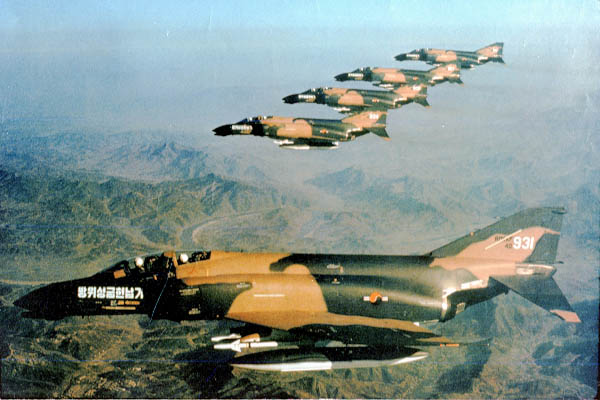
The Republic of Korea Air Force (ROKAF) originally planned to buy 120 advanced, high-end fighters as its next-generation platform, in order to replace its existing fleet of F-4 Phantom IIs and other aircraft. So far, it has bought 60 fighters in 2 phases. Back in 2002, the South Koreans picked the advanced F-15K derivative of the F-15E Strike Eagle for its F-X Next Generation Fighter Program, and bought 40. In 2008, a 2nd F-X Phase II contract was signed for 20 more F-15ks, with slight modifications.
As the 3rd phase loomed, the question was whether it will be a variant of their existing fleet, or something new. While the Defense Acquisition Program Administration (DAPA) dreamed of developing their own “5th generation” aircraft for Phase 3, reality eventually had its say. Now, foreign manufacturers are offering the ROKAF a number of off-the-shelf options. But throughout 2013 DAPA couldn’t seem to be able to reconcile the air force’s desire for advanced technology with its budget constraints. Boeing seemed on the edge of winning with its F15-SEs as the sole contender within budget, only to be rejected by the end of September 2013. This reopened the tender with Lockheed Martin’s F-35 as the likely favorite, a choice which was confirmed as 2014 unfolded.
F-X to KF-X: The Best-Laid Plans…
(click to view full)
South Korea’s relationship with Boeing’s F-15 began in 2002, with a $3.6 billion contract to deliver 40 aircraft to the ROKAF, beginning in 2006 and ending in August 2008.
Their 2-seat F-15K Slam Eagles were the first F-15s produced with an updated version of the GE F110 engine common on many US F-16C/D aircraft, and on the ROKAF’s first 40 F-16 Block 30s, making South Korea the world’s first F-15 customer to fly that engine. They will also carry the SLAM-ER missile as their medium-range precision strike weapon.
F-15Ks have not been equipped with the AESA radars found on some US F-15Cs and Singapore’s forthcoming F-15SGs, however, relying instead on the AN/APG-63v1 radar upgrade, whose back-end can accommodate an AESA array in future, if one is added.
The ROKAF’s F-X-2

with SLAM-ERs
(click to view full)
In May 2006, the Korean Overseas Information Service said that the ROKAF would purchase another 20 multi-role aircraft, with delivery planned to begin in 2009. This 2nd phase of the F-X next-generation warplane procurement project didn’t quite go as planned. The ROKAF had reportedly hoped to order another 40 planes for F-X-2, but had to settle for just 20 more instead. Then their open competition fell apart. The F-35 was excluded for having incompatible timelines, Dassault and Sukhoi didn’t attend the DAPA presentation after being named as candidates, then Eurofighter pulled out, leaving Boeing’s F-15K as the only submission. DAPA put out a second request for tenders in response, and Boeing was, again, the only respondent.
The actual Phase 2 deal was signed in April 2008. It covered 21 more F-15Ks, to be powered by the Pratt & Whitney F100-PW-229-EEP extended life engine, instead of the GE F110-129 that equipped its previous 40 planes.
An earlier F100 variant powers its 140 “KF-16” Block 52s, and these arrangements ensure that troubles with either engine type will still leave South Korea with a substantial fighter force.
F-X-3 and KF-X

(click to view full)
The 5-year process of getting to a Phase 3 RFP has seen its share of twists and turns, along with some confusion in terminology.
The F-35 Lightning II was initially seen as the only F-X-3 contender, but F-35 program delays began to make its participation questionable, and South Korea’s politics are pushing them to build up their own defense industry as a prime supplier.
The multinational F-35 program has no space for that kind of lead role, so Korean discussions for Phase 3 quickly shifted to some kind of indigenous “5th generation” KF-X design, possibly in concert with a major foreign defense firm. That approach carries immense cost and risk, and eventually the reality of cost, development, and technology transfer risks became impossible to ignore. South Korea’s indigenous fighter efforts beyond the FA-50 will either be shelved entirely, or focus on a different KF-X program that aims to develop a post-2020 fighter in the F/A-18 Super Hornet’s class. Read “KF-X Fighter: Pushing Paper, or Peer Program?” for full coverage.
For its top-tier F-X Phase 3 fighters, South Korea has reverted to the sensible choice of buying an off-the-shelf or late-development foreign platform. According to a ROKAF report submitted to the National Assembly in 2007, DAPA initially planned to open bidding in 2011 for 60 “5th-generation” jets under a 5.4 trillion won/ $5.4 billion program, aiming to deploy the planes between 2014 – 2019. By the end of 2014 DAPA settled on a 40 fighter order worth WON 7.3 trillion ($7B), with a 2018 – 2021 time frame.
However, despite Lockheed Martin’s promises, the US GAO isn’t at all confident that the F-35 Block 3F software iteration, which is the first fully combat-capable set, will be ready by the 2018 delivery date.
Stealth, and the F-X-3 competitors

(click to view full)
At the ROKAF’s high end, stealth has been mentioned as an important characteristic for F-X-3, and neighboring China’s unveiling of its J-20 stealth fighter has added force to the ROKAF’s desires. So, too, has Japan’s decision to buy F-35A Lightning II stealth fighters. South Korea’s 2012 RFP was initially written to require certain stealth levels and an internal weapons bay, which would have removed all contenders except the F-15SE and F-35. Those requirements were removed before the RFP’s release, but DAPA’s Oh Tae-shik had said that they would “evaluate stealth capability as one of the key aspects, giving an advantage to an aircraft with a lower [radar] observability.”
Those choices affected each of the competitors, but the key is that they widened the field. The finalists were:
* Boeing: F-15SE Silent Eagle
* EADS: Eurofighter Typhoon
* Lockheed Martin: F-35A Lightning II
Unfortunately, all 3 contenders submitted bids for the fighters, industrial giveaways, etc. that were above South Korea’s budget. The competition was briefly suspended, as the government tried to figure out what to do. Bids then resumed, and Boeing was the sole contender for a few weeks, before being rejected for not being a 5th generation offering. The competition was taken away from DAPA, and the military forced stealth requirements that excluded all competitors but the F-35.
(click to view full)
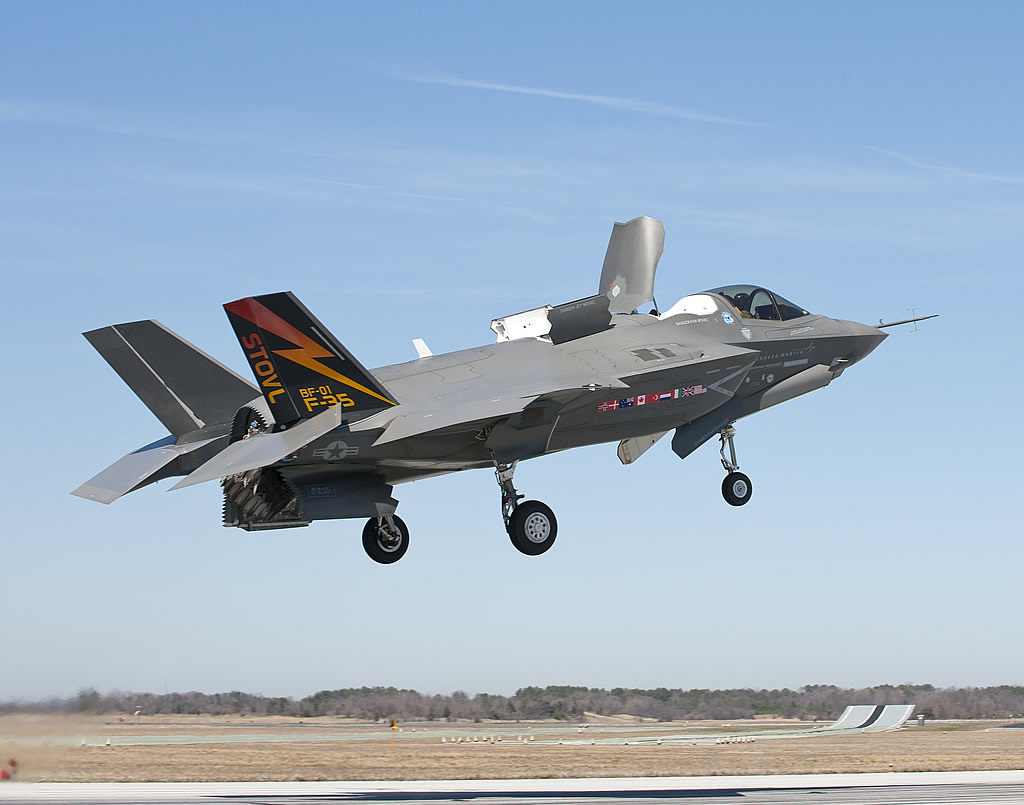
Lockheed Martin’s (picked). China’s unveiling of their J-20, and Japan’s purchase of F-35s, added pressure to keep up with the neighbors. F-35s are the only option as an off-the-shelf stealth strike fighter, so they became the ROKAF’s sole-source buy.
That happened after the F-35 had dealt itself out of DAPA’s competition. DAPA’s relaxation of stealth and internal weapon carriage requirements let others compete, and the F-35 was hampered by issues in meeting speed, external weapons carriage, evaluation flight, and cost requirements. The F-35A will also have the smallest set of qualified weapons to 2020, and may take several years after that before it reaches even the limited breadth of the Eurofighter’s array. In the end, however, cost was the biggest issue. Japan’s base cost per fighter has already risen past $120 million, and the F-35 couldn’t meet the ROKAF’s budget for 60 planes.
The F-35B STOVL’s combination of vertical landing capability, USMC compatibility, and stealth could have made it a compelling choice for the ROKAF, but the ROK’s April 2013 DSCA request involved conventional long-runway F-35As that can carry 2,000 pound bombs internally.

Boeing concept
(click to view full)
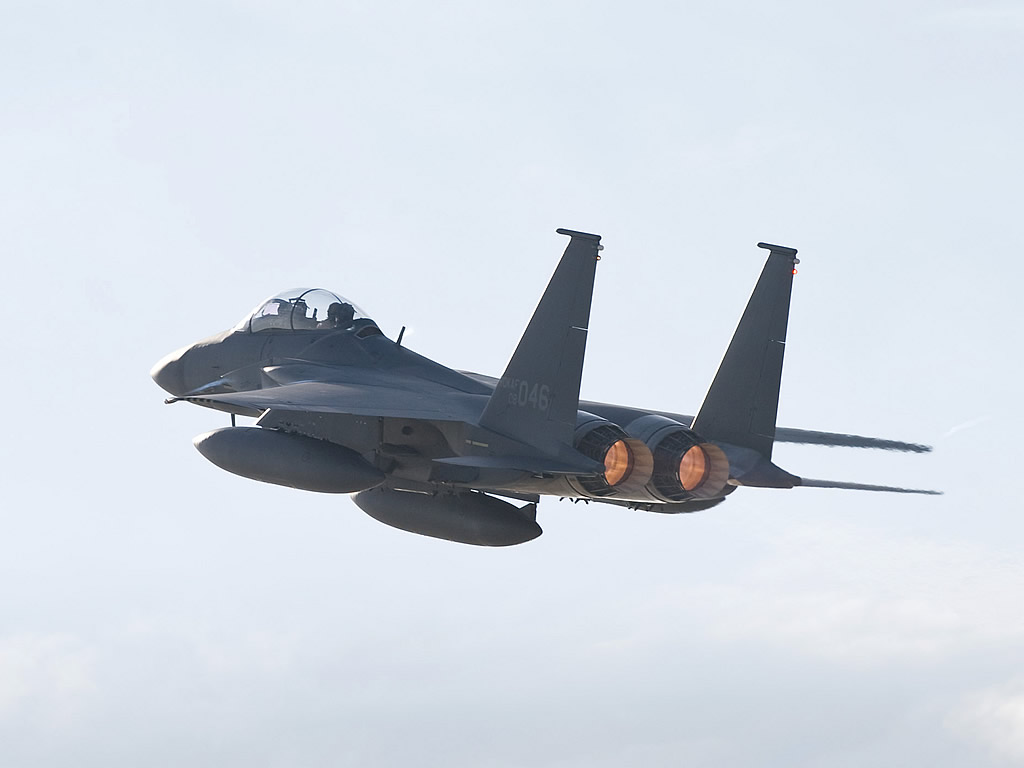
Boeing (lost). Boeing had an interesting card up its sleeve: the South Korean government’s dream of participating in the development of a new, stealthy fighter platform could survive, albeit in a toned-down form. They would have made Korea the launch partner for its most advanced F-15 fighter yet: the F-15SE Silent Eagle. It doesn’t offer the same radar signature reduction as an F-35, and is only optimized for air-to-air combat stealth. In addition, the canted tails that improve lift and reduce side radar signature are only an option within their bid, rather than a standard feature.
What the F-15SE does offer is improved radar stealth over the F-15K, internal weapon bays, and major advances in controls (fly-by-wire), onboard radar, electronic countermeasures, and sensors. In short, Boeing had to win on advantages like range, carriage capacity, low risk, fleet commonality, and the broadest array of weapon capabilities within South Korea’s budget.
The F-15SE would have given the ROKAF a platform that’s compatible with many of its existing fighters, while boasting advanced capabilities that Korean firms could help manufacture for other F-15 customers. It also offered the singular promise of a 90%+ common high-end fleet, if the ROKAF moved to refit its existing F-15Ks and create a uniform high-end F-15 force of Silent Eagles. Fly-by-wire would probably be too expensive for the upgrades, and canted vertical tails are an unlikely retrofit option, but all other components could be added.

(click to view full)
EADS (lost). The Eurofighter Typhoon was a Phase 3 competitor throughout, unlike its pullout from F-X-2. EADS proposed to phase in Korean assembly for Phase III, and in 2013 they improved that offer to involve 12 planes made in Europe, and the last 48 assembled at KAI. It wasn’t entirely clear whether KAI would also be performing structural manufacturing, and if so how much. The Eurofighter’s challenge was that technology transfer and local manufacturing adds cost. That hurt them in Japan, despite being rated as the best industrial offer. They hoped that pledges to assist South Korea with development of its proposed K-FX fighter would help tip the balance.
Eurofighter’s Typhoon has more RCS (Radar Cross-Section) shaping features than most people realize, but it has no conformal weapons bay. Instead, its design philosophy was built around the concept that full stealth adds too much expense, and will be compromised by future technology developments. EADS’ design focused on agility, long-range sensors, and long-range weapons instead. The Typhoon does extremely well in those fields, though its range of weapon options is far narrower than the F-15’s. In the end, it wasn’t enough. The bid was eliminated from DAPA’s selection on a questionable technicality, then precluded from the relaunched competition by stealth requirements it can’t meet.

(click to view full)
Saab (declined). The Swedish firm indicated a preliminary interest, and made themselves eligible to bid with the JAS-39 Gripen NG. Saab would have been able to offer South Korea a position as a full platform co-development partner, but chose not to bid in the end.
Their Gripen Demo prototype is finishing testing, but the operational Gripen E/F is still in development between Sweden & Switzerland. The Gripen is a smaller fighter than the other competitors, and lacks the stealth enhancements found on the F-15SE or F-35, but its combination of RCS shaping and smaller size have made it difficult to find during NATO exercises like Spring Flag 2007. Overall, it’s a versatile and very agile fighter with a good weapons array, short-takeoff and landing capabilities, and a proven record of low purchase, operations, and maintenance costs. On the flip side, the Gripen’s size creates limits as well as advantages.
Contracts & Key Events
2014-2016
JSF Order confirmed.

(click to view full)
August 11/16: An agreement between the Pentagon and Seoul will see the transfer of a crucial GPS component for the Taurus cruise missile, paving the way for its operation by RoKAF F-15K fighters. It’s expected that the Taurus will be delivered and in use by the end of the year. Dubbed as a “jamming proof” air-to-ground guided missile, the decision to allow Taurus exports to South Korea comes as North Korea flexes its muscles with ballistic missile tests.
July 29/16: Officials from South Korea and the US have met in Washington for their first set of talks to discuss the transfer of technologies for the former’s upcoming KF-X indigenous fighter. Approval had been given for the transfer of 21 technologies as part of Seoul’s commitment to purchase 40 F-35s, however Washington refused on four core technologies, saying they would need to be developed domestically by South Korea. The meeting saw further discussion of the core technologies in question as well as technologies related to the development of the medium-altitude UAV.
January 28/16: South Korea’s planned acquisition of German made Taurus missiles for their F-15K has run into problems, as the US has stalled in approving export licenses of a key GPS component needed. The GPS component is an integral part of the missile integration project for the jet’s trace and key-target hitting functions which can automatically detect, trace and hit targets and penetrate a concrete wall as thick as six meters. Plans had been made to have 170 of the air-to-surface cruise missile delivered by the first half of next year, but any decision on the matter won’t be made until August. As a result, the project has stalled in the middle of missile installation; frustrating plans to have the missile deployed on time.
November 24/15: A deal has been signed between between Korea Aerospace Industries (KAI) and the Indonesian government as part of South Korea’s KF-X fighter program. The agreement includes details of shared costs of the joint engineering and development phase of the fighter. Indonesian contributions to the costs amount to $1.5 billion, about 20% of the costs. KAI was announced as preferred in March by the South Korean Defence Acquisition Production Administration (DAPA) and will collaborate with Indonesia with design and some part production. Planned production of the indigenous fighter will commence in 2025 with Indonesia as one of the first customers as export. Indonesia hopes the collaboration will help their own indigenous development capabilities in future.
October 5/15: The South Korean government has opened an investigation into a senior security official over his role in the decision to procure the F-35 in March 2014, with this finalized in September 2014. Kim Kwan-jin headed the Defense Acquisition Program Administration (DAPA) committee responsible for the selection of the Lockheed Martin jet, despite an earlier DAPA recommendation of the Boeing design on technology transfer grounds in September 2013. The failure to see four core technologies transferred to the country from the F-35 program, confirmed in September, has hit the country’s KF-X indigenous fighter competition hard, with it now thought that the transfer of these technologies was never likely. The probe is now assessing whether Kim lied about the contract’s terms in order to set Lockheed Martin up for the win.
F-35 deal
Sept 24/14: F-35A. DAPA confirms the terms of its order for 40 F-35As, for a total of WON 7.3 trillion ($7.04 billion), about 120 billion won ($115 million) per fighter plus support, spares, and training costs. The actual Letter of Offer and Acceptance (LOA) will be signed within days, under a Foreign Military Sale (FMS) process. Lockheed Martin agreed to transfer flight control and fire-extinguishing technologies. Deployment is planned between 2018 and 2021.
Subsequent reports indicate that Lockheed Martin has limited its proposed help with KF-X to just 300 man-years, rather than the 800 desired. In exchange, they offered a very unusual offset: they would buy a military communications satellite for South Korea, and launch it by 2017. Lockheed Martin isn’t saying anything, but Thales is favored as the source, as they provided the payload for South Korea’s Kopmsat-5 radar observation satellite, and have played a major role in KT Sat’s Koreasat commercial telecommunications satellites. Why wouldn’t Lockheed Martin, which makes these satellites itself, just built one? Because this way, it doesn’t have to deal with any American weapon export approval processes and restrictions, which would have delayed overall negotiations and might have endangered them. Source: Yonhap, “Seoul to buy 40 F-35A fighters from Lockheed Martin in 7.3 tln won deal” | Defense News, “F-16 Upgrade: Problems With S. Korea-BAE Deal Could Open Door to Lockheed” | Reuters, “Exclusive: Lockheed to buy European satellite for South Korea in F-35 deal”.
May 11/14: Diehl & Saab’s Taurus Systems joint venture is opening an office in South Korea, its first outside of Germany. The Seoul office will support South Korea’s November 2013 contract, while overseeing technology transfer and joint development of the next version. Sources: Korea Times, “Taurus Systems to open Seoul office this week”.
March 27/14: Oy! of the Tiger. The F-15K fleet’s Tiger Eye pods combine advanced all-weather and terrain-following navigation with an electro-optical day/night sensor suite that includes Infrared Search and Track (IRST). Yonhap places the number bought at just 10, and adds that the ROKAF has had trouble maintaining them. Perhaps that’s what led to allegations of disassembly and industrial espionage (q.v. Nov 18/11)?
Now the pods are coming home to bite a second time, via a 6x hike in support costs. Yonhap reports that the ROKAF is the system’s only customer, and quotes American sources as saying that the rarity of parts is driving the problem, though Singapore’s F-15SGs were were displayed with Tiger Eyes on rollout. The Koreans are responding by trying to buy key components for lifetime support, before those components disappear.
The ROKAF has 40 Sniper Advanced Targeting Pods with good optics, but they’re often deployed along with Tiger Eyes. If Sniper ATPs are used alone, the ROKAF would have to add LANTIRN pods to gain the same radar-evading low-level flight advantages, and they’d lose the IRST. Sources: Yonhap, “U.S. demands sharp rise in price of F-15K’s sensor parts”.
March 24/14: South Korea’s government officially ratifies its decision (q.v. Nov 22/13) to sole-source 40 F-35As as their next fighter jet, instead of accepting 60 F-15SEs from Boeing’s $7.2 billion bid. Sources quoted by Reuters place South Korea’s revised budget at WON 7.34 trillion (about $6.79 billion), but negotiations on the actual price aren’t expected to finish until late 2014.
Lockheed VP Gary North says that the planes will have “fully operable” Block 3F software when they’re delivered, and other sources give a 2018 – 2022 delivery period. Lockheed Martin is breezily confident that it can meet those requirements, but official GAO and DOT&E reports cast grave doubt on software development and testing in particular. Block 3F seems very unlikely to finish by its target date in 2017, and a lot of things would have to change very soon in order to make even 2018 a likely bet. Contract language around “fully operable” could become very important.
Lockheed’s Randy Howard, the VP who directs the F-35 Korea sale, touted the program’s recent assessment that “the F-35 is on a downward path that will lead to a Unit Recurring Flyaway (URF) cost for an F-35A of between $80-85 million,” as his firm seeks an up-front contract for all 40 planes. On the other hand, ROK DAPA sources point to the fact that the program’s estimate based on doubtful sales estimates, and note previous gaps between touted costs and actual prices.
Lockheed Martin’s desire to avoid smaller annual contracts that minimize customer commitment makes sense. With American orders facing cuts, and projected orders from key program members like Canada and the Netherlands coming in at about half of initial estimates, they need to add guaranteed orders. Otherwise, early buyer prices will stay very high and hurt sales. On the other hand, Japan’s recent experiences suggest that the smart money bet lies with DAPA’s dubiousness. South Korea has already locked itself in the negotiating room, and Lockheed could benefit from a smaller Political Cross-Section by not leading with its chin in this way, but it seems to be a persistent pattern. The Sources: Lockheed Martin, “Republic of Korea Selects Lockheed Martin F-35A Lightning II” | Yonhap, “S. Korea confirms US$6.8 mln deal for 40 F-35s in Q3” and “Lockheed Martin says F-35 will get cheaper in next five years” | Reuters, “South Korea boosts air defenses with about $6.8 billion budget for F-35s”.
F-35A sole-source is official
2013
ROK removes DAPA from the equation and picks the F-35 without competition; Export cases for F-35A, F-15SE, and accompanying weapons; EADS offers to support KF-X if Eurofighter is picked for F-X-3; ROKAF picks KEPD 350 as its long-range cruise missile; F100 engine support deal.
(click to view full)
November 2013: Cruise Missiles. South Korea’s DAPA reportedly signs the contract for KEPD 350 cruise missiles with Taurus Systems, a joint venture between LFK (MBDA Deutschland) and Saab. Previous reports indicated that the contract would involve about 170 missiles, at a cost of about $360 million equivalent (q.v. April 25/08, May 18/11, April 4/13, June 19/13, July 5/13). Sources: Korea Times, “Taurus Systems to open Seoul office this week”.
KEPD-350 cruise missiles
Nov 27/13: Dissension. Ruling Saenuri Party members are demanding that South Korea’s government renegotiate the proposed buy of 40 F-35As. Influential Rep. Rhee In-je echoes the Chosun Ilbo newspaper:
“The government made the right decision in choosing the F-35A for its stealth capabilities, but compared to Japan, the conditions (for the purchase) are strikingly unfair…. This isn’t an issue that can be glossed over. We have to try to (buy the jets) on the condition of technology transfer and with the same terms as Japan [q.v.: local assembly for most and some local parts production], even if that means more negotiations…”
Other senior party members want “an open bid for core technology transfer,” and the opposition is blasting the government for weakening its negotiating position by abandoning the competition. On that score, it’s simply too late. There is no competition now, and everyone knows there’s no real competition. Which means it isn’t possible to get the benefits of competition. Even as China’s recent aggressive moves in the East China Sea/ Mer de Coree are turning the fighter buy into a high priority for the ROKAF.
The deal on the table has technology transfer provisions that focus on South Korea’s KF-X fighter, and other projects. If the entire deal revolves around the F-35, it takes these items off of the table. Does the ROK want that? Rep. Rhee In-je is right that the ROK has painted itself into a bit of a corner, but he’s wrong to believe it can just walk out of that corner without paying a steep price. Sources: The Korea Observer, “Ruling party members urge better conditions in fighter jet contract” | Chosun Ilbo op-ed, “Korea Must Keep Edge in Fighter Jet Negotiations”.
Nov 22/13: F-35 Only. South Korea’s Joint Chiefs of Staff announce that there will be no competition for F-X Phase III. They’ve set the stealth requirements so that only the F-35 can meet them, and DAPA plans to sign a 2014 contract for 40 F-35A block 3 jets, to be delivered from 2018 – 2022. That’s a drop from the original requirement for 60 planes, though the ROK JCS will consider a later buy of another 20 jets, type unspecified, for deployment in 2023 – 2024. JCS spokesman Eom Hyo-sik:
“The F-35A will be used as a strategic weapon to gain a competitive edge and defeat the enemy in the early stage of war…. The South Korean military will also use the aircraft to effectively deal with provocations.”
He’s referring to the ROK’s counterstrike doctrine, which intends to actively seek out artillery and missile launchers in early stages of a full war, and strike heavily-defended North Korean targets in response to lesser armed provocations. DAPA’s immediate challenge will be setting a budget for its purchase. Senior DAPA official Oh Tae-shik says that “We expect to firm up the total budget size after discussions with the related ministry.” The ROKAF’s intermediate-term challenge is the fact that American GAO auditors don’t have a lot of confidence in the 2018 deadline for Block 3 jets, given how far behind the fighter’s software development has fallen.
As a side effect, the JCS has moved proposed development of the local KF-X fighter as an intermediate-term project for development by 2020, rather than a long-term project. Lockheed Martin is expected to lend its expertise to KAI, as part of an F-35 industrial offsets program that will also include a new military communications satellite and a cyber-warfare training center. ROK’s Yonhap, “(LEAD) S. Korea decides to buy 40 Lockheed F-35s from 2018” | E&T, “South Korea confirms F-35 fighter jet deal” | China’s Xinhua, “S. Korea picks Lockheed Martin’s F-35 as main fighter jet”.
Oct 11/13: Boeing. Boeing is reportedly shifting its strategy in Korea to promotion of a split-buy. South Korea will take over primary command responsibility for forces on the Korean peninsula in 2015, and wants fighters by 2016, but the F-35B isn’t going to be ready for combat by then. Experiences with other F-35 buyers are also demonstrating much higher purchase costs, resulting in order cuts of 50% or more in partner nations.
Boeing is hoping this will lead to a situation like Australia’s, where the government ended up buying F/A-18F and EA-18G fighters as an interim bridge, and a way to improve fighter force size. The bad news is that South Korea’s perceived need for in-country infrastructure to handle most maintenance operations means that a notable chunk of their F-35 costs won’t change if they switch from 40 F-35s to 24 F-35s + 30 F-15SEs.
Boeing’s F-15SE technologies remain available as upgrades for South Korea and for other customers. Sources: Aviation Week, “Boeing Sees Possible Split Fighter Buy For Korea”.
Sept 24/13: F-15SE out. DAPA yields to pressure from the air force to pursue a 5th generation acquisition. Defense minister Kim Min-seok:
“A majority of the committee members agreed to reject (F-15 SE) and restart the project, taking into consideration the recent security situation including North Korea’s third nuclear test and latest aerospace technology development. They agreed that South Korean Air Force needs fifth-generation combat jets to keep pace with the latest trend and to deter provocations by North Korea.”
This puts Lockheed Martin in a strong position, if the money is there and stealth ends up being the defining “5th gen” requirement. Note that the money will have to encompass more than just the planes, as the nearest major maintenance hub for the F-35s will be in Japan. South Korea already has that infrastructure for its F-15s, but it would have to build and stock a new system for the F-35. Sources: Yonhap, “S. Korea decides against picking Boeing’s F-15 SE as next fighter jet” | CS Monitor, “F-15 Silent Eagle: Why South Korea rejected this jet” | The Diplomat, “South Korea Rejects Boeing’s F-15SE Fighter, Will Restart FX-III”.
F-X-III called off
Aug 28/13: F-15SE radar. Aviation Week reports that Boeing offered South Korea the APG-82(V)1 AESA radar for its F-15SEs, which is a step up from the APG-63(V)3 AESA in Singapore’s F-15SGs and Saudi Arabia’s forthcoming F-15SAs. The APG-82v1 will be the USAF’s Strike Eagle radar under a refit program. Compared to the APG-63(V)3, the APG-82 offers a new wideband radome, an improved cooling system, new Radio Frequency Tunable Filters (RFTF) that let the radar and Electronic Warfare System function at the same time, and an architecture of LRM “blades” that can be swapped out in the field based on internal diagnostics. That improves readiness compared with the APG-63’s large LRU “black box” units, which must be sent to a maintenance depot for diagnosis and service. Sources: Aviation Week, “Boeing Mulling F-15 Plans Beyond Silent Eagle”.
Aug 19-20/13: Contradictory reports. Conflicting messaging from DAPA and contractors give a somewhat muddled picture, apparently leaving the F-15SE as the de facto winner.
DAPA announced that Eurofighter was out because of procedural flaws, which EADS reportedly denies. The core problem is that the ROKAF wanted 45 single-seat and 15 2-seat aircraft, for whatever reason. All F-15SEs are 2-seat, and all F-35s are single-seat, so it was an arbitrary figure for EADS. The 2-seat planes cost a bit more, and EADS says that operational experience shows a need for fewer trainer-capable planes due to advanced simulators, etc. So they proposed a 54/ 6 split, to stay within the budget. EADS Chief Sales Officer Christian Scherer offers a way forward, if politicians want to pressure DAPA into reconsidering:
“I would like to stress that Eurofighter’s intention has been to provide DAPA, to consider within its discretion, fully within the boundaries of the Request for Proposal (RFP), a bid package that would meet the declared essential budget…. We do not see any promises made but only different scenarios with preferences which have been discussed respectfully by the parties all along the negotiation process…. We are open for any constructive discussion with DAPA. We have shown different paths, and we are ready to discuss the applicability of any or parts thereof to help DAPA come to the most cost-effective choice for the F-X Program.”
Meanwhile Lockheed Martin is not admitting defeat just yet, though that’s standard procedure in jet competitions, where it’s not over till it’s over. The truth is, their best hope is for DAPA to reject the F-15SE, or have the competition derailed some other way, giving them time to be able to offer more cost certainty and meet the budget – if they can. Sources: Yonhap, “Interview – EADS denies procedural breach to Korean fighter jet project” | The Hankyoreh, “Eurofighter eliminated from next-generation fighter project” | Reuters, “Lockheed says S. Korea jet fighter contest not over” | Korea Times op-ed, ” Fighter project in limbo” Government needs to reexamine plan from square one”.
Aug 16/13: F-35 Out. South Korea’s new negotiating strategy pays off, as the F-15 Silent Eagle and EADS Eurofighter reportedly meet the bid limit and become the 2 finalists. The DAPA procurement agency will only confirm that at least 1 bidder was within the budget, but Yonhap News Agency confirms that the F-35 disqualified itself by bidding over budget. The Korea Times cites an unnamed “industry source” who says that Eurofighter and Boeing both bid within the limits, which sets up an interesting duel.
DAPA could run the evaluation and decide not to buy any fighters right now, but that’s a good way to simply lose your budget. Reports say that a request to raise the budget has already been refused, in order to increase voter entitlement payouts. The Eurofighter is a better air superiority fighter, but the F-15s have a much wider array of weapons they can use. That versatility, coupled with the prospect of eventually upgrading the F-15 fleet to a mostly-common F-15SE configuration (albeit without fly-by-wire or canted vertical tails on older F-15Ks), is expected to give Boeing an edge. Sources: Yonhap, “S. Korea’s fighter jet project becomes two-way race” | Korea Times, “F-15, Eurofighter vie for F-X project.”
July 29/13: New bids. A Korea Times article makes DAPA’s near-term negotiating strategy crystal-clear. DAPA Spokesman Baek Youn-hyeong says that once any of the bidders meet the KRW 8.3 trillion/ $7.45 billion budget, all candidates will be evaluated, and any not meeting the budget will be disqualified regardless of their evaluations.
The paper reports that Boeing’s bid was within 3% of DAPA’s budget, which means we could have a winner very soon. Sources: Korea Times, “F-35 to be first to bow out”.
July 25/13: New bids. DAPA spokesman Baek Youn-hyeong says that DAPA will begin a 3rd round of F-X-3 bidding in the 3rd week of August. Then he says that:
“If there is no entry with price within the project budget after the resumption of bidding, we will pursue the project again through reviews or increase in overall budget…”
It’s hard to say what this means. Telling companies that “if you don’t bid within our budget, we’ll increase it and try again” is a poor negotiating strategy. Unless the reviews and budget increase are simply applied to the already-submitted bids, and a winner is picked with no further bidding. This would be a reasonable strategy if technical compromise is seen as out of the question, but the people controlling the budget need to be assured that the winning offer is the best possible deal. Sources: Reuters, “South Korea reopens bidding for stalled fighter jet competition”.
July 11/13: Say what? South Korea’s government needs to decide what do do about its fighter competition. One DAPA official tells Reuters that:
“If the auction falls apart, we will consider all possible options, possibly including splitting the purchase…”
If all 3 bidders are over slot, we fail to see how splitting the purchase will help. The only way it would help is if DAPA changed the buy to include lower and higher performance fighter tiers, which would add less expensive competitors to the mix. That would leave EADS in a bind, however, and increase the pressure for fleet compatibility in at least one of the tiers. The F-16V would be a very strong contender in that scenario, as it would fit with the ROKAF’s planned F-16 upgrades. Sources: Reuters, “South Korea to review bids on $7.3 billion fighter jet deal”.
July 5/13: Suspended. The new round of bidding extended until July 5th, but it didn’t help. None of the entries could meet South Korea’s industrial demands, and performance specifications, and budget limits. DAPA responded by suspending further bidding on the competition.
Something clearly has to be rethought, if South Korea wants those fighters. If they don’t drop the number bought, then either the budget must be increased, or cost-adding elements like industrial offsets need to be revised, or the performance specifications need to be relaxed and new competitors contemplated. Sources: Yonhap, “S. Korea temporarily suspends bidding for next-generation fighter jet program” | Yonhap, “S. Korean fighter jet project stuck over pricing”.
F-X-3 suspended
July 5/13: Cruise missiles. A budget analysis report by the National Assembly’s Budget Office notes potential budget problems with the proposed buy of Taurus long-range cruise missiles. South Korea began with a KRW 221.3 billion/ $194 million budget, and has since raised it to 411.9 billion won/ $360 million.
The bad news? The bid for the Taurus missile package was KRW 568.8 billion/ $496.4 billion in 2011. The Budget Office report wants DAPA to report the results of their negotiations with Taurus/MBDA, before the office conducts budget deliberations for 2014. Sources: Yonhap, “Parliament advises review of Taurus, Global Hawk acquisition plan”.
June 28/13: Try again. DAPA official Baek Youn-hyeong said another round of bidding would start on Tuesday July 2, since the 2nd round of bidding ended with none of the bidders meeting the 8.3 trillion won ($7.3 billion) budget set for 60 aircraft. Sources: AP, “S. Korea extends $7.3 billion fighter jet bidding” | Yonhap, “Second round of bidding for Korean jet project fails over price”.
June 19/13: Cruise Missiles. DAPA has approved a plan to purchase Taurus Missiles (q.v. April 4/13 entry) in the absence of American clearance for JASSM. Yonhap reports that the deal will be over $300 million, for about 170 missiles. Note that approval isn’t a contract yet, but at least we’re zeroing in on prices and quantities. Sources: Agence France Presse, “S.Korea to buy European missiles”.
May 23/13: Eurofighter. EADS Cassidian reportedly announces that they would invest $2 billion in the K-FX fighter development project, and help market the plane internationally, if the Eurofighter is chosen for F-X-3. Investments would include a maintenance repair and overhaul (MRO) facility that could extend to the KF-X, and an aerospace software center.
It isn’t a bad idea for EADS. Barring multiple orders from new sources, it’s very unlikely that the Eurofighter will still be in production by 2022. Upgrades and maintenance will continue for some time, but the C-203 KF-X design could offer EADS a new option to sell, with a fundamental design that can improve toward stealth fighter status. The question is whether South Korea wants to go forward. Sources: Yonhap News, “EADS offers US$2 bln investment on Korean fighter jet project”.
May 22/13: Weapons. The US DSCA forwards South Korea’s official weapons export request for up to $823 million worth of weapons to equip F-15SE Silent Eagles [PDF], or up to $793 million in weapons for F-35As [PDF], if either plane is picked as the F-X-3 winner. There’s a lot of commonality, with some differences. The commonalities:
* 274 AIM-120C-7 Advanced Medium Range Air-to-Air Missiles (AMRAAM). This is the most advanced export version, and the ROK already uses AMRAAMs on its F-15s and F-16s.
* 6 AIM-120C-7 AMRAAM Guidance Sections.
* 154 AIM-9X Block II Tactical Missiles w/DSU-41. This is the most advanced Sidewinder short-range air-to-air missile. The F-35A and F-15SE The ROKAF would need to do additional work, if they wanted to add it to their KF-16s as well.
* 14 AIM-9X Block II Tactical Guidance Unit. Spares are good.
* 33 AIM-9X Block II CATM (Captive Air Training Missiles). Used for exercises.
* 7 AIM-9X Block II CATM Guidance Units
* 1,312 FMU-152A/B Fuzes (FZU-63 Initiator)
* 6 MK-82 Filled, Inert Bombs. Operational Mk-82s weigh about 500 pounds.
* 4 BLU-109 Inert Bombs. The BLU-109 is a penetrator section for 2,000 pound bombs.
* 542 GBU-39/B Small Diameter Bombs. These 250 pound GPS-guided glide bombs replace existing bombs on a 4 to 1 basis, and pack the same penetration punch as a 2,000 pound weapon against some hardened targets.
Plus containers, missile support and test equipment, provisioning, spare and repair parts, support equipment, personnel training and training equipment, publications and technical documentation, and other US government and contractor support.
The F-15SE and F-35A requests have different distributions and types of bombs. The $823 million F-15SE request includes 1,312 bombs:
* 780 JDAM Tail Kits, MK-82/BLU-111 KMU572C/B (GBU-38) w/SAASM/AJ. In English: 500 pound version with jam-resistant GPS guidance.
* 170 BLU-117 2,000 pound General Purpose Bombs.
* 170 JDAM Tail Kits, MK-84/BLU-117 KMU-556C/B (GBU-31) w/SAASM/AJ. 2,000 pound version with jam-resistant GPS guidance.
* 362 BLU-109 2,000 pound Penetrator bombs, for use against hardened targets. It adds up to 532 2,000 pound bombs in this request.
* 362 Joint Directed Attack Munition (JDAM) Tail Kits, BLU-109/KMU-557C/B (GBU-31) w/SAASM/AJ. 2,000 pound penetrator version with jam-resistant GPS guidance.
The $793 million F-35A request includes 1,310 bombs:
* 780 GBU-12 Paveway II 500 pound laser-guided bombs. Instead of the GPS-guided JDAMs.
* 4 GBU-12 Dummy Trainers.
* 530 BLU-109 2,000 pound Penetrator bombs, for use against hardened targets. The F-35A can carry a 2,000 pound bomb and an AMRAAM missile in each of its 2 weapon bays. Maximum impact is best against the kind of tough targets they’d attack.
* 530 Joint Directed Attack Munition (JDAM) Tail Kits, BLU-109/KMU-557C/B (GBU-31) w/SAASM/AJ. 2,000 pound penetrator version with jam-resistant GPS guidance. The F-35A request orders more of these JDAM kits, but none of the other types.
* 4 JDAM BLU-109 Load Build Trainers.
The principal contractors are listed as Raytheon Missile Systems Company in Tucson, AZ (AIM-9X, AIM-120); The Boeing Corporation in St Louis, MO (all JDAM kits); Lockheed Martin Missile and Space in Bethesda, MD (GBU-12); and Kaman Precision Products in Middletown, CT (fuzes). General Dynamics OTS makes the base bombs, but aren’t mentioned. If permission leads to negotiated contracts, implementation will require multiple trips to Korea involving U.S. Government and contractor representatives for technical reviews/support, program management, and training over a period of 8 years.
US DSCA: Weapon export requests for F-15SE, F-35A
April 5/13: Eurofighter. With initial F-X-3 negotiations underway, and price negotiations expected to begin on April 18/13, an un-named military official tells the government’s Yonhap News Agency that EADS has changed their industrial offer. Instead of having the first 10 made in Europe, the next 24 made using Korean components, and the last 26 assembled in Korea, EADS has offered to build just 12 in Europe, and the other 48 Tranche 3 planes at KAI in South Korea.
The news report is imprecise, leaving the question of structural manufacturing vs. kit assembly unaddressed. It also fails to address how EADS can promote the idea of 20,000 South Korean aerospace jobs for a 5-year period, when the company also says that building the Typhoon for the much larger orders of the core country participants created just 10,000 jobs in Europe. On its face, the statement seems less than plausible, but it does point to the likelihood of significant structural manufacturing in Korea. Sources: Yonhap, “EADS offers to manufacture 48 Eurofighters in S. Korea” | Fly To Barcelona, “Cassidian Spain presents the Eurofighter offer for South Korea” | New Pacific Institute, “EADS’s ‘Eurofighter Typhoon’ Localized Production Deal with South Korea in Jeopardy”.
(click to view full)
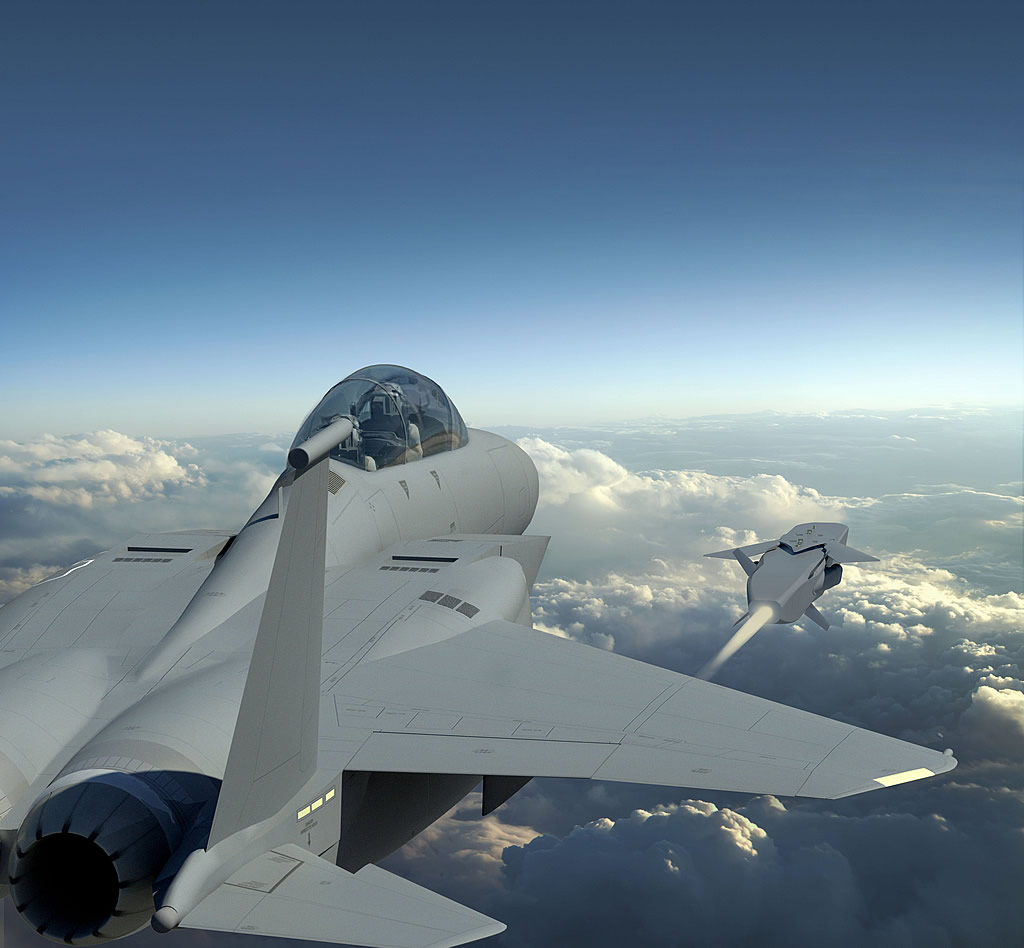
April 4/13: Cruise missiles. The ROKAF has taken about 5 years (q.v. May 18/11, April 25/08 entries), but they appear to have picked their long-range cruise missile: Taurus’ KEPD 350, with an expected order of 200 weapons. Negotiations are expected to begin quickly. A ROKAF officer is quoted as saying that they “urgently need more long-range air-to-surface missiles due to the mounting nuclear threat and the increasing possibility of provocations from North Korea.”
It was clear from the outset that the ROKAF was looking beyond the 40 or so Boeing AGM-84K SDLAM-ER missiles in its arsenal, with particular interest in Lockheed Martin’s AGM-158 JASSM/JASSM-ER. Unfortunately, the current administration has made it difficult for South Korea to join Australia as a JASSM export customer, and hew to the past pattern of buying American. Parliamentary defence committee member Kim Kwan-jin is quoted as saying that:
“U.S. missiles were one of the options we were considering, but because it is difficult for them to be sold to Korea, the only option we have is the Taurus.”
Chalk up another “own goal” for American weapons export processes and administration – though JASSM reportedly had some carriage issues with the F-15SE and F-15K (vid. Nov 5/12 entry). The KEPD 350 uses a combination of terrain matching, GPS, and Imaging Infrared guidance. It’s currently integrated with the Tornado and F/A-18 Hornet, is partially integrated with Saab’s JAS-39 Gripen, and is expected to be integrated with the Eurofighter by 2015 or so. The ROKAF will have to fund additional integration and testing on its own, in order to use the new missile with its F-15Ks and F-16s.
Technically, the ROKAF could have ordered MBDA’s Storm Shadow and paid for its integration instead. The thing is, it’s more expensive to buy, thanks to an added level of stealth that isn’t really helpful against North Korea. Storm Shadow also lacks the KEPD 350’s void sensing fuze, which is especially useful against the multi-level bunkers so beloved of North Korea’s tyranny. The KEPD 350’s 500 km/ 310 mile range matches or exceeds the Storm Shadow’s, and almost doubles the existing SLAM-ER’s 278 km reach. Sources: Chosun Ilbo, “S.Korea to Buy Bunker-Buster Missiles from Europe” | Reuters, “S.Korea to buy bunker busting missiles from Europe” (different article).
Cruise missile picked: Taurus’ KEPD 350
April 2/13: The South Korean government has a pair of DSCA export requests tabled. If they aren’t actively blocked – and they won’t be – then either Boeing or Lockheed Martin will be able to negotiate a contract IF either fighter wins the ROKAF’s F-XIII competition. If the Eurofighter Typhoon wins, of course, they’re both out of luck. As the winning F-XIII fighter enters service, the ROKAF is expected to retire its F-4 Phantoms.
The respective requests make comparison very difficult, because the F-35A is a full Foreign Military Sale, whereas the F-15SEs involve a Direct Commercial Sale of the core F-15SE fighter that doesn’t appear in the offered totals. Implementation of either sale would require multiple unspecified trips to Korea involving US Government and contractor representatives for technical reviews and support, program management, and training over a period of 15 years. If either proposal is accepted, industrial offset agreements will also be part of the negotiations.
F-35A. The US DSCA announces a full FMS case for 60 fully-equipped F-35A fighters, and another 9 spare Pratt & Whitney F-135 engines. The order would also come with Autonomic Logistics Global Support System (ALGS); the Autonomic Logistics Information System (ALIS); Full Mission Trainer; “Weapons Employment Capability,” and other Subsystems, Features, and Capabilities; F-35 unique infrared flares; Reprogramming center services and software development/integration; Aircraft ferry and tanker support; Spares and repair parts; Personnel training and training equipment, and other forms of US Government and contractor support.
Lockheed Martin and Pratt & Whitney will be the prime contractors if the F-35A wins. The estimated cost is up to $10.8 billion, which is $180 million per fighter, but all of those “the order would also come with” items do add up. Sources: US DSCA [PDF].
F-15SE. The US DSCA announces a possible hybrid case in support of 60 F-15 Silent Eagle aircraft and their engines being procured via Direct Commercial Sales (DCS), and other items that must be sold under the FMS procedure. Boeing in St. Louis, MO would be the prime contractor. FMS items are estimated to cost up to $2.408 billion, and include:
* 60 Active Electronically Scanned Array Radar sets (type undisclosed – APG-63v3 or APG-82v1)
* 60 AN/AAQ-33 Sniper surveillance and targeting pods
* 60 AN/AAS-42 Infrared Search and Track (IRST) pods
* 69 Link-16 Terminals and spares
* Advanced Display Core Processor II
* Joint Mission Planning System
* 132 Ultra High Frequency/Very High Frequency (UHF/VHF) secure radios with HAVE QUICK II
* GEM-V GPS airborne receiver module
* 60 Digital Electronic Warfare Systems (DEWS)
* Plus various support equipment items, and communication security; software development/integration, spares and repair parts, personnel training and training equipment, publications and technical documents, and US Government and contractor support.
The F-15SE’s new stealth-enhancing features, fly-by-wire, etc. make estimation difficult. Based on sales of less advanced F-15K/SG Strike Eagles to South Korea and Singapore, however, those 60 planes can be expected to add around $6.6 – 7.8 billion. That’s still below the F-35A, and the question is how far below. Another advantage the F-15 has is that most of the training, spares, engine spares, and support infrastructure is already present from F-15K sales. Source: US DSCA [PDF].
F-15SE & F-35A export requests
Jan 8/13: United Technologies Corp. subsidiary Pratt & Whitney announces a 5-year, $300 million Performance Based Logistics (PBL) contract to support over 230 ROKAF F100 turbofans in intermediate engine shops, and at the depot level.
All of South Korea’s 180 or so F-16C/D fighters, and some of its F-15K Strike Eagles, use the F100 engine. With the exception of the earliest F-16 Block 32s, the vast majority use variants of the F100-PW-229. The other exception involves 39 / 60 F-15Ks, which fly with GE’s F110-GE-129. That way, problems with the F100 engine can’t ground the ROKAF’s entire top-end fighter fleet.
Multiyear F100 engine support
2012
F-X-3 stealth criteria lowered, but other criteria adjusted to keep F-35A viable; F-X-3 bids make it F-15SE vs. F-35 vs. Eurofighter; Are JASSM missiles a problem for F-15K/SE?
(click to view full)
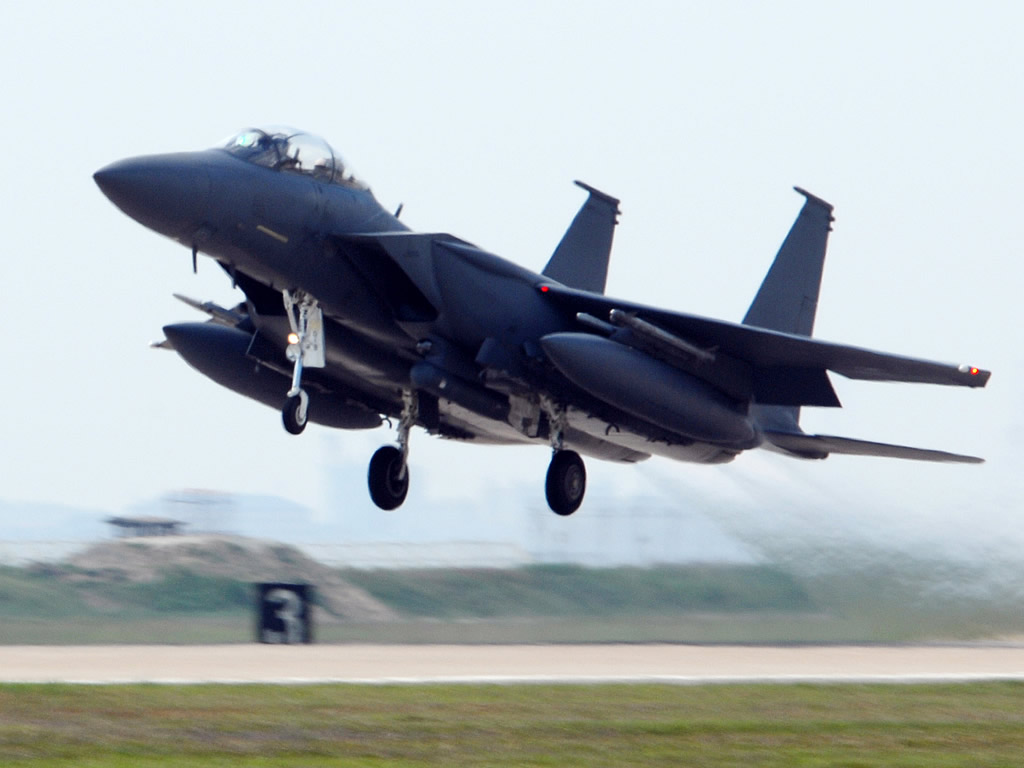
Nov 5/12: Cruise missiles. South Korea’s Yonhap News Service reports that a design inconsistency involving the F-15K Slam Eagle will make it impossible to load 2 JASSM medium-range stealthy cruise missiles on the aircraft, without modifying either the pylons or the plane’s upper wing:
“…JASSM) with a 370-kilometer range has been considered a favorite, as the U.S. firm offered a cheaper price than its German competitor Taurus… recent test showed, however, that Lockheed’s JASSM doesn’t fit the F-15K, as the missile’s upper wing folds only to the left side. The Defense Acquisition and Procurement Administration (DAPA) has asked Boeing, the F-15K maker, and Lockheed Martin about ways to install the missile on the F-15K, but both have not responded… “To install the JASSMs in both wings of the F-15K, either F-15K’s pylon or the JASSM’s upper wing should be modified, but it would cost a lot,” the official said.”
That’s odd, because the AGM-158 JASSM lists as already integrated on US F-15E Strike Eagles. If Yonhap is correct, Taurus has a price problem, and JASSM an integration problem. By extension, MBDA’s high end Storm Shadow would also create price issues for South Korea. Time will tell. Meanwhile, the F-15Ks remain capable of firing Boeing’s AGM-84K SLAM-ER cruise missiles. Yonhap.
Sept 14/13: Downgraded F-15SE. Defense Update reports that Boeing is turning canted tail fins into an option for Korea’s F-15SE bid, rather than a core feature. The canted tail fins were supposed to improve side stealth while improving lift, and reducing weight. Wind tunnel tests appear to have shown less flight performance improvement than Boeing was hoping for, and the redesign would have added to the fighter’s cost. Sources: Defense Update, “Boeing Cuts F-15SE Design Feature in Korean Fighter Bid”.
July 3/12: All 3 competitors have re-submitted their bids. DAPA says that flight tests will begin in late July 2012, but some will be based on simulators “because core parts of all three jets are still under development.” Note that if the final decision is put off until 2013, it may well fall under a new government. Korea Herald.
June 20/12: F-X-3 Re-submit. South Korea’s DAPA reopens bidding, “citing what it called errors in the relevant documents.” The re-submission date is July 5/12, which means the same 3 candidates are the only realistic possibility.
DAPA commissioner Noh Dae-Rae also told Yonhap News Agency that an October 2012 decision was their goal, not their deadline, and could delay that decision if they felt it was in “the national interest.” A delay could wind up being important to the F-35, and Lockheed Martin will respond to South Korean demands for more involvement in F-35 testing by June 22nd. Otherwise, Noh says that the F-35 could deal itself out of the competition:
“If the U.S. side rejects our request, we will have no choice but to give [the F-35] a zero point in the criteria of flight-testing.”
That’s a good initial negotiating position, anyway. Defense News | Yonhap.
F-X-3 RFP re-do
June 18/12: F-X-3 Responses. A DAPA official confirms the 3 bidders for the Phase 3 buy: Boeing’s F-15SE, EADS’ Eurofighter, and Lockheed Martin’s F-35. They’ve submitted their boxes of documentation, and DAPA plans to announce a winner by October 2012, then sign a contract by the end of 2012.
The main opposition Democratic United Party is opposed to the fighter buy, and is demanding that the next government deal with it. They won’t get their way, but technical developments have added weight to their case.
Of the 3 jets, only EADS’ Eurofighter will be fully available for flight tests. The F-35 is single-seat only, and has fielded only a handful of test aircraft so far. Training a ROKAF pilot to the required level would be both time-consuming, and damaging to the F-35 development program. South Korea will have to rely on simulator flights, which are questionably useful for a plane that’s still in its development & testing phase. Boeing’s F-15SE is available as a 2-seat test aircraft, and has 80% commonality with existing F-15Ks. On the other hand, the test aircraft lacks important features like fly-by-wire, which will be present in the final F-15SE, and in Saudi Arabia’s more conventional F-15SAs. Korea Times | Yonhap | Bloomberg | Flight International.
April 2/12: F-X-2. Boeing delivers the final 2 F-15K Slam Eagles to the Republic of Korea Air Force at Daegu Air Base, ROK. All ROKAF F-15Ks were delivered on cost and on schedule. Boeing.
F-X-2 all delivered
Feb 23/12: F-15K support, 2012-2017. Boeing announces a 5-year, $300 million Performance Based Logistics (PBL) contract to support the ROKAF’s F-15K fleets. The PBL model offers agreed-upon bonuses and penalties around specific outcomes, like mission readiness rates. In some cases, the contract will simply require the outcome and offer a fixed-fee payment.
The exact terms of such deals are everything, but Boeing isn’t discussing them. They do note that their responsibilities under the new contract will involve chain forecasting; coordinated procurement of production and spare parts to benefit from economies of scale; rigorous supplier contracting, quality and risk-management practices; and more efficient delivery processes, as well as collaboration with customer maintenance depots and local industry. Their partner Hyundai Glovis will provide in-country logistics handling, and supply chain distribution activities.
“Boeing is pleased to continue supporting the ROKAF F-15 fleet, which already has achieved some of the best mission-capability rates of any air force operating the F-15, and those rates have continuously improved since the aircraft’s introduction to the ROKAF,” said Jim O’Neill, vice president and general manager, Boeing Integrated Logistics.”
F-15K support
Feb 7/12: F-35 finagling. An exclusive Korea Times report notes that the F-35A will likely fail to meet 2 of the ROKAF’s key requirements. it also explains how this failure will be circumvented, to keep the F-35A in the competition.
The problem is that F-35A is designed for a maximum speed of Mach 1.6, and almost certainly cannot achieve that speed while carrying drag-inducing external weapons. Which is a ROKAF requirement. Indeed, by the time the ROKAF wants the planes, the F-35A won’t even be certified to carry and use external pylons, because that isn’t a priority for the USAF.
The way to keep the F-35A in the competition anyway is for the US government to essentially lie, and say that these attributes will be present by the time it’s delivered to South Korea. They won’t, and everyone knows it, but DAPA has already made compromises to widen the competition (vid. Jan 12/12), and is expected to play along. If the F-35A wins, they’ll be able to assess comparatively minor contract penalties at the end, for non-compliance.
Jan 30/12: South Korea releases its FX-III RFP, for 60 aircraft. Source.
Jan 29/12: No PAK-FA. The Korea Times quotes a DAPA spokesman, who confirms the potential F-X-III competitors:
“No Russian firm submitted an application to attend the program’s explanatory session, which was a prerequisite to participate, by the Friday registration deadline,” a spokesman of DAPA said. He noted that a representative from Swedish company Saab, which has been searching for additional export orders for its Gripen multirole fighters, successfully filed an application for the mandatory session along with Boeing, Lockheed Martine [sic] and EADS.”
This means that the Indo-Russian PAK-FA will not be part of the competition, just as Russian disinterest kept the SU-35 out of F-X-2, despite reports (vid. July 20/11) that Sukhoi was intending to participate this time. The report adds that DAPA doesn’t see the Gripen as likely to meet its competition’s requirements. Then again, that’s what explanatory sessions are for. Saab itself told the newspaper that it hadn’t decided whether or not it would bid.
Jan 12/12: F-X-3. South Korea will change some of its F-X-3 fighter requirements, in order to ensure that interested bidders can submit for its competition. The Korea Times reports that:
“Kim Dae-sik, the head of DAPA’s contract management agency, confirmed that… “DAPA plans to issue the RFP by the end of the month without the requirement of the conformal weapons bay… Oh Tae-shik, head of DAPA’s program management agency, confirmed that any major players in the market will be able to enter the FX-race without having to fulfill a specific RCS (Radar Cross Section, i.e. stealth) value previously set by the Air Force… “Non-stealth fighters will be able to enter the bid as we will lift the two early requirements,” he said. “However, DAPA will evaluate stealth capability as one of the key aspects, giving an advantage to an aircraft with a lower observability.”
2011
ROKAF still wants long-range cruise missiles; DAPA tries to solicit Sukhoi’s PAK-FA stealth fighter for F-X-3; How much does stealth matter for F-X-3? Korea tries industrial espionage on F-15K pods.
(click to view full)
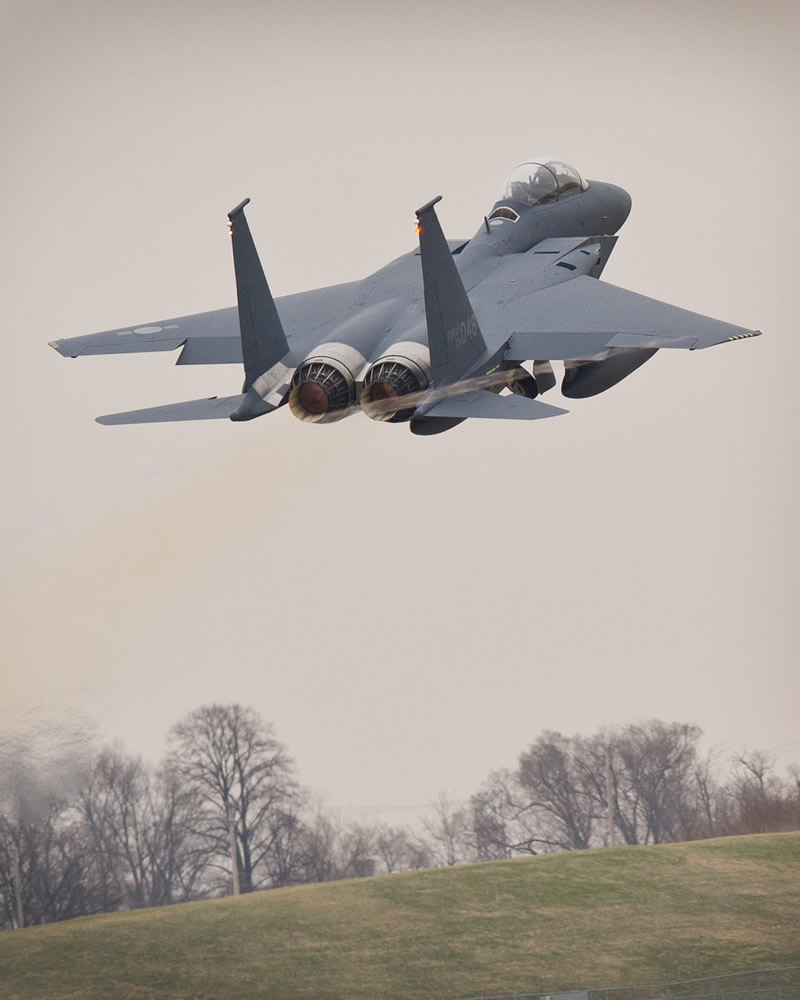
Nov 18/11: Industrial espionage? South Korea’s left-wing Hankyoreh newspaper reports that a combination of unauthorized examination of an F-15K’s “Tiger Eyes” IRST (InfraRed Search and Track) sensor, and concerns that a number of South Korean products contain copied technologies, has halted “strategic weapons exports” from the USA to South Korea. That reportedly includes the proposed RQ-4B Global Hawk deal.
The allegations are single-source, and written by Hankyoreh, but they are also quite detailed – and further investigation by DID indicates that they may have some substance. If the problem expands, or the current rift is not repaired, it could certainly change the F-X-3 competition. Read “US-South Korea Rift? Of Tiger Eyes & Industrial Spies” for more.
F-15K espionage
Oct 21/11: JHMCS-II. VSI unveils the upgraded JHMCS-II helmet mounted display, which would equip the stealth-enhanced F-15SE they’re offering in South Korea’s FX-III fighter competition. HMDs are tactical game-changers in aerial combat, and JHMCS-II is later revealed to be based on Elbit systems’ new Targo helmet, though it uses existing JHMCS systems inside the F-15 to ease integration. It offers a lighter and simpler, night-vision capable, all-digital HMD, with color LCD for the daytime display. Flight International | Aviation Week
Aug 20/11: #51-53. Boeing delivers 3 more F-15K-2 Slam Eagles to the Republic of Korea Air Force (ROKAF) at Daegu Air Base: aircraft 51, 52 and 53. The remaining 8 aircraft on the contract will be delivered through April 2012.
July 20/11: PAK-FA in F-X-3? As South Korea’s DAPA eases the criteria to try and foster more competition, DAPA’s Col. Wi Jong-seong says that “Russian aircraft manufacturer Sukhoi expressed its intent to compete in the fighter jet procurement project early this year.” The report quotes him as saying that Sukhoi’s T-50 PAK-FA will be up against Boeing’s stealth-enhanced F-15SE Silent Eagle, Lockheed Martin’s F-35 Lightning II, and EADS’ Eurofighter Typhoon. Assuming we don’t have an F-X-2 repeat, where all competitors but one drop out.
At this point, FX-III is being touted as a 60 jet buy of high-end fighters, with a budget of 8.29 trillion won ($7.86 billion). Eurofighter reportedly offered a better deal than the F-15K in F-X-2, but lost. The firm recently proposed to phase in Korean assembly for Phase III, with the 1st 10 made in Europe, the next 24 using Korean components, and the last 26 assembled in Korea. Korean Herald | Korea Times.
June 2/11: #49-50. F-15K-2s number 49 & 50 land at Daegu AB, ROK. Note that the ROKAF has fewer aircraft than that, due to an accident (vid. Jan 2/08 entry). After F-X-2 is finished, they’ll have 39 F110-powered F-15Ks from F-X-1, and 21 F100-powered F-15Ks from F-X-2. Boeing.
May 18/11: Cruise missile (still) wanted. South Korea is looking for advanced cruise missiles to equip its aircraft. They have been thinking about this for some time (vid. April 25/08 entry), but are now preparing an RFP.
South Korea’s F-15K Slam Eagles are so known because they can carry the AGM-84K Standoff Land Attack Missile – Expanded Response (SLAM-ER), a Harpoon derivative with extra range and dual GPS/IIR guidance. South Korea has previously expressed interest in Lockheed Martin’s stealthy AGM-158 JASSM cruise missile for its fleet of F-15Ks, and presumably for its KF-16s as well. That would give them a way of striking even North Korea’s most heavily defended targets if necessary, while remaining out of range of the North’s air defenses. Indeed, the ROK recently prosecuted an ex-ROKAF Colonel who leaked information about its JASSM plans.
JASSM’s long history of technical difficulties have reportedly given South Korea’s DAPA procurement agency pause, however, and an anonymous DAPA official now says that a broader RFP will go out in June 2011. Likely contenders include Lockheed Martin’s JASSM and JASSM-ER, Boeing’s SLAM-ER, MBDA’s Storm Shadow, the MBDA/Saab Taurus KEPD-350, and Raytheon’s JSOW-ER. Of these contenders, Boeing, Lockheed, and Raytheon have the advantage of owning platforms that have already been integrated for use on the F-16 and the F-15 Strike Eagle. MBDA’s products would incur integration costs, but it’s possible that their Storm Shadow’s combat-proven high-end capabilities, or KEPD-350’s combination of reliable capability and lower cost, could still make them attractive buys. Yonhap News | Flight International.
April 18/11: Eagle Snipers. Lockheed Martin announces that the ROKAF has received their AN/AAQ-33 Sniper surveillance and targeting at Daegu Air Base, South Korea, and immediately deployed them into full flight operations with the ROKAF’s F-15K fleet.
Subsequent inquiries with Lockheed Martin and Boeing reveal that South Korea ordered 17 Sniper pods in the FX Phase 2 contract, which included aircraft, radars, pods, etc. While the contract received formal government approval in April 2008, the actual signing date was in December 2007. In 2009, Lockheed Martin demonstrated the benefits of Sniper pod’s capability for ROKAF by successfully flying Sniper on Korean F-15K and the KF-16s, using a common Sniper pod software load. That common load allows operators to deploy the pod on various aircraft types, extending the pods’ flexibility and significantly reducing life cycle costs for mixed fleets.
March 15/11: #47-48. Boeing delivers F-15Ks 47 and 48 to the ROKAF at Daegu Air Base. The remaining 13 aircraft will be delivered through April 2012, but some will remain stateside for a brief interlude: 6 of the new F-15Ks are scheduled to participate in a 2012 international Red Flag exercise, held at Nellis Air Force Base, NV. Boeing April 5/11 release.
March 9/11: F-X-3. Defense Minister Kim Kwan-jin tells reporters that the ministry will push for a stealth fighter in F-X-3. The ROKAF s still pushing to get the program started in 2011, despite political delays. Recent announcements by China (J-20 unveiling) and Japan (F-35 negotiations) are adding urgency to the process, and may tip the scales in the ROKAF’s favor.
These trends seem to be pushing away from the Eurofighter, and may even handicap Boeing’s F-15SE Silent Eagle against Lockheed Martin’s F-35A Lightning II. The F-35’s biggest issue is likely to be its delivery dates, though cuts by other customers could open production slots. Chosun Ilbo | Korea Times.
2010
1st F-X-2 F-15K flies, and deliveries begin; ROKAF retired all F-4Ds, but still has other F-4s; KAI gets F-15SE sub-contract.
(click to view full)
Nov 8/10: +3 delivered. Boeing delivers 3 F-15K “Slam Eagles” from the 2nd contract to the Republic of Korea Air Force (ROKAF) at Daegu Air Base, South Korea. Aircraft deliveries under that contract will continue through 2012. Boeing.
Nov 3/10: F-15SE sub-contract. Boeing announces a Memorandum of Agreement with Korea Aerospace Industries Ltd. (KAI) for KAI to design, develop and manufacture the Conformal Weapons Bay (CWB). The agreement is an important step toward a broader F-15SE partnership that would make the ROKAF the type’s launch customer, and it also has implications for KAI beyond any F-X-3 program. These combination fuel tanks and weapon bays can be installed on either new-build or existing F-15 series aircraft, making it a potential upgrade for any existing F-15 customer.
KAI has experience working with Boeing. The firm builds the F-15K’s wings and forward fuselage, and works with Boeing on programs including the ROKAF’s pending E-737 AWACS planes, the A-10 Wing Replacement Program, and all Boeing commercial airplane programs.
April 28/10: F100 engine. Pratt & Whitney announces that:
“Last week, two Pratt & Whitney F100-PW-229 Engine Enhancement Package (EEP) engines powered the first flight of a F-15K aircraft planned for delivery to the Republic of Korea Air Force (ROKAF) later this year.”
Phase 1 F-15Ks are powered by GE’s F110 engines instead. The split buy leaves South Korea with flyable F-16 and F-15 fleets, even if problems with one engine type or the other ground equipped aircraft.
April 22/10: F-15K-2. Boeing conducts the first flight of F-15K41, the first of 21 F-15K Slam Eagles produced under F-X Phase 2. Boeing.
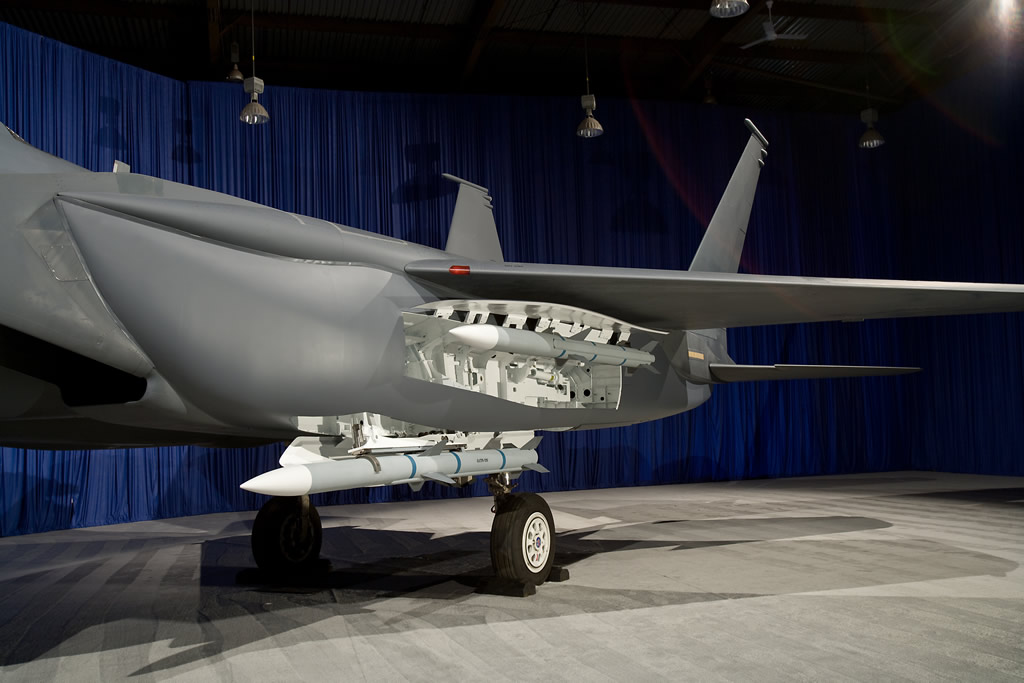
July 8/10: F-15SE. Boeing flies its stealth-enhanced F-15SE “Silent Eagle,” for the first time, demonstrating the weapon bay’s operation in flight. The next stage will involve firing an AIM-120 air to air missile from the recessed weapon bay, which is part of the plane’s conformal fuel tank.
Boeing executives are also quoted as saying that they expect export approval for the F-15SE, and have received interest for Korea. A Jerusalem Post report adds Israel to this list, citing several conversations between Israeli defense officials and Boeing about F-15SE capabilities, and possible interest in a cheaper Silent Eagle bridge buy that allows full Israeli customization, while the F-35A achieves greater cost certainty and lower production costs. The F-15SE could also fit South Korea’s interest in a KFX-3 development program, which would involve both Korean research and equipment, but use a foreign fighter as the base. Both South Korea (F-15K) and Israel (F-15I) already fly Strike Eagle variants, and the 2 countries have begun to cooperate in a number of advanced defense programs. This raises interesting speculation about the possibility of tripartite cooperation on the F-15SE. Boeing | Defense News | Jerusalem Post.
June 16/10: F-4Ds retired. The ROKAF flies the F-4D Phantom II for the last time. It still has F-4E/F fighters in inventory. ROK’s Ariang TV.
F-4Ds retired
2009
Stealth-enhanced F-15SE Silent Eagle unveiled; Issues with F-15K readiness rates; DAPA still dreaming of a local 5th generation fighter.

(click to view full)
Oct 19/09: F-15K. The Chosun Ilbo reports that the F-15K’s “concurrent spare parts” availability rate was just 16% in 2008, compared to 70-80% for other ROKAF fighters. As a result, cannibalization of flying planes for spare parts skyrocketed from 39 cases in 2006 to 203 in 2007, and 350 in 2008. While the ROKAF has maintained the target 80% availability rate for the fighters, it means that 5-6 of the aircraft are unavailable at any given time. The figures come from documents the ROKAF submitted to Grand National Party lawmaker Kim Jang-soo, who heads the National Assembly’s Defense Committee. Chosen Ibo:
“Cannibalization is prohibited, but authorization can be given by the top echelon when there is no other option… The Air Force cites a lack of forecasts of “components needs” because it claims to be in the early stages of deploying F-15Ks, and blames manufacturer Boeing for failing to hand over the relevant information.”
F-15K availability issues
July 9/10: F-15SE. Daily Tech reports that South Korea has formally asked for information on Boeing’s F-15SE, and the company is in the process of getting an export license so it can talk to them about the jet. Brad Jones, Boeing F-15SE program manager, said South Korea:
“…has asked for information on Silent Eagle so now we’ve applied for the [license] and we hope to get that before the end of the month… As soon as the export license is provided, then I can provide [marketing] information to a country.”
July 23/09: KF-X. Defense News reports that “South Korea Drops 5th-Generation Fighter Plan.” That title is actually misleading. The Weapon Systems Concept Development and Application Research Center of Konkuk University is leading the study, and the center asked Boeing, Eurofighter, Lockheed Martin and Saab about their views on the per-plane cost estimate of $50 million, as well as budget-sharing ideas and technology transfer.
Their specifications, however, most closely mirror the ($150-180 million) F-22 Raptor, indicating that some reconciliation with reality is still necessary. The center will wrap up the feasibility study by October 2009, and DAPA is supposed to issue a decision on the KF-X initiative by year’s end. That will determine whether KF-X competes with/ supplants F-X-3, or proceeds as a separate program.
DID: In the end, it became a separate program with far more reasonable requirements, and a joint venture with Indonesia. Read “KF-X Fighter: Pushing Paper, or Peer Program?” for full coverage.
March 17/09: F-15 Silent Eagle. Boeing unveils the F-15SE “Silent Eagle” variant. The aircraft has slightly canted vertical tails to improve aerodynamics and reduce weight, some minor radar shaping work, the addition of coatings to improve radar signature further, and a pair of conformal fuel tanks with cut-in chambers for 2 air-to-air missiles each, or air-to-ground weapons like the 500 pound JDAM and 250 pound GBU-39 Small Diameter Bomb. The tanks would be swappable for traditional conformal tanks if desired, and weapons could also be carried externally. BAE’s DEWS electronic self-protection system would be fitted, along with Raytheon’s AN/APG-63v3 AESA radar.
The intent appears to be to offer a “budget Raptor” in the $120 million range, with a basic radar signature that’s competitive with newer fighters like the similarly-priced Eurofighter Typhoon. Advantages over the F-15K would include better radar signature when internal carriage is used for long combat air patrols or limited precision strikes, a superior and proven AESA radar, longer range, and more total carriage capacity if necessary. On the flip side, it would not provide the same maneuverability options as canard equipped contenders like EADS’ Eurofighter or Dassault’s Rafale. The total package would come closer to parity with the SU-30MKI/M and subsequent versions of Sukhoi’s offerings, but may or may not measure up against longer-term opponents like Sukhoi’s PAK-FA or China’s J-XX. From Boeing’s release:
“Boeing has completed a conceptual prototype of the CFT internal-carriage concept, and plans to flight-test a prototype by the first quarter of 2010, including a live missile launch. The design, development, and test of this internal carriage system are available as a collaborative project with an international aerospace partner.”
2008
F-X-2 contract for 21 F100-powered F-15Ks; Weapon request; All 40 F-X F110-powered F-15Ks delivered; ROKAF looking for long-range cruise missiles.
(click to view full)
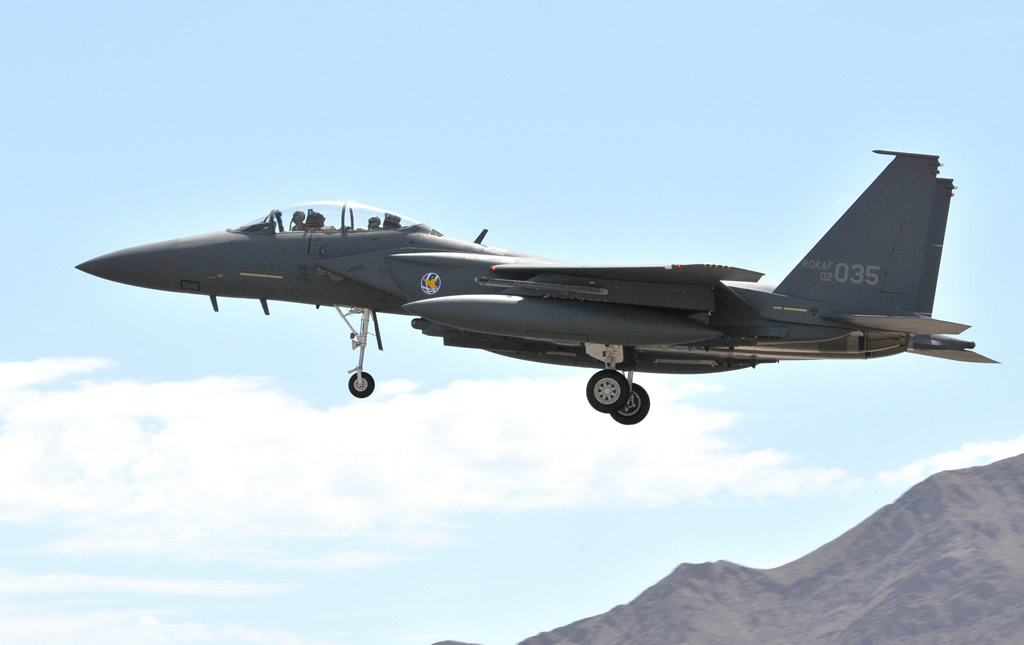
Oct 8/08: F-X. The Korea Times reports that Boeing has delivered the 40th and last F110-powered F-15K from the F-X Phase 1 order.
All F-X planes delivered
July 28/08: F-15K ECM. Electronic warfare is an integral part of the modern combat environment, and aircraft that lack this protection can find themselves blind and defeated in very short order. Strike aircraft also need offensive jamming systems, in hopes of disabling enemy radars and missiles.
Which is why Northrop Grumman Corporation has received a $74.6 million contract to provide 21 ALQ-135M electronic combat systems for the Republic of Korea Air Force’s F-15Ks. This is not a surprise, since NGC’s AN/ALQ-135 is the default system for F-15 variants around the world. AN/ALQ-135 offers a set of fully automatic, internally-mounted electronic combat system that can prioritize, manage, and defeat several enemy electronic systems at once. The latest configuration improves on earlier versions by replacing multiple processors with a system that adds memory and faster PowerPC chips, while using microwave power module (MPM) transmitter technology to reduce weight and boost performance. Deliveries will start in February 2010 and be completed by October 2011. NGC release.
June 20/08: Weapons. The US Defense Security Cooperation Agency announces [PDF] South Korea’s official request to buy a variety of weapons to equip its air force, in conjunction with the planned Direct Commercial Sale 21 more F-15K Slam Eagle fighters. The total value is up to $200 million, but will depend on specific contracts. The proposed order includes:
* 125 AIM-120C-7 Advanced Medium Range Air-to-Air Missiles (AMRAAM). This is the most advanced AMRAAM in large-scale production. A more advanced AIM-120D version is currently in testing.
* 14 AIM-120C Captive Air Training Missiles, with seekers but no rocket motors.
* 2 AIM-120C Dummy Air Training Missiles.
* 35 AGM-65G MAVERICK Missiles. They are especially designed for use against hardened tactical targets, and use imaging infrared (IIR) guidance to make them fire-and-forget.
* 6 TGM-65G MAVERICK Training Missiles.
* 280 Joint Direct Attack Munition (JDAM) tail kits, which convert Mk80 family bombs to GPS/INS guided smart bombs.
* 2 JDAM Load Build Trainers.
* 2 GBU-24 Laser Guided Bomb Units (2,000 pound PAVEWAY III), offering dual laser-GPS guidance. An order of this size for a new weapon usually suggests testing.
* 32 GBU-12 PAVEWAY II 500 pound laser-guided bombs.
* 2 GBU-10 PAVEWAY II 2,000 pound laser-guided bombs. Comes in both general purpose and hardened target penetrating version.
* 12,700 RR-170 Radar Jamming Chaff, used as a defensive system.
Plus containers, bomb components, spare/repair parts, publications, documentation, personnel training, training equipment, contractor technical and logistics personnel services, and other related support elements. The principal contractor is Raytheon in Tucson, AZ. South Korea should have no problem integrating these weapons, and there are currently 4 U.S. Air Force pilots and 5 maintenance Extended Training Service Specialists in the Republic of Korea. They are expected to remain for the next 5 years.
F-15K weapons request
April 25/08: F-X-2 contract. A South Korean government panel approves a 2.3 trillion won ($2.3 billion) contract to buy 21 F-15K fighter jets from Boeing for the country’s F-X-2 program. The new aircraft will be delivered between 2010 and 2012. See Jan 21/08 entry for more re: 21 aircraft instead of 20.
The 21 F-X-2 F-15Ks will feature one key difference from the ROKAF’s first 40: they will use the Pratt & Whitney F100-PW-229-EEP extended life engine, instead of GE’s F110. Compared to the F100-PW-229, the new EEP variant adds design improvements, HUMS prognostics and monitoring equipment, and a slight boost to 29,100 pounds of thrust. The selection of different engines for the same aircraft type is unusual, but Aviation Week reports that Pratt & Whitney offered better pricing, part production sharing, and warranty options. Korea’s Samsung Techwin and P&W will be partnered to produce the 46 engines, under a under a $220 million contract. F100s also equip the ROKAF’s F-16 force, and having similar engines in the F-15Ks offers both maintenance commonalities, and insurance that problems with either engine will not ground the entire F-15K fleet. On the flip side, maintenance arrangements will be more complex for the F-15 fleet, and certain F100 related problems could now ground a larger portion of the ROKAF’s tactical air power.
The other difference F-X-2 offers is a different approach to the contract. Negotiations reportedly reduced the required industrial offsets from 85% in F-X to 33%, in exchange for better pricing, more spare parts, and more responsibility to the contractor. Pratt & Whitney release | DAPA re: standard offsets practices | Korea Times | AFP report | St. Louis Today | Aviation Week | Armed Forces International | Flight International.
F-X Phase 2: 21 F-15Ks with F100 engines
April 25/08: New cruise missiles? Reports surface that Korea intends to arm its F-15Ks with new, longer-range cruise missiles. The ROKAF already uses Boeing’s Harpoon-derived SLAM missile, but is reportedly looking to buy another 400 missiles with a longer 400 km/ 250 mile range. Armed Forces International reports that no decision has been made, but The Korean Herald states that Korea has a very specific interest in Lockheed’s AGM-158 JASSM stealth missile. JASSM has been selected by the USA and Australia, and an even longer-range variant is under development. On the other hand, the program has been plagued with reliability issues; should the missile fail, other options in its class would include EADS’ KEPD 350 Taurus, Kongsberg and MBDA’s stealthy Storm Shadow.
Jan 28/08: KF-X reality check. The current program was scheduled to be followed by a KF-X program to develop and indigenous 5th generation/ stealth fighter to replace all F-5E Tiger IIs and F-4E Phantom IIs. After a feasibility study in 2008, the project would aim to produce the next-generation jets by 2020, with the goal of building 120 planes in a bid to secure proprietary technology and strengthen the country’s medium level fighter jet capacity. The goal is reportedly a single-seat, twin-engine plane with about 40,000 pounds of thrust from its engines, with more stealth than the Eurofighter Typhoon or Dassault Rafale, but less stealth than the F-35.
Now the Korea Development Institute has delivered a report concluding that the economic and industrial returns would be weak in proportion to its cost: about 3 trillion won/ $3 billion in returns, on a 10 trillion won investment. Papers quote foreign experts who estimate development costs of up to $12 billion. Korea’s DAPA said the KDI report was for reference only, and the project decision would include other factors such as export prospects and technological capacity.
Options like partnering with EADS on a stealthier version of the Eurofighter, for instance, might lower development costs and offer an additional option. Nevertheless, the comparable cost of buying, for example, 120 F-35 Lightning II fighters in 2020 is likely to be half this sum, and the difference would be very noticeable within South Korea’s defense budgets. With F-X-3 likely to select the F-35 as a platform, a merger with the K-FX program and negotiation of an industrial deal seems more likely. Especially given South Korea’s demographic crunch, which will begin to bite by 2020. Chosun Ilbo | Korea Times.
Jan 20/08: F-15K. The Korean Overseas Information Service reports word from a military source that Boeing may be moving the close the F-X2 deal by offering to deliver 21 F-15Ks for the contracted price, in order to replace the aircraft that crashed on Aug 6/06 due to pilot error. KOIS adds that:
“Korea has so far bought 30 F-15 fighters from Boeing under the contract for purchase of 40 F-15 fighter jets by the end of 2008. Seoul is currently negotiating with the U.S. airplane manufacturer to buy 20 more fighters.”Boeing might have made the proposal to express their thanks to the Korean government for its decision to purchase 20 more F-15 fighters,” a source said. “The Korean government may make a decision on the proposal late this month when the negotiations for the purchase of engines are to be concluded…The proposal by Boeing came as Korea revealed last year its plan to purchase from 2014 to 2019 about 60 fifth-generation stealth fighter jets such as the F-22 and F-35 of Lockheed Martin.”
At present, the F-35 Lightning II seems to be a far more likely future purchase than the F-22.
2007 and Earlier
F-X-2 approved, but Boeing is the only bidder… twice; F-15K maintenance deal; F-15K crash; F-22s – dream on.
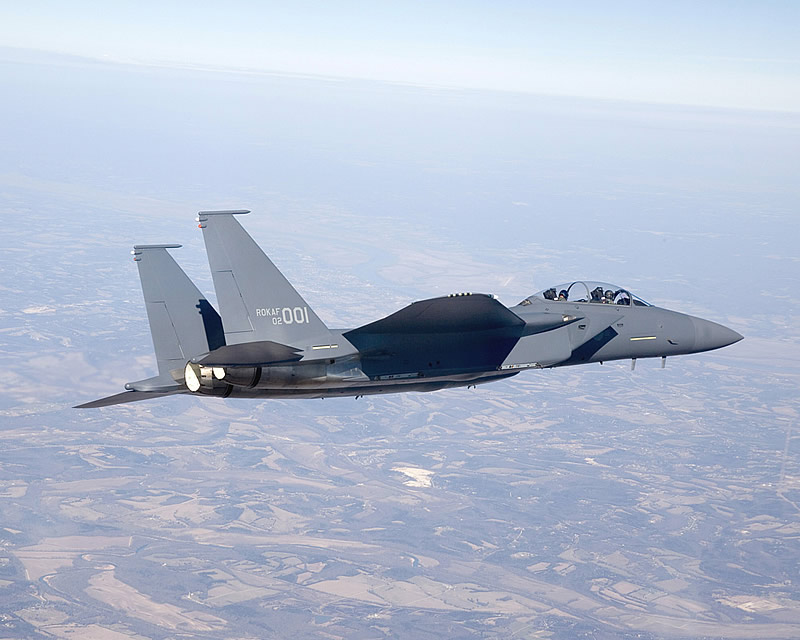
(click to view full)
May 10/07: F-X-2. “Boeing is the only company that has submitted a bid proposal as of 3 p.m. today, the deadline for the re-invitation to the open bidding,” a spokesman for DAPA said. KOIS report.
April 30/07: F-X maintenance deal. KOIS reports that Korean Air Co. has clinched a preliminary deal with U.S. aircraft manufacturer Boeing Co. to provide a wide range of maintenance and services, including training of military maintenance personnel, for Boeing-made F-15K fighters in the Republic Of Korean Air Force.
While this is the first time a private company has performed this kind of work for the ROKAF, they do have a solid base of experience. Over the last 25 years, the firm has overhauled about 500 USAF F-15s at its maintenance unit in Gimhae just south of Seoul.
April 27/07: Dreaming of F-22s. South Korea’s Yonhap news agency: “Seoul eyes advanced jets beyond F-15K.” In which ROK ministers discuss their ambition to procure fifth-generation fighter jets such as F-22 and F-35, made by Lockheed Martin of the United States, to keep up with Japan and China. An excerpt:
“The U.S. Congress has yet to make a decision on whether to lift the ban,” Defense Minister Kim Jang-soo told reporters here. “We will have to look at its decision.” He said South Korea needs to stop falling behind Japan and build up comparable air force firepower… In an interview with Yonhap News Agency earlier this week in Beijing, Kim admitted that the F-15 model is outdated in comparison with the F-22 and F-35. His comments were construed as hinting at the possibility that South Korea may delay the purchase of additional fighter jets.”
While F-35 procurement would be welcomed and might be a good timetable fit for a 3rd phase F-X around 2013-2015, F-22 exports would be a very different bowl of bulgogi. South Korea’s triangulation between North Korea and the USA has harmed ROK-US relations, and the country may now be considered a security risk in some quarters of the US defense establishment. Contrast this situation with Japan, whose larger sea lanes make a stronger prima facie case for a long-range, stealthy defensive interceptor force. Japan also worked to improve its diplomatic and military relations with the USA, stressing its reliability as an ally and collaborating on sensitive technologies like missile defense. Hence the current situation, in which F-22 or F-35 exports to Japan can be discussed with some expectation of success.
April 23/07: F-X-2 RFP re-issue. DAPA issues a public notice, once again inviting foreign bids again on its plan to procure 20 advanced combat aircraft by 2012. Boeing Co. of the United States turned out to be the only company that bid on the $2.4 billion contract, in response to the first request. The formal explanation session for the project will be held on April 30/07 at DAPA’s office in Seoul, ROK. Interested firms will have to submit bid proposals by 3 p.m. on May 10, 2007. KOIS report.
2nd F-X-2 RFP
April 20/07: Weapons. The US DSCA notifies Congress of South Korea’s request for 102 AIM-9X Sidewinder Missiles; Organizational and Intermediate-Level Maintenance AIM-9X spares; 26 Section-Level Shipping containers; Organizational and Intermediate-Level training; and AIM-9X missile and support equipment; and publications. The contract would be worth $55 million to Raytheon in Tucson, AZ. See DSCA release [PDF], which says that:
“The sale of the Sidewinder AIM-9X missile system is being addressed in conjunction with the planned sale of additional F-15K fighter aircraft.”
AIM-9X missile request
April 18/07: Eurofighter no-bid. A KOIS article quotes a defense ministry source to the effect that Eurofighter has informed the government that it will not participate in the project. “If Boeing submits a bid proposal by itself by today’s deadline, the Defense Acquisition Program Administration will invite bidders once again.” The source added that a second sole-source bid by Boeing would result in a contract award for 20 more F-15Ks.
March 11/07: F-X-2. KOIS reports that officials from the Boeing and Eurofighter attended a presentation meeting organized by DAPA on March 9th. It covered an outline of the second F-X project and operational requirements for candidate aircraft.
The 2 bidders who attended have said that they plan to submit their proposals to the agency by April 18/07, and the successful candidate will supposedly be chosen after test flights in February 2008. Dassault’s and Sukhoi’s non-attendance, on the other hand, may well be a sign that they will not be bidding. The KOIS report certainly treats the Phase 2 competition as a Boeing vs. Eurofighter competition from here on in.
Feb 9/07: F-15K. Korea Overseas Information Service (KOIS) confirms that Boeing will bid its F-15Ks again for F-X-2.
January 2007: F-X-2. Maj. Gen. Kim Deuk-hwan, director-general for aircraft acquisition programs at DAPA, offers a more detailed briefing on Phase 2 of the F-X program: 20 fighters, and DAPA aims to seal the deal by February 2008, after 6 months of evaluations and price negotiations between June and December 2007.
“We’ll draw up a detailed plan for the procurement program next month and open the bid in March [2007] by identifying the Air Force’s operational requirements to foreign competitors concerned…”
June 7/06: F-15K crash. A ROKAF F-15K crashes after its pilots black out. Flight International report:
“The South Korean air force, which plans to enhance its biological training structure and introduce G-LOC (g-force induced loss of consciousness) training equipment… A rash of G-LOC incidents which followed the US Air Force’s introduction of the F-15 and Lockheed Martin F-16 led to aeromedical studies that concluded the best prevention was training, particularly for pilots new to the aircraft… The air force says the F-15K left Daegu airbase at 19:42. The aircraft discharged simulated air-to-air weapons at 20:11 but, while manoeuvring to respond to an opponent’s attack, the crew sent a “knock it off” signal at an altitude of 11,000ft (3,350m) – the aircraft crashing 16s later, at 20:12:19.”
South Korea resumed flights with its Boeing F-15Ks on Aug 21/06, following the investigation. See also Chosun Ibo story | Dong-A-Ilbo story.
Crash
May 2006: F-X-2 approved. KOIS reports that the $2+ billion plan for F-X’s 2nd phase was approved during a defense ministry meeting as part of its mid-term arms acquisition project between 2007 and 2011. President Roh Moo-hyun endorsed the plan.
F-X-2 approved
March 27/06: F-15K SLAM test. An F-15K becomes the first F-15 to release a Standoff Land Attack Missile-Expanded Response (SLAM-ER) weapon, during certification testing at Point Mugu, CA, USA. For the test, the F-15K released the Boeing-built SLAM-ER at 25,000 feet at Mach 0.8 approximately 100 nautical miles from its target. The SLAM-ER maneuvered to its target and scored a direct hit.
Korea is the first international customer for the SLAM-ER, and the ROKAF has received the first 4 of 40 F-15Ks under the F-X program. The first 2 aircraft were delivered in October 2005, during the Seoul Air Show. The remainder will be delivered by August 2008. Boeing.
Appendix A: Original F-X-2 Candidates

(click to view full)
Back in November 2006, “South Korea to Buy Another 20 F-15K Fighters?” offered an analysis of the F-35 option being bandied about in various newspapers, and came to this conclusion:
“These factors make a Phase 2 ROKAF buy of F-35A Lightning II aircraft almost inconceivable for the 2007-2011 time frame; rather than opening the issue up for consideration, Lt. Gen. Kim Eun-Ki appears to have been saying “no” in an innocuous way…”
Fast forward to a Jan 17/07 Korea Times article, which quoted Maj. Gen. Kim Deuk-hwan as saying:
“Possible candidate fighters for the latest F-X project are Boeing’s F-15K, the Rafale of France’s Dassault Aviation, the Eurofighter Typhoon built by a consortium of European aerospace manufactures and the SU-35 of the Russian Aviation.”
The article adds:
“Kim, however, said the F-35 Lightening II of the U.S. Lockheed Martin would not be a competitor because the fifth-generation fighter does not meet the basic requirements of the Air Force regarding the number of engines, weapons-carrying capacity and combat radius.”
Not to mention delivery time. The F-35‘s armament capacity and combat radius has been questioned in other strategic contexts, most notably by defense critics in Australia. Its single-engine status has also been raised as an issue in Australia; and may become an issue elsewhere as well.
Given North Korea’s close overland proximity, South Korea could justify a set of requirements that would remove the two-engine and extended range qualifications. It could also justify weapons load requirements that would match up to the F-35’s mid-range capacity. It chose not to do any of these things, and so F-X-2 proceeded without the F-35 Lightning II as a contender.

(click to view full)
The F-15K won the original F-X competition, and remained the incumbent favorite for F-X-2. It’s capable of air-to-ground, air-to-air and air-to-sea missions in day or night, under any weather conditions. It can carry 23,000 pounds of payload and has a combat radius of 1,800 km. A single aircraft costs about $100 million. A follow-on F-15K win would extend the F-15’s production line until mid-2011, giving Singapore up to two more years to go ahead with its contract option for 8 more F-15SGs. The production extension would also keep the possibility of orders from other US allies alive.
Boeing was the only contender to submit a bid by the F-X-2 deadline. Whereupon DAPA once again called for international bids. Meanwhile, Korean Air received a contract to service the ROKAF’s F-15K fleet, deepening Boeing’s local partnerships and advantages. In the end, Boeing was the only qualified bidder, and won a contract for 21 planes.
There were other potential competitors.
Despite Boeing’s advantages, a Nov 1/06 KOIS article discusses a growing sentiment within Korea to diversify their defense sources. Dassault’s Rafale was the most obvious candidate – it reportedly beat the F-15K by narrow margins in the F-X’s Phase 1 technical evaluation, and a Korean export order would have been a major boon to the program as it looked for its 1st export order. The aircraft is a contender and known quantity, but Rafale’s narrow range of integrated weapons to date and complete lack of export orders (most recent loss: Norway) create an uncertain future for upgrades and additional investments. This is a major issue given the Korean F-X-2 fleet’s likely 20-30 year service life. Revealed corruption scandals, a CEO’s promise never to do business in South Korea again, and corporate legal action against the government haven’t removed the Rafale from consideration, but they did underline the dim nature of Dassault’s future prospects.
Dassault held to its promise, and did not attend the mandatory DAPA information session on March 9/07. Nor did they bid on Phase 2, when the competition was re-opened.

EADS/BAE’s Eurofighter is acquiring more multi-role capabilities, and despite export setbacks, its overall production and investment picture is good. Over 100 aircraft are now in service with various European air forces, and at the time of the F-X-2 competition, the plane was competing for additional orders in Norway, Denmark, and India.
Eurofighter offers a very strong air superiority choice that is widely believed to be superior to the F-15K or current SU-30 variants, along with growing secondary attack capabilities. According to KOIS, the Eurofighter lists its combat radius as 1,389 km/ 869 miles. It also offers a large and growing set of weapons options from American and European sources, and a crowded but proven national work-sharing structure.
Eurofighter GmbH was initially part of the F-X-2 bid process, but pulled out at a later date and did not submit a bid. Nor did they elect to incur further participation costs, after the ROK DAPA re-issued its solicitation.

F-15C, Mirage 2000
(click to view full)
During F-X-2, the Russian SU-35 also got attention, as an aircraft the South Koreans expressed public interest in considering. These aircraft have good range, large weapon loads, and performance that exceeds the ROKAF’s F-15Ks in a number of areas. At the time, however, only 14 had been produced as testbeds. The Sukhoi’s avionics set will create significant difficulties for weapons integration with Korea’s overwhelmingly US weapons, but Sukhoi will choose its own entry if it participates, and may decide to go with a variant of India’s SU-30MKI instead. This is arguably a more advanced aircraft than the SU-35, with thrust-vectoring capabilities and a mix of French/Israeli/indigenous avionics that could make integration of non-Russian weapons easier.
The SU-30 family has other potential attraction as well. Russia’s production agreement with HAL already offers a proven model for partial industrial offsets, and India’s indigenous avionics work creates a parallel set of opportunities for South Korea to insert its own locally-developed equipment. Geopolitically, Siberia’s treasure-trove of resources need foreign investment; warmer relations with Russia could offer opportunities in this area, and also create another diplomatic lever to use against North Korea.
These selling points, and the SU-30 family’s growing presence in a number of Asian countries, might make a Sukhoi bid more competitive than one might at first believe. Sukhoi did not attend the DAPA’s mandatory March 9/07 F-X-2 information session, however, and didn’t change their mind after DAPA has re-issued its solicitation.
Appendix B: Which SU-35?

(click to view full)
As one of our readers noted, DID’s articles seem to describe two different SU-35s. One is a mid-life modernized SU-27 Flanker, but we have also covered a much more re-engineered “SU-35” variant with canards, thrust vectoring, etc. that has been confused with (and possibly redesignated between) the SU-37. So… what do we mean by “SU-35”? By SU-27M, did DID mean the canard-equipped, ultra-modernized version?
DID explains the natural confusion regarding this fighter, and offers clarity and program news in “Russia’s SU-35: Mystery Fighter No More”
Additional Readings
Background: Chosen Fighters & Key Equipment
* Boeing – F-15K – Republic of Korea.
* Republic of Korea Air Force – F-15K.
* DID – Lightning Rod: F-35 Fighter Family Capabilities and Controversies.
* Boeing – Standoff Land Attack Missile Expanded Response.
* Taurus Systems – Taurus KEPD 350. Semi-stealthy medium-range air-launched cruise missile.
Background: F-X-3 Contenders
* Boeing Korea – F-15SE Silent Eagle page [in Korean].
* Flight International – F-15 Silent Eagle. Includes a roundup of changes, a cutaway, and more.
* Air Force Technology – Rafale Multi-Role Combat Fighter, France
* Flight International, via WayBack (April 10/05) – Beyond Rafale
* Air Force Technology – Eurofighter Typhoon Multi-Role Combat Fighter, Europe
* DID – Russia’s SU-35 Super-Flanker: Mystery Fighter No More
* DID – PAK-FA: India, Russia Cooperating re: “Fifth-Generation Fighter”. The PAK-FA, likely to be renamed SU-50.
News & Views
* East Asia Forum, via WayBack (Aug 3/13) – South Korean missile acquisition boosts strike capability. The MBDA/LFK KEPD 350 missile, and what it means in East Asia. Plus, why DID the USA stall the ROK on JASSM?
* Aviation Week, via WayBack (June 3/13) – South Korea Nears F-X Phase 3 Decision. Explains some of the considerations at work, in their view.
* The Korea Times (Jan 17/07) – South Korea to Buy 20 More Advanced Fighters by 2012
* Korea Overseas Information Service (Nov 1/06) – Korea Mulls Purchasing F-35 Fighter Jets for Next-Generation Project
* The Korea Times (Oct 31/06) – Seoul Mulls Buying F-35 Fighter Jets [dead link]
* Flight International (Aug 6/06) – F-15K crashed after pilots blacked out South Korea resumed flights with its Boeing F-15Ks on August 21 following the investigation. “The South Korean air force, which plans to enhance its biological training structure and introduce G-LOC (g-force induced loss of consciousness) training equipment… A rash of G-LOC incidents which followed the US Air Force’s introduction of the F-15 and Lockheed Martin F-16 led to aeromedical studies that concluded the best prevention was training, particularly for pilots new to the aircraft… The air force says the F-15K left Daegu airbase at 19:42. The aircraft discharged simulated air-to-air weapons at 20:11 but, while manoeuvring to respond to an opponent’s attack, the crew sent a “knock it off” signal at an altitude of 11,000ft (3,350m) – the aircraft crashing 16s later, at 20:12:19.”
* Flight International, via WayBack (March 18/05) – South Korea’s defence ministry approves 20 Boeing F-15K fighters to keep line alive until 2011
* Flight International, via WayBack (April 13/04) – South Korea urged to join JSF team to meet next fighter requirement
* Flight International, via WayBack (June 11/02) – Dassault slams South Korean ‘favouritism” “Dassault says it will boycott future South Korean defence competitions in protest at what it claims is Seoul’s predisposition towards buying US equipment…” It also launched legal action against south Korea’s government.
* Flight International, via WayBack (March 19/02) – Dassault drops South Koreans over F-X scandal. “The French manufacturer says it has broken ties with local trading company Comet International, which had been one of its agents in the campaign. The move follows the arrest by military police of South Korean air force Col Cho Joo-hyong on suspicion of receiving an unauthorised 11 million won ($8,400) payment from Comet. A second air force officer, who worked with Cho on the F-X evaluation team, has also been arrested…”
* Military.com Forums, via WayBack – F-15K/RoKAF Updates. An interesting and extensive collection of press releases (good) and republished articles (not good), covering F-15K program developments and Korean fighter program developments from March 2005 – end 2007.