

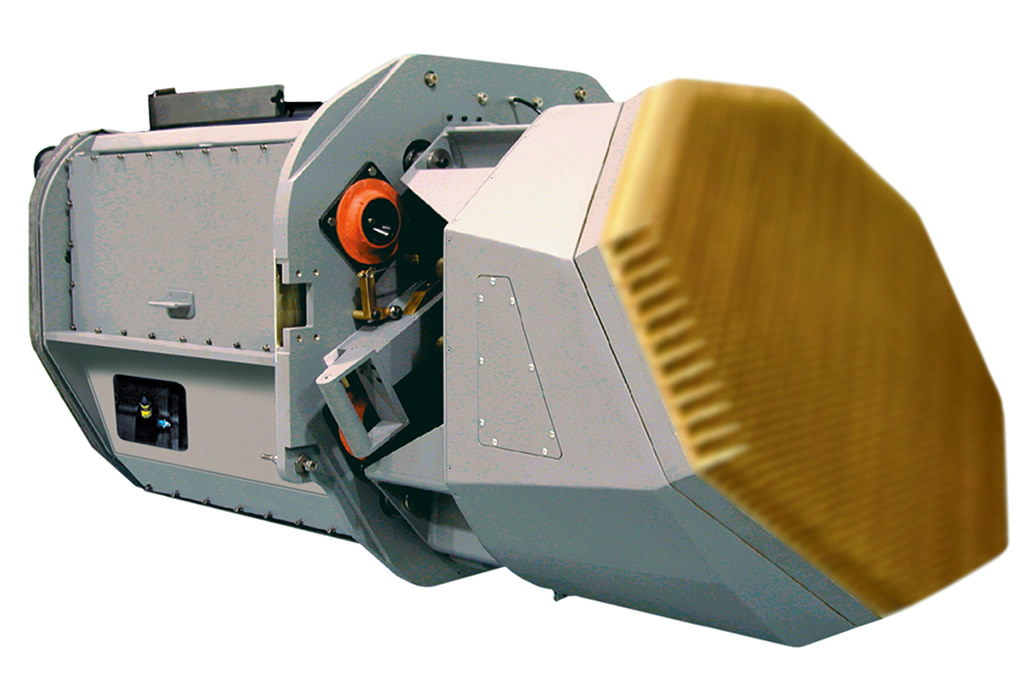
(click to view full)
The AN/APG-79 Active Electronically Scanned Array (AESA) radar began life as a replacement. Initial F/A-18 E/F Super Hornet production batches installed Raytheon’s all-weather, multimode AN/APG-73, but the APG-79 has intrinsic technical features that offered revolutionary increases in capability, reliability, image resolution, and range.
Unlike the APG-73 that equipped the first Super Hornets, the APG-79’s AESA array is composed of numerous solid-state transmit and receive modules that are fixed in place, eliminating a common cause of breakdowns. To move their beams, they rely on electronic changes in each module’s transmissions, creating useful interference patterns in order to aim, focus and shape their output. Other system components include an advanced receiver/exciter, ruggedized commercial-off-the-shelf (COTS) processor, and power supplies. With its open systems architecture and compact COTS parts, it changes what both aircrews and maintenance staff can do with a fighter radar – and does so in a smaller, lighter package.
AN/APG-79 & The AESA Advantage
The APG-79 Program

(click to view full)
The AN/APG-79 will replace Raytheon’s own AN/APG-73 on F/A-18 E/F Super Hornet Block II aircraft, and equips the derivative EA-18G “Growler” electronic warfare aircraft now entering service.
Since the original contract award in 2001, Raytheon employees say that the APG-79 program has met all its milestones on time. The system has performed well in flight tests, and is already in widespread use.
In April 2005, Boeing and Raytheon debuted an F/A-18F Block II Super Hornet equipped with the AN/APG-79 AESA radar system at a St. Louis ceremony. That was the first step toward fulfilling the Navy’s roadmap to expand the F/A-18E/F Super Hornet family’s future capabilities. In October 2006, the first Super Hornet Block II squadron attained the requisite “safe for flight” designation, certifying that they were ready for independent operations with the new equipment. Production installations and retrofits of older Super Hornets have continued, with the 300th radar delivered in November 2011.
The APG-79’s AESA Advantage
AESA: Technical Advantages

(click to view full)
The downside of AESA radars is that they cost more to buy. The cost of producing all those transmit/receive (T/R) modules has come down, but it’s still a more expensive choice initially. On the other hand, AESA radars offer a number of performance advantages, and appears to be a cheaper choice over the fighter’s entire lifespan.
American AESA radars feature a fixed array, with active electronic beam scanning that moves the beams rather than the radar array. That allows faster scans over a broader area. AESA radar can also commit clusters of T/R modules to each task, allowing pilots and crew to do something previous generation radars could not: conduct simultaneous air-to-air and air-to-surface operations, at a higher level of performance.
Raytheon personnel cited a 2-3x expected range improvement when moving from a mechanical phased array radar to Raytheon AESA radar with the same power input and the same aperture. This is due to better dynamics in the beams, and more efficient use of power by the array of individual T/Rs.
(click to view full)
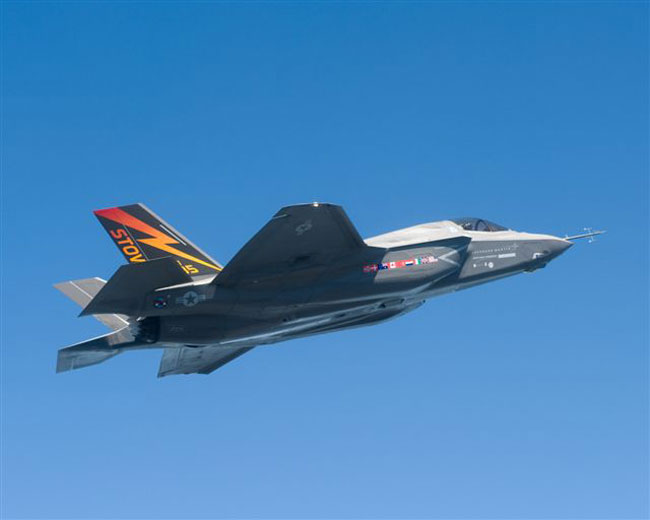
The final set of AESA technical advantages involves entirely new roles. AESA arrays’ depth of individually programmable T/R modules gives them the potential to send high-bandwidth communications, and even perform offensive electronic warfare functions. That latter capability suggests that the radar may start to become the fighter’s electronic warfare fulcrum, instead of relegating that role to drop in EW system “black boxes”. The dedicated EW systems would still be there, but emphasis would shift to coordination with the radar as both an emissions receiver and a compatible electro-magnetic emitter.
Raytheon sees this EW Center of Gravity role as more of a next-generation feature for integrated platforms, but the APG-79’s use in the EA-18G dedicated electronic warfare aircraft may give them some future development opportunities. That will be important, because Northrop Grumman’s APG-77 and APG-81 AESA radars have already been picked to equip the USA’s next-generation F-22 and F-35 fighters. The F-35 in particular features a lot more integration between its systems, and electronic warfare capabilities are among the top requests from F-35 customers. That creates demand-pull pressure on Northrop Grumman to move forward along these lines. If they do, it could create a competitive advantage for NGC that would affect Raytheon’s Electronic Warfare components business, as well as its radar orders.
AESA Advantages
AESA: The Tactical Advantage
[youtube:v=y8nc6zJ_rbw]
The tactical consequences are equally significant.
One is concealment. AESA radars also offer less emission “leakage” beyond their scanning cone, and can spread their signal emissions over a broad set of frequencies. Most people don’t think of the radar as part of a platform’s stealth level, but it is. Less side-lobe leakage improves the radar cross-section directly. “Agile beam” radars can both spread and switch frequencies as they go, which makes the radar very hard to detect, even when it’s on. Previous generation radars haven’t had that advantage, and turning on your fighter’s radar was kind of like the policeman who turns a flashlight on to find bad guys in a big warehouse. In all likelihood, they can see the light source before the policeman can use the beam to see them. Modern infantry solve this problem by using invisible infrared lights, which work with their night-vision goggles and allow them to see without being seen. Agile beam AESA radars offer the same advantage for a modern fighter jet.
In air-to-air mode, an AESA radar’s improved sensitivity can allow targets to be engaged at longer ranges. If political Rules of Engagement permit, fighters can launch at maximum range, taking full advantage of new longer-range air-air missiles and air-ground weapons. Raytheon employees could not comment on speculation that resolution improvements might allow APG-79 radars to lengthen the positive ID range for enemy aircraft. If that were true, however, it would solve a big problem. Rigid Rules of Engagement have often required positive identification, which has forced American planes to close to visual range before firing. This removes many of the benefits of having beyond visual range air-to-air missiles like Raytheon’s AIM-120 AMRAAM on board.
In air-to-surface mode, AESA radars offer a choice of same-resolution ground mapping at 2-3x longer standoff ranges, or improving the resolution “by faster than linear” margins (i.e. by more than 2-3x). Its SAR (synthetic aperture radar) images can be used to designate multiple targets at once, identify unplanned ground targets and engage them, and sort fast-moving naval targets despite the clutter created by waves and weather. With the previous APG-73 radar, only pre-planned ground targets, entered into the system before the mission began, could be attacked at full capability.
A US Navy R&D program called “Initiated Strike Accelerator” aims to “identify targets using Advanced Target Recognition,” using the AN/APG-79 radar and ATFLIR surveillance and targeting pod. If it succeeds, it could certainly help with ground strikes. The interesting question is whether these capabilities could also be used for air-to-air engagements, in order to break through the up-close visual identification Rules of Engagement.
APG-79: The Maintenance Advantage

(click to view full)
Beyond the front lines, AESA radars offer a number of operational and maintenance advantages.
One set of advantages involves long-term costs. Unlike predecessor radars like the mechanically scanned APG-73, American AESA designs to date have no moving parts to serve as sources of failure. Better yet, AESA radars’ inherent redundancy allows them to fly and perform well even if some of the individual T/R modules need replacing. As a rule, therefore, failed modules are just left alone. Raytheon touts a 10x – 15x improvement in overall reliability, and an expected flight lifetime of 10,000 – 15,000 hours. That compares to a 6,000 flight hour lifetime for their fighters, or 10,000 with life-extension programs. Fighters can take 30 years to exhaust 10,000 flight hours, so the maintenance savings make AESA radars a cheaper long-term option, in exchange for higher up-front investment.
The APG-79 adds one more operations & maintenance innovation: Line Replaceable Modules (LRM). Most radars, up to and including Raytheon’s APG-63v3 AESA that flies on advanced F-15s, have Line Replaceable Unit “black boxes,” that must be sent back to depots for diagnostics and repair. It’s expensive, and time consuming. In contrast, the LRM philosophy has the radar do most internal monitoring and diagnosis. Once its recommendations are delivered, a field technician on the front lines can open a box that used to be a depot-only LRU, and swap out an LRM that looks like a circuit card. Doing this in the field, on the front lines, really lowers costs and improves readiness.
As a bonus, the LRM philosophy makes options like processor upgrades, etc. similarly modular. Money and time must still be spent on testing durability for the new LRMs, ensuring software compatibility, and testing it with other radar components. Once that’s done, however, the hardware swap is much faster and cheaper, saving money that can be used on development work to take advantage of the new capabilities.
The AN/APG-79 has a downside, however, and it’s a big one. Pentagon testing reports consistently cite software problems with the APG-79, including instability and issues with its Built-In Test (BIT) functions.
A Wider Market? Spinoffs and Spin-back
(click to view full)
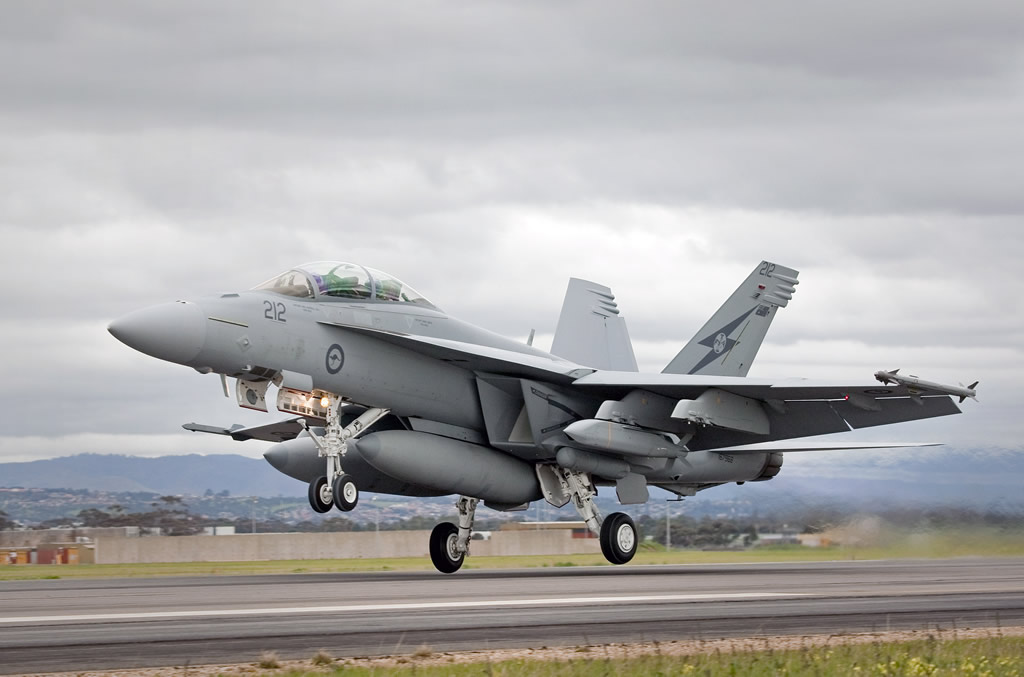
The U.S. Navy plans to buy over 400 AN/APG-79 AESA systems, and potential foreign sales span future Super hornet family customers, as well as the 7 countries that fly earlier-model F/A-18A-D Hornets. Australia’s purchase of 24 F/A-18F Block II Super Hornets made them the radar’s first foreign customer.
At present, the AN/APG-79 appears destined to equip only F/A-18 Super Hornet family aircraft, but co-investment in the APG-79 by the US Navy and by Raytheon has paid wider dividends beyond the program itself. Related technologies will equip American F-15s, and may equip a wide variety of American and foreign fighters as retrofits. Once those products are sold, Raytheon’s Common Radar Roadmap’s emphasis on commonality and modularity means that the technology influence will begin to cut both ways.
One spinout has already paid dividends for the USAF. Technologies from the APG-79 have found their way into the AN/APG-82v1 radars that will be retrofitted to USAF F-15E Strike Eagles, and the new radars will also share the APG-79’s LRM approach.
(click to view full)
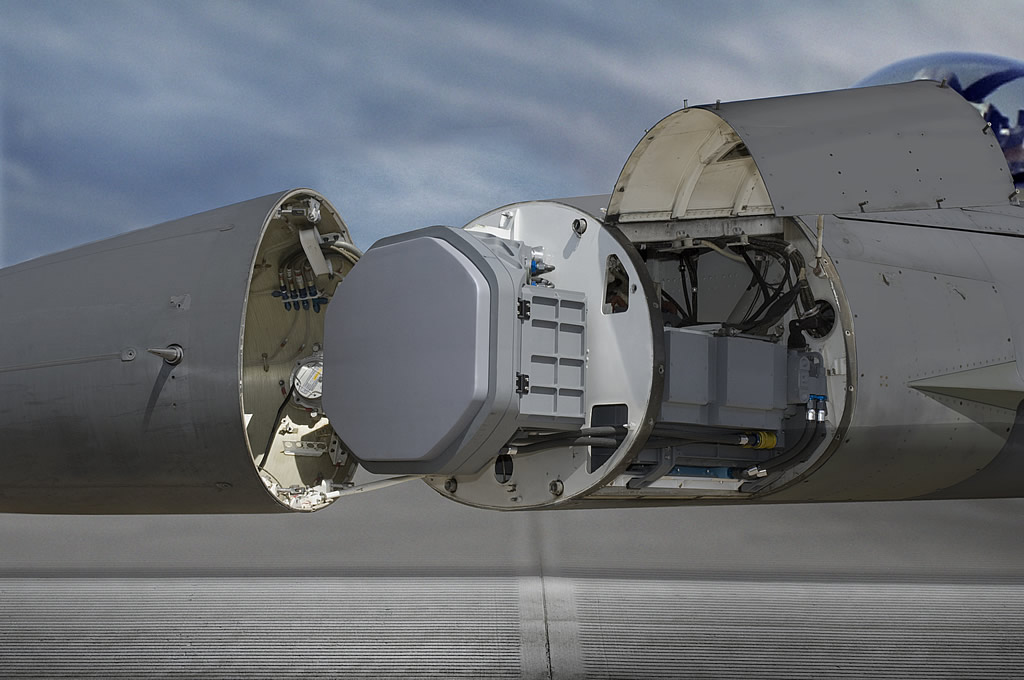
Raytheon’s resizable RACR AESA radar also owes the APG-79 a debt. RACR is aimed at a very large potential market, as a retrofit for F-16s and F/A-18 Hornets around the world, and as an option for new planes like the JAS-39 Gripen New Generation.
The essential idea of RACR is to leverage the AESA improvements described earlier, using APG-79 technologies. Keep the existing radars’ aperture and keep the same power requirement, allowing customers to just drop it in F-16 and F/A-18s without structural or power changes. The translation of received data is mostly handled within the RACR modules already, minimizing other changes to the receiving fighter. This same flexibility is possible for other platforms with previous-generation radars. Aperture sizes can be changed by changing the number and arrangement of T/R modules, and power back-ends can be varied. The continuum from the large APG-82, to the APG-79, to RACR, using closely related technology, demonstrates this. That makes RACR retrofits or forward-fits on other platforms equally plausible.
As related radars like the APG-82 and RACR are sold, they will bring benefits back to the APG-79. Raytheon employees told DID that it’s possible to develop a radar mode like RCDL high-bandwidth communications for a platform like the F/A-18E/F, and have it made available to RACR or APG-82 customers. The cost and effort would involve minimal engineering work, followed by LRM swap-in or software reprogramming, and check-out testing. The reverse would also be true, allowing innovations requested by RACR customers to find their way back to the APG-79 fleet.
Beyond the aerial domain, Raytheon employees added that the firm is involved in requests from other customers to bring the firm’s Common Radar Roadmap technologies and approach over to non-aircraft platforms. They won’t say who or what, yet. It’s worth noting, however, that Northrop Grumman’s G/ATOR multimode ground radar for the USMC uses technologies from its APG-81 AESA radar, so these kinds of conversions are very possible. Raytheon IDS’ President was the father of the APG-79, and that part of the firm is involved in systems like the USA’s Patriot missile system, as well as next-generation naval radars like DBR, and AMDR.
Contracts & Key Events
In many cases, the AN/APG-79 was bought by Boeing for its Super Hornet family planes, rather than being bought separately as Government-Furnished Equipment and given to Boeing. Direct contract exceptions are noted below, and radar retrofits do appear in Navy budget documents. With that said, many radar production contracts will be private and therefore unannounced. Based on Navy budget documents, recent costs per radar appear to be around $2.8 million.
FY 2014 – 2021

(click to view full)
September 24/21: AESA Light Raytheon Intelligence & Space has introduced a lightweight, affordable AESA radar in its lightest form factor ever. In addition to being a third of the weight of most modern AESA radars, the new compact radar also costs about half as much as typical fire control radars. Gallium Nitride technology is combined with an innovative packaging of its digital receiver/exciter and processor called CHIRP, and a unique air-cooled design.
August 19/21: Configuration B Raytheon won an $11.5 million order, which provides for the upgrade of 10 AN/APG-79 radars from Configuration A to Configuration B and continuing required efforts to repair Weapons Replaceable Assemblies identified as nonfunctioning following baseline testing. AN/APG-79 provides situational awareness, near-instantaneous track updates, and multi-target tracking capability for Marine Corps combat aircraft. Work will take place in Texas, Mississippi and California. Estimated completion will be in July 2023.
September 2/20: Wide Band Radomes General Dynamics Mission Systems won a $17.5 million deal for wide band radomes. The deal provides for production of wide band radomes supporting Air Force F-16 aircraft outfitted with Active Electronically Scanned Array (AESA) radars. AESA is a phased array system in which the beam of signals can be steered electronically in any direction, without physically moving the antenna. The antenna consists of an array of an array of small antennas each with a separate feed. The beam is steered by electronically by controlling the phase of the radio waves transmitted and received by each of the multiple radiating elements in the antenna. Work will take place in Marion, Virginia and expected completion date is by August 30, 2032.
August 7/20: Fomation Test Testers from the US Air Force’s 40th Flight Test Squadron and the 85th Test and Evaluation Squadron carried out the first four-ship F-16 formation test of the new APG-83 AESA radar on July 2. The mission objective was to determine if the jets experience interference when all four radars are active at the same time and to determine if there is signal improvement or degradation during the flight. According to the press release from Egline Air Force Base, the APG-83 is powerful enough that it allows the pilot to target a corner of a small building or the cockpit of an aircraft from beyond line-of-sight.
December 12/19: Spare Parts Raytheon won a $45.1 million delivery order for APG-79 Radar System spare parts. The AN/APG-79 active electronically scanned array (AESA) radar is an airborne radar made for F/A-18 E/F aircrafts. It is comprised of numerous solid-state transmit and receive modules to practically eliminate the possibility of mechanical breakdown. With a range of 150 km, the AN/APG-79 provides instantaneous track updates and multi-target tracking capabilities. The AN/APG-79 is strategically valuable because of its active electronic beam scanning. This feature allows the radar beam to be steered at nearly the speed of light, optimizing situational awareness and providing superior air-to-air and air-to-surface capabilities. Performance location will be California. Estimated completion date is December 30, 2022.
October 11/19: Spare Parts Raytheon won a $11.9 million delivery order for the procurement of 101 spare part units across nine assemblies used in support of the F-18 APG-79 Active Electronically Scanned Array radar system. The AN/APG-79 AESA radar is an airborne radar made for F/A-18 E/F aircrafts. It is comprised of numerous solid-state transmit and receive modules to practically eliminate the possibility of mechanical breakdown. With a range of 150 km, the AN/APG-79 provides instantaneous track updates and multi-target tracking capabilities. Its X-band radar allows for higher resolution imaging, helping with target identification and discrimination. The AN/APG-79 is the replacement radar for the AN/APG-73. Work will take place in Forest, Mississippi. Estimated completion date will be by December 2022.
March 29/19: Repair Services The US Navy awarded Raytheon Space Airborne Systems $58 million for repair services for the APG-79 active electronically scanned array radar system used on the F/A-18 Super Hornets. The deal has Raytheon fix 25 weapon repairable assemblies for the AN/APG-79. The APG-79 AESA radar system utilizes active electric beam scanning, which provides nearly instantaneous track updates and multi-target tracking capability. It features an entirely solid-state antenna construction, which improves reliability and lowers the cost compared to a traditional system. The radar allows the Super Hornet crew to fire the AIM-120 AMRAAM, while at the same time guiding several missiles to several targets widely spaced in azimuth, elevation or range. Its X-band radar allows for higher resolution imaging, helping with target identification and discrimination. Raytheon delivered the first low rate production APG-79 radar set to Boeing Integrated Defense Systems in Saint Louis on January 13, 2005. Up to 415 radar sets were expected to follow the first one to outfit US Navy’s Super Hornets beginning in September 2006. On 28 June 2005, Boeing awarded Raytheon a $580 million multi year procurement contract for 190 APG-79 radars to equip the US Navy’s F/A-18E/F and EA-18G aircraft. Raytheon will perform work in Forest, Mississippi and will approximately be finished by March 2022.
May 14/15: Raytheon announced that it has successfully flight-tested the APG-79(V) X AESA radar system, intended to extend the service lives of F/A-18C/D aircraft by 15 to 20 years. This latest test builds on a previous successful test in January, with new features such as Synthetic Aperture Mapping (SAR) announced with the company’s press release.
Sept 5/14: Support. Raytheon Co. in El Segundo, CA receives an $11.4 million firm-fixed-price delivery order, covering potential repairs to 288 radar component units consisting of 18 different weapons repairable assemblies (WRAs) used in support of the F/A-18 family’s AESA. All funds are committed immediately, using FY 2104 US Navy budgets.
Work will be performed in El Segundo, CA and is expected to be complete in March 27/15. This contract was not competitively procured in accordance with 10 U.S.C. 2304 (c)(l) nu US Navy NAVSUP Weapon Systems Support in Philadelphia, PA (N00383-10-G-005H, DO 7040).
June 12/14: Boeing in St. Louis, MO receives $10.2 million for cost-plus-fixed-fee delivery order to conduct an engineering change in the APG-79’s 5th and 6th Receiver Channel Wiring. Boeing is, of course, the F/A-18 Super Hornet family’s manufacturer.
One hopes NAVAIR will also get around to investing in a serious fix for the radar’s long-standing software issues (q.v. Jan 28/14).
All funds are committed immediately, using FY 2014 aircraft budgets. Work will be performed in Andover, MA (40%); Forest, MS (30%); El Segundo, CA (20%); and St. Louis, MO (10%), and is expected to be complete in January 2016. US Naval Air Systems Command in Patuxent River, MD manages the contract (N00019-11-G-0001, DO 0200).
Jan 28/14: DOT&E Testing Report. The Pentagon releases the FY 2013 Annual Report from its Office of the Director, Operational Test & Evaluation (DOT&E). The APG-79 is included, and the verdict isn’t great:
“AESA demonstrated marginal improvements during FOT&E from prior testing and provides improved performance relative to the legacy APG-73 radar. However, operational testing has yet to demonstrate a statistically significant difference in mission accomplishment between F/A-18E/F aircraft equipped with AESA and those equipped with the legacy [APG-73] radar.
….Though aircraft software has demonstrated acceptable suitability, the continued poor reliability of the AESA radar appears to be a result of software instability. The radar’s reliability and poor built-in test (BIT) performance remain deficient. The Navy did not attempt to address long-standing deficiencies in air warfare or AESA radar reliability with SCS H8E [the latest aircraft software build]. Overall, the F/A-18E/F/G is not operationally effective for use in certain threat environments, the details of which are addressed in DOT&E’s classified report issued following SCS H6E, SCS 23X, and AESA FOT&E.”
FY 2011 – FY 2013
300th radar delivered; 3rd & 4th radar retrofit contracts; Combat ID using AESA?

(click to view full)
Unless otherwise indicated, all contracts are issued by the Naval Air Systems Command (NAVAIR) in Patuxent River, MD to Boeing subsidiary McDonnell Douglas Corp. in St. Louis, MO. It’s Raytheon’s radar, but Boeing is the lead contractor for the aircraft, and assumes overall responsibility for buying the radars and integrating them into the aircraft. Workshare in “El Segundo, CA,” for instance, is actually Raytheon’s.
buying the radars and integrating them into the aircraft. Workshare in “El Segundo, CA,” for instance, is actually Raytheon’s.
Sept 26/13: ECP. Raytheon in El Segundo, CA receives a $34.7 million cost-plus-incentive-fee delivery order for AN/APG-79 Engineering Change Proposal 6381 Step 2’s flight test requirements. All funds are committed immediately.
Work will be performed in Andover, MA (50%); Forest, MS (30%); and El Segundo, CA (20%), and is expected to be completed in August 2016. US NAVAIR in Patuxent River, MD manages the contract (N00019-10-G-0006, 0047).
Sept 24/13: ECP. Boeing in St. Louis, MO receives a $6.9 million cost-plus-fixed-fee contract modification for engineering work associated with flight test requirements for AN/APG-79’s general purpose processor 3 upgrade. More computing power is always good, and it’s being conducted under Engineering Change Proposal 6381SOWR2 (see also June 20/12, though other ECPs have involved GPP-3), bringing its announced total to $38.1 million. All funds are committed immediately.
Work will be performed in El Segundo, CA (76%), and St. Louis, MO (24%), and is expected to be complete in February 2014. US Naval Air Systems Command, Patuxent River, Md., is the contracting activity (N00019-12-C-2006).
Sept 23/13: +15. Raytheon Co., El Segundo, CA, is being awarded $39 million for 15 AN/APG-79 AESA radar systems, as a firm-fixed-price delivery order. All funds are committed immediately. Note that FY 2013 fighter orders involve 38 radars (23 F/A-18E, 3 F/A-18F, 12 EA-18G), and final FY 2014 orders involve 21 radars (all on EA-18Gs).
Work will be performed in Forest, MS (80%), and El Segundo, CA (20%), and is expected to be complete in November 2015. US Naval Air Systems Command in Patuxent River, MD (N00019-10-G-0006, #0048).
15 radars
June 13/13: ECP. Raytheon in El Segundo, CA receives a $22.4 million order, covering 53 ECP-6279 retrofit kits for F/A-18 E/F and EA-18G aircraft. ECPs involve aircraft or component modifications, and the announcement doesn’t explain which one, but our coverage elsewhere (vid. Oct 07/09) shows that it involves improvements to the APG-79 AESA radar. All funds are committed.
Work will be performed in Forest, MS (80%), and El Segundo, CA (20%), and is expected to be completed in July 2015. US Naval Air Systems Command in Patuxent River, MD manages the contract (N00019-10-G-0006; delivery order 0036).
June 13/13: ECP. Boeing St. Louis, MO receives a $9 million firm-fixed-price delivery order for 30 ECP-6038 R2/R3 retrofit kits for the F/A-18 E/F aircraft, including radomes for the AN/APG-79 active electronically scanned array radar. A fighter’s radome nose cone is very specialized. It needs to allow the right radiation wavelengths to pass in and out easily, while remaining durable enough to handle the shocks and stresses of flight. All funds are committed immediately.
Work will be performed in Marion, VA (57%) and St. Louis, Mo. (43%), and is expected to be completed in January 2016. The Naval Air Systems Command, Patuxent River, MD manages the contract (N00019-11-G-0001).
June 27/12: Australia. Raytheon in El Segundo, CA receives a $6.7 million cost-plus-fixed-fee delivery order, for upgrades that will let the F/A-18 AN/APG-79 AESA radar commercial depot diagnose and validate repairs of RAAF APG-79s under the Foreign Military Sales Program.
Work will be performed in El Segundo, CA (70%), and Forest, MS (30%), and is expected to be complete in August 2014. US Naval Air Systems Command in Patuxent River, MD manages the contract on behalf of its Australian client (N00019-10-G-0006).
June 20/12: ECP. A $31.2 million cost-plus-fixed-fee, firm-fixed-price contract for APG-79 Engineering Change Proposal 6381SOW, for engineering related to the general purpose Processor 3 upgrade.
Work will be performed in El Segundo, CA (84%), and St. Louis, MO (16%), and is expected to be complete in May 2013. This contract was not competitively procured pursuant to FAR 6.302-1 (N00019-12-C-2006).
April 30/12: ECP. A $12 million firm-fixed-price delivery order for supplies and services associated with Super Hornet family Engineering Change Proposal 6038. Supplies include 42 R2/R3 retrofit kits for the AN/APG-79 radomes. Radomes are the “nose cone” of the aircraft, engineered to protect the radar and take the punishment that comes from their position on the aircraft, while letting radar waves through efficiently.
Work will be performed at the Marion, VA (57%), and St. Louis, MO (43%), and is expected to be complete in August 2015 (N00019-11-G-0001).
Feb 29/12: +16. Raytheon Space and Airborne Systems in El Segundo, CA receives a $45.3 million firm-fixed-price contract modification to fund 16 AN/APG-79 radars, to be retrofitted into F/A-18E/F Block I aircraft that were built with AN/APG-73 radars during production lots 26-29.
Work will be performed in Forest, MS (43%); Dallas, TX (29%); El Segundo, CA (27%); and Andover, MA (1%), and is expected to be complete in December 2014. $8.4 million will expire at the end of the current fiscal year, on Sept 30/12 (N00019-09-C-0003).
This is Raytheon’s 4th refit contract, and brings the order total to 73 of the planned 133 fighter refits in that sub-program. As one might guess, most APG-79s are fitted into new Super Hornet family fighters on the production line.
Refits: 16 radars
Feb 13/12: Combat ID? Pentagon budget documents (US Navy RDT&E BA1-3) show that in 2011-2012 the Initiated Strike Accelerator R&D program aimed to:
“…provide an advanced airborne capability to accurately identify targets using Advanced Target Recognition (ATR). These capabilities are utilizing the F/A-18 E/F, AESA (Active Electronically Scanned Array) Radar and ATFLIR (Advanced Targeting Forward Looking Infrared [pod]) sensors…”
It’s an interesting and logical extension of known AESA capabilities, and using the ATFLIR pod’s long-range cameras and geolocation as an additional input also makes sense. If it works, it would certainly help pilots strike ground targets with greater assurance. The big question is whether the resolution and algorithms would also be fine enough to remove the biggest obstacle to effective combat use of medium-range air-to-air missiles: Rules of Engagement that require close-in visual ID, because electronic IFF (Identification, Friend or Foe) systems aren’t considered reliable enough to avoid all friendly fire.
Nov 22/11: #300. Raytheon announces the delivery of its 300th AN/APG-79 radar to Boeing, for integration on U.S. Navy and RAAF Super Hornet family fighters.
#300
May 13/11: +42. Raytheon announces a contract from Boeing for 42 APG-79 radars, to equip Super Hornet family aircraft bought in the 2nd year of the 2010-2013 Multi-Year III program. Raytheon doesn’t always announce these contracts, but they can be assumed whenever Super Hornet family aircraft are ordered.
They don’t give cost figures. Work will be performed at Raytheon facilities in El Segundo, CA; Andover, MA; Forest, MS; and Dallas, TX.
42 radars – Boeing contract
May 2/11: ECP. A $12.6 million cost-plus-fixed-fee order for one-time engineering work associated with Engineering Change Proposal 6381 re: the AN/APG-79’s General Purpose Processor 3, and for the purchase of 12 engineering development modules.
Work will be performed in El Segundo, CA (65%); Forest, MS (20%); and St. Louis, MO (15%). Work is expected to be complete in January 2012 (N00019-11-G-0001).
Nov 30/10: Support. A $17 million ceiling priced order for AN/APG-79 radar repairs. Work will be performed in Forest, MS, and is expected to be complete by June 2012. This contract was not competitively procured by the US Naval Inventory Control Point in Philadelphia, PA (N00383-10-G-005H, #0001).
Nov 16/10: +19. Raytheon Space and Airborne Systems in El Segundo, CA receives a $52.25 million firm-fixed-price contract modification for 19 AN/APG-79 AESA radars, to be retrofitted into F/A-18E/F aircraft Lots 26-29.
Work will be performed in Forest, MS (43%); Dallas, TX (29%); El Segundo, CA (27%); and Andover, MA (1%). Work is expected to be complete in December 2013. Raytheon’s release adds that: “This third retrofit contract brings orders for the update of block II F/A-18s up to 57.”
Refits: 19 radars
FY 2009 – FY 2010
200th radar delivered; 2nd retrofit radars contract; Processor upgrade.
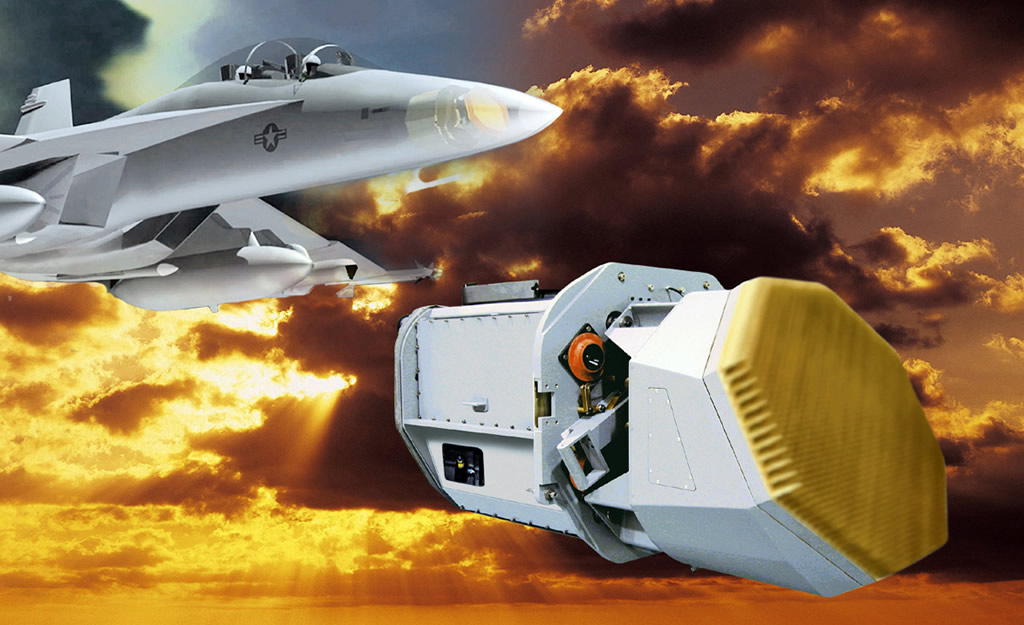
(click to view full)
July 21/10: #200. Raytheon announces that it has delivered is 200th APG-79 AESA radar to Boeing.
#200
April 8/10: +2. Raytheon Co. Space and Airborne Systems in El Segundo, CA received an $5.8 million delivery order against a previously issued basic ordering agreement for procurement of 2 AN/APG-79 AESA test radars for the F/A-18E/F and EA-18G aircraft.
Work will be performed in Forest, MS (45%), El Segundo, CA (35%), and Andover, MA (15%), and Dallas, TX (5%) and is expected to be complete in November 2011 (N00019-05-G-0008).
2 test radars
April 5/10: ECP. A $13.6 million cost-plus-fixed-fee delivery order against a previously issued Basic Ordering Agreement (N00019-05-G-0026) to complete the AESA waveform generator DDS II die parts obsolescence redesign engineering change proposal for the F/A-18 E/F aircraft.
Work will be performed in El Segundo, CA (87.7%), and St. Louis, MO (12.3%), and is expected to be complete in March 2011.
March 24/10: GPP. From FedBizOpps, solicitation #20047-10 deals with a reality of modern equipment. The equipment lasts long after the underlying electronics are completely obsolete. Imagine if your computer went 15 years without an upgrade. The USAF experiences that as an ongoing reality, for even longer periods. For the APG-79:
“The Naval Air Systems Command has a requirement for an engineering change to the AN/APG-79 Active Electronically Scanned Array (AESA)… upgrades the general purpose processor in order to support additional capability requirements. The AESA prime integrator is The Boeing Company, St. Louis, MO. The Navy intends to negotiate the engineering change as a sole source firm fixed price delivery order to the F/A-18 & EA-18G Basic Ordering Agreement with Boeing. Boeing will be responsible for the non-recurring and recurring engineering changes. Award of the delivery order will be made with authority under FAR 6.302-1, only one responsible source and no other supplies or services will satisfy agency requirements. Boeing has the requisite RADAR knowledge, experience, and technical data required to respond to this requirement. This notice of intent is not a request for competitive proposals.”
The result will almost certainly be a sub-contract to the radar’s manufacturer, Raytheon, but as noted above, Boeing owns final engineering responsibility.
Oct 7/09: ECP. Raytheon Space and Airborne Systems in El Segundo, CA received a $5.7 million modification to a previously awarded firm-fixed-price contract to perform engineering change proposal 6279. This will enhance the AN/APG-79 active electronically scanned array radar on a number of Lot 33 production aircraft: 14 F/A-18Es, 9 of the 2-seat F/A-18Fs, and 22 EA-18G Growler electronic attack aircraft.
Work will be performed in Forest, MS (42%); El Segundo, CA (36.8%); and St. Louis, MO (21.2%), and is expected to be complete in September 2011 (N00019-04-C-0014).
April 2/09: +19. Raytheon Co., Space and Airborne Systems in El Segundo, CA receives a $54.5 million firm-fixed-price contract for 19 AN/APG-79 active array radars. The radars will be retrofitted into F/A-18E/F Super Hornet aircraft built during Lots 26-29, replacing Raytheon’s mechanically-scanned APG-73 phased array radars.
Work will be performed in Forest, MS (43%); Dallas, TX (29%); El Segundo, CA (27%); and Andover, MA (1%) and is expected to be complete in December 2010. This contract was not competitively procured (N00019-09-C-0003).
As of Raytheon’s May 26/09 release, the firm had delivered 134 APG-79 radars for use in F/A-18 Super Hornet and EA-18G Growler aircraft, most of which have been slated for new aircraft. With this latest contract, orders for the APG-79 retrofits now total 38 of the planned 133 fighters. See also the related Dec 21/07 entry.
Refits: 19 radars
Oct 17/08: Support. An $11.2 million firm-fixed-price, definite-delivery/ definite-quantity modification under a previously awarded delivery order contract. The US Naval Inventory Control Point is buying APG-79 radar system spares.
Work will be performed in St. Louis, MO (40%); and El Segundo, CA (60%), and is expected to be complete by May 2011. This contract was not competitively procured (N00383-06-D-001J-0005).
FY 2007 – FY 2008
1st retrofit contract; Australia orders; R&D to expand capabilities; 100th radar delivered; 1st USN Super Hornet block II squadron declared ready.

(click to view full)
Sept 25/08: Support. An $8 million cost plus fixed fee delivery order under previously awarded contract to repair AN/APG-79 radars. Work will be performed at El Segundo, CA (90%) and St. Louis, MO (10%), and is expected to be complete by September 2009. This contract was not competitively procured by The Naval Inventory Control Point (N00383-06-D-001J, #0004).
July 1/08: #100. The US Navy and its industry partners, Raytheon and Boeing, mark the 100th delivery of the APG-79 Active Electronically Scanned Array (AESA) Radar at a celebration in Forest, MS. NAVAIR release.
#100
March 31/08: Support. A $38.5 million firm-fixed-price, definite-delivery/ definite-quantity contract modification under a previously awarded basic ordering agreement. The firm will deliver new spares to support the AN/APG-79 AESA radar. Work will be performed in El Segundo, CA (90%) and St. Louis, MO (10%), and is expected to be complete by August 2010. This contract was not awarded competitively by the Naval Inventory Control Point (N00383-06-D-001J, #0004).
Dec 21/07: +19. Raytheon Space and Airborne Systems in El Segundo, CA received a $54.8 million firm-fixed-price contract for the procurement of 19 AN/APG-79 active electronically scanned array radars to be retrofitted into F/A-18E/F aircraft Lots 26-29. The radars will replace the APG-73 radars currently installed in the aircraft.
Deliveries were: LOT-26: 48 aircraft, LOT-27: 45 aircraft, LOT-28: 42 aircraft, and LOT-29: 42 aircraft, for a total of 177 aircraft. A total of 42 Low Rate Initial Production (LRIP) APG-79 radars were delivered for installation in the aircraft production line, and the remaining 135 (now 133) aircraft will be retrofitted. This contract mentioned above is the 1st of 5 projected annual contracts to retrofit those 135 Lot-26 and above F/A-18 E/Fs with the APG-79.
Work will be performed in Forest, MS (43%); Dallas, TX (29%); El Segundo, CA (27%); and Andover, MA (1%) and is expected to be complete in Dec. 2009. This contract was not competitively procured (N00019-08-C-0001).
Refits: 19 radars
Oct 17/07: APG-79B An $11.2 million order against a previously issued basic ordering agreement for the nonrecurring engineering to upgrade 210 AN/APG-79 Active Electronically Scanned Array radar to the APG-79B configuration (includes 114 retrofit and 96 production upgrades). All Raytheon would say is that the B configuration is “an approved engineering change for a hardware modification.”
Work will be performed in El Segundo, CA (95%) and St. Louis, MO (5%), and is expected to be complete in September 2011 (N00019-05-G-0026).
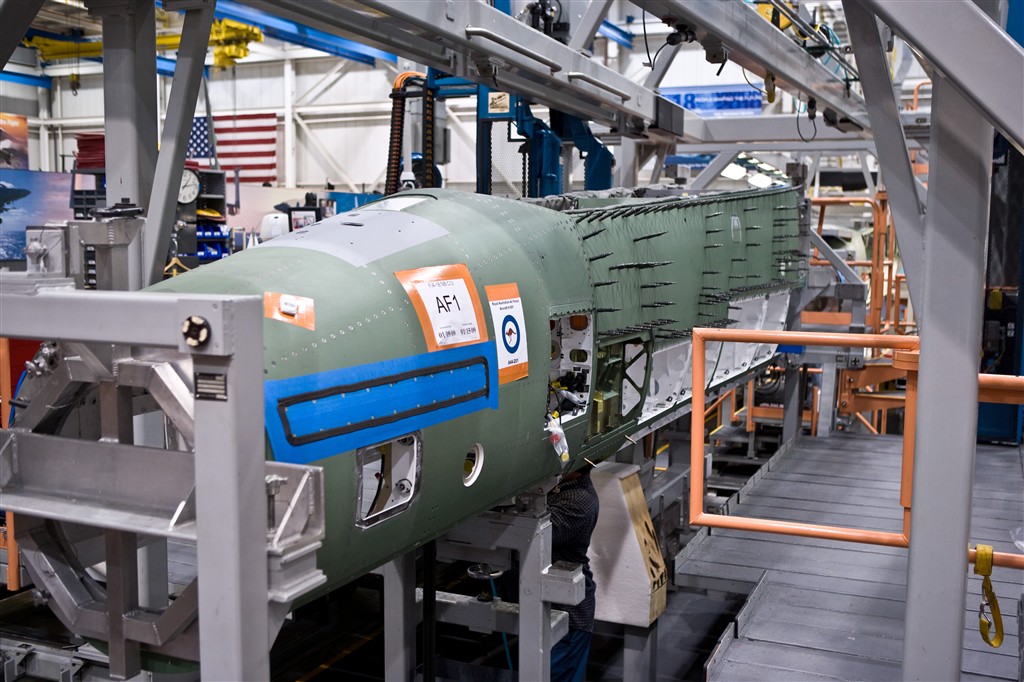
(click to view full)
July 11/07: Support. A $7.6 million firm-fixed-price, definite-delivery/ definite-quantity delivery order under previously awarded contract on July 10/07, for new spare parts to support the F/A-18 AN/APG-79 (AESA) radar. Work will be performed in El Segundo, CA (9%) and St. Louis, MO (10%), and is expected to be complete by October 2008. This contract was not awarded competitively by the Naval Inventory Control Point (N00383-06-D-001J, #0002).
July 5/07: ECP. Boeing received a $90.2 million modification to a previously awarded firm-fixed-price contract (N00019-04-C-0014) for a newly developed, additional capability for the AN/APG-79 Active Electronically Scanned Array radar. Work will be performed in El Segundo, CA (95%) and St. Louis, MO (5%), and is expected to be complete in September 2011
While these exact capabilities were not disclosed, DID’s top bets would be either the “big SAR” wide angle surface scans that will now be part of the production F-35 Lightning, or limited electronic warfare capabilities.
May 16/07: ECP. A $7.4 million modification to a previously awarded firm-fixed-price contract for the redesign of 5 monolithic microwave integrated circuits utilized in the AN/APG-79 AESA radar. Work will be performed in El Segundo, CA (95%) and St. Louis, MO (5%), and is expected to be complete in December 2008. Contract funds in the amount of $6 million will expire at the end of the current fiscal year (N00019-04-C-0014).
May 5/07: Australian order. Australia’s DoD announces a contract for 24 F/A-18F Block II Super Hornets and associated support systems. This will mean accompanying export orders for the AN/APG-79. Read “Australia Buying 24 Super Hornets As Interim Gap-Fillers” for full coverage.
Jan 8/07: F/A-18E/F Block II. Boeing announces delivery of the 11th F/A-18E/F Super Hornet Block II to Naval Air Station (NAS) Oceana, VA. Boeing is delivering AESA-equipped Super Hornet Block II aircraft to 2 squadrons at NAS Oceana: the Black Lions of VFA-213 and the Gladiators of VFA-106. In addition, there are two AESA-equipped Block 2 Super Hornets attached to VFA-122, the Flying Eagles Fleet Replacement Squadron (i.e. training squadron), at NAS Lemoore, CA.
Oct 27/06: F/A-18E/F Block II. The “Black Lions” of VFA-213 squadron have transitioned from their F-14D Tomcats, and become the first AESA-equipped F/A-18E/F Super Hornet operational squadron to attain “safe for flight” status, which clears it to independently fly and maintain its state-of-the-art Block II aircraft. Source.
Fully operational
FY 2005 – FY 2006
Sub-contract for 190 radars; LRIP-3 order; Super Hornet Block II rolled out; Tests with AMRAAM, JDAM, and APG-73 equipped Super Hornet cohorts demonstrate increased firing range, real-time targeting, and coordinate passing to non-AESA fighters.
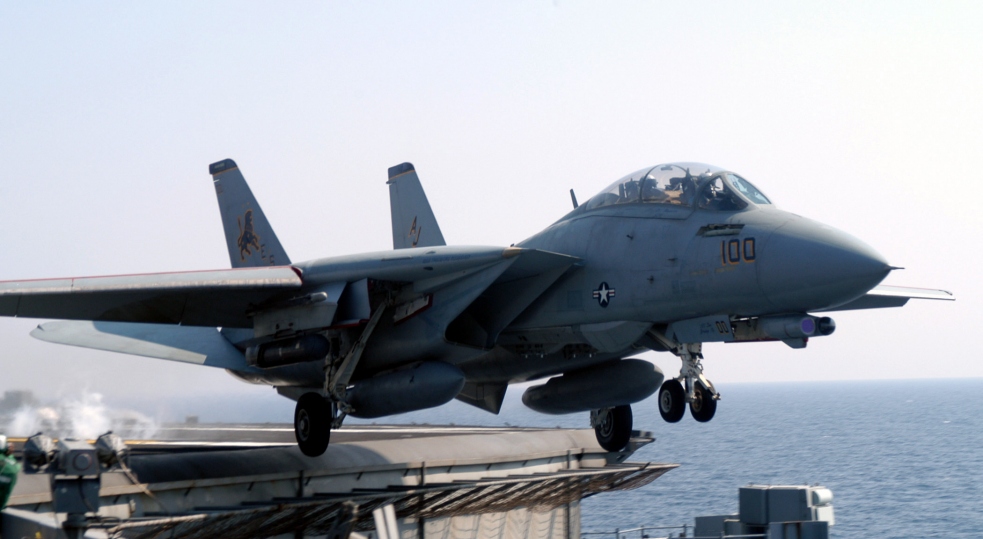
transitioning out
(click to view full)
Sept 21/06: Support. Raytheon Co. Space and Airborne Systems in El Segundo, CA received an $11 million delivery order against a previously issued basic ordering agreement for system test equipment (STE) for the AN/APG-79 AESA radar for the F/A-18E/F and EA-18G aircraft. The STE will be used to test radar modules returned for repair to determine root cause of failures and to return the radars to the Fleet in a ready for issue status.
Work will be performed in El Segundo, CA and is expected to be complete in September 2009. Contract funds in the amount of $6.4 million will expire at the end of the current fiscal year (N00019-05-G-0008).
April 18/06: Testing. Boeing announces a successful demonstration of the F/A-18E/F Super Hornet Block II’s to provide targeting coordinates to other aircraft using the Raytheon APG-79 Active Electronically Scanned Array (AESA) radar system:
“During the test at the Naval Air Weapons Center at China Lake, Calif., an AESA-equipped F/A-18F created a long-range, high resolution synthetic aperture radar map and designated four closely-spaced stationary targets. The aircraft then data-linked two target designations to non-AESA equipped Super Hornets, which successfully delivered four 2,000-lb. Joint Direct Attack Munitions (JDAM). All four weapons impacted the targets within lethal distance. The targeting Super Hornet then used the AESA to provide highly detailed bomb damage assessments to confirm the hits.”

Dec 5/05: Testing. Raytheon states that its a Super Hornet equipped with its APG-79 radar successfully delivered multiple JDAM GPS-guided smart bombs on target, using real-time targeting coordinates derived from a high resolution SAR (synthetic aperture radar) image taken by the radar. The tests were conducted at the U.S. Navy’s China Lake facility. They add that the release of multiple precision-guided weapons from a single radar SAR map is a first, and note integration with other equipment as well:
“To further demonstrate the synergy of the onboard Raytheon sensors, the JDAM test also employed the ATFLIR (Advanced Targeting Forward-Looking Infrared) system to provide imagery of the targeting area. Interfacing seamlessly with the APG-79, ATFLIR recorded the impact of the weapons against two diverse targets, confirming simultaneous weapon delivery while providing post-impact bomb damage information…
The program has also been highly successful during the recent air-to-air live fire demonstrations last month in which an AMRAAM was successfully deployed. This proved that weapons delivery from an AESA equipped F/A-18 can now be executed at ranges not possible before. “In the past, the weapon’s capability exceeded that of the aircraft. The missile could reach the target, but the radar couldn’t see it. Now, with the APG-79 radar, the aircraft’s capability exceeds that of the weapon, and this gives us an enormous advantage when prosecuting a mission,” said Capt. Aaron “Slime” Bowman, U.S. Navy AESA program manager for the F/A-18.”
Oct 31/05: Testing. Raytheon discusses the results of multiple live firing tests this month using inert AMRAAM and JDAM weapons. Both AMRAAM (Advanced Medium-Range Air-to-Air Missile) and JDAM (Joint Direct Attack Munition) live fire tests were successful at proving out the radar’s air-to-air and air-to-ground targeting capabilities. How does this work? Raytheon explains:
“The AMRAAM engages long-range targets after launch by incorporating targeting data from the APG-79 AESA. During flight the AMRAAM receives updated tracking/targeting information from the APG-79 AESA radar via data link from the launch aircraft… The JDAM “Smart Weapon” uses the APG-79 AESA radar to provide precise targeting coordinates. The pilot uses a high resolution SAR (synthetic aperture radar) image to identify the intended target. The target is designated from the image; the target coordinates are passed to the JDAM weapon; the weapon is released and flies under GPS navigation to impact, thus completing the kill chain. Prior to the introduction of the APG-79 radar, it has only been possible for pre-mission planned ground targets to be attacked. Now, with the Active Electronically Scanned Array (AESA) APG-79, real time, time sensitive ground targets can be identified and engaged.”
The APG-79 radar is currently in developmental flight testing and initial operational assessment. The program is expected to transition into OPEVAL (operational evaluation) on schedule in early 2006.
June 28/05: Main sub-contract. Raytheon Co. announces a $580 million, multi-year subcontract to deliver 190 AN/APG-79 AESA net-centric enabled radar systems for the Boeing Co. over the next 5 years, for installation in production F/A-18 E/F Super Hornet fighter planes. This successfully concluded negotiations for 190 radars from low rate initial production (LRIP) lots 3 & 4, through full rate production lots 1-3. These radars will serve as retrofits and also equip new fighters on the production line.
The first low rate initial production APG-79 AESA radar designed for the F/A-18E/F was delivered to Boeing IDS (Integrated Defense Systems) in January 2005. Following successful installation and testing, Boeing plans to deliver the first AESA-equipped F/A-18F to the U.S. Navy in April 2006. Sources: Raytheon release, June 29/05.
Boeing APG-79 production sub-contract: 2005-2010
June 23/05: +22. a $102.4 million modification to a previously awarded firm-fixed-price contract, exercising exercise an option for 22 AN/APG-79 low-rate-initial-production III (LRIP III) Active Electronically Scanned Array (AESA) radar systems for the F/A-18E/F Super Hornet aircraft. Work will be performed in El Segundo, CA (88%); St. Louis, MO (6%) and Marion, VA (6%), and is expected to be complete in December 2007 (N00010-03-C-0054).
LRIP-3: 22 radars
April 21/05: Rollout. Boeing debuts the F/A-18E/F Block II Super Hornet equipped with the APG-79 AESA radar system at a ceremony at Boeing’s St. Louis, MO facilities. The aircraft will be used as part of the AESA radar flight test program prior to entering Operational Evaluation (OPEVAL) in 2006.
The AESA radar, built by the Raytheon Corporation of El Segundo, CA is part of the F/A-18E/F Block II upgrade, which includes integration of advanced mission computers, high speed data network, cockpit controls and displays, environmental control system upgrade and forward fuselage affordability improvements. It works with several existing elements of the weapon system, such as the stores management system, the gun director, and AIM-120 and AIM-9 missiles, to enhance the lethality, survivability and affordability of the F/A-18E/F. The AESA radar and the Block II upgrades are being delivered under 2 multi-year contracts. Sources: Boeing release, April 21/05.
Super Hornet Block II rollout
FY 2001 – FY 2004
From concept, to 20 LRIP orders.

(click to view full)
Feb 5/04: +12. A $61.8 million modification to a previously awarded fixed-price-incentive contract (N00019-03-C-0054), exercising an option for 12 AN/APG-79 low-rate initial production II (LRIP II) AESA radar systems for the F/A-18E/F Super Hornet aircraft. Work will be performed in El Segundo, CA (70%); St. Louis, MO (25%); and Marion, VA (5%), and is expected to be complete in September 2006. Boeing’s release adds that:
“Production of the LRIP2 radar is scheduled to begin March 2004, with delivery of the first LRIP2 radar-equipped aircraft scheduled for December 2005. The radars will be installed in selected two-seat “F” model Super Hornets. The radar system currently is undergoing evaluation testing at Naval Air Systems Command, China Lake, Calif.”
LRIP-2: 12 radars
Sept 3/03: +8. A $49.5 million fixed-price-incentive contract for 8 AN/APG-79 low-rate-initial-production AESA radar systems for the F/A-18E/F Super Hornet aircraft (q.v. Jan 15/03). Work will be performed in El Segundo, CA (70%); St. Louis, MO (25%); and Marion, VA (5%), and is expected to be complete in September 2006 (N00019-03-C-0054).
Boeing’s release adds that: “Production of the LRIP1 radar could begin as soon as next month, with delivery of the first LRIP1 radar scheduled for early 2005.”
LRIP-1: 8 radars
June 30/03: Testing. An F/A-18 Super Hornet test aircraft carrying the APG-79 Active Electronically Scanned Array radar system completes several test flights with the radar operating at Naval Air Systems Command China Lake, CA. They are the first test flights with this AESA radar. Boeing release.
Jan 15/03: A $14 million ceiling-priced order against a previously awarded basic ordering agreement (N00019-97-G-0037) to buy Time Critical Parts for 8 low-rate initial production AN/APG-79 AESA radars for the F/A-18E/F Super Hornet. Work will be performed in El Segundo, CA (90%) and St. Louis, MO (10%), and is to be complete in June 2003.
Nov 20/02: Radar Rollout. Boeing and subcontractor Raytheon roll out integrated APG-79 Active Electronically Scanned Array (AESA) radar in a ceremony at Raytheon facilities in El Segundo, CA. Boeing release | Raytheon release.
AN/APG-79 rollout
Feb 8/01: A $324.5 million cost-plus-fixed-fee, award-fee contract for the design, development, fabrication, integration, installation and test of 5 full and 2 partial AN/APG-79 Active Electronically Scanned Array (AESA) radar engineering development models for the F/A-18E/F Super Hornet aircraft.
Work will be performed in St. Louis, MO (59%) and El Segundo, CA (41%), and is expected to be complete by January 2006. This contract was not competitively procured (N00019-01-C-0074).
APG-79 development contract
Additional Readings
DID would like to thank Raytheon personnel for their insights and interviews. Special thanks are due to Larry Seeley and Kevin Gabriel.
* Raytheon – AN/APG-79 AESA Radar. See also Raytheon AN/APG-79 Product brochure [PDF, 2007 capture]
* Raytheon – Raytheon’s Revolutionary AESA Technology. Includes links to their various AESA radar designs and capabilities, and adds as a list of related press releases at the bottom. Raytheon’s AESA fighter radars fly on the USA’s F/A-18 Super Hornet (APG-79) and F-15 Eagle/ Strike Eagle (APG-63v2-3, APG-82) fleet.
* Northrop Grumman – AESA Radar: Revolutionary Capabilities For Multiple Missions [PDF format]. Details a number of the radar type’s characteristics that make it special, and offers insights into some of the developments within the AESA field. NGC makes AESA fighter radars for the F-16 Block 60 (APG-80), F-22 (APG-77), and F-35 (APG-81) platforms.
* DID (Dec 18/05) – AESA Comlinks. Dr. Carlo Kopp has already done a fair bit of work in the field, beginning with his PhD thesis in Melbourne in 1999.
* Aviation Week & Space Technology (Dec 11/05) – Talking Radars.
* DID (Oct 24/05) – Supersonic SIGINT: Will F-35, F-22 Also Play EW Role?
* Australian Aviation (June 2002) – Active Electronically Steered Arrays: A Maturing Technology.
Related Super Hornet Contracts
* DID FOCUS Article – Super Hornet Fighter Family MYP-III: 2010-2013 Contracts.
* DID Spotlight Article – The USA’s 2005-2009 Multi-Year Hornet Procurement Contract.
* DID FOCUS Article – EA-18G Program: The USA’s Electronic Growler.
* DID Spotlight Article – Australia Buying 24 Super Hornets As Interim Gap-Filler to JSF. They will be 2-seat F/A-18F Block II aircraft, with the APG-79.