


(click to view full)
In 2005, the US military and NASA announced the kickoff of the Army-led Joint Heavy Lift program, with the award of 5 contracts for the Concept Design and Analysis (CDA) of a Vertical Takeoff and Landing (VTOL) Joint Heavy Lift (JHL) rotorcraft. This is a futuristic aircraft that’s imagined as having the C-130 Hercules aircraft’s 20 ton cargo capacity, but with the ability to take off and land like a helicopter. No current US military helicopter platform even comes close to that vision, and so the competitors are deploying some radical and different technologies in their attempts to meet these goals.
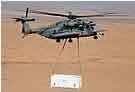
At the same time, the US Marine Corps’ vital medium-heavy lift CH-53E Super Sea Stallion helicopters are beginning to to wear out their airframes. Hence the HLR Heavy Lift Replacement (HLR) program, aimed at fielding new-build CH-53K aircraft beginning in 2013-2015. The US Air Force, meanwhile, has its AJACS program, which aims to produce a C-130 replacement beginning around 2020.
All 3 programs may face a rough ride ahead. Runaway cost growth on numerous US defense programs, operational demands, and a looming demographic crisis in social programs all work to create budget squeezes, and hence pressures for program consolidation. The USMC’s affordable CH-53X track upgrade was very nearly sidetracked via a merger with he R&D heavy, schedule-uncertain, JHL, and may not be in the clear yet. The USAF’s AJACS program to replace the C-130 Hercules with a modern 20+ ton transport is also facing scrutiny of this sort, and those pressures, too may increase. Conversely, it is also possible that the JHL program could find itself edged out by a pair of more conventional helicopter and aircraft solutions from the USMC and USAF. DID notes the technologies, the politics, and progress to date.
Recent news includes a report that shows just how far away the US military is from a viable competition and winning design.
The JHL Program
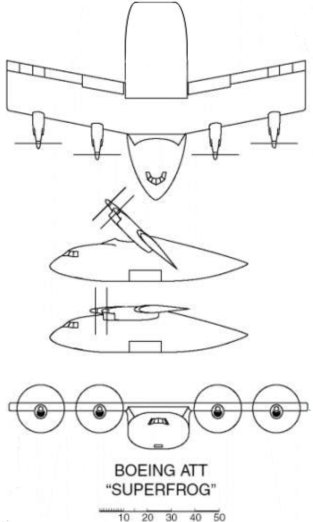
A string of similar programs have preceded JHL, but most have met an early demise at the hands of mergers or restructurings. In November 2001 the Army recast the Future/Joint Transport Rotorcraft (FTR) program to replace its CH-47 Chinook heavy-lift helicopters as the Air Maneuver Transport/ Advanced Maneuver Transport (AMT) program, for instance. which included the Advanced Tactical Transport (ATT) option. The JHL program is the current incarnation, though it is ‘joint’ in name only… for now.
The 5 CDA awards, made in September 2005 under the Army’s Aviation Applied Technology Directorate (AATD) Broad Agency Announcement (BAA) W911W6-05-R-0004, are for the conceptual/preliminary design of a baseline aircraft. They also play around with the impact of variations in payload, range, environmental conditions, and shipboard compatibility, in order to understand the possible impacts on aircraft size, performance, operational suitability, cost, schedule, and development risk.
The baseline design specification is to maneuver a Future Combat Systems vehicle/ Stryker family vehicle/ LAV APC over a 250 nautical mile (nm) radius, under 4000 foot density altitude and 95 degree Fahrenheit (4k95) conditions, from/to land or sea bases and operating areas. Eight specific excursions to these conditions will also be investigated that include lighter and heavier cargo (16 – 26 tons), shorter and longer mission radii (210 – 500 nm), more extreme environmental conditions (6k95), and full compatibility with a future ship. These design variations allow for a variety of concrete options to discuss as the military begins the joint requirements process.
These initial awards are for 18 months and represent over $30M of Government and Industry contribution. The purpose of these contracts, according to the Army, is to define the “art of the possible,” the “science of the probable” and the “design of the affordable” for a JHL VTOL rotorcraft. This includes the delivery of designs with substantiating data, a specification document, a technology development strategy, and cost/schedule estimates for a Component and Technology Demonstration phase to achieve Technology Readiness Level 6 (TRL 6 = prototype tested in a relevant environment) with an appropriately large-scale flight vehicle.
Award of any future JHL development activity, should it occur, is separate and independent of this broad agency announcement.
The CDA is part of an overall multi-year (FY05-07) JHL Concept Refinement effort. This is the very earliest stage of a military procurement effort that will eventually replace the H-47 Chinook series of medium-lift helicopters. A CDA offers the joint requirements analysis the first stage of assurances that credible options for meeting their desires exist, and that the technologies involved can reasonably be matured to TRL 6 (prototype demonstrations in lab) by 2012.
Note that the Chinooks are expected to be part of the US Army’s inventory well into the 2020s and possibly as late as 2033; nevertheless, the standard 15-20 year US military procurement cycle for items of this nature means that work needs to begin now if enough replacement aircraft are to be delivered in time.
The Contenders
The 5 concept vehicles chosen for this effort, and their predicted design cruise speeds, are:
* Sikorsky X2C, X2 Technology Crane – coaxial rotor (165 knots, eliminated)
* Sikorsky X2HSL, X2 Technology High Speed Lifter – advancing blade compound (245 knots);
* Boeing ATRH, Advanced Tandem Rotor Helicopter (165 knots, eliminated)
* Bell Boeing QTR, Quad Tilt Rotor (275 knots); and
* Frontier Aircraft OSTR, Optimum Speed Tilt Rotor (310 knots).
The contracts, awarded by the Army as director of the Joint Heavy Lift Program, are small by defense industry standards. These contracts don’t just come from different manufacturers – they represent very different concepts.
The Modernized Standbys: ATHR, X2C
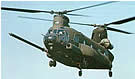
One contract, worth $3.4 million, goes to Boeing Phantom Works for its Advanced Tandem Rotor Helicopter (ATRH). Boeing proposed the ATRH in the Army’s low-speed category, which is for vehicles that fly between 160 and 200 knots. Based on Boeing’s descriptions, it’s safe to describe this as an upgraded and modernized design similar to the Chinook; the photo that accompanies Boeing’s Sept 22/05 press release confirms this.

recovering a Chinook
Sikorsky’s option number one in the slower category is the X2C, a super heavy-lift coaxial rotor crane that can cruise at 165 knots. The use of the words ‘rotor crane’ implies that the design will incorporate aspects of Sikorsky’s CH-54 Tarhe/ S-64 Skycrane, originally built for the military and reportedly one of the last projects that Igor Sikorsky was personally involved in. The description notes, however, that they will be adding at least one modern twist.
Coaxial rotor technology consists of two counter-rotating rotors stacked one on top of the other. Russia’s Kamov in particular is famous for using this mode almost exclusively in its maritime, civil, and attack helicopters. The co-axial contra-rotating rotors allow very controlled, stable and precise flight, allowing the helicopter to carry loads with minimum deviation from the designated location – in narrow canyons or between city buildings, for instance. They also allow precise placement of heavy loads for construction. The absence of the tail rotor contributes to the safety of the helicopter in maneuvering near obstacles, and in decreased sensitivity to changes in wind force and direction.

(click to view full)
These features have made the Ka-32 popular in the west as a skycrane helicopter, and the Ka-26/226 offers a more purpose-built coaxial skycrane example. The Ka-50/52 Black Shark, meanwhile, is currently the world’s fastest attack helicopter. DID has noted the potentially transformational skycrane/ISO battlebox combination in the past – though the Ka-32 proves that skycrane designs can also look and perform like conventional helicopters.
Time might have told which path Sikorsky’s X2C would take… but both of these competitors were eliminated in March 2007, due to new aerial refueling requirements introduced into the competition. The army decided that the competitors had to be able to refuel fixed-wing aircraft, a job currently undertaken by SOCOM’s Hercules HC-130s and the Marines’ KC-130s. This example of requirements creep introduced a minimum speed requirement of 220 knots, which eliminated both Boeing and Sikorsky’s options in this category.
Sikorsky’s Compound Helicopter Option
(click to view full)
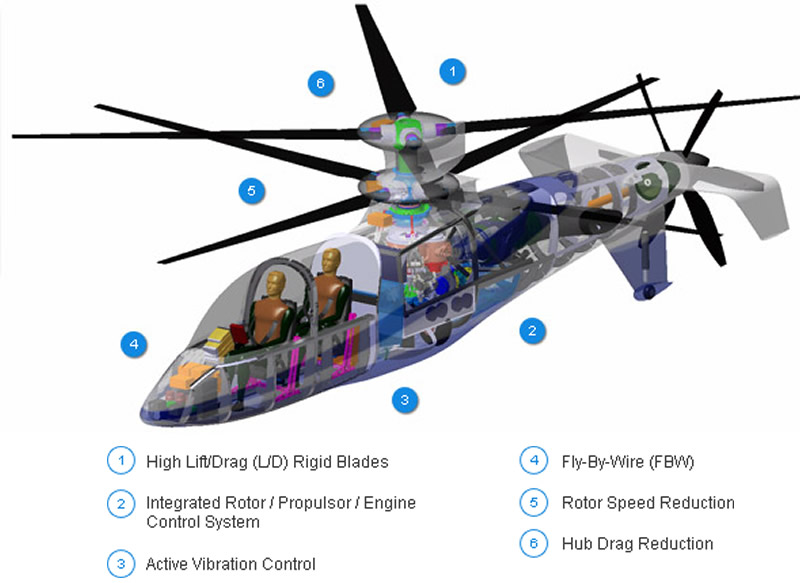
Sikorsky also received a development contract for a high-speed super heavy lift configuration capable of cruising at 245 knots, the X2HSL, for “X2 High Speed Lifter.”
Sikorsky’s release notes that “X2 Technology aircraft will hover, land vertically, maneuver at low speeds, and transition seamlessly from hover to forward flight like a helicopter. In a high-speed configuration, one or more ‘pusher props’ are part of an integrated auxiliary propulsion system to enable high speed with no need to physically reconfigure the aircraft in flight.” In other words, the high speed Sikorsky X2HSL option will be a compound helicopter, with one or more ‘pusher props/jets’ in addition to the standard helicopter rotors and small lifting wings on the sides.
The Army release added another interesting detail when it used the words “advancing blade concept,” otherwise known as ABC.
The Advancing Blade Concept (ABC) uses two rigid counter-rotating rotors in a close coaxial arrangement to provide advancing blades on both sides of the aircraft – you can see that effect clearly in the above photo, by looking at the blades. ABC thus makes use of the high dynamic pressure on the advancing side of the rotors at high forward speed, virtually ignores the low dynamic pressure on the retreating side, yet still keeps the whole rotor system in roll trim. Theoretically, such a rotor system will maintain its lift potential as speed increases. Sikorsky’s XH-59A was designed to investigate this theory in the mid-1970s.

Nick Lappos, who claims to have flown the experimental Sikorsky XH-59 ABC craft, noted in an August 1999 post that:
“It went 300 miles an hour (259 knots) using the J-60’s as auxiliary thrust. When blasting along, it was actually in autorotation, with the rotor freewheeling as the jets pushed it along… Doug implies that there was nothing really new about the ABC, since others had flown co-axials before. Actually, the XH-59A ABC (Sikorsky designation S-69) was very rigid, with extremely stiff blades, unlike the very low offset Kamov designs (including the KA-50 Hokum/Werewolf). The extra rigidity is quite unique, and allowed the ABC to operate beyond stall on the retreating blades.
With a more conventional Coaxial, stall makes the blades flap a bunch, and tip clearance between disks becomes an issue [DID: i.e. the blades hit each other and probably crash the aircraft]… This ABC post stall operation relied on the upsweeping blade on each side of the helo to keep roll and pitch control (in a single rotor at stall, you lose control because the down sweeping blade gives up the ghost). ABC could pull about 1/2 to 1.0 more G’s than an equivalent helicopter, and could do so at altitude. The ABC demonstrator pulled 2.5 g’s at 25000 feet!”
DID cannot vouch for the reliability of this account with a source check, but we include it because several of the details mesh with other sources’ notes, and we believe it may shed some additional light on the technology issues involved.

(click to view full)
GlobalSecurity.org notes that the Advancing Blade Concept was also a contender for the RAH-66 Comanche attack/scout helicopter (which was canceled in 2004), but the transmission weight penalties were too high and so the trade study decided that the performance advantages were outweighed by the weight disadvantage. The system’s weight would be much less of an issue in a heavy-lift helicopter, of course.
X2 Technology development in all of its variants is being funded by Sikorsky, and undertaken in collaboration with its Schweizer Aircraft subsidiary.
The Tilt-Rotors

(click to view full)
Another contract, worth $3.45 million, goes to the V-22 Osprey team of Textron’s Bell Helicopter and Boeing’s Phantom Works. The contract invites them to perform conceptual design and analysis of their QuadTiltrotor (QTR) aircraft, which was entered in the high-speed category of 250 knots or more.
The QTR would be a Hercules-sized aircraft with many similarities to the troubled V-22 Osprey program, but doubling the number of wings (to two) and rotors (to four). The engines and avionics would be the same as the smaller V-22, reducing development risk, and potentially lowering costs for both the QTR and V-22. Among other factors, a four-engine tilt-rotor may find it easier to avoid and recover from the one-engine vortex ring state stalls that have crashed more than one V-22.
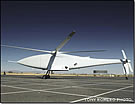
Abe Karem-owned Frontier Aircraft will be entering an optimum-speed tiltrotor concept, referred to in the solicitation as the OSTR. As their name implies, optimum-speed rotors vary their speed as a function of the aircraft’s gross weight and speed to maintain overall efficiency.
Frontier Aircraft was formed after Karem sold Frontier Systems to Boeing. Boeing acquired the rights to Karem’s optimum-speed rotor technology used for unmanned aircraft like the A-160 Hummingbird, but Karem is free to apply the concept to manned vehicles.
As DID’s August 12, 2005 coverage of the DARPA-funded A-160 Hummingbird Warrior program noted: “…this program will evaluate application of the optimum speed rotor concept to other systems including heavy lift and tilt rotor capabilities.” Whether Karem can leverage DARPA’s ongoing research is an open question, and the relevant intellectual rights to that information may yet prove significant to this competition.
Program Contracts & Key Developments

July 30/08: We’re a long way from a competitive program. How long? First, the specifications changed in December 2007, adding requirements closer to fixed wing transports and dropping 2 contenders that couldn’t meet the new speed. Other changes were made in February 2008. The 3 industry teams already holding contracts are supposed to report back re: the effect on their designs, which is supposed to generate a new specification in September 2008. That’s expected to last for a year, while industry players do more design work, in advance of yet another iteration of the specifications. At the end of this entire process, the US military still won’t have a program – just a specification to be competed over.
If Bettina Chavanne’s reporting is correct, the “Joint Future Theater Lift (JFTL),” as it is now called, has the Army, USMC, and Special Operations pretty unified, but the USAF was invited late, which is expected to lead to more tug-of-war over the specifications. Aviaton Week Aerospace Daily and Defense Report.
Feb 29/08: Lockheed Martin and Karem Aircraft Incorporated announce a teaming agreement to jointly develop the Optimum Speed Tilt-Rotor (OSTR) design, which has received a JHL Concept Design and Analysis extension contract. Lockheed Martin’s effort will be led by Lockheed Martin Aeronautics’ Advanced Development Programs organization (The Skunk Works), and the graphic accompanying the release shows a twin-tiltrotor design.
Feb 24/08: Sikorsky unveils its X2 Technology Demonstrator at the George R. Brown Convention Center at Heli-Expo 2008. This compound helicopter employs a number of next-generation technologies, including fly-by-wire flight controls, high drag reduction, counter-rotating rigid rotor blades, active vibration control, and of course the tail “pusher” propeller.
The original X2 technology release on June 1/05 said that “Sikorsky plans to build and fly its X2 Technology demonstrator helicopter at its Schweizer Aircraft subsidiary by the end of 2006,” but the effort is behind schedule. Sikorsky’s Senior Manager of Advanced Programs Peter Grant says that the vehicle has been tied up in build and subsystem test, and re-entered vehicle ground testing in November 2007. First flight is now expected in 2008. Sikorsky release.
Dec 1/07: Rotor & Wing reports that JHL program officials have dropped 2 contenders from the competition in light of a new requirement, and are seeking about $40 million in FY 2008 and 2009. Program director Bruce Tenney reportedly said that after this next phase of concept design is done, they want to hold an open competition to build 2 technology demonstrators, including an engine competition.
The publication reports that Sikorsky’s X2HSL remains in the competition, alongside Boeing-Bell’s C-130 sized Quad Tilt-Rotor and Frontier Aircraft’s OSTR Optimum-Speed Tilt-Rotor, a cargo aircraft-sized bird with twin tilt-rotors whose speeds would vary depending on the flight condition. In May 2006, Tenney and other Army officials unveiled a High-Efficiency Tilt-Rotor (HETR) which apparently resembles Frontier’s entry to some degree. Tenney says the HETR was only a concept for illustration purposes, and not a preference of any sort.
May 2007: A government Joint Technology Team decides that the JHL must be able to refuel fixed-wing aircraft at 220 knots airspeed or better, just as a KC-130 Hercules does. That apparently Sikorsky’s X2C Skycrane, and Boring’s CH-47 derived ATRH large Advanced Tandem Rotor Helicopter. Source.
Nov 9/06: The pressure to merge JHL with other programs hasn’t gone away; it just appears to be changing form. On November 9, 2006, in “US Air Force renames and expands concept for tactical airlifter,” Jane’s Defence Weekly reported that Advanced Joint Air Combat System (AJACS, formerly known as ‘AMC-X’) had bigger ambitions than just offering a leap-ahead over the Airbus A400M. It now aimed:
“…to find ways to converge the USAF requirement for a new tactical airlifter with the US Army’s requirement for a C-130-sized rotorcraft known as the Joint Heavy Lift (JHL) concept. ‘The solution [for the army] is not necessarily a pure vertical take-off and landing joint heavy lift platform…”
November 2006: The CSAR-X competition was won by Boeing’s HH-47 Chinook in November 2006, as it defeated Sikorsky HH-92 Superhawk and the Lockheed/ AgustaWestland US101/EH101. The contract had to be recompeted, however.
April 2006: The CH-53K HLR program later got the go-ahead, and now begins its journey through the procurement maze. Language in the FY 2006 defense appropriations bill would have merged the CH-53X program with JHL, but the US Senate had that provision removed in conference.
October 2005: As a follow-on DID report notes, the US Marines did lobby hard for the V-22, but a combination of procurement control decisions, program specifications, and funding levels caused the PRV-22 team to pull out of the PRV/CSAR-X program.
Sept 20/05: Contracts are awarded for JHL design analysis. Boeing release | Sikorsky release.
Appendix A: ‘Borging’ HLR & the CH-53’s Future (Sept. 2005)

(click to view alt.)
At first glance, one might think that the US Marines’ Heavy Lift Replacement CH-53X program is too different from the JHL’s futuristic, quantum-leap ambitions to be affected.
While some of the above concepts have been the subject of prior R&D efforts, JHL is clearly a major weapons development program that will require substantial R&D. Contractor assurances aside, it’s rare for such program to be complete within a decade, let alone in 6 years (2011) when the US Marines’ existing CH-53 fleet is scheduled to begin hitting airframe hours issues. All in the middle of the intense demands of a dispersed Global War on Terror that places a premium on helicopter capabilities, and possibly some full-on nation-state wars as well.
The Marines may also point out that the CH-53 serves in a medium-heavy helicopter lift capacity, and is built to ship-friendly dimensions. The JHL, with up to twice the capacity of the CH-53, is not really in the same class, and there’s no guarantee that the JHL craft will be carryable within the same range of ships.
It’s possible that these seemingly-reasonable points will fall on deaf ears, however. If so, the wound to Marine airpower will be largely self-inflicted.
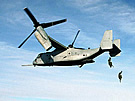
When budgets are also being squeezed hard by multiple cost overruns on a wide swath of programs, any similar programs become a target for Congressional cuts and pressure to merge [DID: and did, in the House’s FY 2006 defense budget bill]. The US Marines have been the leading service advocates of tilt-rotor technology as a transformational necessity. Having invested so much of their prestige and credibility in the V-22, many on Capitol Hill are likely to view the Marines’ rejection of a program that includes similar QTR and OSTR options as inconsistent, and hence mere territoriality. This would not bode well for the HLR Program’s political survival.
It certainly wouldn’t be the first time in US military procurement history that the promise of the shiny new thing has found itself in the way of fulfilling military necessities with cheaper, proven options.
The natural response to such pressures would be to emphasize the comparatively speculative nature of the JHL Program’s technologies and their uncertain development timelines, while touting the value of cheaper builds of proven helicopters in order to meet immediate needs and an uncompromising timeline for fleet airframe life. Making that argument, however, flies in the face of almost everything the USMC said when some in Congress pushed for conventional helicopter options to replace the Marines’ Vietnam-era CH-46 Sea Knights. Options that would also have been far less expensive than the $80-100 million per plane V-22 Osprey.
Which brings us to the CSAR-X program, recently covered in-depth here on DID.
Current contenders for Air Force Special Operations Command’s next generation combat search and rescue rotary (known as CSAR-X, or PRV for Personnel Recovery Vehicle) include an HH-47 Chinook variant, whose development is likely to serve as a test-bed for some of the proposed improvements in Boeing’s low-speed Advanced Tandem Rotor Helicopter (ATRH) JHL entry. At the higher end, meanwhile, Bell-Boeing is also offering a PRV-22 Osprey variant despite the potential issues with that technology in a CSAR role, and the US Navy’s decision not to buy 48 HV-22s for similar missions. Meanwhile, Sikorsky has yet to formally announce.
Should either of Boeing’s options win that CSAR-X competition, it could easily strengthen their corresponding options in the JHL contract. A PRV-22 win in particular would intensify the USA’s “commitment trap” in tilt-rotor technologies, and increase the pressure for tiltrotor technology as an emerging force standard in order to drive down costs across all programs and make this very expensive and complex technology more affordable.
(click to view full)
A CH-53X program would likely find it difficult to survive in that environment, thus effectively ending the CH-53 as a viable future platform for Sikorsky (and the Marines). A HH-53X entry and win in the CSAR-X program, on the other hand, might go a long way toward safeguarding the Marines CH-53X HLR program as a complementary investment in a guaranteed future platform, one that could create more fleet-wide interoperability and drive down costs. It may even allow Sikorsky to offer some of their X2 compound helicopter technology options to both programs, thus giving the veteran helicopter maker a key proprietary technology of its own to counter Bell-Boeing’s tiltrotor expertise in the 21st century global market.

(click to view full)
When DID evaluated Sikorsky’s CSAR-X choices, we noted the possibility of an HH-53X option as a stronger contender than its H-92 Superhawk. Making that choice would probably doom the H-92 to a largely civilian role, however, just as its failure to find military customers for the H-76 led to a successful S-76 variant in the commercial market. Would Sikorsky choose to abandon its new platform, given that an HH-53X may not win anyway?
It would appear that the choice is no longer so simple. If the CH-53X HLR program is under threat, Sikorsky’s CSAR-X choice may involve the likely orphanage of a major helicopter program no matter which option it chooses. As DID has noted, to compete in CSAR-X with the HH-53X would doom the potentially promising H-92 platform with a vote of non-confidence. To compete and lose again with the H-92, on the other hand, will cripple the platform’s future foreign sales and shut it out of the US market. It may also doom the CH-53, when a stronger HH-53X bid might have saved it – and given the company a whole new technology to build its future on. Of course, the HH-53X could also lose – perhaps even to the PRV-22 Osprey tiltrotor. In that case, the result might be the end of both helicopter platforms as viable offerings in the global military market.
Additional Readings & Sources – JHL Program & Future Technologies
* DID – JMR-FVL: The US Military’s Future “Helicopters”? What follows JHL. Which amounts to more studies, in 2013. Albeit on more mature designs.
* Helis.com – Why Can’t a Helicopter Fly Faster Than It Does? A good explanation of basic helicopter aerodynamics, which the JHL designers will all be trying to overcome or sidestep with their high-speed proposals.
* GlobalSecurity.org – Joint Heavy Lift (JHL). Has links to GolbalSecurity.org topics that nclude: JHL Concept Design and Analysis | ATRH Advanced Tandem Rotor Helo | OSTR Optimum Speed Tilt Rotor | QTR Quad Tilt Rotor | X2 Technology Crane | X2 Technology High Speed Lifter
* GlobalSecurity.org – Future Transport Rotorcraft (FTR)/ Joint Transport Rotorcraft (JTR) (H-47 Chinook modernization program). Became JHL.
* Aviation Week (Oct 11/10) – Compound Interest on the Rise
* National Defense Magazine (March 2009) – Inter-Service Rivalry Surrounds Joint Heavy Lift Aircraft Program. All services have signed on to the requirements document – except the Air Force. New Air Force Chief of Staff Gen. Norton A. Schwartz, who previously served as the commander of U.S. Transportation Command, may be more receptive.
* US Army (Sept 19/05) – US Army Awards Five Agreements for Concept Design & Analysis of Joint Heavy Lift (JHL) Rotorcraft
* YouTube video- Bell/Boeing Quad TiltRotor: Concept of Deployment. The scenario used is unusually specific and concrete.
* Flight International (Nov 7/06) – Full Tilt Ahead: What Will Follow the V-22? A fairly up-close look at the Quad Tilt-Rotor in particular, including a concept cutaway and some early design decisions.
* Providence Journal (Sept 3/06) – Bell, Boeing working on helicopter-plane hybrid: “It’ll be like the V-22 Osprey the companies make for the Marines and Air Force – just three or four times heavier and far more intricate.”
* Sikorsky – X2 Technology Demonstrator
* Sikorsky (Feb 24/08) – Sikorsky Aircraft Unveils X2 Technology™ Demonstrator
* Sikorsky Release (Sept 20/05) – Sikorsky Awarded Design Analysis Contracts for X2 Technology
* GlobalSecurity.org – XH-59A Advancing Blade Concept (ABC) / S-69. See also this Aircraft Resource Center article, with photos.
* Lappos Usenet Post re: XH-59 ABC
* DID FOCUS – AJACS Load: US Begins (Another) Next-Gen Tactical Transport Project. Could end up competing with JHL.
Relevant Current Technologies
* DID FOCUS Article – CSAR-X: And Boeing Makes One… HH-47 Wins $10B Competition (updated). Until the entire competition was canceled in the FY 2010 budget.
* Army Technology – CH-47D/MH-47E Chinook Heavy Lift Helicopter, USA
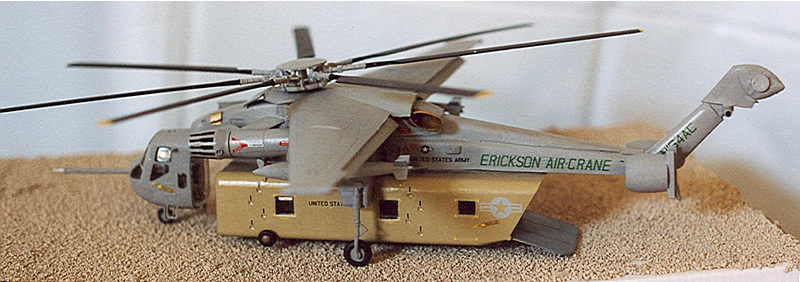
* Sikorsky CH-54/S-64 Skycrane. The Skycrane is now manufactured by Erickson Air-Crane, which owns most of the remaining military CH-54s and bought the civilian S-64 Aircrane Type Certificate from Sikorsky in 1992.
Other Future Technologies
* Flight International, The DEW Line (May 4/09) – Bell Helicopter reveals “Hybrid Tandem Rotor” to replace AH-64 and UH-60. Involves a wing that tilts by 25 degrees, with an additional 5 degree tilt by adjustic blade pitch. Would have forward speed of 225 kts, but will remain a design concept only unless the US Army goes ahead with the unfunded Joint Multi-Role (JMR) requirement to replace AH-64 attack helicopters and UH-60 utility helicopters. See also Aviation Week: “Bell’s HTR: Tiltwing + Rotors = ???”
* The Register (Sept 5/08) – DARPA funds radical disco-copter concept: Spinning-platter switchblade chopper takes wing. Covers the disc-rotor compound helicopter concept, which is receiving up to $9 million in DARPA funding to Boeing for preliminary concept testing. An actual disco-copter would probably violate the Geneva Conventions, if its music was audible from the ground.
* Special Operations Technology (Nov 19/06) – New Age Spinners. Focuses on Piasecki’s compound VDTP which is almost ready for flight testing, Heliplane/ Gyrodyne technology, and the quiet XHawk Fancraft “aircar” being developed by Bell Helicopter and Israel-based Urban Aeronautics.
* Special Operations Technology (Oct 13/04) – The Next Generation. Covers more radical new helicopter and fixed-wing designs, including blended wing, quad tiltrotors, tilt-wings, gyrodynes, and compound helicopters.
* National Defense Magazine (Feb 2000) – Industry Titans Vying for Early Lead in Cargo Aircraft Markets. QTRs, Superfrogs, and more.
* Tactical Studies Group – Compound Helicopters – The Future of V/STOL. Highly opinionated and subjective, but also has a significant collection of articles and history relating to compound rotorcraft past, present, and future.
* Air Attack – Navy YSH-60F With a VTDP. Covers a year 2000, $26.1 million contract by Piasecki to modify an SH-60 Seahawk to a compound configuration as a demonstrator. Sourced in part from a July 29/04 article in Aviation Now. The YSH-60 is also known as the VTDP program; National Defense Magazine covered VTDP in June 2002.
* Congressional Research Service Report for Congress (Jan 7/05) – V-22 Osprey Tilt-Rotor Aircraft [report in PDF]. VERY fair. Catalogs all of the program’s travails, and presents the arguments both for and against the V-22 Osprey well.
* The Project On Government Oversight – V-22 Archives. See also DID coverage of the subsequent reports: POGO takes Aim at V-22 Osprey.
* Fort Worth Weekly (July 7/05) – Osprey or Albatross?
* WIRED Magazine (July 2005) – Saving the Pentagon’s Killer Chopper-Plane. A far more positive article than the title might indicate. Very useful for explaining in detail the steps taken to fix key mechanical issues; it does not deal with tactical concerns.
* American Helicopter Society, Vertifile Magazine (Winter 1999) – On the Vertical Horizon: Bell Designs Are Accelerating at Full Tilt. The QTR is mentioned. This was, of course, before V-22 Osprey crashes grounded the program for several years.
Appendix C: Additional Readings & Sources – HLR Program (CH-53X) and CSAR-X
* DID FOCUS Article – CH-53K: The U.S. Marines’ HLR Helicopter Program (updated)
* Hill News (June 1/05) – House language could create friction over chopper programs
* GlobalSecurity.org – Heavy Lift Replacement [CH-53X]
* DID (Aug 29/05) – HLR (CH-53X) Helicopter Program Moves Toward Milestone B Approval.
* USMC, Leatherneck Magazine (May/05) – Heavy Lift Replacement: A Vital Marine Corps Program
* American Helicopter Society, Vertifile Magazine (Spring 2002) – From The Past To The Future Of Heavy Lift Part Three: Heavy Lift Helicopters [PDF format]
* American Helicopter Society’s Vetifile Magazine (Spring 2002) – An Affordable Solution To Heavy Lift [PDF format] by Lt. Col. James C. Garman, MH-53E pilot in HMH-772 and a Senior Preliminary Design Engineer in the New Product Definition Group, Sikorsky Aircraft Corporation. It describes the basic outlines of many low-risk CH-53X improvements.
* Naval Technology – CH-53E Super Stallion – Heavy-Lift Helicopter, USA
* DID (Feb 3/06) – Sikorsky Announces CSAR-X Helicopter Partnerships, Platform
* DID (Oct 24/05) – V-22 Bows out of CSAR-X/PRV Competition
* DID (Sept 21/05) – CSAR-X: And Boeing Makes 3…. The HLR program may be affected by the choices Sikorsky makes in the CSAR-X competition.